Why the Rich are getting Richer (ft. Tom Wheelwright)
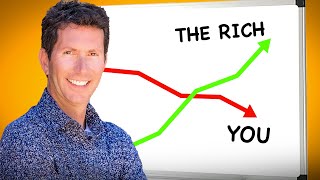
Transcript of a podcast conversation (Art of Passive Income) between host Mark J. Podolsky and tax expert Tom Wheelwright about how U.S. tax law incentivizes production and reinvestment, why wealthy investors benefit from tax strategy, the proper use of debt, audit preparedness/documentation, and practical tips for investors (including raw land owners). The piece emphasizes using tax incentives legally, treating the government as a partner, and forward-looking tax planning.
Chapters
Hey, it's Mark Podolski, land geek with your favorite niche real estate website, thelandgeek.com and on this week's Art of Passive Income podcast. Back on the show is probably one of your favorite guests of all time because let's face it, your biggest expense is taxes. And Tom Wheelwright is the CEO of Wealthability in Tempe, Arizona and the best selling author of Tax Free Wealth. And Tom is a leading wealth and tax expert, global speaker, entrepreneur magazine contributor. He is best known for making taxes fun. I know you're thinking fun, but how about this? Easy and understandable. And specializes in helping entrepreneurs and investors build wealth through practical and strategic ways that permanently reduce taxes. And also, you've probably seen his books. Him and Robert Kiyosaki are very close. He co authored his Rich Dad, Poor dad book as a Rich dad advisor and it's amazing. Tax Free wealth is a book that everyone should read. Tom, welcome back.
Thank you. I wish I'd co authored Rich Dad, Poor dad, but I did actually work on his why the Rich are Getting Richer book. So if I'd co authored Rich Dad, Poor Dad, I would have a lot more money than I do.
Yeah, yeah. Let's talk since you brought it up, why are the rich getting richer?
Well, you know, some of it's a matter of mass attracts, right? And so the more money you have, the more money you attract. And that's actually just a, that's a property of physics. That's that, that's nothing else than that. But also because the tax law is actually built for people who reinvest their money and they invest them into actual production as opposed to into derivatives like the stock market. And so they, and the tax law rewards that. And so when you pay less tax, of course you have more money. The more money you have, the more mass you have, the more wealth you can attract.
There you go. Okay, so let's assume somebody's listening to this for the first time. They have no idea about taxes tax strategy. They think, oh, you know what, I'm going to go to H R Block and get my taxes done. What would you say is why is tax strategy so important and how should we be thinking about it?
Well, you mentioned it first off, you said taxes are single based expense. So you know, when you think taxes are as much as anywhere from 30 to 50% of our money go to taxes, whether it's Social Security tax, income tax, property tax, sales tax, you know, if you're in the mining industry, it's severance tax. I mean there's just a lot of different taxes. State income tax. So you add all that up and you go, wait a minute. If there were something I could do to prevent that drag on my wealth. Because the word tax is to drag, right? It's to restrict the progress of. That's what tax means. And so if I could reduce that friction on my money, life would be a lot better. And here's the thing. So most people don't realize that the tax law is actually a series of incentives. And the question is who their incentives for, right? Or what activities they're incentives for. And once you learn, the first thing you have to learn is there are a series of incentives. Okay, well, if they're incentives, I want my incentives. You know, it's like, I want my piece of the pie. And we all do. And guess what? It's not only legal, it's encouraged. Despite what you'll hear some commentators say, right? It's. It's neither immoral nor advisable to pay the most amount of tax possible. And in fact, I would challenge anybody that says they do that, because I don't believe they do. I, I challenge anybody who says, I have a. I bought a home, but I don't take my home mortgage interest deduction. I guarantee you they do. Well, why do we have a home mortgage interest deduction? Not all countries do. The reason is because we incentivize. Homeownership policy was made years and years ago to incentivize homeownership, and part of that incentive is through the tax law. Even, even more than that, we incentivize building homes for other people. And, and we incentivize. Now we have a huge incentive for putting solar energy on our roofs. We have a. Or on our commercial buildings, which is, by the way, even a bigger incentive than putting it on our personal residents. So one of the things that I think is important for people to understand is that this is how the tax I work. And we. And the government doesn't accomplish its objectives without people taking advantage of these incentives, okay? They actually go hand in hand. People think, well, you know, the government needs my money. I'm going, well, then give them all the money you want. Okay? But that doesn't mean you don't do the. If you really want to know what does the government want done, look at the tax incentives. So right now it's energy, housing, business, technology, agriculture, food, okay? All of these have tax incentives. And, you know, first thing we have to stop doing is saying, well, anybody who does anything to reduce their Taxes is bad. Well, that would make 90% of the world bad. Right. Frankly.
But, Tom, let's face it, the government is very efficient with our money as well.
Yeah, well, that's. Honestly, Mark, that's why it works. Part of why it works is it's not just a financial benefit, but it's a. It's an emotional benefit. We hate paying taxes. Nobody likes it because nobody believes the government does good with our money. There. There's no transparency in the government, what they do with our money. And so we're going, well, wait a minute. I don't want to pay taxes. And so that's an emotional response. Mark, over the years, I've had clients who said, I will spend $2 to save a dollar of tax because I hate paying taxes that much. Going, not my recommendation, but if that's what you want to do, that's what you want to do. That's why. That's one of the reasons tax incentives work so well, to incentivize behavior, is that people just don't like paying tax.
Yeah, absolutely. So what's. I mean, going back to rich dad, poor dad, what are the wealthy doing today that. Let's say. I mean, I'm not. Look, there's nothing wrong with being a W2 employee, but they pay a tremendous amount of taxes. I don't know, one wealthy person that. That is a W2 employee. And maybe they have stock, you know, options. But, you know, except for these. These edge cases here. What. What's your advice to. To somebody to. Who wants to be wealthy and to think about these incentives.
Well, so. So think about this. We're partners with the government. We don't get to choose that. You're a citizen. You're a resident of a country. You were partners with the government. The question is, what kind of partner do you want to be? You can be a silent partner, which is most of the public who says, just irs, leave me alone. You know, I'll just pay whatever tax. Don't. I don't want to take any deduction because the IRS is going to question it. Great. By the way, you can even check a box on your tax return and pay additional tax if you want to contribute to the government. No problem. Or you could be an active partner with government. So what? Doing the things that the government wants done, whether it's creating jobs. Right. Being in business, creating jobs, creating technology, building housing, growing food, raising cattle. I mean, these are all things the government wants done. Renewable energy or fossil fuel energy. The government wants both of them. You may think they don't, but they do. The tax incentives are there. So you just choose where does your, where does your investment strategy align with what the government wants done? Because you'll notice none of those are investing in the stock market. Well, the stock market's fine. And actually there is an incentive, it's called retirement plans and that gets into the stock market and that is an incentive, a government incentive, because they want you to at a minimum put away enough money so that when you retire you don't have to depend entirely on the government. That's this country, by the way. A lot of countries do completely take care of their citizens when they retire. That's why France is so up in the arms. Over, over the 62 to 64. They don't, they're not expected to save money, they don't make a lot of money. And so they, they live life and they expect that once they turn 62 they get to retire and live the rest of their life with the, on the government dole basically. And, but, but the US Government said no, we, we want you to put money away, we want you to save money. We're okay if you put that in the stock market where we'd like it to go. And so that's the one place where you get a tax benefit for investing in the stock market. But otherwise, you know, the tax benefits come from production. The government wants you to produce. Consumers get taxed, producers don't get taxed. And that's, it's a really easy rule of thumb. If I'm putting money back into my business, I'm putting my money back into the ground. If I'm a farmer, if I'm putting my money back into energy production, if what if I'm actually producing, then I'm probably going to get a tax benefit. There's probably a tax benefit there for you.
Yeah. So this is going to be a little, you know, self serving question. So I'm just going to ask it anyways. So as a raw land investor, raw land lasts forever. We can't depreciate it.
Right.
Are there any tax incentives for us raw landowners where we buy the piece of land, we sell it and then we're, you know, we're owner financing it. So I don't think there's, there's much unless we're going to do something solar. Right?
I, Right. I mean, I think you've got a couple of options. First of all, you should never pay tax on the game. Right. Because you can do 1031 exchanges. You can, you know, if you need money, you can borrow against it. And debt's not taxable, so you should never. There's two sides of this, right? There's, do I get a tax benefit going in or do I get a tax cost coming out? Well, raw land, you know, you should never have a tax cost coming out. All right? But you don't get a real tax benefit going in. You're right. Solar is one of the things you can do on raw land. Wind is something you can do on raw land. Right. You can actually do certain businesses on raw land. I mean, I, I grew up. My, my. One of my dad's best friends owned a big sign company. They did the billboards, well, guess what? Those go up on people's land. Raw land. Your cell phone towers, those go up on people's raw land. So they're. They're still. I mean, there's still, you know, ways to utilize that raw land. But again, what you're talking about is turning that raw land into productive use. If you're talking about just holding the raw land for investment, you're right. I mean, the, the tax benefit is on the exit, not on the entrance.
Yeah. So let's talk about debt, because you brought it up. So many people, the, the Dave Ramsey generation, they. They think debt is bad, avoid debt, debt, that, that it's terrible. And yet the more sophisticated, the wealthier investor looks at debt differently. How are they looking at debt?
Well, they're looking at. So you have to go to, why do you have the debt? All right, that, that's really what you have to go to. Why do you have the debt? The. The purpose of good debt. So we'll talk about good debt versus bad debt. The purpose of good debt is to buy an asset, and the purpose of an asset is to produce cash flow. Okay? So you just gotta follow those. Follow those. Well, if you're debt buys an asset that produces cash flow, why would you ever be afraid of the debt? Right? And the reality is, if you're afraid of the debts because you don't trust the asset.
Right?
It's that simple. If you, if you're afraid of the debt, you don't trust the asset. Well, okay, well, so Dave Ramsey, I've actually had this conversation with him and he got into trouble because he was flipping with debt back in the 80s. He got in trouble with it. Okay, well, flipping with debt is like borrowing money to gamble in Las Vegas. Okay. It's probably not a good idea, right? So there are certain things that doesn't. Don't make a Lot of sense to have debt and use debt for those. There are other things. I mean, if I were, you know, I would. You would never. I would never buy a. A piece of investment real estate, for example, that produced cash flow without debt because I maximize my returns, I maximize my tax benefits, I maximize return. So, you know, there's. There's certain assets that we're so good at managing those assets, we're so comfortable the asset that I have no problem with the debt, my business, I could buy all the CPA firms that I wanted to. I would never worry about the debt because I know how to run a CPA firm. I know how to do that. I know how to make it work. I know how to make it better. So I would never worry about the debt. But if I, if I were to go out, say I don't know anything about farming, it'd probably be a bad idea for me to go out and borrow a bunch of money and buy farm, because I don't know anything about it. So I think it's a function of, okay, how comfortable are you? How confident are you in the asset? And if you're comfortable that the asset is going to produce cash flow, why would you worry about the debt?
I love it. I love it. So let's talk a little bit about wealth, ability, and your, your average client that's coming to you. What would you say they're. Let's say they're coming from another firm. What would you say is the biggest sort of problem that you see they're coming in with that you have to then reverse or even like, what mindset are they even coming in with where you have to sort of tweak so that they can see the bigger picture of incentives?
Well, the first thing is they're coming with this idea that there are certain things you can do and certain things you can't do. And I think that right there is the big issue, because the question is not, can I deduct something I buy? The question is, how can I deduct it? Okay, so they're coming to this idea that the tax law is black, black and white. Well, it is from the standpoint that the tax law is pretty clear on how to deduct what you want to deduct. But we just need to understand. So what is it that I need to do to do that? Let's say I want to deduct my travel. Okay, well, what do I have to do to deduct that? Now my job as your advisor is to say, okay, I'm here's what you need to do to make your travel deductible. Are you willing to do that? And you can say yes or no, but my job is to give you a choice. And the challenge I have with, I think a lot of my colleagues in the tax industry is they are making the decision for the client instead of giving the client the choice. And some of that's a function of not being an educator and being willing to educate your clients. And the other is a function of you not understanding that the tax law, you want to, as we like to say at wealthability, you want to change your tax, you got to change your facts. What facts do I have to change? And as long as you have that choice, that, see, for us, we serve solely entrepreneurs, investors. That's. That's who we serve. If you have a W2, and that's all you're going to do and you're going to spend your money, I'm probably, probably not the right place for you. But if you want to invest, you want to be an entrepreneur of any kind, then we're really the best place for you because we're not going to tell you what you can and can't do. We're going to tell you how to do what you want to do.
I love that. Yeah. And one of our clients is a wealth ability cpa, Lloyd Ippolito. And he's, he's great. So what is some of the worst advice you see or hear given today in today's tax climate? Because I know for me personally, people are up in arms. The 83,000 new IRS agents, and I can only imagine your clients coming in and saying, no, no, no, I don't want to do that. I'm going to, I'm going to trigger an audit.
That's actually, that, that's actually the worst mistake I see is that is they'll come, they'll come to me and say, my CPA says I shouldn't take this deduction because it's a red flag to the irs. Okay. So, for example, I mean, the number one is going to be a home office. And I'm going, so first of all, you have the home office done, right. Has not been a red flag to the IRS in over 20 years. Okay. So first of all, your accountant's way out of date here. Okay. But second of all is the question again, would be, how do I take my home office deduction without it being a red flag to the irs? Nobody wants an audit, and we are going to have a lot more audits. No Question. There are going to be more and more IRS audits. And so another thing you need to make sure of is that your tax advisor has handled an audit before, knows how to handle an audit and has a network of people that they can go to to ask questions about how do I best handle an aud? I, I've probably, in my career, I probably handled, you know, been 40 years, I probably handled 12. I mean there's not a lot of them that I've handled, but they've, you know, one way or another they've been fairly successful. And I, I think that what you have to do is ask your tax advisor, okay, so help me understand what I need to do to a avoid an IRS audit. But if I get an IRS audit, how do I, you know, how are we going to deal with that? What's, it's curious to me, Mark, that there are a lot of big firms, CPA firms, that they don't maintain work papers when they prepare tax returns. So that scares the daylights out of me. I'm going. So that means that when they, their clients get audited, they are relying on their clients to gather all this information again. Yeah, because they already gathered at once for the tax return. Now they're making them gather it again for the IRS auditor. I'm going. Wouldn't it be easier if you just had all that information in your files as the cpa and then when the audit comes, you're just, you just go to the client and ask for anything you're missing as opposed to everything from scratch. I just can't even fathom how much work that's going to be for all of those poor business owners and investors who get audited and they have to, they have to dig this stuff out of their files from three or four years ago.
I couldn't imagine. I was listening to you when you were speaking to our passive income mastermind group. And you know, these are all accredited investors. They're all, you know, doing lots of businesses investments. And you gave a really interesting piece of advice about if you are in an audit. Would you mind sharing that?
Well, first thing is rule number one is never talk to the irs.
That was it. Yeah.
That is rule number one. That is not your job. That's my job. So it's kind of like, you know, if you're playing, let's say you're in a one on one tournament basketball, if you could bring in a ringer for yourself, wouldn't you? Why, why would you, you know, why would, why not bring in a ringer and that's really. You're allowed to do that. You're allowed to bring in a ringer. And how cool is that, that, you know, tax, which is, while the concepts are simple, the law itself is complex. And so why not bring somebody in that understands the complexities and actually understands it better than the IRS auditor? And so to me, I'm just going, if I could. If I could bring in Kevin Durant to sub in for me, you know, in my one on one tournament, I would bring in Kevin Durant. Right? Yeah. I'm going. Okay. Seven feet tall, shoots better, dribbles better, passes better, does everything better than I do. And yeah, I love playing basketball, but, boy, if it came down to life and death or a lot of money like an IRS audit does, I'd rather. I'd just rather bring in a ringer.
Absolutely. So there's really nothing to fear in an IRS audit if you're documenting correctly. Is that right? Or following your advice and documenting Well.
I, I think you, I. You need to document very carefully, for sure. You need to maintain all that documentation and just a reminder that your credit card statement is not a. Those are not receipts. Okay. You actually do have to maintain a. A copy of those receipts, and it can be a digital copy. You can scan it. Right?
Right.
Use your, Use your note app on your iPhone and scan it. I mean, it's easy to do, but you do have to maintain the documentation. But on top of that, you need to make sure that you've got a. You've got to have your ducks in a row and don't be giving the IRS more than what they ask for. That's a mistake. I've seen multiple times where CPAs have turned over information. The IRS never asked for the information. I'm. We are very careful. We turn over exactly what they asked for and nothing more. I mean, nothing less. We get. They're doing their job, but why would I give them more information that they're asking for? So it is an art to handling an IRS audit. There's no question. We, you know, our, our network, CPAs, we, we've gotten very good at it, but we're going to see a lot more of them. So I, I would, I, I wouldn't worry about if you've got a CPA that you're comfortable, knows how to handle it, but if you don't, I would probably be worried.
Okay. Yeah. And so, Tom, your, Your mentorship has been invaluable. Is there any question I should have asked you?
I didn't but you know, the, the, I think the biggest question is. How do I know I'm doing everything that I need to be doing? I, I actually think that's the, the most interesting question. And we actually develop software for it. So we, we develop software to be able to analyze tax returns. And look at, hey, is a, is a investor an entrepreneur? Are they doing everything they can to reduce their taxes or they really do. They have glaring opportunities to reduce their taxes. Rather than trying to teach people how to analyze a tax return, we decided to just take, because I know how to analyze the tax return. I just put it, we just put it into a software platform so that we can actually take your tax return, run it through our software and outcomes. Okay, yes or no? We, you know, you're paying too much tax. You're not, you're not paying too much tax.
Wow, that's amazing. So let's say I have my 2021 return. Could I use that software and do an amended return and get money back?
Maybe. Unfortunately, what happens is most of the opportunities we see are forward looking opportunities. So it's, it's always hard to plan backwards. It's much easier to plan forwards. And so what, what the software is looking at is, are the things you could have done now can you go back and, and do them? Most of the time, not every once in a while, yes, but most of the time you can't go backwards. But I could take your 2021 return and say, okay, so what should we do for your 2022, 2023 tax return that would be different so that you can reduce your taxes.
Phenomenal. Phenomenal. Again, Tom, thank you so much for your time. But we're at that point now, the podcast where I'm going to ask you for your tip of the week. And you've been so generous with your, your knowledge, your tips, information. But one more tip of the week, a website, a resource, a book, something else actionable for the art of passive income listeners to go improve their businesses, improve their lives. What have you got?
So, you know, I'm, I'm a, I'm a big fan of Strategic Coach and Dan Sullivan. He just came out with a new book called 10x is easier than 2x. And really what I'm, what I've learned the hard way in my career is it's not just who you know, but it's who the people you know know who. Right? So it's this expanded network and one of the things I find a lot of people doing, they're still reliant on a single individual for legal work, a single individual for tax work, a single individual for financial planning. If you look at the really good financial planners, for example, they've got a whole network of people that they're relying on. If you look at the really good CPAs, you want a CPA that's an entrepreneur. Yeah, I don't like the big firms. I've just never been impressed with the big firms outside of the, the big four, which won't talk to you until you're paying them three, $400,000 a year. But, but that kind of, kind of the everything under the big four. I, I prefer the small local firm because you get very personalized service. But that person needs to have a network of people they can draw on because otherwise you're just left with them. I would not want anybody to just be left with me. I have a network of people that I can go to. I have a network of resources that I can go to, not just within the tax profession, but outside the tax profession. And so I think that it's not just who you know, but who the who you knows know.
Yeah, I couldn't agree more. I'm actually in Strategic Coach and Genius Network and another mastermind. And it's, it's so true. Like all these people have incredible networks and your, your net worth is your, your network in a way. And to your point, the same way I want to work with people who have such a big network that they, because no one knows everything, it can be an expert, but they can send you off and help you with any problem that you want solved. And I love that book. 10x is easier than 2x as well. And I've got 100 copies right now. My office. Ben Hardy sent me. So very cool. I'll be, I'll be giving those away at boot camp. If you're listening to this, my tip of the week is going to be learn more about Tom Wheelwright and wealth ability. His podcast is amazing. Just go to tom wheelwright.com we'll have it in the show night show notes. But tomwheelwright.com to learn more and, and go there and certainly get, get those books as well. Tom, thank you so much. Are we good?
This is great. Thank you, Mark. Really. You know, I always love being on your show.
I appreciate it. I want to thank the listeners. Just remind you the only way I'm going to be able to cajole Tom to come back again is if you do three little favors. Follow rate, review the podcast, send us a screenshot of that podcast of that of that review to support attheland geek.com Today's podcast is sponsored by Flight School. Learn more go to landgeek.com forward/training and start building your passive income without any headaches. And Tom could help you save taxes on that raw land. All right. Let Freedom Ring. Thanks again, Tom.
Thanks for listening to the Art of Passive Income podcast.
Are you ready to learn? Learn how you can start building a.
Passive income without renters, rehabs, renovations or rodents. Schedule a free consultation@thelandgeek.com training let freedom ring.
More from Mark





How to find funding partners: How to Scale Land Without Using Your Own Capital


