Why Trump's Tariffs Could Make Land Investors Rich
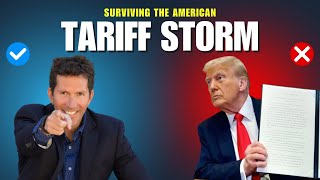
Mark J. Podolsky, John Burnett, and Scott Bossman argue that tariffs and economic uncertainty create buying opportunities for raw-land investors. Land acts like gold, owner-financing limits downside risk, and recessions produce motivated sellers at discounts. You can start small through partnerships, wholesaling, or owner-finance arbitrage.
Chapters
Sa.
Foreign.
You're watching the markets swing wildly, reading headlines about trade wars, and wondering if Trump's tariffs are going to crush your investment portfolio. But what if I told you there's a small group of investors who are actually smiling right now? These savvy land investors aren't just surviving economic uncertainty. They're positioning themselves to potentially double or even triple their returns because of these tariffs. There's a hidden opportunity emerging that over 90% of real estate investors are completely missing and has nothing to do with residential properties, commercial buildings, or even traditional development. And in today's episode, we are revealing exactly how these tariffs could create a perfect storm for land investors who know where to look and the uncovering. And we are uncovering a few specific regions where this opportunity is already starting to unfold. Whether you're already investing in land or just curious about how to protect and grow your wealth in uncertain times, this is one episode you can't afford to miss. It's nightcap, fellas.
Cheers.
Cheers. I'm joined this evening by the one and only. Where is he? Here I am.
I was just hiding.
Handsome Rob, John Burnett. John, how are you?
I'm doing great. I just had a little Internet, I guess. We had an Internet blip in Northern Idaho, so I've been gone for five minutes, but it's been great.
Well, I felt the void. And now you're back.
I know. I felt it, too.
And then, of course, dude, Buddy, the nightcap OG Scott Bossman. Scott, how are you?
I'm doing well, Mark. I'm excited to be here tonight.
I'm excited. We got a really great show. And unfortunately, the zen master, Mike Zano is off living his best life and cannot join. But I think we've got a great. A great topic because, look, no matter where you are politically and this is not going to be a political topic. And the reason being is I don't read the news. I'm probably the most, like, the. The most uninformed person right now. I know what tariffs are. I understand the reasoning behind the tariffs. But as a land investor, it don't matter to us at all. So let's talk about why these tariffs could make land investors rich and how you can also benefit from it. So here's the deal. Just quickly, John Burnett, you and Val lose any sleep past couple days watching a trillion dollars of value go away from the stock market?
No, we didn't.
Didn't bother you, dog. I mean, we lost.
We lost sleep from our baby.
That's it. Yeah. Okay, now, dude, buddy, you And Aaron, biting, biting nails, looking at the market, watching the ticker go, think, oh, My God, my 401k. What happened?
You guys hear me? Am I back?
Yeah, you're back.
Okay.
Yeah. No Mark. No nightmares on our end. No. No real biting of nails. I. I have thought about maybe some family members who are heavily invested in, in the stock market, that type of thing. But. But personally, no, no. Huge worries.
Yeah, I mean, I felt the same way. My partner, Lanny, she's heavily invested in the stock market and she's been having just a ball the past, I bet. And now the sleep ain't so great. And So I had 100 sleep score last night because I have literally one stock and that's it. I have Apple, which I've owned since I was 13 years old. Wow. That's it. So I don't care. We have all our net worth into raw land. And the great thing about it is that it cash flows, we have no debt, interest rates can do whatever they want. It don't matter to us. So what's really cool, it looks like John's frozen, by the way, is that if we do go into a recession or deep depression. Right. The world's on sale and land investors can take advantage of this because there will be so many people that maybe they're sitting on the fence waiting to sell their land because they was going to go up in value. All of a sudden they feel poor and they're like, oh, maybe I'll sell that land now and get out of it and take some cash and do something.
Right?
And land investors can take advantage of it. So, dude, buddy, great episode on Trump's tariffs. Blake, it doesn't matter. It literally doesn't matter.
Yeah. And I think if we even dial it back a little bit and just talk about, you know, why is land good to invest in the first place? And really it just comes down to the fact that, you know, land is a hard asset. Right, right. It's, it's tangible, there is a limited supply. And, you know, unlike stocks or crypto, it's just, it's just much less risky and you can rely on it more to not disappear.
Yeah, exactly. You know, what's interesting about that is I was reading some, some stuff by Ray Dalio and, and, and he was saying, you know, in times like, of uncertainty, people flock to real assets. So precious metals do very well. Gold and silver are having their day. But what else is a, a precious limited resource? Raw land. And so you're going to see a flock to safety into These assets, as you have turbulent markets, nobody really understands or not. They don't understand, but they really can't predict what's going to happen if we go into a major trade war with China and how these tariffs are going to affect us in the short term, in the long term. And so with uncertainty, where do investors go? They go to cash, they go to gold, they go to silver, they go to land. And so the value of our land is going to increase, while the people who own land and might need cash are more likely going to end up selling to us.
Yeah, I think it's definitely. It definitely may pose an opportunity for land investors to buy land from people that we're going to be solving problems for. Some people buying their land that they don't want anymore. It's interesting, Mark, because a lot of the people we buy land from, they're not very emotionally attached to the land anyway.
Not at all. It's not like they're living there. It's not like a house.
Right.
Yeah. They're most likely haven't visited the land in years, if ever.
10, 20, 30 years, ever. Right. And then something like this comes along that, you know, may be the catalyst for them to finally get rid of it, and we show up as a solution in their mailboxes during a time of need. So I think, you know, we're going to stay the course right now, and it's business as usual for sure, and we're definitely going to be hitting, hitting our direct mailing campaigns. Can you hear me?
I can hear you.
Uh, oh, now where's Mark? Mark's there, but he's not there.
Oh, now he's gone. Oh, I'm on the top again. There we go.
There you go. So my Internet just froze.
The streamyard issue might be a Streamyard issue. I don't know. It's a little laggy on my end.
As well, so I just want to blame Streamyard. So it's not my fault. That's my plan. Yeah. Not my fault.
John, by the way, you're 10 minutes late and we're, we're heavy into this discussion.
Okay. Yeah, I mean, I'm sure you guys handled it really well.
Yeah.
So, John, how. How have sales been going for you and Good. And acquisitions going for you? As in, in the turbulent times of, of tariffs.
So, yeah, I mean, yeah, like, I had, I don't know, like, since the tariffs went into effect, we've had, I don't know, 65 grand in sales. So I guess. And I mean, granted, like, so that's that's actually good for me.
Yeah.
Yeah.
So, I mean, it hasn't. It hasn't impacted me substantially at all. Now I do find, like, I think you guys in. In my. As I was blipping in and out of Internet land, I heard you guys talking about uncertainty. And that's kind of one thing that I have found is that basically I feel like when things are up, there's a level of predictability. When things are down economically, there's a level of predictability. But when people don't know what to expect, that's kind of where I see. I saw a slowdown leading up to the election in sales a bit, and then on the other side, it picked right back up. So I do find that in, like, a little period of uncertainty, sometimes I'll see a little bit of a lull, and then things just kind of pick back up once people kind of feel like they know what to expect, you know?
Yeah, absolutely. All right, dude, buddy, I got a question.
Okay.
Your best friend from college calls you up and says, dude, buddy, my 401k is, like, down 75. I'm really worried is. I know you've been doing really well in the land business. Is now a good time to get into the land business, or should I wait until the, like, the smoke clears a bit? There's more, I don't know, certainty in. In the market. What would you say?
Yeah, that's a good question. I think the Money in the 401k, I might leave alone and wait it out, if you can. Right. But. But, like, if you're looking for. For an investment, if you've got some savings that's sitting in a bank account doing nothing, if you got even some home equity, that's, you know, a lot of us, as we get older, into our 40s and 50s, we have a lot of home equity. Like, how do you make that work? Right, well, land investing is a great place because, you know, Mark, we talk about all the time. We make money on the buy, and we're literally buying these assets at 25, 30 cents on the dollar. Right. And. And we can just. I mean, you can just. We have. We sell to land bankers. I can't tell you how many repeat buyers we have. They just want to buy land and stack it up in a portfolio and let that land appreciate over time, because to them, it's maybe a safer place to park their money. So I think there are a lot of great reasons to invest in land. I think a lot of people are probably saying right now, okay, well, look, look what's happened in the stock market the last week. Now is a really great time to invest in stocks. But it'd be interesting to see like, what if we took, you know, 10,000 and invested in the stock market right now at a low point or the lowest point, and you take $10,000 and invest in land right now at 25 cents on the dollar, where would that be in five, 10 years? Be kind of interesting, wouldn't it?
No, absolutely. I, I know what would happen. I mean, Eric Peterson did a, a whole year competing against his son with a thousand dollars and his son was buying crypto and doing options and buying stocks and he came out of the gate hot. And then Eric made 100 grand in land.
But he started, Mark, he started with $1,000.
You started with a thousand dollars.
I know at the end of a year he had a hundred thousand dollars in enterprise value.
Yeah. Which is insane. And so. It's insane. Okay, so John, same question to you. Your best friend comes to you and, and says, hey, is now a good time to get into the land business? Because I'm, I'm feeling like I could get laid off. Right. You know, I, I don't know how these tariffs are going to affect my company. Right. So many big companies that rely on these imports or my E commerce business, everything's going to go up. And as prices go up, we're already in an inflationary environment, people are going to not buy as much. Is now a good time to hedge and go into the land business and start creating cash flow for myself with this passive income with raw land?
Yeah, I mean, I think so. I think for one reason just being that like, just in terms of, like to delay ultimately costs quite a bit, right? So the longer you delay, ultimately that's, that's lost income, Right. Because that is, that is time, that is that you are going to spend not working on this, not building your business. And ultimately those months, those years that you take to be build up, those are months and years that you won't be getting income out of your business in the future. Right. And so I think that that's, that's one thing. And then I do think like there is a level of certainty and predictability and I think when it comes to land investing and the fact that like a, like there's, there's deals to be had, right. And even if the economy takes a turn, right. That's where there are more deals to be made, right. That's when there are lots of people that are looking to liquidate you know, and where you can find like lots of opportunities to acquire, right? And then I think it's, you know, it's effectively the big question is like what happens if there's, if there's a recession, right? Like that's ultimately what it comes down to. And the nice thing is that we've kind of got you as, as living, breathing proof of what that looks like, Mark. And so like we kind of know like, we know like this model has through a recession, we know what to expect. And the reality is that even if you sell property with owner financing and you get people to default, you keep the property, right? You keep the property, you resell it, and so you end up on top. Even if you, even if your monthly takes a, takes a little bit of a dip for a period, you ultimately end up in a stronger spot. And so it's all kind of baked into the cake. And we kind of know what to expect if that were to happen. So even, even in the midst of uncertain, we kind of know what to expect, you know.
Yeah, absolutely. And it's so funny because I think about this all the time and why I feel so good about sort of being contrarian in my investing and not buying assets that could appreciate or could go down. And because I don't want appreciation. It's, it's insecurity. So I, I have literally no effect on the stock market and all these things that are, that are going on are literally outside my control. If, you know, tariffs, unemployment, interest rates, none of these things do I get to choose. And yet I'm going to take my hard earned money, put it into this market that I have no control over, and hope that over the long term as it goes up and down, up and down, that, you know, 50 years from now or 40 years from now, I'm gonna have a, a nest egg that I could use. Why not shortcut it? Why not just create cash flow of the same amount? So If I have $10,000 a month in passive income for the rest of my life, that's 120, 000 a year that people have done in, in 12 to 18 months. So let's just do some math, okay? This will be fun.
Oh, I like math. I like what I like. Math with Mark. Math with Mark. New segment on.
All right, so we take $120,000, okay. And we divide by, we go to the bank, we say, hey look, how much money do I need to deposit? And I don't want to touch this principal, I just want the interest. Just want the passive income. And they'll say, oh, you know, interest rates are pretty good right now. We're going to pay you 2% of the savings account. Like, okay, 2%. How much do I need to deposit to get. Throw off $120,000 a year in passive income. And they said, oh, no problem. Deposit $6 million and then 2%, you'll. You'll get $120,000 a year. Well, we can do that in a year. How long would it take you to save $6 million then, even in the stock market, to convert then into a safe cash flow that you can use and live off of, of $120,000 a year? Not to mention the dollar and inflation and our purchasing power going away. We have control over this. We can buy more land. We can sell more land. And I don't know, what am I missing here, Scott? Dude, buddy, what am I missing?
I mean, I think we could. We could help others make a good return on their money as well, right?
Yeah, exactly.
We always need more money to buy land. So, like, help me and I'll help you. Let's. Let's do some deals together. And, you know, I know, Mark, you have a fund, right? Or you don't have fun? Well, you've done for your coaching program. But, but, but, like, land is. We all want to buy more land. Just buy more, buy more, buy more. And it's always helpful, you know, it's helpful to use other people's money in that sense, and we can provide with them, provide for them an opportunity as well.
But isn't now the time to, like, start your own land business?
Totally. Totally. Time to start your own land business because. And we talk about this all the time, you know, people are of the belief that. Is there really that much land out there? And can you still buy it at 25 cents on the dollar and short answer, yes and yes. Right? Like, the market is. Market is absolutely huge. Mark, you didn't want to teach people initially because you're like, why would I invite competition to my marketplace? But then you sat down and did the math, and you're like, the market is so massive.
It's so.
It's so big, and there's so much opportunity for so many of us that, yes, now is the time to invest in land, because you can buy these assets at such a deep discount, and you can hold them over time. You can do what you want with them. You can hold them, you can own, refinance them, you can sell them for cash, which Mark hates, but you can sell Notes.
Right. I don't, I don't hate it. I don't hate it. I just don't think it solves the problem.
Right.
I mean, sometimes if it's, if it's gonna solve your problem, great. But I think long term cash flow solves the problem because we want to solve our money problems and our time problems. We don't just want to solve our money problems.
Yeah, yeah.
And I mean, raise six kids, right?
I think so. Mark, I've only been doing this 10 years. You've been doing this 25 years. My perception of the land business over the last 10 years is it's just very, it's very stable. Like, I can count on it. I. Every year I see growth. And in the last 10 years, there has been, there have been a few bumps in the road. Right. There was a pandemic when we didn't know it was going to happen initially, but then a lot of us had record years because people, I don't know, there was a lot of cash in the market at the time and people maybe wanted a place to escape to. And then last year there were. And currently there are fears of inflation. But even in this environment, land has been very strong. At least our model has where we can sell land for one or two or 300 bucks a month. Because even, you know, even in this environment, there are a lot of people out there that can afford that type of payment. And then you lived through the recession of 2008 and yeah, this was so profitable.
I survived. I mean, I learned some hard lessons. I write about dirt rich about, oh, I don't know, maybe save some money. Don't spend all your money, like. But I had never gone through a cycle. And then, you know, luckily the. I got a big ego kick in the head, which turned out to be a blessing. Yeah. But what saved me was I didn't have that where, you know, my land friends who were really riding that wave that went into debt to buy their land, they had, they had to get jobs and, and I, I continued to, to do it. I mean, I just had to really, you know, adjust to my lifestyle. Like, oh, maybe don't spend all your money that. When you're making a lot of money. That, that, that seems reasonable. Like, if my parents are watching, you taught me better. You know, I just had to figure it out myself.
You know, we all have those lessons to learn, I think.
We all.
Yeah.
It's so funny because, like, we all know it intellectually. It's like, oh, but life has to teach you the Lesson we need, we all need that road rash to really sink in.
Yeah, yeah.
The joys of parenting, too. Like, you know how many times you tell your kids, you know, do this, do that. Oh, I did. I see. You're making a mistake. Oh, no. They're like, okay, they're gonna have to learn for it on their own. And then they go, okay, dad, you were right.
It's just part of it. Right.
Just part of it. Yeah. So I think it's a good segue then for making sure that your business is political proofed.
Right.
So that no matter who's in office, who's leading the country, who's making decisions that you agree with or disagree with, how do you politically prove your, your life? And I think this is the answer is let me start a business I control.
Sorry.
Yeah, the dog's like all excited. Yes, this is a good point he's making. And so, you know, all this uncertainty between politics, the market, AI, now's the time to start a business. Buy assets 25, 30 cents a dollar and make them cash flow. And you build systems and automation, hire virtual assistants to do the work. And you, you're free.
You're free.
And the, the, the worries, the financial worries go away. I mean, John, look at you. You're 88 years old. You have the stress. You look so young.
Why?
Because you don't have to worry about money. No, but 80 years, like what I'd be curious, what are your biggest worries right now?
I mean, I think like, as far as my biggest concerns, it's always just around, like, wanting to do the best I can for my kids and raise them. Right. Right. And just be, just show up, show up as a husband, show up as a dad and, and make a big splash. Right. Like, you only live once, you know, and so that's kind of, I think what it comes down to me, for me is just doing, doing the best I can, so.
Right. But, but you're not worried about somebody firing you this week?
No, it's not.
Like, John, you know, we really need to adjust our lifestyle because we don't know what's going to happen.
Right.
I mean, that, that's, that type of psychic freedom. I think it's priceless in a way when, yeah. When people are just so worried and anxious and it sort of becomes a cloud in everything you do in life where, like, I'm going out for dinner tonight and I don't think about it. Right. Where somebody else like, oh, my four, okay. Went down 50, like, I don't want to Go out for dinner. I don't want to spend money. I don't want to do anything. I just want to, you know, be anxious. And there's just that sense of no agency, no control. And this is a perfect opportunity to really find the solution to it. So, dude, buddy, what are your thoughts?
I mean, it goes back to your question, you know, do I have worry? And I would say, you know, I don't worry about much right now, which is nice. I. I see others worry, and I can empathize with them because I've been there.
Yeah, right.
And that's. It's. It's actually very freeing. You know, I actually. So I work just a half morning a week as a. As a pt, and I meet people who, you know, they're maybe providing physical therapy services at a. At a place of work. They work for a company, and they're providing therapy services at a clinic or a nursing home. And since I quit my job, Mark, in 2018, there have been four company changes at one building. And I know a lot of the people that just go, they work for a company, and then the company folds or they move on, and then they work for another company, and there's always this period of uncertainty that they. That they have to experience, and I've done that before. And it's hard. It's hard on your family because, oh, you get called into a meeting today, and guess what, guys? In one month, you no longer have this position. So now you have to get another one, and I don't have to do that anymore. And it's the. You know, that's one of the most amazing feelings I have, is that because I went into land investing, I'm, like, I say. I say this a lot, but I'm the captain of my fate, right? Nobody else is controlling my fate. I'm the captain of what I do this month, right? If. If I don't buy as much land as I should, that's on me, but it's on me. It's not on somebody else. So there's a great sense of ownership that comes with this business and freedom and control that a lot of people don't have. And I'm thankful for that. And I empathize for others who are not in that position. And that's why I think, you know, Mark, your. What you have done for. For all of us is just so powerful because it helps a lot of us realize that we are more capable of that than maybe we initially thought.
No, thank you. And, John, when Scott was talking, am I the Only one thinking I could be a Somali pirate in his life and be like, I'm the captain now.
I think I can safely say that you were the only one thinking that.
Don't get the inside baseball. It's Captain Phillips with Tom Hanks based on a true story of Somali pirates. Yeah, yeah, so, but I digress a.
Little bit, but that's okay.
But it's okay because it's nightcap and it's fun and it's.
Exactly.
That's what we're supposed to be doing. So, John, while Scott was talking and you know, having that agency in your life, do you remember a time where you didn't feel like you had control and how did you, how did you manage it?
Yeah, I mean, I do. Like, I can remember professionally several instances. Like, I think one thing that came to my mind while Scott was talking is just the, like, when you're looking for a job and applying for jobs, it just like, it just sucks, right? Because you're like doing so much work and only one thing that you do ultimately pans out into anything, right? Like, and, and you're not getting paid, right. And so I remember periods of, of doing that, right. Looking for, looking for jobs and then periods of, yeah. Being uncertain as to what my future held in a specific industry, you know, and it is really nice to know that I'm in control of that now, right? Like I'm, I'm my own agent, I'm my own, I'm my own boss, right? And I control all of that. And so I have the flexibility now to not show up on a specific day. I could take days off if I need to. I've got full control of, of all of that. And so it gives me agency, it gives me flexibility. I can put in the, if I need to put time in, I could put it in when I want, where I want. And so it's given me the flexibility to, to spend the time on the things that I want to spend them on, right?
So yeah, no, I love that. And it's so great when you own your own business to just wake up one day and say, you don't give myself a raise. Like, I, I don't, like, I haven't worked at a company in what, 25 years. But I do remember people were like getting raises and bonuses and it was like, not that much, like, like inflation based raise, like 1% or 2%. I don't know. Put in the, in the chat, what is, what is a typical raise at a company these days? But it's not like, what we can do where we can just buy more land and be like, all right, I'm gonna give myself a 50 raise this year and I can spreadsheet it out because I know if I buy a hundred thousand dollars worth of land, it's gonna cash flow $10,000 a month in 12 to 18 months. I want to make more. I just buy more land and sell more land. And ideally I get to the point where I'm not even the one doing it. That's my team is doing, you know, running the playbooks that I create. And I'm just sort of watching it and managing it and massaging it and breaking stuff.
I love that Chris Black says 2.5 to 3.5% annual merit. That's, that's pretty good, Chris. I remember getting, you know, like 1% back in the day, 2%. That's pretty good.
That's pretty good, Chris. But like, it ain't as good as, like, but what we could do.
Well, you know, Mark, you know how I view a lot of terms deals now is like, if I sell a property for, you know, five hundred a month, right? I just gave myself a six thousand dollar raise for the year.
Yeah, yeah, yeah.
Like, I love, I love thinking about it like that. Like, I'll go in and say to Aaron, hey, we just sold property for, you know, 500amonth. That's, it's kind of a neat way to think about it.
No, it's really cool. It's really cool. Now on the flip side of that, you know, we could be like, hey, look what happens if you, if your note defaults, right? Well, all right, we have a temporary dip in our passive income, but our, we still have the asset. So our cost basis has gone down on that asset. There's no cost to foreclose. We just resell it. We extend out our roi. So imagine the way I would think about it is Trump declares tariffs and all of a sudden people, instead of our stock, the stock market going down, our land portfolio assets actually.
Get better.
And go up in value because the nervous Nelly borrower might default now, but they lower our cost basis and we make more money.
Or it's possible, Mark, land in the areas we work in could become more valuable because the intent, one of the intents, right. Of the tariffs is to bring industry and production and employees back to America. Right? So, like, what, maybe land in the path of growth is, is going to inflate.
Because of that. Absolutely. And we know over time land does inflate because of inflation, right? Yeah.
John, yeah.
What are your thoughts?
Yeah, no, I agree. I mean, I've done very well from like, I mean, I sent you a, I sent you a vox a while back about for the notes that like, I went into Geek pay and added up the total amount of payments I had received prior to default for everybody. I defaulted and it was a very large amount of money. It was like very surprising to me, right? Like, and I mean, I, like, I made a big sale the other day and it's all like the cost basis of the property had been covered, the property had defaulted, and then I sold it again at twice the value of the previous note. Right. And so like, I don't know, like, I've done very well. I don't have an appreciate. I tell people, like, I don't make an appreciation play. Right. It's not what I'm trying to do, but I've done okay, like from appreciation. And it's because, like, I've had so many situations where there's been a default and then I go to market the property and I review current values for properties in this area and I realize, oh, it's gone up like a good bit. Right. And so I've done, I've done pretty well.
Amazing. Amazing. Yeah, I, I remember, I think it was maybe two, three months ago, I think I told you guys about that 80 acre parcel that defaulted and we had sold it, I want to say, for like 40 grand. And then our cost basis went down to 4 grand on it and now it's worth 80 something thousand dollars. We resold it for 80 grand. Like this. This business is kind of like a fine wine business. Like, the longer you're in it, the better it is. But Kate Taylor has an interesting question. Should we answer it or should we just ask?
We actually have a. We actually have a number of questions coming in which I. Which I like. Let's engage.
I love it. Yay. They're engaged. Yay.
Here's Kate.
If I'm starting out, what amount of capital is needed to start to get to 10,000 per month for someone's very limited time due to a W2 job? That's a great question. I have a, I have an opinion. But Handsome Rob John Burnett, you want to take.
So my general thought is that like, you start where you are, right? And so part of it, the big thing that isn't on in this question is time frame. Like, how soon do you want to get to 10k? Right. But there's a lot of ways to get creative and maintain momentum in my mind. It comes a lot more down to timing and when you're getting started than it does to how much money you're actually bringing to the table. Right? And so I said this, I think, a few episodes back, and I stole it from Mike Zano, who's not here. So I'm going to steal it again.
So I think we should steal all of Mike's stuff.
Yeah, we should just do it. But, like, you know, one of the things that Mike has told me that I really think rings true. Like you can buy properties for $500, and you can buy properties for $5,000, and both work, like, in the early stages of your business, it's more about just building the machine, right? Let's build the machine. And we can build the machine with $500 things. We can build a machine with $5,000 things. And both work, right. You know, generally my thought is that, you know, if you've got like, five grand, that puts you in a spot where you can both acquire property and market. Right? And we can. And we can effectively get things rolling. Right. But at the same time, like in my own business, my general philosophy has always been I want to maintain momentum, right? And there are ways that you can do that regardless of where you stand from a capital standpoint, right? So we've done land arbitrage, where I've purchased property on owner financing. I've sold that same property on owner financing. When you net everything out, the holding costs are extremely low. And so I've utilized that so that if I didn't. Even if I didn't have the funds to acquire property in a specific instance, I can still acquire and then sell and then make a good profit off of those properties. The other thing is, you know, like Scott was saying, partnership deals where somebody else brings the money to the table and then you split the profits, right. And you get a win, win situation on either end. And so there's really a lot of opportunity for creativity, right? So regardless of where you stand, you know, there's ways to build and maintain momentum in this business.
I love it. I love it. Dude. Buddy. John might have given, like, a really definitive answer to Kate, but do you have anything you want to add?
I think the only thing I would add is that, is it 10k per month on notes? Is it 10k month per month on cash? Because you could be a wholesaler to get to 10k a month pretty quick, in all honesty. And, you know, if. If you buy land for. For a thousand bucks at 25 cents on the dollar, you can sell to me for 50 cents on the dollar, do that a few times a month and move on to the next deal. And you know, you could get to 10k a month revenue pretty quick with that approach. I think most of us like the passive income lifestyle, we want to build that up. Right. If you were going to sell, if you wanted to get to 10,000amonth passive income with land, you know, I think you're going to have to invest. I don't know Mark. Like I think we've talked about, you know, you might need like $100,000 invested in land to create $10,000 a month passive income. But like John said, there are multiple strategies on how to raise that capital to buy more land. You wholesale, you sell notes, you get other people's money. Right. So I think I would answer to Kate, 10k a month, what amount of capital is needed? Like you can start this with a couple thousand and grow it from there. Eric Peterson started with a thousand dollars and a year later he had a hundred thousand dollars in, in, in value. Right?
Yeah.
So if you start with maybe 10, that would be amazing.
Amazing.
Yeah.
I mean capital is not the constraint in this business. The constraint in this business is exactly, it's right here. And it's your, it's, it's, it's your willingness to be uncomfortable and embrace the suck and start something new. And so often in time like I have this happen to me. I go out, I play golf, I hate it. I think I should be better than I am. But the people who to just let it go and they like go out and enjoy it and they put practice and their, their intent is just to get better at it a year later. They're good golfers. As, as long as you stay with it Kate. And you, you know, you devote sometime like I don't know, hour or two a day, it will move the needle. And there's so much creativity like these guys are saying to get you to where you want to be. But I would say that it's, it's really important to be really clear on your why. Why do you want to do this? What does $10,000 a month solve for you? And is it that important where when you like, you know, you get knocked down, will you get back up to, to do this business? And so I think it really starts with that burning desire, that strong why and all the so called problems that you might face or they'll go away because you'll figure it out. And of course you know, we can smart cut it for you too. Like we could be your Sherpa. But like that being said, you, you know, this isn't brain surgery either.
Mark. Mark. I think what I'd say to that also is, Kate, I was where you are. I had a W2 job. I had four kids. I was burning the candle, both ends. My why was so strong, like Mark said, that I committed to myself to get up at 5 in the morning for a year. And, and if you do that for a short period of time, you can reap the rewards later. So when people say they have limited time, I would just encourage you, you know, to, to really think about what your goals are and, you know, find the time, carve out the time to create those goals for yourself.
Yeah, I mean, John, you were in the same position. I was in the same position. We all started. This is side hustles.
Yeah. Yeah.
And neither. None of us liked our jobs. And so we did what it took to, to get out of it. Oh, Guy Ross. Tippy. Fantastic. One of our coaching clients. What's up, Guy? In rough economic times, would land not be a stable coin, so to speak? Some of the people put their money into that they know will go bust. I mean, it is dirt. It's tangible. Seems like an asset people would run to in uncertain times. I mean, Guy.
Raw.
Stupid.
Are you an economist?
Yes.
You're correct. You are correct, sir. Absolutely. It is. I mean, you know, for those of you that don't know what a stable coin is in the crypto world, that means when there's turbulence in your, in your cryptocurrency, you can buy what they call a stable coin that's tied to the dollar and isn't going to go down in value. John, do you want to disagree?
Love it.
No, I think that that's really true. I think about land like something like gold in the fact that generally it's not radically inflationary. Right. There are times when it might be inflationary. So like if you get a big, like if you've got a big development or something like that. Right. Like there might be some kind of an inflationary force on something like land, but generally it's just. It's stable. It retains its value Right. Over time. And so, I mean, I say that, but like, I mean, my, my land's gone up in value pretty substantially. So maybe that's a, maybe that's a counter example. But I, I do think of it as like something that's relatively stable, something that's predictable, something that's generally not going to go down in value. Right. And so it is something that. That I think and is. Is probably. I think a note to all of us in. In times of uncertainty to really emphasize that to our. Our potential buyers as well, that that's one of the reasons that it's something worth investing in.
Yeah, absolutely. Such a good point. So, dude, buddy, this is a good question. George hall, top three books to read. To help get out of my head and start and keep at it until it happens, let's each pick a book. So, dude, buddy, you want to start one? Like what? Like, what's like the Mindset book. And by the way, feel free to say dirt rich and dirt rich too. Let's just shamelessly plug.
Those are a given.
We'll give five.
Yeah, let's find those are the top two.
Yeah.
Yeah. So this is a little bit older book, but it left a huge impression on me during my first year or two in the business. It's called Procrastinate on Purpose by Rory Vaden. And the title, in my opinion, doesn't. I don't. I think it could have been a better title, but really what it talks about is, oh, I should have picked a different one. I just thought of a different one.
But anyway, I'm gonna give like 10 bucks by the time we're done.
I know, I know, right?
A bonus book. Like what. What do you like better than Procrastinating on Purpose?
So Procrastinating on Purpose is really applicable to the land business because he talks about. It's kind of like dirt rich too, Mark. He talks about automating, delegating, eliminating things in the business that you don't need to do anymore. So it kind of helped open my mind to like, the whole notion of the four hour work week, which when I first read that, I was like, intimidated. I'm like, that's not. That's not possible. That's not my. That's not my bonus book, though. My bonus book is the Cash Flow Quadrant by Robert Kiyosaki. So if anybody's never read that, that opened my eyes completely to. I was. I was totally on the wrong side of the quadrant. Right. I was in one quadrant. I wasn't in both sides. On the. On the. What do you call that line? Not the equator, but the prime Meridian.
Prime Meridian.
I was. I was all on the left side of the prime meridian, and I needed to be in the lower right hand quadrant. So that those two books, Cash Flow Quadrant by Robert Kiyosaki and Procrastinating on Purpose is what I would recommend to people.
I love it. I like it. John, you got. You got a book.
I mean, so cash flow quadrant is what set Valerie and I on this journey as well. Right. So we listened to it on audiobook and on a road trip. By the end of the road trip, like, our whole mindset had shifted, and that's when we started to look at different models and ultimately landed on land. But I would say so since Scott cheated and gave two bucks, I'm going to cheat and give two bucks. So you're getting, I mean, at least seven now.
Right.
But I'm going to give. So mine are going to be more in terms of discipline and mindset as you're working the model. Right. And the two that I would give, one is Eat that Frog by Brian Tracy, which is like this thick. It's very small, and so you can read it very quickly. But basically the principle is that you want to work on the right thing. Right. When you're working in a business like this, it's really easy to get sidetracked by the littlest things that are not important, that are not moving the needle for your business. You can get so sidetracked by, like, I've got to get the logo designed just perfectly. I've got to focus on this, that the other thing. And in Eat that Frog, it is about basically taking the thing. So taking your to do list, ordering it from what you want to do the least to what you want to do the most, and then that's your priority list for the day. And then you build momentum, you maintain that momentum, and you hit the end of the day feeling extremely good about yourself. Because usually the things that you want to do the least are the things that move the needle the most. Right. They're the. They're the things that are most impactful. So that's my book number one, and then my cheat book number two. It's going to be extreme ownership by Jocko Willink. So that one's had a very big impact on me as well. So the idea of just owning everything in your business and no excuses, just say, this is the way it is and I'm going to take ownership of it and I'm going to make it happen. Right. But I think those two have been extremely beneficial to me just from a disciplinary standpoint.
So.
So, all right. Since you guys gave those great books and they're really. They're really fantastic and practical mindset books, can I go a little woo woo? Because he said, get out of my head. Is that okay or sure or no? I feel, I feel like I'm gonna get trouble for this.
Yeah.
But I'm gonna say it anyways. Okay. I think if you're worried about being in your head a lot, there's a couple books that really talk about how to get out of your head and not really take these thoughts so seriously and not be so attached to the thoughts. So a book for me that has really been instrumental in this is Anthony Demello Awareness. It is a phenomenal, phenomenal mindset book and not very thick at all. Another one is the Untethered Soul by Michael Singer, which again. Yeah, I see. I see the look on John's face, like he's going very woo woo.
As long as we're not getting into astral projection, I'm good. Yeah, yeah. But.
But I. I think a more, A more practical maybe mindset book is Gay Hendrix, Take the Leap, which Stephanie Dean, you know, that's her nickname now. Let's take the leap.
Take the leap.
Take the Leap. Yeah. So that's. We gave a lot of books. Not three, but all in any of those. And honestly, I think one of the best mindset books is Rich Dad, Poor dad by Robert Kiyosaki. It's a great one to start with. And then go to the cash flow quadrant. I think cash flow quadrant is better. But if you just want mindset, Rich Dad, Poor dad is a classic. Classic. But because he said, get out of my head, I had to go there.
I love it. I love it. I think so. I don't think I've read. I haven't read Take the Leap yet, so I gotta read that one.
Well, I've actually never read Rich Dad, Poor dad, like, which is crazy now that I think about it. It's just cash flow quadrant.
So it's a great read. It really is.
Yeah.
Especially if you're at that point in your life where you're not sure if you should quit that W2. Right. It's great. It's great. I recommend it to Kate Taylor. She hasn't read it. She's like, you know, she quit my Kate's.
Kate's got a lot of reading to do.
Yeah, she's got a lot of reading to do. So does George and George. Yeah.
Mark, this is a good question because this is something a lot of people wonder about is, aren't defaults difficult? And like, doesn't it take a lot of time and money to go through the default process and the foreclosure process on your properties? And the quick and simple and dirty answer is no, which. And so this kind of gets at that. But which states are your favorite to buy in that are most friendly when you have to foreclose? We work in states where it's very easy to foreclose because we use land contracts when we own our finance. Right. And we don't have to record those land contracts with the counties. So it's just a matter of sending a letter. That's it. It's a letter.
Right, Mark?
It's a letter. It's. Yeah. The way that we do it, it's really simple. And oftentimes you'll think, oh, if you talk to a real estate attorney, they say, oh, you can't do this. You have to use a deed of trust and you have to go through the foreclosure process. We've been doing this a long time. And it's a. It's a contract. You got a purchase deal agreement, land sale contract, and promissory note. They all say the same thing. Pay on time and you're going to get the deed. Right. If you miss a payment, no problem. You've got 30, 35 days to cure your default. But then if you don't pay, you keep your down payment. We keep those monthly payments. You've lowered our cost basis, and there's no cost foreclosure. We just resell that property. Simple, simple, simple. We love simple, simple scales.
Does scale, boring scales. Simple scales.
Simple scales. Yeah.
We're all that and more boring and simple.
Yeah.
Gotta throw that on a T shirt. Land geek on one side, boring and simple on the back.
There you go.
Yeah, there you go.
All right, well, let's, let's, let's end with this one, Mark. How do I find. This is from Billy Swinton. How do I find VAs who can do due diligence for $11?
I think you should go cheaper.
You could go cheaper. So there's, you know, there's a few companies out there that will do it. What is it? Is it parcel review.com? i'm not sure if they're $11.
They're more like 20 or 20 or 30 bucks. Yeah, parcel review. There's a land VA for you. There's Landmasters.
Yeah, they're all, they're all offshore. They're all relatively inexpensive, and they're all connected to an American title company. So I would start there. You could also go on like upwork or fiverr and find someone offshore that knows the land business. And they, you know, don't. They might charge $5 to do your search for you.
And, you know, markets. It's getting easier to find people that are experienced now in the land business. Right. It's kind of neat because 10 years ago, when you went on upwork, you're looking for people who, you know, were experienced in the land business. Might have been a little bit hard to come by. Now you go to upwork and you look for people who are experienced. The land business are like, oh, yeah, I've worked for, you know, land investors in the past, so it's kind of cool.
Oh, it's really cool. And I'm not bitter at all. You're all so spoiled. It's so easy now compared to when I started.
Oh, man. I know. It was. It's easier compared to when John and I started, too.
Isn't it? Isn't it amazing? I mean, it's. It's crazy. There's a whole economy for land investors, everything from every aspect of the business. Now there's somebody that can solve that problem for you.
Yeah.
Inexpensively, right? Yeah.
Awesome. Well, I should. Should we look at next week's topic?
Yeah.
What's next week's topic? What are we talking about next week?
I know what we're talking about. I've got it right here.
Well, then you tell us so I don't have to look it up.
Yeah. You know what it is?
What?
How interesting. Using AI VAs and modern technology to remove yourself from the business while making more passively. That's gonna be our topic.
I'm bummed I'm gonna be gone next week. I really want to talk about that topic.
We could use you on that topic.
We could use it. Yeah, exactly.
Maybe. Maybe I'll just show up, you know.
Val's not gonna care.
I mean, if it's enough.
She's got. She's just be like.
I'll just be like, I need to go run to the groceries, make a quick errand, and I'll just, like, poke in from my phone. That'll be great.
Yeah. Yeah, it's fun. Well, I hope everybody got a value out of this topic. And we didn't even go political.
No, we didn't. We stayed very neutral. It was all good.
Very neutral. Yeah, it was good. So I think we should just do like we used to do and just say, let freedom.
Freedom ring left.
Freedom ring Pretty good.
John got it there. John got it at the end. That's good.
Yeah, yeah, yeah.
Awesome. Thank you, guys. This was fun.
Thank you, guys.
We'll see you next week for more fun and hijinks.
Awesome. Loving, everybody.
Love Nightcap.
More from Mark



How to find funding partners: How to Scale Land Without Using Your Own Capital




