Thomas Anglero discusses how to know yourself better through presence and spirituality. He argues that AI reflects its programmers' values rather than having its own consciousness, and explains how technology can actually help you be more authentic.
Chapters
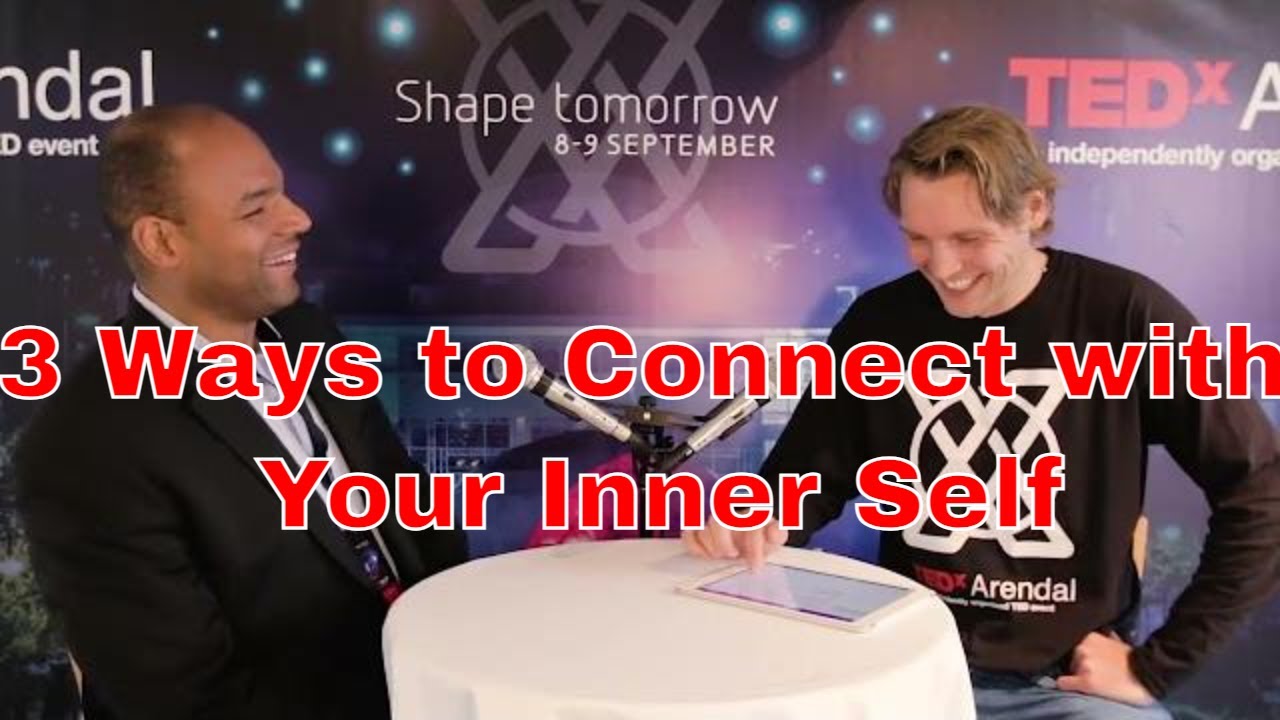
So we're here in the TEDxRandall studio with Thomas Anglero, who just gave an excellent talk inside. And actually, you surprised me because you did not give the IT talk that I expected. You really gave a deep talk about knowing yourself, being yourself, and being yourself more often. And you had this view that technology is allowing you to be you. Yeah. How?
Well, first is the why, right? So why give such a talk now? And that was because the people running this TEDx, they've seen me talk before, and your boss lady Selena told me that She goes, "I know you have something deeper within you." So I would go back and come back and say, "You know, this is some stuff." She goes, "I want you to go deeper." So we did this like 3 or 4 times and I said, "You know what? You want me to reveal my soul?" She goes, "Now you're getting close." So I spent a lot of time really reflecting and to simplify what I have been feeling. And the simple thing was the message I was giving today and that is that technology, especially artificial intelligence, and all this. It's giving us the opportunity for us to be us all the time. But the problem is we're not used to being us. You get all these layers, all these things going on. You know, you're never really you. This is a very heavy question and discussion.
Of course.
But isn't it important? Shouldn't you be spending every moment of every day being all you? And everybody who meets you meets just the true you. That's life. So that was my discussion, but the thing people say, "Oh, here comes the technology guy or nerd or something like that, he's gonna bore us." And no, the outcome of being a technology guy and a nerd guy is the further I go down that rabbit hole of tech, the more I get closer to my spirituality. And that's what I was trying to share today.
And what are these moments that define, you know, us? How do we How do I know who I am?
Every moment, this moment, if you're truly in this moment right now, not just paying attention to what I'm saying, but actually feeling me, then you're having that moment. The challenge is to always be in the moment. It takes a lot of work, but once you get used to it, then you start embracing it and you start saying, "Wow, I want more of this, I want more of this," because it's so wonderful to be in the moment. You're connected to everything, everything's so simple. Simple. Life's problems aren't so complex because I love it. I'm in it. This is wonderful. This is the way life should be. The problem is we, you know, life and business and bosses and food and family and the wife and the da da da da da, you know. But the answer is just to be you. It's so simple but so hard because we don't do it often enough, and most of us haven't done it in decades, right? So Just be you. How often when you talk to somebody, you're thinking while they're talking? Or are you actually feeling them and connecting with them? You should be connecting with everybody you talk. That's my attitude.
Wow.
Yeah, this is a typical interview, isn't it? Welcome to my world.
But I need to ask you this IT question as well.
Let's go.
Why should we not fear artificial intelligence? How can it not be a tiny bit scary?
Okay, so here we go.
Change gear.
No, this is absolutely normal. Artificial intelligence, right? You teach it basically. So we teach it to be good. If you teach the software to be good, it's going to be amazingly good. It's going to solve some of the problems that we've never been able to solve. Improve the planet, improve our health, blah, blah, blah, blah, blah. Incredible. If you teach the software to be bad, it's going to be really bad. Okay? So the question of, "Shouldn't we fear this thing?" You decide. When you drive your car, you decide to drive down the street, and if somebody's hurt, you put them in the car, you take them to the hospital. The car's helping you do good. You go in your car, you decide to drive down the sidewalk and run over everybody on the sidewalk. The car's helping you be bad, but it was your decision. So if we decide to teach the software to be really bad, it's not the software. Software doesn't have a personality. It's a reflection of the person who put the programming in. So the question is always formed as if this thing is a living entity. It's not a living entity. It's a reflection of the programmer who said, I want you to do That's it. So it's not a living thing. Stop talking about it as if it's a Terminator and it's got self-conscious. It does not have self-conscious. If it acts or mimics self-conscious, that's because somebody put an if-then statement. If you experience this, then act that way. Those are just algorithms. It's not self-conscious. It's a reflection of the programmer. So the question is, why did that person program it to be bad? Not, why is it bad? Take it back further. Was that nerdy enough, or should I use some heavier words for you?
That was good words for me.
Okay, good.
So artificial intelligence can— you were really clear on this, and I'm reading this into your answer right now. Artificial intelligence can never replace you. You went out with with this beautiful sentence: Life has always been and always will be all about you.
Yes.
Thank you for the interview. Thank you, Thomas Anglero.