Adversity Creates an Incredible Life | Thomas Anglero
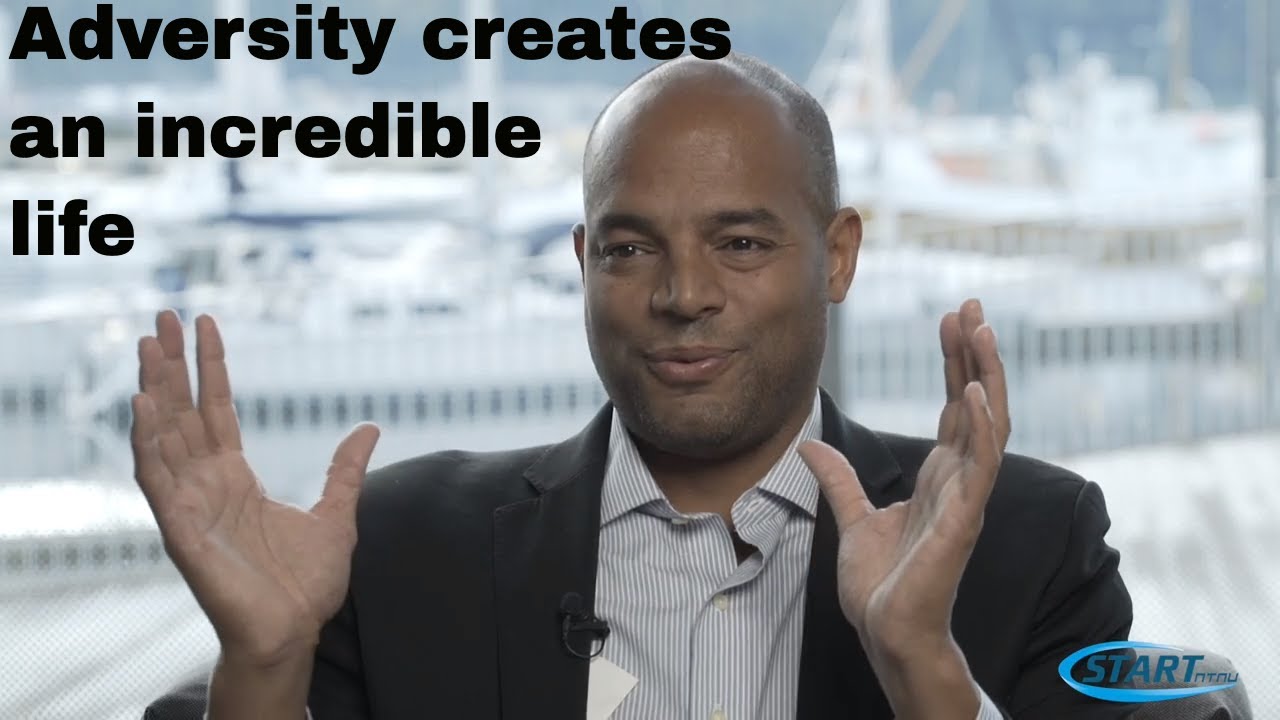
This content was created by Thomas Anglero. This content was uploaded by Thomas Anglero. This is a YouTube talk/interview titled "Adversity Creates an Incredible Life | Thomas Anglero" (created 2018-12-13). The excerpt is an English conversation featuring Thomas Anglero with at least two interviewers (labelled Speaker B and Speaker C). Content includes personal anecdotes (a joke translation experience in Japan, early rejection and culture shock in Norway), a turning-point moment of taking responsibility, reflections on mindset, love, regret, and encouragement to follow your dreams — presented as a motivational talk/interview.
Chapters
So cultural.
Yeah.
So I got a great story for you. Alright, here we go. I'm in Japan doing a speech, of course, doing all these things, and beforehand they had interpreters, and someone told me, make sure you always talk to interpreters. So I'm talking to interpreters, I say, you know what, I got an idea. I said, I got a joke, one joke in my presentation, because Japan, you guys don't laugh too much. But I go, this is my punchline. And I literally had to explain the joke to them and they had to translate it beforehand. They go, thank you so much, Thomas Anglero-san. And the joke was this, this is many years ago, remember when mobile phones were super big and heavy? And I said that the mobile phones here in the world, everybody thinks they're really stylish. These big mobile phones in my old neighborhood, in the ghetto, We use them to beat the shit out of people. And they said, they literally stood there to translate, going, ah, because they figured out how to translate it. So when I did my presentation, I got to that punchline, everybody laughed. And then they later on told me they actually told a totally different story. That was the only way to translate it. Culturally, it doesn't work.
No, it doesn't.
No, you don't beat somebody over the head with a mobile phone. So they came up with another story that was so culture, you know.
You thought though, when you were there. That's your, uh, you—
yeah, yeah, yeah, that's your joke.
Just worked.
It's totally cool. You respect cultures. I mean, living here in Norway, being a foreigner, yeah, respect culture. Different doesn't mean bad, it's just different.
Do you sometimes feel like being from New York, being more international than Norwegians, and more maybe like you're from a bigger country, more citizens? Do you feel like that gives you like a—
No, I've never thought that way.
No?
No. You're thinking about it completely wrong. You don't understand. The way I think about it is right now we're talking, what an opportunity I have to learn from you. That's it.
Yeah.
Every time I meet somebody, it's what an opportunity it is to learn from that person. Yeah. It's not this, you know, I come from New York and you're from Little North— what the hell is that crap?
You know, do you think that your mindset comes from, uh, like we talked about, coming from a poor neighborhood and being more open-minded in that way?
No, my mindset comes from my mistakes. Yeah, a lot of mistakes, especially living in Norway. A lot of mistakes. Um, came here with very much a not a Norwegian mindset and struggling and fighting the culture. So I could tell you what happened to me. Things were not easy here. Hard to get a job. I remember my first job interview in Norway was with Shipsteadnet. And I was on the phone with them and they said, "Come on in. We're going to sign the papers." And I came in to sign the papers. The guy looked at me and he goes— started asking me interview questions. I go, "I don't understand. We did all this over the phone. I'm here to sign the papers." He goes, "You're never going to work for us. Never." He goes, "This interview is over." So I went to shake his hand. He said, "No. Get out." So I go outside the door of the room and I start going back to the reception desk where I came from. He goes, "No. You don't go out that way." He goes, "You go out the fire exit." So he opens up the fire exit and then there's steps, you know, go down like that, and there was— no one had ever used it because it's a fire exit, and there was nothing but cardboard boxes and dust about that thick, and he slammed the door closed on me. I had been in Norway for one week. It was my first job interview, and I get hit with that.
But why? Did he like—
I have no idea. He didn't give me an explanation.
No.
It's so difficult, life, when you get faced with life. You never get an answer to the why. And you naturally blame the world. You get angry at the guy. And I was very angry for a long time for a lot of things. Things were not working here in Norway. And my breakthrough moment was I was coming— this is a couple of years ago, whatever— coming home from Remy with my plastic bags full of food, and I'm about to cross the street and it hits me. I dropped my plastic bags, I bend down and I start crying in the middle of the street. I figured it all out walking home from Remy with stupid plastic bags, and I realized It was all my fault. I flipped my entire perspective of my life where I blamed everybody. In that moment I said, "No, it's always been and always will be my fault. That guy sent me down those stairs, said no, whatever, it was my fault. What can I have done better? What can I do better? How can I be better?" At that moment I owned every aspect of my life and that is how I exist my life. And from that moment on, things, everything now is like this. I own it all. That was a changing moment and it has nothing to do with, oh, American living in Norway. Bullshit. Are you mature enough to own yourself? And then you will succeed anywhere, irregardless of language and culture. It will be rough, but people will feel the love. That's the answer.
So when you flip that switch and you walked home and then you started—
Cried home.
Yeah, you cried home actually.
I did, actually.
Did someone comfort you though? Like sit down with you?
No.
What's wrong? No, no.
Norwegians don't do that.
No, but nobody will be there. No, I'm being— that's in terms of Norwegians. Do not expect anybody to comfort you. No, no. Again, that statement is on the wrong perspective. That's an external thing. Own it. On the grind, own your life, own your moments, and be in the moment. Like right now I'm talking to you, I'm not trying to impress you, I'm not— I could give two shits, care less, but I'm giving you everything I got. I'm not faking anything. I'm proud of who I am. I'm proud that I cried. I'm proud that I woke the hell up. Thank God. That's tough, man. If people aren't there to hug you, they're not supposed to be there to hug you. But when you get a hug when you need it, wonderful. Somebody gave you love when you need it, what a wonderful thing, but don't expect it. But give everybody love, everybody love. They don't want it, ask yourself, why don't they want my love? What can I do better? What can I do different? That is tough, man, to exist that way, but it's powerful.
It seems like your mindset is very expect nothing, but give everything all the time.
Yes.
Is that correct? Yes.
Yeah.
So when you go on stage, like now, you don't expect any reaction.
Why would I? I don't expect. Why would I expect? Why would I expect anything from anyone?
You just got to give it.
Always. Don't you understand? That's it. That's it. Since I've been this way, We were talking before on stage. I'm humbled that you guys invited me. I'm like, why me? I say, why me? I tell you, I think this year I'll do 60, 70 keynotes this year. Last year I did 100. So, I talk to tens of thousands of people a year. Why me? And I think this is a wonderful place to be. I've done the ego thing. I was a CEO during the dot-com time, made a lot of money. Woo, big ego. Not a nice guy. It's much nicer to have your feet down and be connected to everyone. I'm connected to you now. I'm not, you know, whatever you want, I give it to you and I'm giving you everything. And I think it's wonderful. Life is about creating moments. This is a moment. Imagine every time you have a conversation with somebody, you're creating a moment. Life is just full and beautiful then.
Right? I agree. Especially now.
Yeah. That's the way. You opened my eyes, man. Yeah. Just stay there. Stay there. The second you start thinking, "Oh, I should say something to impress him," or, We're guys, so there's an attractive woman, oh, I gotta impress her. No, you wanna win her, see her, and then feel her. She will feel the connection.
So when you met your wife?
Yeah. But in the States? Yeah.
I have to ask you.
Oh man, this is a story.
Huh? How did you meet her?
So she was a transfer student, you know, huno norsk, she's Norwegian. —And she was a transfer student to— in Brooklyn. We were the school of Pratt Institute. She ran track and field and I played on the school basketball team. So as I ran on the court like this, she would do laps around. And I remember I finished doing a sprint or something and I had muscle back then, not like I am now. I'm a mess now. And I was sweating, so I'm sweating, I got all this muscle and she would be walking by me after she does a sprint. And I go, "How you doing?" And I'm just looking good, you know? And she would just look at me like, not even pay attention to me. 9 months of blowing me off. Never talked to me when I was doing my best macho stuff. She later on, of course, after we met and all that, she told me why she didn't talk to me. Would you like to know? Yeah. She said, this is not a very Guy moment. But she said, you hung around so many women. Whenever I saw you, there were like 5 or more women around the whole time. So any man who's around women that much must— it must be gay. So I thought you were gay for those 9 months. And here I am doing my macho stuff. How you doing? Hey, can I talk? Hey, isn't that funny? So, yeah, yeah. But she came back with her to the, to Norway. Yeah, no, actually, no, no, she did a Norwegian thing. So we graduated, we both had jobs, life was perfect, and she made that decision of, um, things are too good, let me go back home, or I'll never go back home. Norwegians are bound to their soil. Yeah, that's a cultural thing, and She actually left on Thanksgiving Day while we were in New York. That's a big deal. Don't leave on Thanksgiving Day. Thanksgiving Day is the day you come together, not when you break apart. So we lived apart for 18 months, and during those 18 months I had a job and I was spending $800 a month, which was a lot of money. It was my monthly salary on phone calls. And the internet was very new, so I got into internet telephony. I'm the 10th person in the world ever to use the internet for phone calls. So I actually was one of the first people in that business, and that's how I got into IT and technology. And long story short, moved to Norway, started up with Ericsson, started up that group there, or worked in that group there. And that's how I became a nerd— love. I had to follow her. Yeah, so that's how I became a tech guy, was because I needed to be with her. So I used the internet as a phone way before the internet with a phone. So I thank her for the reason I am who I am today. Yeah. If it weren't for her— It wasn't for her. Yeah, exactly. I would never have come to Norway. That's cool. It is what it is. It's so—
These are all good stories.
How much time we got? Life is a story. Just tell it. Yeah. Yeah.
Can I ask a question? Yeah. You know, when I meet a lot of people, if they are students or if they have a job, a lot of times I meet people who don't do what they like. Like, they— I'm really curious why some people, I know it's really scary to follow your dreams, you know, are we driven by fear? So I think my purpose in life maybe is to inspire people to to do what they like. And I get really happy when I meet people who do what they like. Like, for example, Hogan, he went to like an audition to be an actor. Like, just doing things to pursue your dreams.
That's it. But that's what life's all about.
Why do you think so many people don't do what they like?
Fear. Fear. Safe. And it's killed everyone. And I'll touch on it when I get on stage, if I remember. Most people, literally when I say most, over 50% of people in their last moments, literally your last few minutes of life, have the same thoughts. There's 10 thoughts that almost everybody has, and that's: Did I love enough? How come I didn't tell people that I love them? Why did I work so much? Why didn't I go to my kid's football game? Those regrets. And this was, actually there's a sequel play, a nurse who worked at a hospice. And she worked there for 25 years. She held the hands of people in hospice, you guys know what a hospice is, right, where you go to die in the last minutes. She held the hand of people, her job was holding your hand just before you die. And people died every day, many people. So after 25 years, how many tens of thousands of people and their last words were always the same thing, all these 10 things. That means that the majority of us die with regret. We never fulfilled who we were meant to be. We lived a life— if you work from 9 to 5 and stuff like that, you're living a life for a boss and you're completing his or her vision, but not your own. So the question is, did you ever exist?
And then to finish this off with a major question here. Yeah. Do you feel like you fulfilled who you're supposed to be?
Oh no, no, no, no, not yet. You'll try? What I'm doing is the way I fulfill it, my formula, and I'm going to give that advice when I get out there, and that's how I'm going to end it. I'm existing in every moment that I am breathing. I'm doing and feeling and saying exactly, exactly what's coming through my damn heart. I do that every day. And I wake up the next day and I do it again. And then in my final moments, I know I gave as much love as I could. I believe I will end up And I'm already proven from the plastic bags till now, what a journey. And I'm still the same guy before, but before nobody wanted to interview me, nobody, they put me down the hall. I mean, it was horrible, but I'm still that same guy, but something changed. When you ask me if I'm able to fulfill, in my final moments, I'm sure I'm gonna have a full life, a full life based on just loving and being. That to me is what an amazing life. I don't say, am I going to fulfill it? Did I buy a Ferrari? Who gives a shit? If it ends up with a Ferrari, fantastic. But so many amazing things are happening. I'm traveling around the world, meeting amazing people. I'm here in Norway and I have better relationships with Norwegians than I've ever had before. And Norwegians love, love. They just— hard for them to find it because of all the layers of crap, you know. But underneath it all, everybody loves love. So just be your ultimate version of you every day. If you can't be it the whole day, try it 30 seconds. Next day, try for 45. It's a wonderful life you have. That's it, man. That's it. So simple.
More from Thomas






IBM Watson AI Lab for Cancer presentation to Ullern HIgh School / Thomas Anglero

Will You Lose Your Job to AI / Oslo Business Forum / Thomas Anglero & Richard Qwest



