ATEA Community Keynote: IBM Watson and AI | Thomas Anglero
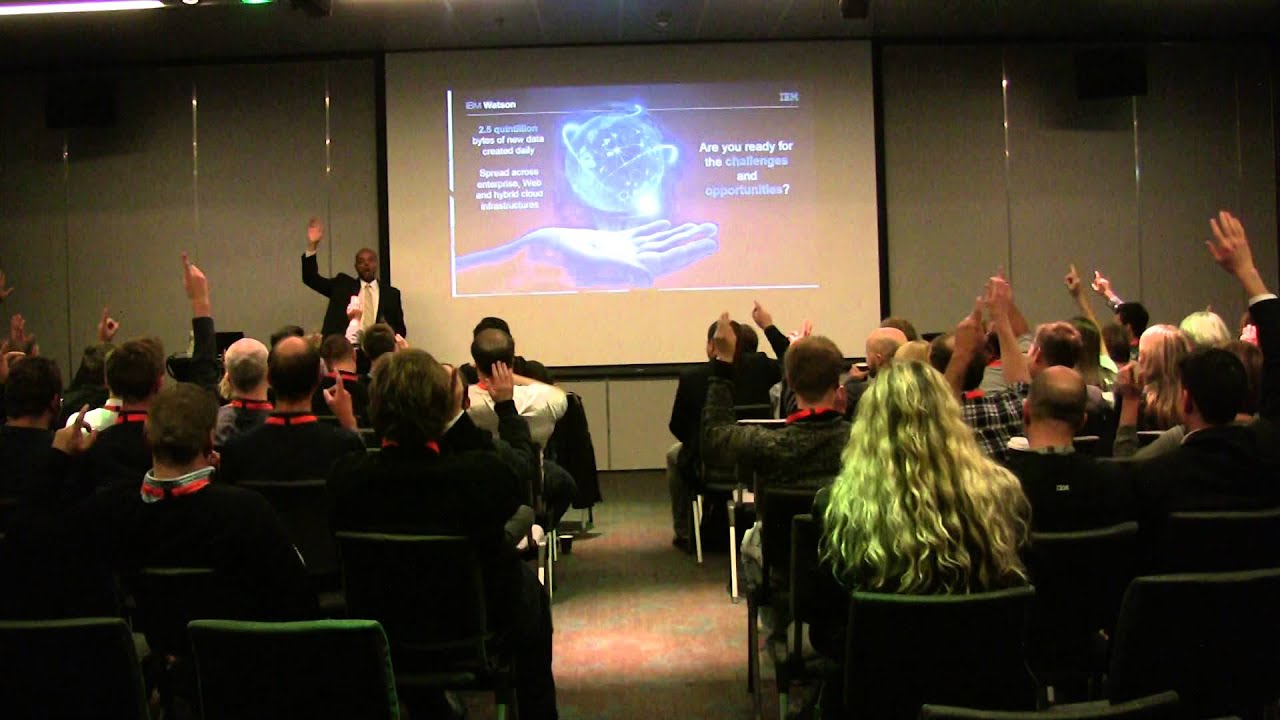
Thomas Anglero, IBM Norway's director of innovation, explains how IBM Watson connects separate datasets to find hidden patterns. He layers examples like beer sales with weather and flu data, and discusses how personal health devices generate insights when combined across silos.
Chapters
Jag är slåke norsk, man. I'm not funny in Norwegian. I've really, really, really tried, but I just don't get the Norwegian jokes. There's a whole bunch of Norwegian jokes. You guys grew up with these rubber boots, we call them in English, but you know, whenever I hear these jokes, people laugh and I go, "Oh, God." So I apologize. But anyway, I'll try to be as funny as I can in English. My name is Thomas Anglero. I am the director of innovation for IBM in Norway, and I'm going to talk to you today with a very— from a very different perspective. So this is not going to be boring, and this is not going to be a technical presentation. Let me explain to you why. For the last 20 years, I've been working in IT and telecom. I've started 2 startups, one in Norway, one in in Zrenjanin, Serbia, about an hour driving with a lunatic former Secret Service driver north of Belgrade. Have you guys ever been in a taxi from hell? Right? This guy, you know, I was working with the Serbian government in one of their incubators down there, and my flight arrived late. They said, we have a special driver to take you to your meeting. And I only had— it was a 1-hour drive, I had a half hour. I literally spent the whole ride with my head down here and my feet up here, and I had the seatbelt on. And when I got there, I said, "Who the hell is this guy?" And he literally was part of the 5 people who drove the President of Serbia, the Secret Service. So while we were driving, it was a one-lane road, we spent most of the time on the oncoming traffic. 'Cause you gotta get out. So I got some interesting stories. So I've done startups, I've worked in telecom for 20, 25 years all over the world, and for the last 5 years I had the most interesting job in Norway. Who did I work with? Company, not product. I don't talk product. What's the most interesting company in Norway? You can't say your own company. IBM. Not IBM. I just started in IBM in May. I'm a baby in IBM. I'm not old. Everybody? I'm even older. I'm not old. No, that's really cool though. More interesting than Google. Okay, I'll give you a hint. In the public sector. That's right. The most interesting company to work for in Norway is the public sector. Oh man, he gave me a serious look. Go ahead. Now more specific. No. Hell no. I love Nauvoo, and that's why I say that. I worked in someplace more interesting than Nauvoo. Scottsdale, Totten. So, hello, the Louisiana Tax Authority. Is everybody happy? Half the room is ready to leave now, right? I got some great Scottsdale, Totten stories for you to make you feel really, really good, especially when you guys go down to Gran Canaria, which you guys love to do. All right? So I was the head of innovation for Skattetaten for 5 years, and then in May I fell in love with this technology called Watson that IBM had. Had an amazing meeting with the— well, sorry, it was a half-hour coffee with the head of IBM Norway. It turned into a 2-hour shouting session with me yelling at him. Well, that was supposed to be a job interview, right? Who would do that in a job interview, right? And then 48 hours later, he gave me an offer I couldn't refuse. And then here I am with you today. So do you understand how this presentation is just not going to be normal? Yeah? Are you ready? I'm American. I'm a New Yorker. That's worse than American. Do you guys know that? Right? Okay? So I'm allowed to touch you. Oh, now he wants to go to bed. Okay. So here we go. Every single day, we generate 2.5 quintillion bits of data. Every single day. In the last 2 years, all the data that's ever been created since we started playing with our PCs and Okay, I got a test for everybody. Who remembers what if I say 14-4, 28-8, what am I talking about? Sibiu. Moldau. Moldau. We got some old people in the room. Do you young people, do you guys even know what the hell I'm talking about? No? Okay, to win a better prize, can anybody imitate the sound of a 14-4 or 28-8? It's funny because we all remember that sound, right? There you go. Do you remember those days? So that was the days that data started, right? And we were all excited when that noise— make that noise again, please. And then when it connected, it went— were you in my living room or something? And when we got connected, the data collection started, right? And that was sort of '90s, '80s if you're really, really old, right? '70s if you're one of the founders like Vint Cerf. But did you know in the last 2 years, we've generated 80% of all the data that's ever been created in the last 2 years? Do you know why? You know what? Why don't you come up here and present? That was perfect. Yeah, there it is. Everybody got a mobile phone? Does everybody have a mobile phone? Yeah. Does anybody have kids with a mobile phone? Yes. Does anybody want to choke their kids with the damn mobile phone? Okay, when your kids are not paying attention to you and you're saying, how do you order laksa? And they're just, ba-da-da-da-da-da. What are your kids doing? What program? Let's go. Go ahead, yell it out. Don't raise hands, this is not school. Snapchat. Snapchat. Instagram. Facebook. Let's do one at a time. Snapchat. What are your kids doing on Snapchat? You don't know? Shem febron voksin. Dor le fod el derech. You guys are terrible parents. You have no idea what your kids are doing. Not at all. Alright, Snapchat. Anybody know about the hot dog legs? Holy crap. Let's try that again. On Snapchat, your kids are taking pictures and they're titling it hot dog legs. The room is dead silent. You don't? Wow, okay. Pause the presentation really quick. You have to understand what you're— the kids are generating a tremendous amount of data. So hot dog legs. Everybody's really interested in this presentation now, right? Yeah. So hot dog legs, when the next time you're in Grand Canaria, hot dog legs is when you take a picture of your legs in a pair of shorts, so you got a skin, and you make it so that there's no muscles showing and it looks like two hot dogs. Now it's still going on now. I don't know, maybe some of my friends are like living in dinosaur days and stuff, right? So that's that. Then we got, which one? YouTube. Okay, do you know how much data is uploaded to YouTube every single minute? I'm sorry, not data, but the amount in terms of minutes and stuff like that uploading to YouTube per minute? 2 years? 100 years? Wow, you guys are really far ahead. 300 hours of video is uploaded to YouTube every single minute of the day. So we are, you know, you know the selfies? Now we're doing video selfies. Upload, upload, upload. Upload, upload, upload, upload, upload, upload, upload, upload, 300 hours a minute. Do you know what our kids are doing? I'm sorry, do you know what your kids are doing? Right? Okay, anybody else? What else do their favorite kids have? This is really embarrassing for you. At this point, everybody should be turning around if you don't know what your kid's doing. Instagram. Another one? Anybody? Instagram's just photos. Well, it used to be. Now you can do videos too. And here they're approaching YouTube status. Tinder. Huh? Tinder. And there goes our PG portion of this presentation. Does anybody know what Tinder is? Raise your hand if you know what Tinder is. Raise your hand proud. Don't be embarrassed. Okay, those of you who don't know what Tinder is, you'll be downloading Tinder by the end of my presentation. Tinder is the— well, politically correct. Tinder is an application— will somebody do this for me, please? This is really hard for me. You meet people on Tinder. Is that a good way of saying it? Matchmaking. I'm sorry? Matchmaking. It's matchmaking. Thank you. On Tinder. And if you like You like, and if there's a picture of someone and you like them, you swipe to tell them that you like them. And if they're in the vicinity, they can swipe you. And wow, you've just been swiped. They swiped me, I swiped you. What happens next? Tinder. Everybody downloading. So now even you're getting into the game. Now Tinder's used by kids too, but really shouldn't, if you know what I mean. It's a Friday night app. Does everybody understand what I mean by Friday night app for adults? Yes? A lot of the girls are going, "Yes." We're generating huge amounts of data. Huge amounts of data. What are we doing with this data? It's just, we're just collecting it. We're creating it. We consume it. How do we consume it? Do you consume it? Do you consume it for your business? Where is it going? What use is it? You ever thought of that data? You ever thought what your daughter is doing other than driving up your mobile data account every single month? Anybody want to kill their kids whenever that mobile phone bill comes in? No? Am I the only one with a daughter that drives me nuts? Wow, okay. Damn, you're great parents. Mine too. I want to kill her. Oh, you got the wrong provider. Huh? You got the wrong provider. No, I got the wrong daughter. I can tell you. Data in your office today. Let's talk about Scott Titan. I got a great story for Scott Titan to give you the ultimate picture of data laid— laying in silos. Every one of you in your company, you have a database that has tons of data. You have another database full of data. These two databases don't talk to each other. And you have other databases. You have tons of data all over the place. It's not integrated. But when your boss asks you a question, or the boss needs information, you have to compare information from this data, from that data, from this data. If you miss one database, is that information, that analysis that you're giving to your boss, that final conclusion accurate? No. Is it efficient? How long did it take you to go through all this data? All this data? Right? It's a huge job. All these silos and silos and silos of data. Yes? Oh, does everybody know? Everybody's office is absolutely perfect, right? Then what the hell are you doing at this conference, right? Let's look at Scott to the Times. I'll tell you an inside story about Scott to the Times. I'm not picking on Scott to the Times. It's your tax authority and mine. You guys love Scott to the Times? Yes. Oh. Sometimes. Sometimes. Every month you hate him, but once a year when you get that return, yeah baby. Here comes the new Tesla. Okay. I had it when I was working at Scotiabank. I had a project and I wanted to find out what transactions, how many transactions do Norwegians do when they go on vacation to Grand Canaria. Are you scared? Do you guys know we know how many things you buy and when you buy it? Who you buy it for? No, I'm just kidding with the last one. So I had a meeting with this woman who had all the data and I said, listen, you know, I need to have all this data because I want to analyze it. I want to start and understand Norwegian consumption abroad. She goes, Thomas, no problem. So she reaches down her drawer, she opens up the drawer, comes down, stands up and throws all these CDs across the table. Everybody know what a CD is? This guy laughs. You be amazed. Okay, sorry, sorry. If I say 33 and 45 and I go like this, what am I talking about? All right, who has no idea what I'm talking about? I'm looking at that really young kid over there. You have no idea what I'm saying and you're an American? Go leave the room now. A 33 record? Everybody seen— who has not seen a record? Who's never heard a record? Wow, okay, no, it's too embarrassed, all right, leave it alone. So she threw on the desk all these CDs. And I go, excuse me, but what is that? And she says, each one of those CDs represents one month of transactions of Norwegians abroad, per month, in Spain, in Gran Canaria. She had maybe about 5 years of CDs. How is that— is that data being shared by anybody? Where was that data? In a CD. Where was the CD? In the bottom of her drawer. Does anybody in the country of Norway know that those CDs are there? Except the person calling on that phone? Do you feel better now that when you go to Gran Canaria and you use your Visa card, Where is your information going to end up? Are you worried about Scott Tanton now? Do you like Scott Tanton now? See, see, Scott Tanton is not that bad. That to me is the ultimate example of where data, our data in our company, this critical important data, not critical to you because it reveals too much of your private life, yes? Yes? Yes. Okay, so we want to stay in down that drawer, yes? Do we like that woman's laziness, yes? So that silo data in Scott's Attan, that silo data in your office that you're too embarrassed at this conference to publicly say yes because your boss is sitting next to you or behind you or, ah, okay, I'll cover your back, I got you. That's hurting business because that data is not being shared and no one can access that data. It's a huge, huge problem. But there's some more important data. Now I want to make this very personal to you because the most important data is in the following slide. You. Did you know in your lifetime you're going to generate 1,100 terabits of data just on you? Did you know you're that big a hard drive? You never thought of yourself as a hard drive? I'm a CK hard drive. I'm a Western. You're a hard drive. Clinical data. When you go to the hospital, you're sick, your doctor takes your blood temperature, writes a data record, fills up the EMR, the electronic medical record that's shared through all the hospitals and all the different systems. Through the course of your lifetime, it's going to generate 0.4 terabits of data just on your health. Your genomic data. Everybody knows what the genome is, right? You at a DNA level. You're huge. Look at your genomic. You're 6 terabytes at a genomic level. You're complicated. There's a good excuse when you get into an argument with your wife, you know. You don't understand me. Hey, I'm complicated, right? You got the proof for it. 6 terabytes worth. You try it. Hey, when I get into an argument, I go for anything, right? The exogenous data is the data like A Fitbit. Anybody really cool got a Fitbit? You have, you had or have? I have. Do you have it on? No, it's at home charging. It's home charging. Good answer. The CEO of Fitbit said something really interesting about a month ago. He says, we have one clinical, one critical problem to our business. 80% of all Fitbits after 3 weeks are where? In somebody's drawer. Isn't that incredible? 80% of them. But that's incredible amounts of data that's being generated by those devices. Anybody got an iPhone 6? Raise it up. Raise up your eye, come on, there's Apple people upstairs. Let's just do something for our partners at Apple. Alright, we got about 25% of the room with Apple. Okay, if you have an iPhone 6, maybe the 5 has it as well, has a HealthKit, right? And every time I walk, what is it doing? What is it doing? I'm from New York, you gotta answer me. It's counting the number of steps I take, and every time I go up, una tasha, dos tasha, tres tasha, it's counting as well, right? Right? So this thing is tracking our life, and it's collecting tremendous and tremendous amounts of data as well. Have you ever realized how complicated and how much data you're generating? Here's the worst slide you've ever seen in a presentation in your whole life, yes? Do we agree? No? You've seen worse? What company you work for? Dea? It wasn't Dea. It was a competitor. It was a competitor? Of yours. Of ours? Oh, good. I love this slide, alright? Because this slide is you at the genomic level. This is a slide of you, of your DNA. At the very center of that circle is your one node of DNA, and each one of these little baby circles is a protein that hangs off the DNA. Now let's do the math so you understand how it works. There are tens of thousands of proteins on every single DNA. And everybody remember in school when you had DNA, you have two DNA, then goes up and creates the double helix? Everybody remember? You're supposed to say yes and fake like you know what I'm talking about. Yes? Yes. Everybody slept during that day, right? So you got tens of thousands of proteins on every DNA strand. In every single cell, how many DNA strands are there? Millions. How many cells are there in the human body? Hundreds of millions. So how many proteins are there in the body? Anybody know that number? It's a Greek word, probably. Many. Many. Did you know that if one of those proteins mutate, you can have a disease? You can have cancer. Your daughter or your son can have cancer if there's one single mutation of one single protein. Did you know you're that complicated? Did you know life is that precious? Have you ever thought about yourself being that way? Is this an interesting presentation? Anybody seen the movie X-Men? X-Men? Anybody seen the movie X-Men? Yes. Wow, you guys are tough. Were mutations good or bad in that movie? Were there some cool mutations? Yes. Tell me some of the cool mutations, come on. What were your favorite mutations? Shapeshifting. Shapeshifting, wow, yeah. You know, come over here, sit over here. Other mutations that were really good. If you're about, if you haven't seen X-Men, go see it on Netflix. Great company. Come on, favorite mutations. Okay, if you had a mutation, what would be your favorite mutation? The young kid over here who was really quiet but laughing a lot. What's your, if you could do anything in the world, what superpower would you What like to have? superhero would you be? I don't know. As a gentleman who used to be buffed and everything, the one mutation I want, and I'm speaking for every guy in this room, is the six-pack mutation. Right? Right? Every guy is laughing. The guys who aren't laughing are saying, "No, I got a six-pack." We all remember our 20s. That's when we had the six-pack. 6-pack, right? So mutations are good and mutations are bad, but remember, the complication is this: what happens if this one, one protein that's on the end of my little pinky is mutated, and then I have another protein somewhere else in my body mutates? What happens when these two different proteins mutate? How do I calculate that? How do you figure that out? There's so many zillions— I can't even have the number in my head— of of different permutations of what happens when all these proteins— what it reacts with what. Is that a good mutation or is that a bad mutation? Am I gonna have knives coming out of my hand or am I gonna be sick with cancer? What does that mean? How do I figure it out? The computations, the amount of data is too much to figure out. But is this not an important question, yes or no? Yes. Do you understand how complicated you are? Yes. Do you know how important data is? Yes. When you hear the word big data, is it going to mean something to you more now? Yes. Yes. It's like church. So what got me excited about IBM was Watson. IBM did something really, really amazing. And what they did was— and I'm going to explain to you Watson in the simplest form. The world's easiest explanation of Watson. Remember the data that's sitting like this, right? Silos of data, right? And where's Scott Trottin' data? If you ever see somebody do this ever again, it's like, Scotty Trottin', Scotty Trottin'. It's like a dance, right? I'm in trouble. I love the company, really. I had a great time. Wonderful people. So you have your silos and silos of data. What IBM did with Watson, what Watson does, it takes these silos of data. And turns it sideways so that you now can look through all the data and see how does this data relate to this data relate to this data relate to this data. Welcome to Watson. That's the simplest explanation I can give you of what Watson is. All your silos of data is now related and you can see the relationships that you never could see before. Let me give you an example. I think this is very appropriate because I've hung out with some crazy Norwegians who like to drink a lot of beer. Anybody like to drink beer? Your boss ain't watching, raise your hand. Okay, those people who embarrassed, pick up their hand. Akvavit? Is this a, you know, really, this is not church, okay? Because in church, you know, I went to Catholic church and every Sunday they made me drink some wine, so hey, you know. It's okay. You know what, it's part of the law where you are in. You got an effing one. I like that. Okay, leave the church theme. Let's go back to alcohol. So here we have a beer company in the United States. Now they had their— they had beer sales and they understood their beer sales. We understand how much beer we sell, We understand how much beer we sell per month. You know, they have the Excel spreadsheet broken down completely. We know our business really well. But then they said, "What happens if we take our beer sales and we overlay it with weather?" This is what they did here. They overlaid their beer sales with weather and they all of a sudden found out that under certain conditions in certain places when it was super cold, this beer sold more than that beer. All of a sudden they realized that weather affected their beer sales. That didn't show up in an Excel spreadsheet. Yes, sir? So is beer responsible for global warming? Beer responsible for global warming? You know, I just saw a Netflix film and I have the longest answer in the world for you on that one. No. Was that okay? That would be great. Yeah, I got so many ways to answer that question. Let me focus on this and then we hang out after, all right? So what they realized was when they started, they realized that, and by the way, the person who did this, he did this while his boss was on lunch. He just layered weather information because we have, with Watson, we have access to all the weather data that's ever been published around the world anywhere. So he says, okay, I got my data, my silo of data on beer sales. In the United States. Let me overlay it with weather. Boom! He all of a sudden saw his company and saw how sales were related to weather. That occurred in a few minutes while his boss was at lunch. All of a sudden, he saw his company completely differently when he compared it to weather. Amazing. Then over here in this corner, I love this little red thing because it's so annoying, right? That little kid over there, you want to play with it, don't you? I took this out at home. Every kid was, you know, Yeah, they almost broke it. That's a long story. That's another one. Like I said, I got— my kids are interested. So anyway, here is the most interesting of them all. Now this guy said, "Mm, that's interesting weather." Now this is a very creative person just like you. And he says, "Here's our beer sales. Let me overlay it with the flu. What happens in our beer sales when I overlay it with the flu?" All of a sudden they realized that when there's certain flus, their beer sales go through the roof. Who the hell would have figured out that certain flus make people drink more beer? People are giggling in embarrassment. They're like, I get to drink a lot when I'm getting the flu. My wife's not home working, I'm— okay. I've been in Norway many years, I know all the secrets. You cannot hide from it. But isn't that interesting? Where an existing beer company who thought they knew everything about their business, just by layering a new layer of data, they saw their business completely new. They had new ideas on how to sell, when not to sell. Should we send— okay, it's coming winter, the Northeast is going to get hit really hard. Should we send more? Should we send less? Here comes a nor'easter. You guys don't know what nor'easter is. Here comes a storm, it's going to hit Boston for this weekend. Let's roll the trucks, right? Isn't that interesting? Your existing company today, you have tons of data on what you do, how you do it. Have you layered it with the flu? You're laughing. It was funny until he saw the picture and he realized, holy crap, we can make more money. Are you laughing now? He did this over lunch. My question to you is, who's your company? Do you really know? You know off your current data and off your current Excel spreadsheet. Congratulations. What have you layered your company against? Now when I say that, I'm not trying to put you on the spot. I'm trying to create, you creative juices to get them flowing. I think the example of layering beer sales with flu is the ultimate example of what the hell was wrong with that guy. But he made the company a lot of money. So with Watson, you could have those moments. You know how you're hanging out in the hitta, having a lot of fun, right? You go pashi. After you're done, you're talking about all these wonderful things you did and you didn't do. How many times you fell down when everybody was ahead of you and they didn't see you, you wipe it off, there's no snow on you, you keep on, right? Yes? I've been in this country a long time, okay? I know your secrets, right? You get back to the cabin and you start drinking, slamming down the Aquavit, having a wonderful time, and it's probably the best time when you're hanging out, right? Oh, doing all these wonderful things, and you come up with these wonderful thoughts. Take those thoughts and layer it, right? Oh, I would do this with the company, I would do that, what about this, what about— Layer it. That's where we are today. Do you understand what I'm saying? This is not future. This is not oh someday. This is today. He did this during lunch. To the young kid here today, you start your career, your moment from this moment on, take everything you see and layer it. What does this have a relationship to this? How do these things relate? Or how do they not relate? What does this mean? Does everybody get my point? Are you a different person today? Now we're getting religious. Oh yeah, right? I think this is amazing because it takes the world of silos. It takes the opportunity all you have to be the new boss, to get rid of your— who wants to get rid of their boss? Raise your hand. Nobody wants to raise their hand? Wow, you guys have no guts whatsoever, okay? I like my boss. I don't want to get rid of him yet, but I like him. You have the opportunity to get a promotion. You have an opportunity to change the course of your business just by being you and layer the data. That simple. Don't change, just layer. With Watson, we have access to all the sports results that have been published publicly. So let me see if I can be very Norwegian right now. Haia— wait, what is it? Haia Brown, Haia Brown, right? I can't do the damn thing. Våringa, give me some Haia. What is something you say? Nobody wants to do it? Who likes football? Wow, and then when you guys get drunk, you're like, "Vem ligar futebol." You're like, "Ah!" You're ripping your shirts off in the interconference. Don't you see who you are? It's interesting, isn't it, huh? This contrast. From New York, we're just one thing the whole time. We just don't change. We don't have time to do that. We got 14 million people we live around. You ain't got time to change all the time. Just be yourself. So take your beer sales. Take your company. Everybody know what company you work for? Yes? It's kind of a stupid question, but I'm hoping to get a yes, right? You know the company you work for right now? Do you have your favorite football team in mind or the football team you hate? Or if you hate football, just choose a team. Got it? Yep. Layer them right now in your head. You're going, "What the hell is he talking about?" Right? But think about it for a moment. Whatever business you're in, football results, the results of a football game, a win or loss, when you layer it, does something happen? On that particular day or at that particular moment or at halftime or when that goal goes in the net or when that team loses, when you layer it, you actually might see relationships to your existing business and to football scores. Interesting? Everything's related. You ever— okay, now let's get down. This is like a Bible class. I don't know why we've gone this way today, but you know how they say we're all interconnected? Everybody heard that expression? Nobody's heard this? Should I go into that whole presentation? Everything's connected. So forevermore, whatever you see, when you're watching sports with your buddies, and you people who hate sports, when your partner is in the living room watching sports and you're in the other room going, I hope that TV breaks. It's related. We also have access— as a matter of fact, we just announced today that IBM just bought— I think it's weather.com— we just bought the whole entire database, the entire history of the world's weather data. So whatever company you're in right now, again, layer against weather. Have you ever even thought what happens to your company when the weather changes? And I'm talking about a second-by-second basis, whether you're in Kristiansand or whether you're in Trondheim or Tromsø, how does it affect my business? You can see it. And it takes just a few minutes to layer the data and boom, within a couple of minutes you have the answer. This is not like you layer the data and you wait 2 weeks. You get an instantaneous answer. Take the result, run to your boss and say, "Ja, tringge. Nett tringge." Do you see how easy? Isn't it great to come to this one? You guys are going to make a lot more money come Monday, yes? Right? So we also have access to all the tweets out there in the world as well. Somebody said, "Eh." I love that. So that means what happens if there is a crisis or is there a mudslide or an earthquake, does that affect your business? Or everybody heard, I heard this morning, I almost lost my breakfast, Justin Bieber is flying in today. Everybody heard this? This guy is over here going, "Mmm." Everybody remember the last time Justin Bieber came, what happened to downtown Oslo, Karl Johan, with all these crazy girls, right? Yes? Yes. You know, if we said it to a New York crowd, people would be like, "Oh yeah!" Norwegian, yes. Alright, so Justin Bieber's in town. Are people not tweeting this? I know I'd be tweeting, "Go home." Right? My personal opinion, that idea. What is amazing? What happened when Justin Bieber got off the airplane? People started tweeting. How did that affect your business? You don't know unless you learn. How do things that happen in the world, happening around me, or things that are not happening near me affect my business? You can know now, you can know in a few minutes. No longer do you have an excuse. Use your creativity, use your curiosity to help your company and help yourself get a promotion. This is my nerd slide and my only technical nerd slide. Any nerds in the room who love databases? Raise your hand. This is your slide. 5, 4, 3, 2— so all these are all the different databases that we integrate with. With in the backend. A lot of these databases are in this cloud and a lot of these databases are in mainframes. So whether you have your access stored in good old IBM mainframes, the most reliable mainframes in the world, or you have your databases stored out in the cloud, it's readable and you can still access them. Let's go into a couple of business cases. I want to give you— start to have your creative juices Anybody ever seen the movie Minority Report? Yes. Okay, this question is to the women in the crowd, maybe to some men in the crowd. Tom Cruise, cute, yes or no? Yep, she gave me a yes. You okay? Anybody else cute in Hollywood I should know? When I change this presentation? Women? Men? Cute? Anybody? No? Is Brad Pitt still cute? And you say that with your hand going, "He's cute-er." That's a statement. In the movie Minority Report, Do you remember how the precogs could precede crime before they happened? Yes? Yes. A little bit of a bad passion. Yes? Yes. It's okay to let it go, you know? It's okay. Well, in the United Kingdom, we're working with a police station there. They looked at their entire district. They said, we know the history of where the crimes are committed, who they were committed by. We know what the weather was at that time of day, but we just don't know how— we have all this data. What do we do with it? Well, they put all this data into one
More from Thomas






IBM Watson AI Lab for Cancer presentation to Ullern HIgh School / Thomas Anglero

Will You Lose Your Job to AI / Oslo Business Forum / Thomas Anglero & Richard Qwest



