Episode #1: Working Remotely Effectively
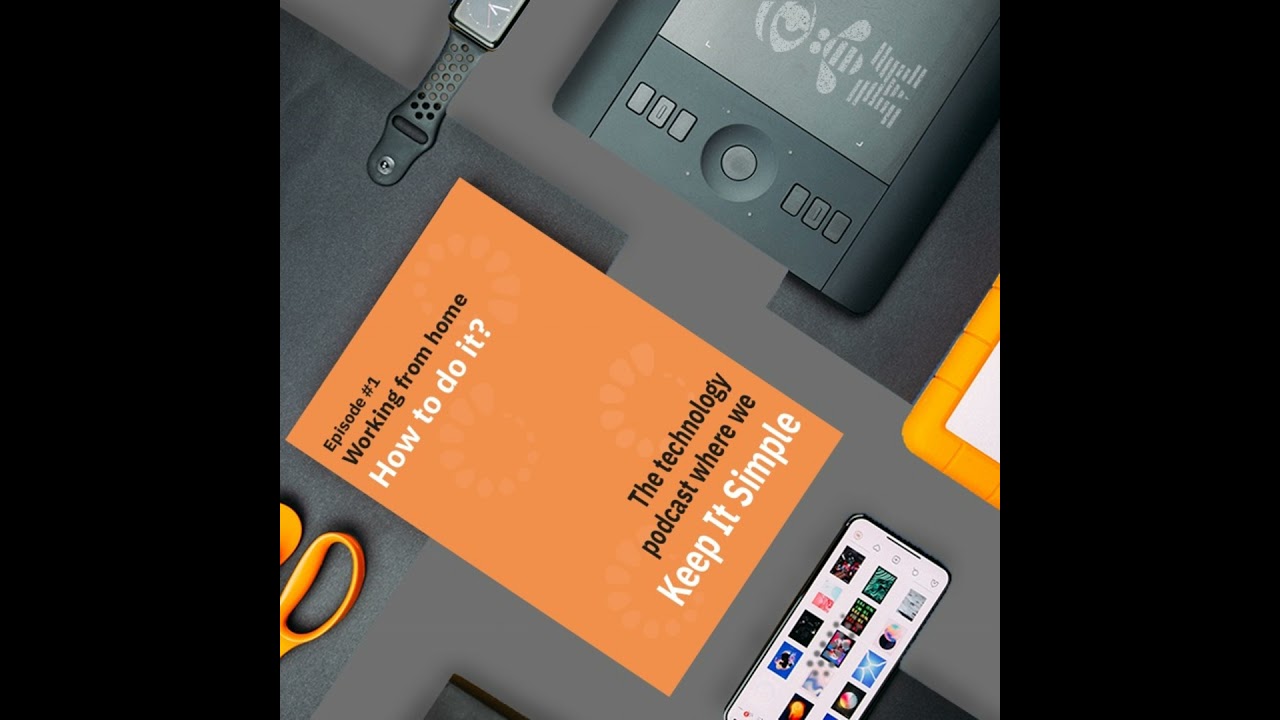
Thomas Anglero and Luke Vredenberg discuss how to work from home effectively. They cover VPN security, setting up a dedicated workspace, lowering productivity expectations, virtual social rituals like lunch calls, and leadership check-ins that show you care about your team.
Chapters
Computers now have primary control of critical vehicle functions.
Welcome to the IBM Keep It Simple Technology Podcast, where each episode we discuss technology, but in a simple way. We keep the explanations simple, but what we spend our time on is emphasizing what this technology means to you and how you can best utilize this technology for you and your business. Your host, as always, Thomas Anglero.
Welcome to the IBM Keep It Simple Show. Two hosts for today are IBM's technology officer, Luke Vredenberg. Luke, say hi to everybody.
Hi, everybody.
And myself, Thomas Anglero. Nordic Director of Innovation. Luke, are you ready for our first recording, our first episode on this podcast?
Yes.
All right.
Let's do it.
Let's do it. So what we see is that there's a lot of people working from home. And what we want to do at IBM, what we do all the time, is we provide information and share information. But we want to share this opportunity and time to share information in a very simple way, not to blow you away. There's no way to do PowerPoint over a podcast. Thank God, right, Luc?
Yes, as technology officer, I have to subscribe to that view.
Yes. Okay, he hates me already. So we just wanna keep it simple. So we wanna paint pictures in your mind and things like that. The first thing we wanna first start off with is just give people some advice as to how to work from home. And I think having our CTO on, Luke— I'll just call him just Luke instead of being so damn formal— is great because a lot of people are unfamiliar with how to work from home. And at IBM, like other companies, we have a work-at-home policy. So Luke, just off the top of your head, right? Being the CTO, what are some of the things you think people should think about in terms of working from home? And for me, if I could just start the whole thing, the first thing I think about is that people probably should be running a VPN. Do you run a VPN while you work from home?
Always, always, to protect the data that I'm sending to and fro using my own private network at home. Obviously, it's it's protected as well, but you can never be too sure, so I always run a VPN.
Yeah, and I, I always run a VPN. I run a VPN over my phone as well. So for those people out there, we said we keep things simple. A lot of you might be going, what is a VPN? So VPN stands for a virtual private network, and basically what that means is that usually you run an application on your PC or phone and it creates a tunnel, a private network that directs you to a server. And whatever traffic, whatever internet information is going from your PC out into the internet world, it's encrypted and protected so that nobody could hack you, nobody could pick it up. Luc, you have a more simple description of that?
No, I think you described it very well. It's your own private network on a a common public network. So what you are doing is private, just between you, your PC basically, and the server that you're talking with, which is usually then in the network of your work address. So you get direct access to your network at your office through this pipe, which is then protected from anybody else. And that's obviously also from a private perspective. If you're doing stuff for yourself, i.e., you're running your VPN also on your phone— I do the same thing— that when you're at the airport and you want to browse the net, the web, read the papers or whatever, you can still do that protected and private by this VPN.
Let me tell you, you just remind— perfect story because you just reminded me of a perfect example of why you have to do this at the airport.
Airport.
So my wife and I, we were traveling through the country of Georgia a few months ago, maybe a year ago, and I went up to the second floor of the airport. I forgot the name of the city we're in. I'm American, we don't know geography. Um, so I go to the second floor because as an American I smell donuts, right? Don't say anything, Luke. And, uh, so I have to find out where the hell they're selling these damn donuts. And there's this guy sitting there up at the, the donut store, whatever. There was a table and chairs, and he had 3 laptops out. And I'm like, who the hell comes to an airport and sets up shop with 3 different laptops? And I just thought, that's very unusual to have so much power, so much equipment. And he was working all 3 at the same time. Um, and my wife was downstairs on her phone surfing and things like that. Uh, When we got home, you know, we took our flight and everything. When we got home, we realized that she got hacked. And this guy was up there and he put up a fake, um, a fake node. And so that people would log in, he put his thing was like free airport Wi-Fi. People log in. And so he took all of our, all of her internet traffic. She got all of her username passwords because she didn't have it encrypted. She didn't have a VPN running on her phone. Right. So I mean, running a VPN is critical even when you're at home, but especially when you're not at home. Now, there's, there's two different— there's many different types of VPNs. One, your employer supplies. So that's a VPN, a private network directly to your employer. But there's also public VPN companies that you could buy VPN from as well. Right.
So I see now I'm, I'm client of one of the major virus protection companies, and they now also provide VPN as part of their contract. So you can actually get your virus protection and your web protection as well as a VPN from one source. That's very nice.
Absolutely. I think you have to run it through a VPN. What, what are other things people should be doing? I mean, I really want to talk about what people should be doing with their time, but I think that's a hot topic and I won't touch on that.
I've noticed myself, I'm now at home, 4 people, 2 kids, my wife, she's going to work from home from today, and myself. And obviously we don't have 4 places to work. So it's important, or at least advisable, that you have some sort of formal place where you say, this is my office when I'm at home. So you actually go to the office when you go into that room or that place, sit there, and you know, your mindset is now I'm at work. And then when you're not there, you're not at work. So have some sort of boundary between where you do your work and where you're private.
Hey, Luke, not every one of us are CTOs of IBM. We have a private room to work at home.
But listen, I'm sitting on my couch in the TV room now. The other 3 have taken my room.
You got thrown out? There we go. There we go. The truth comes out.
Yes.
He threw you to the sofa again.
That's what they call the pecking order, Thomas.
Well, you know, I've worked in all sorts of different places in my house because the same exact thing where the family rules, you know. I was just watching Vega TV yesterday and this woman was being interviewed and she has two little ones and it's impossible for her to work from home. She was on a conference call, right? And the kids are crawling all over the place. I mean, that's an extreme situation, and I agree with the advice the expert gave, which is prioritize the family and kids, you know, that's especially if you've got little ones. But, um, in my house, I've actually worked in my bathroom because that was the only place I could close the door and get somewhat less noise and not be so disturbed.
I mean, um, so one of the advice that, that she gave yesterday was lower the bar, so don't don't have the same expectations of your productivity when you're working at home, especially in this situation we are in now where it will probably last a while. And you have to accept that you will not be as productive, uh, working overtime at home as you would have been when sitting at work.
Exactly. It doesn't— this time period doesn't have to be a stressful time period, you know. It could be a time period where You lower the bar, but the things you do, you do it really, really well, right?
Yeah. More effectively. Yes.
More effectively. Exactly. And, and calling and, um, going into people's calendars and filling up your calendar day with meeting requests, that's not effective. That's extremely ineffective, right? Um, you could use this time. I mean, Luke, we were talking about before how you've made a list of all the different courses you wanna take. This is great stuff to do from home. What are the things you can do that you didn't have time for before? Does your company have mandatory videos on learning different things? This is the time to do that type of stuff, right? And then, but also on the soft stuff, because as a leader, taking care of people is huge and critical. So I think people should also have a list of who are the people I should call, not as a call, like a cadence call to say, what have you done? Anything like that. Well, who are the people I should call to take care of them and see how they're doing? For example, if you know some people in your company are sick, as a leader, I would have it on my list every day to make sure if I don't call them, at least send them SMS or something. How are you doing? What are the calls you can make now to take care of your people? The calls that you didn't have time to make before. I think that's just as important as taking these courses.
Yeah, one of the things that we have done in the management team in IBM Norway is that each leader has virtual lunches with their team. So they book a time, half an hour every day, and then they eat lunch together while they have the video on so everybody can see each other, and they talk just like we do now about different things. So keeping the social contact even if you're away. And I think that's a great idea.
Yeah, that's— it's, you know, when people are in crisis, I remember a touchy subject, but I think it's perfect. You know, I was living in New York when 9/11 happened, and New York always been this city of people saying New Yorkers aren't nice, New Yorkers are rude. And when 9/11 happened, Everybody came together. All issues were forgotten and forgotten for a long time. And I think it's built into human beings to take care of each other. And now that the whole world is having this crisis, I think in your own company, not just the people in your own team, but who else outside your team that you, you know, I don't have, I haven't had time to have lunch with that person, I've seen that person, send them a message. Hey, do you have a couple of minutes to talk? You know what I mean? This is as important as making your company money because when you get back to work and normal, now your whole team, your whole company is closer and stronger. And now, of course, when it's been proven that when companies and people get along, you know, companies are more profitable. So—
Totally agree.
Yeah, this— I think, look, Luke, I think I think we could do this all day, but I want to give people a small taste of, uh, what we're going to be talking about on a regular basis. Um, I want people to see the other side of IBM, not just the tie and jacket.
Well, I've thrown them away for a long time ago.
I know, I know, but I'm still— every time I was about people, I keep asking me, where's the tie and jacket? I'm like, okay, okay. IBM has this stigma that needs to go away. But I hope you get— I hope everyone has enjoyed this. Luke and I and others will be on this podcast and providing you with different information during this time. What we want to let you know is, you want to reach out to us, we're both available on LinkedIn and we're available on Twitter, and we'd love to hear from you. Um, once again, this is Thomas Anglero and Luke Please.
This is Luke.
Luke Vredenburg. He has a last name. And we really hope you take care of yourself and your family. And we will talk to you the next time. Stay safe. Stay healthy. Bye for now.
More from Thomas






IBM Watson AI Lab for Cancer presentation to Ullern HIgh School / Thomas Anglero

Will You Lose Your Job to AI / Oslo Business Forum / Thomas Anglero & Richard Qwest



