How AI Is Changing Every Industry | Thomas Anglero
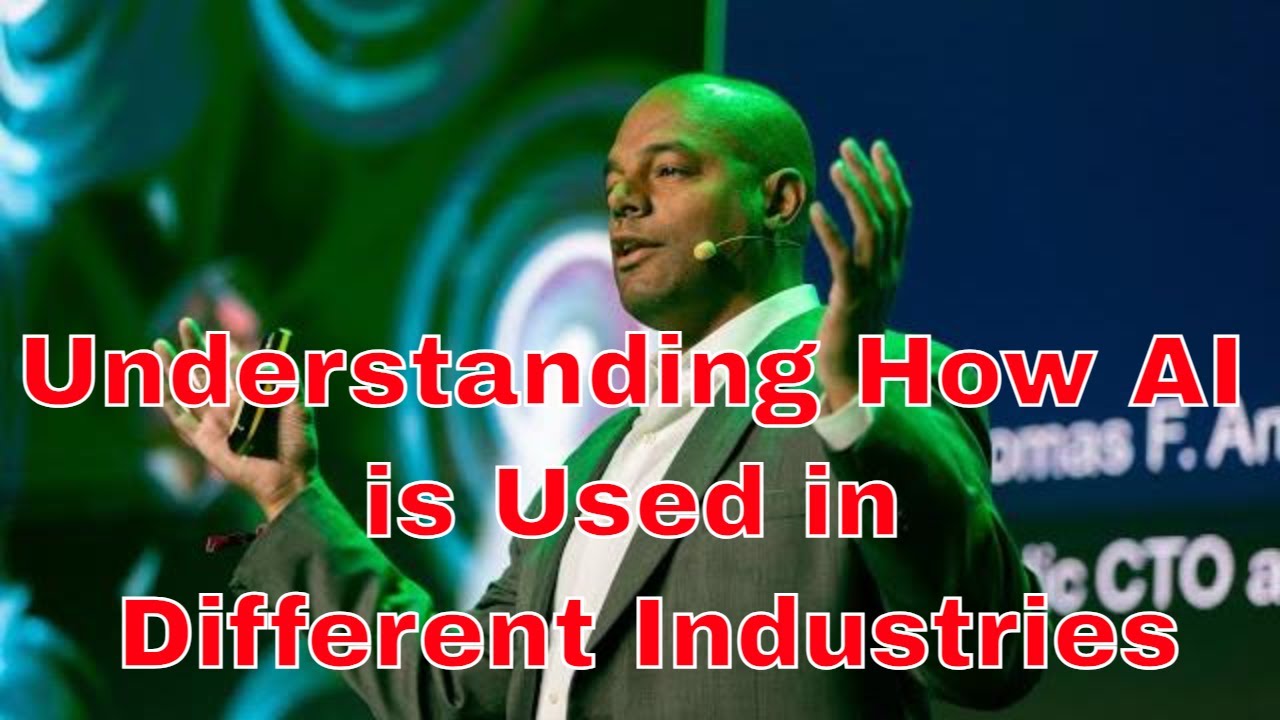
Thomas Anglero, IBM's Director of Innovation in Norway, walks through AI applications across industries: AI predicting salmon-farming lice, drones in agriculture, IBM's debate system, and voice interfaces. He argues AI works best alongside humans, not replacing them, and shows how companies are shifting from hierarchy to network-driven models.
Chapters
Okay. You're in for a ride, which I wanted you to enjoy it, so you all sit down and have a relaxing— you know, you're going to listen to Thomas, you should be ready. So Thomas is an— I don't know about building up expectations, I shouldn't do that. Thomas has never been speaking for an audience before, he's new to this game. Well, he has his own TEDx talk, which kind of says something about, you know— the type of person he is. He doesn't like that at all. No. Thomas is the head of innovation at IBM Norway. I don't need to say anything more. I think that's it. Thank you very much. I welcome you.
We met on the basketball court, so there's a long history between us. She played for Oslo. That's good, right? Yeah, and I'm Ullr.
Yeah, I have to say, can I say one more thing?
Here we go.
Sorry, sorry.
It has begun. Go for it.
Go.
Anybody pass the ball?
No, this is something. I had this kind of amazing kind of like really positive things said about me during the break, which is like, do you work in television? Are you like a program manager in television? Which I think is really nice because I never got to introduce myself. So I'm actually a professor of technology management at Oslo Met. I am not somebody that's working in television. But to have that, that is such an honor too, that somebody would say that to me as a professor. So thank you for the person who asked about that. Thank you.
Okay, now that the— is this it? Yeah, cool. So now the expectations are really high, let's get really low. So I am the Director of Innovation for IBM, and I spend majority of my time either traveling around the world doing speeches like this And the other majority of time is following up after those speeches with CEOs and their leader groups discussing disruption. What is AI? What is happening inside of my organization? Why are things not returning back to the way they were? So what I want to do in this presentation is I want to give you a bunch of examples of AI. You've been getting that all day. We'll give you a couple of more. And this is examples of IBM's AI, but I'm not going to pitch. If I pitch, somebody throw something at me. Is that cool? Anybody got anything ready to throw at me? What, you hate men or something? You were so quick. So, I want to take you and show you where the latest is on AI, what's happening behind closed doors, what's happening in the research labs. And then my very last slide, I'm going to explain to you why things aren't working. Is that cool? Yes or no?
Yes.
We got a live crowd, huh? Clicker. There we go. So I thought this was kind of cool because I went to a financial conference the other day, and I made this slide myself. That's why it's quite horrible. But I thought it was good because it reminded me of many girlfriends ago. I'm looking at you.
What do you mean?
Long story. She doesn't remember, so I'm kind of pissed off. Why are we getting into this in public?
This is going great, Thomas.
Okay. This is about AI or Tinder? Anyway, so this ugly slide represents a girlfriend ago. So her father-in-law was a stockbroker and he made a lot of money. And I was very young back then and much better looking. So good old days. And I asked him, Richie, how did you become a stockbroker? And this is the picture he put in my head. He said, Thomas, every single night I read books on how to trade stocks. I read all the time for 7 years. I would read a book, finish a book, read a book on the train if somebody else was driving. I would talk to my wife. I had her, I read, read, read, read before I made my first trade. One trade, which was $5 trade, I bought a stock for $5. The amount of knowledge each one of you have to put into your head over the course of your life to become an expert in one thing is insane. How many of you are students right now? Students, raise your hand. How's your headache? Isn't it insane, right? And now that's for several subjects you have to be a master of, and this is just becoming a stockbroker. So this is not all the books. This is just what I grabbed off the internet. And what I want to depict in this picture to show you where we're at is that all this information plus all the other stock books ever written in the history of the stock market and libraries, every book ever printed, today can be consumed by AI in 1 second. So it's not read, it's read and understood. So this sentence means this to this sentence, just like when we read, you know? It's the same thing. All of the knowledge in stock trading is absorbed by AI, or IBM Watson, there's the pitch, don't throw. All in one second, and then after that, the AI can then do prediction, because the AI has not just read the book, but has looked at the history of the entire stock market, every transaction ever made, the timing of the transaction, the volume of the transaction. It takes all the information, the history of all transactions on the stock market, plus every theory ever created on stock trading, and it's good to go. It doesn't need you. Are you guys aware of this? One person's awake. So the history and the story, do you guys want to know when this all started? When this thing started? It started in 1996. A stockbroker on a Wednesday afternoon who wasn't a nerd, he was just a regular stockbroker, but he liked computers. He said, "I will give anyone a million dollars if they write the code for me and give me a program by Friday afternoon." A small little company did it. How much was $1 million in 1994? Good money? Yeah. You're just as broke as me because I was— So I just want to start off with you understanding that this is where we're at, where knowledge is not a competition. What you have to look at it is that this thing, these AIs are our ultimate assistant. Any of you who've graduated, right? Do you all remember the day the day you graduated, everybody remember when they got their diploma? Remember? All right, remember that feeling when you're like, dun-da-da! Do you remember that? Not honeymoon night, but I'm talking like when you got your diploma. That's a good joke, man. You guys don't get it. I feel sorry for your wife on honeymoon night if you didn't get that joke. That moment, that moment when you got your diploma, you said, I could conquer the world. This is the excitement where we are AI now. That excitement, I can conquer the world, is now here with this. A lot of you are, a lot of you working on doing your 9 to 5, you're doing your da da da da da da da, this sucks, I'm not optimizing who I really am, how come my boss doesn't see me, all these things. Your ultimate, your passion, your drive can now be achieved with the software, is there for you. This is not a competition. Even though this thing can do everything a stockbroker can, it cannot replace us. Do you guys want to see an example of how a Ken approaches us? Somebody say yes so I can embarrass her. Come on. I wish every woman approached me so. Men like that. Absolutely. So here we go. This is spontaneous. This is not prepared.
Okay. Not prepared. Okay, good.
Can I touch you? No.
Okay, you're allowed.
All right, thank you.
Only on the defense.
Is this a comedy show or what? I don't know. So, the reason— this is the ultimate example, and this is more in health, and I'll get a little serious. When you guys go to a doctor and the doctor has all this information, say the doctor is using AI and the doctor has all the information, has examined her, and the AI is giving the ultimate recommendation saying that, you know, with 98% certainty, we should treat her this way. Should we trust AI for her health? The answer is no, because this is what the doctor does. 100, 500 people said I could touch you, so.
You got it on record? Yes. Do I need to lay down? What's that? You were looking at us, Thomas.
You're the one who went with that line. I did not go over the line. You suggested it, so we're going to—
no.
So here we go. Give me a hand. Give me a hand. No, don't shake my hand. Uff, bye. Relax. Relax. You can't look at me, can you? Don't look at me like that. So when you go to a doctor's appointment and the doctor says, "How are you?" "Stressed." "I wonder why." "Don't know." So you see that the doctor usually holds here or the doctor does something like this, and the doctor always puts their hand here. Though I noticed in Norway, my fastlegger, if you guys live in Norway, fastlegger doesn't touch you much, right?
No.
No, it's very strange. She's not paid to?
That's another conference.
Interesting audience. So the reason why, if you were outside of Norway, the doctor would do this, other than she's very attractive and I'm enjoying this moment, The reason why I'm touching her here in this muscle here is that when she says she's stressed, I can feel how tight this is. So the doctor says, "How are you? How's it going with you? Do you have a boyfriend?" No, husband. Do you have a boyfriend?
Yes.
So they ask these questions, "How are you doing?" And they look at your eyes. So this is the point. They're touching you, they're feeling your pulse, they're feeling this muscle. I'm looking in her eyes. I can see if she's upset, if she's sad. If I say the right question, she goes, You can see all these things. This human interaction, code it. Somebody write the code for that. The interaction of when two people see each other and they like each other, they could joke on stage and stuff like that. Somebody code the way we're interacting and communicating. Anybody? Sure.
You can wait until MX and then you can pitch that. That's fine. Yes.
Thank you. So this is my— I think that's a good example. And the other example I have that's probably good for everybody is, everybody remember the first moment before you gave that person your first kiss? Everybody kiss somebody? Yes? OK. So you remember that moment just before you puckered up and you said, I'm about to go for it? Everybody remember? Remember your toes were curling, your stomach was all this, should I go for it, should I not?
Thomas, do you want me back on stage now?
We can finish this entire presentation right here.
Sorry, I can't help myself.
Nothing like doing a presentation with a friend. But that's a good example. That's it. Code that feeling. Code that. Code that feeling of when you're in love. Code that feeling of when you want to kiss somebody. Code that emotional feeling. Code that feeling when you want to get up and just spontaneously make a joke. We can't do it. We cannot code what makes us ultimately human. So AI is there to complement us. It's done all the investigation, it understands all the data. Thank you very much. But then you use what makes you human combined with the advice AI, and then you make the final decision. So AI in my world, I will argue with anybody, and which will be here all day, it will never replace us because it cannot replace me on that sofa. Yeah, okay, I think I made my point. So this is a cool AI project here in Norway. This is Aquacloud, and in Aquacloud, so we have the salmon fish farming. Fish farming is huge in Norway, and they've been gathering huge amounts of data for many, many decades, and they haven't done nothing with it. And one of the challenges they have is the lice that float in the water that attack the salmon, that kill the salmon. And they're losing billions of dollars every single week on the salmon. So what they've done with AI is they put into the AI all this data that they're collecting— temperature, currents, phases of the moon. Anybody ever think about phases of the moon when you work on an Excel spreadsheet? Sounds kind of weird.
Exactly.
So what they've done is the outcome of this is they can predict where the lice are coming. And so if the lice are coming, let's say the ground or the bottom of the water is there, the top of the water is here, and the lice are coming in at this level, they'll open up the nets and have the salmon drop to the bottom and then the lice will pass by. But they're able to now predict what the lice are going to do, where they're going to be, how long they're going to be there because they have huge amounts of data. But before, it was too much data. Now they have this data and they put it into an AI platform. The platform says, This is what the lights are coming tomorrow at 2 o'clock, 2:07, drop the nets or raise the nets because the lights are coming here and have the fish up here. So this is a Norwegian project and they're just starting. They're just starting to get their hands wet and understanding with all this data where can we go. Can we take this international? So I thought it was cool to give a Norwegian example. This is really cool. This is the worst, another horrible slide of mine, but it's really cool. These are— this was announced last month, and I think it's exciting as hell. These are all the subject areas where AI is now completely mastered, that area, everything. All the knowledge in these 6 areas has now been put into an AI. So if I could say, look at agriculture, human— look at agriculture, just like this example. So if anybody have a farm, any farmers? One guy's only brave enough, nobody else is a farmer, and this is Norway. Bunch of liars. Everybody's got a damn farm in this country. Don't look at me like that. So if you guys had a farm, you usually pay somebody to come walk your farm, and this guy goes out there, it's usually a guy, and he walks the farm touching the grass, you know, getting off on it, a little bit like a pervert, ooh yeah, mm, yeah, ooh, and he's examining the grass, and after that he spends a couple hours walking your grass, charges you 50,000 kronor, writes up a report and says that this grass here suffers from this infestation. The grass over here is dry, this one needs some water. But how much grass can you cover by going like this? Not so much. What they've done now is they've taken all the knowledge of agriculture, put it into the AI, connected it to a bunch of drones. So the one person who has a farm, who's the only honest person here— do you have any kids? Go borrow some kids. All right, for Christmas, you're going to be the ultimate neighbor, all right? You get a couple of drones and you have them, you're going to have a competition. Tell them whoever can fly the drones over all my land and back is the winner. As the drones are flying over, their camera is looking at the grass or your farm. It looks at it from every millimeter of your entire farm. It takes, looks at the image, feeds it back into the AI. When the drones come back to the kids and they love you to death for Christmas, it has an analysis of every millimeter of your entire farm. What took a guy, I don't know how many hours to do about 5 or 6 mole, you could do your entire 100,000 mole in 15 minutes with analysis broken down to every single millimeter. This is the current state in agriculture and there's other examples in each one of them. I think this is really exciting. This is not a replacement thing. For a farmer, what can you do now? If the drones with the AI can do that for me as a farmer, what is a farmer now? Where— what business can a farmer get into? He's freed up time. Maybe he or she can spend more time with the family. So on and so on and so on. This is exciting. This is not a replacement thing. This is the exciting thing. You guys get it? What are you doing? I'm playing with her. Sorry. Let's go to the next one. So This thing doesn't work from far away. Here we go. I thought I would show you another really cool version. So this came out 2 months ago as well. We wanted to show IBM— no pitching— it's been working on this Watson thing for 10 years. And we want to show the world what's the ultimate example and how far it can go. So we made a version of Watson to debate. So what you see here in the picture here is that's the latest one. It's called the IBM Debater. This woman here is a professional debater. And the gentleman over there is a professional debater. So what we did is we said, we're going to have a live debate and we're actually going to put our AI in the middle of it. All it was, was connected to the open internet. It didn't know what it was going to debate and it had a debate in real time. Because we said this will be the ultimate version of AI to see how intellectual and how smart it could be. Would you like to see a video of the world's first debate against AI? Yeah. Here we go.
Real world problems. A lot of times they don't have a clear bottom line win. Otherwise, we wouldn't debate things.
According to rules set by the candidates themselves—
What we are trying to accomplish here is really to demonstrate that we can have a meaningful and valuable discussion between man and machine.
We are actually trying to show that a computer system can add to a conversation or decision-making by bringing facts and doing a different kind of argumentation.
Sorry.
Hello, Dan. Thank you for the opportunity to be here today.
The Debater system tries to understand the concept over which we are debating.
Having analyzed the data, I will argue that we should subsidize music education.
When it gets the topic, until you hear the first speech, it's collecting all the possible arguments, trying to remove redundancy, It is about recognizing important issues for society.
The system is evolving.
IBM Debater can have all the opinions in the world, but IBM Debater does not pay taxes, and we do.
You are speaking at the extremely fast rate of 218 words per minute. There is no need to hurry.
The value of this technology is really to allow decision makers to take more informed decisions. There is a territory which is uncharted to some extent. And this is where we are now.
Thank you for listening.
She just informed me I only have 3 minutes left. This 20 minutes went by fast. So I just want to summarize a whole bunch and I want to get to that last slide that I promised you. I'll explain to you what is happening inside these offices. This what you see, the big takeaway you have to have is the accessibility, how you use AI in the next year to 2 years will be through your voice. Remember this moment. Any of you have a Google Home or an Amazon Echo? Anybody? So we're connecting the hell out of that thing. So that slide, if I go back to it, just use your imagination. What we're doing in the labs now is that. We're allowing, we're connecting all the knowledge of all those industries directly into those home devices. So that means that when you're out, let's say this is Norway, so you guys like to hang out and hit this, right? And you guys like to drink, yes? So at 1 o'clock in the morning, you're drinking in the hütte, and you have, you know, you're drunk with your friend, and all of a sudden you have this brilliant idea, and you go, you know, "We really should be doing this." For the first time in history, you could actually go to Amazon Echo or Google Home, ask it a question, it'll access all the information, all the knowledge in the world, come back to you with answer. The biggest thing I can tell you is you don't have to be a programmer to have the benefit of artificial intelligence. You just have to know how to speak. Remember that. This is not a nerd world. It's just a speaking world. I got 1 minute?
Sure.
Okay. Thank God you like me. So I'm gonna skip all the way to the last one. By the way, this is the China thing. The previous presenter was right. China is here. They're no joke. And this is the one I want to leave you with. So this is what's happening inside of all the head big CEO companies, the CEOs and their leader groups. Throughout Europe, medium to large size. Small ones are different, thinking a little different. On the left side here, this is the world that we all were brought up in, that we're working to make profit, that I'm the boss, and that the hierarchy— I'm the boss, I decide over all of you, I control you. This is the world that we were brought up in, and this is the world that now exists and is replacing this world. Today, young people today, the people who founded Uber, the people who found all these unicorns and things like that, they're doing it for for purpose, not profit. That's why it's working and the old model is not working. When you like something, you're, you know, these 20, 30-year-olds, when they like something, they say, "Oh, you like it too?" And they share it. They don't say, "Pay me money." They just share the thing. It's about sharing networks. It's not about hierarchy anymore. This, I think, is the most important slide. You have to understand what's going on. Why is it when oil was down to $30 and all these CEOs are going, "Oh my God, what am I gonna do?" Today oil's back at $75, $72. And they're all going, "Why the hell haven't we returned to the good old days?" Because of that. It's not going to come back because this side here is the social network of the world, the fabric, and is growing and growing and growing and is replacing what has been for the last few decades.
Great.
Yeah. I'm sorry. Thank you very much.
Thank you. I was on the I would say the one and only Thomas Anglero. Yes.
More from Thomas






IBM Watson AI Lab for Cancer presentation to Ullern HIgh School / Thomas Anglero

Will You Lose Your Job to AI / Oslo Business Forum / Thomas Anglero & Richard Qwest



