IBM Watson and AI: NOKIOS 2017 Keynote | Thomas Anglero
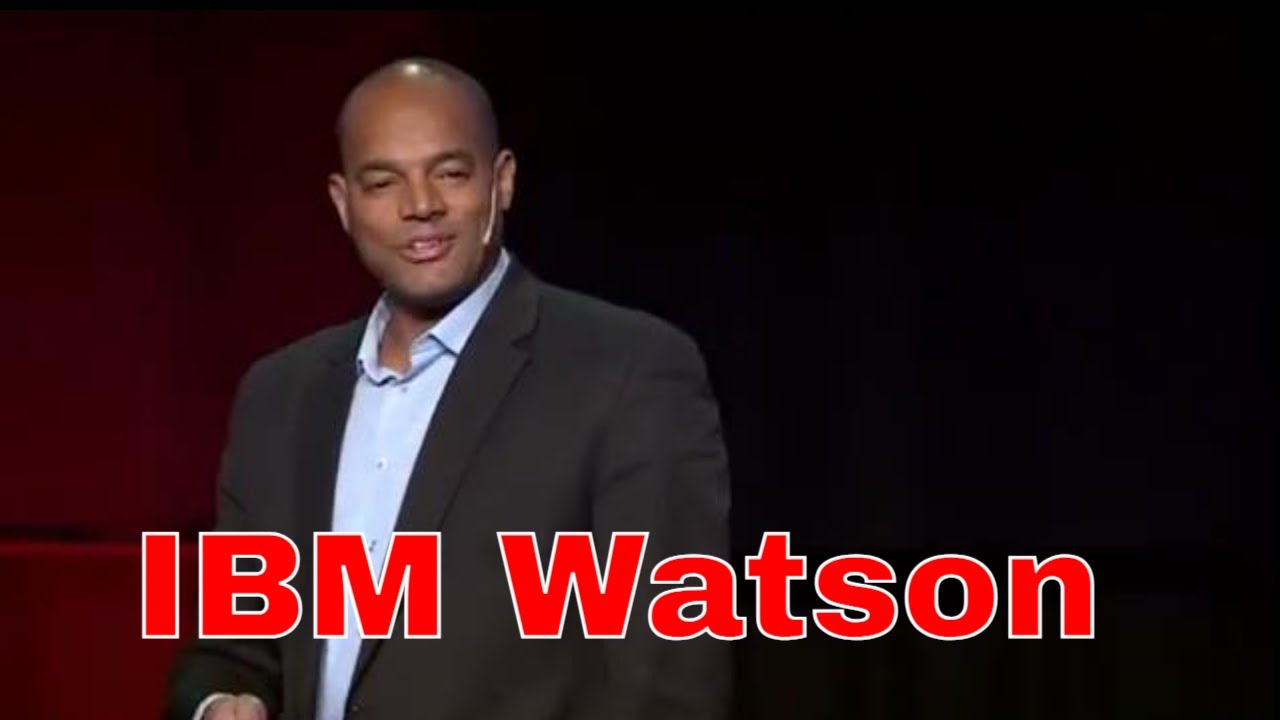
Thomas Anglero, IBM's Director of Innovation, discusses Watson's capabilities including image recognition for skin cancer diagnosis and the DoNotPay legal service. He covers quantum computing and emphasizes how organizations must protect risk-takers to drive innovation.
Chapters
Saison. And then I would like to introduce the first speaker. He's the director of innovation at IBM. He's responsible for IBM Watson and innovation processes and projects with IBM's customers. He is the creator of the new and existing Watson Innovation Lab at the Oslo Cancer Cluster, which is the home of Watson in the Nordic countries. So please welcome with a big hand Mr. Watson, Thomas Anglero.
Thank you.
So are you guys excited to hear about IBM? Nobody? I figured you guys would be an impossible audience, especially since this is the end of the day and "Olá, derahar, vunti, rumpa," right? Yeah? So I'm going to take care of you. Are you guys ready to shake it?
Yeah?
Do you want a taste of the new IBM?
Yes!
Do you want a taste of the new IBM? Yes! Oh, baby.
Wait for me, girl. Wait for me. Wait for me, world. Wait for me. Wait for me, world. Wait for me. Wait for me. Ah! Ah! Ah!
Ah!
Better keep up till the sun goes down. Ah! Ah! Ah! Don't chase that motion, look around. Wait for me, butterfly, wait for me. I'm only trying to set you free. Wait for me, problems, wait for me. I'm only human, so let me be. Let me be.
I'm so tempted to say thank you for the presentation and just walk off after that, you know. So that's the new IBM, and what it is is all about where we've been and where we are today. IBM's over 100 years old, and we're an IT company. Doesn't that sound kind of ridiculous? Was there even IT 100 years ago? So I want to do some storytelling and show you about the journey. So I'm going to tell you stories and stories and stories, and then I'll get thrown off the stage. So let's go with some storytelling. IBM— let's jump right to the end. We were in the very first days, you know, we did mechanical equipment when we started off. That wasn't very IT, everything was mechanical. And we rode the entire journey of the industry. Maybe this sounds familiar to you. Your company's been doing what it's been doing for a long time, many, many decades. You've taken your business model for as long as you possibly could. You took your financial model for as long as you possibly could, and now your margins are shrinking. And you're going, what do we do next? Sound familiar? Anybody wanna be brave enough to pick their hand up? Look like one guy's going like this, okay, I'll help you out. So IBM, if you notice, this is actually what we've done. How do you do this for 100 years? What you do is you ride the technology to the very end, you ride your business model to the very end, and when you get there, you go, let's make a leap of faith of what's coming next. These are all the leaps of faith IBM did. 1900, in the 1920s, We went from mechanical to electromechanical, and then we said, you know what, there's something called the vacuum tube. Did you know IBM actually created the world's first vacuum tube? And we rode that entire industry all along the way. And then said, ooh, there's something else we just invested, it's called the transistor. And we left the old business model and created this new one and rode that all the way. That's how you do it. The question is, do you or your management team of your company I'm sure I could use a curse word. I gotta be very civil. Are they brave enough to make that jump? Are they willing to say, let's leave behind everything we've done, everything we invested in, into this thing we have known nothing about? If they are, if that's the culture of your company, 100 years from now, you had yet to be on a stage at Nokia since show slide like that. Isn't that kind of cool? I think this is important for you to understand. When you hear the name IBM, that's the story of IBM. Do something right, ride it to the end, and make a huge leap of faith about something you just started that your scientist just created. And you ride that all the way to the end, and you do it and do it and do it and do it. This is the predictions that we have in the upcoming years. I thought, what can I do to help you guys and girls to say what's coming, what is digitalization, what is technology, what should my company focus on? You give me advice about jumping, but where should I jump? Is that what you guys are thinking, yes or no? Like one guy's honest. Everybody else is still sleeping. You guys want me to go back to the good music? In the next 18 months, these are the buzzwords, and they're no longer buzzwords. You have personalized learning, hybrid cloud, these are all the words you know now, right? These are nothing new. This is all already happening. But what we see in the next 18 months to 3 years, I love the advanced image recognition. This is what we see as being the next great thing in technology that's gonna revolutionize everything. Today we've already with Watson, if you've heard of IBM Watson, is our platform that knows everything, reads 10 million pages in 3 seconds, is amazing. We're able to diagnose cancer moles, so if you have a cancer on your skin, it could diagnose it with over 80% certainty. In the next 3 years, it will be closer to 100% certainty. And it can all be done inside of a mobile app. So, say some of you are at the beach. You know, at the beach, and you're putting on some suntan lotion. Everybody remember that? You guys haven't been to Gran Canaria lately? No? You're putting on some suntan lotion, and all of a sudden you notice a little spot. In about a year and a half from now, you're able to take a picture, and within seconds you'll know whether or not it's cancerous with a certain level of prediction. That's where we're coming. And then in 3 to 10 years, quantum computing. Quantum computing, I love one part of quantum computing is we're just looking at things at the quantum level. At the quantum level, our laws of physics no longer apply. If I drop this right now, he would be pissed at me, but it actually would prove a point. In the quantum world, there is no gravity, there's anti-gravity, there's things that are happening, 1 1 doesn't equal 2. That's part of our universe, but we don't take into account. Does anybody ever take that into account that a particle could be in 2 different places in the solar system when you're working on your Microsoft Excel spreadsheet? Sound kind of stupid? In 3 to 10 years from now, this is the way we're gonna be thinking, or at least the software will be thinking and taking that into account. So these are things that are coming, and I don't know about revolutionize, but they're gonna influence everything we do. It's gonna influence how you work. So now that you know what's coming, what is your company gonna do about it? Start talking to your management team. If you're the manager of the company, it's okay to jump. You have to jump. If you don't jump, see at the end of the round circles, you see that gap? If you don't jump, your company falls into the gap. And then you end up at NAV on unemployment or something like that. Anybody work at NAV? High enough? Let's give you another example to just simplify this even more. Here's an example of a completely non-digital going to digital just by coincidence. Have any of you ever been to this website called Do Not Pay? It's donotpay.co.uk. It was created by a 19-year-old kid who I'm going to show you in a second. He got a parking ticket. And he didn't want to pay the parking ticket, so he went to a lawyer. He asked the lawyer, "Help me to not pay this parking ticket." The lawyer said, "No problem. I'm gonna charge you $2,500 an hour." The kid got even more pissed. So what he did is he went back to his dorm room— and by the way, I'm sorry, I didn't mean to be rude. Here's Josh. There's Josh. Josh went back to that seat. That's his dorm room. That's where he sits. That's the PC. And for one week, he taught Watson everything about parking tickets in the judicial system. After one week, he launched the website donotpay.co.uk, and when you go there, you experience Watson. Watson asks you a question: "Was it hard to understand the signs, the parking signs?" You answer: "No, not really." It's a Q&A. When you're all done, Watson will print out a form. You print it out, it gives you the label, send it in. To this day, he saved over 500,000 people from paying a parking ticket. He saved them over $15 million. When I presented this at a lawyers' conference here in Norway, I asked the audience, "How many of you lost revenue because of Josh?" 80% of them said yes. Did Josh try, wake up one morning and say he wanted to undermine the legal system? Did he wake up one morning and say, "I want to take all lawyers and put them out of work?" He didn't. He's just a pissed-off teenager. How many of you have pissed-off teenagers at home? I got 3. Do you guys know what the hell— who's going through hell? Right? Ikke sundt? I can speak Norwegian. Want me to do this Norwegian? I'm really boring in Norwegian. That's why I'm funnier in English. But seriously, I think the most important thing, keep looking up at Josh. Pissed-off teenagers. This kid didn't have any money, didn't want to pay the parking ticket, and now what he did this past summer, was he taught Watson 1,000 different other legal areas. And now when you go to DoNotPay, if you get over 1,000 different fines, you just go through the Q&A with Watson, it prints it out, you don't have to pay. This service is for free. He is taking down the avocats, the lawyers, their work is disappearing to a website because he's a pissed-off teenager. My point is this, I'm trying to be funny but I'm being serious at the same time. A lot of you or your management team are going, We have to pay really close attention to our competitors. That's your competitor. Do you got it? This is extremely important. The old world, you thought you knew who was coming after you. Today, because Watson, where you could teach this thing after one week, it'll learn an entire industry. This kid in that room in that dorm, that's nothing special. That's it. Remember the Bill Gates story? He did it out of a garage. Here's the Josh story, the kid who took away all lawyers' income. He did it from his dorm room. That's who your competitor is. Do you got it? "Jahrlinnai." Beautiful, wow. That was not Norwegian. Want to have some more fun? Here's another example. We had a project with this guy named Dave. Let's just run the video and I'll explain to you. This is my buddy Dave. Dave is the 2-time winner for Race Across America. Race Across America is Dave rides his bike from New York all the way to San Francisco and he does it in 7 days. There's my boy Dave. Has anybody, who's done Trondheim-Ulslo? Stand up, you deserve recognition, come on, stand up, come on. Everybody clap, come on, clap. Woo! Fantastic. No, seriously, I mean, David Umpah hurts like nobody else's. So Dave came to us, he has a simple bike, you know, 100,000 kroner bike. And he says, I want to take it to the next level. See the pill? So we told Dave, Dave, take this pill. In that pill is a bunch of sensors. So when Dave takes the pill, all those sensors, we know his blood pressure, his heart rate, we know what's going on in all his different organs.
All right?
So when we did this project, we said, Dave, let's see what happens. So Dave is doing Race Across America. He's going up the steepest mountain in Colorado. And all of a sudden, Watson, which is connected to the pill, which is inside his body, says, pull Dave over, get him off the bike, and take him to the nearest hospital. We take Dave off the bike, we get him to the hospital, and for the next 6 hours, they shoot Dave up with antibiotics. What the— I'm sorry, they shot him up with antibiotics. After 6 hours, he got back on the bike and he finished the race. He took second place that year. You guys are amazing for doing Trommelmann Oslo, but let me shoot you up with antibiotics for 6 hours and see how you do. That's the race, you guys probably know, right? That's the way it is race. You're in the front, there's a van behind you. This is the moment before the van pulled him over. What the hospital found out was that Dave had just got an infection in one of his organs. What Watson realized was the moment the cells, the germs started to split, you know when you grab, you touch something that somebody's germs, you touch it, it's got something on it, and 2 or 3 days, through 2 or 3 days later you're sick? This is the moment you touch the doorknob. Watson realized that when he was on the bike racing, that he just at that moment, the germ started to split. It said, "Get him to the hospital." From this simple project of helping a guy race his bike, startups are now offering a service to all of you. Their guarantee that you will never be sick another day in your life if you take that pill every day. We started, this was just a simple bike project, not very digital. And all of a sudden it came out from, we now can guarantee that none of you will ever be sick ever again. Question is, would you take that pill? Should I put on that music again? You guys okay? But that's an example of non-digitalization, right? A very simple, we're talking about bicycles all the way to now saving lives. I think this is kind of cool. This is another cool IBM video, and what this is about is going from the invisible to visible. In your corporation today, what you're doing today, all the answers are in there. You just got to change your perspective. When you looked at the last video with Dave and the bicycle, you changed— it wasn't just about bicycles, right? It actually uncovered how to save everybody's life in this room. Did you see that coming when I turned on the video with the bicycle? Did anybody? Nigh. But it was there. In your company, you know what your company does, you have your database, you have your datasets, you know everything you're doing. If you change your perspective, what can you really be doing to help in the future? I hope this helps to change your perspective. Those are snapshots of all the changes that we're going to see in the next 5 years. All these things are coming. And the amazing epiphany, the moments of us realizing that we could do all these amazing things, was when we just looked at what we were doing from a different perspective. That's the takeaway I want all of you to do. The future, where we're going, what we're going to do, what is my company going to do, is not intimidating. It's not scary. Just change your perspective. How many of you go to work and I do the same thing every day from 9 to 5? Da-da-da-da-da-da-da. You go to lunch the same time with the same people. Sound familiar? Start going to lunch with people who you don't like. Oh, so nobody wants to do that. But change your perspective. So in my final slide, I think this is the most powerful I could give you as a gift. Creativity is coming up with an idea. Anybody could come up with good ideas. That's not amazing. Anybody, you know, you go to a meeting, there's usually a guy, women are usually very sweet, But a guy comes into the room, storms into the meeting room and goes, "Ved' dva vimo jore son, no son, no son?" Then he sits down and doesn't say crap for the next hour. Anybody ever been to that meeting?
Yeah?
Anybody married to that guy? The guy just raised his hand, I feel sorry for you. You know, that's being creative, coming up with ideas. If you want to make a real difference, if you really think you're innovative, that's the person who's actually doing something. You know you're innovative when no one likes you. Think about that. Do you guys know the real story of Tesla? Anybody have a Tesla? I love interactive presentations. Go ahead. I live in Holmenkollen. Everybody has a freaking Tesla in Holmenkollen. Go ahead. You raised your hand. That's one person. Two. You embarrassed? You spent all that money, you don't wanna raise your hand at a conference? The Elon Musk story that people don't take in consideration was that at midnight, Elon Musk with Tesla, very early, very early days, they didn't have funding. And at 11:45 PM, 15 minutes to midnight, Elon was crying in his living room. He had been throwing up from 6 o'clock on. At 11:45, he was crying. He was destroyed, completely destroyed. His dream was gone. And 11:45, the phone rang. An investor said, "I believe in you." Elon was very alone. No one believed in him. Now he's the poster child of innovation. Do you know how much it cost him to bring you your Tesla? No one ever wants to talk about that. Everybody wants to talk about how nice it is to be Elon Musk. If you want to be that guy, that girl, if you want to be known as being innovative, you're going to have a lot of lonely days, but it's worth it. All the technology I showed you in all the videos, it's worth it. All the innovations we have, the mobile phone that you have, you know how many people were alone, how many people nobody believed in, how many lunches they went to alone? For your company to change, it's gonna take someone to change, someone to take that risk. If that risk, if that person is not you, then I give you the strongest advice I could give you. If you're not that person who likes to take risk, and that's 100% fine, that's no problem, then I want you to do is to make room for that person who does in your organization, and you protect them at all cost. Do you understand that? If you're not that person to take the risk, you find that person and you protect them, and then your company is going to be fine. Because one of the things as Director of Innovation for IBM, I'm talking to management teams all over Norway, and it's not about technology change. If you think I was coming up here to hit you with tech, it's not about tech. The real-world example that I have, the real experience, is culture. That's where innovation needs to be. You want to be successful in digitalization? You don't need a new DVD, you don't need any upgrade of your server, though IBM would love for you to pay for that stuff. What you need to do is look at you from a different perspective. Cultural change is there. The answer's in front of us. The answer's within you. But remember, if you're not that person, protect that person who's willing to eat lunch alone, that person's a little bit different, You know in Norway when you go to the cantina and there's somebody sitting alone, what do you guys usually do? "Vasjer mæhan." Everybody's staring at that person. The next time you see that guy alone or that girl that's alone, protect them. They're the future of your company. Thank you very much.
Thank you, Thomas, for an inspiring session, and especially the first 2 minutes. It's the first time I've been inspired to dance with a man. Thank you very much. I got my wish come true. Thank you. Take this gift.
Thank you.
Thank you.
More from Thomas






IBM Watson AI Lab for Cancer presentation to Ullern HIgh School / Thomas Anglero

Will You Lose Your Job to AI / Oslo Business Forum / Thomas Anglero & Richard Qwest



