Innovation at the National Level: 37C Panel | Thomas Anglero
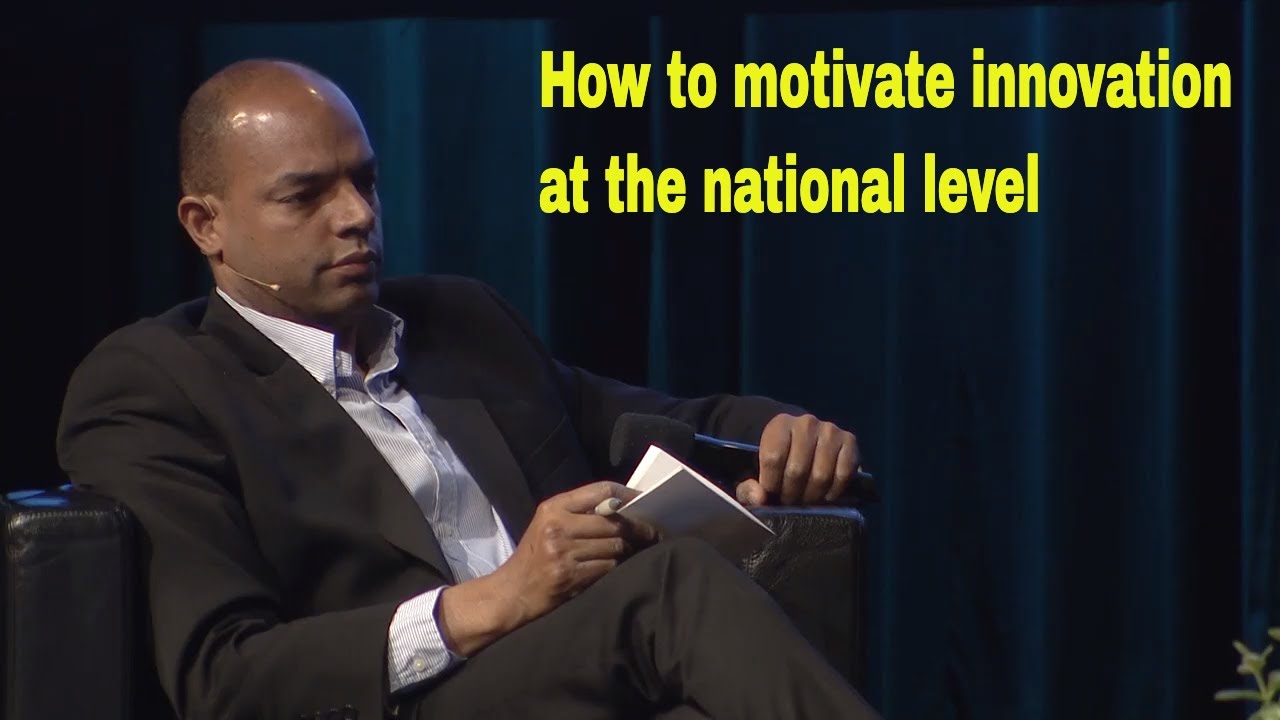
This content was created by Thomas Anglero. This content was uploaded by Thomas Anglero. This is a YouTube panel discussion titled "Innovation at the National Level: 37C Panel | Thomas Anglero" (posted 2019-05-08). The excerpt is a moderated, multi-speaker panel on national innovation ecosystems for life sciences and digital health. Thomas Anglero moderates and engages panelists including Antti Porkkä (Finnish health/business development, pharmacologist/MBA), Dan Schwarzman (CEO, MindUp, Israel), André (enterprise architect, MediCloud project), and Arlin Nøbbe (leader of ELIP health incubator, Oslo Science Park), plus other audience questioners. The conversation compares models from Israel, Norway, Finland (incubators, government grants, culture of failure, platforms, Medicloud), discusses incubator funding mechanisms, public-sector innovation, cultural and educational drivers of entrepreneurship, and practical steps to build ecosystems. The format is an on-stage panel with audience Q&A and international/cross-sector perspectives.
Chapters
So, thank you. To keep on with this very serious nature, we had a discussion before we came on stage, and since I'm from New York City and they're not, they have agreed to be in New York mode. So, throughout our panel discussion, they will cut each other off, and we have a grading system. Whoever's the most rude wins the panel discussion. Is that okay? So, let's go right into it. We don't have much time, and I don't want to take up any of the room of our amazing panelists. So, Ansi, why don't you start by introducing yourself, please?
Thank you. My name is Ansi Porkkä. I come from the— The last project that I have been working with was with the Ministry of Social Affairs and Health. I was leading the business development and how you make money out of the Finnish healthcare data. I'm a pharmacologist and MBA on my background. Worked in last 17 years in the— sorry, 15 years in area of oncology with big pharma and diagnostics. And I'm a very— let's say, I think that I'm a very innovative person. So these guys need to challenge me.
Dan, would you please introduce yourself?
Yes, hi. My name is Dan Schwarzman. I'm the CEO of MindUp. MindUp is a fairly new, or a year-old, technology incubator based in Israel. My background, I had the opportunity to work for small startups, to manage small startups, and to work for large organizations like Johnson Johnson, Ethicon, Ethicon Endosurgery, Hospira in the US. Spent some time in the US, almost 10 years working there, studying there, and here I am.
André, please.
André, André, working as an enterprise architect in Sykkes Partners Health Trust. It's the IT provider for Health Southeast region of specialist healthcare. The last years we've been focusing on developing a concept we call MediCloud, trying to— with the ambition to create a national arena for facilitating and accelerating innovation within eHealth. My background is I'm a pilot in the, in the ground, and then I have a master's degree degree in science and signal and image processing.
Arlin, please.
My name is Arlin Nøbbe. I'm leading the ELIP, the health incubator in the Oslo Science Park. The initiative was actually established last year, in October last year, so we have within the last half a year attracting 32 companies, um, so they are working actually together in the Oslo Science Park, um, and we have everything from biotech to digital health and medtech companies. Um, myself, I, I come from the pharmaceutical industry. I've been there in, in 20 years, but I also have always been thinking that what I have been trying to do elsewhere in the world, it could also be possible in Norway. So that's why I took all this kind of initiative.
So you understand our panel is global in its perspective of—
Am I alive?
Am I alive?
Okay.
So our panel is global in its perspective of innovation. So let's go straight to the number one question we got off of the social media world. What kind of innovation or ecosystem is needed to foster life science or innovation? Antti, why don't we start with you?
You know, everybody is talking about the money, but I would say if we can spoil the market and small startup companies with money, what we need is platforms. And what I mean with platforms, we need support that work that happens between the private, what we heard, and with the public. And I'm talking academic research and the private market. That's what we need, and what government can do, talking on the government behalf, is enabling by legislation that to take place. That's very short.
Okay.
Oh, thank you. You guys don't like me, huh? Thank you, Antti.
Yes, I think obviously there's no one recipe or kind of one way to do to foster innovation in a country or to structure that. What I wanted to do, first of all, I completely agree with what you said, but there are many other things that are around it. What I wanted to do, and I prepared some slides just to show, to talk about the Israeli model, which is again one of the models, one of the ways. It's not something that can work only with this system or with the structure that Israel put together, you need many more things around it, and I think that we'll talk about it next. But first of all, I don't know if you're familiar with Israel. Israel is a fairly small country, although relative to Norway, we're kind of big. In Israel, there are 8.5 million people in population. A few figures here just to give you a sense of why Israel is so known in terms of innovation. I highlighted basically two, only two things, two figures there. One is that Israel has the largest density of startups in the world, over kind of one startup for 2,000 people. And the other thing that I think is very relevant for, for the discussion is that in Israel there are over 300 research centers of global companies, anywhere from IBM, Medtronic, GE, Philips, Google, Intel, Apple, etc. MindUp is a, is a digital health incubator. We are a joint venture of 4 entities: Medtronic, IBM, Pitango, which is the largest venture capital firm in Israel, and Rambam, which is a medical center in Israel, a government medical center, which again is something that is relevant for the discussion and for what was discussed earlier. Everything here works under kind of a license from the government, from the Office of the Chief Scientist or Israel Innovation Authority. The Israel Innovation Authority put together a program that I think is about 20 years old. They started it a long time ago. The basic goal of this program is to encourage and to help entrepreneurs to form their startups so they can grow their companies or develop companies, especially where money is hard to raise from the private sector or from a different sector. And on top of that, obviously, the goal of this program is what we all you can think of, generate workplaces, etc. The core kind of, say, components of this program is that company that applies or that is being accepted to the incubator is entitled for a budget that we're talking about, about $650,000 for 2 years. 85% of this budget comes from the government in the form of a grant. The remainder comes from the incubator, which is a private company, comes from the incubator in the form of investment. So we do take equity. So there's a mechanism how the government see the money back, but basically the founder itself doesn't take risk and doesn't risk his own or her own money. I will not talk about digital health in general and what is digital health, but Just again to show you the digital health is a fairly new field, fairly new kind of sector in Israel. There are almost 400 registered companies operating in the field of digital health investments. You can see only last year there were 19— at least is what we know. Many of the investments, as you know, are not published, but we know of almost 20 investments in seed and pre-seed rounds, which again is something very important. Again, MindUp is a joint venture, as I mentioned, of these four entities. The important thing here is that we, we provide the companies that come to our incubator office space for two years. They will spend with us these two years. They will get administrative support, legal services, accounting services, everything that they need to allow them to focus on the development of their product. So they get mentorship from us, support in BD, in marketing, whatever they need. They also get access to the knowledge, the experience, the relationships, the contacts that each one of these partners has. So be it IBM, that was— that mentioned here all the technology and experience that IBM has in cognitive computing and data analytics, etc. Medtronic, the largest medical device company in the world, all their technology and knowledge, experience, contacts, relationships, access to the market, etc. Again, Pitango is, is provide access to investors and other strategic partners. And through the hospital, which is a governmental hospital, because the hospital cannot invest money in the incubator, their investment comes in the form of in-kind services, which is again another way to support the companies and allow them to get access to clinical data, access to clinicians, access to facility and a way to do or place to do clinical trial where basically we as an incubator subsidize everything for the company. So this is kind of a long, very kind of explanation of what happens in Israel.
Yeah, but it's extremely mind-boggling, and we'll come back, but I just have to ask you a question. You said something quite profound: the founder doesn't take risk. That's incredible.
Yes, and this is, I think, and this is why I said that it's not enough to have money, it's not enough to have you know, the idea. You need the entire system, and I don't want to use ecosystem because it's so overly used terminology, but this is the best term, I would say. And I think, you know, there are many other components you need to take the risk. You need to provide commitment, kind of to make sure that you get the commitment, and the commitment from the founder, and the commitment from the clinicians that will be involved. And other things.
May I challenge, as a New York style, no risk, no reward?
New York style, we wouldn't say may, we'd just do it.
Yeah, thanks. No risk, no reward. What do you say about that?
Yeah, so I think the risk is the alternative, right? Because each one of the talented, very talented entrepreneurs that we see can go to IBM and get a great job there, or can go to Google and get great job, great terms, great salary. So they do take risk. They do chase after their dream. But many people don't have the ability to finance this risk. So this is a way to take away at least one thing from their kind of long list of risk items. Or risky items.
Let me ask one more question, then we'll go to other two panelists, because this is so incredible. So as a founder, do I, if my company goes bankrupt, because I took no risk, do I go, eh, so what? Or do I actually lose sleep and go to some bathroom and throw up for 3 days? What is a typical Israeli doing after a company goes bankrupt?
Commit suicide.
Commit suicide. Another Israeli, Jesus Christ.
Please go ahead. I think what you will see, I mean, there are, it depends, right? First of all, I think one of the things that you will learn very fast from talking to Israelis is that every question that you will ask, the answer will be either it depends or it's complicated. But I think that—
They sound very Norwegian, but go ahead.
But I think What happens, it really depends what was the reason for the failure. I mean, we all know we cannot be successful without failure. It was discussed here before, and everybody says that you need to go through some failures. The important thing is, first of all, to learn from failures, and secondly, is not to repeat the same failure again and again. And what happens for entrepreneur who made the same mistake again and again and again, probably for the first the fourth time, he or she will not be accepted to any program, be it the incubator or be it raising private money. But the thing is to really to have this system that supports and understands what's going on. And this is obviously a fairly small community, and people talk to each other, and we know if there is a rock star CEO that was was mentioned yesterday many times as kind of the serial CEOs. We know who they are. If they are failures, we also know who they are.
Thank you very much. André, I apologize, please.
We need to do something in order to answer the question. I think that's for starters. I think I answered the question by some experience from the project that we've been doing and piloting, the Medicloud project. We've been guiding— we have put ourselves in a situation where we be guided by some principles. And the first of this is open, openness, and open innovation.
Explain to everybody what is Medicloud first.
Medicloud, I mentioned, is our attempt to create a national arena that could facilitate and accelerate innovation within eHealth. And coming from SickKids Partners from the ground up. So we've taken one for the team, see if it's possible to take something from the ground up from within the public sector. So, and the 3+1 principles is the first one is we need to open up. We cannot work closed. Closed innovation is— Dead innovation. Yeah, it's dead innovation. So we need to open, open. And we need to take advantage of those platforms that we see are out there. We need to create something on top of that. And in order to do so, we need to talk about open architectures. So when innovation succeeds, it could easily be exported. Today, if you succeed in Norway, you put yourself in a unique architecture, and you're going to be stuck there. The second is you need to have a playground, or you need to have a place where exploring and failing is possible and encouraged. So we use the term— Gartner comes with the term of bimodal IT. And the Mode 2 aspect is what we have been focusing on in our project. And the third is information assurance. We need to put ourselves up and start talking about the information, not the system, not the technology, but more on the information. When it comes to laws and regulations and everything, you need to start focusing from the information and up. You heard a lot of talk today. Data is the new asset, not the technology. And the plus one is that we have a saying that we can think of— content is king, but distribution is King Kong. So we need to engage with the users. We need to start engaging. In a way that's trustfully, but still it is risky also. But you need to engage to evolve this thing. And that's our approach. And that's done some good learning the last 3 years in that matter.
So I'm going to make you a little more uncomfortable, if you don't mind. Do you guys mind?
Right?
New York mode. Public sector innovation. Those words have almost never come together in the history of mankind. How are you innovating in that?
How are you succeeding with that? That's why I mentioned we are taking one for the team because we saw coming into that, because like you see, it's like I've been working in defense and in oil and gas before I came into health, and I felt like I go 5 years and 10 years back in time in order to— it's how the projects are placed and how they're thinking when it comes to IT. And that's why we started up this project, see if it's possible, because I think it's crucial when you talk about open innovation, it's crucial that you have the healthcare sector and the technology working together. And how do we do that? Because if you look outside, there is a lot of innovation on the outside. But it's an ever-increasing expectation gap if you look from the inside, what kind of services are coming from the inside. It's sad. Sad to look at.
Please comment.
Yeah, I just wanted to follow up on this public innovation, because a lot of people is talking about public innovation. I think a lot will happen over the next years. What we see this week, we are running a project with Oslo Kommune. They wanted to turn this around, so they want Oslo Kommune to be an arena for innovation. So they are actually going out to startup companies and to medium companies with some needs that they need to solve in the future, and they want the industry to come to Oslo Kommune and actually solve problems for Oslo Kommune. And they are now setting up an accelerator so they can come into Oslo Kommune and work with the product or the services to actually solve some of of the issues inside Oslo Kommune in the future. So this is actually turning everything upside down.
Exactly.
From the past, but I think we will see more of this in the public innovation in the future.
I just wanted to add a few words about what's going on in Israel in that perspective, because there are, again, one of the things that is important here is the openness and the creativity. And one thing that the Israeli government is doing, at least in the healthcare sector, is from time to time they publish kind of challenges and they go out to the startup community and say, these are the few needs that we identified, we want solutions, and we are willing to pay. So they will pay money for these companies to develop the solutions. So it's kind of one thing. The other thing is the ability and the openness to share data. So especially again in our field, we need access to data. And if we get easy access to data, then companies can play with it. And the other thing is what we do with the hospital, again, it's a flexibility and openness from the government perspective to allow a governmental hospital to be some kind of an investor and play with innovation in an incubator. So this is something that allows us and other entrepreneurs entrepreneurs to work directly with the hospitals, with the clinicians to identify needs and to build from them companies. And maybe I would add one more thing. I think Ruthie mentioned it earlier, but one of the catalysts, the kind of the things that helped things like that happen is the consortium that was developed in the country, the association of the industry. And then I think Ruti was one of the first people to, or at least one of the vocal people, kind of the more active people in Israel, pushing and communicating with the government, showing them, explaining them, and fighting for what the needs of the industry in order to facilitate innovation.
When you talk, you talk in such a historical historical way that this has been going on for so long. MediCloud's project is about a year old, right? The Norwegian or the Nordic perspective is relatively young, but every time you talk, you talk like we've been doing this for so long. It sounds like it's a culture in Israel. How long has this been going on, this way of just being? Is it relatively new or has it been around since grandpa?
A couple thousand years.
Okay.
Seriously.
Yes. Yes, so the incubator, the incubation program started about 20, 21 years ago. Why?
What did you do?
The real need for that was actually the Russian immigration, that the government saw that there are so many scientists coming from Israel and they don't have enough places work in their profession. So they started to either, you know, do shift and move work in a different profession, or let them work and develop, use their, their knowledge, use technology and experience, things that they learned in Russia, and now they can implement it here in Israel. So this was something that I think the main kind of cause for that. And over the years, it was developed. It became from something, you know, an incubator that was privately owned, it became multinational companies, the most attractive multinational companies coming to Israel in order to kind of own an incubator.
Arlie, please.
It's fascinating to hear because I think Norway is quite young when it comes to innovation like this. I saw a slide this morning that Mehnon Economics was showing that we are— in Norway we are spending like 9 billion a year in kind of research related to health, but a relatively few number of companies is coming out of that. So I think there is an enormous kind of potential in Norway if we are able to come up with some good commercial ideas. And I think what you are saying we need to do something with the culture. Because we find some good examples, and Anita Kos this morning was a great example of how to turn kind of great research and science into commercial idea. But I think we need to share that across kind of the university systems in Norway to create a culture that, yes, research for, I mean, the better understanding, but also maybe for commercial ideas. And for product and services in the future. So therefore it's interesting to see what you have done in Israel when I also see it on your numbers. So I think there is a lot of things that we in Norway can pick up from outside, but we need to adapt that to the Norwegian kind of model.
Yeah, but Dave, I think, I think, I think I'm— go ahead.
Okay.
Is New York just for you?
I'm not a New Yorker.
Just to help the other person.
I was saying I think you're right about the culture. And also our experience, you mentioned one year, we've been doing the medical priority for like 3 years now and getting some experience on that. And what we see is there is a lot of low-hanging fruit. And maybe when you look at the innovation projects, They're very complicated. It's right to the— within the sector. They're very complicated projects, going to solve and take a long time. But if we focus more on the— I think there was a saying that I catch up in the US. I think they use the word billionaire. But the new millionaire is not the one that raised $1 million for but the one that makes a difference for a million people. And that's— there is a lot of opportunities on this— on that side that maybe not be very interesting for the best clinicians or the health personnel, but still it will make a big difference. And it's a start. It's a place to learn. And that's a place where the risk or the— if you fail could be as crucial.
I want to jump over that if you fail thing in culture in Norway, but Hansi, you first.
You know, hearing and knowing what's happening in Israel, it's really exciting. And what we have been looking in Finland, it's anyhow, it's very much up to how we succeed. It's up to do the marketing part. And we have saying in Finland that, you know, let's innovate here and let's hire a Swedish guy to market this. It's a bad joke.
Is that a joke or are you being serious?
Yeah, yeah.
So, but I think what— knowing the maturity of the foreign companies doing IPOs, listing new companies in the New York Stock Exchange, more than half comes Israel. It's telling something. And, and looking the valuation of your companies versus Finnish companies, if we have a company doing in a medtech area, the valuation might be between 1 to 8 million euros in Finland. If we take the same company from Israel, it's, it's some somewhere between 10 to 30 million, and US companies even exceed that. But you do extremely good in marketing. So you have a— like, a marketing plan is on top of the pile of the papers always, how you, you go into the market. And it's what you said, and it's about distribution.
Um, from my perspective, it's about maturity, right? And they've gone through 20 years of challenging cultural challenges, cultural maturity. So, so here's the perspective that I see. In the US, it's taken us a long time. The dot-com days were very painful. Everybody lost a lot of money. But you met people who've lost, who had 7 companies that went bankrupt, and you asked them, you know, how are you? You know, and they go, you know how much experience I have? That was their perspective. Do you know how much experience I have? I bankrupt 7 companies. Do you know how much I know? Right, and it's kind of crazy from a Scandinavian perspective, right? Because that's the worst thing you could do is so, ya ya, ya ya, konkurs, nobody wants to talk to you, right?
Like my grandmother said that, you know, I was asking a young boy that what's konkurs, so what's the bankruptcy, and she said to me, she was an entrepreneur, she said, that's the line, final training you want to take.
You see, and it's a cultural difference, right? And in Israel, that's why I challenged you earlier on, was what happens with failure? Failure and all that, or are the founders spoiled? I think what cultures have to realize is failure is success. And until a culture turns that corner, they will forever spend money and be frustrated and all those things. And, you know, marketing plan or without a marketing plan, unless you embrace failure, you will forever just keep on failing because failure is success. All right? And I can pick on Norwegian culture and how many marriages people get married to, and every time you You know, get divorced, is that a failure or not? That's a whole other story. But I've been here too long. No 3D stories.
Go ahead.
I just want to add one thing regarding kind of culture. I think a lot of it related to education and what we see in Israel, there are programs for entrepreneurs from very early age and they— and kids and young adults are living in an environment that talks and teaches entrepreneurship. So there are methodology, and there is just the culture and the environment. And one more very important thing is the kind of the support mechanism around it, and the fact that you have success stories and you have failure stories, and you have these stories and these entrepreneurs that were successful and are able to go back and support and mentor and share from their experience and from their connections and everything is something that is very important that helps building this culture and support kind of system. And I would say one more thing is that typically when you think about startup, the entrepreneurs working extremely hard. This is the expectation of the investors, this is their own expectations from their own kind of project. What is important is that everything around it will be easy and fun. And what you see in many places in Israel is where there are lots of— all the service providers are in close proximity. Other global companies are available and around, restaurants, everything is there. The startup scene is something that is more than just give me money and give two other kind of components to make this recipe works perfectly.
Yeah, it's not just a spiritual culture, it's actually an environmental culture, it's a physical culture.
It's everything.
It's everything. Ecosystem. An ecosystem, exactly. So this leads into my next question, which you already answered. What is the missing? Link, and that's where you came from. But Arling, what about you? Do you have any perspective on what is this missing link missing in innovation from your experience? From— I mean, you've been working all over the world. What do you think?
I think it's a lot of things, but I think as we have talked about, I mean, we can call it platform, we could call it an ecosystem, but I think all the bricks Things in the ecosystem need to work together. And I think that's an important part for Norway. When I was jumping into this project, I saw that there is a lot of things happening. But I think it's a little bit what Dan said. The culture is one thing that we have talked about. But also how you bring startups to an investable case or a project, there is some fundamental things that you need to have in place. Something can be provided by— from public funding into kind of programs. But other things, they need to solve that by themselves. That could be in a community sitting together to do this. But it could also be kind of on their own. But I think they are in a network, it's easier to succeed than just run on their own and try to figure out everything by themselves. So for us, we have tried to put together kind of a network for a health community in Norway. Someone will physically be sitting in the Oslo Science Park, and someone would be connected from Tromsø, Kristiansand, Stavanger, Bergen or whatever. And for me, it's then to share the competence, the critical competence that's needed to be in place. It could be regulatory kind of strategy, it could be patent, it could be more accounting and financial services. So we try to put that together and bring that into the network that can foster the innovation. And on top of that, I also think that in the future we can't succeed in everything. So we might pick on something. We have the Oslo Cancer Cluster, very specific on the cancer segment. I think if we are going to succeed in the future, we might find some, some clusters that we need to be really good on, instead of being very wide and being good on everything. And I think we should look at the community, the healthcare system in Norway. We have some really good things that you are building on in Mere de Cloud, that we have good biobanks. We have the ID on everyone in Norway. That could— this could bring to something in the future. So why don't kind of build the network and also the environment around those things?
The foundation is there in Norway, there's no doubt. From a Finnish perspective, Aasi, what do you think the missing link is?
As I started my talks here, is that it's not the money, it's not the— I would say even that it's not what the government's doing, it's the municipalities and people doing. And I think what we need, we need to build that culture in Finland as well, that, you know, we, we have to encourage people in, I mean, youngsters in school, in, in primary and secondary school, to, to see that this might be my career. And it was 15 years ago when there was a research done in Finland that how many would like to be an entrepreneur, and it was less than 5%. And now it was because of the Rovio and Supercell and the other companies in, in a gaming industry, it has— this has changed dramatically. Now more than half of the secondary school students say that they could consider to be entrepreneur. And I think that's the missing link that what we have been missing for so many years because there was a lot of— we might have a kind of a bit of Russian academic culture in Finland. I would say that, you know, it's praised to get the academic degree or two or three even, and it's publicly financed. But now I think we are moving the right way because we need academic research, but without deployment and implementation of academic research and making money out of that, nothing happens. So that's the— that's the youngsters and the entrepreneurial kind of thinking what we need, and that has been the missing link. We are on the way. We are not there yet.
Yeah, but it sounds like you're a bit ahead of Norway and falling in line with what Israel's done. André, any last thoughts?
Yeah. Sorry. Phone call. I think we need to ask— start grasping what we are hoping for. Because some of these, when you talk about innovation, it's going to be disruptive. It's going to change how we do things. Going to change the need for certain type of personnel, for example. And if you look at it from a, let's say, the postal service, If you're selling a post service in the grocery store to the local manager at the post office at the local office, you know you have trouble. So we need to accept the development and accept what is happening and prepare for that. And then we have to go into creating an environment. And culture is one of them. You can see that both— we're working on some scenarios. To, well, 2030 and something. And then you look into that and see why is this so difficult. And if you look from the health side, Hippocrates, so first do no harm. And then you've got Zuckerberg saying act fast and break stuff. Of course it's complicated. And we need to— if you're talking about open innovation, we need to create a culture that takes the best from both sides. And that's challenging. And you should have health, and you should have— today, the strategic IT decisions are made by health personnel within the— so it's no wonder we're going slow. We need to sit on the same table and be challenged on the same opportunities. And on the other hand, I think we need to lift ourselves up to— because we see that vendors are focusing on the, you could say, the healthy citizen. And it's very proactive interacting with that. And on the other hand, we have the healthcare sector with visions around the patient healthcare. But it's very reactive because you're waiting for the customer to come in. And we need to combine this and maybe talk about citizen healthcare instead of— and try to create that because it doesn't come by itself. It needs an initiative to try to create. That's some of the missing links. They work on the culture. Work and acceptance of what we are asking for.
Thank you. We only have a few minutes left, so can we open it for other questions maybe?
Me first? No, you.
Go ahead.
Go ahead.
Thank you to the panel for a very enthusiastic, humoristic, and nice discussion, and Thomas Anglero, you have been leading this in a very nice way. I think we have to reflect a little bit why we are here in Stavanger, actually, because we know how innovation can be created. Strangely enough, and that reminded me hearing the Israel experience, is that Norway is extremely filthy, naughty rich right now. We have the biggest sovereign fortune after Abu Dhabi and Russia. Now, what happened here in this part of the country some years ago was that we actually, out of nothing, became global leaders in subsea offshore technology. The way that that happened was actually through what I would call public innovation in a sense, even tax innovation, Thomas. It's quite amazing because— Goes well together. —what they said out of this, that there is something here around the coast, and if you want to play with that, we're going to tax you to death. That was the first message. Charge you to hell with tax, 80, 85, 90, 100%, and nobody wants to do that. But at the same time, they said, we will allow and reimburse all the expenses you have drilling after oil. Drilling after oil and life science has many similarities because you have most empty holes, it's very difficult, you have long lead times, et cetera. When you hit the hole, It's like making an $800 million, you know, deal with a big pharma. We know that a man on economics has looked at this system in Norway and see if we could do something like that, introduce something very bold in public innovation and suggest what they called oil mosquito arrangement was what actually the— and look about mosquito was the equivalent of an NNSI. SME, a small-medium-sized company. So everyone could actually do this. There were no knowledge, no natural sort of background that could enable Norway to become a leader in offshore technical extremely difficult things. I think that the difference is, of course, that the population or the state of Norway or whoever we are owned the resources, and that's a little bit more tricky perhaps regarding who owns the life science resources. But I think that listening to what you are doing in Israel is quite interesting and the no-risk type of engagement of the authorities. We don't see that, although the R&D funding is quite rich from the state. I don't think we can train innovation more than certain part, whether it's from creating entrepreneurs or making smart clusters or whatever it is. Remember back in AstraZeneca, we, after 5 years of digging, we found out that we didn't understand what innovation was. We couldn't tell what actually made a drug success or not. And we called it after this enormous process, more shots on goal. It's like someone who is actually hitting the goal. I don't know whether AstraZeneca is a good example because it's been successful and not successful, etc. But I think that you guys working in— if you work in the public sector, you need to address these big issues because it's actually— we all know that lack of funding and taking away the risk is a very harsh damper on the innovation, and we have the ability to do something about that. So I think engaging with the public sector to actually discuss this risk and use the examples on what we have created here in the offshore subsea oil business is actually a reminder for how we can do it in life science. The money is there. We need public innovation. The private companies would have to adopt in a sense. They would always make money out of it somewhere, and the drug industry has some threshold actually in their profitability to be able to do that. So some thinking and respect for where we are here in Stavanger.
So maybe two quick comments to what you said, just for the protocol. First, I have no criticism on the Norwegian states or, uh, or, uh, mechanism because I'm not familiar with anything that's going on in Norway Then you're the only person in this conference who doesn't. Now, the other thing is that keep in mind that my comment about taking the risk from the entrepreneur in Israel, it's only in this particular program. There are many other vehicles that entrepreneurs are taking a lot of risk. And again, these are different channels. The idea of this, the kind of the governmental subsidized incubation program came to support entrepreneurs that were unable to get funds where there is too much risk.
I just want to insert a couple of sentences about Israel, which I tried not to do up to now, but I think that it needs to be said to make things clear. First of all, I don't wish on anybody in this room or anywhere in in the world to live under the sort of stress condition that we are living. And the stress condition has good sides and it has bad sides. The good side is that sometimes you stress cells and they secrete good things. So our system is somewhat stressed and every individual really wants to achieve something in their lifetime, whatever their lifetime is. That's number one. It's embedded inside. It's not something that you talk about. Then you have the government, and the government was very smart. It had to do with the Russian Jews that arrived to Israel, but it's also true today. They're saying this is a small amount of our total budget, so if we fail, we fail, but from the failure we learn. And the knowledge being— that is gained over these 2 years stays within the country, okay? It allows for the next person to learn. It allows the next company to be better. We better now in something X, Y, Z, imaging, whatever it is. We improve with small amount of money that the government has allocated. As far as the risk that the person takes, remember this incubator program is a 2-year program. Afterwards, if you didn't find money from some another entity, then that's the end of this project, okay? So it's really just a first stepping stone. And for many people, it helps a lot to be under this kind of environment. And it started in the beginning of the '90s with a program by the government called Yozma Initiative. And actually, they took $100 million. That's all, $100 million. Maybe 1990 was a little more than it is now. Value today, but put $80 million into different kind of funds, different kind of organization, and $20 million was invested directly. But that has given the boom to the venture capital industry in Israel because some money was by the government so that I had like the anchor investor, and that was a very nice beginning. So just wanted to give some background.
Thomas Anglero. Just to comment from my perspective, I have been involved in similar challenges in the oil industry and I think— and I also happen to be sitting on the board of Sosia, which is, as far as I can see, one of the few experienced investors in this space. And I think that's probably the problem— there aren't that many investors with experience to help you. There aren't that many former successful inventors that you could talk to, as opposed to the oil industry where you have plenty of people who already made a success story. They have the right experience. They're willing to back up young companies and so on. And so I think it's— it's something one needs to encourage and more money going into that of the money that's coming from the government, but also help people to become good investors, teach investors what it takes in this space.
I am sorry that Israel is taking over this panel, but I have a few observational points. First of all, the culture. In Israel, everyone that finished the army service will go to find himself, so-called, but actually it's a vacation on the expenses of the parents, He will find himself somewhere in the Far East or in South America, and then he'll come back at home and he'll open a startup in his basement. He probably will fail and he will start another one. About 30% of our startups are by second, second or first after first failure, compared to the States where only 5%. Then we are talking about risk-taking. We are actually— by the way, I failed with my startup about 14 years ago. I was driving a startup based on two patents of Tel Aviv University, and after two years, I have joined a club, a very distinguished club of CEOs that hasn't been able to raise the kind of debt fund and became director in the Export Institute, but that's nothing stop me. Now we are talking about— usually you rely on miracles. In Israel, you plan on them. And that's a risk-taking issue. Third is, of course, the military service where you are creating a network that you can use, and more of that in the military different cultures, different languages, different origins are meeting together and creating some kind of mutual language which helps them in life science. And when we are talking about medical devices, when we have to talk with doctors and physicians and mathematicians, that helps to create a common language. And of course you can cut cut corners and create a new network. And the last but not least is that we are immigration country. We are managing to have a multicultural personnel and that's help, not as necessary, but still help to get to the multinational arena. Thank you. Thank you. Thank you very much.
Anybody else?
Wait one second.
Gentleman in the middle and there's a gentleman to the left as well. I hope you people don't need lunch.
Sorry. Just two comments and two questions. Much of what I'm going to ask is based on what I've heard, so I don't want to say I read it. It's more anecdotal evidence. So my understanding is that at a particular point in time, there was no venture capital in Israel. So I want to take that privilege to ask the guy from Israel maybe to tell us whether the venture capital is the one that has supported the medical life sciences, or it's just something that happened coincidentally. Then also, going back to Stavanger, My understanding is that nothing really comes out of nothing, so as much as the oil industry emerged and new skills emerged, I would also suspect maybe in the case of Israel and maybe Finland that the development of the new industries, it has something to do with an existing industry. Maybe, for instance, in terms of oil, maybe shipbuilding, a relationship of some kind, and maybe hopefully the pipes and pumps project will have some kind to medical. So based on that, I then want to find out from the Finnish guy. I'm also told that Finland tried to invest into biotech but did not do so well as they did with IT. Is that something that you can learn from?
Okay, so that was a question to you, Dan, and to you, Antti. If I could summarize your question, is lessons learned, really, if in a very high level, in regards to Finland, the lessons learned from the biotech industry.
I think what we— I see what we should—
is the microphone on?
Go for it.
Just pass this over, please. So what I see—
Arne, can you pass it over?
Now I see. So what I see that what we should learn is how we managed to build up from scratch the gaming industry. There was nothing related to gaming industry 15 years ago, and that was that, you know, there was only two persons, two people in the Ministry of Economic Affairs who somehow maybe they love to do, to play video games or whatever, they saw the value and they put money. And which there was no such a big risk in the Israeli way. And luckily enough that went well. But we, in terms of the biotech industry, I think, as I said, we should take— learn lessons from the gaming industry, and we should be not— let's say not too sophisticated. We should be brave, with courage, and just go on and have a try. And we think that, you know, the biotech industry is so much regulated, but what we have heard already today, the harmonization of things is actually good. That's how Nokia actually managed to do the platform economy because they managed to get their platform through the system. Sony didn't manage that, and so that's a lesson learned. Maybe I address your question or not, but we are running out of time.
Let's— there's one last question. The gentleman in the middle, would you like to ask your question before everybody beats I'll meet you up for food. You want to be everybody's friend right now?
I'm sorry. I'll keep it very quick, but it seems to me we're— Louder, please. We're looking at experimenting in public and private systems, and one of the really interesting ones that has come out recently is looking at social impact bonds or welfare bonds. Where you have a state that obviously bears the burden or pays the cost of a failure. For example, in type 2 diabetes, it's the state that has to pay for the consequence of individuals' actions along their lifetime. And an interesting model that's come out of that is looking at, well, why don't we have pay for success type contracts where we have a third party that looks to gather the solutions and enters into a success contract with the state so they can have potentially massive savings where you use venture capital to finance the pilots and the testing and looking for the solutions for before that, and, you know, they can throw out projects if they don't work, or they can add new ones along the way. There's no sort of contracts with the state that they're binded into other than finding a solution to a problem. So I'm just wondering, like, that, in my mind, that has to be part of the platform as well, is having some kind of a success or pay-for-success model with the public sector, and maybe some tax incentives incentives around that as well.
Can I just touch on that? So I can summarize it really quick from an IBM perspective. I think they hear me fine. I don't need a microphone, actually. From an IBM perspective, many of the political parties in Norway, because the election's coming up, have approached us and said, give us direction, give us insight. You guys have been doing innovation for many, many decades, right? And especially around the excitement around Watson and Watson being at Oslo Cancer Cluster. IBM, you've taken this big step. This is real. What is innovation? What can we do? So I've not seen in all the years I've been in Norway the excitement from— not just excitement, the hands-on involvement of the political party sitting down with us and actually trying to do something in the area of innovation. They're actually trying to move Norway and actually putting in, taking money and backing it up. So this election coming up is in the newspapers having graphs because I guess the discussions are supposed to be secret, but I mean, everybody talks to everybody. But these elections are quite huge. The political parties are more than moving. They're trying to really putting down their best advisors. What is this word innovation that we've been talking about forever in Norway, and how do we get something done? So stay tuned because this is probably the most exciting elections because they're all over the place. And again, I said it before and everybody said it, the fact that something like Watson has made his home at Dalsø Cancer Cluster inside of Radium Hospitale is here, right? This is a significant move. Norway is ground zero for curing cancer. That's a big statement. So it's happening. Lady gets the last one. The gentleman who was trying to hide, he's trying not to hide, but I'm sorry, she's prettier than you. No offense, we're all hungry. Yes, ma'am.
Yeah, Uni Brostein, Tarek Care. So I'm a hematologist, so I work with the, you know, the worst of the worst, and I'm very much more considerate about how to use the focus. And I could sense a little bit from you that you are interested in how to prevent disease and I'm thinking like when we talk about life science, it's looking at health in a very big perspective. And I'm, after working with cancer for such a long time, I was kind of thinking where, why not, you know, try to not be so interested in all the pharmaceuticals and the gadgets and yeah, how is it like, is there, could I sense that you're thinking about more like the society, like how you go in and influence people in the society in an earlier stage, like to prevent disease?
When you say you, do you mean—
You, I mean Erling and Andreas.
I think what I was pointing out, I think we need to move our focus on something that's common, and that's citizen.— if you use the word citizen, because it could be a patient and it also could be a healthy citizen. I think, and as you mentioned, I think we need to go for that. And we need to build business models that works for the government and works for the entrepreneurs. And I mean, we need to engage earlier and engage in the same thing so they're proactive. Proactive side and the reactive side can work together. And if you look on the outside and other sectors, that's how it's done. That's how it's moving. Now we are two-faced initiatives, one on the reactive side and one on the very proactive side. And we need to join this. And then I think that's the only way to— gonna withhold the public healthcare system with the social profile that we have today. And it was one of the assets that Norway has, that we have a common and very social profile on our services.
But then I was just, since I still have the microphone, where is the funding for that? How is it, like, is it difficult to get funding funding for those kind of social entrepreneur preventive medicine, integrative medicine projects that I'm representing?
Please. Okay. No. Is it easier? I think we in— currently we have 32 companies in the incubator. 4 of them I would— they they will have a social kind of segment. They could be part of the Fired Social Entrepreneurs, actually. They have been a part of that program in the past. So they have kind of a particular social profile. So we are open for everything and look broadly into the future instead of only focusing on prevention.
Very good to hear.
But it's not necessarily social project. I mean, medicine today is talking about prevention, proactive, personalized, and predictive. It's all kind of— this is where we're going.
It's about integration.
And let's try to adapt the Japanese thinking about the human being not just being a pragmatically very ill or healthy. There's a huge continuum between that, these two.
All of our panelists will be available during lunchtime, so if you have any questions, please feel free to be— continue being a New Yorker with our panelists. Okay, thank you.
More from Thomas






IBM Watson AI Lab for Cancer presentation to Ullern HIgh School / Thomas Anglero

Will You Lose Your Job to AI / Oslo Business Forum / Thomas Anglero & Richard Qwest



