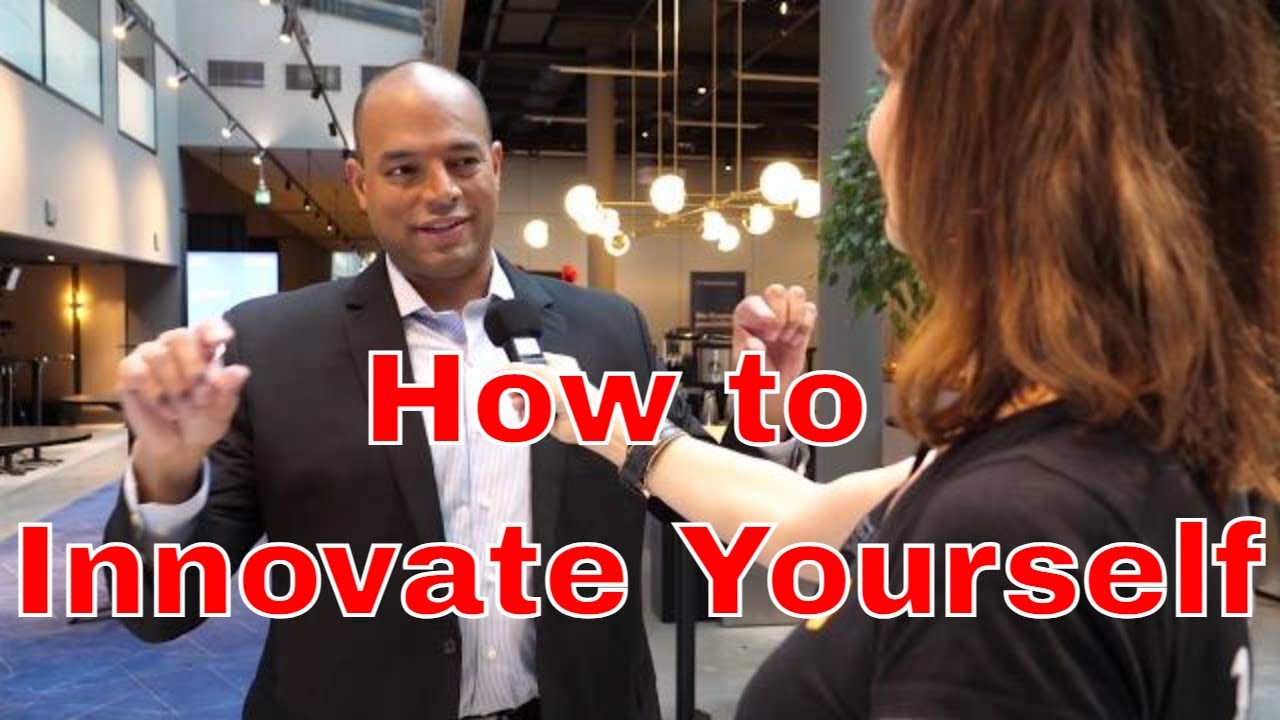
Thomas Anglero discusses how individuals must risk embarrassment to innovate, and how corporate leadership either enables or blocks that risk. He draws on his experience leading innovation at Norway's tax authority, Skattatan, and shares strategies for driving change from inside an organization or as an outside consultant.
Chapters
The first part of cultural innovation is innovation of you. Are you willing to risk being embarrassed, being exposed, being the person laughed at because you have an idea that everyone has to hear? Are you willing to do that? Not many people are willing to do that. And that's one part of cultural innovation. The other part of cultural innovation is innovation inside your corporation. Does your corporation, does your company allow, does it have a culture that allows for somebody to stand out amongst everybody? Or do you all have to do everything together? Do you all have to agree upon everything? Da da da da da, right? Cultural innovation is culture. It's the you, it's the company culture. It is the second half. There's technology innovation and there's cultural innovation, and together that makes up pretty much innovation. You cannot just do one really well and not the other, then you won't innovate. So you have to. So cultural innovation is the soft stuff, but it's actually the real stuff. How much are you willing to risk in your idea? That's a big, big question. And when you're able to answer that question with, "I'm willing to risk everything," then you started to take the steps to innovate.
So how do you, how do you make people take that step?
Good question. You make people— you can't make anybody take the step, so you have to undo your question, right? You have to take the step for you. I can't make you do anything, right? I'm married. I just have never won any argument, okay? Nobody can— I can't change anybody, but you can change yourself. What are you willing to do for you? What are you willing to— how much do you believe in you is the other question. How much do I believe in what I— you know, everybody knows me to be this type of person, but I'm really this, but I'm uncomfortable. I don't want anybody to see me. Nai. You have to get to that point where, you know what, I'm tired of being this thing that everybody likes. I want to be me. Only person that can do that is you. So I— so no one can make you do it. It has all come from himself. You look at Elon Musk. Nobody forced Elon Musk to be Elon Musk. He did it because he felt he just— he's Elon Musk. He has to do these things. When you get to the point where you have to be you, then you start to innovate on a personal level too, though. But this is not just business. Innovation is also very personal.
But it's also a question about how do you make organizations to do that step? And how do you, also for leaders, how can you convince your organization to be brave?
So there's, in my head right now, I have two answers for that, right? So I can give you an answer from a third party, an outside person, and then there's the other answer of the same question as if you're inside the company. And these are two different answers. So we'll start with the outside person like me going into a company. I start at the top and I start with the CEO or with the leader group and get inside their heads. Your company's dying or is not doing as well. Your margins are less. This is reality. Why not? The why not? The answer to the why not is not, oh, my people are horrible or they haven't innovated. That's, that's, that's not the truth. The question is, what decision did you make in the past that created this environment that has led this way to go this direction instead of that direction? Get into their heads. Innovation begins at the leadership, period. In a corporation, it begins at the CEO. Get in their heads. And by getting in their heads and like an onion, peeling them away, peeling these different layers of insecurity, then eventually you get to their trust. And once you have their trust, then you can start coming up with new solutions. But you can't just come in a room and throw up posters and go, this is where your company is going. That's consultant talk. If you really want to innovate, you have to peel, get to the core, and then build them up. So that's from the outside. From the inside, very difficult, right? You have a job, you don't want to lose your job, you have a reputation, you have, you know, you got all these things going on. So this is the big decision you got to make because, and the reason why I hesitate is because I was in it, right? So I was the director of innovation for Skattetan, the tax authorities in Norway. That was a war, okay? I know this from a fact. But when I took the job, the head director of Skatatan told me, "Thomas, are you willing to go to war against Skatatan?" That was my job. So every day I fought with all the leaders in every abdeling, every department, and said, "You're wrong, you're doing things wrong." Not that I knew better, but I said, "Look at all the statistics, look at the information I have. We're going the wrong direction." So if you're inside a corporation and you want a challenge, it is a war. If you got kids, if you have kids in barnahaga, kindergarten, if you have kids you're paying for, you have a mortgage on your house, you gotta pay for college, are you willing to take that war now? This is a big thing if you're inside. So how do you do that? If you're willing to take that step and speak up, first of all, congratulations. I'm behind you. Second step, do it from as personal as possible and look the CEO or the leader in the eye when you talk. Don't do it like, I have an idea. It's not. You're willing to risk your entire family, the foundation of your life. I have an idea. Well, don't do the finger pointing, that's rude. But I have this idea, you have to hear me. And they may say no, but you gain their respect. But to get there, you have to first innovate you because you got to get to that point and then look them in the eye with all the passion. And I sometimes tell people, they go, I don't know how to do that. I go, yes, you do. I tell them, have you ever fell in love before? Everybody's fallen in love once. Okay. Have you ever told a man or woman before that you love them? Oh, yeah, yeah, yeah. Do you remember that moment before you said I love you? All of a sudden, in that moment, you're like, I'm going to do this. I'm going to do this. You got super brave, right? That's the same feeling you bring up inside of you when you go to your boss, say, I need to talk to you. It's that same courage. You know that courage. Just tap into that. Maybe a couple of years ago, maybe for some people, a couple of decades, but you have it.
Okay, so how did it go for you at the tax department in Norway?
Wow, it was a struggle. It was a struggle. But we have— what's interesting now, that was many years ago, um, the reports and the things we told them to do, they're now implementing it now. And now they're hiring me back. Okay.