Poverty Cannot Hold You Back | Thomas Anglero
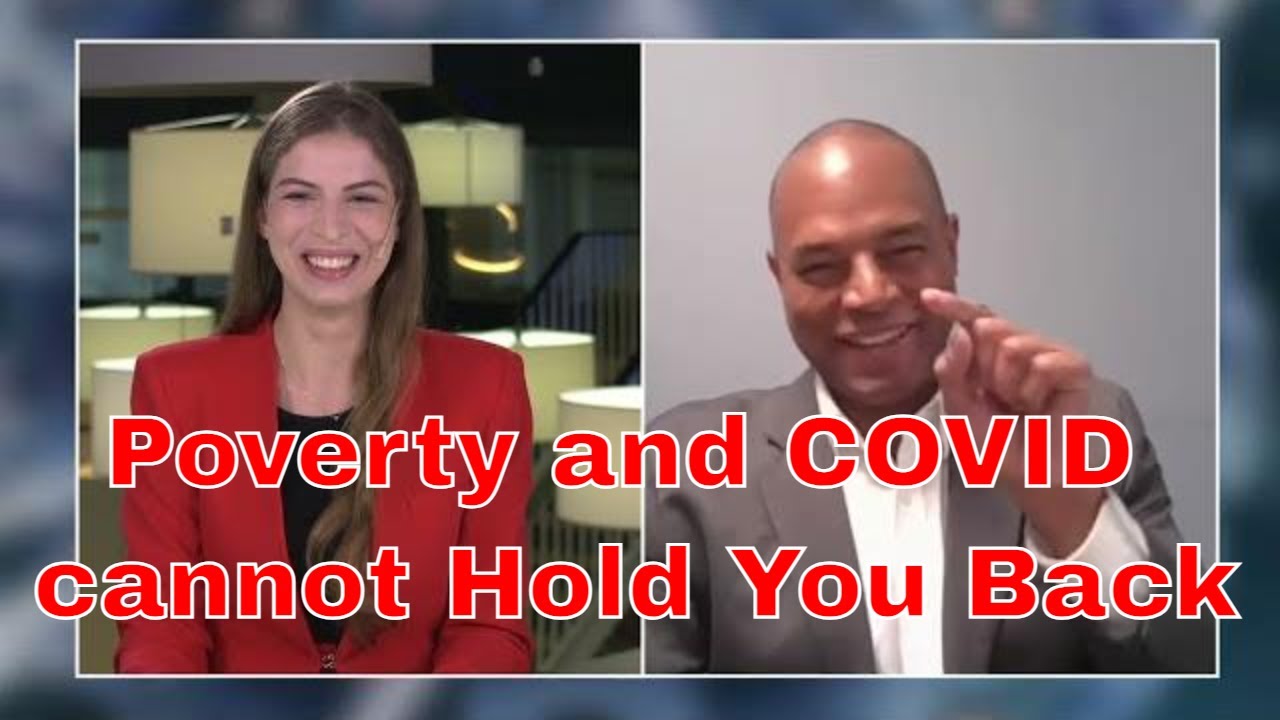
Thomas Anglero, a cognitive technologist, shares his journey from poverty and discusses how mindset shapes success. He covers self-improvement, leadership, AI as augmentation, blockchain basics, and emerging technologies like brain implants and the metaverse.
Chapters
Hello, and welcome to the conference. Today we will be talking about the future of autonomous transportation. Our expert on this topic is Thomas Anglero, a cognitive technologist at Novartis Wadovas. Hello, Thomas.
Good morning, hello!
So how are you? It's probably early morning for you.
Yes, it is, but I'm excited, I'm so excited, first time coming to Lithuania. I am going to give everything I got, I am just, I'm ready to go now.
Well, we're really excited to have you, to have you here today and to have you in a few days at Lugin Conference. And my first question will take you way, way back, way back to your childhood. I read some interesting things about your childhood and I was wondering if you could share a bit a little bit about it and what were the key things that helped you to be where you are right now?
Wow. Let me just— without joking around, let me get directly to the answer. I was brought up in a very poor family in a very poor neighborhood. And we quite often would live off of government food supply subsidies. And I remember one summer having the best summer ever because the government decided to choose our building where they would distribute the food. So it was enough food for me to have in my stomach that summer. It was the first summer that I actually had food in my stomach. So having that type of childhood motivated me to do more, be more, take chances, push myself. And from that upbringing, just taking risk, falling in love with a woman who lives in Norway, And even though I'm from New York City, I bought a one-way ticket, forgot my friends, forgot my family, moved to Norway, didn't know the language, pushed myself, took chances. And today I'm still doing the same thing with the same amount of energy. And I'm excited to go Lithuania to bring that energy, to bring that inspirational type of focus, because nothing can stop you. And that's what I just, I live on. Nothing can stop me, nothing can stop you. Let's just be the ultimate person we can, you know. So that's the shortest version of summarizing my life. Good question.
But it's very easy to just give up and maybe blame your environment, say, oh, the government is bad, oh, you know, my parents were like, they didn't provide me enough, and so on. There's always an easy way out, easy way to blame others, but you chose a different path. So how did you find the strength to actually do something about your life?
Great question. So here's the specific answer I could give you. The answer is this: everything's your fault. You're jumping right into a very deep subject. You cannot blame other people. You cannot have a life of you being the victim. Let me give you a very specific story that happened to me in my life. Everything was going bad here in Norway. My startup wasn't succeeding. I was having no income. It was very hard. I was walking home from the store one day with the food in my bags and stuff, and all of a sudden it hit me. I fell to my knees in the street. The food came out of my bags, rolling into the street and the sidewalk everywhere, and I started crying and I started crying because I realized that all the problems in my life, that all the frustration I had, I understood it was my fault. It wasn't that person that didn't like me, that person didn't understand me, those people don't like me because this, that, that, that, the government, all that. It's my fault. When I understood that everything, all problems I've had in my life, everything is my fault, I literally felt this weight come off me. From the very next day onward, all of a sudden my startup got funding. All of a sudden my interviews and meetings started being much more progressive and positive. The trick to life is accepting that everything that goes wrong is your fault. I know it's hard. I know it's a strange way of thinking. But when you get there, you mature and learn, and you feel this freedom, and you get— you feel like there's nothing that could hold you back. But as long as you think, is that person's fault, that person's fault, then you're a victim and you're always going like this. But when you realize everything's my fault, if everything's my fault, then I control everything. I control every conversation. I control my outcome. Then it's more of this attitude. So stop going from a victim and all to going like this. How's that for an answer?
That's a very good tip, and it works for many different topics in life, not only business-wise, really. Absolutely. Yeah, and often we see a lot of like posts about how successful Bill Gates is or Jeff Bezos, Elon Musk, and I'm not trying to take away anything from their success, but often we learn that their parents, family gave them some significant amount of money so they could start their own business. Yeah, so, and here you are who started from, like, we can say from the rock bottom and now you're way up somewhere. So do you have any other tips for people who are— okay, so now they're trying to step away from the victim mentality, but they still want to know how they can be successful when they come from an environment that is not financially stable.
Absolutely, and trust me, I know about not being financially stable. And because I come from that, I still think about that, right? I never take for granted, uh, where I am today, and I always think I could be back there tomorrow. So let me optimize this moment. Like this interview, I'm being 100% myself. So to answer your question, the advice I have for you, and the advice that I live by, is that improvements in your life come incrementally. What I mean by that is this, I want you every single day to do something more. Let's talk about you're not happy with the way you look. Do today 5 sit-ups. Fantastic. Tomorrow, try 5. The next day, maybe 6. Maybe the next day that 6 was too much, go back to 5. The point is be consistent. Consistency every day. After a week and a month, 3 months, 4 months, it adds up and you start moving up. This is the same thing when you read a book. This is the same thing when you go to school. It's the same thing in anything you do. Always be professional and always be respectful. People want to give opportunities to people that they like, so always be a respectful, beautiful person. Always give love. If anything, what I've learned in life is talk about love a lot. The higher you go up, the best leaders— not bosses, the best leaders— are people who love their people. So if you want to move up and you want to be this great leader, then wherever you are now in life, be yourself, give love, be in that moment, and do it every single day. Consistency, consistency. And you'll end up where you're supposed to be. And it's not where you're supposed to be, it's not supposed to be a billionaire. I don't think that's— that's a nice thing for TV, but in actuality, I think where we all want to be at the end of the day is being loved and respected by everybody, right? So don't lose your perspective in your own life, right? So there's my life advice.
That's a very good— that's a very good grounded advice for people. Thank you. And now let's move on to another topic of yours, which is, I think, very significant. And innovations in artificial intelligence. So you've been working in this field for more than 20 years, and I guess you did a lot of interviews. And with interviews, journalists always come and, I know, talk about myths, stereotypes, clichés about this field. Are there some misconceptions about innovation and artificial intelligence that you would really like to, you know, clear, clear the air and just say, okay, So that's not true. That's not how things work.
Wow, you came ready with some great questions. The one I want to clear up most, I get the question I get the most, is that artificial intelligence will come and take my job. That's the wrong way to look at it. And the way I like to reply back is a little bit of joking. I love humor because humor, everybody can relate to. Do you remember when you were in school and you had a wonderful time, and instead of staying instead of sitting there and doing your homework, you decided to go out with your friends or, you know, remember if you were able to turn the clock back and that version of you that would have stood there doing the homework day after day, night after night, that's sort of what artificial intelligence is. It's that version of you that kept on going, right? So what I want you to do is understand that artificial intelligence, it can remember everything. It can remember everything. It can visually see everything. It can see, remember everything you've seen in your life. It can remember everything you've done. Anything you smell in your life. So what I want you to say is this, look, if I have the ability to be with this version of me that always did my homework, that remembers everything I did, everything I saw, and me and that person together, what can we accomplish? That's how I want you to look at artificial intelligence. It's the ultimate version of you being a gift coming to you. What are you gonna do with it? Don't look at it saying, oh my God, this thing is coming, it's gonna take my job. No, this thing's coming, it's the greatest assistant I've ever had. This is the ultimate gift to me. What could I accomplish if I know the answer to every question I have within a few seconds? What can I do? What ideas can I come up with? What can I create? That's the attitude you should look at with artificial intelligence. Maybe you haven't done so much in your life up till now, but at this moment now, this technology is coming. You and it, where are you going to go? What are you going to do? That's what's exciting about artificial intelligence. Do not look at it again from the victim mentality. Oh, it's coming, it's going to take my job. Oh, I'm going to lose my job to a computer. Victim mentality. Flip it around. This computer is coming, I can work with it, what can we accomplish? See, it all comes together.
So yeah, again, this is the topic of being proactive and, and doing things yourself and not letting the situation just be something bad for you. But we see them, some situations where actually people are losing their jobs to automation. For example, we see less cashiers, you know, there's a lot of, you know, machinery in factories and so on. So there's all going to be like a period where people need to adapt, that the innovation is coming into the field, but they're already like 50, 40 years old, and that's for them, those kind of people, it's really hard to adapt. Do you have an advice for for those kind of people?
Yeah, um, the same advice I have for young people. Don't give up. Incremental changes. Where do you want to be? You know, sometimes in life things happen that frustrate us and we go, why, why did this happen? Um, what you have to do then, say, this change is— this happened because my life needed to change.
Right?
The problem with us, we get so comfortable with our day-to-day life. This happens, that happens, that happens, I go to bed. This happens, right? There's a change that comes. Change is good. Change is painful. As a human being, we hate change, but change is where it comes innovation. So when this change comes, you're 50 years old, I'm 50 years old, I'm 56. When change comes, of course, the first moment you're frustrated and you're like, oh, What about my mortgage? What about my family and all that? What you got to do is after you go through that moment, you go down and then you come up and go, okay, I can't fight it. What can I do about it? So go to your employer or your former employer, or think to yourself, what did I once wanted to do back when I was in high school? What I must want to do back when I was in college? What have I learned over the last 20, 30 years? What have I always wanted to do the last 20 or 30 years? One of my startups I created many years ago where I lost my job and I didn't have a next— another job to go to. So I said, you know what, I always wanted to close the digital divide. I wanted to make sure that every kid in Africa, every kid in Southeast Europe, no matter if they had no money, I want to make sure they had access to the internet and a PC. And I launched my startup, and from that it grew to another opportunity, another opportunity, here I am. So if you lose your job and you're 50+, what is it that you always wanted to do? As you go towards that goal, other opportunities will come. I promise you. But sitting back and complaining, saying, "I lost my job, oh my God, what am I gonna do?" Don't stand there. Do something. But do what you're passionate about, what you love, what you always wanted to do. People love supporting people who are passionate and driven. People will not support people or a victim and going, oh, me, oh my God, this is horrible, right? I mean, do you want to be around your friends who are always complaining, or do you want to be around your friend who's going, I got this idea, let's go do this? That's who I want you to be.
You talk about innovation, artificial intelligence, and I wanted to ask, is it easy to talk to the public about these kind of topics? Because, for example, blockchain has been around for a lot of years now, and still there are a lot of people who really don't understand what it is. So is it a hard subject? To discuss?
Well, um, I'm a storyteller, so I've learned that just like in the olden days, the village always had the village storyteller, the elder who told stories about the past, and everybody would learn about the past, and the lessons of life were taught through stories. I use stories. So I use stories to explain blockchain, I use stories to explain artificial intelligence, I use stories like I'll do on my presentation and coming up in Lithuania, I use stories, and that's how I communicate everything. It's not complicated, just tell a story around it. Don't try to impress people, just try to make people understand the story. That's how I do it.
So no hard words, no difficult words, just easy, simple way of explaining. Is that correct?
Yeah. Absolutely. I mean, here, let's do blockchain. Takes about 20 seconds. Wonderful. So that was the hint you have me. I know, no big deal. So look, look, blockchain is, um, so what blockchain is, let's, let's do the big words, right? So it's just an open ledger. What does that mean? So, you know, there's always been someone, um, who's always at the end of the day or at the end of the week who's counting how much money the store made, if you worked in a store. Right? You sold 5 or 10 pieces of candy and you got 5 or 10 cents for the 5 or 10 pieces of candy. Somebody's always checking the numbers, right? So what blockchain is, instead of that person who at the end of the day or at the end of the week who checks the numbers in the back of the store all by themselves, blockchain is that ledger, that piece of paper that person wrote it on, is open to the entire world. So what blockchain is, is just that transaction is, you know, when something's bought and sold, as we're talking about in the candy store, That transaction, when it's bought or sold, is open to the entire world and everybody can see it. The beauty of this is that now nothing can— it takes away the layer of corruption where people are taking advantage of you, of you getting mis— misfair practices, uneven pricing. The whole world gets leveled out. The beauty of blockchain is that everything's open and we can go to this world where Everybody's paying equal amounts, equal payment, and it's all fair. Blockchain is nothing but— now when I say the word open ledger, it's not so complicated, not so intimidating. It's an open piece of paper that watches the transactions, and with that, it creates a beautiful new model of us having a world where people aren't taken advantage of. So blockchain, not so scary.
Thank you for this very simple and lovely explanation. And another situation that really changed innovation field was COVID. So in COVID, we saw many new things starting up. I really didn't expect that I would be taking like university classes or working for Zoom. I didn't even know what Zoom was. Probably most of people didn't know what Zoom was. How do you think the pandemic changed our lives and the way we use new innovations?
The pandemic changed everyone's life and everyone must accept that. I always— what I say to people now is that the pandemic has broken everyone. And some people go, "I'm not broken. I'm fantastic. I'm—" We all were locked up for 2 years. I mean, before the pandemic, if I would have said to somebody, "I guarantee you I could lock up 7.8 billion people on the planet for 2 years," people would have thought I was nuts. That's what happened. But we're not made to be locked up in our apartment. Some people, you know, I heard a colleague here who they have 2 or 3 kids and they have a studio apartment and it's not very big. And her and her husband had to be on Zoom, like you're saying, in the same room with 3 kids in the middle running, throwing toys all day long for 2 years. That breaks you. Everyone is broken. I know someone, he's Italian. His father got sick during COVID He wanted to fly home, he couldn't fly home. His father, he got the phone call on a Monday, Monday evening he had the phone call, I'm sorry, Tuesday evening he had the phone call, his father died. Him and his father had been like that their entire lives. He wasn't able to say goodbye to his father. He wasn't able to even ring his, call his father. You know, things that happened during COVID are so extreme that we're all broken. It doesn't— the question if you are, aren't— we're all broken. How much are you broken? So with that, because we're broken, one of the things I'm going to talk about at the conference, my main focus is 6 steps to innovating yourself and your team, your people, as a leader post-COVID. I think that's really important because we're all broken. Before COVID if you're a leader and you told somebody, I want you to make me more money, I want you to sell more, If you say that same thing to someone after COVID today, when I'm talking about after COVID, we are in after COVID today, do you understand that person maybe has missed someone, has lost someone? That person maybe has issues with being afraid of people, thinking anybody is going to cough on them, they may get sick. You understand we all are much more complicated beings today. So innovation today is a little bit different. And my point is, if you want to innovate yourself, if you want to innovate a group of people, the First thing you gotta do is going back to the word love. You have to take care of yourself. You have to make sure you love yourself, make sure you're okay and accept the fact that these things have been hard. Remember I told you the story that my, I let go of my grocery bags and it fell all over the place and I understood it was all my fault. I understood things were hard. After COVID, understand we're all broken. It's okay. Then slowly start fixing yourself. Slowly start picking yourself up. But as a leader, love your people, take care of them. They're broken. They'll respect you for that. They'll trust you for that. And then once you establish that trust, then you guys can innovate the world. So that's how you do innovation post-COVID. Trust, love, care, then innovate.
So as I understand, post-COVID businesses, you know, workforce really has to focus on mental health. Is that true?
Mental health is a big issue everywhere. A close friend of mine, uh, yeah, a close friend of mine, her mother, um, she's 70, 80 years old. Now that COVID's over, she doesn't trust going outside because she's afraid somebody might cough on her and might make her sick. Um, we— everybody knows somebody who's not the same person they were. So, you know, take care of each other. It's not an awkward thing. This is— we're human beings. Matter of fact, let me give you a story. You love stories, I can tell. So let me give you a story. I was, um, 3 weeks ago, I did a keynote speech here in Norway. And after the speech, this, um, older man, very short, came over to me and he said, Thomas, that was a beautiful speech. He gave me all these compliments and stuff like that. And he was talking in a very slow way, I guess. He was being— was coming from his heart. So I said, thank you so much. So I reached down and I gave him a hug. I said, thank you, that meant a lot to me. It did. I appreciate those compliments. And as I'm hugging him, he starts to cry. So I let go and I step back and I go, I'm so sorry, I invaded your space. I apologize, I didn't mean to do that. I just wanted to thank you. He told me, he goes, no, Thomas, That's not it. He said, "It's been 2 years since somebody touched me." So at that moment, we both started crying and we both hugged again, even deeper and stronger hug. We're all broken. So as a leader— sorry, I just lost light in my room. It's okay. As a leader, take care of your people. Understand that your people are not your employees. You have to take care of them. You have to take care of them. You first got to take care of yourself. You have to accept that you're not the same person you were 2 years ago. And right now with everybody being a little bit off, love people. This is the time where you could go, like you were saying, you want to be Jeff Bezos, Elon Musk, and all that. You could go from 0 to 100 now. By being that amazing leader. Love. And if you're allowed to hug, don't be weird about it, but take care of people. And then boom, you'll be, you will be one of those amazing people too.
It's very interesting because usually when I ask this question about, you know, post-COVID life and what COVID brought to our lives, when we talk, when we're talking about innovation, usually people talk about that we are able to work from any place in the world, it's made us more free and so on, it saves money. And you're bringing completely different point, which is, which is very important, you know, our mental health and loving each other. And thank you for sharing that. It's very important.
You're welcome. And if I may add one more thing that I think is important. When people talk about innovation, they seem to, they always talk about technological innovation, always. But before we could do technological innovation today, We first have to do cultural innovation. Without first addressing cultural innovation, the innovation of people, the culture, your culture and your family. Is your family the same as it was 2 years ago? I know, so I know many couples that broke up. They couldn't stand living with each other 2 years in the same room, right? So there's a lot of stuff that has to be done. So cultural innovation is the first type innovation that must be addressed. Once you take care of cultural innovation, all the things I've been talking about, the soft stuff, then you could do technological innovation. And then yeah, we can work from anywhere and all those things people love to say. But when those people say that, they're making believe that we're not broken. We're all broken a bit. So cultural innovation is first, technological innovation and the other innovations are next.
And I have one more question for you. Let's pretend that we're oracles, okay? So I would like you to imagine, uh, to predict, uh, the way our lives will look in 5 or 10 years.
Well, that's a tough question because I would have never saw COVID coming. So 5 or 10 years, I believe our lives will not be so different, um, from a technology point of view. Yeah, what you will see is that'll be different, significantly different. I mean, significantly different, right, in 5 to 10 years. Some of the technologies I'll be talking about on stage, one of them is the insertion of chips into the brain for people who have been paralyzed, people who have Parkinson's where their hand shakes all the time, right? So, you know, if your hand shakes, you're trying to drink the water, it's going back and forth. With the chip, the chip will say your hand is going left, the chip will say no, hand go right. And then the hand wants to naturally go right, the chip say no, move the hand left. And then the end result is the person— the hand goes straight and the person can drink water, right? The chip will also— you can put two chips, one in the brain to communicate with the brain. And let's say you had a motorcycle accident and your spine was broken, therefore you're, you're paraplegic, you can't walk. You can take another one of these chips, insert it below the spine where the break was, and now the chip using wireless technology can replace the the spinal cord where all the messaging comes. When the brain says move your leg, your right leg, that signaling is broken because you broke your back. So what the chip will do is— the lights came back on, I'm sorry. So I'm sorry. So the chip will do, it will wirelessly talk to the chip beneath the break, and when your brain says move your right leg, wireless signal will go, it'll tell the muscle, and then you move your leg. So The next 5 years, we're gonna start seeing the insertion of chips into the body. People will begin to walk again. People will begin to see who have never seen before. And we're gonna become, I'm not trying to scare anybody, but that old cyborg, but really not like Star Trek cyborg, but that will be a significant change in our life. And then I see things with the metaverse. Gaming is so big. That there's nothing to stop gaming. People love being online. COVID pushed the, like, the people loving to be online all day long to a new level. And this whole metaverse is gonna happen, especially people who are chipped. So all this sci-fi stuff can be done today, is being done today. And matter of fact, the very first human being who's paralyzed, but will be chipped and will be walking will happen in December of this year. So 5 years from now, it's going to be amazing where we're going to be because technology and us will come together. And of course, there is always a dark side with that, but I'm trying to be more positive in saying that a lot of the people we love that have been injured, accidents and things like that, they can have— they can walk again, they could talk again, they don't have to suffer from all these different diseases, and we'll have this beautiful world if we take care of the technology as it melds with us. So in the next 5 years, this is what I see happening on the positive side.
Thank you so much, Thomas. Thank you for spending your time with us today, and I really, really hope that I'll be able to hear your speech during Login, and I encourage our viewers to also check their calendars, find when Thomas is talking, and listen to his speech at Login. Thank you so much. Thank you.
Bye-bye. My hon, my pleasure.
More from Thomas






IBM Watson AI Lab for Cancer presentation to Ullern HIgh School / Thomas Anglero

Will You Lose Your Job to AI / Oslo Business Forum / Thomas Anglero & Richard Qwest



