how a disease i had 13 YEARS ago is STILL affecting me | Let's Chat
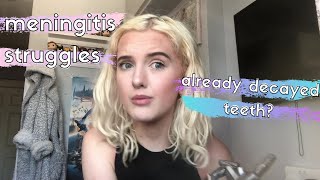
Tilly Lockey survived meningococcal septicemia at 15 months old and lost both hands. Thirteen years later she's still dealing with decayed teeth, a leg-length difference that required surgery, chronic infections, and repeated medical procedures. She talks about the physical toll and the emotional weight of living visibly disabled.
Chapters
Hi everybody, it's Tilly and welcome back to my YouTube channel. First of all, let's address this. I am burnt. We've had the weather really, really nice in England, so obviously I've been sunbathing. You've got to take what you can get where I live. So yeah, I did layer the sun cream on, but apparently my skin cannot handle the sun, which is very unfortunate because I was kind of hoping for the golden tan. My arms have kind of got it a little bit, but This is painful, okay? I went through so many tops this morning, like, trying to decide what to wear because everything was just like rubbing against it and like scraping my skin off. It was not good. Anyway, hi everyone! Today I'm going to be talking about how meningitis, when I got it as a baby, is still affecting me 13 years after I contracted the disease. Now, if you don't know what meningitis is, it's basically exactly what I got when I was really, really little. I have a full video talking about my survival story, everything that happened in gory details. So if you want to know all of that, then you can definitely check it out. But I'm going to give a short explanation of what meningitis actually is. My mom was telling me all about what it is earlier, and let's see if I can get it right. I'm pretty sure it is the inflammation of the membranes around the brain. And the bottom of the spine. So that's what meningitis is. Meningitis does cause a lot of mental problems, but what it can also bring on is septicemia, and that is very, very serious. It was actually one of the, like, factors in the plague, the sepsis, where you get, like, marks of just blood poisoning. It's basically a blood poisoning, and it causes all your limbs to go black and basically die off, traps blood The septicemia starts killing off your body from the tip of your toes to the tips of your fingers, and eventually, if not treated in time very, very rapidly, the septicemia can spread and it can eventually get to the heart, which would obviously mean death. So it's a very serious disease. You've got to act very, very fast. And meningitis and septicemia often come in a pair, so those two together are absolutely fatal. And that's what I somehow managed to survive. So many people die per year due to meningitis, septicemia, and just meningitis or septicemia on their own. But when they're together, they're so much more powerful, so much more fatal, and it can result in amputations, it can result in death. There's so many side effects which I'm going to talk to you all about in this video, side effects that come with meningitis and septicemia once you've already survived the disease. So Yeah, I just wanted to tell you all my experience, what I've had to deal with, and there's a long, long list of so many consequences and different things that you could have in your life. You kind of just don't know how much the meningitis and septicemia has affected you until you get older, and that's what I want to talk about in this video. One thing I do want to clarify is I do not want sympathy or pity-ness, if that's a word, throughout this video. If you are are a regular subscriber and follower and viewer of my channel, then you'll know that is the last thing I want. Literally, I do not want your pity comments, okay? Because I'm happy with where I am. I simply just want to raise awareness and share my story, everything that I've had to deal with, but how I'm still with a great mindset trying to push through everything. So that's the purpose of this video. Do not leave me the sad comments because they will be deleted, because I don't want my YouTube channel being like a negative, wow, she must have such a sad life, because I really don't. Okay, with that cleared up, let's get straight on into the video. I'm going to talk very briefly about my survival story because this is based around meningitis. So I told you all about meningitis and septicemia as a disease themselves, how they're very, very fatal together especially. Um, but I contracted meningococcal septicemia strain B when I was 15 months old, so I was really, really young, and I was rushed to the hospital and the time my parents really realized that this is really, really serious, because I was originally diagnosed with an ear infection and sent home. But my family knew it was a lot worse when they found the septicemia rash on me, which is actually the symptom just before death. So all they knew is they had to get me to the hospital as quick as possible, and we were basically against the clock. When I got to the hospital, I was told I was 100% going to die. There was no buts or maybes. She'll not make it through. I mean, we'll try our best, but we're, like, 100% sure that she's not gonna make it, to the point where when they were about to shut my body down, they actually asked my family if they wanted to come in and see me because they couldn't be certain my eyes would ever open again. It really is that serious. But somehow, against the odds, my 15-month-old little self managed to, after 1 week in intensive care, 3 weeks in recovery, a secondary infection, and 10 blood transfusions, that's a lot of blood transfusions, that somehow I managed to survive. I'm alive and I'm here today. They did have to amputate my hands though, which obviously, you know, I was very lucky in my experience with meningitis. People are always shocked how I say like I'm a lucky person because this is a very rare disease and I was very unlucky to have contracted it in the beginning. But I'm here today against the odds. I was told I was 100% going to die. There wasn't even a 0.0001 chance that the doctors told me that I could live. So So it was absolutely crazy and honestly a miracle that I survived. And the fact that I survived and I only had to lose my hands, literally from like the wrist, I've still got a wrist and everything, so I'm really, really well off. A lot of people lose their legs and I have my legs still, so that's good. And I'm so, so grateful for how well my amputations were done. My mum made me a promise when I was going in for my amputations and she said that one day she would give me my hands back once again. So she let the person who was doing my amputations, the doctor, know that we could be interested in prosthetics in the future. She wanted to leave that all up to me, which I'm insanely grateful for because obviously I've decided to go down that route. I am going to read off just a few of the side effects that I know can come with meningitis, um, because there are a lot of them, but there are a select few, and I will put a couple more on the screen that you're currently watching. So I know that you can get a lack of vision. You can get epilepsy, spasms, you can have speech difficulties, coordination difficulties, you can lose your hearing and your sight. So there's so many things that come with that, and there's so many more that honestly, if I was to go on and list them all, this video would be a lot longer than it needs to be. So I would definitely recommend you go check it out, and I will stick everything on the screen here right now. I'm very, very lucky and extremely grateful that I did not receive a lot of these side effects and consequences that come with survivor meningitis, but I am going to tell you of the ones that I did receive, starting with my teeth. You see my teeth, um, they're— they're— I pride myself on my teeth, but that's because they're not really real. Yeah, they're not really real. They— I have caps on them. Basically what we figured out is when I survived meningitis, um, and I started losing my baby teeth at around age 7, 8, I think I was in year 2 at the time. I think that's grade 1. It's pretty much the average age that you start losing your baby teeth. But we definitely did get a shock when I lost my baby teeth. It was all great, it was all fine, but what then grew in after that, my adult teeth already grew in decayed, like yellow, not nice at all. I hated them so much. I really did not like that at all. My parents got such a shock, obviously, because as a parent you think, oh, have I not taught her how to brush her teeth properly? Has she not been doing it day and night? Everything like that. You kind of blame yourself. But it was then we discovered that it was actually the meningitis's fault. Um, basically my adult teeth had been kind of forming in my gums when I got my meningitis. So when they grew through, we found that the meningitis had affected them while they were up here, and they grew through already decayed and really, really painful. I really didn't like the look of them. Obviously, they decay, they're yellow, they're like crumbling. It's not good at all. But most importantly, on top of that, they were really, really painful for me. I found it hard to even eat. It was the hardest task ever just to brush my teeth in the morning. Obviously, you have to, and to be able to fight this decay that's going on, you need to be able to brush your teeth. But I cannot express the pain. It's really hard to explain, but when you're brushing your teeth, it's kind of like a throbbing ache, but not quite an ache. It's a different pain. Obviously, you would not want to experience it. Brushing your teeth day and night is just a daily task, like you've got to do it. So I used to find it really, really difficult, to the point where my mom literally had to sit me down and brush my teeth because I couldn't do it. It was too painful for me. Uh, we went to see the doctor pretty much straight away, and they told us everything. It wasn't my mom's fault, it wasn't my I was brushing my teeth just fine the way they were. It was no one's fault, it was the meningitis fault that was to blame. So I ever since then was getting caps from the normal NHS dental clinic. Hello? Okay, thanks, bye. Yeah, okay, thanks. Okay. It was my decision. I was really insecure about my teeth. I didn't want to smile, I didn't want to speak because they were really, really yellow. They weren't pretty. My teeth were decayed. That was not healthy. I was really, really insecure about it. I never wanted to speak or smile. Um, obviously people who would see me and they saw how decayed my teeth were, they would automatically pin that on my mom or me not being able to brush my teeth properly, like a health issue that I couldn't look after myself properly, which was not true at all. But I decided ultimately myself that I wanted to get them sorted because, I mean, you're not going to be happy when your teeth ruin, decay. You weren't the cause of it and there's nothing really you can do about it on your own. So I decided to go into the dental clinic and I've been getting caps on my teeth ever since. I found the caps just of the NHS dental clinic. I mean, they were obviously a lot better than just my normal natural tooth because it was decayed and they stopped my teeth from hurting all the time. I can now brush my teeth with my caps on and look after my caps rather than my actual teeth. Because my teeth were long gone, there was nothing like making them recover. Like, they were, they were gone. There's nothing we could do about that. Instead of like putting caps on top, I really, really love these caps, but they do actually come on and off. Like, they can literally just snap it. Like, a certain period of time after a couple of months, I think they would snap about maybe 2 or 3 times a year. And these days, I remember when my teeth caps fell off, obviously I don't want to go into school, it's back to square one. A lot of my friends didn't know that my teeth were fake. I mean, they weren't really fake, it's not like I just like covered it up with some veneers, it was kind of a medical issue. So my teeth were allowed to be fake, okay guys, fine. Um, but a lot of my friends and classmates had never seen me with like my decayed tooth, so obviously I didn't want to just go in and Hi, Mom, she's been fake all along. So I didn't really want to go into school those days at all. I was so insecure about it, and I would like beg my mom not to send me in, and she didn't send me in, which I'm insanely grateful for because I would have been very angry if she sent me in. I wouldn't have gone, to be honest. So yeah, but I remember there was another time where my cap snapped, and they snapped like at the back, so So I thought, okay, that's not very visible at all. I felt like my teeth were a bit rounded on the bottom rather than flat like that, but they weren't that recognizable. So I just thought, right, I'll go into school, it's not a big deal. I'll just try not to smile, or if I smile, then I'll just be like— which is how I would usually smile. And I just won't talk much, and I'm quite an introvert at school anyway, so I didn't talk much. At all, so it really didn't seem like a big issue. So I went into school that day, but like, as soon as I spoke, literally said like good morning to my friends or something, it would be like, oh, what's wrong with your teeth? And I really, really didn't like that. I had to tell everybody what happened, why they were the way they were, and people were really understanding about it. But I feel like it was just a knock on my self-esteem personally, knowing that it was so recognizable, my teeth, and how they just weren't normal. None of it was my fault, it was just something that I had to deal with after everything I'd already dealt with, with the meningitis and the blood transfusions and all the infections that I had to deal with before. Sometimes it would take a little bit of time to book back into the dentist and have them have the available time in order to fix my teeth, put some new caps on. And I am terrified of injections. I know it sounds stupid, I literally had 10 blood transfusions and I'll like cry at an injection. It's ridiculous, I know it is, but But I really don't like injections, and when I'm getting these cups done, you have to have— I don't know if anybody's had this, like if they've had wisdom teeth removed or whatever, um, like the needle inside your lip, like there. So painful, it's horrendous. They like inject the numbing cream into it, and I don't like how numb they go as well. Like last time I got my teeth done, I literally almost bit through my entire lip. I caused like a couple of holes in my lip because I couldn't feel it, and I have a really, really bad habit of biting my lips. So as soon as I got that numbing cream off, I was like, ouch! I definitely felt it afterwards. So yeah, that's not fun. But either way, it was easily fixed after a couple of days. Obviously I had to take off school because I wasn't prepared to go in with my decayed teeth, my real teeth. Um, so it took a couple of days, but eventually it wasn't a big issue because I could just get the caps back on like within about 3 days. So it wasn't too bad. I was never really fully confident with the caps I was receiving. I didn't feel like they were put on very well. I'll attach a picture probably nobody wants to see it, but I'm opening up in this video and showing you the struggles that come with meningitis even after you've survived it. So I'm gonna put that picture up on the stage, and I took a before and after picture, and you'll see— I mean, you can see my teeth now, which are very different. It was all throughout my life of having these caps. They were a lot better than my original teeth, but they still didn't look like everybody else's. They still look like I couldn't really take care of them properly. I felt like they were very carelessly done, and the way I described them was actually as Play-Doh. And that's not a good comparison you want to make, like Play-Doh to someone's tooth, because to me they look like very, very bumpy. You could see where they had stuck the cap on to where my decayed tooth was, like it was not really blended in at all. It was rather than— I just felt like it was Play-Doh stuck to the bottom of my tooth and like blended up a little bit in order to make them look a bit longer. It wasn't really to make them look natural, and although I like them much better than my original teeth, they still were not great and still did not give me the confidence I needed to go out and just smile and be able to talk to everybody as normal. So me and my mom thought long and hard about it, and we decided that we wanted to go private with the dental clinic in order to get them a bit better. And how they are now— my cousin Brandon, he's probably watching, so hi Brandon, went private with the dental clinic, a different dental clinic, which he talked to us about getting Invisalign. He really loved his experience there, and I was actually at school and got to leave early because he to pick me up to basically just sneak me into one of his appointments just so I could see and have his dentist look at it and see what he could do to make them any better, whether that would be completely veneers or caps, but just do them a little bit better than they are, than they were currently. So I was really, really excited. I was, I was so excited to go, and he took me in his car and we went to this private dentist, and I was looked at by him, and he was such a lovely bloke. I'll definitely put up the dental clinic that we went to on the screen because They're incredible. I can't remember, like, off the top of my head, but they're incredible. So if you've ever had any problems with your teeth or even want to go private and do something like veneers, and I definitely recommend this clinic. So yeah, check it out. I was really, really happy with the appointment that we had. He took pictures of my teeth, like, from the inside. I had to, like, hold the camera in my mouth or something. I can't exactly remember how we done it. After he took the pictures of my teeth, it wasn't really pleasant, but I had to, like, have a look at my teeth, which obviously It wasn't a great picture, definitely wasn't Instagram-worthy, because you could see all the flaws in my teeth. They're not perfect, they were not straight at all because of the meningitis I had as a baby and the caps that I'd been getting over the years. He actually told us that these caps, he needs to work on these as quick as possible, because what the dental clinic were doing previously, well, they were just sticking the caps on top of my decayed tooth basically trapping the decay in there, which could cause a further infection. And we don't want an infection. This all came from an infection, like, of my blood and the inflammation of my brain and spine. The meningitis and the septicemia was an infection, and that's what caused all of this. We definitely don't want another infection caused from the decay being trapped inside my tooth. So that was definitely a wake-up moment. We knew that we needed to get this done as quick as possible. The ice cream truck is here! Isn't that just the most summery sound ever? Like, the ice cream truck just instantly brightens my mood. That is so cute. I'm not gonna go get one though because I'm recording. Yeah, that was definitely a wake-up moment for us. We knew that we needed to get it done as quickly as possible, and I'm pretty sure we got it done maybe like 3 months after the appointment, and I just wanted to get them done as quick as possible. But oh, everybody's queuing up! Everyone's queuing up for the ice cream truck. That's so cute. Okay, I need to stop. All right, back to the video. Um, we decided that we would get them done like 3 months after my appointment, and I went in. I took the before picture of my teeth, which I'll put on the screen again, and then once he was done, this was the after. And I mean, look at the difference. That was insane. When I was telling my nana and everyone that I was going in to get this done, this private thing to get my teeth how I wanted them, my nana was like, oh, I think it's just a personal issue. I never noticed it as much. They're really not that bad. Obviously she was 100% supportive about it, but she was just cautious of me spending my money on something that didn't really need to be that fixed. But when you see the comparison pictures she got the shock as well because I showed her these pictures and I was like, Nana, look what they were before, look what they are now. And she was like, wow, that is insane. And the difference is insane. And the fact that this dentist did the same thing as this dentist but they just took a little bit more care with a little bit more money spent on them— and he actually did give me a discount as well, so that's really nice of him— it's just so worth the money. My confidence is so much higher now. I want smile with my teeth all the time because I'm so much happier with how they are. And he did say to me we could have done veneers, but since my teeth are small still and growing— I still haven't lost— actually, I think I might have lost all my adult teeth now, I lose count. Um, but he said that veneers wouldn't be the best option. He could do that when I'm a little bit older, but he wanted to make them as natural as possible, and I was 100% on board with that. So he actually made like little scrapes in my teeth. I know it's very, very cringe-worthy, like scraping in your teeth, and I had to sit there and have them scrape through my teeth. So consider yourselves lucky just hearing the story. I had to actually sit there with the needles and the numbing cream and hear like— but I really love how natural they are. He scraped them in to make them as natural as possible so that they do look like just a 14-year-old girl's teeth. And this is what my teeth would look like had meningitis not affected me the way it did. So it's really not that huge. It's not like me getting like surgery or anything. It's just to fix a medical condition that I had, and I'm so much happier now. And I just think like, do whatever you want. Get plastic surgery, get fillers, just do what makes you happy. And if getting veneers makes you happy, it makes you a lot more confident in who you are and your body, then go for it. And it's fair to say I'm so much happier now, and I couldn't give a more positive review on that dentist. Because he was lovely. Next thing I need to talk about of what— how meningitis is still affecting me after 13 years is my leg. If anybody has seen me, like, my vlogs or follow me on Instagram and they've ever basically just seen me walk, then you'll know that I walk with a little bit of a limp. My leg is a bit of a peg leg at the moment. That's what I call it. I feel like a bit like Smee or whatever his name is from Peter Pan because he's got like a peg leg, doesn't he? You know, he probably doesn't, but one of them definitely have a peg leg, and that's me. Okay, so I basically, when I was around, um, I think I was about 9, 10 years old, my mom started to notice that my pelvis was a bit off when I was walking. She did also notice that I kind of go over on my ankles a little bit when I walk, like I walk more in the outer part of my foot, like I'm going over. It's very, very dodgy. Um, but she started noticing that when I was around 9, 10 years old, and she just thought it would be a good idea to contact someone about it because obviously if your pelvis and you're walking funny, that can cause a lot of problems with your back in the future. So she did get in touch with the hospital about that. I went for a couple of appointments, consultations, and they basically thought at the beginning that I had scoliosis, which is a curvature of the spine where your spine basically goes in like an S-shape like that. However, with some x-rays, MRI scans, CT scans, all of that malarkey, um, they found out that it wasn't actually back at all. It was the growth plates in my left— I think it was my knee or my thigh, but they basically stopped working. So my left leg is no longer able to grow, whereas my right leg is. So as you can imagine, when I'm growing and when I'm walking, my right leg is a lot longer than my left leg because my left leg stopped growing when I was about age 10, which is, which is quite a big difference bearing in mind that my right leg is still growing now. So it wasn't really an option at this point. I needed to get my legs sorted, otherwise it would lead to probably scoliosis, a curvature of the spine, and a lot of back problems when I get older. Probably me being in a wheelchair by the time I'm like 50 or something. So it was really, really serious. I definitely needed to get it sorted. There wasn't an option there for me. That was like the only option. I have to get sorted, otherwise I'll have to deal with not being able to walk when I'm an elderly, which I don't want. However, I was put off on the operation for like 2 years, nearly 3 years. I— they let my right leg grow with my left leg being stuck because just other things are important. There were more important operations and I was just on a long waiting list. But in the meantime, we didn't want to get it any worse. We didn't want my spine to start tilting more than it already had. So basically what we did is I wore big wedges on my left shoe only my left shoe, not my right shoe. So everybody was really shocked at how I was walking. Um, but I wore big wedges on my left shoe, which made it a lot easier for me to walk and balanced out my leg length by like putting a big platform on only one shoe. I honestly, I remember when I was getting like measured up because obviously my leg is— my right leg is still growing more and more. So then this wedge throughout the years had to continuously be getting bigger and bigger and bigger. And to be honest, when I went to these hospital appointments, I was like, thought it was quite cool, like the bigger the better on one foot. I was like, yeah, that looks quite cool actually. But I thought it was cool and I was like, yeah, let's make them proper big, oh, I know. But when I was like out and about, I honestly didn't think it was that big of a deal, like it's a platform on my shoe. But to be honest, I got more stares at like my feet at my shoes rather than me having no hands, because everybody was just always staring down at my shoe. Why she got a wedge on this one and not the other one? And it was so frustrating. I get enough stares. I got enough stares before my leg lengthening difference, so just because of me having no hands, and I definitely did not need another reason for people just to stare at me. I'm sick of the stares, okay? Just stop staring. It's really not a big deal, but that really, really got on my nerves and I didn't like it. The hospital did do these wedges for me for free. We would just pick a shoe that we liked. Obviously there were like requirements. I couldn't wear— I couldn't pick some trainers that had like that bubble mesh bit in the middle of the platform because that would be hard to build up. Um, but I could just pick any shoes other than them really, and then the hospital would take them in, they would build them up free of charge, and then basically just give me them back and I would go out and wear them. My size, everything's fine, but with a little bit of a platform on the bottom. Well, quite a big platform. If I can find some pictures, I will attach them up here as well just to show everybody. And I hope I can find like some of the little ones and then how big they actually got, because they did get pretty huge. And you can understand how people can be like, how the heck is she walking in like one high heel and one not? Because that's basically what it was like. So I never blame people for staring, but it definitely does get a little bit annoying if you're being stared at every second of your life. I do have a full hour-long video of me talking about my leg lengthening operation, again with all the gory details that not everybody really needs to know, but if you want to know, then it's up here. It's not up here, it's over here, isn't it? I don't know, I think it's up here. So yeah, definitely check that out if you want to know all the details. But again, I'm just going to talk about all the different side effects that I've had with my meningitis. So that's a lot shortened down version because otherwise this video will be about 3 hours long and nobody's gonna sit and listen to me ramble on for 3 hours. I don't even know if people can listen to me ramble on for 15 minutes. So I'm sorry, it's my worst habit. I know, rambling, stop rambling. Right, back to the video. It was after 2 years that I finally got to the top of the list and I went in to get my operation on my leg. Basically what this operation would be is basically a massive like cage X-fixator, I think that's what they called it, on my left thigh. I will attach pictures and everything. Um, it's basically screws going through my bones, and every single day I had to twist cogs on the cage a certain amount to stretch my bone on the inside. So that would mean the cage grew along with it. With obviously the metal going through my skin, it's not only dragging my bone and stretching that, so serious groin pains, but it's also stretching up my skin, which led to further infections. And I had infections in my leg for— I think it really actually got to the point of 8 weeks. And that was a pause in the lengthening as well, because you want the infection to be able to recover, because that could literally lead in another leg amputation. So I feel like my whole life has just been like amputation threats like throughout my whole life. Yeah, it's stressful. But when I got this Xfixator on, I remember waking up, I was authorized to have morphine as well. But to be quite honest, I didn't really feel like the morphine was doing much for me. And I've heard when people are on like gas and air, because I've been on gas and air and that before as well, and morphine, they don't remember the next day like what happened or anything. But I remember everything like thoroughly, so I don't know. If it was working. I mean, it probably was because it knocked me out eventually after I'd had it confiscated because I pressed the morphine button like 28 times, which was not good. But I just— when you get in that point and you feel that pain, like, you just want it to be gone. I feel like I've been stabbed 6 times in my leg, which I basically had because I had 6 metal rods basically going through my bone and out the other side of my leg. I've literally been stabbed 6 times, and that's exactly what it felt like. Even with the morphine and gas and air, This was a very, very, very painful procedure. I, as I said, I had to twist the screws every day. Intense groin pains, infections were involved. It was also very hard to sleep at night with a cage on your leg. Literally, the rod sticking out my leg would get stuck in the springs of my bed, so I literally had to like somehow maneuver myself out of it so that I could move and not be like swallowed up by my mattress, because that's what was happening. Um, but this was a very painful— I feel like that was like my lowest part in my life so far. I remember just being really, really upset about it. I was really positive at the time, but now looking back on it— when you're in the situation where you need to be positive, then you have to be positive. That's your only option. So I was trying to be as positive as possible. I was like making jokes and stuff in between. I don't know if anybody else watches the Eurovision Song Contest, but that was on when I was in hospital. So me and my dad sat and watched it on my hospital bed. While all my family were at my nana's house celebrating, when usually we would all get together and like have a Chinese and just have a good time. We would like mock and give all the performances ratings and who would win in our opinion. So that was really upsetting, like certain things that I wasn't able to do anymore because I was stuck. I was completely immobile. I couldn't even get to the toilet, literally. If anyone's been in that situation where you have to use a bedpan to wee in, That's literally all I wanted in that moment. I couldn't care less about this cage on my leg. I just wanted to be able to use the toilet, okay? So yeah, it was a very, very hard time, but what I like to do is just make jokes in between. I would be delivered lots of teddies, lots of chocolate to eat, and my dad bought me a lot of in-app purchases, like on episode, where it's like basically— basically episode is when you can like pick a story and It's basically a story, but you are watching it visually and you can make yourself be in the story. And you have to pay a lot of gems to do any good options. My dad bought me like a bucketload of gems, so I was having fun just spending all my gems on episodes, eating all my chocolate. But in reality, it was really, really difficult, and all I wanted to do was get back to normality. I was in the hospital for 2 weeks, pale as anything because I wasn't allowed outside. And I remember when I finally got outside, it was such I mean, it was a breath of fresh air because I hadn't been in that fresh air of nature in a full 2 weeks. And you forget and you take for granted how lucky we are to have nature. It's— I felt so drained being stuck inside all that time and not even being able to see the light. There was one window in this room and it was like right at the very edge. And this is like my bed here and this is like the window right over here. So I just really missed like the sunlight and everything, to be honest. So when I escaped and we had like a corkscrew and it was like summer, that was the best thing that I could ever ask for. I wasn't able to walk until right at the very end with like— I was having to use a frame, which I hate because I'm like, it's just what like the older people use. So I couldn't use crutches obviously because I have no hands, so that was my only option, was a gutter frame. And I did not enjoy that in the slightest, so I wanted to learn how to walk as quick possible. So yeah, meningitis did cause my left leg to stop growing. I'm still dealing with that today. When I was getting this cage on, my doctor told me, right, you've got to keep on top of the leg bend, you've got to keep on top of physiotherapy because it will stiffen up. But I feel like my legs are very, very short. My legs are so short. Definitely got a longer body and shorter legs, um, which only makes up for 4'11" of me, but whatever, it's fine. It could have been smaller because some people who survive meningitis stop growing when they're in like year 2 or something, so I was really, really lucky in where I stopped growing because there are people, although it's classed as like incredibly short and not even reaching 5 foot and being fully grown, a lot of people I see are also in that situation where even able-bodied people just normally just naturally stop growing at 4 foot 11, so I don't really feel that much different to other people. Obviously, it's not often that you find somebody that small. I can barely reach the top shelf in my fridge, so it's obviously not ideal, but it's so much better than what some people have to deal with. And there are some people who just naturally stop growing this size, so it's not too bad. When I got the cage on, I was told by the doctor to keep on top of physiotherapy. My leg would stiffen up, like the bend of my knee, if I could not keep on top of it. But my legs are very short, my thigh is very small in particular, and that's where I had the cage. So I physically couldn't bend my leg and keep on top of that because the screw was so, so close to my knee. Like, we're literally talking inches away from my knee. And so if I would bend my leg, it would literally just drag the skin down, cause infections, all sorts. So I was literally unable to do that. I couldn't do it. I couldn't keep on top of it. So when I've been stuck in this situation with a wheelchair, with my legs being out straight because I've never been able to bend it for 6 months, then my leg is now very, very stiff and I walk with a limp because I can't bend my leg. I can get about a 30 to 40 degree bend, I would say, but not really anything more than that. I have to go up like one step at a time up my stairs and I'm, I guess, a little bit slower, quite a lot slower, and I can't run obviously because my leg doesn't bend. So I do have to be really, really careful with stuff like that, and I have to be careful on where I'm standing. I have to really focus on the ground rather than looking up at like mountains or something. I'm more focused on the ground. Is there a rock that I can easily trip on? Things like that. So that's something that has also happened with my meningitis. There's been intense physio since then. I got my cage off of my leg 3 years ago now, and my leg still hasn't bent. But I have faith that it will get back to normal, and I can't wait for the day where I'm gonna go like marching in, like doing the splits into my hospital appointment, because I believe that I'll get it back on my own. I do feel like I'm making a lot of progress on that recently. Beginning lockdown, I have a lot of time to do physio and really focus on that myself. So yeah, I think that is going to be fixed well, I don't want to say pretty soon, um, but I'm working on it and it could be— and it is getting better. I do have to have hospital appointments like once every month, to be honest, to check up on everything. I had a call with my doctor over the phone because we can't just let it go, and I'm not gonna head over to the hospital, but with, you know, everything that's going on, I'm not sure if I can say the disease words, you know what I mean, because I might get demonetized and that's not what we want. So they've got their hands full at the moment, and so I don't really need to go rocking up about my leg that hasn't bent in 3 years— more than 3 years, like about 4 years now. So I got a call with my doctor over the phone, and basically same old same old. If I really, really can't do it, then I might have an operation on it, but I'm kind of scared to do that because it could get worse, which is not what we want. So even 4 years after, I'm still trying to do intense physiotherapy on my leg, and I feel like we might be finally getting somewhere. But I'm doing it all by myself, but that is like an extra commitment that I've got to take on, which meningitis has caused. Meningitis has caused me a lot of hospital appointments in my time. Literally, if I go to the hospital and we'll say, yeah, it's Tilly Lockey, she's here for the appointment, they literally— you know how everybody has like those folders of like all the medical history? Everybody else's is like this, this big, and then they see mine and it's like that. It's literally so thick. And as soon as people like see me and know they're working with Tilly Lockey, it's like, oh, this is gonna be an adventure and a half, because things always seem to be happening to me that people have never seen before. It's always when it comes to me, it's like, wow, this is the first time I've ever seen this happen, which isn't really great when it's like medical. But it's okay. It's definitely fair to say that meningitis has affected me in more ways than one. However, I'm extremely lucky and grateful to have only been affected in the ways that I've been affected. As I said earlier, there's a list, a huge list of consequences that can come with having meningitis septicemia, and for me only to have a few of these is actually really, really good. My mom works with meningitis now, so she talks to families and children who've been affected by this every day. And it's really, really sad that the amount of damage a disease can do to someone even after they've survived it and after the fog has gone, another thing can pop up later on. So I think it's really important to talk about that. And I'm just really grateful and lucky to be alive, be here today, have only had the side effects that I've had so far. I hopefully am at the end of it now. I hopefully will not receive any more side effects. That are unwanted, obviously. And yeah, I'm really happy with where I am. I will have to have another operation as my right leg is still growing and my left leg is not. That's kind of a continuous thing that you've got to keep on top of. But other than that, I think that I'm probably done. I'm really, really happy with my life. As I said at the beginning of this video, I do not want sympathy, I do not want anything like that. This is just purely to raise awareness to know, to let people know that they are not alone, to hopefully make people realize how grateful they should be for their bodies. Because not everybody has normal grown plates, not everybody has arms and legs. And people get so, people get so down on themselves because they have a bruise on their leg. And I feel like that's been so normalized that a bruise on your leg is something to be insecure about. But I feel like people should know that there are bigger issues out there you can be insecure insecure about this. Of course you can, you can be insecure about the bruise on your leg, but you need to realize how lucky you are to have legs. I guess that's what I'm trying to say in this video. But thank you all so much for watching. I really hope you enjoyed this video. I hope you learned a thing or two. I hope you can check out the side effects and learn a bit more about meningitis septicemia as a disease. And I hope to see you all next time. So Bye!
More from Tilly

We had to hit the Alysa Liu dance!! 💃🕺 #dance #alysaliu #dadanddaughter #bestfriends

spiritual connection🥹💗🐐 I love this little baby #goat #wholesome #limbdifferent #girlhood

THAT WAS SO GOOD OMG IM never recovering🥹👽. #projecthailmary #scifi #ootd #cinema @Sony

trying to convince myself not to get bangs🙈 #hair #newhair #oliviadean #girls #relatable


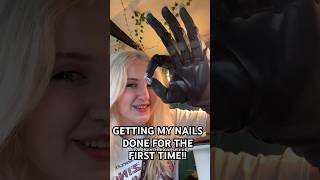
Getting my nails done on my new bionic arms for the first time!!💗#girlhood #nails #bionicnails

Tilly Lockey: Lost Both Hands at 15 Months, Leading the Bionic Generation |With Tamil Subs| Gobinath

The Incredible Foundation Making Sport Accessible to Every Athlete | Bob Babbitt on Tilly Talks Tech

Cate Dunlap🖤 I get compared to a lot of characters so here’s my series inspired by them!🦾 #fashion