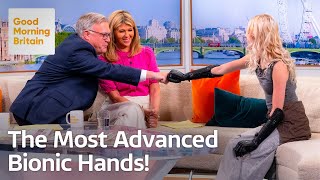
HOW I LOST MY HANDS! growth, adaptability and drive - Tilly Lockey deep dive on life
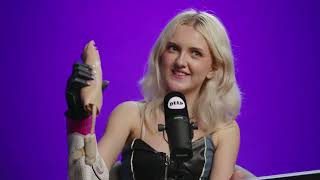
In this first‑person monologue, Tilly Lockey recounts her life‑changing battle with meningococcal septicemia at 15 months, the subsequent loss of both hands, and the long medical and emotional journey that followed. She describes early NHS prosthetics (a crude claw), her experience with a myoelectric hand and a non‑functional glove, the financial and community fundraising that enabled her to acquire more advanced devices, and her partnership with Open Bionics that introduced her to 3D‑printed, multi‑grip bionic arms. Tilly explains the technical operation of these arms (two muscle sensors, six grip modes, menu‑style switching) and highlights the mental and confidence benefits they provided. She reflects on social challenges, school experiences, and the stigma of disability, then moves to her current roles as a YouTuber, singer, tech advocate, and orthotics enthusiast. Throughout, she emphasizes adaptability, the importance of community support, the need for accessible prosthetic technology, and a personal philosophy of making oneself proud.
Chapters
Now if I squeeze my muscles, you have a tiny one-finger pinch which picks up tiny things, um, and a little point like this which also goes down like that. So when I was born, I was a completely normal, happy, healthy baby, all four limbs, like nothing seemed out of the ordinary at all. And then it was when I was 15 months old that I fell really ill. I contracted a terrible disease called meningococcal septicemia strain V. I was rushed to the hospital basically where I was, and my family were told that I was gonna die basically. Like I was given 0% chance of survival. It was the worst case they'd ever seen. And immediately there were like 12 paramedics all fussing over my like tiny body 'cause obviously I was so small at the time as well. It was just like cutting clothes off, sticking tubes here, there, and everywhere, trying to save my life when I was literally barely even begun to live, really. So technically speaking, meningitis is the inflammation of the membranes around the base of the spine and the brain, and that can often bring on septicemia, which is a form of blood poisoning, and that is what really devastated my body. Like, that's what kills off your limbs. That left my hands basically like curled over and hard and broken and dead, basically. It just kills off your body. Limb by limb. And yeah, it was an awful, awful time for absolutely everybody. My mum tells me as soon as she found out, she was just throwing up projectile vomiting and apologising for it. I'm like, "Don't apologise, this is totally normal." My dad was obviously really scared himself, but he was also sort of the voice of reason a little bit and that strong force that we needed and my mum definitely needed at the time because he was just like, she won't die, it's Tilly Lockey, she eats all her vegetables, like she's a good kid, she's not gonna die. And he was very much like, nah, like it doesn't happen. Then you got the maternal, like, mother instinct which actually got me to the hospital on time. And it was thanks to that worry and that stress that I managed to get there in time because if it were like seconds, minutes later, like even the doctor said I probably wouldn't have made it. It's a really interesting story, actually, their take on it all, because you think, oh my God, that's such a life-altering operation. I mean, you speak to anybody who has hands in their life, I'm speaking to you right now, and if I told you that you had to lose your hands tomorrow, you'd think, what the hell am I going to do? Literally, you rely on your hands so much, you do everything with them every single day. So telling somebody that is like, in that moment, you feel absolutely doomed, do you know what I mean? And my mom says during that time that she felt really helpless, really useless, really, especially when when it was all kicking off and like they didn't know whether I was gonna survive, there was this one doctor who basically had the power to like turn off that machine that was keeping me stable. And he would walk past every day and everyone would feel sick to the stomach. And then one day he like walked past, he came in the room and he was just like, she's getting better. And that to my family were just like, oh my God, rejoice. Like even, even the nurses, and they were saying, oh, we're going to get sacked, we're not meant to get sentimental about this sort of thing, but they were like, there was no way I was gonna survive by how I looked when I first got there. So it was just celebration and obviously when it came to amputating my hands, they were told that as well, like, "Yeah, she survived, but we are gonna have to amputate the hands." And that to them was like, small price to pay. Like, it sounds crazy when you hear it like that, like, "We're gonna have to chop off your daughter's hands." It's like, what? How are you gonna deal with that as a parent? But when they'd been so close to actually losing me and losing their child altogether, It was like, the hands are fine, we'll figure that out as we go, you know? So that was literally how it was. And when they amputated my hands, it was like, yeah, they had their worries, weird little worries. Like my nana used to worry about how I would like make myself a cup of tea. But it was just like, we're gonna cross every bridge when we come to it. At least she's alive. And then I got to go home and that was all that mattered really. I actually got sent home with my hands still attached, like literally dead. I had to go back and forth to the hospital to like bathe and all things like that because they had to be infections and things, and so I did actually go home with my hands attached and then I had to get them amputated at a later day. But I mean, it was all really stressful and it didn't help as well that I was, I seemed to be recovering at one point and then I actually contracted a secondary infection and by the end of it, I'd had like 10 blood transfusions or something crazy like that. They said it was really worrying because I was in intensive care 24/7 watch and it was like, "Oh yeah, she's fine now," and then it was like, they could look after me again, they were like, "We're scared, we don't feel qualified to do that." just yet. After that secondary infection, I was all good after that point. And yeah, I just— they got used to keeping me at home, and it came to the point where I had my hands amputated. I didn't need to go to the hospital for any more appointments apart from like checkup, like every now and again. So then it was just integrating back into normal life, but not too normal life because now I didn't have hands like everybody else. That's all. It was kind of weird for me, like, growing up, like, because I have 3 sisters and a super supportive family. So because I had 3 sisters and I'm like the second one, I've got one older, two younger, so I've got my older sister to look up to and then I'm like looking after my little 2 sisters. Obviously they all have hands and I was around them like 24/7, we were all so close, but I was always with them and I was never treated any different from them. I think that was a big thing in my, like, home life, at home where I was I was just like, "Okay, these guys have hands, I don't have hands," but it literally didn't mean anything, 'cause I was like, "I literally do everything the same as they do." When I think about adaptability in general, I'm just like, "That is crazy how your body adapts." I had my hand still attached and my mom tells me, "I looked down and I seen my hand's all black and curled over," and something clicked in my brain. It was like, "Well, they're no use to me anymore." And literally, so I picked up my bottle with both my wrists together, like I have to pick things up now when I'm not wearing any prosthetics, it's like two arms together. And you can actually, like, there was actually that moment where they witnessed where it was like, they're done to me, let's try and figure this out without hands. So I was really, really good at adapting to things when I was little. And so I just sort of grew up doing what my sisters did and it was never sort of a big deal. But then you go to school, you go to school and it's like people who don't know the whole story, 'cause obviously my sisters know, and they know me past that disability. But like, little kids, they have no filter. It's like, they're just, they'll say anything, do you know what I mean? But there were things like activities that I just didn't like doing for the sole reason that I knew I stood out. Like, I think the first time I really realized that was like, when my sisters and I would go to the park and like, it's obviously kid central, and like, all the kids were just like, I would notice like, my sister could like, make friends like, there on the spot and like, go, sit on the swings together. Whereas for me, I got a lot of stares and then I sort of had to, like, wait for them to ask the question and then me sort of explain it. And once I did, like, that was all good and we could be friends. But it was like actually getting to that point and it was just like that extra little step that I realized that, like, my older sister Tia didn't have to deal with. They just make friends, like, off the bat. Whereas for me, it was like that, like, explanation first, which I didn't mind doing, but then it's Sometimes people are a little bit awkward about that and they're like, they don't know what they can say and what they can't say. Sometimes parents are awkward about that and they're like, they don't even want their kid to offend anybody or get involved, so they'll just like swivel the kid the other way. But I think that just further establishes the gap between like disabled and able-bodied people, and there really isn't much of one. The first prosthetics I got, I'm pretty sure I was like 3. As soon as I had my hands amputated and as soon as those bandages were like healed enough that we got straight into it and the first prosthetic I used was from the NHS. I think that's the first place you go because obviously it's free and you just want to see what's available there. And I haven't got it with me today because it's actually like in like an art gallery for show right now. But it was basically like a tube to put your arm in and then kind of like a claw tied together by elastic bands. And that wasn't actually technological at all. You'd move your upper body to pull on strings, which would make this claw go left and right in a sort of pinching motion. It was probably a really scary time for me as a kid because not many kids go through that, you know? Yeah, I got this prosthetic from the NHS, but didn't really— the main thing was I didn't really associate it with a hand because it didn't look like a hand, which led to me going to private routes and getting hands that look like hands later on. But yeah, at the time I just didn't even really know what it was. Like, I thought of it more of a weapon than a hand. I would, like, chase my sisters around with it, but I didn't see it as, like, a replacement of my own hands, which I'd lost. I didn't really, I don't know, get attached to it. And yeah, I didn't, I didn't really use it at all. Yeah, I feel like the whole thing must have been, like, a bit traumatizing for me because when I was fresh out of hospital as well, like, I had a real fear of women. Because it was like women who came and like gave me all the injections and stuff in hospital. So what my family told me, so like if there was, if I'm in a clinic type setting and then there was like a woman come over, I'm a full-blown feminist now, but like when a woman came over, like my little like sort of self and mindset was like trembling, like what's gonna happen here? So like, you know, there was internal and mental like effects. And yeah, I think like growing up around hospital appointments, anybody who's been through that sort of like turmoil so young, even if you don't remember it, it's probably there in your brain, like bubbling away. So this one is a myoelectric hand. This was like probably one of the second prosthetics I had. Basically after I didn't get along with the claw at all, we decided to go private. And back then realism was like, I mean, that was what was offered. Like it was all like realistic prosex, but I feel like that was kind of good for me because like I said with the claw, I just didn't associate with a hand, whereas this very much looks like a hand. So I was like, okay, that's a hand, like I'm making sense of this now. And I used to take it to nursery and things. It's obviously like high definition silicone, um, you've got nails you could paint, you've got wrinkles, freckles. It's scarily good, like it is good, and it kind of feels kind of like skin as well when it's like high definition silicone. But yeah, so I used to take these to nursery when I was first getting used to everything and I didn't really get on with them even then. Like, I was like, I would like paint pictures, you know, when you're a nursery kid it's like easy sort of tasks. So be like painting with them and like that was fine, but when it came to like just daily stuff, I didn't really get along with them that much. Like, they couldn't open wide enough to hold a cup, so like that was a big thing. So this, that's what like myoelectric means, that it can move a little bit and that's This is just a single grip. So basically this thumb would like come down and go back up, but it didn't go that far. Maybe it went like there. So it really wasn't a lot of movement, but I actually became the youngest child in the UK to receive a myoelectric arm because before they were offering a myoelectric arm, I was actually given a glove. And this I feel like is the real trigger of my like fear of rejection when I got older is because before I was offered anything, I was given a glove and it did nothing. It literally just looked realistic. And when we got given it, we were like, "Oh my God, what does it do? How do we make it work?" And the guy just flat out was like, "Oh, well, it doesn't do anything. It just goes on the end of your arm to make you look a little bit more normal." And I feel like that has some impact. I think that has some impact and did have some impact on me growing up. And I genuinely do believe that's where the fear of rejection came from because you're so young. Your brain is still developing and you're basically being told that you have to, you're gonna wear this glove to make you look more natural and like hide that difference. That's what the glove was all about, which suits some people but not me. And like, I feel like that definitely did something to me. So we were just like, well, no, we're not doing that. Like, I need a hand that's gonna move. I'm not interested in the glove. We want something to help. 'Cause the thing was, I was so small. They were like, the technology doesn't fit like in that tiny hand. So that's how I became the youngest. And we're just like, well, you're gonna have to try 'cause I'm not taking your glove. And honestly, this one is really small, so this might actually be like one of the first ones I had. It was around 30 grand, I'm gonna say. And when they got a bit bigger, because I got a bit bigger and like we're just trying to make things better, it was along the same lines though, still this really realistic high-definition silicone. The biggest one I had was like 36 grand. This is a lot of money that we were fundraising for, by the way. Like, I don't have that in my pocket. Like, we're not that sort of family. I think a lot of people think that as well because I've got so many boner cams that I'm just rolling in it. Like, it was a lot a lot of fundraising and my community, like up north, they managed to fundraise the entire 24 grand, which the first one was worth. They did that in 24 hours and that was my community, like not barely even my family or me at all. I mean, not me because I was like 3, but yeah, like I was supported so much in my local area and it's thanks to those people who donated and supported me back then that I even wear these prosthetics here today. But yeah, after that really expensive one just wasn't working for me. It didn't open wide enough to hold a cup still, even when they got bigger. They moved really slowly as well, which was infuriating for an impatient little kid like me. I was just like, "It's just not worth all that money really." And it was when I was 9 years old where 3D printing started its revolution really. And that was really exciting. And my mom literally, we're always on the lookout and my mom literally went on Google and just Googled 3D printed prosthetics. That was it. And then up popped Open Bionics because their hands are completely 3D printed. And they were looking, by some miracle, all of this, like, the coincidences are insane. They were looking at the time for a child below the elbow amputee to help them develop their prosthetics. And I, like, fit all the requirements, always wanted to help. They were looking for somebody to help. So we literally just, like, messaged them, sent in a little audition tape. I think I was, like, dressed as, like, Alice in Wonderland or something like that. It's probably what gave me the edge at the end of it. But yeah, we just were like, answered their application form and then they ended up picking me, which is probably a bit of a risk now I think of it, 'cause I'm missing two hands and a lot of people only missing the one. But it means that when I wear this technology and I'm testing it, I've got to be brutally honest, because when I'm wearing both of them, that's what I'm relying on. I was really excited and I went down to the lab at Bristol and And that day was epic because they used to share it with these people who were making spider robots and everything. And I remember, obviously I'm 9 years old, super excited about this new technology, which also for once wasn't trying to mask that difference. It was like they were making Iron Man arms. So that to me as a 9-year-old kid was like, this, this is what I want. Yes. Finally. Yeah. And then I went to the lab and there were all these spider robots walking around. I was getting tested and fitted with this bionic arm, which I could then control, which I I thought was so sick and the movement was so much better than what I was used to. And yeah, so I got fitted for the first time, tried it on. This was right early prototypes. The sensors weren't even on the inside. They were like little stickers on you. And then they took me out to the front and just set up a table of things just for me to mess around with and throw. So I was literally launching tennis balls. It was well fun and it was like, the first time I sort of put on a prosthetic and I was like, this feels right. And it was like empowerment rather than this thing to even help disability. Like it was deeper than that. And I think for me walking around with this superhero arm, I think that really helped a lot of probably the emotional turmoil I was still dealing with. I didn't know it yet because I was only 9 years old, but would later surface. And like, yeah, it was really cool and it was like, from that day onwards, I was just like, Open Bionics, the ones to watch. I was like, I want to be a part of this. Yeah. So they are 3D-printed multi-grip bionic arms. And basically how they work is through muscle sensors. So there are muscle sensors on the inside of the arm. There's literally only 2 sensors which control the entire hand, which really shocks people, but it makes it easy for like kids especially to grasp. So there's one on this side, which is the closed sensor. So if I squeeze my muscle, that's what it touches and it will close. And then if I flex, that one's on this side, it'll open. So literally squeeze to close, flex to open. And then if I flex again, it flashes green and vibrates and then the thumb comes around and that's basically me changing the grip mode. And then it sort of works like a menu system beyond that point. So there are 6 grip modes in total for the medium to large hands. Um, so just to cycle through them, you've got the grasp, and you can grasp like that. Good for a hairbrush, makeup brush. I use this one probably the most. You've got the thumbs up as well there, which you can also push in like that. And then I can press the button on the back, it'll flash like a pink sort of color, and now if I squeeze that same muscle, you'll notice only 2 fingers come down. So like you see, it's sort of like a menu system, and you've got to remember where you're at in that. And then if I open that all the way and then try to open some more the grip will change again. And they call this the tripod grip mode, which I call the peace sign personally, but it also goes down like a little pincer. And then finally, if I press it one more time, now if I squeeze my muscles, you have a tiny one-finger pinch which picks up tiny things and a little point like this, which also goes down like that. I preach all about the mental benefits as well because obviously it's a medical device. My whole thing with them, like growing up, I was like, you're calling all these prosthetics and medical devices they need to actually move and they need to actually help. And the way these move is so epic to the point where people will come up to me or see me on social media and be like, "I think they're gloves," because they're just like, "Oh, they just move so normal." And when I talk, I'm often like this while I'm talking and people just think they look really natural. So the fact that they can even fool people into thinking they're gloves and not prosthetics, I think that speaks volumes for their dexterity. But then also just the mental benefits are insane and that's what I really lean into. Like I said, I feel like a lot of things did probably impact me when I was growing up, whereas Umbonics were the first company to really be like, why are we hiding this? Like, you don't need— They were like, they were the first company to just ask me what I wanted. And you think that's what people would do first, but they didn't. And they understand the history of prosthetics and like people coming home from war and they actually want replacement hands which look natural. So like, you understand where the thought process came from. But for me, it was like, It's so nice to be asked here, now, today, what do you want as your hand? Like, how do you imagine that dream prosthetic? And they actually sat everyone down with a piece of paper. They were just like, draw me your dream hand. And you may or may not be surprised to know, but like, not one person drew a realistic looking hand. And that was like, oh, okay, this is something we can do different. And I'm so glad they did. And it's just even better now, 'cause like you see people all over the world, like, and these kids have gone from rolling their sleeves down like I once did, to wanting to roll the sleeves up and turn on the flashy light and letting everybody look and like show their friends and stuff at school and like the whole narrative is just completely turned on its head in such a positive way. I really do feel like confidence is such a journey that everybody goes on and like I've made countless YouTube videos about this because at that point when you are at your lowest you just want somebody to give you that one piece of advice where just like, 'Oh, it all makes sense now.' It just clicks into place and then it's sunshine and rainbows and you love yourself the next day. But it's just so difficult because nothing anybody can say really will ever drastically change you. I really feel like obviously there's advice that can help but it is such a personal journey. And I annoy myself sometimes because I'm like, I feel like I just woke up one day and didn't care anymore. And it's so annoying because you're like, 'Well, I want to have that moment.' I'm like, I feel sometimes you just have to wait for it. I don't know whether it's just like getting older and realizing that it's actually not that deep, which is funny because this is what this show is about. But yeah, I feel like there's a lot of things like life experience and things which changes things. I feel like finding Open Bionics and finally being told that that mission was feasible, being able to finally see that my vision aligned with somebody else. I definitely think what's helped me in the down moments, because everybody has them, I just try and focus on what you can actually change, what you can control. I feel so many people get all worried and stressed out and angry and in a bad mood about all these things that they can't actually change. Whereas for me, it's like, are my hands gonna grow back? No, they're literally, they're gone for good. They're not gonna go back. So you've just gotta make the best out of that situation. I definitely feel like in my own pursuits and my own social media and my career and things like that, that's like, a reminder that the disability hasn't really defined me at all and I can still do everything that I want to do. I mean, my all-round passion now is like work with Orthotics and helping develop this tech. Like, that is going to be something that never ever goes away. Like, I love those days in the lab. Also, accessibility-wise, I just want them to be more accessible because it's all great making the best inventions in the world and letting them do all these things if people actually can't get their hands on it and you know, don't have that support network. I think that's just all around making prosthetics better, like making them move better, function better, but also be better in the sense that people can get them, you know, because then it's pointless. But then in my own personal life, social media has been absolutely crazy. And then I did this premiere, Elite Battle Angel premiere with Open Bionics, where I got these cool bionic arms. And Elite Battle Angel has such a fan base. And so all those fan base found me on socials. And I was like, I was 13 here and I was just like, oh, okay. So they all found me on socials and I gained a lot of followers really quick. And for some reason people would start messaging me and be like, we want to see like bionic arm content and stuff like that. And I was like, for some reason I put my story, I was like, hi guys, just putting this out there because I didn't really realize like my prosthetics and things was something that people were really interested in. Like, would you guys want to see me wear prosthetics and stuff? Like, so I was very much just taking selfies at this time and thought that's why everybody was following me. But I was just like, I was like, yeah, is this something you want to see? And they were like, yes. So after that point, I was like posing about them and they are so much a part of my life anyway. And then I'm also a singer, by the way. Yeah, I did a CBBC singing competition in 2020, which I went on to win somehow. So now I've got a new single coming out really soon. I'm an all-around personality. No. I'm massive on the future and it scares so many people, especially nowadays with the launch of AI and flipping Optimus Tesla robots, which I was in a deep hole researching the other day. It scares a lot of people and I feel like at a lot of the tech conferences I go to, I'm kind of there as a reminder sometimes that tech actually can do really good things because everybody's so scared of it nowadays. Everybody's like, oh my God, it's going to take over, stop it now. But it's because none of the good tech gets a lot of exposure. There's so many awesome inventions out there. Like those, some to like tackle climate change and global warming. It's like exoskeletons letting people walk again, like prosthetics giving people eyes back, limbs back. Like there's all these crazy inventions and people don't hear it because they're hearing about AI like crazy robots. And that's like one of my great passions is like showing people like actually tech can do a lot of really good things that you don't hear about. I'm so proud. And I'm really happy to say that because I feel like people sort of like tiptoe around that fact. And I think if there's one thing you should say to yourself like every day, it's that you're proud. I feel like I feel like the purpose of life is to make yourself proud. Like, if you're not making yourself proud, then what are you doing? Do you know what I mean? You're gonna be gutted if you're on your deathbed and you're like, I didn't make myself proud. So like, just try and make yourself proud every day. Like, I, for one, I'm so proud of like how much I've been through and I'm so proud of like my— I'm gonna cry. I'm so proud of like my younger self. I feel like sometimes when I am like struggling and that, I look to my younger self and I'm like, and like, if she did it, then I can. This is weird 'cause I never cry. People sometimes ask me like, what's your biggest inspiration? And I'll literally say it like, my younger self. Because like, she went through everything. Like, she battled that awful disease and I get to benefit from that. Like, present me, future me gets to benefit from that. It's really weird when I think about my life if none of this had happened. Like, I don't really associate with me without hands anymore. Like, I'll see a picture of myself with hands, like before I lost them, and I'll just be like, "Oh, like, that doesn't feel right. Like, that's not me." There are a lot of assumptions that come with being, like, physically disabled, and I just want to probably say to those people that you might have a disability, but it's not always completely disabling. There's a lot of things that I was told I wasn't going to be able to do. I was told I wouldn't live, for a start. I was told I'd never walk or run. I was told I'd never play piano and now I literally play the piano and people are like, "How do you play the piano? You've got no hands." I've literally got a prosthetic made out of a toilet roll tube and a garden rake and I play the piano with that and make chords and now write my own songs at the piano using that. People put a lot of limitations on you but they are your own to figure out and break through. Try to be kind to yourself on your own confidence journey and I know it's annoying that I can't just give you some advice advice to like fix that right now if you are struggling, but I promise you one day you will actually wake up and just it will all click and you'll be like, why did I waste all those summers like rolling down my sleeves and hiding my scars? Like, why didn't I live my life to the fullest? And you can definitely do that, limitation, disability or not, you can still do that. You can find a way around it.
More from Tilly
We had to hit the Alysa Liu dance!! 💃🕺 #dance #alysaliu #dadanddaughter #bestfriends
spiritual connection🥹💗🐐 I love this little baby #goat #wholesome #limbdifferent #girlhood
THAT WAS SO GOOD OMG IM never recovering🥹👽. #projecthailmary #scifi #ootd #cinema @Sony
trying to convince myself not to get bangs🙈 #hair #newhair #oliviadean #girls #relatable
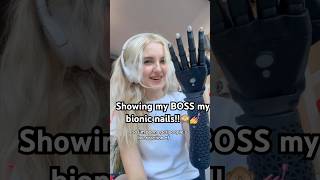
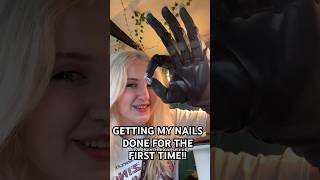
Getting my nails done on my new bionic arms for the first time!!💗#girlhood #nails #bionicnails
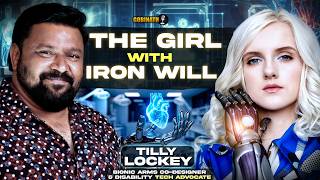
Tilly Lockey: Lost Both Hands at 15 Months, Leading the Bionic Generation |With Tamil Subs| Gobinath
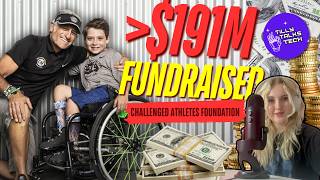
The Incredible Foundation Making Sport Accessible to Every Athlete | Bob Babbitt on Tilly Talks Tech
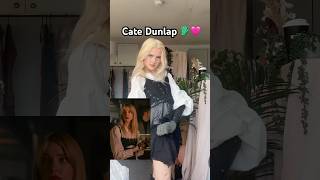
Cate Dunlap🖤 I get compared to a lot of characters so here’s my series inspired by them!🦾 #fashion