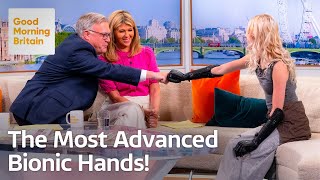
How I lost my hands | my SURVIVAL story
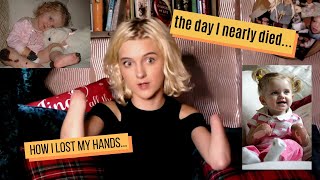
In this long‑form storytime, 14‑year‑old Tilly Lockey recounts the chain of events that led to the loss of her hands and how she rebuilt her life. She begins by clarifying that she was born with normal hands and a loving family. At 15 months she fell seriously ill with vomiting and a rash; her grandmother noticed purplish spots that matched a magazine illustration of meningitis‑septicemia. Her mother, recalling the article, called an ambulance and rushed Tilly to hospital. Tilly spent weeks in intensive care, undergoing numerous blood transfusions, surgeries, and a secondary infection while doctors warned she might die. After a prolonged fight she began to recover, marked by her first laugh. The infection caused irreversible damage to her hands, and surgeons amputated them in a way that would allow future prosthetic fitting. Tilly later received bionic arms from Open Bionics, describing the adaptation process, early challenges (e.g., opening presents, feeding herself), and the crucial support of her sister, parents, and extended family. She emphasizes her independence, the motivation to prove doubters wrong, and her subsequent pursuits: piano lessons with a specially adapted rig, motivational speaking, advocacy for prosthetic technology, and using her platform to inspire others. The video ends with a call to follow her journey and an invitation for more storytimes.
Chapters
Hi everyone, my name is Tilly and welcome back to my YouTube channel, or if you're new, welcome. You probably clicked on this video thinking you just saw somebody got their hands amputated. I lost my hands, yes, here they are. And you're probably thinking, how? What happened? I need to know. And being an amputee myself, I do know lots of people who are also amputees, and there are many, many, many different ways that you can lose your hands, and you probably wouldn't think it, but yes. And I have a couple of friends, one who lost his arm by getting hit by a train, one who was eaten by a shark, a couple who were just born without a hand because that is quite common as well, and people who've had illnesses. So there's so many ways that you can actually lose your hands that you probably wouldn't really think about on your day-to-day, in your day-to-day life. It could happen so quick to anyone. But I'm basically just here to share my side of the story, what happened to me, how I lost my hands personally. And basically just give you all the details of what happened and how I got to where I am today. But I'm just gonna answer the first question and say that I was not born without hands. I had hands when I was born. I was born into like the best family I could ever ask for. It was me, my mum, my dad, and I had an older sister too. And I used to just like play around with my sister. I had hands. I was a completely normal, happy, healthy baby. So I was just going to get that out of the way first, just let you all know that it was a bit deeper than that. But I, first of all, I just want to say like I don't want pity from this at all. I don't want sympathy or anything from filming this video. I just wanted to do a little bit of a storytime and tell everyone how I lost my hands because it's quite an interesting topic and not one that pops up on your feed very often every day. So I just thought it'd be really fun just to talk you all through what happened, how I lost my hands, and all that stuff. So I do have some notes on my phone here, and I'm just gonna be looking at them throughout because it is a long story, very long story, and I just don't want to miss out any details. So I do apologize if this video is quite long. I have a feeling it's gonna be really long because, as I said, it's a super long story. But if you catch me like looking at my phone, that's why I'm just looking at notes because I don't want to miss anything out. So we've already covered that I was not— I didn't— I wasn't born without hands. I had hands when I was born, and now I'm gonna tell you what actually happened. But basically, it first happened, I was completely normal, happy, healthy, completely fine baby with my sister, my family. And then one night I felt really ill, and I was 15 months old at the time, so I'm kind of just going off what I've been told. And I do quite a lot of interviews and stuff, so I've like repeated the story so many times, it's kind of drilled into my brain now. But I I just wanted to let everyone know that I don't actually remember this time when I was actually going through the amputations, actually going through my meningitis. But obviously my parents were alive, my sister was alive, and they remember it pretty vividly because it's not something that's easy to forget. But basically, I was feeling really ill one day. I was only 1 year old. I was just like— my mom says that I was whimpering in my cot quite a lot. But I was around that age, you know, I was teething and everything, so they thought, oh, she'll just be teething, that's fine. But she went to me, made sure I was okay. I stopped crying and I went back to bed. And then later on I was whimpering again, and this is maybe like early in the morning now. And so my mom comes and sees me again, and then she picks me up and I start throwing up everywhere. I start throwing up all over the place. So then she realizes, okay, she's a little bit sick. So she takes me into bed with them, gets me cleaned up, and yeah, I go back to sleep. And then the next day my mom did take me to the doctor's because I was still throwing up. I was just— I didn't really have much emotion in me. I was basically just like, I wasn't interested in toys or anything like that. So my mom, just to be on the safe side, went to the doctor's where they diagnosed me with an ear infection and they sent me home. Now my mom was a mother of two at this time, and I have two more sisters, so there's four of us. But since my mom would only have had two kids and neither of us had ever had an ear infection before, so she didn't really like misdiagnose that it was an ear infection or anything like that. She didn't think of anything, but they just said basically I would be right as rain, back to normal, everything would be completely fine in just 48 hours. But as I said, my mom was just kind of like, okay, he's a doctor, he knows what he's doing, kind of thing. And so she just didn't question it, looked after me, gave me some Calpol, as you do, look after your kid. But it kept just getting worse and worse, and basically my my mum just had like a thought in the back of her brain where she was just like, are you sure this can just be an ear infection? Like, it seems a little bit more serious than an ear infection at this rate. But I was at my nana's house, and again, I was just sat on my granddad's knee, and I was just watching CBeebies or Nick Jr. or something. I was only 1, and I was just chilling. But they thought— I, I think they thought like, oh, I was fine because I was just watching the TV, and I was just kind of staring at the TV. So I've just really focused on TV, so like that's normal, she was just watching the TV. But then I went— my nana, she's the one who spotted something really wrong in my body that really pointed everything out that there was something actually seriously wrong here. And she took me in and changed my nappy basically, and then she found these kind of purplish rash things. And my mum describes them as like when you get older, like a really old person get those like those purplish spots, like old age spots, like the blood or whatever. I'm not really sure what it was, but that's basically what they described it as, and that's what it looked like, kind of them just all over my body. And they were just really little to begin with, and then they like started to expand, started to get a bit bigger around more parts of my body. We noticed them more. And so my nana is usually kind of the person to like brush things under the rug, like, it'll be fine, like she's caring and stuff, but she's like, if the doctor's diagnosed this, then they maybe it's just an allergic reaction or something, but it's nothing crazy. Like, I wasn't acting crazy. So, but luckily she shouted for my mom, and my mom came in, and my nana was just like, um, Tilly's got these kind of rash things on her body. I don't know if you want to come check it out or what. So my mom came in the kitchen where I was with my nana, and she had one look at these marks and she was just like, oh my gosh. She like jumped to that conclusion, light bulb moment just switched which wasn't a good lightbulb moment though, but she instantly knew what it was. And then basically she called her sister down from upstairs to come have a look too. She came running, she was just like, Helen, come quick, like, this is serious. And basically Helen came down the stairs and it was me, little tiny me, baby me, my nana and my mam and my auntie Helen, my mam's sister. And then basically they all just stopped and were like, this is bad, type thing. You may be wondering what they were, what it meant, how did they recognize them, like my mom and her sister. But it was basically a couple of months before I got ill, um, my mom and her sister were reading a magazine together. And basically in this magazine, it was just like, I don't really, I'm not really sure what kind of magazine it was, just life and stuff. But there was an article in this magazine about a little girl. She was really young, I think she was like 3 or 4. And it was all about this girl who had a disease called meningitis, septicemia, and we— my mom didn't really want to read this article because it's one of those sad articles, like there's a child losing their limbs, like you don't really want to read that because it's really sad, but she just felt since she was a mother it was kind of her responsibility to know about these things, so she read it and thank God she did, and basically this article was all about this mother's experience with meningitis, septicemia, how to watch out for it, and and that's what I had, meningitis septicemia strain B, and my mam instantly knew because in this article, luckily, they also included a picture of the septicemia rash. So as soon as my mam saw that image but in reality on her own child, she instantly was like, it's meningitis. So she got on the phone, she ran to the phone, she was like, 999, I need a hospital quick, my daughter's got meningitis, please, please, please come. And they were like, okay, we're on the way. They were like trying to ask her questions like, well, is it 'This is what this is,' just to make sure they didn't send an ambulance for someone that was completely fine. But obviously it was pretty serious. My mum was like, 'Yeah, you can ask me questions on the way, you can ask me questions when we get to the hospital. Like, when the ambulance is here, just tell me that it's coming and I'll answer anything you need to know.' So they were like, 'Okay, okay, okay, this is really serious.' So they jumped in the ambulance and they came rushing straight to us. And my mum just picked me up, like shoved some shoes on, probably not properly because she was just wanting wanted to get me there as quick as possible. And she literally just picked me up and she sprinted with me down the street, just even just at least to the end of the street. She just wanted to get me to the hospital and in the ambulance as quick as possible because she'd read about this disease and knows that it's a life or death situation, which I completely believe that everything happens for a reason. And it's really weird that my mom read that magazine just a couple of months before I got ill myself because I always think if she hadn't have read that magazine— I bet there's lots of people out there who don't know what meningitis is, don't know what to do, don't know how to react, don't know what to look out for— and if she hadn't read that magazine and that article that day, would she have known that this was a life or death situation, she had to be extremely fast, and my life basically depended on how fast she could get me to the hospital. So we got here and we rushed in. I don't really remember, I don't remember anything, I don't really know anything about like the ambulance trip, we just got there as quick as possible. And when we got to the hospital, I was being rushed through on one of those hospital beds. Tiny little me, guys. I was 1, and I was 2 weeks early as well as a baby, so I've always been quite small, and I still am. I'm 4 foot 11 and I'm 14 years old, so you know. But they basically had me on this hospital bed and they were sprinting me through the hospital trying to get me to like the surgery room, operation room. I'm not really sure what it was. The serious place. A&E. That's what it's called. A&E. They were running to get me to A&E really quick. And then I got there and my mum just tells me there were just like maybe even 10 doctors all looking over me trying to help, like stabbing me with all sorts of needles trying to sort things out. I'm not even really even sure, but I was just sat there and she just remembers thinking like me, as tiny as I was, being worked on with all these, like all these doctors who were all doing different things to my body trying to keep me alive. It was absolutely insane and something you as a parent any parent should never have to go through. I always feel for my mom because of this. So Mom was just like, as soon as like one of the doctors got out, she was like, is she gonna be okay? Is she gonna be okay? Like, what's gonna happen? Is she all right? Type thing. Um, and they just said, we're not sure, she's in a really, really bad case. They said like, she's really young, it's probably— she's probably gonna die. And they didn't even say probably, then they gave her a percentage and they were just like, yeah, she's gonna die, 100%, she's gonna And my mom just started throwing up everywhere. My mom just dropped to the floor, like, crying, throwing up, just completely overwhelmed. And honestly, who can blame her? It was absolutely horrible and crazy situation to ever be in, and I hope nobody else has to be in that situation ever. But yeah, my mom was just throwing up everywhere. My dad was at work. He left work. He was running now, like, to get to the hospital to see us. And I had my older sister as well at this time. She's called Tilly Lockey. And she was basically— all this time I was in hospital, having to stay with my nana and my granddad, my grandparents' house. And so my parents had to like juggle between being with me in the hospital and looking after my sister obviously also, because we're only 2 years difference between us, so she was only 3, so she needed all the attention as well. And yeah, it was a pretty hectic time, but my dad was really kind of the rock in all of this. So my dad, he was obviously worried sick as well. He's amazing, I love my dad. But he was the one kind of like, he knew me even when I was 1 year old. Like, I wasn't the type to let go easily. I don't know how they knew that when I was born, but as soon as I, I guess I just came out the womb and I was like, I'm ready to fight, you know. So people, my dad was just like, she'll be okay, babe, she'll be okay. Like, to my mom, it's fine, it's fine, she'll, she'll get through it, of course she will, she's Tilly type thing. So he was a really, really important, played a really extremely important role in the family at this time. And basically I was in hospital for weeks, for weeks and weeks and weeks, and they just told me I was gonna die. Every day my parents would ask, is she getting better? You know, will she be okay? Is she gonna live? But they can never really get an answer because they were kind of just waiting to see how I would do. And it actually got to the point where they were about to shut my body down for the machines to keep me stable, to try and recover something, at least like the tiniest thing. We needed to do— try anything, basically. And they actually asked my family if they wanted to come in and see me before they put me to sleep because they couldn't be certain I would wake up. So you can imagine hearing those words about your kid if you're a parent and you have a kid. You can imagine those words and how my mom was feeling at this time. I can only imagine. But basically, it just stayed like that for a while. My mom went home, packed me a suitcase. She didn't know what she was packing. She didn't know how long I was going to be there for. But I was there for, as I said, a couple of weeks, and then there was this one day where my dad found some statistics in a leaflet in the hospital, and they basically said that only 1 in 10 people actually die from endometriosis. So that's a good thing, right? So he had all this hope. Oh, there is hope. Look, she's gonna be fine. Only 1 in 10 people actually die. Like, that's only 10%. That's really, really great. So she'll be alright. And he said this to the doctor. She'll be alright, right? She'll like get through it. But his exact words in response were, "Well, she is at the sicker end of the scale." And that's all my parents really got, and then it was a waiting game. So then it was after 1 week in intensive care, 3 weeks in recovery, a secondary infection, being transferred to a bigger hospital, and 10 blood transfusions that one day I started showing signs of recovery. Somehow. I don't even know how that happened. Like, it was so weird. Everybody who found out just like literally dropped to the floor and they were just shocked and they were all just crying. They were like, how has she done this? A 15-month-old tiny little baby girl battling this extremely rare case of meningitis that is deadly and kills a lot of people. And even though it is quite rare, anybody who usually gets it will die from it if it's that strain because it's like a really serious one of them because there are many types types of meningitis strains. And for the one I had, there is a vaccination now that we helped campaign for on the NHS. I'm not sure in other countries, but in England you can get that vaccination, or you could go private somewhere else. But it is available now because we did a lot of like media trying to get this available, share my story and everything like that. But yeah, somehow I managed to pull through. I survived, and I'm here today. But this recovery process took a really long time. I was in like the hospital bed. They put me in recovery, and as I said, I was in recovery for a long time. And a lot of this time I was still emotionless. And the septicemia is a blood poisoning, so basically what it does is it makes kind of parts of your body, starting from the tips of your toes and tips of your fingers, it like kills its way through it until eventually sometimes it will kill you as a person, as a human being. So we were actually really, really lucky. But going through this process, like I was in in the hospital bed, tiny little baby. I had black purplish big scabby like bruise marks things. I don't really know how to describe it all around me, but I'm gonna be putting pictures on the screen right now and also so you already like see what was going on. But yeah, it was a really, really hard time and they always say it's like it's a blood problem and I don't know if this is— I don't know about this, but my mom says it's like jamming, you know when you jam your finger in a door, like, and it like cuts it kind of, it like stops it. That's what my mom says, and that's— she says that that's what the pain would have felt like, like kind of just being squished, if you know what I mean. So you imagine when you like jam your finger— I mean, I don't know why I'm going like that because I don't have a finger— but if you like jam your arm or your hand or whatever in a car door, how much that hurts. So whenever my mom does that, she just thinks of me as a tiny little baby with these purple legs, these purple hands, purple arms, like even some of my face was purple. Like I have a scar on just under my eyebrow, like here, or on this side, I'm not really sure, but that was off. I had like a little purple mark there, so that's why that exists. And if that was like any closer to my eye, I probably would have went blind. It's literally just underneath my eyebrow, so I'm really, really lucky about that. But around this time, I was still completely emotionless. I used to be a happy, smiley, cheerful baby, always cracking jokes, as the one 1-year-old, my first word was higher. So I used to go at the top of the stairs and just scream, hiya, like a proper happy baby, just full of energy and everything. And that was completely lost in this time. I was just— looked so dazed all the time. And actually, a funny little piece of information, I guess, that happened was I was obsessed with Fifi and the Flower Tots when I was little. I don't really know why. I didn't like it very much. I remember when I was 7 or 6 onwards, so I'm not really sure why I was so obsessed with it I was little, but apparently I was. And that was the only like thing that I would do. I had— I would just watch like Fifi and the Flower Tots over and over and over again. And even if I was fast asleep and parents were like, okay, she's asleep, we can knock it off now, like because the same song was going on, they were like, oh, uh, but they would just knock it off when I was asleep and I would literally wake up and be like, put Fifi back on, but in my mind because I wasn't speaking or anything like That.
Not yet.
TV. Oh yay, TV. Television.
So it seems.
Bifi got me through hell, basically, was what I'm trying to say. But I wouldn't eat from my parents, I wouldn't eat from my family. I only ate from my sister, who was 3. So, you know, I guess that was the start of a really good bond that we had. But she would basically have to come from my grandparents' house and like feed me a yogurt because otherwise I wouldn't eat at all. But it went like on like this for like a couple of weeks, and then I was starting to recover a lot more, but I still couldn't come home, and I was still emotionless. Nothing was really happening. I was only eating off my sister. And then one day my mom and my dad were there, and I didn't really know what they were doing. They were playing. I think it was someone's birthday or something because they had balloons. Um, but, um, they basically— my mom, I think, or my dad, either one of them, but basically one of them like booted this balloon onto each other just for fun. They were just playing around. And me, after going through all of that, me as a tiny little baby going through hell, like, I just completely started belly laughing, laughing for like the first time. And my mom and dad just looked at each other and then looked at me, and they were just like, keep doing it, keep doing it, keep slapping each other with the balloon. So they just kept slapping each other with this balloon, and I was absolutely hysterical as a 1-year-old. I was just absolutely creasing over my parents hitting each each other basically, so that shows the type of person I am. But yeah, that was the first time they'd heard me laugh for ages, and it was then they realised she's gonna be alright, she's getting better, she's doing great, she's just laughed. Like, I hadn't spoken at all, and then all of a sudden I just full-on just start completely laughing, belly laughing, and it was so amazing for them, I can only imagine. But yeah, that was the start of it. They hit you with a balloon and I thought it was hilarious. But then as time went on, I— since my hands were all— they really damaged my hands, that's why I don't have them anymore. But basically, with the septicemia, my hands were all like curled over, and my mum and my dad tell me that I wanted to do something, I was picking up a book or something, but I just looked down at like my black, scabbed-over, curled-over hands, and basically in my mind, I guess I just thought they are useless to me now. So I picked something up using just my arms, which is obviously how I do everything now, and that started the road and the journey of adaptation. But eventually I got like the green light, the thumbs up that I could be discharged, and I went home with my family. But every time I needed a bath or something, they had to like take me to the hospital to get a bath for some reason. I'm not sure, infections or whatever. But I went home first with my hands, and like my real hands, my human hands that were still attached to me. And then we had to go back for the amputation just because you want to get rid of it as quick as possible before it spreads even further. And most of the time people do lose legs, like they lose full arms, like up to here. So I was actually really, really lucky. And my mom made me a promise before I went in to get my hands amputated, where she basically said, like, I promise I'll give you your hands back once again. And that was because before that we'd had a conversation with the person who was going to do my amputations, and he had asked us, are we interested in prosthetics? And if future. And it's not something my family had thought about. I was born, so I couldn't make that decision. But he amputated in a way that would make it really easy for me to wear prosthetics in the future, because it's easier just to like have it all gone rather than having like fingers or lumps or like half fingers or anything like that. So he just amputated in a really great way that would make it so I could wear prosthetics should I want to in the future. And I'm really grateful for that, because if you've seen my YouTube channel or you've just seen me on TV or whatever, I've been all all over the place, then you will know that I do wear bionic arms now, made by Open Bionics, and I love them. So I'm really grateful that I got to make that decision for myself, and I feel like it's really important that we share our stories and let people know that that is an option should you want to take it. And now prosthetics are a lot better than they were like a decade ago as well. I would know because at the time they weren't very good when I first got my hands amputated. So yeah, but basically I was able to go home and they amputated my hands, and I was obviously— it was really hard. I was trying to get used to how to do things without my hands. And I'm gonna play like some home footage now of me at Christmas when we were trying to like sort things out. Like, I was trying to open presents with my no arms, no hands, and they were like all bandaged and everything at this time. It was really, really fresh. But I'm just gonna show you some videos of me trying to do things at this time when I was first trying to adapt. So just let you know, like, it was hard. And it was not easy at first, as you can see now.
You did it! What's next? So my sister did have to help me a lot.
My family had to help me a lot. Through that time, and they did have to really push me. I'm a really independent person now, so I thank them for that. But they now don't ask if I need help, which is great, but I'll ask them if I need help. So I have that independence and that responsibility, and if I need help, then I'll ask someone, you know what I mean? But I just try and do things myself because I've been brought up trying to do things by myself. And I feel like when I first had the meningitis, when I was first getting amputations and all of this, they were like, okay, well, she'll never be able to walk, she'll never be able to run, she'll never be able to play the piano. And so what did my family do? They bought a piano. They bought a piano so I could learn how to use it. Like, I got piano lessons. There's videos of me online playing the piano. I had a piano teacher called Michael Mulroy. Shout out to you, dude. But he basically only had one leg, and he made me kind of like— wasn't aesthetically pleasing, kind of pathetic, but it was practical. It was really practical. And it was basically this rig that allowed me to play chords on piano. Splendid. Absolutely great. Well done. And I just feel like whenever somebody tells you that you can't do something, that just gives me anyway, personally, that motivation to prove them wrong. Like, I will go out my way to complete this task that you think I cannot do just to show you that I can and you're wrong and I can do anything. So yeah, that's basically my motto, my motivation throughout my life. You tell me I can't do something, I'll prove you wrong. Simple as that. So I've always had a really, really supportive, amazing big family behind me. Like, I have 3 sisters, a mom, a dad, 3 cousins, nana, granddad, and we're all extremely, extremely close. So I'm really, really thankful for them. They mean the world to me. And my friends as well have helped me along the way, so amazing. Shout out to you too. But yeah, basically that's my story, how I lost my hands. If you want to know more story times about everything else in my life, like my journey with prosthetics from from the very beginning to now, because let me tell you, they have changed a lot. But that's my story, how I lost my hands. I hope that wasn't too long and I didn't ramble too much. I didn't really look at my notes at all there, I just kind of went out and started talking, but whatever, it's more natural that way. But that is my story, that is how I lost my hands, and I'm now 14 years old, traveling the world, being a motivational speaker, trying to give people confidence, an ambassador for an open bionics prosthetic company, and I get to wear really awesome bionic arms all day, every day. And I have a YouTube channel and an Instagram account, so follow me on there. But it's just been— that's basically what happened to me. And if you asked me now if I would take that back, I wouldn't, because it's made me— I feel like that day made me who I am today, and my family made us the people we are today. And linking back to how everything happens for a reason, I think this did happen for a reason. And I believe I was put on this earth to try and help other people. I know that they're not alone and things happen and you can share your story and you can be who you are because I'm full of confidence and a lot of people have their insecurities and they aren't missing hands, they're insecure because they've got split ends in their hair, that type of thing. But I feel like I was really put on this earth just to help other people and have a good time and show everyone that you can still have a good life and you don't have to be depressed or anything like that just because you're missing something and things not going as planned because at the end of the day this is is the plan. Everything you've done in life, that is the plan that you were put on this earth. Like, that was the plan. So just remind everyone, you're doing great. That's how I lost my hands, and that's how I got to where I am today. Thank you so much, everybody, for watching. As I said, do leave some— if you wanted me to do more storytimes, tell me and let me know which ones you would like me to do, because I'm full of stories. Honestly, I could talk for England. I ramble so much, so I apologize. But I hope you enjoyed this video. Leave some likes like if you did, and subscribe and hit the notification bell if you want to hear more of me and see me more and keep up with my journey, because I feel like this is just the start, and I would love to have you join the family on here.
So thank you so much everyone for watching, hope you enjoyed, and I'll see you next time.
More from Tilly
We had to hit the Alysa Liu dance!! 💃🕺 #dance #alysaliu #dadanddaughter #bestfriends
spiritual connection🥹💗🐐 I love this little baby #goat #wholesome #limbdifferent #girlhood
THAT WAS SO GOOD OMG IM never recovering🥹👽. #projecthailmary #scifi #ootd #cinema @Sony
trying to convince myself not to get bangs🙈 #hair #newhair #oliviadean #girls #relatable
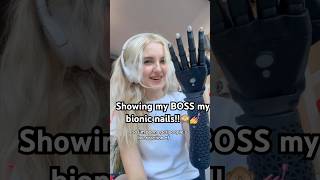
Getting my nails done on my new bionic arms for the first time!!💗#girlhood #nails #bionicnails

Tilly Lockey: Lost Both Hands at 15 Months, Leading the Bionic Generation |With Tamil Subs| Gobinath
The Incredible Foundation Making Sport Accessible to Every Athlete | Bob Babbitt on Tilly Talks Tech

Cate Dunlap🖤 I get compared to a lot of characters so here’s my series inspired by them!🦾 #fashion