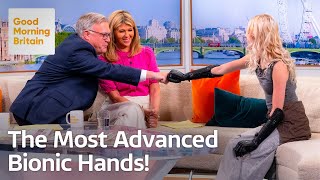
In this segment of the South Africa Summit vlog, the hosts introduce Daniel, who shares his daughter Leah’s experience with a limb difference, underscoring the summit’s focus on disability inclusion. Tilly Lockey, a teenage amputee and prosthetic user, talks about her schedule for day two of the convention and then takes the stage alongside Benji Rossman, a SingularityU South Africa faculty member. Tilly explains the design and operation of her Open Bionics 3‑D‑printed bionic arms, highlighting their wire‑free, muscle‑controlled mechanism and the learning curve of switching from traditional prosthetic control. She emphasizes the arms’ lightweight nature, their novelty, and current user base (about 60 in the UK). The discussion shifts to the company’s expansion goals: making the prostheses available in the United States, Germany, France, Spain, and eventually the NHS in England, as well as targeting markets in South Africa and China. Tilly’s personal narrative illustrates how advanced robotics can transform daily life for amputees and serves as inspiration for children with disabilities.
Chapters
So this is Daniel. We've just been chatting to him, and he has a daughter called Leah, and she's been struggling with her disability. She has a limb difference just like me, so that's why we're here, being able to, like, let everybody know that these hands are out here, and we're trying to get them worldwide to different countries. So shout out to Leah, you're doing great. I hope you embrace your differences and just be yourself, because that's what it's all about, and Thank you, Daniel.
Thank you so much.
So we're just having a quick breakfast before we head back to the convention. And yeah, this is day 2 and I'm going to be speaking. They want me there at 7 to do some rehearsals, I think. So yeah, I hope it all goes well and I'll see you there.
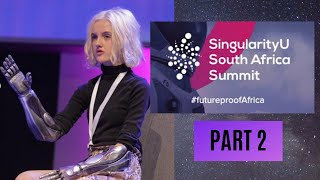
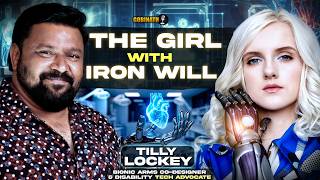
Then we have Benji. As I mentioned, he's part of the SingularityU South Africa faculty, and he has a strong focus in machine learning, artificial intelligence, robotics, and automation. He has a passion for growing the African machine learning community, and he is the founder and leader of what is called Deep Learning Endeavour. And Tilly Lockey, her life was impacted by the advances of robotics and technology. From the UK, Lockey serves as a true source of inspiration and possibility. She was diagnosed with meningococcal at a young age and sadly lost both of her arms. She now has open arms that are made by Open Bionics, which are 3D-printed, lightweight, and most of the products that Open Bionics creates are actually customized to suit the person who really needs them. Ladies and gentlemen, please welcome to the stage Singularity Youth South Africa a faculty member, Benji Rossman, and all the way from the UK, Tilly Lockey.
Maybe just to start off, can you tell us a little bit about these arms and what they can do, just for some context?
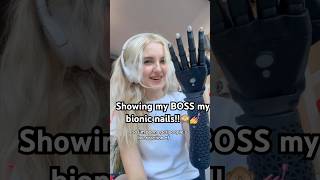
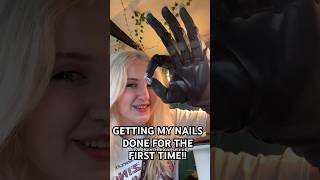
Yes, so these are my bionic arms. They are made by a company based down in Bristol in the UK called Open Bionics, and basically how they work is there are no wires attached attached at all. You just slip your arm in there and it's all muscle-operated basically. So if I squeeze my muscles and then it also can work as a thumbs up as well, so that's pretty cool. It was quite difficult at first. I've been working with different prosthetic companies ever since I was 2 years old and, you know, all the hands work differently and it was quite confusing at first because my previous hands were squeeze to open and relax to close, whereas these ones are squeeze to close and flex to open. Scared, I'm not trying to hide, and I just feel like it's really important that kids are now raised to know that this is the world we live in. And yeah, whereas now when people see me, and kids especially, they get really excited because these hands don't look like your everyday hands. But they look like something out of an action movie. They look like something made out of, like— so Open Bionics are a really startup new company. They've only been going 5 years, and so they're pretty new. And I do know there's around 60 people in the UK who are using these now, and we really are trying to expand. So these hands are available in a couple of countries— America, they're in Germany, they're in France, Spain. Not England yet, in the NHS, but we're trying to get them on all the medical services so it's easy for people to get a hold of them who would need them a lot more. And we are trying to expand to countries like South Africa. I recently went to China and there's a lot of people there who would really benefit from these. So that is our main goal at the moment, trying to expand as well. Compared to other prosthetics in the past, they are the lightest on the market. They're really amazing. I have a lot of friends who are also amputees, and we were sat with him having a nan knows, and he just picked up my hand and he was like, wow, that is so light.
And he was saying that his hand's 10 times heavier than this.