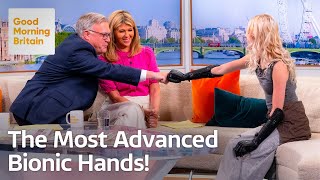
THE PROSTHETIC EVOLUTION! My experience with prosthetics and my collection of hands...😈
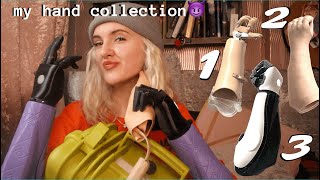
Tilly Lockey has worn prosthetics since age two and now co-designs bionic arms with Open Bionics. Each device costs £27-36k. She moved from realistic hands that drew stares to themed arms like Frozen and Star Wars, and her feedback shaped features including a freeze button and custom grip modes.
Chapters
Hi everyone, it's Tilly and welcome back to my YouTube channel. First of all, I just want to say the setup that we have right now— I am basically got a little stool thing on my bed, so I'm really sorry if it's like wobbling constantly. There's really nothing much I can do about that because this is the only place I can film right now because all my sisters are doing online school because of lockdown 3. So we need to be a little bit more quiet and in my own space. Also, I know so many of you are gonna be thinking right now, Tilly, you look so cool, you look so edgy in that beanie. The truth is I'm only wearing the beanie because we've had a bit of a hair malfunction. So yeah, this is my hair. My mom usually does my roots for me because if you don't know, my hair is bleached. It looks so awful, oh my gosh. My roots were looking extremely bad and my mom tried to redo them like she always does, but we accidentally got the wrong stuff because they ran out of the other stuff. So we ended up just getting like brightener rather than the actual bleach root stuff that you're supposed to use. So it just brightened my what was like really, really dirty blonde hair to just a really vibrant yellow. So I'm gonna put that hat back on. Thank God I got like a selection of beanies for Christmas because I'm literally filming for Sky later on today and they would not be very happy with that. Maybe it's time for me just to get the shave. Today we are going to be discussing a very requested topic and it is this very big heavy green briefcase thing that I have. I'm gonna put it down because it really is heavy. Basically what's in there is all of my prosthetics throughout the years. I'm 15 and I've been wearing them ever since I was 2 years old, on and off. So as you can imagine, I've got quite the collection. But I'm just gonna get straight on into it with this prosthetic. Yes, it is a prosthetic. It looks like this on. Yeah, this is the first ever prosthetic I got, and it was off the NHS when I was 2 years old. Basically how it operates is you slide your arm in. I've definitely got this on the wrong hand. Hang on, give me a second. You slide your arm in like this. And then as you can see, there's like this elastic band which is kind of ripped off because I've had this for years, guys. I was 2 years old, so I'm not gonna push too hard because it literally will just snap. How this operated is, you see that hook on the thumb? There was a big harness that attached to that that went all over my 2-year-old little body. And the way I would move my upper body, so my shoulders and my upper arm— there's a ghost in my room— the way that I move my shoulders and my upper arms would kind of pull on strings that would pull on this hook and Therefore making it go side to side so you could like pinch things. Honestly, I am not a huge fan of this. I wasn't at the time. Obviously we had no idea what we were getting into really. We'd never looked into it before. Why would we need to? I'm gonna take that off because I don't know, I just, I much prefer these ones. Yeah, we didn't know at all what we were getting into with these. We never researched it before. So this being the first thing I was given when I was 2 years old, was a bit like, hmm. Obviously the way it operated was very excessive and like external, very visible, like a big harness. I didn't want to be walking around in a big harness all day. I felt like a puppet all the time. I was terrified in the clinic, which sounds really bad, just because it was a bunch of people with like— obviously being as young as I was, there's a bunch of people with like no legs and no hands running around, and the hospital's got that kind of creepy aspect to it anyway. Obviously I have no hands myself, but I'd never seen anybody like me. And at that point I wasn't really looking for anybody like me. Like, I didn't feel like I needed reassurance to know that I wasn't the only one here. As well, this was very, very fresh after my amputations. So after my amputations, I had a really strong fear for just women in general because it was always the female nurses who would come and like take my blood and run all these tests on me when I was in hospital. And it kind of developed this really strange but persistent fear for women in me. All the people working in the clinic, a lot of them were female, and I— it just wasn't a pleasant experience for me. I would literally sit shaking in the office. Sure, I gave it a go. I was only 2 at the time, like, this was all that was available. And but I just remember thinking of it much more like as a weapon than a hand. It didn't look like a hand to me, therefore I didn't associate it as a hand, so I couldn't take it in as my hand, if you know what I mean. We decided to then go down the really realistic route just because my mom wanted me to know like what she was trying to do here, you know. A small anecdote as well on how and why this this was such a terrible experience for me getting this, my first ever prosthetic arm. It was actually handed over to us in a brown paper bag, as if something to be incredibly discreet about, you know. Like, my mom was not too happy about that when they literally handed it over in a brown paper bag. They didn't talk to us much about it. It was just like, oh yeah, here it is, and it was in a brown paper bag, which we just thought was pretty sus, just a bit weird, you know. Like, why would you give me a medical device in a brown paper bag? And then actually, as we were walking away from the clinic once we had received this, there was another woman who was was also waiting, and she came running after us, and she just said, hey, can I just ask, like, what exactly did they give you? So we showed her, we opened the brown paper bag, we showed her what they gave us, and she just gasped, and she was like, you know what, that's exactly what they gave me 25 years ago. 25 years ago, and it had not changed one bit, like the format, the design, the functionality of it. Nothing had changed in the slightest in 25 years. That really got me and my mom's head whirring, like Seriously, this is what they managed to come up with in 25 years? There needs to be something better out there. Opening the big green case now. This is the next hand I have to show you. This looks incredibly creepy, I know, but this hand was off Dorset Orthopaedic, and we had to go private for this. As you can see, there's a lot more attention to detail on this thing than the hook. It literally looks so realistic, which is what the time— what we were going for, because I was trying to associate these prosthetics as a hand. This is the hand. I do just want to say that me and my family had to really beg for a prosthetic that would actually move, because me being so young at the time, all they were offering was kind of just like aesthetically pleasing things. So I cannot tell you how many times I would— I was offered a glove before an actual prosthetic arm because I was so young and the technology could never shrink down small enough to fit into such a small hand. That was always the issue for me and what they said, so I was always offered a glove. But me and my me and my mom were both just like— I was a bit older at this point as well, and we were just like, but why? Like, I'm not trying to hide the fact I have no hands. It's not something I'm ashamed of. It felt like at this point everybody was just trying to hide my disability, which is why I can imagine so many people with limb differences and like just amputees are put off completely by prosthetic hands because the experience was absolutely awful. And I was conditioned to think from the age of like 4 years old was when I was getting this, that it was something that I needed to hide away because they were all offering a glove and that's it. Like, it doesn't need to move, it just needs to make you blend in. We had to really, really seriously fight for a hand that would actually move, and this hand does the bare minimum functionality-wise. It is all muscle-operated. This is the battery that sticks out there, and that attaches to like further up your arm. Obviously, this is really small and doesn't really fit me anymore because I do grow over time, believe it or not. I am 4'11", but I have grown, right? Listen to this part because this is kind of important, because all these prosthetics, or the majority of them, are operated completely differently. And the ones I wear now are the complete opposite. So to operate these hands, I would have to squeeze my muscles to open it. Basically, the thumb would just come down and up, and that was it opening. Like, the rest of the fingers were stationary. And then I would relax my muscles to make it close, whereas the ones I wear today, I would squeeze to close and flex to open. So that was a little bit confusing at first because you're basically doing the complete opposite of what is natural to you with your organic limb. But at least it was progress, you know, we got some kind of movement. I would love wearing these hands. I was really a fan of the realistic design at school because people already knew my story. That was the thing, like, I would go to school wearing these hands and I would be the most popular person ever because it was like, oh my gosh, Tilly has hands now! She didn't have a hand yesterday, you know. And everybody wants to hold my hand. It's like, whoa, because it looks so realistic as well. But I quickly went off the realistic design when I realized that when I was around people who didn't know the full story or what these were, why I needed them, that I don't actually have hands, I would just find I was getting so many stares. Every single person's eyes would be on me constantly because the truth is they couldn't figure out whether it was real, whether it was fake, because it looked so realistic but it moved so robotically. So it honestly was quite uncanny and it really creeped a lot of people out. I can't blame those people for doing that because it is something that I a lot of people just— you're obviously not used to seeing a lot. And obviously me just whipping this off at any point, everybody gets the shock of their lives, which I must say was quite funny for me, but also it was kind of uncomfortable for me. I did like these hands for a bit. I liked them around people who knew my story, but ultimately it wasn't really for me, and I wasn't trying to hide the hand again. That's what I felt we were all trying to do, trying to hide the fact that I have no hands. And all these, these guys are probably— I think these are the most expensive ones I had. So these are the smaller ones, so these were around £27,000, I think. But as I got older, obviously you're gonna have to replace these arms. And my last pair of these ones, the bigger ones, were about, I want to say, £32,000 or £36,000. Obviously this amount of money is absolutely ridiculous. Like, we cannot afford that. We're definitely not rich, which a lot of people assume that I am because I wear devices like this. People don't actually know the full story and how much help I actually received and still receive now, even to this day. I've been so lucky in my very supportive family and my very supportive area, us being quite informed when it comes to social media and fundraising. I feel like when something that serious happens and you rely so much on other people's support in helping you fundraise to get arms, like hands, something that is really a basic human right, it really makes you realize how important charity work really is. So yeah, we had a lot of help to afford these guys, but I just felt like all this money, £36,000, they really needed to be better. Like, I love them and I'm so appreciative to anybody who helped, and they were a big part of my journey, I do think. However, we decided to nip it in the bud at some point because that's a lot of money which we couldn't keep up with, and we couldn't expect other people to help us keep up with. When I was growing up, I worked with two pretty similar companies, so this was the next hand I had, and as you can see, it's still very realistic root, like it's got the peach skin tone and all that. And this was very, very similar to the other company I worked with. This was from a company, again private, called Touch Bionics, and their hands were pretty pricey also. Believe it or not, the hands I wear now are actually the cheapest I've ever received and definitely helped me the most. At this point, I was really, really dedicated, and my mom as well. We were really, really dedicated to just make a change in prosthetics. All we wanted to do was help people develop them more and it wasn't only just for me. That was something that I really wanted to help with, just help get something at least a little— not actually, not at least a little bit better. I wanted it to be extremely so much better. I needed them to be reliable. I needed them to be more functional, to make you feel good, because at this point I do not feel good wearing this. Like, I feel like an alien. People are still staring at me, giving me bad looks. It was all very sympathetic as well when they figured out what had actually happened. Oh, she's got no hands. And they'll actually talk to me about like, oh, I'm so sorry for you. I don't want your sympathy. Like, I don't want anyone's sympathy. If you've ever left a sympathetic comment for me, don't. And don't ever leave me sympathy because I don't want it at all. Like, no, I don't want it. Like, I'm doing— I'm thriving, I'm doing great. I don't need your sympathy, so please do not leave it for me. Yay! I understand that a lot of people do it to like— they're thinking it's a nice thing and they're not trying to be rude, and it's like more of a kind gesture. A lot of people people think, but from the perspective of me, somebody with the disability who's actually fine, and then everybody jumping to the conclusion that I must be so sad and that they should feel sad for me— I don't like it. And I've never met anybody who does appreciate it. So if you are that kind of person, don't feel bad, but just try not to do it again. I'm giving you help here. There was at some point working with one of these companies, we were really working on trying to get a wrist. I was like working with these people, like telling how to develop them, like, from the user's perspective, will be really, really handy to me. Because handy, haha, that's really funny. The people who are making the prosthetics obviously can't try it for themselves, like, they can't test it and know what to do next to make them better because they have hands. They can't test it, you know. So they really need people like me, like, people with limb differences that can actually test out their product in order for them to get any better and to the standards that I hope they will get in my dreams and in the future. So I was trying really, really hard with this company to try and get a wrist involved. It was again adding to the price. It's always the thing of all these features you want to make the hand better and more reliable, but the price is always going to go up with that, which is something that's really annoying and an issue that we're still facing today. But we did actually end up with a wrist at some point, which basically if you like pushed it against a surface, it would twist like that, like however way you pushed it. So it was still manual and still not really ideal because you don't like push your wrist around, you know. Ultimately, you want it to be automatic because you actually do so much with your wrist, which you wouldn't think. But if you try a day like without your wrist, like not moving your wrist whatsoever, you'll realize how hard it actually is. I had my parents do it and they couldn't last like 5 minutes. I do recommend that if you want to know what it's like, like from somebody else's perspective who is wearing prosthetics. And another reason why we need to hustle on it I had a couple of versions of both these two hands, and because obviously I was growing when I was trying these and working with these companies, and I needed replacement arms. So a big part of my collection, I'm not gonna bring them all out because they are literally the same thing but like bigger and smaller than this one over here. As you can see, we went from this hook thing to two very realistic designs. Getting more functional but still not really there. At this point, nothing was improving. We were getting the same thing, like, oh no, the technology is too exquisite and too, like, complicated to fit into such a small hand. It was really just stuck. So I was forced to take a break from it all. But in the meantime, I wanted to make a list, like, I was wearing my brain, all these ideas that I had for the hands which I would want in my future and for other people's futures. So it's about 5-year break I think I took while technology was stuck, but then suddenly advanced, and that's when I found the company who make these bionic arms. We found them through an online appeal. They're called Open Bionics. They're based in Bristol in England, and they were looking for a child below the elbow amputee to help them develop their prosthetics. I fit the criteria. We were looking to get involved. They were looking for someone to help. I had experience, so we just thought, perfect, and so we got involved. They had hundreds of applicants and eventually chose me, which I'm incredibly grateful for. We went to meet them down in Bristol and I got to see the lab. A mesmerizing experience. Robots walking all over the place. I truly felt like I was in some sci-fi movie because they shared this lab with so many different, like, people who are making cool robots, like these spider-looking things that would literally walk across the floor, like the hallway, while you were walking. It was really cool actually, and I love going down to the lab. They do have their own lab now, but It's still pretty cool, even if there aren't robot spiders running the joint. But I went, I met them, and I got fitted for my own binaural comm. I really loved the idea of these. I loved how they weren't so realistic, and that was something on my list in my break that I decided, hey, why am I wearing such realistic prosthetics? Like, this isn't what I need anymore. This is just uncanny. I don't like it. It's getting bad impressions. It's all sympathetic, which I hate with a passion. So I thought, yeah, why— I'm not trying to blend in, so why not go the complete opposite way? I was so excited when we found Umbreonics because they were going the exact same route and they were looking at it the exact same way as me and my mom were. Then they collaborated with Disney, creating, um, like Frozen arms, Star Wars R2-D2 arms. I'm not a huge Star Wars fan. I don't really know what R2-D2 is, but it looks cool. They're also making Marvel Iron Man arms and some based off of video games, which was actually the first project I did with this company. I I went to San Diego Comic-Con where I modeled the Deus Ex arm for children, which was modeled after the Deus Ex video game. That was such an awesome experience for me. It was my first time ever in America, and it couldn't have gone any better, to be honest. I loved it so much. So I was working with them back and forth, everything that I wanted fixed in the arm, everything that was really, really great, giving my feedback, and then also things that weren't so great and were actually pretty awful and I needed fixed. Instantly. Also, looking back on previous interviews, it's crazy to think how far they've come on. I've been a part of it for like 5 years now, I think, and it's— you don't realize all the changes that are happening, like little, little changes every time. But looking back on previous interviews I did when we were there in Amsterdam, one like tech events, the— even the grid modes are so incredibly different and the way it all operates. And it's really cool to have been a part of something that's come along so far in that people all over the world— well, the places that they're available in currently. So great to see that everybody's benefiting from a technology you were a part of testing and co-creating. As I mentioned earlier, these hands operate the complete different way to these ones I was wearing, where that was squeeze to open and relax to close. This is squeeze to close and flex to open. So that was a bit confusing at first, but it did only take me like 5 minutes before I was in the lab chucking things around and —causing absolute chaos. It does take practice. I'm still learning things that I can do with them even today, but the whole like basics of it is pretty easy, which is obviously important when you're replacing someone's arm. I am just gonna share with you some of my own inventions in this arm, my personal favorite, and so incredible to see it's a lot of other people's who use these arms' favorite feature as well that I invented. I'm gonna take credit for that, guys, because I don't know, it's really cool. To see, you know. I was really trying to get into like interviewing people, and I was interviewing my sister just for fun, like we weren't filming or anything, but I was trying to hold this microphone and every time I would move my hand, obviously I wasn't as, um, comfortable with the whole operating of it. Now, now I could easily do that and I'm really good with them, to be honest. I'm really good at like operating them now and knowing exactly what I need to do, and they are much more reliable. But at the time I was looking for that little bit extra trust in my hand. In my hand. Oh my gosh, my accent is so funny. I actually edit this and like laugh at myself, you know. I needed a little bit more safety in my hand because when I was going to like— I'm using the microphone. Hi, I'm gonna use my hand as a microphone. Okay, so this is the microphone. I'd be like, hi Tia, so welcome here today and you're gonna tell us what you're doing at school. Like it was very basic stuff. Stuff, right? And then I would like point it over to her and she'd tell me about a day or something, but then I would just— and it would just drop and open on its own, like unintentionally by me. So I fed this back to Open Bionics and I told them that I had actually started completely turning the hand off. So if you hold that button down, like turn off, it's literally gonna die. It's red. If I hold that down for longer, it turns the hand off completely. I'm gonna model it for you there. There, so it's turned off now. So now no matter what I do in my muscles, the hand will not open or close. Like, it's stuck, okay, until I turn it on again. It plays a little song. I told everyone who works at Marnix that that's what I'd started to be doing, so I kind of brought up the idea of how about like a freeze button without— so the hands can still stay on because it's very easy. You don't need to sit through the whole recalibration and everything when you're turning it off and turning it back on. On, but you do just get that extra sense of safety and reliability and trust in the arm when you're just doing everyday stuff like that. I mean, interviewing my sister isn't really everyday stuff, but it comes in handy for anything like brushing your hair, eating, brushing your teeth, like drinking, anything. It helps so much in. So here, right, I'm moving the hand, and where I would close it and then just turn it off completely, now if I just hold it shut for like 3 seconds It'll beep and turns blue, and blue obviously representing ice. Now the hand is frozen, and no matter what I do with my muscles, this hand— or microphone, it's not a hand, guys— is not going anywhere. That was my invention, and it's so great to see that everybody loves it so much as well. It really is very handy, and it's definitely helped me a lot in like everyday activities. And then to unfreeze it, you can either press the button, or I like to do on the inside of the arm. I just hold down for 3 more seconds. Mic drop! The functionality of these guys is so much better than a hook, which is what I started with. You can even do like the 2-finger shut and a peace sign. They call this the tripod grip mode, but it's a peace sign in it really. Then if I press again, I can do a 1-finger, even smaller, which can literally pick up hammer beads. And then I can also do a pointer. And a pinch like that. So obviously the functionality of these guys is so much better. Seems, seems though we started with it all manual, like I was dressed up as a puppet, a harness, try and get it to open and close, or like pinch really is what it did in this hand, like do that. But also the aesthetics of the arm, I'm so happy to get away from the whole realistic design of things because it's just, it was never really for me. Like, I feel like now what was the sympathetic story when it came to these, when people figured it out that I actually don't have hands and these are my prosthetics? These, when they find out these are prosthetics, a lot of people think they're gloves, which I think is a compliment because that means like they work really fluently. But when they figure out that these are my actual bionic arms and I can operate them and I actually don't have hands underneath them, it's more of a wow, that's I think that is so sick. Technology has come on so far. I did not realize this, and it's such a more cool and positive topic of conversation rather than, "Oh man, you lost your hands, that's really sad, boo," which I absolutely hated all the time. So I adore the reaction these get. It's kind of annoying when everybody thinks they're gloves. Like, I bump into people— I was at Harry Potter Wizarding World, like, behind the scenes one time, and so many people were like, "Hey, cool gloves!" And I was just like, like, thanks. Like, I don't want to just whip them off and be like, actually, you know what I mean? But you also get the kids that scream, why is she covered in arms? And it's funny that the kids can get it but the parents all think they're gloves. But I appreciate the children for that. I'm like, hell yeah, I've got robot hands! They get really excited by it and everybody wants to shake your hand, which is something that I never experienced with these, with the people who didn't already understand what was going on. So I feel like ultimately they've improved so much. This has been like maybe like a 13-year evolution for me, and it's changed a lot. And to think that we went from, from a hook to this to then this, it is absolutely insane to me in that short amount of time. Imagine what it's gonna be like in another 5 or another 10 or another 20. And I'm just so happy to be a part of that, and I can't wait to see what comes from the future. A lot of people requested this video and really wanted an insight into it all. So I hope this was informative and you enjoyed this video. Make sure to like, comment, and subscribe if you did. I really hope you enjoyed, and I will see you all next time. Bye!
More from Tilly
We had to hit the Alysa Liu dance!! 💃🕺 #dance #alysaliu #dadanddaughter #bestfriends

spiritual connection🥹💗🐐 I love this little baby #goat #wholesome #limbdifferent #girlhood

THAT WAS SO GOOD OMG IM never recovering🥹👽. #projecthailmary #scifi #ootd #cinema @Sony

trying to convince myself not to get bangs🙈 #hair #newhair #oliviadean #girls #relatable
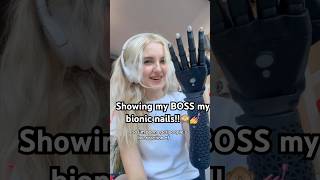
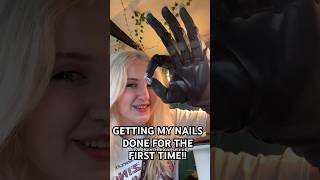
Getting my nails done on my new bionic arms for the first time!!💗#girlhood #nails #bionicnails
Tilly Lockey: Lost Both Hands at 15 Months, Leading the Bionic Generation |With Tamil Subs| Gobinath
The Incredible Foundation Making Sport Accessible to Every Athlete | Bob Babbitt on Tilly Talks Tech
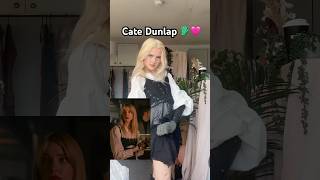
Cate Dunlap🖤 I get compared to a lot of characters so here’s my series inspired by them!🦾 #fashion