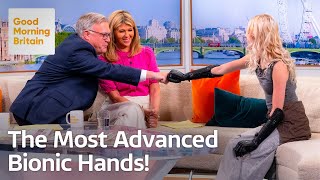
Tilly Talks To... SUE NEILL!!
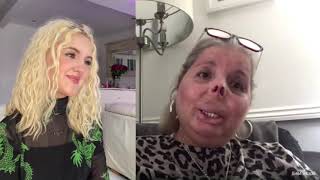
In this interview, Tilly Lockey speaks with Sue Neill, a survivor of severe sepsis that resulted in the loss of all four limbs. Sue shares her background as a devoted mother and grandmother, the traumatic hospital experiences that left her feeling neglected, and the emotional impact of losing her limbs while retaining her voice. She describes the challenges of early rehabilitation, the inadequacy of the prosthetic arms initially provided by the NHS, and her subsequent discovery of Open Bionics' Hero Arm, which she is now crowdfunding for. Sue discusses the social stigma and altered perceptions she faces, the importance of dignity and proper care for amputees, and her plans to improve her facial appearance through surgery. Throughout, she emphasizes resilience, a positive mindset, and the desire to inspire others, while calling for systemic changes in NHS prosthetic provision and greater public awareness.
Chapters
The nurses are too busy.
It's very easy to tiptoe around the fact.
I wish people would advise me I did not.
I'm so passionate about this, so I'm so glad you brought it up.
The treatment I had was just unbelievable. I truly think that they would have killed me.
So I am recording now, if that's okay. So if you just want to maybe introduce yourself, just tell us who Sue is, regardless of your situation, just about you in general. What are your passions? What do you enjoy?
Um, well, my passion, I suppose, in life is my family. I've got 5 kids, loads of grandkids, and they are my life. I, I'm the carer, I'm the crafter, cook, cleaner. I used to love doing it all, just trying to be kind to people, you know. Yeah, just looking after people, really. That was my— that's what I needed. I needed people to need me. I think that's the hardest thing about finding myself like this. The house was really quiet without me. Like I said before, sepsis took everything except my voice.
Yeah.
So yeah, they miss my voice.
I adore my family and I mean, yourself, you sound like a really strong, caring, just motherly role in your whole family as a grandmother and as a mother yourself. And you've always been very charitable, a very generous person. So now could you tell us, me, maybe a little bit about the moment which did change your life, really? The moment that you lost all 4 of your limbs?
Well, I suppose in a way it was strange. They kept telling me, you know, we're gonna have to lose— it took a few months actually, and I sort of thought, oh my gosh, like, what do I do now?
Yeah.
And being totally dependent on people was something I don't sit comfortable Well, it doesn't fit me at all as a person because I'm a get-up-and-doer. When this happened to me, it took everything. It took a lot of training to get to talk again. I was just determined I was going to talk. I sort of gone, okay, so this is what's going to have to happen and it will happen. I've got a vocation. And then obviously last year I just started the ball rolling with I contacted orthodontics.
Yeah.
And even my face surgery was being looked at, and then COVID stepped in and stopped everything. I'm always going to be positive because I find that no matter what situation you're in, you've got to move forward.
100%.
Small steps, they are.
Yeah.
As long as I'm not going backwards, I'm okay.
Yeah, 100%. Yeah, I think that's amazing. That's totally the mindset that I've had all throughout my life as well. A lot of people look at people with disabilities and they assume that we have really bad lives and that we should be really, really sad, and there's so much sympathy around that. But what they don't realize is when you're actually in the situation, the only way to go is forward, really, and you can't dwell on something that you're not going to be able to change. Like, what's happened has happened. And so you look forward, you look for the future. Speaking a lot about my experience in general, you get a lot of people who are like, oh wow, if I was in your situation, I wouldn't even know what to do. Maybe I would kill myself. Like, I just, I don't know, like, that your situation must really suck and your life should be really bad, when really it's not like that at all. You share that mindset. That's something we definitely have in common. And, and it was sepsis, wasn't it? That was what the accident was.
I just am blessed that I survived. Yeah, when it got to that, I think it was like 4 months in intensive care, um, and I was a bit more with it, um, I was just everything. I just wanted to see the trees, I wanted to see the sky. I just, it was so great to be alive. I just embraced it. Oh my God, I've survived, I'm here. Yeah, because I kept being told is, oh my God, you, we thought you was gonna go. And I am lucky, I think that I'm lucky. I've got my voice and I've still got a little bit of limbs I can use, and I know I can in the future get better. And also, I might not have survived, and my little girl would have been without her mum, you know. Yeah, that was a tragic, tragic thing for me, you know. By the time she came out the hospital, because I was so bad, they wouldn't let her see me. For 5 months, I think it was. That's a long time for a 4-year-old. And when she came and saw her, she wouldn't even come near me. She was so frightened. But, you know, she's overcome it now. And, you know, it's just lovely. We just sit and cuddle as much as we can. And the arms, that's gonna be amazing to actually be able to put my arms around. Yeah, there's no doubt. Yeah.
I can imagine.
It's the little things in life, I think, that the arms will change for me.
Whoever I speak to and whoever my mom speaks to, like, you always hear that it's the, the little, the tiniest things that people get excited about. I mean, when, when I was losing my own, like, biological organic hands, I guess you could say, my mom wasn't thinking about so much about, like, how I would do important tasks, like, I don't know, I mean, get dressed, brush your hair. She was thinking of that, of course, but she was I was also thinking about things like how I'd make myself a cup of tea. And it sounds so crazy to people, really. Like, you're, you're about to lose your hands and you're thinking, how will I be able to make myself a cup of tea? And it's something that I think only when you're in that situation that you understand. It's the little things that really build up life to be what it is. I also had septicemia, so I had meningococcal septicemia strain B, um, and I was told I was going to die, just like yourself. So I feel like I can really relate. The only thing that's different is the fact that I was really, really young, so naturally I don't remember a thing. But you've grown up and you've had hands your whole life. You learn how to do tasks with your hands and now they're gone, and your legs as well.
Well, I sometimes lay in bed— I know it's silly— I lay in bed and close my eyes and it's almost like I've got my arms and my legs, especially in my arms. I can feel my fingers.
Yeah, me too, actually.
Strange. If I close my eyes and I just imagine having all my limbs again, I don't let it get me down. I do have bad days, but most often they're not, and I always smile no matter who I see, who I meet. I always smile because— well, try and smile. Not that you can actually see it much at the moment. You meet people and they talk right over your head like you're just—
yeah, yeah, yeah.
I'm here.
Yeah, that was actually my next question. Obviously, you going from a completely able-bodied, generous, completely charitable, always doing things for other people type of person to then suddenly having a disability, but not only a disability, but a disability as drastic as losing all four limbs. Is there anything that has really, really shocked you, like going from that one extreme to another?
I think, yeah, I think people's perception of me now has totally changed. They sort of tend to— oh, Tilly's done this, saying this sort of thing. And you know, because they turn their back or walk away or cross over the road. I wish people would embrace me a bit more and come up and say, what happened? You know? Yeah, that was a big issue to sort of, to go into her school, um, because I was frightened that the kids would be frightened of me. Yeah, it was really awkward. I think it's my face more than arms and legs. That people are feeling awkward without.
Really?
Yeah, I mean, it's like, I think that was harder for me as well, you know, because my face is my identity.
Yeah, of course.
Now I'm sort of— that's not who I am. I mean, I didn't look in a mirror for nearly a year, and when I did, I was off. I had to do therapy. I'm now sort of seeking surgeons are saying what anyone can do for me now. So I think that is the next, you know, next on my list after the arms definitely is my face.
Amazing. Well, I mean, that's what we're here to like talk about that. Hopefully, I mean, you never know who's watching. So hopefully, like, if anybody can help, they definitely can do. I want to go back to when you said that you feel like it's the way people perceive you, which has changed a lot. Every single person with a disability that I speak to, as everybody says, it's not so much the disability itself sometimes, which is the worst part, it's the way that your interactions change so much, like people's behavior around you and towards you changes a lot. But I mean, at the end of the day, you're still the same person. You feel like you've lost half, like kind of a little bit of your identity by losing part of your face. But I feel like it's still, you're still the same soul, like you're the same person. So yeah, I never understood why, why people would need to treat you any differently, you know? That's always kind of been my thing.
Yeah, it's true. I mean, I don't know, I think people don't sit very well sometimes around disabilities.
100%.
And I just think it's like, I'm so sad, they're scared to say the wrong thing and so they'd rather say nothing. Yeah, I've had friends say 'Oh, I really wanted to come and have a cup of tea with you, but yeah, I weren't quite sure whether you'd want to see people.' I'm like, 'I'm still human, I would still like to see people.' Yeah, we can't now, but you know, if it weren't for COVID, I would still love to have coffee mornings with the friends, you know.
Exactly, still want company.
Yeah, and I just miss that chitty chat, you know, like, yeah, you know, like us girls Do we just get together?
Of course.
You know what, also, my next campaign will be in years to come. I went into hospital and the treatment I had was just unbelievable. I ended up having to discharge myself and I truly think that they would have killed me had I stayed. I went in with kidney failure. They gave me no buzzer for a nurse. And they took me in a side room and they used to shut the door on me.
That's terrible.
Yeah. And the doctors were saying that you need to drink. And I'm saying that there's no one there to give me a drink. The nurses are too busy. So, yeah, after 5 days, they would have killed me. And I said to the doctors, you know, I'm sorry, I'm discharging myself. And the consultant said, I can't condone it on paper that I agree with what you're doing. Yeah, and they had— they didn't even have an hoist to get me into a bathroom. I think every hospital should cater for amputees.
Yeah, 100%. I mean, that's, that's ridiculous. Like, you telling that to me, that's, that really is ridiculous because we have the National Health Service and we're very lucky to have the National Health Service, but if you look at the, the, the people who are getting treatment are being treated like this, that, that's not treatment at all. It's very easy to tiptoe around the fact, but in reality, that needs to be like looked at a lot closer. Because if you're saying you went like hours not being able to contact a nurse or being able to get some water or even go to the restroom when you need to, definitely something that needs to be talked about a lot more.
Definitely. And I will be, you know, once I'm a bit— I've got my face together a little bit, and that is going to be my next mission, is get some sort of acknowledgement for anti-Taser and everything else. So I thought, what on earth? What is going on in this day and age? Yeah, I went in there for my prosthetic arms. That's what I went in there for. And I'm telling you, what they gave me was rubbish. I don't like to say it, but I can't tell you what it was other than rubbish. They gave me a left arm which was supposed to be cosmetic and it looked like a big blob of plastic and it was hard, it was uncomfortable, it was heavy. And then the right one, they gave me a claw.
Yeah, I think I know exactly what you're talking about.
I came home and the first thing I said to my husband is, 'Put them at the back of the wardrobe because I will never put them on.' Feeling a bit deflated because I thought, in this day and age, you know, you would think with the technology out today that they would do something better. Yeah. And so I started researching and that's when I saw you. Now, I remember you from years ago. Did you not go on Davina's Yeah, yeah, this time next year. That's it, that's where I first saw you. And so immediately when I saw you on the website, I knew it was you, and I kept watching the videos and I was like, oh my God, this is so amazing. So I contacted them straight away by email, and then that's how it all started. And I was like, hey, like, I was so excited, honestly. So you actually think about moving your hand and and your hands on those?
Yeah, in a way it's all muscle operated. And you know what I feel is easier? I as well, like you said, I can feel my fingers as well even though I lost them so young. They like tied those nerves down, so I still actually have them. Still like prosthetic in a way. It works like a menu system, so you can like open the hand fully by flexing your muscles, and then if I flex again It'll turn green and the phone moves around. So that's me basically changing the grip mode. Then if you press the button, it'll go pink on the back, and then the same movements. It's all just using these same two muscles, so it's really quite relatively easy to get, like, grasp, to get a hold of. And then you can do small things like a pinch, peace sign. It's called the tripod, but I like to think of it as a peace sign, really. And then you can also do even smaller movements, like a pinch, even smaller. And then like a point, like, so as soon as you get yours, I have hope that you're going to get yours. And then we should definitely like organize something where we should like get together and I could teach you some tricks. Yeah, that'll be fun. Totally down to do that.
So exciting, honestly. I'm like, it's giving me a little buzz, you know. Once I've got the arms, then I'm going to go for the legs and yeah, I'm going to go for the whole works if I can. Awesome.
Just rebuilding your cyborg body, really. That's what we're doing.
Yeah. Yeah.
In about 5 to 10 minutes, really. It was pretty quick. Like, that was the very basics. But so I could like pick up something and try and chuck it across the room. I was causing absolute havoc, chaos. For some reason, I feel like you would be the same. Like, just seeing what you could do straight away, right off the bat, just because it's exciting, isn't it?
It is, yeah.
So I do want to go back to how you said that you were mistreated massively in the hospital, and you really put this emphasis on the fact that you want better treatment for amputees. So it just got me thinking right now, do you feel like the negative experiences you're having now comes from the fact that you have a disability? Like, did you have any bad experiences beforehand, or is it just because of this?
Yeah, I know I never had any bad experiences until this happened to me. I was taken to East Grinstead, to Queen Victoria, and they were just so amazing. Um, like every nurse in there— I didn't call my nurse, I said they're angels because that's what they were. I spent a year, just under a year with them, and they looked after me so well. They literally— oh, there was like family to me by the time I left. That's the way that I think that you should be treated.
Yeah, 100%.
They treated me with such dignity, like a human. But then when I went into my local hospital. That's when everything was terrible. I've never known anything like it. I'm not going to be treated like this anymore. I had 4 bedsores when I left there, that hospital, because they wasn't turning me. They just literally plonked me in a cot and that was it.
I was just left like it. You're saying, I love these people at this certain hospital because they respected me and they treated me like they should, like as a human, like another human being. So it's It's crazy to think that that's sometimes a luxury for people with disability, like that you're actually treated like another human being. Wow, how is that? You know what I mean? It's crazy. So anyway, you said at some point, and you said it again at the beginning of this interview actually, that sepsis has taken everything from you apart from your voice. That was a statement that really stood out to me, and it just— it's really, really powerful. Could you explain what you meant by that a little bit more?
Well, I think in the early days when I was in intensive care, at first I couldn't talk, so we was using alphabet boards for me to communicate. I was like that for a few weeks and I thought, you know what, I'm going to start talking. And at first it was just a tiny whisper and then I just got stronger and stronger and I've got my voice back and I thought, yes, you know, and that was the point I said Sepsis has taken everything, but it's not taken my voice. I think really it's going to take people with a voice to change things.
Yeah.
You know, even like these arms now, we shouldn't have to be crowdfunding for them.
100%, I agree.
Why are National Health offering us bits of plastic that do nothing and are useless? Which obviously costs them money. Yeah, there's in my cupboard right now doing nothing. So why don't they invest money in something that is gonna be— yeah, well, can you imagine how many people would be delighted to have horns?
Yeah, 100%. I'm so passionate about this, so I'm so glad you brought it up. I was going to bring it up anyway because it's so important. I think it's ridiculous. I mean, They're trying, they're giving us all these devices, but again, I feel like when I was growing up and working with all these prosthetic companies, we were never actually asked, or me as a user, me as a customer, me as somebody with a limb difference who is going to use this prosthetic arm, I was never actually asked what I did want in it. You know what I mean? Like, we were never actually asked as the target audience whether a really high-definition, realistic, and expensive arm is exactly what we wanted. Like, we were just kind of— I know I definitely was just told my whole life like, oh, here's a glove, here's something that will make other people around you feel comfortable. It was never really for me, and I just feel like that's probably the reason so many people with limb differences don't go down that prosthetic route, especially because it was such a massive turn-off. So much money, so much fundraising had to go into it. I think at one point it was £36,000 which we're not rich. I think it's really, really important, and like you say, it shouldn't be something that you have to try so hard to crowdfund for. I mean, I think everyone agrees that having 4 limbs should be a basic human right, and it's not your fault that you've got into this situation where you've got sepsis, or you've, I don't know, got into an accident like a car crash or been hit by a train or anything like that, which meant that you've lost some of your limbs, one of your limbs, all of your limbs. It's never your fault. You know, and it's almost like you're making these people suffer even more than they have to, to try and get something which is a basic human right, a device which will help give them back their life which has been so brutally taken from them. So yeah, that's something that me, me personally have been very passionate about, and that's why we opened up the OBF, which is the Open Bionics Foundation. That's something that we have got now. However, I'm also very passionate about how they should be on the NHS. Me and you, I mean, we're just like two people. I've— I know so many people feel the exact same way. Um, it is sometimes really, really hard to talk about because we're grateful for the NHS. Like, they, they saved our lives, me and you, and so many other people. So I do not ever want it to come across like we're really just like saying terrible things about the NHS because they're incredible. Like, I wouldn't be alive without them. And what they're offering now, mostly everybody who's tried them have had the exact same reaction where they've just been like I just don't know how this is going to help me in the slightest.
Yeah, yeah. Look how much money the National Health must be wasting giving out these arms. It cost them 7 weeks worth of hospitalization for me and to come home with 2 arms which basically are no good. Yeah, it's a waste of money. I know, you know, who makes these decisions? Because whoever it is Yeah, uh, wrong.
Yeah, pretty much. Really great function, comes with a large price. But the thing is, these binder comms are approximately like around the same kind of price range that what they offer now is, you know. I think that this is available now around the same price range which what they're offering now, which people aren't having a great experience with, is. Then I think they just need to be told by people that this is here, let's do it, you know.
I think, I think you should go to tell Doris.
Boris?
Good old Boris. Maybe saying, right, now's the time, let's get the arms that people need.
Yeah, and I think, I think that's the next step for me personally.
Be able to change someone's life, that's priceless, isn't it really? 100%. You know, if they, if they've got reasons why they shouldn't be giving them out on National Health, well, we should know what the reasons are.
Yeah, yeah, just let us know.
Yeah, exactly.
It's like, we're just going to keep working to get these on the National Health Service because ultimately it's going to benefit a lot more people in the long run. You're actually currently crowdfunding for your own Hero Arms at the moment, so we're nearing the end of this interview. I kind of just want to know, what positive impact do you think a Hero Arm would have in your life? Wow, big question.
It is a big question. I think it's gonna— I think it'll just make me feel more useful. I suppose it's all going to be training, isn't it? Yeah, but it's just gonna do the little things for me. I just turn the arms on, they don't— uh, just everything, like picking something up for myself. Yeah, that would be amazing. Picking a full cup would be really amazing. Um, and so there's so many little things that I can think of. They're just little things that I think the whole hands, um, just being there without even doing anything, they look great, don't they? Who doesn't want to do the Darnik one then?
After all, I think so, definitely.
And I think that's a really good thing, you know, because especially when it comes to like my children, grandchildren, and going into schools, I think they might go, is she cool, look at her arms!
Yes, definitely!
I'm sort of positive that I'm sort of some cool mum and nanny.
Amazing, yeah, that's, that's incredible. I think, I think you're definitely going to benefit a lot from it. So not only does it benefit me physically, but like you say, also very much mentally as well. Like you feel like a superhero all of a sudden. Kids aren't scared of that anymore. There was a couple of times where I outed myself as a kid, as an alien, before they could do it first, so I could be in control and I'd be like, "Right guys, I'm not an alien." So then for the rest of the school year, people would be like, "Oh look, it's that girl who's an alien." But at least then I'd take control of that in a way. But now there's no need to do that, and there shouldn't be a need to do that. Now kids see it and they're like, "Oh, that girl with the superhero arms." that girl who's gonna be in Marvel's future campaign. Like, @Marvel, if you want to like hit us up, then let us know. But like, yeah, it's just the way people look at it is very, very different. I've definitely noticed the way people react to me has been a lot better because it can make you feel very abnormal the way people treat you, like, definitely out and about. And it's always been very sympathetic for me, which I've always hated, because yeah, this is my situation, but it's not— I don't class it as a bad situation. Like, I personally think I'm still thriving. Like, nothing's gonna stop me. So people's added sympathy was just kind of irrelevant because I was like, well, this is my life. You might not be able to handle it if you were in my situation, but don't kind of spread that on me because it always makes me feel like I should be sad, which is just not true.
Yeah, I have that a lot actually. You know, people say, oh gosh, you know, how do you cope? Yeah, well, you just do because that's life, isn't it?
Yeah.
And make the best of what you have got. What I said when I came home is instead of sitting than crying about the things that I can't do, I will embrace the things I can do. So even little things like the first time I touched my face, for instance. I couldn't do things like that, and I had physio and physio, and I came home and I suddenly could touch my face, and it was like, oh my God, I wanted to wake everyone up because it was like in the middle of the night. Yeah, I couldn't wait till the next day. I was like, look what I can do. But yeah, embrace the things you can do. That's the way I cope.
My mum really, really had to be just cruel to be kind, and I thank her for it now because she told me, no, Tilly, you can do it. I was like, I can't, Mum, throwing a tantrum. I don't have any hands, therefore I cannot do it. And I was really just affirming that to myself all the time, which, I mean, it was just a lie. I tried it and it didn't even take me very long, like maybe 10 minutes. And my mum just says, like, the look on my face when I achieved it, just opening a door, like the way my face lit up, it really like— I feel like that was the point in my life where I realized, you know what, I can sit back and let everyone do things for me, or I can take charge and try and do things my own way. And maybe different to the person next to me, my classmates, my friends at school, but it's still a way that is adapted and works for me, you know.
So You've done amazing. You're a great inspiration, honestly. Thank you.
It's been amazing talking to you too, and we're just gonna wrap it up. I know that there's gonna be some people watching, no matter how many, there's gonna be some people watching, including myself watching my own video, that want to help you out. So could you tell us like a little bit how we can do that, how we can support your campaign, and just you in general? Is there anything that you're working on or looking for at the moment?
Um, well, on Tuesday my granddaughter and my daughter are both shaving their hair.
Really?
Yes, yes. And they've got quite long hair, so that's— I was shocked they want to do this for me. Hoping that brings in a little bit of, you know, donations from people that we know. Yeah, that'd be nice. Do you know what, I'm so overwhelmed by it all. I don't know, it's like I'm on a whirlwind at the moment. I don't really know what I'm doing, to be honest. I'm sort of— I've never been in a position to have to ask. Yeah, just for any, any help, that would be more than grateful, and that's all I can ask for. Even the loving messages means so much to me. Yeah, it's not all about money. It's lovely to know that that people think nicely of me.
Of course, you've been pretty successful so far, like, you're doing really, really well, I think, from what I've seen. Is it a GoFundMe page?
Yeah, GoFundMe.
I can put your GoFundMe page, I'll put that in the bio, so anybody watching, if you want to go click that link, donate anything, that, like, it could be, like, literally pennies or pounds, like, everything I know, like, would mean a lot to you, and also make sure to, like, share, save, that really pushes the algorithm, we want to get this out to as many people as possible. So they're the kind of things that you can do. You can donate, or if you're not in the position to do so, you can totally save and share to just to get the message out as much as possible. And hopefully it can land in the right person's lap and they can help out in any way they can. Yeah, hopefully, hopefully when you get it, we can actually meet up and like see if we can— I can teach you any tricks that I've learned over the years or anything like that, because hopefully that can be a little bit helpful. But yeah, that's That's pretty much it. Thank you so much for coming on and talking to me. You're amazing. It's been an absolute pleasure. Honestly, what you're doing is amazing. And the way that you said that sepsis took everything from you apart from your voice and that you're not down to be overlooked by people. You're still very much Sue, the strong, independent woman that you were before. You're just now in a different situation. So I just think that was really, really inspiring and something that a lot of people can learn from.
I dread to think what you're gonna be like in 10 years' time.
Yeah, she's gonna be a force to reckon with. I'll tell you where I'll be, I'll be debating with Boris. I'll be in Number 10 Downing Street.
And I'll be right behind you on that one.
Yeah.
Oh, it's been so lovely talking to you.
Cool, thank you so much for that interview, Sue. You're amazing and we'll definitely, definitely 100% be staying in touch.
Yeah, lovely. Take care. Cool.
Bye.
Bye.
More from Tilly
We had to hit the Alysa Liu dance!! 💃🕺 #dance #alysaliu #dadanddaughter #bestfriends
spiritual connection🥹💗🐐 I love this little baby #goat #wholesome #limbdifferent #girlhood
THAT WAS SO GOOD OMG IM never recovering🥹👽. #projecthailmary #scifi #ootd #cinema @Sony
trying to convince myself not to get bangs🙈 #hair #newhair #oliviadean #girls #relatable
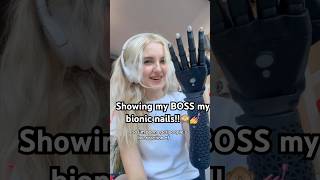
Getting my nails done on my new bionic arms for the first time!!💗#girlhood #nails #bionicnails
Tilly Lockey: Lost Both Hands at 15 Months, Leading the Bionic Generation |With Tamil Subs| Gobinath
The Incredible Foundation Making Sport Accessible to Every Athlete | Bob Babbitt on Tilly Talks Tech
Cate Dunlap🖤 I get compared to a lot of characters so here’s my series inspired by them!🦾 #fashion