Profit First: Beyond The Book with Deb Halliday and her journey
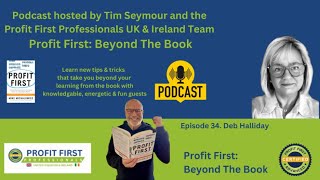
In this episode of the Profit First Beyond the Book podcast, host Tim Seymour interviews Deb Halliday, tracing her unconventional career from a teenage work‑experience role at Ryman Stationers to senior retail management, a stint in vending‑machine sales, and a training‑company business‑development role. After maternity leave, Deb pivoted to part‑time bookkeeping, earned her IAB diplomas, and built a bookkeeping practice in 2008. Ten years later, frustrated by the limits of hourly billing, she discovered the Profit First methodology, which sparked a "light‑bulb" moment that led her to redesign her business model. She created a hybrid team of freelance bookkeepers who were also business owners, implemented outcome‑based pricing tied to client revenue, and partnered with external advisors (e.g., Starling Bank, Sweet Finance). Deb transitioned the firm from pure compliance to advisory, developing a tiered "Solo Starter" to "Accelerator" package system that moves clients through stages of Confusion → Clarity → Control → Confidence. She later sold the bookkeeping practice and focused on education: authoring the book How to Build a Financially Healthy Business, building an online coaching program, a library of 23 mini‑courses for accountants/bookkeepers, and a comprehensive course library for business owners. Throughout, she emphasizes collaboration over competition, empowering clients with knowledge, and continuous personal learning (tech, AI, fitness). The conversation highlights practical insights for bookkeepers and accountants on scaling, pricing, team structure, and client education within the Profit First framework.
Chapters
Welcome to Profit First Beyond the Book, a podcast that takes you beyond the book with Profit First, brought to you by Tim Seymour and the rest of the Profit First Professionals UK and Ireland team. Hey Deb, how are you today?
I'm great, thanks Tim Seymour. How are you?
I'm doing all right, thank you. I'm doing all right. So thank you for joining me today, and I'm going to put you on the spot and grill you today because it's all about you. So, so I want to, I want to explore your kind of your, your journey and what, what eventually led you to where you're at now. And we can talk about where you're at now, um, later on. Um, so let's start with— let's go right back in time. What was your, what was your first job you ever did?
It's my first job that I ever did, um, was working for Ryman Stationers, right, um, in Watford. Um, that back in 1987, I think, '86 or '87. So, and it started off as a Saturday job. Well, it actually started off as, um, work experience from school. They didn't know what to do with me, so they put me in a shop for 2 weeks, I think. Um, thought they probably thought that was all I was good for. So, um, yeah, so I worked, um, for Ryman Stationers for 2 weeks, um, as work experience for school. Absolutely loved it, uh, really enjoyed working. I hated school, but really enjoyed working. Um, and then as soon as I turned 16, they called me and offered me a Saturday job. Um, I did the Saturday job, um, for quite a while, and then I was going to college to do a retail management and marketing course. That's the only thing that I found that I really liked, so I thought I might as well— if I've got to go to college, I might as well do something I like. Um, and then my manager at Ryman's found out that that's what I was doing and asked if I would like a job full-time Um, so I said, well, my parents are making me go to college. So he phoned my dad and asked me— asked my dad if, um, he could offer me a job. And my dad said, well, if you had somebody come to you, um, in a few years and they had 2 years worth of college or 2 years worth of work experience, who would you employ? He said the work experience. He said, okay, you can give her a job. So I did that, um, I went to work full-time, um, and they, they kind of, without putting me on a management track, they kind of like put me on a management track. So it was, um, I got trained, um, to be a senior sales advisor within pretty much the first 6 months to 8 months. There was already a senior sales advisor at that branch So when I passed the exam, I couldn't take the position because there was already somebody doing the job. So I moved to— from Watford to Hampstead and became senior sales there. And then they trained me while I was doing that to become a supervisor. So I became supervisor and then they trained me to be assistant manager. I was assistant manager and then I— they trained me to be manager. Uh, so, and I was a manager by the time I was 19. So it was like, it was promotion every 6 months pretty much. So yes, so I had my own branch at the age of 19 in Hanover Square, Hanover Street in London, then moved to Charing Cross, then to back to Hampstead. Um, and what I did was I actually trained all my team to do the next level up. So, um, the sales assistant was taught by the senior sales assistant to do their jobs. Senior sales was taught by supervisors to do their job, and so on, all the way through the team. I had a team of 14, um, and I gave them all an extra afternoon off so that they could actually put into practice the role that they had been taught to do by their colleague, you know, by the next colleague up. Um, the— so the branch was running itself, basically. Um, the area manager realized what I was doing and made me a training branch. So all the people that— all the new starters in his area were sent to my branch for 6 weeks training, um, before they were placed in the actual branch that they were recruited for. So that was my first, um, experience of training, if you like. They taught me um, gave me all the training and with environments. And it was in those days— it probably still is— but it was regarded as one of the better places in retail to work. So, so that was good. Um, I left there when I was— oh, they gave me a— they gave me a flat. They gave me a flat in, um, Queensway next to Hyde Park. Can you believe it? I was 21. Yeah, because I was still living with my parents. My parents moved down to Leon C in Essex, and it was taking me 3 hours to get to work every day in Hampstead and 3 hours to get back. Um, so I asked if I could be relocated into Essex. Area manager didn't want to let me go out of his area, so they gave me a flat in Queensway, which is West 2, Hyde Park 21. Yeah, um, dealized at the time. What, you know, what I'd landed really, one bedroom flat in, in Bayswater. But yeah, so I did that, um, and then about 3 years later I went and lived in Tenerife for 6 to 8 months just because I was young and yeah, we did that kind of thing. Uh, came back, worked a bit again for Ryman's, but then worked for— decided I didn't want to do retail anymore. I got fed up of doing weekends and late night shopping. Um, so I moved to business to business and worked for a vending machine company. And in the vending machine company, they had me doing everything pretty much. I was, I was recruited as reception admin office person Uh, but I took all the orders, I did all the service desk. We had 2 engineers, um, and we had 8— 6 or 8, I can't remember, we're talking mid-'90s— 6 or 8 operate machine, vending machine operators. Um, so I was in charge of all of, all of that. And then the accountant also had me in the office working 2 mornings a week doing credit control, running the statements on Sage. So, so back in those days, I think it was— I remember going to a conference for Sage saying it was going to be linked to email and it was going to be in the cloud, and we didn't know what on earth they was talking about because we were still working on a green screen, green screen and print off with— we had to tear the perforations down the side. Do you remember those, Tim Seymour?
I remember those.
Yeah, so yeah, so that's where I learned bookkeeping to a fashion. Um, yes, so I kind of like— he taught me double entry. It was all in ledgers apart from the invoicing and the statement run on Sage. Um, but yeah, he just had fold office full of folders. It's all in T-accounts, in ledgers, um, because Sage hadn't quite got there, or he didn't, he didn't trust it One of the two. Um, so I did that, um, and then I went into sales and sold vending machines. Um, and then from sales I went to work for a training company in London and ran a team of business development managers, uh, there. And that was a management and a software training company. So I did that. Um, that was really good fun. I really enjoyed that time in London. Yeah, so we had two training centers in the city. One was in Austin Friars, the other one in Old Jewry. But my office was actually in Tottenham Court Road. So, um, so yeah, so, so that was good fun. Enjoyed that. Um, and then I went on maternity leave to have my son. Um, came, uh, had my son and I had my daughter 13 months later. So I wasn't going back into London to do 12-hour days, um, for the training company anymore. So I looked about to see what I could do maybe around the kids, um, and thought, actually, let's go back to bookkeeping because that's something that I can I can do. My, uh, partner at the time, the children's, uh, dad, he ran a building company, so I was doing his admin and his accounts, um, and his tax return. And then he started telling all his colleagues, and they asked me to do theirs. And so I thought, I better do this properly. Um, so I went to night school to do my IAB diplomas. And, um, got my practice license and set up as a bookkeeper part-time around the kids and got my license. I think it was 2008. So yeah, so that was me into the bookkeeping game. I've been talking a lot about him.
Have a break, have a sip of your water. You know, when, when you start, I, I just sit back and let you keep talking because You're answering questions that I would be asking you anyway, so it's absolutely fine. And I'm sure people don't want to hear from me all the time. It's nice to hear, you know, hear from you and hear your story and, you know, what's led you to where you're at now and all of these jobs that you've done in the past. I mean, being a retail manager of a retail store at 19 is no mean feat. That's something, that's an achievement in itself.
Yeah, I was the youngest, I think, at the time. Youngest at the time, and with a team of 14. Um, yeah, so, but yeah, I mean, I didn't really think too much at the time. I knew that I could do it, um, and I enjoyed doing it. Um, but you look back, don't you? You look back and you think all these different stepping stones have— and all these different experiences, they've really led me to be able to do what I do now. And even to the point of bookkeeping, I thought when I started bookkeeping, there was no lack of confidence there because I'd worked so many different businesses and so many different types of jobs that I recognized all the different aspects of this department. I don't think there's a business department I haven't worked in. I even worked in IT for a short while in the, um, in the training company, um, while the IT manager was away. Um, so yeah, and I did a Microsoft engineering course while I was there as well. Can you believe that?
So I can, as I know you, I, I can definitely believe that.
Yeah, so I did a Microsoft engineering course which I never took any further because I was pregnant with my son um, and it just moved too fast, really. I think it moved too fast, the tech industry, which is why I decided on going back to accounts, because accounts is the same system. Even though the software that you use might change, it's actually still the same system. It doesn't actually change. So I was— I thought that was— that was one of the decisions that made me think, actually, when I was looking at type of business that I wanted to set up bookkeeping was going to be the best fit. So, so yeah, but I've enjoyed it. Um, it's been a roller coaster, um, and a bit of a ride, um, and it's had its ups and downs like most businesses. And I wound it down in 2018 to homeschool my daughter. Yeah. Um, and then I just kept on a couple of clients for about 18 months while she did her 8 GCSEs. Um, and then that's when I found Profit First book, because when I decided to actually, um, make a go of it, I had a decision to make. Do I go and get a corporate job, or do I really make a go of this bookkeeping? And, um, I knew I had to do it differently, so, because I couldn't cap my earnings, I couldn't be the only person selling, marketing, and delivering. So, and I couldn't be charging an hourly rate because, you know, if you don't work, you don't get paid, do you? So that's when I found Profit First in amongst all the other entrepreneurial books that I was reading at the time, and that one was like a light bulb moment. So, um, yeah, and that's when I reached out to you, Tim Seymour.
I recognize that, I recognize that completely. Um, the light bulb moment with Profit First, obviously. Um, but, but also, you know, you've— so you, you went from 2008 to 2018, I think you said, when you, when you read Profit First, first of all. So that's 10 years of running your bookkeeping business. And it sounds like what you're saying is there was a ceiling that you could get to because you only had so much time. And at that point, you realized you couldn't actually perhaps break through that ceiling at that moment in time, and you needed to find a way to do that. And Profit First was one of the things that helped you achieve that. Would that be right saying that?
Yeah, yeah, without a doubt. I mean, if you're charging hourly rate, and you only do 5 hours one day, you know, you, you limit yourself to 5, 5 hours worth of pay, haven't you, for that day. If you can't work one day, then you don't get paid for that day at all, and it's all time lost. Um, so, and there's only so much you can put up your hourly rate regularly. Um, people just compare you to an employee. And they don't realize that the hidden costs, um, that are, you know, absorbed really, um, because you don't feel as if you can recharge them. Or you— the mindset that I had at the time, I didn't feel as if I could recharge. Um, so yeah, so I decided to build a team and I based it on the, uh, the business model of the training company that I worked for. We had a bank of employees, but we also had a bank of freelancers, which is what we called them, um, trainers. So that's what I thought I would do. I would use freelancers, outsourcing, um, subcontractors to do the bookkeeping work. And it actually worked really, really well because they— the bookkeepers that I had on the team they were business owners in their own right. So the type of work that I wanted to do with clients, you had to have a, a level of, um, communication and presence, if you like, that you can have these conversations with, uh, business owners. And being business owners themselves, they had that experience and that knowledge, so they were able to take ownership of the client relationships, which was great. Um, and they really understood what it was like to run a business, so the stresses and the strains that the, that the clients were under. So that worked really, really well. I didn't want to just employ somebody that just wanted a few hours extra work. That wasn't really the mindset of the team that I needed because we were moving from bookkeeping to advisory, so, and it was a hybrid. But there was a lot, lots of different things that we did to change clients' perception of us from just bookkeepers, because bookkeepers can get a bit of a bad rap sometimes. It, it's, it's quite a highly skilled job when you do it properly. And we know when we take on clients' books, um, a lot of the time, if they're in the early days, they think they're working do it because their wife might be at home with children and they're not trained. They don't know, um, the different aspects, the different accounts that they should be putting things through, what they're allowed to put through. Um, so they get a bit of a bad rap. Um, but yeah, so moving from bookkeeping to advisory was, um, was interesting. But I had a plan of how to do that, and that was to partner with other people and other companies that offered advisory or were seen to be, um, not in the bookkeeping world. So banks, for instance, Starling Bank, we partnered with. We partnered with Sweet Finance, um, we partnered with Cheetham Jackson, which their financial planners. Um, so we had all those logos and those contacts, um, that we would put our clients in touch with for various different, um, advisory aspects, really. So we didn't do all the advisory ourselves. We had like a, a partnership with you know, 2 or 3, 3 or 4, um, other advisors that were established and, um, recognized in their own right, really. So that, that, that, that was kind of the path that we took. So yeah, we were called the Counts Ladies, um, but yeah, I started to step back, um, I read Mike's other books, Clockwork And, um, began— because I wasn't actually doing the day-to-day work, I was doing the sales and marketing— started setting up all the systems, um, for the clients to work, for the team to work towards, um, so that we were uniform, um, and had standards. And, um, so I stepped away for a month in June 2024 to go away to Canada for a month, uh, see relatives and We're back.
Okay, you're back.
Yeah, it's— it span around for a bit. I don't know what's going on with the internet. Um, so yeah, so I took 2 months off at the beginning of 2025 as well, um, because my mom was ill in hospital. Um, and then kind of like I'd been thinking about it for a little while, but stepping away completely from compliance. And I, um, handed over the accounts to the sock collectors. Um, yeah, we came to an agreement and they took on the clients directly. And yeah, I'm free to do my own thing now, which is, um, a hybrid of bookkeeping, accountancy, and education training.
Yeah, we'll come back to that in a second there, but I just want to highlight a couple of points from what you've said. Um, so, so you wanted support with your bookkeeping because you knew you couldn't do it all yourselves for your clients, so you bought in some subcontractors who ran their own bookkeeping businesses. Now, some people listen to this, that might put the fear of God into them because they might think, oh my word, what if they steal all my you know, all of my clients and things like that. But you're very much someone who is highly into collaboration over competition, and I think that is the epitome of what you've achieved and how you've achieved things, is that you've taken that principle and brought it to life and made it happen. So, um, yeah, how did you feel when you did that? You obviously had no qualms because you trusted the people you worked with, and obviously I know them as well, you know, and they were great people. But how did that— how did it sort of come about? And how did you— did you have those feelings at any point, or were you just confident?
Um, so my, my kind of— my focus was that, um, if I make the accounts ladies something to aspire to work a team that people aspire to work with, um, and we only have the best type of clients, um, so the ones that aren't snippy with you, they have a respect for you, they have, um, uh, an understanding of the importance of what we do and how it helps them, um then those clients are more of a joy to work with. So it became more of a— I would give them autonomy because when I, I said before that I worked for a training company and ran a team of business development managers. These business development managers were, um, they had their own set of clients, clients, and they were left— they were all We all had targets, monetary targets, um, but they weren't micromanaged at all. We didn't— I didn't micromanage them. They were, um, self-starters themselves. They were motivated. They had the, the right caliber, um, and they, they went off and they delivered results and outcomes. And that's how I, that's how I positioned the roles of subcontractors within the accounts, ladies. Um, yes, ask questions, but, um, that they're your— they're your clients, they're your— um, I'm not going to be a checkbox, a tick box, and checking in with you every 5 minutes. The other thing that I didn't do is I didn't— we didn't do it on an hourly basis, we did it on an outcome basis. So it was, um, these are the tasks that need to be done— bookkeeping, VAT, P.A., whatever it was. But they were paid, um, a set fee for each client based on the services, not based on the hours. So I wasn't— I, I didn't— I didn't— to me, it didn't matter if they worked at 4 o'clock in the morning, 4 o'clock in the afternoon, as long as the deadlines were hit and the client happy. Then, then all was good. So I hope that everybody enjoyed— I certainly kept the subcontractors from beginning to end. We didn't have anybody leave. Um, so it was— and I think that comes from just my experience of training people, trusting that they're going to do their job. And, um, we've got targets to hit, so the targets are just the deadlines in the bookkeeping world. Um, so yeah, so, and picking the right people as well. Um, you, you kind of— yes, you make mistakes sometimes, but you have to, have to recruit based on values, you know. You have to find out what they want, um, out of their role. And I understood also that they weren't always going to be working with the accounts ladies once their own businesses got to a certain level, obviously their own clients would come first. But at the moment, if it's the right fit, then they're right for the team. So it wasn't a case of me trying to hold on to them. And I think they were, they were left alone, given respect as being business owners in their own right themselves. And it worked. We had a, we had a brilliant team. And if I was to do it all over again, I'd recruit the same team. So yeah, fantastic.
Yeah, no, thanks, thanks for sharing that. And, and the, the other aspect I wanted to, to touch on before we move on as well, um, because people listening, it's important for them to probably hear these messages from you because you've, you've been there, done that, and you've moved away from your bookkeeping business now. Um, but which you mentioned hourly pricing, and obviously we know there are bookkeepers in particular, accountants as well, but mainly bookkeepers do tend to fall into that trap of working on an hourly basis. And like you said, the client will consider them as an hourly rate, will consider that to be like an employee. Yeah, but like you say, they're not taking into account the cost of running the business for the bookkeeper. Now, you developed— so, so you, you, you developed your own pricing style. Um, now it was based on the value pricing packaging packages sort of aspect that, that I used when I had my accountancy business. Um, but you kind of took it to another level, and I, and I love what you did with your pricing, by the way. So I, I know you've shared this on this podcast before in a previous episode, but I think it's really important to share again because any bookkeepers listening to this, they could really learn from this, this angle, um, for their pricing to help improve their own business. So can you just elaborate on that for us, please?
Sure. So I, I looked at the, the standard 3 packages where you funnel everybody into the middle package, and yeah, I, I did, I mapped that out, and then, but it didn't quite sit right with me because it— I didn't want the client to choose Um, because if they're coming to us and we're the advisors and we're the experts, then we're handing ownership over to them of what services they need. Then we're not really doing them justice, because what they want is they want the advisory from taking them where they are now to where they're, uh, where they want to be. And if you allow them to choose how they're going to get there, it's not going to work, is it? I mean in my mind it wasn't working. So I kind of reverted again back to the training company I worked for, and we had, um, courses that were proficient. So if you were a beginner, you joined the proficient, and then you went to expert once you've got, um, a certain skill level, and then you'd go to the master level. And there were generally— and it's like basic intermediate and expert, isn't it, usually? But we called them professional, see, expert and master. Um, so I kind of thought, well, I could do it like that. So we could actually— they could start at one level, and actually, once their revenue, their profit grew, they could move to the next level. So the services were based on what they could afford, uh, based on their income, the revenue and profit in the beginning, but really what they actually needed to give them the growth to get to the next level. So not just the bookkeeping, you know, they needed to have profit first. So that was a non-negotiable. If they're working with us, they were having profit first within these packages because then we could see where they were going, we could give them a profit plan. Okay, and then each stage that they were at, we would have, uh, the first one we started with was Solo Starter, um, and that was Illuminator package. So it shut the light on where they were now, um, and gave them some basic understanding and decision-making skills, got them up and running with Profit First. And then they went to the Accelerator package, which was the growth plan. And that actually, um, had lots of different things like scenario planning or his exercise, so we could really optimize their expenses with them. Um, we could focus on owner's pay so they were actually taking out their business what they needed to. Um, we could, uh, look at KPI dashboards so that they understood to start looking at, um, the data and how to use it. And it's not just the accounts program, it's actually the numbers that they need there. Take the fear of numbers away and it's just data, but it tells you, um, your— where you are now, where you want to be, and how you're going to get there by tweaking the numbers and giving yourself targets. Okay, so we would do these, these kind of things with the clients. Um, and that was on our growth program, or what we called our accelerator program. So, and every increase of their revenue increase, our fees— and that was, that was highlighted in the package. So if they started at, I don't know, $200,000, the price would be a set, um, a set fee. But when they reached $300,000 our fee would go up. So, and they, so they could see that we had an interest in making sure that they also grew, but because we were Profit First Professionals, we weren't just concentrating on the top line revenue, but that's the easiest way and most transparent way to set our pricing. And that's what we did. So we, the whole process was around a transformation. Really, of taking them where they are now to where they want to be, um, rather than choose bronze, silver, or gold.
Yeah, I love that. Like you say, you're taking the decision away from the client and actually telling them which— where they fit into your business. If— and if it's what they want, this is what you're going to do with them, and you're going to take them up the levels. And yeah, they're going to pay more as they go at the levels, but they're going to achieve more. They're going to be more revenue coming in, they're going to be more highly profitable, paying themselves more money anyway. Why wouldn't they pay, pay you more? You know, I think that's the, that's the golden rule, isn't it? Why not? Um, and I also like— I know you've said this before, so I'm probably stealing your thunder with this, but I know that you worked really hard educating and giving your clients, um, the feeling of empowerment and confidence that they can make informed business and financial decisions because they were in control of their money.
Yeah, so that was the— that was one of the main outcomes that we wanted to achieve with the clients. And we took them through, um, what we called, uh, I'm trying to think of it now, it was Confusion to Confidence, but in between that there was Clarity and Control. So when went from confusion to clarity, um, and clarity was the Profit First assessment, you know, what you're— what's actually happening in your business and where your money's going. And then control was setting out a plan, um, of what we were going to do to optimize your caps to your taps, your target percentages. And then it's because now, now you've got that plan, you can see where everything's going and where you're— you're heading. We can map out your desired lifestyle with your business targets and also incorporate your growth plans. If you need new vans, if you need to take on extra team members, etc., they would go into the plan. But you can see then that they get the confidence to start making their own decisions because they actually got the clarity. They can see that they've got the money. And one of the examples was we— and one of the clients ended up buying a new van, employing a new team member, uh, buying a cold storage unit, moving premises, all really without asking us because he could see it being planned for, and he could see what was in the pots, and he knew— he was confident he could do it. So he, he went off and did it, and all he needed really was his bookkeeping sorting out. So because he was in a complete mess, and given, um, the Profit First assessment, know that his percentages that he was putting away were right and start understanding the data and the KPIs that we gave him. You know, that's really all he needed. And he needed to just trust that what he was looking at on the screen was a— was in fact reality of where his cash was sat. Um, because he was looking at very, very old and very, very confused data before. He just didn't know what he could spend and what he had saved. Aside for tax, etc. So if you, if, if you can't see, you can't make, you can't make decisions, can you? So, so yeah, so that was one of the main focus because we didn't want to be the— we didn't want to have our clients on the phone to us constantly asking, can we do this, can we do that? The— surely a business owner needs to be able to learn how to make those kind of decisions themselves. And that was, that's what we taught them.
So you've kind of gone from bookkeeping and compliance into advisory, into training, educating— how, I'm not sure the right phrase to use, but basically that's what you've done with them so that they can make these decisions without having to pick up the phone. Which, let's be honest, we all know— I remember clearly how often the phone used to ring, how many emails used to come into you into your inbox asking questions that are simple questions for us to answer, but they all take time and explanation to be able to answer them. So if you're able to solve that at the beginning by training them and educating them, taking them through a process and a framework that works, um, it, it's taken that away from you and it's allowed them to feel free with their business and have the confidence to make those decisions, which I think is fantastic. And it's a really high story of success for you and your clients, Deb, with what you did with your business. So you got to the point where you've sold the bookkeeping business now, haven't you? So since you've sold the bookkeeping business, what's been happening? What have you been doing since then?
Well, aside being nabbed by a certain person called Tim Seymour to do a first university for the UK, um, I've been, um, expanding what we've just been talking about. So, um, there's a, there's a few things, there a couple of things I'll talk about which I didn't know whether I was going to talk about, but I will talk about them. So you said before that I was— had training and frameworks for the clients.
Yeah.
So what I'd done was I'd actually started to build a coaching program online that we were following for the— because we quickly got to capacity, uh, when we were doing one-to-one. So I— and the coaching program kind of like was— it started off because the clients didn't understand the management reporting, so it started off me just translating what each of the features were within the management reports into layman terms. And then that all, um, depending on which area the client needed to focus on, like scenario planning or, uh, breakeven point or whatever it is that we needed to teach them, um, I decided to put it onto a platform the rest of our team. So we had like a, we had a, a structure to go through. And that also meant that if one team member couldn't jump on a call with the client, another team member could see where they're exactly where they were at and just follow the process. Yeah. Okay, so we, we did that, but we still got to capacity because we still got a certain amount of team members. Um, so I decided actually what might be better is to rebuild it into a direct-to-client-facing, um, training program. So, and then we wouldn't necessarily get capacity because the clients could follow along and then jump on group calls or drop-in surgeries, etc., if they were getting stuck. Um, and when I was doing that, I, um I had to change all the jargon because obviously you can't have accountancy jargon where I— the way I would talk to bookkeepers, um, we— I need to translate it to business owners. So, and then as I was doing that, I realized it was a book. So I, I put it into a book, um, which called How to Build a Financially Healthy Business. There's 12 modules, um, and it basically takes you right from profit first through to exit planning, uh, with everything in between. Um, so that was published in, I want to say, kind of April time, I think. Um, I know I finished writing it this time last year, um, but it was eventually published in April. And since then I've been putting it into an interactive online program for business owners. Um, so that's what I've been working on. Um, I've also been working on a business, uh, course library. And you mentioned before that we don't want clients constantly phoning us and asking us questions. And how many times do we repeat the same answers to the same questions that we get asked about VAT, or how to register a Government Gateway account? They don't understand how to read financial statements, or they're trying to put expenses through that they shouldn't be putting through, um, the importance of record keeping and what that— how they need to do that, um, what happens when they hit the VAT threshold. It could go on and on and on. Well, they want to hire somebody, and what happens with PAYE. So I've built a bank of 23 online mini courses for accountants and bookkeepers to give to their clients. So for instance, um, if somebody needs to hire somebody, um, you could send them a link, just do this, this mini course. And there's— they're in between 2 and 4 lessons really, each of the courses. Um, so, and that was I've been planning to do for years and years because after 17 years being a bookkeeper. Can you imagine how many times I've answered the same questions over and over and over again? And I always had it in mind to have some kind of library where I could just, um, send them a link or send them a recording and they could learn and get, get the basic knowledge that we all wish that our clients had. Um, so yeah, so I've done that as well. So there's 23 mini courses um, and that'll be launched sometime in the new year, um, for bookkeepers and accountants to be able to just send the link to their clients, and it doesn't take them any time to answer. They're not having to pick up the phone, copy and paste it from a previous email, um, or leave voice notes, or direct to the HMRC website, which— who can navigate that in the first place? Nobody can. So, so yeah, so I've been working on that. So kind of like pretty much— I wouldn't say all my knowledge, um, but vast majority of it is now in digital online training format. Um, so yeah, so it all be coming in 2026, and that is going to be the year.
And, and I, and I think that Deb, that it encapsulates it, asking you to start off at the beginning, you know, with, with working for Ryman's, then working for, for others and the training company, etc., for a long time. It, it, it just builds that experience up and, and shows people, the listeners, people that are watching, how you've used all of that knowledge that you've collected over your career before you went into the, into the bookkeeping business, and you've used that to your benefit to serve your clients. And that's the clever part, isn't it? And now you've flipped that now, and you've built this massive resource of information that trains business owners, you know, on answering all the questions that, you know, they are going to be asking their bookkeepers and accountants right now. Um, probably someone right now is receiving a phone call from someone asking one of those questions. Like you say, how many times you've been asked the same question from different clients, to be able to proactively point them to a training module that they can watch, you know, via the accountant and bookkeeper that they're asking. So they, they're seen as the trusted advisor because they've got a resource they can give to them, um, which comes through you. I think it's a fantastic way and a fantastic thing to build to help accountants and bookkeepers in look after their time, because time is everything, isn't it? Um, time is money, money is time. They're so easily correlated. And if we can create more time in our accounting, bookkeeping businesses by using your resource, then it's a win for everybody. It's a win for the end user because they get the education, but it's a massive win for the accountant and bookkeeper because they've got a resource they can tap into that saves them time of having pick up the phone and answer all these questions all the time. So empowering our clients with knowledge is really important, and they will never ever catch up with all the financial knowledge that we have through our qualifications, through our experience, and our years of providing the services that we've provided collectively. And that, that includes everybody who's listened to this. I mean, I mean you guys as well, you know, because you've got so much knowledge, you— the, the customers won't ever catch up with that knowledge. They'll never overtake it. But what you can do is give them somewhere they can go to be able to find things out without bugging you, without contacting you, without, without picking up the phone, without sending you email after email, message after message, WhatsApp message, etc. So I think it's fantastic what you've created. I'm really looking forward to how 2026 pans out for you, um, because, you know, there's exciting times ahead. And I think in a future episode, we're going to go into more detail probably about your book, which I do have here, by the way. You can see that.
Oh yeah.
I got it. I had it to hand. And we'll go into more detail on that on a future episode. But I think the tip around Profit First Beyond the Book is definitely today, it's not just about implementing Profit First with the client. It's actually about giving them the power to make informed financial and business decisions to grow their business, to achieve the outcomes they're looking to achieve. So Deb, thank you so much for sharing all of that with us.
No, you're welcome. I enjoyed it. Told you I had to chat.
Well, of course. I mean, I hardly had to ask many questions, to be fair. So I'll tell you what, I'll ask you one more question for the people listening. When you're not working, what do you do when I'm not working?
Um, I love working.
I get you.
I knew— yeah, I do. And it's funny because my downtime is— I'm, I'm a bit of a nerd, work nerd, and it's, it's finding what, um, what new tech there is and AI stuff there is out there to help me um, fast-track what I want, my outcomes that I want to achieve. So I do a lot of reading, watching YouTube, um, yeah, testing software, um, listening to people like Daniel Priestley and, um, Mike, obviously. Um, but yeah, I can't— that's what I kind of do. I'm a bit of a work nerd. I have started going to the gym, um, so that I get out a bit, um, and I like walking my dogs. Um, I live in the countryside, so I've got the outdoor space right on the doorstep. Um, I'm going to London on Saturday. That's my, that's my guilty pleasure, going back into London where I used to work. Um, people say I absolutely light up as soon as when I'm in London, so I'm doing that on Saturday, going to the theater. Um, so yeah, and probably pop into Gordon's Wine Bar, I think, um, which is one of the favorite haunts. So if you don't know it, Villiers Street next to Charing Cross, oldest wine bar in London, fantastic spot for Christmas.
This takes me back to my trips to London, you know, when we've been to events, our own ProfitCon events, Accountex, DAS, etc., and you're, and you're like, right, I've got to go go back, get myself back to Paddington. Well, what we'll do is we'll go to this place because you need to see this. And you just show me all these sites that I have no idea what you're talking about, but the enthusiasm that you elude from sharing it is amazing. So thank you for that. I always enjoy those times. And Deb, your thirst for knowledge is second to none. And I know that because we jump on calls so many times and I'll say to you, what have you done on the weekend? And you'll say, well, I started watching this and then I ended up investigating it further and now I can do this, and you're suddenly producing something going, wow, where did that come from? So yeah, it is fantastic. Don't ever change. I'm sure you won't.
I'm not sure I can.
So Deb, thank you so much. Thank you to everyone for listening to another episode of our podcast. We really do appreciate your time. We appreciate you subscribing to the podcast and all the various platforms. Maybe some of you watch it through the LinkedIn Live or through YouTube, whatever your preference. We thank you for listening. We'll continue to put more episodes out as we move through 2026, and we wish you all a very prosperous, healthy, and happy 2026 moving forward. So thank you for your time today.
Thank you.
Thank you for joining us on our podcast today. Profit First Beyond the Book was brought to you by the Profit First Professionals UK and Ireland team. If you'd like to find out more about Profit First or becoming a Profit First Professional, head to our website profitfirstuk.co.uk.
[MUSIC] [MUSIC]
More from Tim
Profit First: Beyond The Book - Accountants Struggle To Pay Their Tax Bill Too