Profit First Workshop
In this recorded workshop Tim Seymour (co‑founder of Profit First Professionals) leads a discussion with fellow Profit First Professionals Deb and Jason, aimed at accountants and bookkeepers who want to implement the Profit First cash‑management system in their own firms. The session covers: (1) the core steps of a Profit First implementation – instant profit assessment, a 3‑year rollout plan, weekly allocation habits and the use of simple spreadsheet templates; (2) common reasons implementations stall, including behavioural gaps, lack of habit formation, insufficient accountability, and practical obstacles such as not separating income and operating‑expense accounts or handling VAT. Tim demonstrates a mock profit‑and‑loss statement, shows how to calculate real revenue, allocation percentages (owner’s pay, tax, profit, OpEx) and walks through a weekly allocation worksheet. (3) The importance of habit – setting a fixed weekly time (e.g., Friday 9 am) to allocate cash – and how accountability (through the Profit First Pathway community and professional guidance) keeps the system alive. (4) The “Profit First Pathway” – a pre‑membership Facebook group that guides members through self‑implementation, then a structured certification programme (3‑month basic certification, 3 client case studies → Advanced badge, 12 case studies → Mastery, then Elite). (5) Real‑world anecdotes (e.g., dealing with late payments, unexpected expenses, bank account set‑up) illustrate typical pitfalls and how the community helps resolve them. The workshop ends with an invitation to book a free 30‑minute call with Tim for personalised support.
Chapters
So I'm Tim Seymour, co-founder of Profit First Professionals, joint license holder of Profit First in the UK and Ireland. So Deb, would you like to introduce yourself next?
Hi, I'm Deb. I am a Profit First Professional. I have recently sold my bookkeeping practice that I was running. Well, I've been a bookkeeper since 2008, and I had The Accounts Ladies, which were a team of accountants, bookkeepers, and business financial coaches. Um, yep, and I sold it in April.
Fantastic, April last year.
And Jason, morning. Um, yes, certified Property First professional since 2019. Um, also Property First guide, taking bookkeepers, accountants, and coaches through the certification here in the UK, um, and then mentoring them after that.
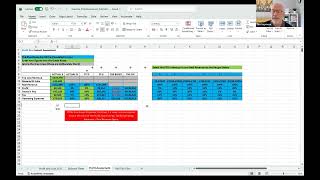
Okay, so we're going to talk about today is a few topics. We're gonna, we're gonna whiz through a few items, so We're going to talk about implementing Profit First properly into your business as an accountant and bookkeeper. We're going to talk what proper implementation looks like. We're going to talk about why Profit First often stalls after the early enthusiasm and the behavioural gaps that stop implementation. And then we're going to show the pathway from implementing in your own business through to guiding clients and beyond with membership with Profit First professionals. The session is educational, is practical, and is pressure-free. There's not going to be any specific, uh, course to action at the end other than I'm going to share a link to book a call with me if you want to learn more about the other options available to you to continue your steps along the Profit First pathway. So that's what we're going to talk about. So the first of all I'm going to talk about is implementing Profit First properly into your business. Sam and Jess, I don't know if you want to— you haven't got your cameras on, that's absolutely fine, I'm happy for you to keep them off. I don't know if you want to just pop in the chat whether you actually know anything about Profit First, whether you've tried to self-implement Profit First, or whether you've turned up and have no idea what Profit First is at all. Because we can, we can talk about, you know, what Profit First is first if you want us to. So if you're feeling brave, if you want to pop in the chat and just say, I know what Profit First is, yes or no. Okay, if we don't get a response, I'm going to assume that we know what Profit First is, um, and we're going to go straight into implementing Profit First properly into your business. Um, okay, there we go. So Jess has half implemented it. Okay, that's interesting, that's interesting. Okay, um, there might be a reason why you've only half implemented it, um, and this is something that we actually do hear quite a lot when we get new members join us, um, we, we take them through the certification program, and part of that process is implementing Profit First in their own business. And quite often the feedback we get is, oh wow, I didn't realize it was, it was like this. I've only done a little bit, or I've only done half of it. So it's interesting that you've, you've commented on that. Um, what I will tell you is, um, we've got some very, very successful Profit First professionals within our membership And the most successful ones are those that have fully live and breathe Profit First in their own business and have found success through their own business and through their own journey and pathway with Profit First. Um, and that's why we've created the Profit First Pathway, um, or rebranded what was Croissants and Coffee previously to the Profit First Pathway, so that we can help you with your business and your business only. Um, because some people in this group are ready to join Profit First Professional straight away and go all in and others are, are in a position where they just want to sort of implement their own business first and foremost, feel their way into it. And that's why we set up the Profit First Pathways. So we're— the one thing I need to remind everyone is, is that this is about Profit First in your business. You are not licensed to work with clients on Profit First until you join Profit First Professionals. So please don't take away from this things that you can use for your clients. These are things for you to use in your business. And your business only. Um, so implementing Profit First in your own business. So Jess has half implemented it. Um, I, I had some more questions to ask you, but I think what I'm going to do, I'm going to share the templates that we use within our membership, um, so I can talk you through what we look— what a profit assessment looks like to us. Now, this is a very, very simple business example, okay? It's not, uh, it's not an accountancy or bookkeeping business. It's not a business at all. I've literally thrown numbers into this template, um, and just— this is a template that we give our members so that they can understand how to operate Profit First and where everything goes to work through it. Um, can you see the numbers okay, or do I need to make the screen bigger? Jason, Deb, does it look okay?
Yep, can see the numbers.
Yep.
Okay, so a profit and loss, very simple profit and loss statement, very simple business, for example, um, purposes. Um, and as you can see, it's all fairly straightforward. We've got the sales at the top, um, subcontractor material costs just below, and then underneath you can see everything's color-coded. So everything that I deem as operating expenses is in green, the owner's pay elements are in yellow, And then the non-cash items are blocked out in red because we're not interested in things that are non-cash. With Profit First, we're only interested in cash. So paper profits, non-cash entries, we're not interested at this stage, okay? And all we're trying to do from these, these set of figures is understand what's happening with the money in the business, okay? So you'll probably recognize that there's this pretty bog-standard costs in here. You might think in your business there's some different costs and some elements I'm not showing. It's an example. Let's not go worry about the detail too much. Don't be too much of an accountant, a bookkeeper right now, and worry about everything balancing off and, and how everything looks, okay? This is just a pure example of a very simple profit and loss. So you can see I've basically highlighted everything on the profit and loss statement, and as we move down the sheet, you can see at the bottom I've taken out depreciation because I've read it that out, but I've also picked up from the balance sheet that this particular person is still repaying a banks back loan of £500 a month. So in effect, over 12 months, that's a £6,000 additional cash amount coming out of the business. So I've added that into OpEx. It's quite important that you remember we're picking up cash. Underneath that, I've also picked up that the owner is paying themselves a regular dividend, and that's £18,000 for the year. So we need to include that in owner's pay. So then it breaks down underneath to a tiny little table, which is the start of the profit assessment, and you can see everything's come down by formula. So we've got the top line revenue, the materials, and the subcontractor cost, which gives us our real revenue. Real revenue is actually a really important part of working out percentages and running profit assessments. For accountants and bookkeepers, we do have a slight tweak that we sometimes use with our members, and I'm going to ask Jason to share that with us after I've gone through all of this. But what this does tell us at the bottom is that we've got 60% is our opex, 2% put aside for tax because that money is actually popped into a tax pot on the balance sheet, which I can show you in a second. Owners' pay is coming out at 36%, and profit at 2%. It's actually not bad a start for a business. What sometimes happens when people see figures like this is they think, oh well, there's not much I can do with this particular person. I can tell you what, there's a hell of a lot you can do. Um, there's always a journey that the business owner wants to go on. So if this was one of our members, we would be looking, looking at them and saying, okay, what is it you want to achieve from the business? What, what was it when you set up your business that you were looking to achieve? What was your long-term goal? And for some people That would be, okay, I just want a bit of freedom, I want some time freedom, I want to be able to pick my kids up from school, I want to be able to be there when they've got their, their activities. I don't want to be that parent that's not around for my family. And what quite often happens is, is that's our thought process, but actually we build our business up and we end up working really long hours because we're churning out the statutory accounts, we're churning out tax returns, we're churning out the monthly payroll, we're churning out the VAT returns, we're churning out the self-assessment tax returns. Obviously we've just gone past January, which can be a very difficult, stressful month. I know, I remember it really well myself. And we find that we're just creating this business that we're a slave to. Now what we do with our members is remove that for them. It takes time, but we work with them really closely and we move them away into a place where they can actually become a lot more free from their business. And then we look at what they want to achieve financially. So we've had members that have gone on the holidays of a lifetime. We've had members that have bought houses, um, and we, you know, there's all sorts of things. We've had members who've got clients who, who have paid for their private school education, university fees. People have bought their dream cars, um, people have paid off their mortgage. All these things happen, but they happen over time. So this, going back to this template, I'm going to take you now, just jump through, I'll show you the balance sheet. Hopefully that's changed on the screen, and you should be able to see, there you go, there's the £2,500 savings account for future tax. So that's where that has come from, the entry on the profit assessment. It doesn't come from, it doesn't come from what your corporation tax bill is, it comes from the amount of money you've saved up for tax at that particular time. Because remember, everything to do with Profit First is to do with cash. So by formula, this pops into the Profit First instant assessment, or Profit First assessment as I would call it. I think instant is probably an old— an older word now from the book. And it drops everything into the framework that Mike has set up for us. So you can see top line revenue again, materials and subs, real revenue, and then off of the real revenue We've— we can see the profit, the owner's pay, the tax, and the operating expenses. Now the clever bit of, of Profit First is that this is the reality of where we're at. This is the picture that we're seeing right now, but it's historical. What we're interested in is what happens next and where we are going to go on our journey and on our pathway with Profit First. And so that leads us into the most important part of this, which is the rollout plan. Now, this is a set rollout plan. I've spread this out over a 3-year period. Now, it's possible that the person whose business this is may be able to achieve the target allocation percentages a lot quicker than 3 years, but if you're moving on a gradual process and you're taking small steps, sometimes going a little bit slower helps you get where you want to go. Okay, so just slightly tweaking owner's pay by 2% here, 1% here, 1% there, another 2% here gradually gets us to that 50%. Okay, the tax, we're gradually building up as we move forward because we know if we're earning more from the business and if the profit's gradually increasing, we're going to need more tax set aside. So we need to make sure we're increasing the tax proportionately with the profit and the owner's pay. And of course, the area that we're going to be trying to reduce is the operating expenses. And we do that in a number of ways. There's a nut exercise that we do, which is a complete and utter expense overview. I'm not going to share that with you today because it's a bit more detailed and it takes quite a long process to go through. But there's, there's a lot we can do to get there. The last thing I'm going to say before I stop sharing this screen is the target allocation percentages are not always what we want to achieve. That's how I've set it up in here because we're talking about Profit First in the framework that Mike set up. For some businesses, what's to stop you if you're moving forward and you've got to 50% owner's pay? What's to stop you getting to 55%, getting to 60% if you want to? What's, what's to stop you trying to get your profit to 10%, you know, so that you can reward yourself each quarter and build up your vault account at the same time and have that emergency fund in the background? You might not need 15% tax if you're, if you're forecasting ahead with your business to see what your future revenue is going to be, what your future tax is going to be, you can determine what the right percentage is. And it might be that 15% is too high. It might be that some of your operating expenses you think about putting into real revenue because they're really important costs. We've got members that put their debt repayments above the line, and we've got members that use some of their delivery staff to go above the line because they're offshore or they're subcontractors. There's different ways to looking at it. If you were to read the book, it will tell you to do 25%, if only when it's over 25%. We would argue that in reality that doesn't always work for us. So I wanted to share that with you. That's, that's a very simple template that our members get to use, um, and they follow it. And they can— obviously this is just a broad brush template. They can change it, make it their own, put it in their own branding. But that— these are the kind of things that we're working with. But initially, this is what we're working with in their own business. Um, there's one more document I want to share with you, um, and that is what happens after you've done the rollout plan. So once the rollout plan's complete, then you need to start making allocations. Okay, now allocations are the most exciting bit. I can remember, um, Jason probably remembers Elisabetta when she first made her allocations. She was literally bouncing off the ceiling telling us she'd made her first allocations, um, because she was so excited. And I think that's the part of Profit First that really counts. Um, so this is another sheet we provide our members with. It's a— it's a— basically it's an allocations worksheet, however you want to word it. I mean, it's called a visual overview worksheet for some reason. I probably need to change the naming on that. The idea of this is— and this follows on from all of the percentages you would have just seen on the profit assessment Um, with a, with a couple of slight tweaks probably. So we've got the VAT, um, obviously to deal with. So that— so what I'm saying is £12,000 come into the bank. Um, now for me, 9 o'clock Friday every week is when I do my Profit First allocations. It's been my habit for 6 years now and it's never going to change. Um, I recommend you choose a time and a day and you stick to it and, and you create that habit of constantly going on to your bank, looking at what your revenue is popping it into a worksheet like this and then allocating where you need to allocate into different pots. Um, obviously we live in the real world and sometimes things go wrong, and that's where Profit First Professionals come in and can help, um, guide you through that process. But for instance, we pop £12,000 in here because that's what's come in. The first pot we're going to is VAT. We have to go to VAT because the money doesn't belong to us, as you know. Um, I'm sure as accountants, as bookkeepers, you've probably got everything under control, and you're probably better to think of clients that haven't. But I will tell you, we have had members that have still struggled to pay their VAT on time or not have used the money for cash flow purposes because we're in that monthly cycle of money coming in, money coming out, and we get stuck within that process. So the first one, I'm assuming 20%, obviously we would probably look at reducing that and look at the average VAT return there. Um, what we would put the VAT in, materials, sub-con, and after that we then go down to the profit. So on this particular amount of money, we're going to put £150 into profit pot, £2,700 into owner's pay, £225 into tax, and £4,425 goes into the other current account to pay all the direct debits and all the bills that are going to be coming out of the bank account. Um, so I just wanted to quickly show you that one. This is my most favorite spreadsheet This is the one that I always use. This is the one that when I've shared this in the past, people have always loved. Um, so, um, I wanted to share that and not leave everything out. I wanted to give everything we've got to you today so you can see exactly where we're, where we're coming from. So, um, Jason, um, just gone through a, a profit assessment in kind of, um, whirlwind time. Um, is, is there anything that you can think of that I've not included, or any, any twists that we talk about with our members, in particular probably delivery staff be one we could share.
Yeah, for sure. No, I think the basic template, as Tim Seymour said, is simple, it's effective, it gets the job done. How we as Property First professionals choose to develop that, customise it, look at things through different lenses, or develop the thinking at a point in time is entirely down to us and our experience as we move forward. The one thing which is really born of how I work with my clients, I'm my background is also sort of ex-CFO kind of standing rather than accountant or bookkeeper. So a lot of the work that I end up getting into with clients is really centered around that gross margin level, that gross profit level where the money actually gets made. And one of the things that we realized in taking members through the certification process was some people started to realize as they were going through that they felt their team was actually quite bloated. It was actually quite inefficient. Staff members had been brought in and more staff members had been brought in, but we weren't really seeing much more of a gain. And one of the reasons for that was that it was just sort of hidden in a month-end wages bill, effectively. So one of the adaptations that we made was to invite the members, as they're going through this process, to actually extract the direct cost, including their employees, not just offshore contractors or part-timers, whatever it might be, their actual employed staff, to get that piece of focus in how much of that revenue was really feeding that wages bill in terms of delivery. That's one core amendment that I would say we definitely take people through. At the end of the day, there's this great phrase— well, great phrase, I say— going around on the news at the moment: advisors advise, ministers decide. And that's very much how we play it here. It's like, if this suits you to analyze your business in this way and see very clearly and allocate money to that direct delivery staffing, great, fantastic. And I would definitely advocate for that. I think it shines a light on that element of a business. If it doesn't suit you or you don't have a team as such at a moment in time, It's fine, carry on as you are, but make sure you're making those adaptations and thinking about how you do allocate the staff as a subset of your OpEx categories, maybe, um, as a slight tweak on the overall system there. Um, but no, the fundamentals are straightforward template, easy to follow, simple framework. Doesn't matter what type of business, what size, what sector, the template works. Um, it's really about getting the reps in, getting the practice actually using it, and the first place to really hone into that is always within our own business, really getting to grips and getting that true understanding of where am I in my own business first. And as Tim Seymour said, those percentages on the example that he gave, they look okay, but let's face it, we're business owners as well. It's not just for our clients. You know, we got into business probably for time and freedom type, time and money type reasons. And so we should be looking to execute on that as well as business owners. Um, so the templates do the job. How we develop it as Property First professionals later on really comes down to how we deliver with our clients later on.
Thanks, Jason. Um, and yeah, just, uh, just a brief apology. Um, we might have a lot of people watching this on record. Apparently the link wasn't attached to the Acuity scheduler, so I do apologize. I did email out just before 10, but I'm guessing not everybody received the email, so Um, I think, I think James, you might have been one of them that struggled to find the link, so apologies for that technical issue. Um, but everything will go out by email with a link to recording, so anyone who couldn't make it, um, we'll, we'll get the recording to you. And I'm great, great, James, that you're able to make it after all. So apologies for the confusion with that one. Um, Deb, I want to come to you and talk about, um, why Profit First often stalls after early enthusiasm, because it's quite a common issue.
It is common, yeah. And I think a lot of it is, um, kind of how the book presents it. So the book for me presented it, uh, the system as a set and let it run system. So it's a case of, in the book it says do your instant assessment, know where you are now, then do your 6-quarter rollout plan. But there's no mention really of revisiting the, the caps or the taps, uh, percentage. So when I first implemented it, um, I implemented it 6 months before I applied to be Property First Professional. Um, that's how I implemented it. I did my instant assessment, then realized as I was doing the allocations throughout the month, I was having to take money out of one pot to cover another. Because my business was evolving, um, expenses were going up, income was going up, but it was fluctuating. Um, so, and also you'd have situations maybe where you had a late payment, um, so the income really didn't match the, um, the outgoings. So I think that, um, then makes people think this system is not working for me because I shouldn't be taking out of one pot to put in another. We actually— it's an evolving system. You should, when you're— because not many businesses start and stay the same over a period of time, um, there's always fluctuation, there's always growth, there's always peaks and troughs. So you need to adapt your percentages more regularly, um, throughout the, your Profit First journey. I think also accountability. I mean, when I became a Profit First professional, had clients that had self-implemented, maybe they hadn't got the percentages right, maybe they were, they were quite accurate, but it was accountability. It was falling back into the pattern of just moving monetary amounts rather than percentage amounts, and that defeats the object really. So they needed accountability. So when we, when we set out to deliver Profit First as a service, we ensured that our clients were with us for a minimum of 6 months. So we wouldn't just— because we had a lot of clients say, come and can we 'Can you just do us an instant assessment just so that we get the percentages right?' And the answer was, 'No, not really, because it's not going to work for you, because 2 months down the line, 3 months down the line, those percentages will probably not be correct.' So we taught them and kept them accountable, um, months— as a minimum of 6 months. We then moved it to 12 months, but yeah, that was through experience.
Yeah, fantastic. Thanks for sharing. And one of the other reasons why things stall, or it's a behavioural gap that we're going to talk about that stops implementation, is not creating the habit. So, you know, how many people made a New Year's resolution this year? You know, go to the gym, go out running, swimming, spend more time with family, give up smoking, give up vaping, drink less alcohol, lose weight. I don't know, achieve, achieve my business goals at last, you know, do the one thing in the business that I haven't done yet that I keep promising myself, promising myself each year I'm gonna do. Um, the reason why New Year's resolutions don't work is if we don't create the habit at the beginning. Um, going to the gym is a great example. Um, how many people sign up to gyms at the very beginning of January, and by the beginning of February they're, they're empty and just the normal regulars are in there still? Maybe one or two have continued. Um, I, I can remember that going back, um, you know, back in my early 40s, um, when I joined a local gym, um, and I joined in the summer actually, just, just to clarify, it wasn't a New Year's resolution. And I had a personal trainer and I was going regularly, um, and I went for about 15 months until unfortunately I became ill and I had to stop going. That's a story for another day. But I can remember getting to, uh, getting through the Christmas period and getting into January and it was just rammed and there was just nowhere. You couldn't get on anything. And it was kind of frustrating because you kind of thought, I've been coming here all this time and now I can't even get on the exercise bike and the things that I liked to do. So I would take myself out of the gym and use the small swimming pool and the sauna maybe and just forget it for that day. And literally by the end of January, it was back to normal. I could just go in at my usual time, which was about 11 o'clock, and just go in and use what I want to use and then leave again. So I think It is just trying to highlight, um, how habits are really important. Um, like I said earlier, I picked Friday 9 o'clock, um, and I do that without fail every week, and I have done consistently since I first implemented Profit First in my business back 6, 7 years ago. And it makes such a difference, the consistency of popping onto your bank account. It literally takes 5 minutes popping onto your bank account making the allocations, sitting back and thinking to yourself, well, that's, that's that sorted for the day. And yet, and I still get excited by doing it, and, and it just gives you peace of mind, it gives you clarity, and it makes you be able to make decisions that you want to make to move forward. So, you know, for me, the behavioral gaps to stop implementation are definitely the habits, finding a way to hold yourself accountable like Dev's mentioned, And being there, turning up consistently to make that habit occur and to become part and parcel of your weekly routine, in effect. You know, if we go back to the gym, maybe some people on here go to the gym, maybe they do other things, but I used to go at 11 o'clock on set days and that was it, not negotiable. And I'd come back, I'd have a shower at the gym, come back, have my lunch at my desk, but I'd be working then, I'd be back into work mode. So I'd go into work, get a few hours work done, go to the gym, come back, lunchtime, boom, there all afternoon. And I would get so much more done because I had that routine, and it was good for me mentally as well. So just wanted to highlight that about habits. Um, Jason, anything you want to add into that?
No, I think it is, it's a crucial and very understated part, not in the book, but when people start implementing, the focus tends to go on to the mechanics.
Let's—
what are my percentages? How much does that mean I need to transfer? And all of a sudden it becomes about putting money in pots. It's not actually about the underlying feature of how deep the behavior goes. Um, and I think for me it really comes back to that intersection of Profit First with real life. Like, things happen. Things do go wrong. Clients don't pay when they're supposed to. You know, I had a client, his roof literally fell in. Like, there was no plan for that within Profit First per se. But again, to Deb's point, the accountability brings that to the fore. We make decisions, we recalibrate and move forward from there. But I think it is, it really does come back to this idea. It is about habit and behavior. Moving money is just a subset of that. It really is about ingraining those habits, making them non-negotiable, making them non-negotiable for clients down the line. And when they're like, oh, I'm feeling a bit short, maybe I won't put the money into my VAT pot this week, it's like, no, we need to get into the VAT pot. We can make a different decision later on, but the first move we make is getting the money into the VAT pot. So yeah, I think that that is a very core part of it. And then really that understanding how to deal with ups and downs in income, infrequent income, those sorts of things very much come into play, and they can easily derail people. But these are things I think in our own businesses we need to focus on. The habit and the rhythm is absolutely core to how we perform and how we behave, I think, as Profit First Professionals.
And Anna, you know, we are Profit First Professionals, so we are our members' Profit First Professionals. So we take the accountants and bookkeepers through the process, we help them build the habits, we help them learn the behaviors, and we hold them accountable, as Deb alluded to earlier. Mike Michalowicz, who wrote the book, even has a Profit First Professional. He shared that with me last summer and I was a little bit gobsmacked, if I'm honest with you, because I kind of thought initially, I thought, why do you need a Profit First Professional? That's mental. You're the person who created it and that. And then afterwards I thought about it and he kind of went, well, of course I do. And I thought about it after and I thought, well, yeah, of course he does. We all do. Everybody needs to be held accountable and to have someone to bounce ideas around and also discuss what you could do in different scenarios. You know, what could happen in the future? What would I do if I wanted to achieve this? How can I achieve it? So Mike would have a different scenario perhaps to many of the rest of us, but there's still things he wants to achieve and he's still on a journey with Profit First, even though he created it and he is the, the author, etc. So I find that really interesting when I spoke with him about that. But it's also really important. The other side that I see where Profit First doesn't work properly is— I hate to say this, Jess, because I think you shared with us at the beginning that you've half implemented— not going all in, not going all in 100%, not separating your income and operating expenses account because, oh, it's going to be tricky, it's going to be difficult, I've got to ring the bank up. I've got to tell all my customers to pay to a different bank account. Do you know what? I banked with NatWest. I rang up NatWest and said, I want a separate, um, current account. I've got money coming into the main account I've got. I don't want to change that because getting my customers to change something is out of my control. So I'm going to let my customers continue to pay into that account, and I'm going to call that my income account. I want another current account, and I want to move all my direct debits and standard payments across into that one. I was on the phone for 20-25 minutes maximum, and it was all done. So I hear so many people put this up as a point of resistance, and I challenge you that that's not the case. Actually, just pick the phone up, speak to the bank, you can do it. Um, because not having a separate operating expense account can cause problems because you're not getting the pure clarity you need to understand the rhythm of the money coming in to to your business. So, um, yeah, I appreciate that, Jess. I'm not saying you haven't got separate bank accounts, by the way. I'm using that— I was using it as an example. Um, so you meant your own makeup percentages? Yeah, that's absolutely fine. I appreciate that. Yeah, I'm just reading the chat. I didn't want to— you didn't want to misinterpret what you'd said. I was just using you as an example and demonstrating that income and OpEx is one of the main areas people fall over. Not separating that out. The, the point of having the separate income account, as, as you remember from the book, is that that becomes a serving tray to the smaller plates. And all we're trying to do is take out that massive amount of money that is sitting there in our current account that actually we know each pound within that has a purpose, or it should have a purpose. And if it doesn't, that's where the problems happen and where the problems occur, because it's too easy to spend that money. It's too easy to subscribe to that new software. It's too easy to buy that book because your peers are talking about it. It's, it's too easy to sign up to another program because it's going to change everything. And then suddenly you get to the end of the month, oh, I've got to pay the salaries and I've got, oh, I've got, am I going to pay myself because I've got to pay my team first, obviously. And now what am I going to do? I'm gonna have to use my personal credit card again and, ah, All these problems are real-world problems that we've all, we've all worked through. Some of you may be there, some of you may have worked through them, some of you may have come through the other side and might be absolutely fine. Some of you may never have been there, and fantastic, I'm really pleased if that's the case. But these are examples of what business owners are going through week in, week out, and accountants and bookkeepers aren't immune from that. And believe me, I know it. I, I was there myself, you know. I speak from experience of my own my own life, my own journey before Profit First. So I'm not, I don't share anything that I haven't seen or haven't lived myself. So separating the income and opex for me is really important. Being able to move that money out of that income pot on a regular weekly basis for me is really important so that you're taking away that temptation. You're taking away that opportunity to get pulled into something that perhaps you don't need to get pulled into because shiny object syndrome's kicked in. You know, someone else has got a program and everyone else is raving about it. What's the outcome at the end? You know, did you get what you wanted? So think about return on investment of your costs. You know, it gives you the opportunity to look at your operating expenses in a much more structured way because you're only looking at what's coming out of the business. And if you have to put money in there from your income account, you have to make sure there's enough in there to cover the bills. Therefore, it's forcing you, really forcing you, to look at what you're buying and what you're spending, um, because you've got less money in that bank account now where the bills are coming out, whereas before all your income was going in there. And that's why perhaps at the end of the month, paying the salaries, paying the VAT at the end of the quarter, paying yourself becomes a problem. Um, because there's no clarity on your numbers. So, so for me, income and OpEx separated, um, profit account has to be done, um, otherwise what's the point of profit first? Owners' pay has to be separate, tax has to be separate as a bare minimum, and VAT— if, if you're VAT registered, you have to have a separate VAT pot. You need to protect yourself from that VAT man because you don't want them knocking on your door. Um, they're probably the worst ones of HMRC to upset, I would suggest. So so you need to make sure you're paying your VAT. That, that's kind of where it can go wrong. So what I want to show now is the pathway from implementation in your own business to guiding clients. So I'm going to share with you a document that I created and I shared with our members just before Christmas Let me just see if I can find it a minute because I'm losing my screen a minute. Where's— there we go, there it is. Too much open on my screen as usual. And if I move you over there, just bear with me, I just need to set this to present. Now just appreciate scribble, okay? It's my scribble, that's my handwriting. That's not done on a reMarkable by the way, it's done on a Rocketbook because I really am fully invested in Profit First and as much as I would love to spend £400 on a Remarkable. I got a Rocketbook because it does just enough for what I need. Okay, so there's another reason why I live and breathe Profit First in my business. Now I want you to ignore this top line because that doesn't exist. This was my thinking last May. I sat down and I was thinking about how I could create the journey, the journey of members, the journey of people before they become members along what I call the Profit First pathway. Now at the bottom, obviously, here's— and this is me being totally open with you— here's our prospects. Okay, so, so here are prospects in here, um, and they, they find us through the website, through the book, through ScoreUp quizzes, through our Facebook group, through Instagram, through podcast, um, our events, um, our resources, email, LinkedIn, you know, webinars, YouTube, all of that, all of that comes in. Okay. and they join the Profit First Pathway. So, um, the Profit First Pathway is a free group, okay? It's unapologetically a pre-membership group. Um, it's on Facebook. We've got a community on there. There's about 87 people in there at the moment. If you've not joined, we welcome you to join. I can give you the link later on. Um, so within the Profit First Pathway, we talk about implementation of Profit First in your own business, okay? Um, you can't do client work because you can only do client work when you're licensed, and you only get licensed when you become a Certified Profit First Professional. Okay, um, that's because we own the license for Profit First. Um, but I wanted to show you, this was my concept, this was my thought process at the time, and then I made it into a graphic. Again, please ignore the top line, that accelerator doesn't exist. It was something that we were thinking of that we never— we were not doing. Okay, so please ignore that top line. This became a better document. So from the handwritten stuff, I went into Canva and I created this. Okay, and so you can see this, this is where you guys are. So implementing Profit First in your own business, fix your business, no client work here. When people join us and they be, they join the membership of Profit First Professionals, they join the community. And the first stage is that they work through the certification program, which takes 3 months. Um, part of that process is go through the basic principles of Profit First, implementing Profit First in your own business, implementing Profit First with 3 beta clients, and taking a certification exam. And at the end of that, you receive your Profit First Certified Professional badge. Fantastic. Okay, now what was happening before was that was kind of it. We were then just supporting our members and continuing the journey with them. But now, what we're doing now, and we actually fully implemented this in January, by the way, what we're doing now is we're asking our members to, to get those 3 clients on board and to build up some successful client case studies whilst continuing their own Profit First journey. And so now our members are uploading successful case client studies. So that's information on what they've done with their clients, and that then helps them achieve what we call the Profit First Certified Advanced badge. So now they're above Certified, they've gone up a level, they're looking to achieve even more. The next stage of the process is to become a Master, a Mastery member, and that's when they've completed another 12 successful client case studies. So they're proving competence in what they do. It's almost like CPD. In many ways because we're continually pushing and nudging our members to move forward. So I wanted to show you that, and it takes you then into the Elite Certification, which is here. So I had the idea, I wrote it out, I did the last Canva graphic, I spoke to Deb, Deb took it away, and she created this whole model here. And so it's the classic thing, the idea, how do you get that idea that's in your head to life? And, and this is what we've now done. Um, so this part is only for our members, obviously. Um, but you guys are in the Profit First Pathway, which is the pre-membership group where we can help you with implementing Profit First in your own business and move you then into our full membership if it's something that you're interested in doing. Um, so I wanted to share that with you so you can understand why it's called the Profit First Pathway, what the Profit First Pathway is. And how you can start to make a few small steps on your way into joining that pathway. Have I covered everything, Jason and Deb? Is there anything that you think I've missed off there?
No, that was very comprehensive.
Good.
I'll just say, Tim, I think what it basically shows is It all comes through experience. You have to be prepared to do the reps, do the work, learn as you go, and then develop your own style and system that goes with that. The things that you need to get your first 3 clients are very different to what it takes to end up with a full-on advisory business. So hence that break at that first 3. It's like, can we get the conversations going? Can we find our routes to entry? Can we find simple conversations with clients? To open that possibility up, then we start developing how we deploy, um, on, on a grander scale down the line.
Yeah, yeah, brilliant. Thank you. Um, I'm going to share my link in the chat, um, that's to book a call with me directly, um, a half-hour call if you want to find out more, um, about membership, if you've got any questions you want to ask. Um, generally just there so you can, you can book a call with me find out what your next steps on the Profit First pathway could be. It could be that you just join the free Facebook group, which is absolutely fine. It could be that you're ready to go all in and become a Profit First professional straight away, but that's okay. Whatever it is, I'm happy to chat to you. I'll talk to anyone about Profit First, actually. You can get on a call with me and I'll just talk to you about Profit First for half an hour, quite happily, if I'm honest with you. Even if that means at the end of the call we just say, right, that was a great conversation, thanks for I'll see you again sometime. Bye. It's never a problem. It's my most favorite topic, and I'm always keen to talk about it. So does anyone, does anyone have any questions? Does anyone want us to revisit anything we've talked about? Does anyone want us to go back and actually explain a bit more about the basic concepts of Profit First, or are you all happy with what you've heard today? Okay, I'm going to say as nothing's coming into the chat, but everyone's happy. Okay, is there anything, Deb, Jason, is there anything you either of you want to add before we close off?
I think one of the things that I would say is Tim Seymour and I have very different backgrounds, but we all learned some very different lessons by implementing profit-first in our businesses. And I think that one of the things that exists in the marketplace is our clients expect us to have the numbers nailed. Yeah, sure, that's an expectation and a reasonable one. I think what tends to happen though is we end up leaving ourselves till last. We are the same as profit, as Mike would describe it in the book. We just leave ourselves till last. And I think one of my my pieces from the last couple of years of being a guide is we have members who have joined us specifically because they have recognized their business is in a bit of a pickle. They are not actually getting paid what they think they should get paid and they can't work out why. Yes, believe it or not, as accountants and bookkeepers, this does happen. And I think that it is that moment of saying, 'You know what, I've got to put a stop to this. I'm doing good work for my clients. I'm dealing with all the compliance side of life and all the things that go with that. But actually my piece for me, not under control, and that's not okay anymore.' You would be surprised at the kind of split percentages that we have seen. Business owners clearly paying themselves barely more than the £12,500 tax-free money. As a salary every year, and yet running a multi-six-figure practice. You know, we have been there, we have seen it. These things happen. There is no shame in it. In actual fact, for me, it is the entire opposite of that. It is to be highly commended that somebody is prepared to say, I am in this position and I'm ready to share that position with my peers, and I need some help and some accountability and a bit of technical know-how to get this worked out. And I think that really is the thing. It is about doing the reps and being prepared to say, do you know what, I should be doing— I'm going to say more, better, whatever kind of words we want to use along those sorts of lines. Yeah, absolutely, we should. To Tim Seymour's point earlier on, there is always somewhere we can go in that journey with a client, even if they're at those target levels. There is always another conversation to be had about how we push forward from there as well. So I think for me it really is that moment, and it's why we've We've talked quite a lot this morning about the importance of implementing in our own businesses. It is absolutely vital as part of the process that we are prepared to live and breathe it, that we do go 100% in. We are prepared to look at our subscriptions and say, yeah, I've just been hanging on to that one just because I've been hanging on to it. Okay, do we really need it? Is it really helping the business move forward? Am I really getting a return from it? No, because from our perspective, the moment we're prepared to take those decisions at its most elementary form, I look at that as percentage points being applied to OpEx that could be applied to owners' pay. It's immediate pay rise territory to me. So doing the work and moving through the gears, as it were, delivers benefit. It's benefit over time, not an overnight fix. But it really is about that process of engagement and living and breathing it and testing it. Every time we move money, we are being given clues. We're on the right side of the line, things are getting a bit tight, I might need to make some changes. We are getting clues every single time we do that move of money if we are really dialed into the process and thinking about what we're doing and what we are learning as a result of the outcomes that we get from that.
Yeah, couldn't agree more. And I was just catching up on the chat while you were talking, and I think Lena— Lena, nice to see you, by the way. Lena and James are asking questions about implementing and how it's going for them. The questions that you're both asking are very similar to what our members would ask us, and the difficulty with the situation you're in at the moment is you're self-implementing, and it means you've got no one, no one to talk to about it and no one to support you on your journey so that if it does slightly fall over or if it does slightly go wrong or you can't quite work out why there's not enough in your operating expenses account to pay the direct debits. Um, you know, these are, these are things that happen in real life. These are things that, especially in the early days of implementing Profit First, um, we know how to solve and we can solve them with you. So I, I would just suggest to you, book a call, use my link, book a call with me. I'll happily have a half-hour chat with you and we can talk about your business to see if I can give you a bit of support there, and then we can we can go from there about, about what perhaps the next steps might be. Um, so if you want to do that, the link— I've dropped the link in. Um, I can drop it in again, I think. There we go, I'll drop it in again so it's in a couple of times. Um, just, just schedule— it's a half-hour chat, just schedule it in. I'll happily discuss your Profit First situation with you. Um, you can see, um, the level of support that you would get if you were to work with us in the future from that, but you can have me for half an hour free I'm always open to that idea. So, so let's do that. I'm going to say thank you very much for coming. The, the recording will go out by email to everyone with a link to the Zoom room so they can watch the recording. Obviously some people couldn't make it because the link was a bit of a technical issue on my Acuity feed, which I'll say technical, but I'm guessing that's human error. I need to go back and have a look at that. So big apologies if you're watching this on record and you missed the, the link to join the call at the time. Um, but anyway, thank you for your time. I really appreciate those of you that have been able to join us live and ask questions in the chat. It really is appreciated. It helps us see where you're at, gives us an idea of what's going on in the background, and also perhaps helps us schedule what we can talk about on the next session that we can bring to you in the Profit First Pathway. So, so thanks very much for joining me, Deb and Jason. Thank you very much, Deb. Any last words to finish off? Um, thanks for joining us. Any last words?
Um, go on, Deb, you go. I'm just typing.
Um, from what Jason was saying, and, um, from just remembering when I first found Profit First, I'd wound my business right down and I was starting it back up again. Um, and I implemented it, self-implemented it for 6 months, and as I say, I was moving from one pot to another. I realized that actually after 6 months this would really help my, my clients and give me a USP to help my clients, to differentiate myself, but more importantly make an impact rather than just keeping HMRC happy. So I jumped on a call with Tim Seymour to find out, didn't I, to find out what was involved in becoming a Profit First professional. And then Tim Seymour helped me implement it over the next, well, few years really, and here I am. So yeah, it was probably one of the best telephone— well, best jumping on a call decisions I made for my business and for my clients.
Yeah, thanks, Deb.
And then, yeah, but it's the same for all of us. We all start somewhere. Um, you know, I, I was at that point, you know, I, I share openly, you know, that evening when I was face-planted on my desk. It always comes back to me when I talk about this, you know. And, and everyone else had gone home. The, the car park where all the other units in that business, business estate were, were— the car park was empty apart from my car. I was the only one there. And I, and I, and I was, and I was exhausted, and my head was in my hands. And I just knew at that point I had to, I had to do something. I had to change. What was going on with my business because everything was on me. I was a massive bottleneck and I was creating my own ceiling, and I knew I had to find a way to break through that ceiling because I couldn't continue in this way. I was going to be ill. And, and I can— and by luck, I came across Profit First from a client just saying, have you heard about this book Profit First? I think you should read it, you'll really like it. It was literally just that simple, over a coffee with a client. And I was like, oh, okay. And so yeah, Got the book, read it, 2, 3 chapters in, I just went, because I knew I was in that situation, I knew I had to do something, I just boom, I'm in. Got on the phone, by the time it was ran in America still, got on the phone with Ron, joined, and as soon as I started implementing Profit First in my own business, like Deb says, you know, everything started to change. Everything became clear, and I didn't try and self-implement from the book, by the way, because I didn't even finish the book before I applied. You're supposed to have. But I was straight in there. I was like, I don't care, I'm just in, I'm in. This is the light bulb moment for me and I'm in. And I joined. And then, you know, once I started living a different life and started to actually see the benefits of Profit First, because I did follow it, I followed exactly what my guide Liz told me to do and it worked. And I started to be able to breathe. You know, that was the most important. I started to actually see that I actually, I could make money out of this business at last. 'You know, I could pay myself more money in the future. It might not happen now, but I could see a route towards it.' So it gives you peace of mind, you know, your shoulders relax, everything makes you feel more comfortable. And then when I started working with clients, I mean, it's next level then, isn't it? Um, and where— and look where it's taken me from that faceplant moment to being the co-founder of Profit First Professionals in the UK, and I'm going to license the Profit First, you know. So Mike's my business partner now. I know, how many people can say that when you've picked up a book and read it for the first time. I thought, this book's amazing, I can't believe what I'm reading, this is so great. Ended up being a business partner, you know, on course, you know, chat, chat to him, and you know, that's just how life's taken me. And, and then I get Deb. Deb, when we took the license on, was the first, um, person to join us, the first person to take, to, to take that leap of faith with me. Um, and then so then look how Deb's journey has gone. You know, so now I'm not just seeing my own journey, I'm seeing Deb's journey, I'm seeing our members' journey, I'm seeing their clients' journey, as well as the clients that I helped back a few years ago as well. So it's, it's a massive ripple effect that Profit First provides if implemented properly, if followed properly, and if you tap into our collective experience, there's, there's, it's virtually impossible to fail. Um, you know, in— unless for whatever reason you stop selling your services, of course. Um, but it's virtually impossible for it to go wrong if you follow our lead and follow the steps that we've taken, because we've truly taken these steps. We don't just turn up on a call and talk about things in theory. We actually have lived and breathed all the steps that we ask our members, and we ask people that we would implement Profit First, you know, in their own business with We will take them through the exact process that we've gone through ourselves, and the framework and the structure of Profit First is second to none. And, and if you eventually want to work with clients and go down that route of becoming the advisor, um, the high-impact, high-value advisor, Profit First Advisory is all you need. You don't need anything else. You don't need all the fancy stuff. You don't need all the talk. Um, you don't even need the certificate, if I'm honest with you. You need to go through the program you don't need a certificate. You just need to be living and breathing it in your own business to be able to do it. But you do need the license. That's the only thing I have to highlight. But my passion's taken over again. I can't help it. It means the world to me to help accountants and bookkeepers. I don't want anyone to be face-platted on their desk late in the evening like I was. You know, I want you to be successful. We know we can help you be successful if it's something you want to or if you simply, um, like James and Lena and Jess, if you simply just want some help with profit first in your own business right now, I'll happily give up a free half-hour call with you, and I'll look at, I'll look at what you've done, and I'll give you some advice on that call. And then what steps you take next after that is entirely up to you, but it won't upset me if you don't join and I give you a half-hour free, because I just want it to work for you. So thank you very much for joining us, um, For those who watch on record, you can see the link in the chat as well. Feel free to book a call with me. I'm always open to talk, to talk to anyone about Profit First, and we can talk about your business, and we can talk about the potential steps you can take next on your own Profit First pathway. Thanks for joining us.
More from Tim
Profit First: Beyond The Book - Accountants Struggle To Pay Their Tax Bill Too