In this spoken‑essay, the narrator uses the recent livestream collapse of 20‑year‑old Braden Peters, known online as “Clavicular,” as a lens to examine the looksmaxing subculture—a male‑beauty‑optimization movement that pushes physical traits to extreme limits through hormone therapy, stimulants, and daily supplement “stacks.” The piece argues that the body has become a public, algorithm‑readable status object: its appearance is continuously performed, recorded, and monetized to signal superiority. The collapse of Clavicular, captured on livestream and followed by an immediate return to club life, illustrates how the performance of strength has overtaken the actual condition of health; a medical emergency becomes a semiotic event. The narrator also notes the appropriation of Catholic imagery—crosses, rosaries, Latin phrases—as visual props that lend gravitas and authority to the looksmaxing brand, even as they invert the original religious meanings of humility and surrender. Platform dynamics (TikTok, Instagram, X, dating apps) reward escalation, volatility, and constant visual proof, marginalising quiet competence and steady, unadvertised strength. The essay concludes with a cultural critique: the relentless need to display power signals underlying fragility, and the broader society—politics, corporate culture, work ethic—mirrors this spectacle‑driven logic. The central question posed is whether a culture fixated on loud, algorithmic signals can ever re‑value restraint, composure, and invisible competence.
Chapters
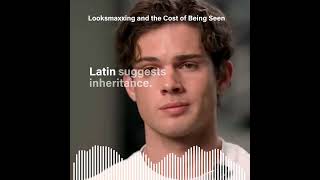
Picture a young man in Miami, disoriented on a livestream, saying he is absolutely gone. Later, hospitalized, then out the next night, posing at a club as if nothing at all had happened. It's grotesque, yes, but also strangely clarifying. Clavicular, the pseudonym for Braden Peters, 20 years old, is an avatar of the looksmaxing world, a subculture devoted to male beauty at any cost. And that phrase, at any cost, is doing real work here. By his own account and reporting around him, we're talking about testosterone started at 14, meth to stay thin, a daily stack of drugs and supplements, Hours of livestreaming, constant maintenance. The body is meant to signify ease, superiority, natural advantage, but the machinery underneath it is frantic. That's the image I can't quite shake. The body is project, brand, and battlefield all at once. Not merely inhabited, but managed. Not simply lived in, but displayed, refreshed. Optimized, defended. In older languages of self-improvement, discipline was supposed to produce some inner condition—health, steadiness, competence. Here, the sign has floated free of the thing. The body becomes a readable status object, a public text that must keep announcing value. And once that happens, collapse isn't just a medical event. it becomes a semiotic event. The overdose scare, the incoherence, the return to the club— all of it tells us that the performance of strength now matters more than the condition itself. When strength has to be signaled nonstop, well, it's often because it no longer feels safe going unannounced. Looksmaxing takes features that used to be— I don't know, just features— jawline, height, skin, hair, muscle, and turns them into ranked information, legible markers, inputs for sorting. You are not just tall, height is market value. You are not just lean, leanness is proof of will. Bone structure becomes destiny, except destiny now comes with protocols, supplements, cameras, and comment sections. Its vocabulary makes that brutally clear. To mog is to outclass someone visually, to dominate by being better looking. To max is to push some trait to its limit. A stack is the chemical and supplemental infrastructure beneath the image. Ascension is the almost religious term for moving up the hierarchy of faces and bodies. It's LinkedIn for cheekbones, basically. Except with more despair and worse pharmacology. What interests me is how different this is from older fitness culture. That world had its own absurdities, obviously, but it at least sold a story about health, training, discipline, maybe athletic competence. This newer formation is less about inhabiting a strong body than producing a highly legible one under algorithmic pressure. Feeds reward the before and after. Dating apps intensify first glance judgment. Clipper accounts carve a person into viral fragments for TikTok, Instagram, X. As reporting noted, Clavicular rose in part because an army of clippers distributed short videos of him everywhere. So the body becomes algorithmic text, something scanned instantly for rank, edited for contrast, and monetized for reaction. And if you're wondering why that feels so stressful, it's because it is. You're not just trying to look good, you're trying to remain machine-readable as high status. Now, one of the stranger visual developments around these scenes is the use of borrowed Catholic aesthetics: crosses, rosaries, Latin phrases, trad styling, devotional music threaded into the same online montage as skincare, steroids, and talk of optimization. And no, I don't think the interesting question is simply, are these young men sincere believers? That's too easy. The more revealing point is that the symbols provide gravitas. They lend thickness to an identity that might otherwise look thin, improvised, and terribly dependent on audience feedback. Ritual objects suggest order. Latin suggests inheritance. The cross suggests seriousness, sacrifice, civilization, hierarchy—all the heavy furniture of transcendence. In the feed, those cues can be repurposed as a style of authority. But notice the inversion: Catholicism, at least in its classical moral language, is about confession, limit, surrender, sin, creatureliness, the fact that you are not sovereign. Here, those symbols are often redeployed to communicate the opposite: hardness, purity, control, invulnerability. What should humble the self gets used to armor the brand. I was raised around enough religious imagery to feel this almost physically. A rosary is meant to mark dependence, repetition, prayer. In this visual regime, it can become one more accessory in a kit of masculine command. That's not a minor aesthetic confusion. It's a little cultural X-ray. It shows a hunger for authority so intense that even humility must be refashioned as dominance. And of course, the platforms make all of this worse. Because they do not reward steadiness. They reward escalation. They reward volatility, public risk, the sense that something might go wrong in the next 15 seconds. In Clavicular's case, parts of the emergency were captured on stream or posted by onlookers. Earlier footage showed him woozy at a restaurant, companions asking how he felt, someone requesting ice water. Then security, emergency responders, the hospital, and then, absurdly, perfectly, the club return. That sequence matters because it suggests collapse is no longer outside the content model. It is inside it. His publicist reportedly gave him an ultimatum about treatment, yet Clavicular himself also raised doubt about whether he could IRL stream in public. Without drugs, saying he might need to practice mogging sober or find a new kind of content. That's bleak. It's an admission that visibility and self-destruction may have fused. And this isn't confined to one streamer. Politics now overplays toughness when legitimacy is thin. Companies preach resilience when their systems are brittle. Work culture glorifies grind because it cannot promise stability. The louder the institution insists on strength, the more I start checking for structural weakness. Quiet competence, once the gold standard, now barely registers. If it's not theatrical, it doesn't scan. So I don't think looksmaxing, or trad-coded masculinity, is the disease itself. It's a symptom, maybe an especially vivid symptom, of a culture that no longer trusts invisible competence. We want proof, constant proof, visual proof, quantified proof, performative proof. And when proof never ends, performance takes precedence over reality. The key semiotic reading is simple enough to sound almost old-fashioned: when strength must be constantly performed, it has started to mean fragility. Not always, not in every case, but often enough, that we should take it seriously. The incessant signal is the tell. The endless declaration of mastery usually hides dependency—on audience, on stimulants, on ritual props, on algorithmic validation, on the next clip. A healthier culture would rate strength differently: less display, more reserve; less escalation, more limits; less branding, more composure. That's not terribly glamorous. I know it won't trend like ascension. It certainly won't sell as many thumbnails, but it might produce people who do not need to nearly destroy themselves in order to appear powerful. And that's the question I'd leave hanging. Can a culture trained to see only what is loudly signaled recover any respect for what is steady, restrained, and unadvertised? Or have we become so dependent on spectacle that quiet strength now looks to us like weakness. That's the bit I can't stop thinking about. Thank you for listening. Until next time.