Episode 14 From the Battlefield to the Boardroom
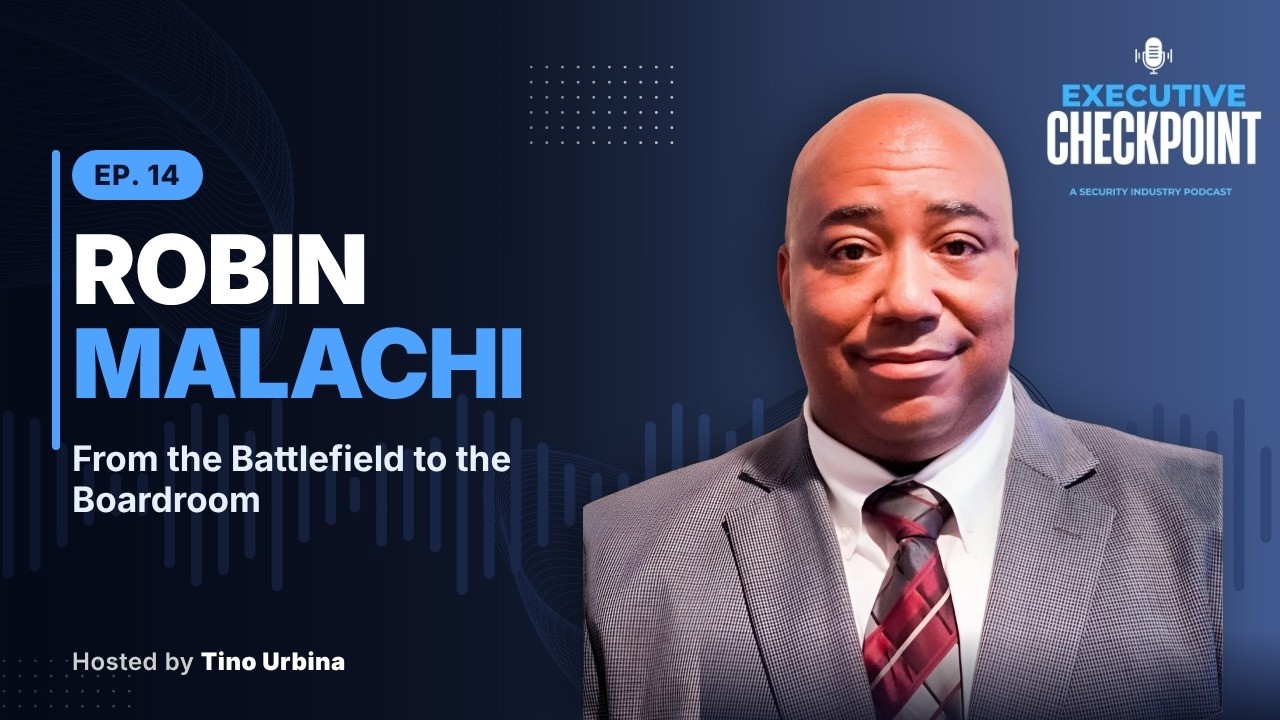
In this episode of Executive Checkpoint, host Tino Urbina interviews Robin Malakai, Director of Corporate Security at CVR Energy, about his journey from a U.S. Army armor officer and tactical intelligence specialist to a senior corporate security leader in the petrochemical sector. Robin explains how military training—particularly the Army’s 11 leadership principles—shapes his approach to leading teams, making decisions, and building a secure culture in a critical‑infrastructure environment. He discusses the practical challenges of translating military language and budgeting to corporate ROI‑focused decision‑making, the value of early responsibility (e.g., managing $12 million of equipment and 16 soldiers at age 23), and how those experiences should be framed on a civilian résumé. The conversation moves to sector‑specific security concerns, including the impact of the CFATS program sunset, geopolitical threats to petrochemical facilities, and the convergence of physical security with cybersecurity. Robin highlights the growing importance of AI‑driven analytics, advanced access‑control systems, and the need for highly trained staff to operate sophisticated technology. He shares leadership philosophy centered on empowerment, trust, and leading by example, and offers advice to veterans entering the corporate world: understand business acumen, balance security needs with return‑on‑investment considerations, and continuously invest in personal and team development. The episode concludes with reflections on culture, staffing, and the rapid evolution of security technology.
Chapters
Welcome to Executive Checkpoint, the live podcast for security professionals. Each week, we explore industry trends, challenges, and insights with leading experts. Welcome to Executive Checkpoint, where security professionals gather insight to navigate the dynamic and ever-evolving world of physical and cybersecurity. I'm your host, Tino Urbina, and today we have the privilege of speaking to Robin Malakai, Director of Corporate Security at CVR Energy. Uh, Robin's journey is one of leadership, adaptability, and resilience, from his time as a captain in the US Army 4th Infantry Division To leading security efforts at Citgo Petroleum, Comerica, and Frito-Lay, he's built a career rooted in strategy, crisis management, and protecting critical infrastructure. His experience gives him a unique perspective on how military discipline, leadership, and decision-making translate into a corporate world. Today, we dive into what it takes to grow go from a military career to the boardroom and how the skills are transferred to the corporate world. So with that said, Robin, I'm excited to have you. Welcome to the show.
Thank you, Tino.
Glad to see you. And lots to talk about. I think, like I was— we were chatting earlier, I think this is a very interesting conversation because a lot of our professional security— our security professional partners they have an excellent career in the military, and then they might be looking to transition into the corporate world. And I think there's, there's a lot of questions floating out there. But before we get to that, as always, we'd love to learn a little bit, a little bit about your background. Where did you start? How did you end up in the security world? And then we'll dig in.
Okay, well, once again, thank you, Tino. My name is Robin Malachi. And I'd just like to share for a few minutes the way I started. I started out in the military. I went through— I received an Army scholarship and went to college through the Army and through the ROTC program. So the ROTC program, as some of you may know, is just a leadership style of program. So I went through that for 2 years. Graduated, received my commission as a 2nd lieutenant, and then transitioned into the Army as an armor officer and stationed down at Fort Hood, which is now Fort Cavazos, as a, as an armor commander, tank commander, and ultimately into military intel as a tactical intelligence officer for the battalion. So that's a little bit about my background.
And so what, what was the transition from the military to the corporate world? Where, at what point that took place and how that happened?
Okay, so the reason why, you know, I transitioned out of the military, uh, first and foremost was a personal reason. I wanted to spend more time with my family. So when I, when I transitioned out, That was a new challenge as well, because I was transitioning from being within a government entity into corporate America. And one, one of the biggest opportunities was just learning the different language, because, you know, in corporate America it's about return on investment, dollars, etc., where in the military it's about budgeting, you know, from October to October, so the fiscal year. So that's a big learning and how to transition my military skills into corporate skills. Right.
You know, I feel like in the military, it's not just barking orders, right? It's earn trust and discipline and leading people the right way. And corporate, I think that, like you said, there's a different language, but similar in attitude. How do you find that aside from the communication differences going from the military to the corporate world? What about that attitude of leading with those?
Right. So, you know, you know, at the beginning where a lot of people look at the military, they think it's about yelling and screaming and hollering and pushups. And a little bit of that happens at the beginning. Okay. And that's kind of what they focus on. Or they watch a movie and they see a war movie and think, well, that's all the military really does. But there's a lot of in-between between your transition in the military versus your time in the military. So as you move and transition forward into your career, there's, there's less yelling. So people don't yell all the time. It's about mentorship and actually Developing leaders. So the first part was about memorization. For example, I remember we would have to study the 11 principles of leadership or the definition, which is the art to influence men or women to accomplish a mission and goal and task. And, you know, you, you put that to memory, but you put it in practice when you actually start leading troops.
Right. I feel you mentioned those 11. Do you, do you still utilize those 11 lessons or 11?
Yes. Yes. For example, one is called set the example, right? And, you know, it sounds so easy. All you got to do is just set the example. But when you really think about it, think about every day you got to come into work, And you've got to set the example for your, for your team, your, your people. So that was just one, you know, know your, know your team, be technically and tactically proficient. So if you think about that in the security world, you have to stay abreast on, on security equipment, security practices, principles.
Right.
So if you want to lead your team, you have to understand this. And as an end user, if you really think about it, we have to be a jack of all trades and a master of none. So we have to know a little bit about cameras and access control. So I do practice those in my day-to-day life.
Right. It's almost like always being a student of your craft, right? In other hands, especially when you're having to make key decisions for an organization. And, you know, like, it's equally to me important in the military as well as a corporation. Every decision you make is gonna have an impact, and we're always hoping for the best, most positive impact. And, you know, uh, is there a time that you feel in— and your background being in the military— that you were tested, that you can recall, uh, having to make a tough decision, that now that experience translates well in the, in the corporate side?
Yes. So that's funny because pretty much you're tested a lot, if not every day, and it starts in your training. And you can think about it, it starts at the basic level. So when I was a cadet, and this is just one quick story, as a cadet, we had to walk through what was called strat lanes. And these strat lanes were little type of missions and operations that you had to learn to manage. And being a cadet at the time is, is very new. So you're, you're, you're kind of blind. You don't really understand. You're nervous. And here someone's throwing you out into the middle of the pack of wolves and everybody's waiting for your orders. Well, when I had an ambush, it was, it was kind of funny. I had to set up an ambush and I was told to travel 500 meters, set up a linear ambush. Well, when I got there, there were no bushes. There were nothing to hide behind. So you have to— you're going, okay, did they want me to just stop at this point here?
Right.
Or am I supposed to move into the trees? And, you know, or whatever. And so that's just one simple example. of always adapting, always changing, and making these tough decisions because you have to prioritize what was important. And that's what the military taught me, that yes, the safety of my men was important, accomplishing the task is important, and how do we go about that. But throughout my career as a tank commander, yes, you're constantly challenged. You're constantly challenged on a professional level as well as a personal level. personal level. And they're looking at you to make those decisions.
You know, one thing that you mentioned earlier that struck my interest was that you started managing or leading when you were, what, 23 years old?
23. Yes.
23. So, you know, having that responsibility at that young age, I think that's something sometimes missing in the corporate world where you scale slowly into the, you know, to having that much responsibility. Do you feel that, uh, is that, um, something that unique to the military where you have that level of responsibility at such a young age that gives you an advantage in the corporate world? Someone listening, maybe sitting there is like, well, I don't know what to do next, I'm looking to transition to the corporate side, and they miss that portion that they don't realize how much of an impact that can have, um, on a resume, right? And I manage What did you say? Millions of dollars, right, in equipment?
Yes.
What's your take on that?
So I think what, what happens in the military, if you're not careful, uh, the individuals that are in the military take what they do for granted, and it doesn't necessarily— they feel that it doesn't necessarily translate into the corporate world. So give you an example, just like we were discussing earlier, I was 23. I had about $12 million worth of military equipment that was under my control, to include 16 soldiers.
Hmm.
But if you look at your peer, they have the same, or, you know, or they have 45 soldiers or a company. So you, you take it for granted. You take what you've gained and you just assume that everybody in the industry is working at the same level, and they're not. And so when you come out of the military, I think it's really important to be able to share that experience of what you've been doing in both leadership and in process management, that, that you, you gain the skill sets to move forward.
So I think any young veterans looking to join, um, the workforce and the corporate side, it's, it's, it's an essential thing to keep in mind, especially, uh, translating that in a resume, right? I think that sometimes is where we need to do that. So, you know, I believe, um, uh, there are some companies that will value you adding— not believe it, I'm sure companies will value you adding that, even if it's exactly what you experience, right? I managed $16 million, $12 million of equipment, 16 individuals, and how that is interpreted in training later in the corporate world. That's, that's different. So yeah.
And if I can share for a second on that topic. So if you think about it, I went from managing 16 personnel at 23 to managing contract officers and a staff here. And so with that experience that I had when I was 23, I leverage it today. It's, believe it or not, I deal with a lot of the same issues and concerns around staffing, around people, around training. And this never changed from the time I was in the military to today. We're just—
Yeah.
Instead of talking about tanks, we're talking about security. We're talking about access control, we're talking about training. So it's a direct transition over into corporate America, especially if you're dealing with security services.
Yeah, and you know, I think you also positioned yourself in a very specific vertical, right? Critical infrastructure and energy is a sector that is vital to the country and is vulnerable. It's a vulnerable industry. What are the biggest security challenges you're facing today in your industry?
Well, the one thing about the petrochem that I enjoyed that was a transition is, believe it or not, although we're here in the US and our assets are here in the US, it still has that geopolitical threat that you still have to be aware of. And so working in critical infrastructure, allows me to continue to hone my skills in for that. So some of the risks that I actually see is just on the political side alone is with the, with the removal or the sunset clause of the CFATS program, which is the Chemical Facility Anti-Terrorism program. As some may know, it had a sunset clause a few years ago in July, and we as CVR, I would say, did a, did a great job with our senior management supporting to maintain our security posture, you know. But where I think the threat is, Tino, is not with the mid to large-sized companies. The risk that I worry about is with some of these small companies and mom-and-pops that are working in the industry. And, you know, how I could tie this back to the military is, although I have my sector covered and I got my position covered, if you have a weak person on your right or left flank, they're risking— You're jeopardizing your safety and security as well. So that's, that's one of the issues I see in the chemical sector that it needs to probably be addressed and a concern for me.
You know, it feels— I'm almost sure that contractually with when you do business with DOD, there is that clause that says you have to, to be up to the standard of you know, everybody else so you can do business with those. You guys as a private group really can enforce it that way potentially, but I see what the weaknesses are. So what about cybersecurity threats? I mean, they've been evolving and, you know, it's always changing. So the combination of cybersecurity and physical strategy, what's your approach to integrate the two?
Okay, so, you know, I, I don't work, uh, as much with cyber, but it's still, it's still a major concern for us because when you look at the convergence of access control and surveillance, uh, it's really key. You know, I, I joke because, believe it or not, from time to time, if I'm talking to people out in the industry, not just in the industry, but just people in general, they're like, why can't I get a Walmart camera? And I laugh because the system is actually designed for that protection, exactly what you said, that convergence on the back end.
Mm-hmm.
So we still, as physical security managers and subject matter experts, have to be aware of all the cyber issues to ensure that one, we're not penetrated, and 2, that we maintain the security of our own network as we're adding to the system and securing it.
Yeah, that never changes. Like you said, being a student of your craft and an ever-evolving mix of the 2, I'm sure you have plenty of conversations with your colleagues in the IT department, right, to make sure there is some alignment.
Exactly.
And I think every company is in the same boat. But you know, when you're talking about critical infrastructure, it's definitely key. So Gonna transition a little bit talking about culture, right? You're obviously leading a large group of folks. It's a good organization. I feel like good leaders build strong teams, great leaders build strong cultures, right? What's your philosophy on building a secure culture and organization?
Okay, well, that's a good question. So the way I view it, Is, uh, and I get this directly from the military. And so when you're on the battlefield in the military, they, you know, at first when I was young, I was trying to control everything. You know, I wouldn't let my gunner gun. I was trying to control what was called the commander's override. I was trying to do everything in that sense.
So.
All of a sudden, it was kind of funny when I joined the Army as an officer. You know, you don't get a— you don't get a machine gun. They give you a 9mm, right? And if you think about it, a 9mm isn't going to do anything to a tank, right? I'm like, it's not going to do anything.
Just throw pebbles.
Yeah. So I was sitting there going, this is bizarre. This is silly. Why wouldn't you give me a machine gun? Well, my platoon sergeant, this gentleman named Sergeant Prescott, was like, sir, your job is to lead, not to sit there and try to control and do. So it was an interesting thought process for me because, you know, you always hear the comments lead by example. example, lead in the front. And no, the leader sits in the center so he or she can control the movements on the battlefield and assess. So it was really important then to allow your team to lead, your, your, your leaders. So in this case, they're not tank commanders anymore, but they're site security leaders, management. So I'm there to look and support my team out there in the field. I'm there to assist and, and provide the, the necessary tools for them to be successful. In my mind, if they're successful and, and they're great at their sites and everyone looks at them and says, well, you know, Joe leads this program really good, Joe is Joe is a good guy. We, we just need Joe. I'm ecstatic because that means in my mind that it's working. My leadership is there to support, it's there to serve the team, and it's there to create their success.
It's trust, right? And discipline, of course, to, like you said, learn and I think the thread that connects the two is exactly that, the strong culture of allowing people to be empowered, right?
Correct.
So kind of off question. If you were to ask anybody on your team to describe your leadership style, what would you think they will say?
If I was to ask them to describe my leadership style, what would they say? Sure. You know, I would think that they would say that, yep, I, I'm kind of laid back in that sense. But, you know, I allow them to provide their input and empower their decision. You know, I'm not there to take that away. My, my philosophy is just like where I came out of the military. You kind of move up or you move out. And so if you're not growing and you're not developing, and I'm not allowing them to talk to their site leadership, or I have to be in control of everything and they can't put a presentation together, you know, we can look at it, we can— I provide my input, but I'm looking for them to lead that part of the process.
Yeah, that's a thing. They're, they're happy group of people, you know, having a leader that is allowing them to grow. And like I said, this, I feel it's a big security, specifically in the corporate world, is allowing people to be equipped to handle what they need to in a given moment, right? Because we got to be sometimes reactive in some, some, some instances. Speaking of that, the world is always changing. You know, secure threats are always there. What are the biggest challenges you believe professionals should pay more attention in the industry, your colleagues at equal level?
Well, some of the biggest challenges that I see is, like we discussed earlier, believe it or not, paying attention to the geopolitical issues that are occurring. I think that's very, very important. the communication today because people are being radicalized, whether off of a computer and it is not an organization, whether you had ISIS or whomever, you know, Hamas or whatever, they are being radicalized and they are still impacting small-town America. We hear those cases going on. Whether it was a Ryder truck in Canada running over people versus a bomb, you know, we hear these things that are going on constantly. I've ran into issues in previous roles where I thought everything was okay. Come to find out, there was a potential employee that was being radicalized in small-town America. So that's a risk today. When you look at security services and staffing, their education and quality level is becoming more important because the equipment is becoming more technically advanced for where it was just unlock a manual gate and push it open. Now they have to learn the entire access control process. So the training is becoming more intense, and staffing is becoming more intense. And as you know, we just got out of COVID So the culture is changing all the time.
Right. So yeah, and I think that finding quality individuals that align with what the company needs is going to be key. Do you feel AI is going to have an essential play in critical infrastructure? Uh, or an impact in, in the petrochemical industry?
Most definitely. You know, we're, we're looking at that now, and, uh, with cameras that have analytics, you know, that becomes very, very important. And, you know, you're starting to actually see some of these robots and, and just the advancement of what they can, you know, and can't do, and it's going to convert more from what they can't do to what they can do. And so, so the technology is, is rapidly evolving within the security industry, and AI is playing a vital role in that.
Yeah, I feel that there's no longer a choice as a professional in the industry but to really get knowledge or advice Pretty quickly. The technology is not going backwards, right? This, this is definitely moving at light speed. So, well, um, thinking about time, um, if you could give your younger self advice, uh, back when you started your career in the corporate world, what would that be?
Uh, if I could give my younger self some advice back in the corporate world, um, I, I think this would be fun because like you shared, coming out of the military is—
Yeah.
Really understand the business acumen, acumen of corporate America. So a lot of times where the mistake I think is being made is as we talk about coming from a government entity that just focuses on a budget to understanding the balance in corporate America is a return on investment. And that's, that's key. So you have to balance the importance of what type of security equipment you're looking for, staffing you're looking for, with the investment of the company. And when I first joined and got into corporate security, I was purely focused on the security, not the return on investment. But that's our survivability. If we're not producing fuel, if we're not producing chemicals, then we're not making money. So that has to be a balance of the two. And that's what I would share in my earlier days.
Well, you know, and the reason I like to ask that question is because I realize that a lot of folks that watch the show, some are senior leaders, similar position as yours. C-level, right? But there's a lot of folks that want to show because they want the insight of how, how they can reach out to those, to those levels, right?
Yes.
And, uh, I feel that that's key. So I appreciate definitely sharing. I believe this has been an insightful conversation, Robin. Your journey from the military to the boardroom is empowering. Uh, you're a great leader. I highly respect it. And, um, I think this has been a great conversation. I'm I'm sure if we have the opportunity to have you back, can we count on you coming back to the show?
Most definitely. I would love to be back.
Yeah. So, uh, was this a good chat, you think?
Oh yes, excellent. I think, you know, I could have probably spoke on this for hours and hours.
I knew it. Yeah, well, like we were talking about earlier, there's so much that, you know, we need to share as an industry that I think we focus sometimes a little too much on the technical side or the equipment side and the Human capital and investment that we make on the communities is key. So I appreciate that you're doing that with us today. And I want to thank everybody for watching today. And until the next time, stay informed, stay secure, and we'll see you at the next Check Point. Thank you, Robin.
Thank you, Tino.
More from Tino


EPS 37 Security Is a Human Business Leadership Risk and Resilience Lee Oughton





Eps 33 It’s Not in the Manual: Real-World Leadership for Security and Risk Professionals

Episode 32 Security, Converged: Why AI Needs People, Process, and Purpose Kasia Hanson

