Leaders and Visionaries On Site in São Paulo, Brazil
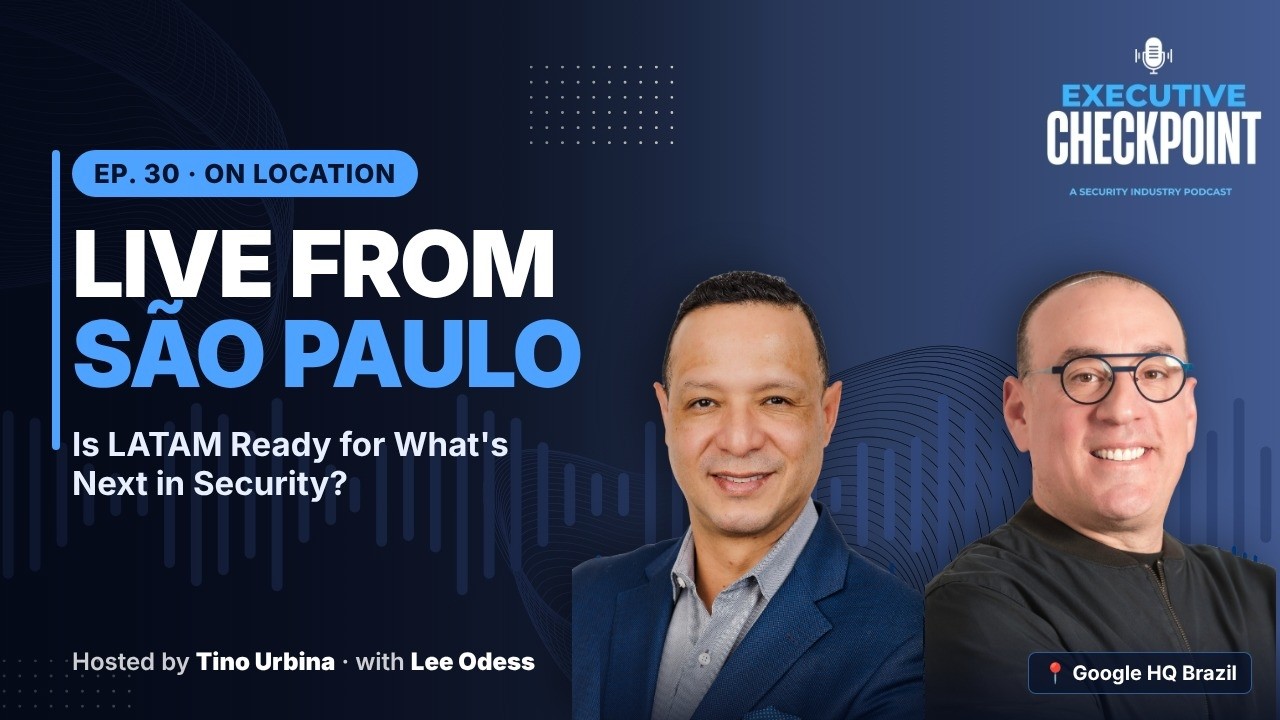
The episode of the Security Checkpoint podcast, hosted by Tino Urbina, brings together a panel of security professionals—including Luis Colon (Gallagher Security), an ASSA ABLOY hospitality specialist, Matej (Sharee), Ryan (MCDN), and industry leaders Hilary Gallagher and Leo Des—at a live event in São Paulo, Brazil. The conversation explores the state of the Latin American access‑control market and extracts actionable takeaways for participants’ organizations. Key themes include the urgent need to invest in AI‑driven behavioral analytics on access‑control data, the evolution and mainstream adoption of mobile‑key technology (NFC and BLE), infrastructure limitations unique to LATAM, the importance of change‑management and education, opportunities for local manufacturing and market entry, and the role of community building across the industry. Participants stress that people—staff trust in technology—are the critical success factor, and that perceived market risk can be reframed as an opportunity for companies willing to leverage local talent and resources. The episode ends with reflections on São Paulo’s vibrant tech ecosystem, the value of face‑to‑face networking, and a commitment to share the insights with the broader global access‑control community.
Chapters
Welcome to Executive Checkpoint, the live podcast for security professionals. Each week, we explore industry trends, challenges, and insights with leading experts. This is your insider access to the minds driving change in our industry.
Welcome to Security Checkpoint, where security professionals gather their intelligence to navigate the ever-evolving world of physical cybersecurity. My name is Tino Urbina, your host, and today we're meeting a group of security professionals in São Paulo, Brazil to further the technology and development on the access control side from distribution, manufacturing, integration, and beyond. Today I'm with Luis. Luis, tell us a little bit about yourself, who you work with, and let's start with that. Why not? Yeah, absolutely.
So my name is Luis Colon. I'm with Gallagher Security. I'm responsible for the East Coast of the United States and Latin America. And very happy to be here with you.
Excellent. You know, being the first time at an event in Latin America, it's your market, but was it an expectation coming to São Paulo, learning from the region?
I didn't really have an expectation. I didn't know what to expect. First time doing one of these events with LeoDesk. Absolutely fantastic, you know, meeting people such as yourself and other industry leaders. Learned a lot. Learned a lot about this market. I mean, I knew Brazil, you know, São Paulo was big. I had no idea.
Yeah, the traffic. Yeah.
I mean, you can go into any direction for hours and it's just city. City, city, and more city. So it's been a hell of an experience for me. And hopefully, you know, we'll continue to grow this market so I get more opportunities to come here.
Absolutely. Well, let me ask you, what's the takeaway that you feel you're gaining by coming to this event?
The biggest takeaway is the connections.
that I made here. It was great running into a lot of people that I've worked with over the last 30 years. You know, we're all in different companies now, but it's great to see that even though I had not seen some people in even 10 years, we picked up right where we left off.
Right.
And it's always great to have those relationships and then meeting new people.
Right.
Meeting customers, getting some time to spend with Lee and Hillary. And just being part of this experience is something that, you know, I really, really value and I want to do more of, you know, in the future.
Interesting, because we're used to the traditional events where everybody has a table, you speak about the product, but this had nothing to do with that. It was more so a conversation on how we move the needle forward. On that point, what will be the biggest takeaway that you think you might want to bring to your organization and say, hey guys, here's one thing that you need to be aware that we might need to Move the needle with the—
Yeah, we talked about a lot of things that we need to do as an industry. You know, we kept talking about 30 years, right? All the things that we've been doing not so great over 30 years. Coincidentally, I've been in the industry for 30 years. Biggest takeaway of all the things that we talked about, for me, it's got to be AI. We got to make an investment in AI, not just our company, but every other single access control manufacturer. And it's all about data. And I heard you talk about data. We, as an access control entity, collect tons of data every day. That data is just sitting there in static form. Maybe you run a report to see where Louis has been. But if we could leverage AI to look at behavioral patterns, you know, we're creatures of habit. And I think AI can establish a baseline of Patterns of behavior, and then be able to identify when people get off of their patterns as a probable indicator that there might be something going on that we need to keep an eye on. So my message back to my business is going to be we need to invest in AI. That that is it's not coming; it's here. It's here, and we're behind.
Absolutely.
Yep.
São Paulo, what's your general take about the city?
Oh my God, the traffic is, you know, last night event was 2 miles away from the hotel. It took us an hour and 20 minutes to get there.
Wow.
It was just incredible. And then on the way back, I think it took us 12 minutes after the traffic died down. But the biggest thing about the city is just the opportunity that I see here. I mean, this is replete with business opportunities, technology, talent, And we haven't even begun to scratch the surface at Gallagher Security. So that's another message that I'm gonna take back, say, guys, we need to invest. There's conversations about us possibly starting to manufacture here.
Oh, wow.
Which is something extremely important if you're gonna be successful in this market.
True.
So I got some meetings with the New Zealand Embassy tomorrow and our animal management counterparts to see where that conversation is going. We have to manufacture. There's a ton of opportunity here. This market could be as big as the US for us if we invest.
Well, interesting that it feels like everybody's walking away with a smile on their face. So I'm glad that it's the same case for you. Yep. And we'll appreciate your time. Thank you so much. Tell us a little bit about your background. What are you doing for the industry and who you work with?
Yeah, thank you. It's been a really, really long day. I'm glad we're We're hitting it off on top here. So I worked in hospitality for many, many years. So my first job in hospitality was at the laundry at Sheraton Hotel in Stockholm.
Oh, wow.
I was 17 years old. That's now 30 years ago. So I gave you my age. So I come from hospitality and I've been digitizing both operations and brand side. So spent a lot of time in operations and then moved to work on the franchise side of the business for Choice Hotels International.
So you've seen it all.
I've seen it all. I messed it up a lot of times and I still came back for more. Good.
So who are you with today?
Yes. So since a month and a half back, I'm actually with ASSA ABLOY and the Global Solutions Division for Hospitality. So I get the opportunity to take all my years in hospitality where I've used technology and bring that into the world of ASSA ABLOY and help really to drive our products for hospitality in the direction it best serves the need of the industry that I, that I just love. So it's amazing.
Yeah. So that transition, mm-hmm, from hospitality to Assa Abloy, that's gotta be a story. So how, how did that happen?
So, you know what, um, in 2010, this is starting to be a while back, I worked in operations at one of the flagships hotel in Stockholm.
Okay.
And, um, a gentleman reached out from Assa Abloy who had Assa Abloy locks.
Of course.
Yeah.
And a gentleman reached out and he said, we want to try to do mobile keys. This is 2010.
Oh, okay.
So I said, okay, let's try this out. And we actually did the world's first pilot of mobile keys in hospitality using NFC technology. That is 15 years ago.
Wow.
And they dominate now.
Dominate. The, the pilot was awful because technology, the market wasn't ready. The technology wasn't there. We couldn't use NFC in the cell phones at the time, right?
BLE was the standard protocol, so we couldn't use NFC.
So when I got to launch mobile keys over NFC now with Google and also with Apple, like 15 years later, I said like, hey guys, welcome to the party. I'm glad we finally made it.
Oh wow.
So coming to an event like this, I know there was some level of expectation. What was yours?
Oh, so you see, I might have been long in the industry, but Axis, I've been using Axis products, but I've never been a service provider of AXS products.
I see.
So for me, this is just amazing to learn about the, like, the inside perspective of AXS.
Sure.
And so my expectation was to say, okay, first of all, to learn more from industry colleagues, but also from the different verticals. Like I said, I've lived hospitality. Unfortunately, there's not a lot of things I don't know about hotels, but there are other verticals that I want to listen to how they've handled the challenges that we might have and learn from that. So that was my one of my expectations. But then also So as I'm new to the company, new to the role, I want to learn about how does the markets differentiate, what's different in Brazil. And I'm not going to say Latin, like I'm European, so I know it's a continent and not a country, but to understand what are the drivers in the market, because at the end of the day, I'm globally responsible for the product portfolio for hospitality. I need to understand the market that I'm servicing. So it was twofold, understand access. But also understand the market that we're servicing.
You know, there's always a difference in culture that is going to be key on bringing new technology. So access control is no different. And I agree with a lot of the points in your conversation about customers having not so great experience and remembering that and how that is evolving into becoming frictionless right now. That technology is getting just better and better. And What's your biggest takeaway? What would you bring back to your organization and go, guys, this is what I learned. We need to make a new focus on X, Y, Z steps.
So I think one thing that I got confirmed, I'm not going to say it's something new that I learned, but across industries that we can have the best technology, the best products in the world, it's going to come down to the people. And when I say people, I mean our staff, our employees. If they don't trust the technology, if we don't invest in them, if we don't have them use the technology, Trust the technology. How can they be advocates towards their guests or their visitors or their customers?
Right.
So technology is the enabler for doing all of this, but the success really sits in investing in the people that's gonna stand behind launching this technology.
And as much as we use hotels, right, it's still a learned skill with the newer technology. So to your point, it's how do you promote it in the right way so people find it flexible? Well, I'm so glad that you've given me the time. Yeah, of course. Thanks so much. When are you going back?
Thank you. Oh, I have two more days. Oh, I'm gonna enjoy my pastel and I have some food and some sightseeing to do before I leave.
So São Paulo five stars.
Yeah, São Paulo five stars.
See, we all agree on that. Manage the traffic and all the helicopters that you see flying back and forth.
Just wear your sneakers and walk, my friend.
See, Europeans know it best. Pleasure to meet you. Thank you so much.
Thank you so much.
We'll see you guys on the next conversation. Stay tuned. If you don't mind introducing yourself, tell us where you come from, the name of your company, and go ahead.
Sure.
So my name is Matej. I work for Sharee. We are a workplace experience platform around digital badges. We are from Czech Republic in Europe, but we are like global. Most clients are from the US. And what we do except the workplace experience platform is like we help companies develop and implement Apple Wallets, Google Wallets in scale.
I see.
You know, traveling from that far, what were your expectations prior to coming to the event?
So, my expectation, except taking part in the panel, of course, was also to get the insights from the LATAM industry. We are present in LATAM, mostly in, like, Mexico, Peru, and other countries. but not in Brazil yet, like right now already also in Brazil. And so I was happy to get some more insights about access systems and the market in general.
What was your biggest takeaway from the conversations you heard, the engagement you have with the local market?
So the biggest, I would say it's, I did my preparation as well. So like I confirmed somewhat what I expected. So for example, Even Lee, I think, suggests, like, mentions as a wrap-up that infrastructure issues is, like, common for the LATAM. That's what I saw from the clients and I just confirmed that. And I'm glad to hear some feedback on, like, where to improve, what to improve in, like, targeting the clients.
So now that you have a better understanding of the market, how do you feel it's gonna help you guys bring a playbook into maybe not just Brazil but across Latin America? Because it seems like everybody had a general consensus on what the market needs. What is your take on that?
I would say that I have to, like, do my wrap-up from all my notes. So, that's the first thing I will do when I come. But in general, it's like about the messaging. So, I will just be thinking about the message for the market so it fits what I heard at the event and, like, to align.
Absolutely. So, São Paulo, first time in São Paulo?
Yes, first time.
Recommended?
I like it. I like it. The traffic jams. I like it.
We also offer through that.
Yes. I like the view right now. If you can see it like this, perfect. So I like it. That's so definitely, definitely we'll come back.
We're coming back. That we all agree on that. Appreciate it. Thank you so much.
Thank you too.
Appreciate it. Welcome to Executive Checkpoint. One more time, we're joined by one of the leaders in the industry, Ryan with MCD Dean. And it's been an interesting journey getting here, but also experiencing this event. It's been an interesting mix of conversations and different ideas, and I think excites everybody. But Ryan, tell me a little bit about what was your expectation before coming over to the event?
Yeah, well, I think the LATAM market is an evolving market. I have a little bit of experience for the last 4 or 5 years in LATAM. I think for MCDN, it's an emerging market for us. We have lots of big customers that have facilities here in LATAM. My expectation of the event was exactly how it was executed. Lee, Odesse, and the Access Control Collective do a great job in orchestrating a very fast-paced conversation that I think people leave with a very honest conversation. What's happening, the trends in the market, how do we come together as— and how do we push forward as an industry?
Mm-hmm.
And I think we had a very honest conversation today. How do we do that? with Lee's help. But my expectation, I'm leaving here fulfilled. Met a lot of great people here in Latin America.
Sure.
Leaders that are driving the LATAM conversation in technology, end users that are trying to develop next-generation technologies and provide and locate best service providers for their organizations. So overall, a great couple days.
So, you know, different because it feels more as an experience than the classic event from the industry, right? So I feel that the conversations, like you said, were honest and transparent and they're kind of challenging a little bit the common understanding of what the region is, right?
Right.
What will be the main point that you see of value proposition that you bring back to the organization saying, hey, here's what we're missing, maybe we need to put more emphasis in this fashion in the market?
Yeah, I think for us, for MCDN, we'll continue to expand and grow with our customers. We're very laser-focused on the type of customer we work with, be it regulated markets, hyperscalers, high-tech companies, Fortune 500, if you will, in every region. So APAC, EMEA, LATAM, and North America. So We extend, you know, a hand to support these customers either based in LATAM or based in the US or based in Europe that have facilities here in LATAM. So we'll continue to hire and expand and grow the customers and support them to the best of our ability, bringing the best available technology to their ecosystem. So, you know, we're really an engineering company that thinks differently than a traditional security integrator. And really bringing extensive value to some of the largest brands in the world.
Yeah. Well, glad that you were able to make it. Finally, you get to hang out. Yeah, it's good to see you. Yeah. São Paulo, what's your take?
Well, I love it.
It's a great city. If you haven't had a chance to come down to São Paulo, spend 3 or 4 days or a week down here. The people are amazing. The weather's been phenomenal. So big 5 stars for São Paulo. But it's great to see you as well.
Excellent. I'm here with Leo Des. Leo, we just shared a tremendous couple of days in São Paulo, but a tremendous day of interaction with many professionals in the security industry, access control. Everybody came with expectations. You obviously leading this event, what was yours before coming to São Paulo?
Yeah, anytime we come into a marketplace, honestly, my expectations that come into is that And I know there's a desire and there's like some pride, if you would, that they want to showcase their market and have a conversation. But there's also sort of an understanding they want to understand also what's coming. So I came in with this idea that I knew there was a desire from people to tell stories and talk about what's happening here in the region. And I wasn't disappointed in that. I mean, we had great conversations about it.
Absolutely.
I learned a lot. I had a feeling that it was going to look a little bit like other markets that we've been to. And I can tell you it's not as dissimilar as maybe people would like to believe. Sure, there's nuances.
Sure.
But a lot of the stories are a lot of the same stories that you see in other markets. But there are nuances that I take away.
So what was it that resonated with you after this many conversations? And I mean, we talked about pretty much everything impacting the industry, different perspectives from manufacturing to distribution to integration. What was it that sort of connects everything in your perspective?
I think a couple things. So number one, a lot of conversations about infrastructure. So there seems to be a decent amount of systems that are installed here, but I'm not convinced a lot of them are going to be able to support what's needed for next and what people want, a lot of the stuff we're talking about. So there's some work that still needs to be done on that. Maybe it's middleware companies, maybe it's rip and replace, different models, different companies, whatever it might be. You can see that that is That's coming, like, and somebody's going to have to solve this infrastructure problem. Second one is just like in a lot of other places, education. There's— it very much seems like a market of people that already know, but they don't know.
With the new changes, new technology, AI, etc.
Change management, conversation opportunities, all of that stuff. So there's stories that need to be created and vehicles put into place to tell those stories to get across to people and to educate on that side. I would say the other thing that I walked away with is it's, it's an interesting market in the fact that, uh, it doesn't do necessarily the level of work communicating externally the opportunity, what's actually happening here, the nuances. Like, people are intrigued by the marketplace.
Sure.
Almost from like, uh, they know it's beautiful, they know there's great food, music, right? I don't know how many people fully understand the industry that's going on here.
Yeah.
And there's an opportunity, I believe, to tell that story externally. It seems to be very focused internally.
Right.
But I think there's a rich story to be told outside. And my hope is that the region bulks up a bit on its muscles, like doing a lot of the work that you're doing, frankly, honestly. There's a lot of people, I think, but I don't think you could do it on your own. I think there needs to be more people to go do that. And that's what I walk away with, knowing that I've met a lot of people I would call them friends at this point, and the ability to work with them to get that message out into the market because there's a lot of pride here. And I think this region can show up just like every other region.
Yeah. You know what? One thing that I heard someone talking about was the risk in the market is actually an opportunity if you utilize the local resources and expertise. And that's a great message, especially for companies in the US that might be looking to expand, but their concern is the region is not stable, where the local region talking about the cultural perception of their own is, no, that is an opportunity. So now that it's over, it's done. We have great speakers and it's amazing. What are you taking away from the city of São Paulo? What's—
that this is the start of my hope of something more, that we have continued conversation, that it's a vibrant market just like everywhere else. We need to spend some more time here to you know, go out. It's not some monolithic marketplace. This is the other part. We talk about Latin America as though it's this same thing, right? And it's not. And it's very clear. We had people from all over Latin America and they brought their own unique perspectives of what's happening. So as much as we talk about the region as a monolithic external, we do. There needs to be more time spent in the marketplace here, understanding the different nuances and the rest of it. So wonderful place, wonderful opportunity. Definitely needs the investment that it deserves, and I'm excited to play our small part in that.
And, you know, and the one thing that I'm thinking is key that we haven't really touched on is the new companies that might be generating interesting technology locally. Yeah. And we have no idea.
Well, not only that, so the keynote was Newton Nito from here at Google, and he talked about the vibrant technology community that exists here in the marketplace. The amount of unicorns.
That was so cool to me. I know, right?
And you live here, like in the region. You know, so it's like that, that's part of what we wanted to get across was I think the market could use a little bit more swag to talk about what it's doing. I talked about it in one of the presentations. Like, there's no better angels coming here to save the area. The area needs to do itself some favors and tell us. But I also think about that infrastructure conversation that we have here. The technology change, to me, it's an opportunity for that local talent to build what's needed.
Right.
Yeah.
Well, again, thank you for creating this space. It's been a great event. I think people are still hanging.
They are.
And creating conversation. So till the next time.
Yes, sir. Thank you.
And again, thank you for watching. See you in the next Checkpoint.
Thank you.
Security Checkpoint, once again we're at the Google headquarters in São Paulo, Brazil, and a great event for access control and its leaders. I'd love to introduce you to one of the people responsible for putting that tremendous and successful event for the rest of us. Hillary, thank you so much for joining me. Thank you for having me. Share with us a little bit about what you do for the organization and what are your responsibilities, and I would like to learn a little bit about expectations before, takeaways, but we'll get to it. Let's start with a little bit about you.
Sure. So my name's Hilary Gallagher. I work with Leo Desch at the Access Control Collective. We've worked together for over a decade at this point. We worked at Brevo together. We've worked many places. We built the Access Control Collective a little over a year ago after the Access Control Executive Brief had started, and we saw a need for a lot more in the industry. And in a nutshell, we're about building community. So we do everything from content to events to thought leadership, kind of you name it, all surrounded around the industry, the ecosystem, and building a community.
And this is a partnership that you guys have developed, you know, not only to bring value to the organization, but to bring a different experience.
Yes.
Brazil and São Paulo is a new market for all of us, including myself. What was your expectation coming into the market?
I didn't really have much of one. I was very eager to see What it was like here, we had a lot of interest prior to the show.
Right.
So my expectation was just that there was going to be excitement, that there were going to be new faces that could get up on stage and speak to, you know, the trends and what's happening in this, in this region that we don't typically talk about and doesn't get quite as much attention. And I would say that that's what we did. I think it was really cool to see this community come together. You know, there were only a few people, I think, that came from the States in different areas where It's really nice to meet people in this region and try to cultivate a little bit of that community here.
Right. Well, now that you met the folks and listened to their points of view, which unique and different from what I was expecting generally, what was your biggest take after hearing all this conversation?
So that's interesting that you said it's unique. I think it's a lot of— I feel like we're hearing a lot of the same things. There's a lot around mobile and listening to the end users, and I think I think obviously there's going to be some differences here and there, but in general, I feel like I'm hearing a lot of the same overarching themes extending into this market as well. But I think it just, it doesn't have as much of a voice or as loud of a voice. And so maybe we've not heard it quite as much, but for me, I'm hearing a lot of the same things.
Yeah. Mobile seems to be a prevalent one. Infrastructure seems to be another prevalent one. I think education seems to be another big one.
Yes.
Right.
Which I, which I think should be a priority everywhere. Right. But I like that that was, was talked about quite a bit today.
Well, there's an interest there. I think that that drives investment, that drives opportunities. But now that you've been here and done that, what will be something you bring back with you to share with the community elsewhere?
I think so. We're going to have a ton of content that comes out of this that I think is going to be great because when I sit there and watch all of these questions, all I'm thinking about is the soundbites that we're gonna be able to take back to the larger community. There were a ton. And so I'm excited to bring that out to everyone else that couldn't be here to hear from a different crowd, you know, a different region and a different audience. And I think we'll be able to bring a lot back.
Well, I'm excited. I know that you guys have been just traveling all over the place. Last time we connected yesterday for the opening of the event, it was Coming right from New York, and like you said, you did it to yourself. But hopefully next time you get a little more chance to spend time with São Paulo.
It's beautiful.
What a city, São Paulo. You can live precariously through me. I'm staying one more day. But generally, we appreciate everything you guys done for the community, for everything you're doing. And I just want to thank you for watching and follow us. And of course, we'll see you in the next checkpoint. Thanks to everyone at the Access Control Collective and Google Brazil. The energy, ideas, and conversations in São Paulo remind me why this community matters. In Latin America, what others see as problems, we often see as opportunity. Challenges aren't setbacks, they're preparation for something greater. And as the city lights of São Paulo drift below on a quiet night flight, I'm reminded of Anthony Bourdain's words, If I am advocating for anything, is to move as far as you can, as much as you can, to the extent to which you can walk into someone else's shoes, or at least eat their food. It's a plus for everybody. Until next time, stay informed, stay secure, and we'll see you at the next checkpoint.
More from Tino


EPS 37 Security Is a Human Business Leadership Risk and Resilience Lee Oughton





Eps 33 It’s Not in the Manual: Real-World Leadership for Security and Risk Professionals

Episode 32 Security, Converged: Why AI Needs People, Process, and Purpose Kasia Hanson

