Goal Setting with the Five Elements Journal
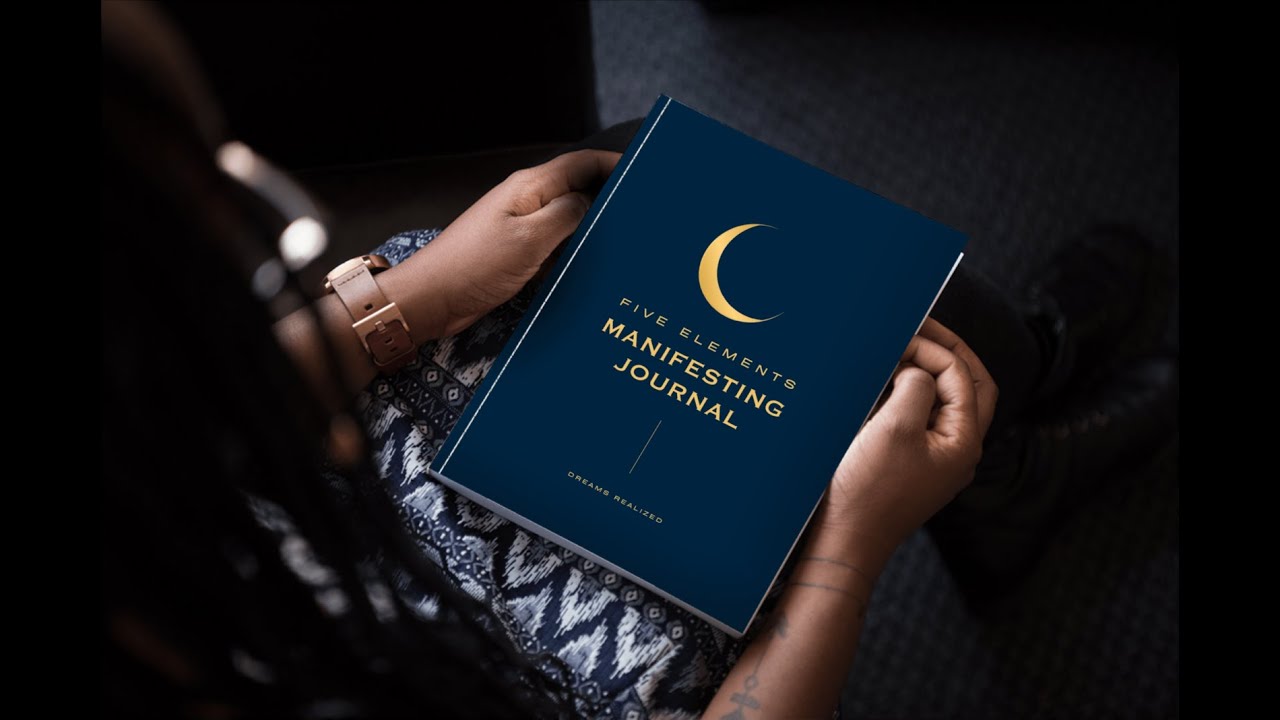
In this instructional video, Tisha Morris presents her Five Elements Method for goal setting, which aligns the creative process with the traditional Chinese elements—water, wood, fire, earth, and metal—and their associated yin/yang qualities and seasonal cycles. She explains that goals are essentially desires that require a shift in energetic momentum, likening change to a snowball that must be slowed, redirected, and re‑energized. The method proceeds through five phases: Water (the intangible ‘why’ or desire originating from spirit), Wood (planning and outlining the steps), Fire (willingness and execution of actions), Earth (considering the market or receptive side of the project), and Metal (adjustments, editing, and refinement). Morris ties each phase to natural metaphors, personal seasons, and the yin/yang dynamic, emphasizing that individuals may be in different elemental “seasons” that affect the type of goals they set. She introduces a Five Elements Quiz to help users identify their strongest and weakest elements, guiding where to focus attention. The accompanying journal provides prompts, space for sketches, and optional modalities such as tarot to tap into the water phase. Throughout, she offers concrete examples—writing a book, launching a business, health, relationships—to illustrate how the phases apply across domains, and stresses the importance of specific, measurable goals (SMART/SMAW). The process is presented as non‑linear, allowing users to loop back to earlier phases as needed, and is framed as a sustainable, holistic approach to manifesting goals without falling into mediocrity.
Chapters
And so failure to follow desire, to do what you want to do most, paves the way to mediocrity. Goals give us direction and purpose. They generate interest and enthusiasm in life. These goals give us— I love this— interest and enthusiasm, but paves the way, or paves the way really to your desires and what you want most. Otherwise, you know, life can easily become default into mediocrity, into what the world wants for you, whoever the world might be. And so perhaps the— as what's obviously the famous quote, it's not about the destination, it's about the journey. And following this, your path to desire is, I think, a great motivation to set goals. To not fall into the trap of mediocrity. And so when I use the words— when we use the word goal, goal, intention, desire, all of these are synonymous and interchangeable of whether we're setting goals, setting intentions, setting desires. But what they all have in common is change. We are making changes. And that's why goals, you know, his have a reputation, understand, um, the— that's actually very real here, the real reputation of being difficult. Change is difficult. And yes, we can talk about hardwiring and subconscious mind, which I did in the workshop before, but a really easy way to think about why change is difficult is because we think about it from an energetic component. We— whatever we're doing in our life has a trajectory, trajectory of energy that's, that has been building with momentum for. So where, whatever got you to where you are now is the byproduct of a lot of energy. So perhaps if you're in a job or have, or have had a business, all the energy and tensions and goals and desires that led to that is a momentum, like a snowball of energy And so when you're suddenly like, now I want to do this— same, same is true if you're in a marriage and it's been, you've been, you know, every year toasting the anniversary and like, I want to, I do, I do, I do, I do. And then suddenly you're like, I don't. Like making that change, or vice versa, you're single and all this momentum of, of singledom, whatever that might look like, and suddenly you want a relationship. It is, um, that snowball of energy has to start to slow down. It has to come to a stop, and then it has to make a turn. And so this is change. And if you just think about it from that energetic level, that's why change can be difficult. And so we have to set into motion a new trajectory, a new, uh, set of energy to get that new snowball going. All right. And that, in my opinion, is what goal setting is about, is getting that new snowball traction, energy, momentum to go in a different direction than it has been going to date. Some of the ingredients of getting that energy to go the direction you want is really making that decision inward and inner and from an inner place first before, before expecting changes to take place on the outer. All right. And that inner must come from a place of will and not just want. Okay. So wanting to make change is, is, is basically not taking action. And if you're not taking action, nothing's going to change. Whereas willing is actually taking the steps, the action steps. All right. Using the stereotypical example of weight loss. So I am— I want to lose weight versus I am willing to take the steps necessary to lose weight. Two very, very different statements. Okay. And so it has to start with a belief. So first you have to believe that you can lose weight. And then find an attitude, a feeling. I want to lose weight to feel more free in my body. And therefore, so what action? I am willing to exercise more or eat healthier or whatever the case is. That's when then you will find— see the outer results. All right, so really the key here is those action steps. And so this is— these are— this is the, um, the fire phase. Phase that we'll be going through here in a second, the fire phase of the Five Element Method. All right, the desire— that desire is the water element. And then in the wood phase, we put into our— we put— we list our act, what actions we're going to take. And then the willing, the fire, is actually doing those steps here. But they are the building blocks to our goal setting in the journal. And so, but my point in this showing you this slide is how they are based in nature. Okay, these 5 elements, they're not just these made-up concepts. They are very real. If you look outside your window, you can see them in action with just how plants grow, your garden produces fruit. It's a very real thing, this thing called the creative cycle. It's actually how I would see how we're all here at all is the creative process. And the 5 elements make up that creative process. And so the creative process, I'm using that, that very general word very specifically where we are creating. And so anything that we create that's sustainable, now we can create something that's kind of shoddy. And you, in which case it was most likely, skip some steps so we can create things. But then later, or it may not, just may not get off the ground at all. It may, may fizzle, so to speak. It may not have that momentum of energy to take through the end for, for, for the lack of one of these phases, steps, or phases., or it might kind of, um, fall apart later. And so we all have, um, a strength and a challenge in one of these elements personally. And so, um, in, in my book, and also it's included in the journal, is the 5 Elements Quiz, and you can take it and see where your kind of your strong element, uh, slash elements are versus where— well, show you— shows you how you rank among all 5. So you can see kind of, um, where your strengths and challenges lie in the creative process. And so this is information for you in your own personal creative process. And by creative process, I mean setting a goal, whatever it is, and accomplishing it or completing it with some sustainability. Okay, each of these 5 phases I have here listed yin or yang, and, and, or in Earth's case, it's a combination of, or it's half yin and half yang. You can— for those who are— everyone's heard the phrase yin and yang, whether you're familiar with it on a more, um, know that the five element— if yin and yang were parents, yin being the feminine and yang being the masculine, the five elements are their children. Okay, um, a very rudimentary way of describing it, but I think pretty effective at the same time. So they, um, have characteristics. Water and metal have characteristics from the feminine, and wood and fire have characteristics from the masculine. And so that's kind of the relationship of yin and yang to the 5 elements. Um, before we jump to the journal, I want to make a quick point that, um, as we can— you can think of these 5 elements, um, we're going to go through them as they show up in the creative process of manifesting your whole, but also you can think of the 5 elements in a bigger picture. Now they do make up the seasons that, that being on planet Earth we are a part of, with water being the winter, wood being the spring, fire being the summer, earth being fall with the equinox periods, and metal being late fall into early winter. How those seasons affect our energy is a very real thing. That being said, we also all have our individual seasons that may or may not follow the natural seasons. Okay, so you may be going through a wood phase of life, um, a fire phase of life, um, a water phase of life, uh, letting go, metal, metal being the starting of the, of, of decluttering and not just decluttering, but like, perhaps like Jennifer mentioned, her mom passing and having to deal with the house. That's a very metal into water phase. There are phases where you might not be on fire, okay? And then there are other times when you are. And so knowing, um, where you are in your big picture dao is always a nice reminder for yourself. And perhaps you're instead— maybe your goals are, if you're going through a more yin period of time, maybe your goals aren't going to be to, you know, have 120,000 followers on Instagram. Maybe it's to— your goal is to actually, um, some steps towards self-care and taking care of yourself. Okay, so our goals don't always have to be external. They can be of a more internal nature based on, um, what season of life you're in. Real quick, through the Five Elements Method, and this, this little graph is actually in the journal. I put it in there to kind of show you where you are in the 5 phases as they relate to your completion of your goal. So Phase 1 starts with the water phase, and this is the idea where the idea comes from. You sometimes we know where ideas come from and sometimes we don't, but it— but regardless, they always come from from the invisible realms— spirit, God, whatever. Um, it could come through a dream, it can come through a person saying, hey, you should think about doing this. Um, it could come just out of what we call thin air, right? This is the water phase. It's the phase closest to spirit. And if it's closest to spirit, you can imagine it's the most intangible of all phases. So we're going from the intangible to the tangible, making— turning thoughts into things. That was a Wayne Dyer book from quite a while ago. He's just describing another, another way to describe the 5 element, um, the 5 elements, the creative process, manifestation. These are all words that are synonymous. All right, and so we get our, our idea, and if there's enough juice behind it, then we want to manifest it, right? Um, so, and that idea could come from a longing. Perhaps you've been single for a while and you're ready to manifest a relationship, um, or maybe it comes from a very practical place. I, I do need to make more money, and so I'm going to manifest a new higher-paying job. Okay, so the idea needs to have— in order for that change, for that momentum, that snowball to take, take, um, take effect, it's going to need some energy behind it. So a desire, a longing, a, a mission, a calling— these, these words that come from Spirit, from purpose. Um, because in order to make that change, it's going to have to have spirit behind it. In some— and I'm using that word very general, general, uh, depending on your vernacular, um, because it's what gets us through to the end. It's what gets us through the fire phase, okay? The actual execution. Um, I use the Five Elements method, or use this methodology always in writing my books. And it's because it's usually a, you know, a good 2-year process, give or take. It takes that phase 1, that water, that idea, in order to get me through the 60,000 words, to get me through doing the proposal and shopping at gets me through a year and a half or however long it's been. And if it's not a strong enough idea for whatever reason, then it'll peter out. And that's okay. You know, that's information. You know, if you don't want it bad enough, then it's probably not gonna get that momentum behind it enough to take you to the finish line. And then we move to Phase 2. This is the plan, the wood. Think of a plant starting to grow. It is the, the, the director, the, the project manager starting to figure out what steps are going to be necessary to pull this off. I might be talking more of a business sense, but this really applies to really anything. Manifesting a relationship— what do I need to start to set my life up for another person to enter it in a harmonious way? You know, so, um, it's— for me, in my mind, um, it's easy to think about goals in context of more business-related things, but it definitely applies to anything, health, relationships, really anything. Once we get a plan in place, you can think of it as a skeleton. And as far as writing a book, it's the outline or also a timetable of what's a realistic timetable to meet your dates that you want to make to finish this up. And Phase 3 is actually the execution, the doingness of this, this goal, this idea, this goal, this desire. And that— this is where the rubber meets the road. Um, this is a lot where the, the sweat comes in. Um, a good— another good, um, instead of just writing a book, getting actually getting, getting that first draft out, getting those 60,000 words out. Um, another good example, you can also see, for any of you who are yoga, yoga people, this 5-element phase also follows a typical yoga, probably a workout series as well. But a warm-up, you start moving through the vinyasas, you hit the, the getting your heart rate up And then you start to cool down. You work on balance poses and you cool down. It's embedded in everything we do, from waking up to getting going, to hitting, uh, getting our stride, getting, taking afternoon rest, to starting to wind down for the end of the night. This, these phases are in everything, and that's why they, it's important to have them in anything that you're creating. So after we've kind of, um, really pounded out whatever we're creating, we move into the earth phase. And this is where we start to think about— I call it the market. Um, I guess that would also be the case if you were attracting a relationship. Um, you could call it the, the available market. Um, but in a business context, or again, going back to my book writing example, I'm starting to think about the, the other people involved. Um, if it's, uh, who's gonna be buying it, who's gonna be reading it, um, where am I gonna promote it, where am I gonna sell it? Perhaps you're starting a podcast. Um, really nailing down who your market is, what price points am I gonna set this product at. All of those things that involve the other. This is also a good time to take a pause in your creation as well. It needs to breathe and needs to rest. You need to step away. And then we move into the metal, the metal phase, and this is the adjustments where you make any adjustments you need to make. This might be after some market research, some feedback. After that rest, after you go back to it and realize, oh, you know what, I need to move chapter 3 over to chapter 1, um, or I need to rename this podcast because after doing my market research I see there's 3 others that have very similar names, um, the adjustments. And adjustments can also relate to trimming, trimming things down. It's the editing phase. Editing things out that are not needed to make it the best, the best it can be. And gardening, it's the, the making sure the dirt has the most nutrients. So it's not necessarily a phase that's going to make or break your, your creation. It's just going to make it better. And then sometimes in making it better is what gives it that sustainability to make it truly to the end. A lot of books stop at this phase or don't do that great in the market because the lack of this phase. And it's also a time to reassess all the other phases. So it's— the adjustments could be an adjustment to the wood phase of your plan. You realize now that it's going to take more time than you thought, or, you know, any adjustments that you need. And then from here you go after that, you see if you need to go back. For me, for my books, it's usually going back to the fire phase. I need to add more, more content. You can jump around to the phases as you need. There is a, there is somewhat of a linearness to it at the same time. But for me, it really helps seeing a big picture of where you are, particularly in these projects that are, you know, that are several months, if not several years long in the making. We do have— we all have all 5 of these elements, um, and, um, within us. Just some are more accessible, some are more dormant. Wherever we put our, um, wherever we put our attention energy go— where attention go— energy flows. Where attention goes, energy flows. So for example, a 3-point shooter practices 3-point shots all day long and gets really good at 3-point shots, but he— this other skill lies dormant because just there's not attention there. Um, and the point is we have access to all 5 of these from using the basketball analogy. You also have the skill to to, uh, to, to do layups or whatever the case is. Um, so when you— so thinking about it in terms of a tie, well, we have all 5 of these, um, and you have 2 that are— 2 are kind of tied for a strength. And as you take the quiz over time, your, your— those numbers will likely also change. It might be influenced by that, the seasons season of life that you're in, um, or just the mood you were in the day you took it. Um, maybe you're not feeling very social or something, and some of the questions had to do with sociability and being out, you know, how outgoing, so to speak, are you. And that changes depending on days, months, years, times of life. So it's not an exact science, since one of the— one answer And then I have the descriptions of the personality types in the book and also in the journal, and you can read through those and see if there's one that feels like it's more you than the other. And you can kind of use your own quizability to see what might be your strongest strength. And yet it also really doesn't matter also. As far as using these, using this information in your goals, you know that whatever those 2 elements get you tied first in are probably phases that are going to be kind of your favorite phases, so to speak, or you're the ones that you, you kind of jam, jam on. Then the ones that score lower, those are— you might put a little more attention on those because that might be where you've historically kind of gotten stuck or kind of gotten a little bit of a hiccup in whatever you're creating. I find how you do one thing is how you do everything. So even in like the way I've manifested a relationship, like a partner, is where I've gotten hung in the past is the same place I get hung up when I'm manifesting starting a podcast or whatever the case is. And that phase, you'll probably see some consistency. And so knowing that going in, when you get to that phase of the journaling, you might just put extra attention on it and maybe kind of double down or drill down on that, on that phase more so than the others that you scored higher in. So the first few pages are just kind of introductory materials. How to use a journal, the quiz, some explanation about the 5 elements and the 5 elements method. When we start to actually get to the hands, put things on paper, really it starts with the goal sheet. And so the journal is designed for 3 goals. And so you can, which might be 3 years, I know, like 1 goal a year, or I don't know if you want to do 3 goals at once, or so it's meant to be done at your own time over the time period that feels comfortable for you. Again, some goals are maybe a month or 2 in the, in the makings, whereas other goals might be a few years in the making. Um, but the pages are designed for you to take your goal through the Five Element Method for 3 goals. And so I would, um, for those who have your journal, if you haven't already, if you have a goal in mind, I would go ahead and write it down just because today is the summer solstice., and it's like, um, it's like a triple thousand New Moon, uh, energy today. So, um, I would take advantage of this opportunity and the fact that you got, uh, 13 other little fire elements cheering you on. Um, I'm not going to make you read it or anything like that, um, but if you have a goal in mind, go ahead and write it down, um, in your journal. And if you don't have your journal yet, you can jot it down on paper and then transcribe it into your journal later. Anytime you write a goal, you want to be as specific as possible. So this is kind of a light— you know, I have a life coaching certificate among many other certificates I've gained over the years. And one of those is the acronym for SMART goals. Specific, measurable, actionable. What's the R? Well, my goals were SMAW, I guess, instead of SMART. But anyway, you want to be as specific as possible. So instead of finishing my book this year, instead you would want to be more specific and say, My goal is to complete the first draft of my memoir by December 31st, 2023. The operative there is first draft. A book— finishing my book, that— does that mean getting it published? Does that mean having it all fully edited? That there's a lot of variation. And of course, I'm just using this as an example. And we want it to also be measurable, because as we go forward in our plan and execution, we always want to set ourselves up to win. All right. We don't want to set ourselves up to fail. Okay. Otherwise, that snowball just starts to melt. And we then— the frustration, that becomes its own little snowball that takes, takes, um, that gets energy and goes down, goes down a dark road. So go ahead and write down your goal if you haven't already. I, because I was able, because I was able to do whatever I wanted to in this project, meaning I didn't have a publisher, I threw in everything I do when I manifest, and using tarot cards is one of those things, and I could not resist. And so if you resonate with this, then high five. If you don't, high five too. Um, it's, it's, it's here if you want to use it, um, but it's not necessary, nor is it technically part of the Five Elements. But I've created this wonderful Five Element spread that I think is pretty cool, and so Um, again, this is part of that yin yang, using yin and yang energy. The yin being the creative, the spirit, the, the more inner workings. And, um, for me, tarot or divination cards or whatever, um, kind of, uh, I have a, I have a really good relationship with my cards, and so, um, they do seem like messages from spirit. And so that's part of that water phase for me. Um, for, for someone else, it could be a different modality, um, um, altogether. So I'm a big proponent of adding in any modalities into your process. Um, so I don't go into— I don't have in the journal the tarot deck and like what what the cards mean. That's something if you use them there, then you know what they mean. If you don't, then you can skip. And then I have space for your notes, for your, for what you've come up with. And so again, there's, there's space for all 3 goals in each of these steps. So I'm gonna skip on over to the water phase. So at the beginning of each of the phases, I again just kind of bring this page up to— for you to kind of integrate and think about your own energy with, um, with the phase that you're entering. And just as a reminder of, oh yeah, I was really low in water, I need to pay extra attention to this phase. I've also listed some activities relating to that particular element that you might think about incorporating in your life. And so I won't go through each of these prompts, but for each of the phases, I have the prompts that relate to that phase. And so in the water phase, for example, all the prompts are related to getting your, your dream, getting your idea, finding that finding that passion behind it, finding out your why. It's really the why— the water phase is your why phase. Okay. And again, anytime we put words on paper, it just makes it that much stronger. So I've— every time I do the process, I've done— I've done— I've gone through Actually in the journal, because I just got it printed, I have, I went through one big goal of mine from front to, or haven't gotten to the metal phase yet because I'm not there yet. But I had a lot of discoveries that I wasn't aware of in just journaling out these, this goal and following these prompts. And it's a goal that I've been, that's been in my head for a while to actually getting on paper and doing the tarot card spread and, and, um, doing the prompts, I discovered a lot of, um, new energy behind it and, and also blocks behind it as well, and action steps. Um, so I give you space to journal— or excuse me, to draw. Well, to give you space to journal, but also to sketch and draw, trying to use all parts of the brain to fire and get this energy going. And you don't have to be an award-winning drawer to— your dream, your goal is not reflective of how good of a drawer you are. And I mentioned in my little Substack that I sent out yesterday of how One of the homes that we ended up purchasing, I had sketched out it. I meant to pull that sketch out and like show you the comparison of how similar it was, and maybe my sketch was too rudimentary to like notice the difference, or it could have perhaps been any house, because my sketches are pretty sketchy. But it's using that, uh, right brain. And that— the right brain is the, the vision, the dreamer, the— all those yin qualities. Um, and so our manifesting our goals don't— doesn't just come from our analytical brain of here's the steps, here's what I need to do, check the box, check the box, check the box. It is a compilation of all parts of our brain, at least it ideally should be. As we move into the wood phase, this is where we start to make a plan. So I walk you through prompts for, for starting that plan, and a plan can be a business plan, a book outline, just jotting down notes. You know, if you want, for, it can, for an architect, I mean, like, this is like the stages of building a house, like the metaphorical and literal blueprint. This is the blueprint phase prototype. Anytime you create a product, you create a prototype, right? So there's the, uh, some wood prompts, and then we actually get into the fire phase. And you want to, you know, you want to take time to write down your execution, but you also want to execute, you know. So you want to be mindful that to write down your plan for execution, but also actually executing. So if you're— and really this is about your commitment. So you're really journaling your commitment to this idea to this goal, and also maybe even putting in some dates. Okay, I'm going to finish part 1 of my memoir by, um, July 31st. I'm going to finish part 2 by September 30th, and I'm going to finish part 3 by October 31st. I'm going to do editing, um, through the month of November. And then, uh, and then take a break. And so perhaps the fire phase is actual dates, um, for execution and really how, how much time am I willing to put into this idea, this project, this goal, this dream. Um, and this is a lot of feasibility, um, feasibility and getting real on your goal so that you can set yourself up to win. We reached the Earth phase, and you can think of this phase as I kind of described it a few minutes ago, is kind of thinking about the other, the market. You can also think of it as the receptive. So we've been putting a lot of energy, yang. The fire phase is the most yang, putting A lot of energy out, and now we want to think about what's going to come back to us. So there's some monetary, uh, if it's a business thing, that the monetary, um, I'm thinking about the practical money, the practical marketing, um, who is your market, who do I want to help, who is, who, what solution am I providing, who's my ideal customer. Um, who do I want to attract? So it's about, um, how are you bringing people to you? Um, and thinking about it from that perspective as opposed to the output of energy that you just put into, um, the fire phase. Um, it's also, like I mentioned, it's kind of a resting phase, uh, for that output of energy. In the 5 elements cycle. It's where yin and yang are equal. And actually, um, the equinox points are technically the earth phase in, um, as far as the seasons go. It's when day and night are 50/50. And so it's when we, we kind of put a pause on the, that yang momentum and take a moment to come to that still point of yin and yang before we start to move into the metal phase, which is when we start to move into the yin, the extraction, the, the, um, editing, the organizing, the finishing up. All right, metal, the adjustment. I think there was a— that was a movie, The Adjustment Bureau. Um, think of the metal element as the adjustment bureau. What changes do we need? What— not change— what adjustments do we need to make for this project to be the best it can be. So what do you need to eliminate or pare down? Um, what— how can I improve it? Um, and then what do I need to go back to? What other phases do I need to go back to? And that should take you to the end. So you might from there go back to the other phases Maybe, um, for those that you're just now starting a new goal today or of recent, you're probably— you're not going to be to the earth or metal phase yet, most likely. And so you'll come back to the journal when you, when you've— when you get to that step. Um, the metal phase usually won't come until definitely after that fire phase of where you've put an output to know what you need to adjust. So, so it's, it's a, it's a work, and the journal is a work in progress in real time. It's not meant to just slew it all out and be on your way. It's like coming back to as you need to work things out.
You know, I've even noticed that I can write my intentions down, put them in a drawer, and forget about them, and they still come true sometimes, but it's a lot longer process. I'm very interested in this process, and I understand this has a lot to do with focus. Um, do you have a quantity recommendation or anything like that?
I want all of your desires to manifest that are in your highest and best interest, so sky's the limit.
Buy more journals. Okay, thank you.
Um, yeah, you know, it's like that I guess your question really is saying, at what capacity do I have energy to live into all my dreams? And there's, you know, divine timing is also at play that I can't build into the journal. That's where the adjustments come in. You know, we're on a trajectory to do this and this and this, and then life turns upside down on you. And you might have to come back a year later and pick up on things. All right, well, thank you so much, and everyone take care and happy solstice, and thank you for joining me on the solstice.
Wafii.
More from Tisha


PSA for Authors Using AI #contentcreators #writers #authors #creativecontentcreator



THE SCREEN PLAYBOOK 🚀A Writer’s Guide to Negotiating Creative Rights Like a Pro





Unlocking Actor Potential with LA Acting Coach Murisa Harba on The Entertainment Business Podcast

Episode 19: Unraveling Foreign Rights in Publishing with Agent Marleen Seegers