NFTs: The Future is Here
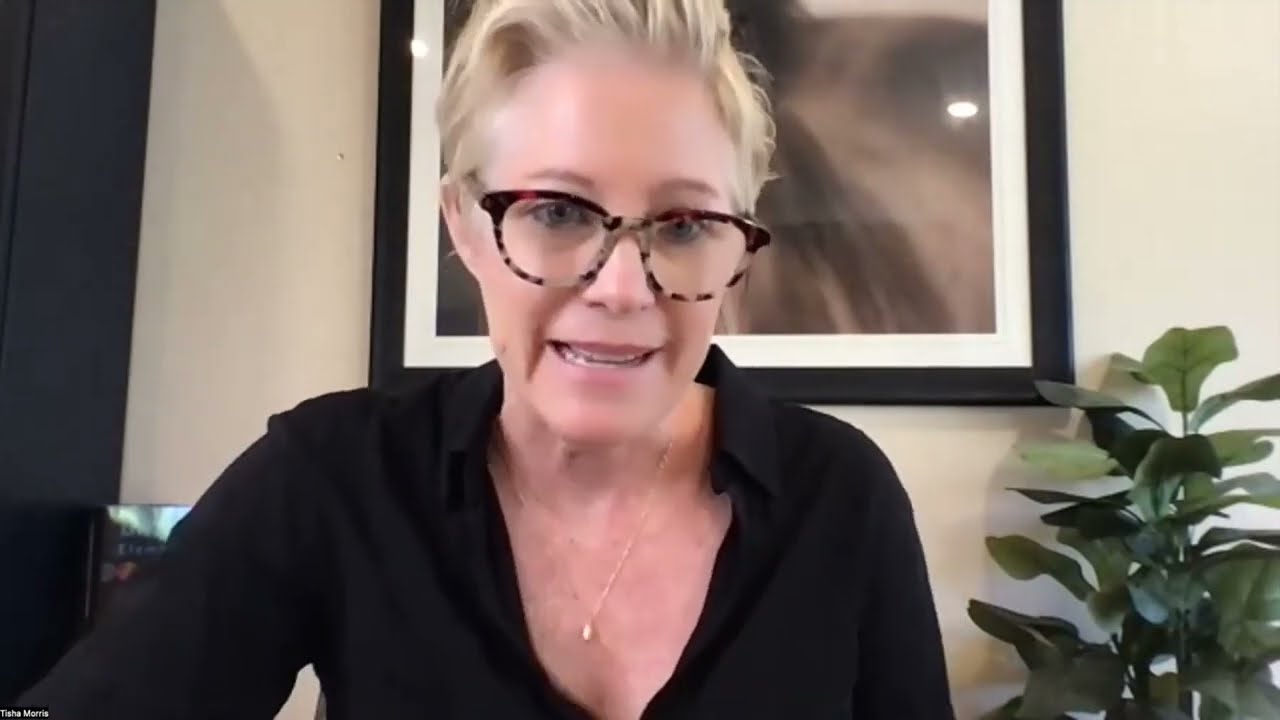
Tisha Morris explains NFTs as more than digital art, showing how they work as tickets and royalty-sharing tools for authors. She walks through buying crypto and setting up a wallet, then demonstrates her own NFT collection of five elemental tokens that unlock writing courses and book proposal materials for creators.
Chapters
So I want to thank, thank our group for being here and, uh, and being the early adopters, uh, to new technology. Um, but I think you'll see it's, it's so much bigger than, than what we think it is, or, or we're just beginning to see the glimpses of what this new world is going to be, and it's, it's very exciting. And so I want to share this with as many people as I can. And thanks for joining me on this ride, on this train, even if we're in the front. I like to be in the front of the train and not in the caboose personally. So, and also I'll show you my NFT collection that I have just released as well. So, and then next week will be my book, my official book launch, book, the actual paper, this thing called paper. Will be released next week. So I want to share my screen and get going with a little NFT action. NFT, the future is here, kind of here. It's a little bit here. We're getting to see little glimpses in the same way that artists and fashion— that's where things always start as far as change goes. And the same is true in the NFT world. So the reason why you're seeing so many NFTs as far as art and all this, like kind of non-utilitarian functions is because that's where change begins, is with the creative minds. And, and so, so I want to kind of introduce you to where that the art world is, is just the beginning of, of this new, of this new era. And soon the, um, the utility functions of NFTs will begin to rear their head. But for now, we're going to stick with art. And my, my drop is, is little art collections but with loaded with content So the basics of NFTs, I want to just for— I'm just going to start with the very, very basic idea of what these are. And some of you may have some familiarity with, with some of these, some of these words. So NFT stands for non-fungible token. Non-fungible. Fungible means it's fungible. Mean is like dollars, it's like bills. They're exchangeable. And if you have $1 bill, it's the same as any other dollar bill. Um, whereas non-fungible means it's unique. Um, excuse me, it's— yeah, that it's unique, and so you can't just multiply it, um, as much as you want. There's a uniqueness about it. So that's, you know, technically what an NFT is. Um, it's, it's, um, not anything— not a term you need to get hung up, hung up on. Um, and so each each NFT, each piece of art token, however you wanna think of it, it doesn't have to be art, but this token, this, this representation, it's really a representation of data. And the token itself could be art, it could be film, it could be music, but it also could just be a representation of unlock, of what we call unlockable content. So in the same way, when you get a ticket the old school ways of getting a ticket to go to a fair or getting a ticket to go to a music show. Now it's usually on your phone, on your, your, your wallet from Ticketmaster, and you show them your ticket to get into, to the festival. These tokens or these NFTs can do the same thing depending on what, what each seller is using their token for. Their NFT. So I'm using all these words interchangeably: token, NFT, data, art. For some, it's the actual art itself that the NFT is. For other things, such as a ticket, it represents you're getting into something. For, for the NFT, my NFT collection, I'll show you, it has unlockable content, and I'll show you what, what each NFT represents. Okay, so the ownership of these tokens, these NFTs, are recorded on this ledger system known as the blockchain. And so every purchase— so it's ledgered and stored on the blockchain upon purchase. Upon— if you— if I buy— if I were to buy that Ticketmaster ticket from you, it is automatically ledgered and stored on the blockchain. All right. And that really in and of itself is the, is the key. I mean, this is where my legal mind starts being like, you, everything is, is accounted for. And so if you start thinking about that in a bigger sense, like every exchange is accounted for, there's like a receipt, no more keeping receipts. So that is really the brilliance of, of And this is what we call blockchain technology. So this blockchain technology, and really, I mean, Bitcoin was the, was like the first notable use of this blockchain technology and accounting for every time Bitcoin is exchanged, it's ledgered on the blockchain, but it's really the blockchain technology that's the the brilliance behind what is now known as Web3. So this idea of Web3, we've been in Web2 for, for 20, 30 years. We started with Web1 with just, you know, chat rooms and some email. Web2 became shopping experiences and social experiences where it's interactive. Web3 is the utilization of this blockchain technology and because we have this blockchain technology, it takes out so many of the middlemen. Middlemen meaning giant companies such as even from, from the Amazons to the Twitters to where, but even like escrow companies. I mean, you can really get really geeked out on this a bit because when everything with— when all exchanges are ledgered and stored on the blockchain, it really, um, suddenly you don't need as many attorneys or, um, uh, filing systems as you once did. All right, so this, this really is the, the why this— why this is not going to be just a fad. This is going to be a new way of, of life, a new way of transacting a new way of doing business, a new way of doing everything as we know it. All right, so why buy an NFT? So as I mentioned, each, each NFT is kind of has its own hallmarks of why someone is selling an NFT. As I mentioned, it could be, it could represent a ticket to exclusive access to events and promotions. There are already, you know, these festival-type events are already using NFTs. And if you purchase, depending on which one you purchase, you get different access to different, you know, types of events going on at the event, VIP access and stuff like that. So we're already seeing this happening. And it's really no different than than buying, you know, getting the tickets and storing them on your, your wallet on your phone. Um, it's just the same thing. It's just the wallet is just— is going to be an official wallet, not just, um, Apple's version of the wallet on your phone, although I'm sure they're working on that. Um, it could be for digital art, like I said, for the art itself. And that's kind of where the NFTs started, or these, um, in a commercial sense. And, you know, I think we've all— I don't know, anyone's like me, like questioning why people would want to buy million-dollar digital art. Because I'm not a millionaire, billionaire, I can't answer that question. But there, you know, there are these online worlds in the Web3, such as Decentraland, in these places where people are buying property and like literally like plots of land. And it's like The whole Sims, you know, remember the, the game Sims game where you have people and families and houses and stuff? That's kind of how I think of some of these, these digitized worlds. But again, I'm not a gamer, so I don't really have a sense of that world. But there are people out there not like myself. I'm kind of more of a physical, tangible home person. But hey, um, you might want a nice million-dollar painting for your home in Decentraland. I don't know. Um, so that's a world I am— can't speak for, but perhaps, um, it exists. Um, and then for all aspects of entertainment— music, video, movies, gaming, and books— and the book areas an area of particular interest to me, and I'm pretty knowledgeable about books coming, becoming NFTs and where that's all going. And it's going to be huge. It will completely revolutionize the publishing industry, meaning NFT books will replace ebooks as we know them. So an ebook that you buy off of Amazon and you perhaps read on your Kindle or your, your Apple iPad, those will become NFTs. And you might— it's a little bit of semantics as far as, and yet it's not at the same time, because as you'll recall, I said that every transaction is ledgered on the blockchain. So when you buy an NFT book that's going to look just like an ebook and you'll be an NFT reader, just like your Kindle reader on your tablet, or however you read your ebooks. But you actually own that ebook. Did you know you don't own any of your ebooks? They're just on license, borrowed license from Amazon or Barnes Noble, wherever you bought your ebook from. You don't own that ebook, um, and they could just disappear tomorrow. I mean, this isn't a huge threat, this, you know, as far as like, um, world problems, that your ebooks might disappear. But the— it's a nuance that's important, um, and it's all about ownership. So this new Web3 world is going to be all about ownership and what you own and what you don't own. But more importantly, if I own this ebook— excuse me, NFT book, I can also sell it, resell it, um, on the NFT marketplace, which we can talk about. I mean, there's already tons of marketplaces out there, but it'll, you know, it's no different than the Amazons and the Etsy, and that it'll become the new Ebays and Etsy and all those types of places that we buy online. We'll be buying NFTs. But so, so I can sell. So if I buy, um, um, an NFT book, I can resell that NFT book. Why is that a big deal? Because every time that happens, the artist, the author, gets a royalty. So right now, if someone buys my used book at some used bookstore, I never— once it's bought once as an author, I never get royalties again from that, which I just get from the first sale. With NFT books, you will— the author will continue to get royalties every time that book is transacted. And so you might think, well, how in the world would you keep up with that? That's the brilliance of the blockchain technology. It keeps up with everything automatically. So when I release that NFT book in this what's called smart contract, I have it to where I get back 10 or whatever commission I set it to for every time that book is transacted or resold. And so that's an example that can also happen in music, movies, every— any kind of, any kind of sell, art of course as well, for sure. So it's a very artist-friendly, um, uh, Web3 is much more artist-friendly, um, than we've seen, than we've ever seen in technology. So that's what I mean by potential equities upon resale here. Um, and so we're moving from collectibles that we've seen, the Bored Ape Yacht Club and all these, these, uh, art going for selling for exorbitant prices. That's obviously cooled down considerably. But we're moving from, from these collectibles to more utility. And so even I would say reading books, I would qualify that as utility. But, but even it's good, we're going to be seeing this even like with mortgages, you know, your, your deed Your deed to your home is going to be in your, your wallet, and it's going to be ledgered on the blockchain. So everything as we know it will eventually be on the blockchain. So the benefits here, owner, like I said, ownership with less corporate involvement. So that, that is a a big, a big benefit. Authentication, these smart contracts built into the NFT that automatically stores the data. And so when we look at my NFT collection, I'll give you perhaps a better sense of some of this in real time. So the smart contract, which is basically anytime you mint an NFT— it's called minting, um, or, you know, releasing, dropping, however you want to think of it. Minting is, is the phrase that's used. Anytime, um, NFT is minted, um, whoever's minting it will embed in it, um, the information that goes with it— royalties, copyright information, and that's the information, the data that will go with it each time it's transacted. So if in that smart contract the author, for example, or the creator gets a 10% royalty every time it's transacted, that's built into the smart contract and that can never be reversed. So there's a very— there's a permanency about, about this that can can be a little scary at times. There's also an element of co-creation with this, and I'm thinking more in terms of, of, in the creative arts with books and music, there is a much, much more direct connection with the artists and the audience. These ideas of kind of create your own adventure with stories, is much, is very, is much easier in this Web3 world. And again, it takes a lot of the middlemen out of it. You know, in the publishing industry, like I said, that's what I can speak to the most. It really, as NFT books become more and more popular, publishing houses will have to will have to participate for sure, because otherwise there's a huge advantage as an author. There will be in the future once all this is more common to have your book as an NFT book. And if a traditional publisher is not going to participate in that process, then that's going to be a big a big reason to self-publish. So they'll, they'll get on board, um, for sure. Um, but an NFT book, like I was mentioning, like you'll read it like a Kindle, that's just now starting to happen. It's not, um, it's, it's not, uh, there's a couple companies, um, in beta mode right now doing it. So right now it's been more of creating NFTs that give the, the purchaser exclusive content that, that you don't get otherwise. And that's kind of how I've created my NFT collection. So just any confusion around what cryptocurrency is versus NFTs, what they both have in common is they both use this blockchain technology and they're both used in Web3. Cryptocurrency is more— is not just more, it is a currency just like dollars, but it's what's used in the Web3 world because it uses the blockchain technology. And so it's accounted for. And so that's— it's the currency that most is most compatible with this Web3 world. So those terms can oftentimes get confused, but it's really cryptocurrency that's used to purchase NFTs. Now, there's some sites that do allow you to use a credit card or use US dollars to purchase NFTs. It has to go through a lot of translations or, what am I saying, conversions to finally get to the cryptocurrency used for the NFT. So it's possible, but it has to go through some extra hoops, which means some extra fees. It's not any different really than, you know, trying to use US dollars to buy something in Singapore or something, you know, very similar to that. So it's best if you're doing transactions in NFT world to use their currency, right?, but it's not impossible to use US dollars, that old thing called US dollars. Um, so crypto, cryptocurrency is fungible, meaning it's not unique. You know, um, one Ethereum is the same as the next Ethereum, uh, and it, as I mentioned, it also uses the ledger, the blockchain, so everything is tracked. Um, and then let's see, anything I didn't point out here. Um, crypto is, is a, is a currency. NFTs are considered an asset, okay, like buying a piece of art. So use the crypto to buy the, the NFT art, so to speak, okay. Different marketplaces use different types of cryptocurrency for purchases. So, you know, Ethereum is definitely the most common, and then Ethereum uses some other cryptos to help. Right now, the biggest problem with crypto is the gas fees, and the crypto world is working tirelessly to try to cut down on what's called gas fees. So that segues into how to purchase an NFT. So, and so in a minute I'll take some questions, and I, and if anyone wants to, if anyone has made an NFT purchase, you can chime in on what your experience has been. But to make it as simple as possible, to buy NFTs, you'll, you'll need a crypto wallet. Okay.. And the most popular ones are MetaMask and Coinbase. There's a bunch of others. These two are the ones I can really speak to and the ones that I've used personally, but they are the two most common as well. And it's very, you know, a crypto wallet is, I don't know if any of you have like an Apple Wallet where you have keep all your cards and stuff in. A crypto wallet is similar, and in a minute I'll show you, I'll show you mine if it helps. Um, and so it's just, you know, I use the Coinbase, which is just an app, and it has, um, I keep a little crypto on hand, um, and it's, it's nothing that fancy. It's just, uh, it has my money I have in it and then what NFTs I have. And so in a minute I'll show you my NFT collection if that's interesting. Um, and so this is always on my wallet, you know, in my wallet, in my phone. So it's, it's nothing that mysterious. If, if it seems like very behind the curtain, it's really not that big of a deal or not that difficult. Um, now the security around these wallets are a little bit more robust than you may be used to with other um, app-based, um, things. But obviously that can be a good thing. Um, so, uh, okay, so let's— that's step one is having a crypto wallet. So, um, it's as easy as starting an app, and then you'll have to put some— you'll have to buy some crypto to put into your wallet. I mean, if you want any money in your wallet. Of course. And then from there, there are two main ways to buy NFTs. You can buy them off these independent project websites like the Bored Ape Yacht Club. You know, a lot of now celebrities and big names are having these NFT projects. Like Anthony Hopkins just had one, although I think his was on OpenSea, but for these big names that are putting a lot of money, then they're hosting these NFT marketplaces right on their website. But for the most part, usually, um, a platform is used, um, and OpenSea— you've probably heard of OpenSea, they're probably the most common— but there's a bunch of others, Rarible and, um, a lot of others. Um, OpenSea is kind of like I don't know, I would compare it to like eBay back in the day, you know. And then maybe, I mean, they might be, they might say them, they might think of themselves more like an Amazon. I don't know, but maybe eBay is like insulting. I don't know. But it's, it's just a big marketplace with a bunch of NFTs, like with millions and millions of them. So You can search, or, you know, usually it's because you know of an artist or you know someone, you know, you have a personal connection to an NFT you're going to purchase. Um, you just don't go shopping for weird art. Um, uh, I have, and it's, it's so strange. It's a strange world. Um, so, uh, anyway, so gas fees is the— as I said, it's kind of the Achilles heel right now in the NFT world because it adds chunk onto your purchase., and these fees, um, they're— the best way I heard it described, and they, they vary depending on how many people are using, um, or, um, making purchases. So it's very similar to when you're trying to get an Uber, and like in the high times the Uber price will be higher than in low times, and that's how these gas fees are going. So like probably right now is probably really high. Whereas like dinnertime, or, you know, I'm thinking US time zone as well, even though this is, you know, NFT world is international. But like late at night when people aren't really on the internet or shopping for NFTs, I don't know when that would be. I did find a chart and like of when the typical peak times are, and during the day is pretty peaky. Um, so, um, so once you've, uh, in a second we'll go to OpenSea and look at my collection, and it'll give you, show you an example of— I won't be able to purchase my own NFT, but you'll be able to see it's pretty, pretty easy. So as you're purchasing an NFT, let's say you're on OpenSea or whatever platform you're on, and you're you're, um, completing your purchase, it'll have— it'll connect with your phone, with your wallet on your phone to confirm your purchase. So everything is actually done through your phone. Um, I have the desktop wallet on my desktop, but it still like has me confirm through my phone kind of as a security, um, measure. So you'll need a— you'll need a phone. And yet you can't buy, NFTs on OpenSea on your phone. So a little bit of a— they haven't— don't have it, um, set up yet that way. So here are— so, so, um, alas, let me show you my NFTs. Um, so the— should be rotating— there we go. Um, I have an NFT for each of the elements. So my book Missing Element, Hidden Strength. So the reason I thought about— well, I wanted to learn about NFTs, and with anything, the best way to learn anything is just to do it yourself, you know, and go through the steps. And so that honestly was the big reason I did this. And this book just seemed really like a great opportunity because I already have these 5, like, tokens, so to speak, these that are just, you know, the whole book is about these 5 elements. And I was like, that would be cool to make make each of these 5 elements an NFT token. So that's the— that was the thinking behind, um, of where this all came from. And so with each of these NFTs and these tokens, these— you do get the piece of art. So it's— I mean, I'm kind of selling the art, but it's really about what the— what, what the unlockable content is. And so the water element um, is— I won't go through the, um, I'll wait for next— for the book launch to go through the energy behind each of the elements. But the water element is the first, um, if, if you could have a starting point in a circle, it would, um, it would be with the water element. And that's where inspiration and, and our ideas come from. And so with this token, your name gets— it's only a dollar, um, unfortunately the gas fees, um, make it a little bit more than a dollar, probably like $5. And that's in dollar— it's sold in Ethereum, but it translates to about a dollar. And so, and it gives you lifetime access to the DAO of Writing course. So if you were to— I'm gonna— okay, so here is the collection on OpenSea. And by the way, please post your questions, and I can't see them while I'm sharing the screen, but I'm gonna definitely look at your questions when I stop sharing my screen. Okay, so feel free to ask any questions. So here's the missing element collection, and here's the water element I was just showing you. And so it— the prices point 0.0008 Ethereum, which translates to $1.27. Um, when I posted this, um, the other day, I guess it was about a week ago, um, it was more like $1.01, and Ethereum's gone up since then, so now it's $1.27. Um, anyway, if you— I can't add to my cart because this is my collection, and even if I sign out, I can't I can't, I can't be a, um, I can't be a nobody because it will have me, um, confirm on my phone who I am. So it's hard to be anonymous, um, and do much, um, on OpenSea. Uh, so you would just add to your cart, and then when you check out, it would link to— it would have you confirm on your phone, um, that you're purchasing and And when you get to that step is when it'll show you the gas fee and you can decide whether you want to spend that or not. So here are the, the properties with each. And so once you purchase, once you purchase the NFT, it'll show up. You'll have an account with OpenSea, but you will then be able to link and see the unlockable content. Which in this case is a link to a private page on my website that gives you all the information and links that you need for your content. So that's that one. That one's very simple as far as what you get. If you want to practice buying an NFT, this would be like— if you just want to go through the steps, this would be a good one. I made Rachel do it, make sure it all worked. Uh, and it, it did. So, um, what happens when you— I'll show you my, um, wallet. Hope I'm totally not geeking, boring you guys out. Um, so here is my Coinbase wallet, and there's nothing private, too private about it. Um, and so it has— so here is my crypto that I— my money, basically. That I have in there. And then it has my— the NFTs that I purchased listed here. I bought this little meditative piece of art for a dollar just to practice because I couldn't buy my own. And then I could resell this if I wanted to. And it— I don't know, maybe this artist becomes well known, or maybe this image suddenly— you know, I could— I can— so anything in here I can resell. Um, uh, so there, that's the potential also with buying art or buying music and film, even books. I mean, if suddenly I become a big name, then you, um, my— these tokens are going to become more valuable. Um, I also have in here, um, my domain that I purchased tishamorris.eth. So that's going to be, um, arguably the next .com is .eth. We'll see, who knows. Uh, it's all kind of a gamble at this point. So that's what a, a wallet looks like. It's nothing overwhelming. Um, and so, you know, eventually we'll have, we'll have— this will be completely full of all kinds of contracts and your deed of trust and your auto title and all kinds of things in about 10 years. All right, for now it's weird art. Um, so I'll only show you the rest of my collection real quick and then I'll get your questions. Uh, all right. And again, this is an OpenSea.io, and if you don't have the actual URL, it's just— you can just search the missing or missing element collection and it'll come up. So the, the, the NFT I'm most excited about is this wood element of what it— the unlockable content that it has. So I've included with it um, an exclusive copy of my book proposal and query letter that I used to pitch the book to my publisher. So that full book proposal and query letter, you get, um, a copy of. And you also get an exclusive look at the inspirational cover design that I did for the book that my publisher did not select. And you'll get an exclusive look at my pitches and subtitles that I used Um, for, for Missing Elements. So basically it's all the, all the work, all the behind the scenes work that I did leading up to, um, getting this book published. So for writers, um, authors, this would be, I would think, of some of interest. Um, this is kind of my favorite one because this will be the only, I mean I mean, who knows, maybe next week I'll get a wild hair and be like, sell this in real time. That's not an NFT. But, um, for now, you— whoever buys one of these, um, is the only people who get to see that content. Uh, so right now it's set at $52. Again, the gas fees, like I said, this was— I started to put these prices a lot lower than I originally wanted to because with the gas fees, I didn't— I wanted to be, you know, affordable. So if you're interested in buying one, I would probably wait till, um, maybe later in the evening perhaps. Um, the fire element has a book coaching session with me, also access to the writing course and an ebook on crafting a nonfiction book proposal. So this is for book— for writers, authors as well. And then the Earth element is all about working in your home, getting grounded in your space. And so it comes with, um, the Feng Shui DIY course, the Clutter Intervention course, and downloads of my previous books, Clutter Intervention and Mind Body Home. So when you purchase this NFT, the unlockable content will be a link to a page on my website that gives you links and access to all of these downloads. Okay, so this one I've probably— I haven't actually minted it yet, so I don't— I'm going to do that probably tomorrow, today or tomorrow. And so I don't have the price yet, but it'll, it'll be somewhat— it'll be reasonable. It's going to be less than if you'd paid for these things, you know, on your own. And the metal element— for anyone who is thinking about or wanting to get a Feng Shui certification, this is quite a deal. My course is usually $1,200, and with this NFT, it's going to be much lower. Um, again, I haven't minted this one yet, and so I don't have the exact price, but it will be considerably less than if you were to purchase it, um, if you were to purchase it normal. So you get an early NFT adopter discount is basically the point here. All right, um, and that's it, you know, theoretically, for what it's worth, that would be resellable in the future. All right, so it's an investment is the way I look at it. All right, so thank you for, uh, for, for your for staying, staying with me. Um, uh, okay, thanks, Rachel. Um, and Bonnie will see the replay. Awesome. Um, any— um, and feel free to unmute yourself if, if asking a question, if you're driving, um, and can't type. Um, but I'd love to hear your your thoughts or questions or concerns or excitement or whatever, whatever you might be experiencing. And for those just wanting to— interested in the book itself, next Monday, November 7th, I'm doing my online book launch, and, um, I'll be giving away copies, um, of my book. And, um, I'll see what other prizes I can put together. But that'll be November 7th at 12 noon, same time as this, and it'll be live on Instagram, on my Instagram feed and Facebook feed. I have a couple of special guests as well. Who'll be joining me. And that's when the, the actual book celebration in, in our 3D paper world will take place. And if you haven't pre-ordered, um, I still have a special on my website. If you pre-order, you get, you get the Tao of Writing course for free. It's really an awesome course. So if you're, if you're, um, writing a book or wanting to write a book, it takes you through all the 5 elements steps, um, from idea to completion of your book. You get an email every week to try to keep you on course, um, but it uses the Five Elements as the basis for writing a book. It can also be applied really to any project. The, the Five Elements is the creative process, all right, from idea to completion. It is the template that nature has given us for the creative process. And so that course takes you through that, um, that cycle, or however you want to think of it, the circle, the circle of life.
More from Tisha


PSA for Authors Using AI #contentcreators #writers #authors #creativecontentcreator



THE SCREEN PLAYBOOK 🚀A Writer’s Guide to Negotiating Creative Rights Like a Pro





Unlocking Actor Potential with LA Acting Coach Murisa Harba on The Entertainment Business Podcast

Episode 19: Unraveling Foreign Rights in Publishing with Agent Marleen Seegers