Awesome-Izing Your Podcast Using Secrets of Radio to Create Driveway Moments
Tod Maffin teaches the anecdote-reflection model from This American Life to create "driveway moments" that keep listeners in their cars. Speak to one person through earbuds, keep your breathing in, and alternate concrete stories with universal truths. Seven rules: lean close, surface truth, let subjects open up, carry a recorder, use music sparingly.
Chapters
He is a well-known podcaster, storyteller, and just be prepared to be blown away. No, don't say that shit, man. Okay, thank you. Man, like, don't oversell it. So, okay, so thank you for your patience, by the way. Sorry about the technical difficulties. So what we're going to do is it is now 4 o'clock, so we're going to go from 4 o'clock to 8:30. That's how we'll solve this little problem we have. So we'll go until about 4:45 or so. This is usually an hour and a half presentation, so I'm going to be speaking really fast. So if you have questions, I would encourage you to hang on to them to the end, and then we'll handle it from there. We may actually kind of push a little bit more closer to 5 o'clock. So first of all, my apologies for those of you who came because of my tweet 45 minutes ago that promised free beer. There is, in fact, no preview. I will not be offended. Yeah, exactly. You're a fraud!
Everyone's leaving.
So, um, I used to, about 400 years ago, I used to be a, uh, what they called a "speakeasy backfill host," which meant that I would fill in for other hosts when they were sick. Um, they were interested in stuff. I used to have a documentary show called "Real Life Chronicles." Uh, and from podcasting, I used to have a podcast called the "How to Do Stuff Podcast." One of the first in Canada. Actually, I think one of the first in the world. I think we were— I think it was number 11 in the world or something like that. But anyway, more important than the number is that when Steve Jobs launched iTunes 4.7, which the nerds here will remember was the launch of podcasting, if you look really, really closely on stage, I was at the moment, I was one of the top 10 podcasts in the world. That is, as I said, because there were only 11 podcasts in the world. Reasonably easy target to hit. So anyway, I don't have, to be perfectly frank, I don't have a lot of podcast cred these days. I haven't put out a podcast in a long time. I kind of have one at todbits.com, T-O-D-bits, but I am going to be reviving it shortly. And also, I'm going to be— there are lots of different ways to tell a story. I'm going to be showing you basically one model, my favorite model. Which sometimes is known as the anecdote-reflection model. And it's a really powerful way of making stories in podcasts or radio shows come alive. If you listen to This American Life, you will recognize it. It is the model that they use. But to understand first how to adapt the way you tell your stories in podcasts, I think it's kind of instructive to look at the way that technology has changed the way audio is presented over time. Performance media started with theater, right? When you think about it, I mean, really before that, it started in stadiums with thousands of people. And then we got smart and we put people in a closed in a closed room, and we presented audio to them in groups of a few hundred, you know, maybe 800 or 900 people at a time. And those people, when you think about how their relationship to the audio was, those people sat quite far away from the audio source, right? They sat 20 feet, 100 feet, 200 feet away or something like that. And so back then, if you were an audio performer, as you are right now if you have a podcast, but back then the only real audio performers were actors and musicians and singers, right? And so if you were a singer, your role was to belt out the song. That was the only kind of singing that really existed back in the day. And a great example of this style was Ethel Merman. You hear that? Right? When you listen to her belt it out, She's literally yelling as she sings, right? But that's the way it was. And radio came on the scene, and radio changed the way that audio performance was done. Radio changed it in two ways. For one thing, instead of it being in a room full of people, now you're in a room with your family and maybe 6 or 8 people in the room together. And so listening became a family affair. So suddenly the audience shrank from stadiums of thousands to theaters of hundreds to radio, large family radio, old school, which was groups of, you know, 4 to 8 to 9 people. But more interestingly, the way I thought, more interestingly to me, is that the kind of audio art and the kind of audio that was presented had to change as well. It was a really good example of how the environment or the technology changed the way that audio is produced. And in this way, for one thing, the loud singers of the day, the Ethel Mermers, could not sing that loud, couldn't laugh that loud on radio because it would blow the transistors out. So a new style of singing had to be invented, and the performers who couldn't really adapt themselves from the belting-it-out style to this new softer style really lost their way. You saw a lot of them kind of fall off the map. It's because they couldn't adapt to the way that the audio technology of the day had changed. This is a singer from Newark, New Jersey named Vaughn DeLuth. And she gained a small bit of fame in the 1920s because she had invented a softer side of singing that became known as crooning. Tonight I'm downhearted, although we have parted, but I love you and I'll always wait. This is a really rare— it's hard to find audio recordings of this. This is a very rare recording of her song. And you can hear the real difference in style, right, between theater-style performance and radio-style performance. And I don't know if there are any Elvis fans, but she did the first "Are You Lonesome Tonight?" So this gave way to the Bing Crosbys of the world and all the crooners that were very popular and still much popular. And it was a much more intimate sound, and that was part of the change of how— it was part of how we consumed radio that changed it. Then along came the TV, and with it, shifting demographics. Now, again, watch this, what's happening, right? The audience size continues to get smaller. So now family groups, family units are 3, maybe 2 or 3 people. And so the audience shrink. I don't mean the global audience, I mean literally the people who are listening at the same time in the same room began to shrink. It went from thousands of people to hundreds, to a large family, to a small family in front of the TV. And television brought with it a new sense of intimacy. You felt like you could peer into people's lives. You know, soap operas were the best at that. And I don't know if you're following the news, but soap operas are getting cancelled left, right, and centre, like they're dropping out. And even if it was only through the device or something like that, it was very— television became very intimate. And video did not kill the radio star. Radio eventually stayed strong, but it changed. And most radio listening today in North America is done in the car, or if it's not in the car, you're doing something else. You're vacuuming, you're taking the kids to soccer or something like that. And so this was the first time that radio moved from the foreground to the background. It became background listening. It became just something in the environment. People didn't make a point to— sometimes in public radio they call it appointment listening. And the most— and radio was and still is to this day, it began to get down to one person, audiences of one, it got consumed by one, or consumed one person at a time. And the most Successful people like the Peter Zoskys of the world really understood this when they spoke. They spoke with a voice if you're talking to one person. When I started as a host at CBC, one of the broadcasters took me aside and laid out all the things I was doing wrong, for which I was grateful, and apparently one of the things I was saying was, "Hey everyone." I was referring to the audience as everyone. Okay, alright everyone, we'll be back in a few minutes. He said, "There is no everyone." In radio, and this is true of podcasting, you're talking to one person. Person. That's it. And so among radio producers, you'll sometimes hear this thing where they'll say, "Yeah, that documentary's really got it," or, "There's something about it that I don't like, but I can't quite put my finger on it." And I'm going to tell you what "it" is, and hopefully it's something you can build into your podcast. If you remember nothing else, or if the room sound system crashes 30 seconds from now, you'll remember that "it" The secret to making a radio show or a podcast sound awesome is intimacy.
Now what?
Thank you.
Cool.
All right. I'm watching cartoons now at the same time here. So this blue line represents the audience shrinking, right? So this is the size of the audience. And I would argue that podcasts are even more intimate than radio because With radio, you're still in a car with a speaker. You're still kind of distanced yourself away from it. How do most people listen to podcasts these days, or anything on the iPod? Earbuds. Like, like, millimeters, less than millimeters away from your eardrums. It is the most intimate medium possible. And yet, so many people in podcasts forget that they're talking to one person and speak as if they're talking to someone who's at the other end of the speaker or something like this. This is where it lives. Remember, it's foreground listening. People who listen to podcasts are listening to it differently than they listen to the radio. They're listening really, really close up. They're an audience of one, and they're actively listening to your podcast. People choose to subscribe. People choose to set time apart to listen to what you produce, as opposed to much radio, which is just kind of on, sort of out there. And so unfortunately, a lot of podcast hosts that I hear go on, you know, I call them ramblecasts. I, like, don't get me wrong, I love Neil LaPorte's stuff, but some of his podcasts are like an hour and a half and 2 hours long, and they just kind of go all over the map. Some people like that, but it's not very intimate. So what I want to present are 7 steps to putting it, that is to say intimacy, into your podcast. And like, uh, in J-school, professor told me once, there are no rules. But here are some of them. By the way, I'm going to be playing a lot of tape in the next 4 hours. So it's okay to close your eyes. I won't be offended. There's this great radio conference that happens in the US for public radio and independent producers called Third Coast. And you walk into these rooms and people are like— if it's the first time you're in there, people are lying on the floor, their eyes are closed, and it looks like someone's let poisonous gas into the room and everyone's dead. Like, it's bizarre. Feel free to close your eyes. In fact, I would kind of encourage it when the tape comes on, because you'll get a much richer sense of the experience. Alright, first. So here's an example of intimacy. This is back in the 1970s. There was this DJ named, uh, I can never pronounce this, Vince Sclesa, Sclesa, Sclesa, anyway. FM radio stations back in the '70s were much more sort of, they were kind of the Wild West. They were a lot more vibrant. They were kind of the way university stations, college stations sound today. A lot of risks were taken on them. They were kind of considered to be the new frontier. And so they were a lot more casual, they were a lot more intimate as a result. So I'm going to play a little bit of tape, about 30 seconds. This happens right after the death of Robert Palmer. And he's doing this sort of tribute to Robert Palmer and some other things. But what I want you to do is I want you to forget about what he's saying. Don't worry about the words. I want you to listen to— and in fact what he's saying is completely banal— but I want you to listen to how he's saying it. And how intimate it feels.
This was recorded in Nassau with a local steel drum player named Bill Bonaparte, and two kit drummers, and a guy playing serrated knife blades. The lyric is self-explanatory, Pride being the first that they sing. Olivia Newton-John's Let's Get Physical was around at the time, and that always amused the hell out of me, part of the lyric if you listen. Closely is "hejliggningen" is "what you say." So, Robert Palmer. And "Bad Case of Loving You" before that, Dr. Doctor from 1980. Yeah, and that's from the album. "Bad Case of Loving You" is from— we'll check.
Hold on, please.
He literally like left the microphone, he's going searching through LPs, right? So, who cares what he says? He just draws you in, right? He's got that real— it sounds like you're sitting there right with him. And when you're doing your podcast, you've got to pretend that you're broadcasting to one single person. Do not take the usual radio advice, picture them in their underwear, it'll throw you off. Alan gave that advice, it's a bad example. But I always thought, like, with this guy especially, like, if you cut up all of his words and just mix them all around, you'd still want to listen to him. Because he's just somehow compelling. Okay, Ira Glass. Lots of people are fans of Ira. He is the host of This American Life in the US. Great storyteller. And what I want you to do is I want you to do— and first of all, listen how close he is to the microphone. I'm going to talk a lot about real kind of tactical, practical stuff. When you're speaking to people, do not speak from a microphone that is this far away. Get right into the microphone and lower your voice. Like as if you're leaning in to tell someone a secret. You know? And you know when you listen to that, like if I hadn't said all that, if I just— all of a sudden started and I was talking at this volume and I said, "You know what, actually, let me start with this." Everyone would pay attention. Even if you were talking, you'd be like, "Oh, what the hell's going on over there?" Right? So there's something about leaning in, there's something about being really close to the microphone. So, and he's also painting a real visual picture in your head around what he's saying. So again, listen to the way he's talking here.
Dear friend, it's true. If there's even the slightest possibility that you'll have to use your gun, someday for self-defense, this is going to be the most important letter you've ever read. I'm not kidding. So please, do yourself a favor. Go to someplace quiet, close the door, and tell everyone not to disturb you for the next 5 or 10 minutes.
Done? Good.
I'm only asking that you do this because I want you to carefully absorb and consider what I'm about to share with you. It really could save your life someday. Well, this is an open letter from this issue of American Handgunner magazine. It's actually written by Ben Cooley, who's described as somebody with 13 years of experience in counting.
So, um, you can hear it, right? You can hear a difference in there, can't you? And what I like about that is even though he'll sometimes— he'll read emails, but he'll get a piece of paper and he'll crinkle it while he's reading. And I've met Ira a couple of times, and there is nothing on the piece of paper that he's holding. It's just a blank piece of paper, but there's something about crinkling a piece. Like, I got this letter, and you crinkle the paper, and it puts a visual image in people's mind. Radio and podcasting— this is going to sound very contradictory— but they are the most visual medium possible, because you, with very little effort, can create incredible images in the minds. Part of why I love radio is you can create these images. And you get that sense that he's not talking to everyone, that he's talking to just you. How many of you are fans of Stuart MacLean? Stuart MacLean is an example of how not to do this, in my mind. Stuart MacLean is a master storyteller, don't get me wrong, in everything. He's got lots of everything that we as adults want, right? A bedtime story, which is great. But I want you to listen to the difference now between the last two people you heard and Stuart MacLean. Morley got Leslie's phone call. Early on a Saturday morning. I'm getting married, said Leslie. Well, that woke Morley up. Morley had been sitting at the kitchen table staring— See, he's projecting his stories, right? You feel like he's performing his work as opposed to telling you a story. And then she paused. To, um, uh— she was madly hunting for a name. To, uh, Joe, she said tentatively. So, remember, lean into the microphone, be intimate. That's really critical to capturing people's attention. Sometimes people used to ask me when I was producing freelancers, like, "I don't think I've got a good enough voice. I've got the story, but I think you should get someone else to voice it." And the only time I say the voice isn't right for radio is when you have an accent that makes it difficult to understand what you're saying. It doesn't matter how goofy your voice sounds. If you can be understood, in fact, the goofier the voice, the better. I am in love with a radio freelancer in the US named Sarah Vowell. Sarah Vowell is 5'1", she's a little gothic, and she's curvy, and she has short black hair, and she's super smart, and she can have my children anytime she wants. But when I first heard Sarah Vowell talk, I thought everyone is going to think she shouldn't be on the radio, and you'll hear why when I play her. It doesn't sound second. And it's that reason why she is perfect to be on the radio or to have a podcast. And you also get the sense that even though you know that she's reading, it sounds like she's just talking to you back and forth, like she's telling you a story. So in this case, you can and should listen to the words as well as her performance of it.
If you were passing by the house where I grew up during my teenage years and it happened to be before before Election Day, he wouldn't have even needed to come inside to see that it was a house divided. You could just look at the Democratic campaign poster in the upstairs window and the Republican one in the downstairs window and see our home for the Civil War battleground it was. I'm not saying who was the Democrat and who was the Republican, my father or I, but I will tell you that I am not the one who plastered the family truck with National Rifle Association association stickers, that I have never subscribed to guns and ammo, and that hunter's orange was never my color. About the only thing my father and I agree on is the Constitution, though I'm partial to the First Amendment while he's always favored the Second. I am a gunsmith's daughter. In our house, or as I like to call it, the United States of Firearms, guns were everywhere. The so-called pretty ones hanging on the wall, Dad's client's fixer-uppers leaning into corners, an entire—
Okay, you get the idea. So when you first hear her, you think, she's 10, but she's got a great way of telling a story. And because it's a unique voice, it actually, I think it really works as well. So that's the first of 7 steps. Intimacy is what makes it. Second thing is that it breathes. A lot of people when they first get into radio or when they first go into a podcast, they start, they get a hold of these digital audio editing tools and you can, if you want to, you can cut people's breaths out and you can cut their, some people are lip smackers. Well, Adam, Adam, I'll tell you this, right? And so, and I used to when I first started, I would get there and like, "Oh, another lip smack," and I'd try and cut it out or I'd cut out the ums and the ahs. And don't! This is the way we speak. Tay Zonday, anyone know who Tay Zonday is? Tay Zonday, Chocolate Rain? He got famous because he put a thing at the bottom that said, "I move away from the mic to breathe in." And he actually did, "Huh." And then all of the parodies had things like that. "I move away from my lunch to not get fat." It was this whole big thing. But I would say do the exact opposite of what Tay says. Lean into the mic and breathe. Breathing is part of what we do. So I'm going to play a little bit of tape. This is from Minnesota Public Radio. The story, the backstory on this briefly, it's a woman who is an alcoholic. She had been in recovery for many years. She relapsed. She had been on the radio earlier talking about her recovery and how strong she was doing. Then she relapsed, and the producer brought her back into the studio as kind of a follow-up. And what I want you to pay attention to here are the moments between the words says more than her words could.
We're sitting here in the radio station where I work just a couple months after you read the last letter for the story we did. And you've relapsed and gotten arrested again for drunk driving and will be jailed again, if not prison.
What happened?
Um, I don't know, that's a loaded question because there's a lot of things that happened. Um, I just kind of let go on my vigilance, I think. My heart was hurting inside and I didn't open up and talk to anybody about it. I didn't share it with anybody because I felt ashamed.
What do you mean your heart was hurting?
Why?
Just 'cause.
I'm not gonna tell you.
'Cause. It just was.
I don't know.
I don't know, Mark.
Okay, so now, um, what happens?
Um, I do the court thing again. I'm facing a lot of time, prison time. I don't know what's gonna happen. Everything's up in the air. There's life after jail. I'll still be young when I get out. I don't know what's gonna happen. Everything's up in the air.
The end of this story was celebrating kind of the fact that you made it, and I mean, at the same time that story was running on the radio, you were already drinking again.
I didn't make it. Yeah, it was a sick feeling.
What was it? I mean, did they destroy a man you knew inside?
Yeah, sick. That's what this stuff— I mean, you can't, you can't hold stuff like that inside. It eats at you.
I don't know, Mark. Can you imagine what would have happened if you'd edited all those breaths out? All those "ums," all those— I don't know, Mark. It wouldn't have told the story. The thing about breathing is that breath is emotional punctuation. I deliberately wrote that like that so it was easily tweetable. It fits. No, I'm just kidding. Breath is emotional punctuation. Breath is—
breath support.
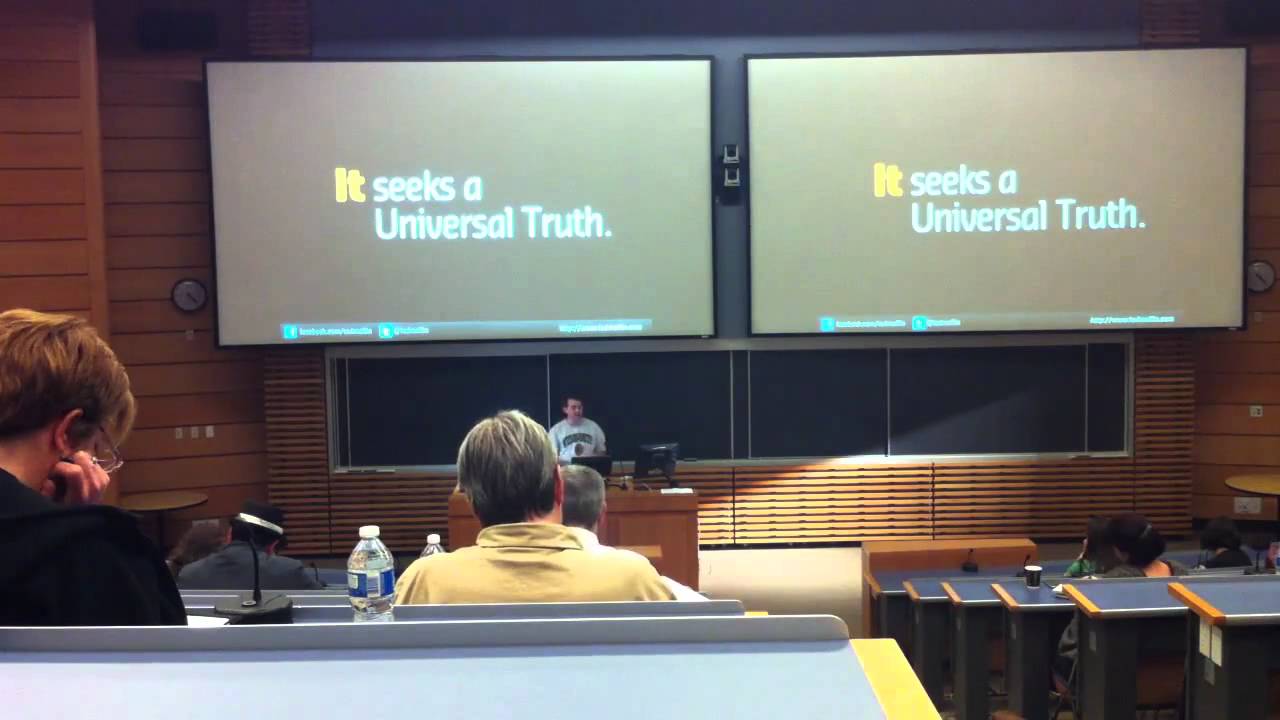
We don't have punctuation in radio, right? So we've got to invent these constructs that help us get to punctuation. In a moment I'll talk about how music can be used break up things into scenes because we don't have scenes. We don't have visual cues like television or movies do. You know, movie, at the end of a scene, it kind of fades to black. We don't have a fade to black in radio. All we've got is audio. All we've got is breath. All we've got is music. All we've got is silence. And silence, breath, the moments between the words can be the most powerful words that exist. So don't inhale them. So don't take out the inhales, rather. Third, it seeks a universal truth. Good stories illustrate something that we all know to be true and that we all kind of say, "Ah, yeah, that's right." And simple stories work really good as well. So if you're doing a podcast and you're talking to someone and it's a good idea to ask them, "Well, what did you learn from that? What did you kind of get out of that? How are you going to apply that to your life?" It just elevates the piece to such an incredible piece. And when you think about stand-up comics, the things that you laugh at the most with stand-up comics aren't actually the jokes. They're the things that are just really true. The best stand-up comics are the ones who all they do is they tell you things about the world that are true and you kill yourself laughing. One of my favorites is Seinfeld. He's talking about airport bathrooms. And he says, "Can't we just get the regular twist 'em on, twist 'em off faucets?" What do they think we're going to do? Turn on the water and run out and push each other into the bushes going, "Water! Water!" And it's true. It's like, of course he's right.
It's so true.
Why can't we just have the twist 'em on, twist 'em off faucets instead of these stupid little, "Oh, I got to get my hands wet." "Oh, I got to put my hands under here." And all that kind of stuff. So it's true. It really resonates. So a piece has it, or a podcast or a story has it, when a universal truth resonates with your listeners. So I'm going to play a little bit of a piece from This American Life. The show, if you want to listen to the whole show, is called Christmas in Commerce. You can listen to all these shows for free on their website, by the way, thislife.org. So I just want to set up a little bit of— or play a little bit of the tape. And what I want you to listen to here is you're going to hear a little bit of the story, and then you're going to hear him talk a bit about what the story means, what the truth is. And then he'll come back to the story, and then he'll deliver more of the universal truth, and it's that back and forth that's powerful.
You know that saying, "You can really tell who somebody is in a crisis"? You can really tell at Christmas, too. That's what is Christmas, more than any other day in the American year. It's a day when we're all handed the same stage props: the same tree, the presents, the meal, the relatives, and all the same expectations. And then we all try to create more or less the same kind of day. It's like hundreds of millions of people all set to work doing exactly the same art project. Not just any art project, but a very high-stakes art project. An art project everybody cares about getting right. And in that setting, the choices people make never seem clearer. In one place, you can witness this human drama at work. Is it one of the epicenters of modern Christmas? The world's biggest toy store, Toys 'R' Us. Closing time, Christmas Eve. The still story is filled with parents making one last run to the goal line of a perfect Christmas. Mark Nemes and his teenage son Ricky are walking the length of the store, walking literally as quickly as men can walk without actually breaking into a run. Their bodies are tense. They spot a salesgirl.
You know where these twins dolls are? Twins for like $70?
They're directed into aisle 12C. It is stacked high with dolls. They need to spend as much time. Where are the twin dolls? There's Heart to Heart Baby whose heart really beats. There's Poseable Sleepy Soft Skin. There's Softina the Miracle Soft Foam Doll. There's Baby Babylock, there's Danielle's Fashion Ensemble, there's Baby Braids, the Pretty Huggable Fashion Hair Doll, there's Baby Tommy—
Don't discount how noticing tiny little details like that and putting them into the story is actually really funny.
—themselves in the search for a doll called the Sparkle Doll, suggests 11C. All the dolls in 11C, for some reason, have names that suggest the names of starlets in adult films, says Shy Sherry. Baby Shivers, Howapoop twins, Previous Playmate, Itty Attachable Accessories. Standing there, I realized, of course their names are like names from adult films. Where else do you find this kind of hyped-up, packaged, theatrical curler snips?
So let's just sort of for a moment diarize all of the universal truths there, you know? The names of baby dolls sound like adult film stars. That's kind of true if you think about it. Why do they? Well, because it matches the whole hyper-plasticized world that they live in. Same with adult film stars, or same with adult films. Christmas is this project where we're all handed the same tools and we all try and create the same thing. Christmas is one big art project. They're all truths. He's a very clever writer and he writes it that way, but really all he's doing, if you'll notice the rhythm of what's happening there, great storytellers do this naturally, is they go anecdote to reflection. Anecdote to reflection. They tell you what happened. This happened, then this happened, then this happened, then they'll stop. They'll come out of the anecdote for a moment. Imagine that you're— imagine you're on an operating table and you just died. You know, people say, "I could see myself looking down on myself." Imagine that's happening. You're in the moment, and then for a moment you stop the anecdote progression, you stop the narrative, you come out of it, you look down on the story, and you tell everyone what that part of the story means. What does this mean? It means that we're all creating the same art project. Then, you go back into the anecdote. And you deliver more of the story. And then you come out and you talk a little bit about that. And this model called anecdote-reflection is incredibly powerful. And people who can tell stories well, you'll hear that, are just— they just do it naturally. So, a really easy— sorry. So a really easy way to get at the universal truth if you're talking to someone, interviewing someone in your podcast, Ask them, "So, what did you learn from that?" Sometimes I've even said, "If you could pull a universal truth out of your story, what would it be?" Have them do the work for you. They know the story better than anything. And it just, it will move your story from a good story to a great, compelling story. Did I talk about what driveway moments meant? At the beginning of the first slide there, it said using Secrets of Radio to create driveway moments. In public radio, We have this term called driveway moments. What it means is, imagine that you're listening to this story and you're on your drive home, and the story is like half an hour long, but your commute is only 20 minutes, and you've landed now in your driveway, and you're at home, but there's still 10 minutes of the story left. If it's a good enough story, you will stay in the car, in your driveway, for 10 minutes, sitting there like an idiot, waiting to hear the rest of the story. We call that a driveway moment. Driveway moments are what you should aim for. Sometimes you can, as I mentioned, alternating between narrative and anecdote and reflection, or the narrative arc and the universal truth, is really important. So I'm going to play one more example of this, and here you'll be able to hear it. He's interviewing a fellow that is talking about this very simple story, this very simple thing that happened to him on the subway, but you'll listen as they go back and forth from the anecdote to the reflection.
I was standing at the subway platform afternoon rush hour, it was crowded. And he noticed this guy, didn't seem homeless, decent clothes, stopping in front of each person, looking into his or her eyes, saying something, and moving on to the next person.
Turns out the guy was telling people they could stay or they had to go, they were in or they were out.
But literally, what would he say?
Well, literally it would be, it would be, uh, "You, you're out, you're gone." You're gone. You're okay. You can stay.
And then do people leave? No, not at all.
I mean, no one argued.
Greg wrote about the incident on his personal website, Greg News. Let me ask you to read a little bit of your account of this from your website. You write about who he decided to keep and who he decided to Go. Right. These are the last few people before he reaches me.
The 50-ish woman in the business suit and thick glasses is summarily dismissed. The homie in the baggy shorts and Chicago Bulls jersey makes the cut. The young immigrant mother, who seems not to grasp the import of this moment, is given the okay.
Oh, versus you, who's grasping just how important this was.
The bookish man in the maroon cardigan sweater —bulbing head and red face—has cut loose with particular relish. Okay, now watch what happens.
They're going to come out of the anecdote and they're going to start flexing out.
When you start to doubt the judgment of strangers, when the clerk in the record store seems unimpressed by your choice of CDs, when one cute person on the bus gives you a look like, "Out of my way," it's as if by their status as strangers they have some special instantaneous insight into who we are. Their vision isn't clouded by our people attempt to charm our friends and the people we work with. The guy got closer to Brad. Back into the story.
I'm starting to feel a little nervous and aware of the fact— aware of the fact— Will I make the cut?
It sounds so silly, and we all like to think that we're evolved enough or mature enough, but when push comes to shove and the guy's going down the line rating, I found that you can't help but kind of hope that he gives you the thumbs up when your turn comes.
But Brett, he's not choosing you for anything. No, he's not.
And he didn't even look like anyone I particularly wanted to hang with, you know. I mean, as much as one can tell from someone's appearance.
You didn't really feel like you needed to impress this guy? No, no.
Nice pacing with the music too, kind of breaks it up a little. I mean, to me, I think you're right, because this is the purest case I've ever heard of. Literally, he's picking you For nothing. Right. And yet you want to be chosen.
Exactly.
That was a little reflection. Now back to the story. Back and forth, back and forth.
So the guy walks up to Brad, stands actually a little too close to him, looks in his eyes, and says, "Okay, let's move on to the next." Okay, I kind of did that deliberately.
Now watch what's happened to you, all of you, right? There is nothing to this story. There's nothing going on here. When you think about the story itself, it's completely boring. There's no— this breaks all rules of storytelling and scriptwriting. There's nothing at risk. The characters won't lose anything. And yet every single one of you, when I stopped it, were like, "I wanna know what happens. Does the guy pick her or not?" Alright, I will play it out.
You can stay. And Brett felt euphoria. A small euphoria, sure. In his mind, he knew there's no reason to feel so good about this. But in his heart, it made him feel really, really happy. He was like, "All right!" He wrote in your account of this, "I find myself against my own better judgment now looking with some disdain and perhaps a tinge of pity upon those who didn't make the cut." Sure, I mean, you can't make this guy's cut.
Come on.
How terrible, you write, to be excluded, to be found unworthy.
But no one has ever claimed life to be fair.
No, they haven't.
Okay. Is that great? The next item: it takes time. Good storytelling takes time. Good interviewing takes more time. Errol Morris, who is an incredible film documentarian, gets these very compelling, very compelling stories. I'm blanking on some of his films. Fast Given Out of Control, help me. Thin Blue Line? Dr. Death? There are a number of them. Anyway, very, very compelling, and what he's really good at doing is getting his interview subjects to just give you the most incredible evocative material, and when you actually ask him, I didn't ask him, I saw a documentary about him, but when he was asked, you know, how do you get this stuff out of them? He says, well, I shoot them for 10 hours. He filmed for 10 hours straight, and the first 4 hours, he throws that material away. Because people have this varnish on them. And the varnish is protection, right? And so they don't give away everything. Really good portrait photographers, the people who do, you know, the still images of the Queen or something, when they used to shoot on rolls, they will say, "I went through 30 or 40 rolls, but the first 10 I throw away." You just go through the motions. Smile, click, smile, click. Same thing with interviewing. You talk, you ask the questions, back and forth, and it takes time eventually People relax. Eventually the real story comes out. And it takes some time for them to get to know you and to get to know them. So throw the first 6 rolls away when you're doing that. Next point: It is everywhere. One of the great things about iPhones— yes, I am a devotee of Steve Jobs, I will buy anything he tells me. Praise and glory to Chairman Marker. Uh, not Harper, Jaws rather. I'm crossing my toes now, that's the problem. One of the things that's really great about the iPhone is it actually, the microphone on that iPhone is broadcast quality. Even just the regular audio recorder is incredible audio quality. So if you have that, if you've got an Android phone with a good microphone, take these things around with you everywhere if you have a podcast because stories will pop up out of the blue. They'll just appear. And it's like photographers. Good news photographers always have their camera with them, even when they're out weekend, they're off, because you never know when something's going to happen right in front of you. So always have something with you. And I'm going to give you yet another example on tape. This is a story that happened. This fellow is a freelancer. He had just started with National Public Radio. He'd never been on the radio before. A young guy. It's September 11th. He works in New York. He goes outside. He's outside doing other stuff. The disaster happens. And to his credit, rather than doing what— excuse me— what every other reporter did at the moment, which was race towards something, look at the buildings, he did the opposite. He looked away. He's like, what's happening over here? What's happening in this other area? And that's when he ran across this guy.
And then I saw a man hitting golf balls in the field. He was on the side of the field opposite the Twin Towers, and he was swinging a 9-iron, lofting balls 100 feet in the air, losing them momentarily in the background of smoke and dropping them in the middle of the field. Just swinging away. I watched him for 10 minutes, pulling balls from a pile, squaring up and cracking them into the field. He didn't look up to the towers, which had at this point collapsed, or at the smoke, or the people watching. He just kept hitting balls.
Can you tell me your name first, where you're from, all that?
Dave, Trinidad, Brooklyn, American citizen.
Tell me what happened and tell me what you're doing.
I heard two planes crash into the World Trade Center, and then someone told me to panic.
Were you already out here hitting golf balls?
I was not coming to hit golf balls. I'm coming to hit golf ball. I ain't no terrorist, you know what I'm saying? So I just come here, you hit a golf ball. I watched the fire was the flame in the building and then it collapsed. But I can't remember. It was crazy, man. Crazy people, man. But I still don't have no control of what people doing, understand? I can't stop because that happened, you know what I'm saying? Just like you, likewise, you can't stop because it happened, you know what I mean? We have no control over it, you know what I mean? Life goes on and everything will be all right.
So you think everything's going to be all right? Yeah, this is America, man.
American Jesus. Isn't that a great tape? And I actually emailed the guy a couple years ago to find out a bit more about it. That was unedited. That was just the raw tape, which is great. And what's phenomenal about that is he asked basically one question, which was, "Can you tell me your name, where you're from, and all that?" You'd never pass a J-school course, journalism school course, if you asked a question like that in school. But it was perfect for that moment. Just tell me what's going on. What he was really saying was, "Tell me what's in your head." And then he just let the guy talk. And you could hear the voice. I mean, you could hear his voice is breaking and everything. And if this guy hadn't had his tape recorder with him at all times, he wouldn't have got that. And again, that piece, I think, that those 3 minutes say more than a 30-minute debate panel on terrorism ever could. It's crock of ice. Sometimes we call that crunchy radio. It's really good. Briefly, another piece. This is a— sometimes you hear people refer to it as cultural wallpaper. It's just, if you're just observant around the stuff that's all around you, sometimes it makes a really good piece. And this is a friend of mine, Andrew Kostman, who used to be a producer at CBC.
This morning I woke up. I got out of bed. I was groggy, and all I wanted was a coffee. But I didn't want a lot of coffee. I just wanted a small coffee. I walked into a Second Cup, but when I looked up at the big board, small wasn't one of my options. The only sizes the coffee came in were medium, large, and jumbo. There was no small listed. I could have many different kinds of coffee. We have coffees, lattes, mochaccinos, caramel macchiatos, white chocolate, hot chocolate. And many different flavors of coffee. We have a Royal Blend, Paradiso Medium. We have Continental Dark, Paradiso Dark, we have La Menita, we have Moka Java, Kenya, Stets, and we have Peruvian. But it was not for a small coffee. Medium is 12 ounces and the large is 16 ounces and jumbo is 20 ounces. 20 ounces is a lot of coffee. That's a beer mug of coffee. You can buy a 20-ounce hammer. You can buy a 20-ounce baseball bat. Even the medium size at 12 ounces was one coffee.
We didn't want it. Also really good, he's doing a really good job of putting things back into your head. So 20 ounces isn't an image you can get in our head, and on radio and podcast it's all about creating images. So he started to throw back, it's a baseball, it's a baseball bat of coffee. Now you can picture a huge bat, right? So always put those little things. And he was also doing what we heard earlier, taking little tiny details and pulling them out of the scene. Mocha Java this, this, this, this. It was kind of funny just hearing the guy list them off. So be aware of those things that are around you and capture all those little the moments, all your details, the tiny little details. In the previous thing, right, the subway scene, the guy was listing off, there's the homie in the maroon jacket, there's the bookish woman with the dark glasses and the slightly uptight look on her face, right? Little things like that make a piece, make a piece. Next one: it does not abuse music. People abuse music in pieces all the time, and I will tell you, CBC Radio is sometimes the worst at it. And the worst offender of all is people will do a story about the Trans-Canada, and God help me, half of the time they put "life is a highway" on it at the end of it, right? And it's obvious, and it's silly, and it's a cliché. Does anyone remember Alias, the TV show Alias? So they did this awful— it's like you'd see Jennifer Garner in a scene and she'd go like, "Ah!" She'd start to cry. And then, on his part, you'd hear the music go, "She's so sad today." And you'd be like, "No!" If you're going to put music in, you hear all the pieces— I'm sure most of the pieces have music in behind them. Music is a great way to move a story along. It's a great way to indicate scene changes, to help transitions move. But you can't think of music like the way that you listen to music. Because the second you hear "Life is a Highway," your head has left the story and it's gone to wherever you were, 17 years old, when you first heard the song or whatever it was. Your mind has switched visual images. When I hear any song from Xanadu, That horrible, horrible roller skating musical movie with Olivia Newton-John. I see a 13-year-old Todd in the top part of the camper of my family van, right? Because it doesn't matter how compelling the story, the second I hear that song, I'm gone. So don't use music that people have heard before. You're going to lose them. Their head's going to go somewhere else. So the best way to put music in is think of it like scoring in a film, right? Film just has music that's underneath it, really. So I want to play you the perfect music bed. And the way you should think about this is if you think about, you know, melody and harmony, right? Melody carries the main line and harmony just supports it. Your words in your podcast piece are your melody. The music underneath should just support it. It should just be harmony. So here's a really good example of a piece of music. You'll notice there is no melody to it. It's just strictly accompaniment. And it's Perfect. It's really basic. That's all there is. So, um, uh, here's another example. This is the opening to a song, actually. Sometimes you find a nice music bed at the beginning of a song, and if it's long enough, you can just use that and loop it. You know, but sometimes you'll find them, you'll just find them there. I love this next piece, and what I like about it especially is it has a nice post. A post in radio is a moment where the song changes dramatically in some fashion. Usually the post is the start of lyrics. Sometimes you'll hear top 40 DJs refer to hitting the post, and what they mean is they talk and talk and talk and talk just up until the split second before the guy starts singing in the song. That's called hitting the post. The post is this moment. So it's got a really nice post in this song. Again, that's the moment where the song makes a significant change, and I will show you on screen where the post is, but just so you hear what a post sounds like, and we'll talk about how to use it in just a second. So you can use posts as ways to indicate scene changes. So between anecdote and reflection is a good place to use it. It signals to the to the listener that something's changed. Sometimes if you're going from time changes, right, you're talking about something in the past, then you move to something different. Maybe it's a physical change, part of your scene is set, you're interviewing someone in a farmhouse, and then now you're suddenly at their office. You use some way of transitioning, that's really important. So here's how I used that piece. And there's two transitions. One is first when the music starts, 'cause there's a bit of talking first. I used the beginning of the music to signal a scene change, and in this case The change was going from anecdote, and then you'll hear the music, and then she'll flip to reflection, and then the post that you heard there was used to signal the end of the piece.
I don't need to reconcile with my past self after all, but with my present one. And my present self isn't going to have a very fun Saturday night brooding about not being more popular or being too hip to get swept up in the cheesy festivities. And so it doesn't matter that I share memories with just a few people. These are the ones that count. Boys and girls I traded lunches with in elementary school, rode the school bus and took swimming lessons with. These are the oldest friends I'll ever have. I let go of my expectations and for once stopped obsessing about what people think of me. My friends want to dance. We head outside to check out the local nightlife. We jump across mud puddles and laugh about double block drama classes. The summer evening air is warm and the night is, like us, still young.
So just signals to the audience. That's— you're the writer, Andy? Yeah. You just signal that there's something there. And I did, if you caught it, you'll notice that she said that the summary is "like us," and then she waits, and she happens to say "still young" right on the beats. Yes, that was editing. Kind of moved those two words into place so that it just had this really nice tempo, and it just flowed nicely into that. That was a bit more nerdy than I meant to be. And finally, the most important thing you should know about radio and
More from Tod




Ten times Canada helped the U.S. with its wildfires, instead of whining about the smoke. 





