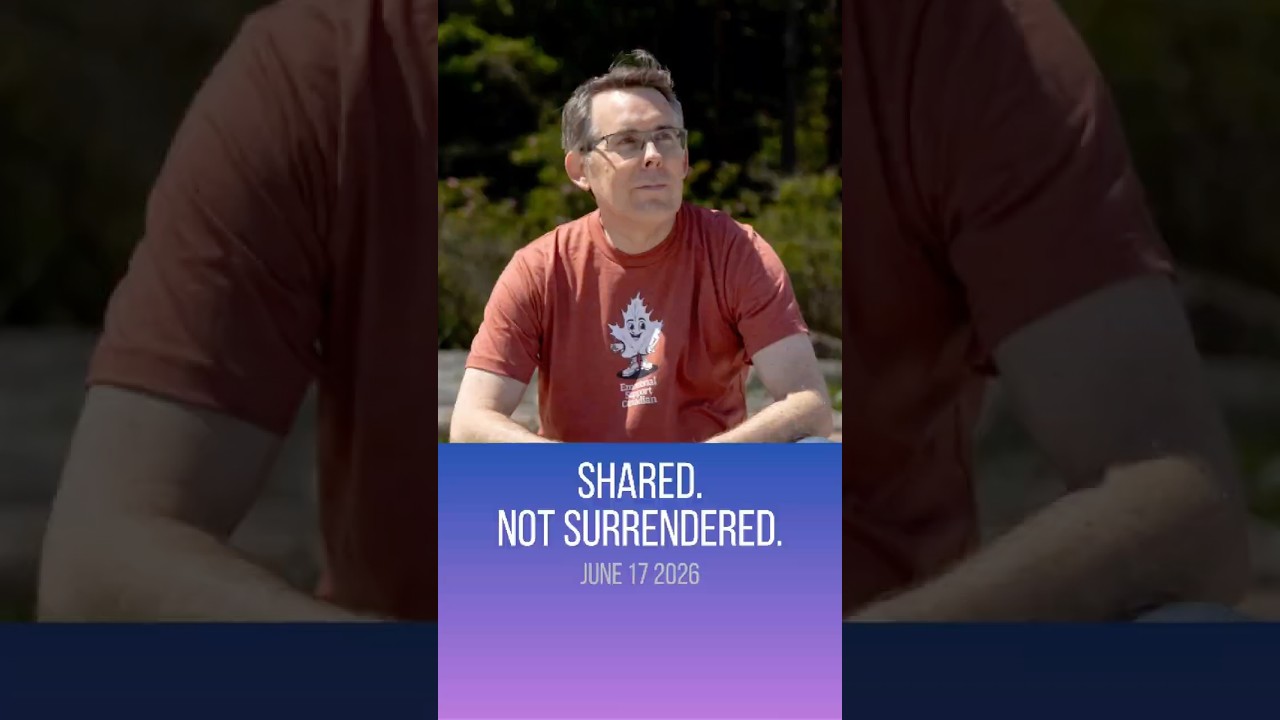
In this YouTube commentary, the speaker celebrates the meme‑derived phrase “Emotional Support Canadian,” which he turned into a t‑shirt design, as a concise way to describe Canada’s long‑standing role as a supportive but sovereign neighbor to the United States. He traces a line of historical assistance—from Lester B. Pearson’s peace‑keeping initiative during the 1956 Suez Crisis, through Arctic radar cooperation, Canadian‑mined uranium used in the WWII atomic bombs, to the Underground Railroad that offered freedom to enslaved Americans. He then contrasts that legacy with current U.S. rhetoric that paints Canada as a financial burden, threatens annexation, and imposes heavy tariffs. The speaker stresses that Canada’s help is rooted in principle, not submission, and highlights iconic Canadian symbols (the Nanaimo bar and the Charter of Rights and Freedoms) as part of the nation’s identity. He ends by urging viewers to remember the friendship when political “circus” passes, while promoting his merch until the end of June.
Chapters
There is a phrase going around that I love so much I hired an artist and put it on a t-shirt. It started as a meme. Someone on Twitter around 2020 offered up the idea that Canadians were available on standby whenever Americans were having a hard time. Americans laughed, Canadians laughed, but it was true. Our American neighbors kept needing support. Wildfires, military training, 3 literal warships full of help for Hurricane Katrina, and we kept showing up. But somewhere in there It stopped being quite as funny. There's a lot of talk right now about the Strait of Hormuz. Back in 1956, the Suez Crisis was about to split the Western alliance in half. Britain and France had invaded Egypt. The Americans were furious. The whole Cold War structure was cracking. Canada's foreign minister at the time, Lester Pearson, walked into the UN and proposed the world's first large-scale peacekeeping force. Canada negotiated the ceasefire that kept NATO intact. New Zealand's Sir Leslie Munro congratulates Lester B. Pearson on being the first Canadian to win the coveted Nobel Peace Prize. We've done it lots. We handed the US access to our Arctic sovereignty, letting them build a chain of radar stations across our northern territory so that American cities would have warning of Soviet bombers.
Now, from any point on the globe, the air ocean provides an open path to any American city.
The uranium that went into the atomic bombs the Americans dropped on Hiroshima and Nagasaki were mined by Canadian workers who were never warned it was radioactive and whose communities in the north are still dealing with the contamination today. We made ourselves the legal endpoint of the Underground Railroad, the only guarantee of freedom for tens of thousands of enslaved Americans at a time when the US government was actively trying to drag those people across the border. So when the United States calls us a financial burden, threatens annexation, breaks trade agreements to slap massive tariffs on our goods, tells us that the border between our countries is just an artificial line drawn with a ruler something shifted. Maybe other countries would have shifted into anger, but we shifted into clarity. Part of the reason I love the phrase "Emotional Support Canadian" is because it captures something about us that we never thought we'd have to say out loud. Support, not submission. We help because it's right, and because someone has to, and because we're good at it. I just never thought we'd have to explain all that. We know not all of you voted for him. We know one day the circus will leave town. We just hope that when that time comes, you remember who your friends were, who had your back. I think the artist did a great job. It's in my merch store till the end of June. This is a Nanaimo bar over here, and this is the Charter of Rights and Freedoms, both of which are distinctly Canadian and both of which we are happy to share. Just not surrender.