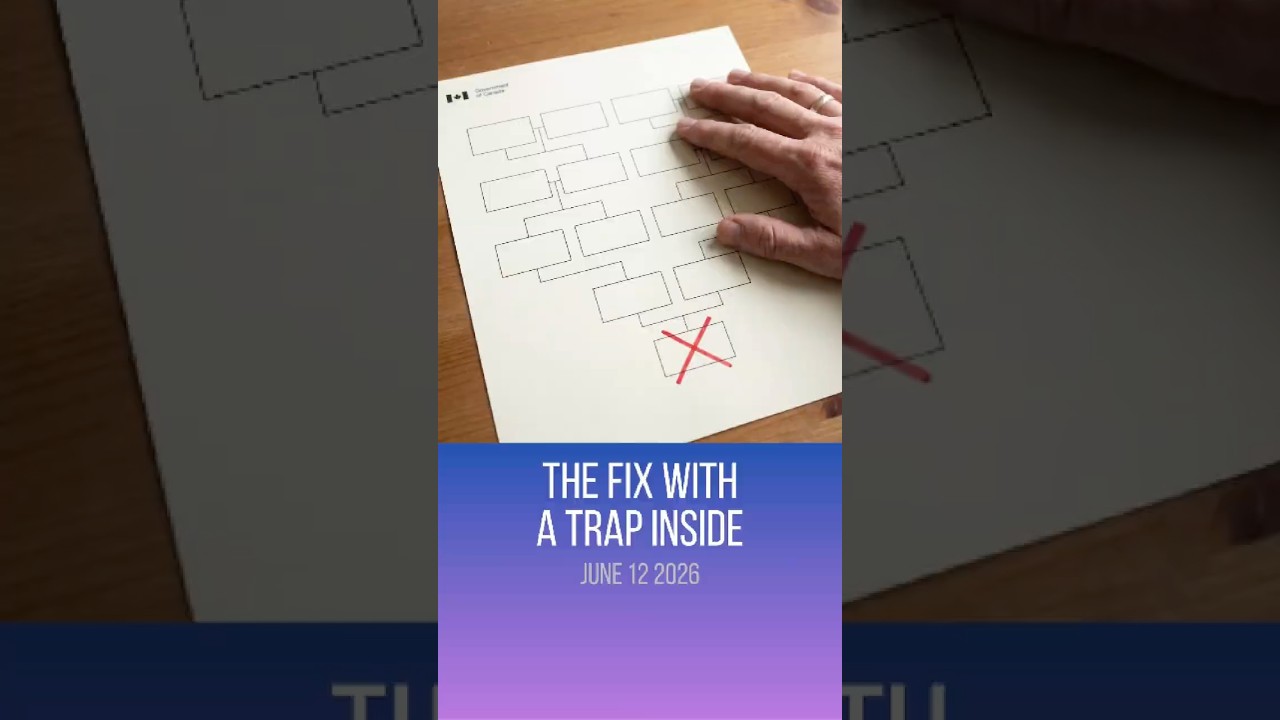
Canada's Indian Act stripped Indigenous women of status when they married non-Indigenous men, while men kept theirs. Jeannette Lavelle got a $35 buyout in 1970. Bill C-31 restored status in 1985 but created a two-tier system that cuts off status after two generations of intermarriage, affecting up to 50% of some First Nations. Bill S-2 would eliminate that cutoff but remains stalled in committee.
Chapters
Canada once handed a woman a cheque for $35 and told her she was no longer Indigenous. It was 1970. An Indigenous woman named Jeannette Lavelle married a non-Indigenous man, and 2 weeks later she got a letter from the federal government with a cheque inside. $35. It was a buyout. Her status, her right to live among her own people, her right to be buried beside her ancestors. Gone. For $35. And while this may seem like some kind of bureaucratic glitch, it was in fact It was policy, written into the Indian Act, enforced for 116 years. If a status woman married a non-status man, she lost everything. Her band membership, her right to own or inherit property on reserve, her right to vote in band elections. If she died, the band could refuse to bury her beside her family. Now meanwhile, if an Indigenous man married a non-Indigenous woman, he kept his status. And his wife gained it. It all changed in 1985, not because Canada suddenly gained a just perspective on things, but the United Nations ruled that Canada was violating international human rights. Rights law. Embarrassment, not conscience, is what finally forced Parliament to act. So Bill C-31 was passed in 1985. More than 114,000 people regained status, but the government wrote the fix with a trap inside. They created a two-tier system with a second-generation cutoff. It works like this: if a status person has a child with a non-status person, that child gets a kind of substatus. Everything the parents have except the ability to pass status to their children if they too have children with someone who's non-status. In other words, after 2 consecutive generations of parenting with a non-status individual, the 3rd generation cannot obtain status. Now Canadians have a one-parent rule, in fact an expanded one with the passage of Bill C-3, but citizens of Canada's First Nations do not. Again, this came from a bill that was supposed to fix discrimination. It took 2 more court cases, 2 more bills, another 34 years before the overtly sex-based rules were finally removed. That happened only in 2019, but this second-generation cutoff is still there. Today, almost 30% of the total registered population hold that sub-tier status known as Section 6 status. In some nations, like the Anishinaabek people, that number is closer to half. If this isn't fixed, eventually it will legally erase First Nations people over successive generations. There is a bill in Parliament right now that would fix it, Bill S-2. It passed the Senate 63 to nothing. All four opposition parties supported it, but the Liberal government, which now holds a majority, say they need more consultations. So as recently as two weeks ago, it was back in committee. Consultations on this issue have been happening for 40 years. Reconciliation is not one event or one decision. It's dozens, it's hundreds of things. I've said this before, we're not perfect in Canada. This is an example.