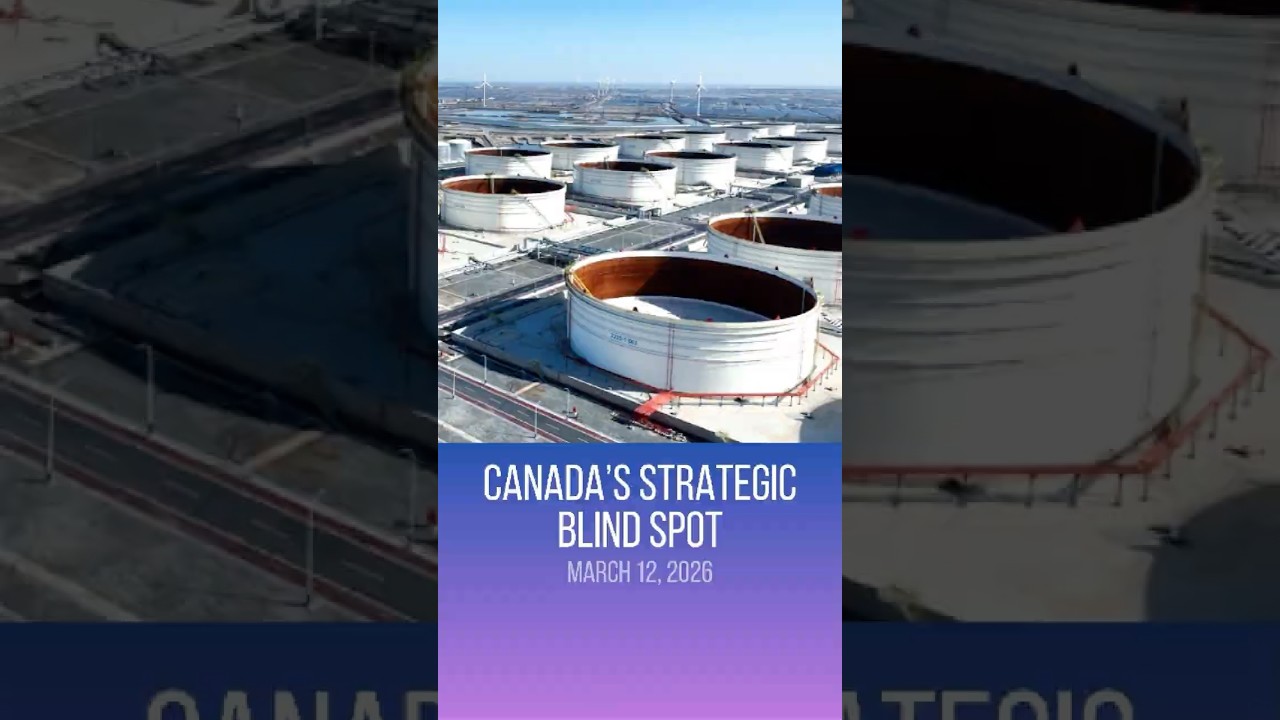
In this commentary, Tod Maffin argues that despite being the world’s fourth‑largest oil producer and sitting on vast petroleum reserves, Canada has never built a federal strategic petroleum reserve. He likens the situation to a farmer with abundant harvests but no stored food for winter. Maffin traces the historical attempt in the mid‑1970s under Pierre Trudeau, when sites were identified and a joint U.S.–Canada facility was considered, but the United States withdrew, causing the project to be abandoned. He explains that while Western Canada’s production can cushion its own needs, Eastern Canada—home to the Irving refinery in Saint John and the import‑dependent provinces of Ontario and Quebec—relies heavily on foreign oil and U.S. goodwill, which is now uncertain after recent geopolitical shocks that spiked oil prices. Maffin estimates a new reserve terminal would cost about a billion dollars to build, staff, and maintain, raising the question of whether the investment is worthwhile. He concludes that Canada has spent decades assuming external markets and partners will handle supply disruptions, a reactive approach to energy security that only gains attention after crises, echoing the post‑1970s creation of the International Energy Agency. A brief interjection from a second speaker adds a snide “Drill, baby, drill!” remark.
Chapters
Imagine you're a farmer who grows more food than your family could ever eat. Barns full of it. And then one winter, the roads ice over, the trucks stop running, and you realize you never actually kept any food in the house. That's Canada. Except replace food with oil. And replace farmer with a G7 nation that really should have figured this shit out by now. Canada is the world's fourth largest oil producer. We sit on one of the largest petroleum reserves on the planet. We have pipelines and rail lines and ports and 100 years of extraction expertise. What we do not have is a federal strategic oil reserve. And here's why. The International Energy Agency just committed its member nations to releasing 400 million barrels of emergency oil to stabilize global markets after Supreme and Glorious Leader Chairman Trump decided to attack yet another country in a mission that I'm sure has nothing whatsoever to do with erectile dysfunction disorder. The American war on Iran sent prices spiking by a third in two weeks. The US Strategic Petroleum Reserve, carved into salt caverns along the Texas and Louisiana coast, is one of the world's largest. Other countries have them too, varying in size and structure, but all built on the same lesson learned after the 1970s Arab oil embargo sent prices through the roof and economies into a spiral. Now, we looked into building one back in the mid-1970s or so. Pierre Trudeau's government identified sites on Bell Island in Newfoundland and along the Strait of Canso in Nova Scotia. We were working with the Americans on a shared facility, and then out of nowhere, but completely on brand, the Americans backed out, decided they weren't comfortable storing their emergency reserves in another country, and we just dropped it after that. The reason Canada doesn't need a reserve is the same reason Canada doesn't need to worry about a lot of things. Because we produce more than we use, and the market is supposedly our cushion. Now for Western Canada, that logic holds. Alberta and Saskatchewan are not going to run out of crude oil anytime soon. But Eastern Canada is a different country energetically. The Irving refinery in Saint John relies heavily on foreign oil, some of it from the US. Ontario and Quebec import. Their energy security depends on the good behaviour of other nations and the continued goodwill of trading partners. Including one that has spent the last year making it very clear that goodwill is no longer their policy. A new reserve terminal would cost about a billion dollars to build. You'd have to maintain it and staff it and fill it, all in the hope that eventually you'd need it. Is it worth it? The deeper issue isn't whether Canada needs a reserve this particular week. It's that we've spent 40 years assuming someone else would do the hard part. The Americans would buy our oil, the market would sort out supply, and the relationship would hold. And mostly it did. Energy security. Like all security really, gets taken seriously after the emergency, not before. The 1970s embargo built the IEA. The current crisis is rebuilding the conversation about what Eastern Canada does when the taps tighten and the usual answers stop working. We've always been good at producing oil. We just never got around to keeping any of it.
Drill, baby, drill! That's what he hollered on the stage, but he never got dirt underneath those manicured nails.