Jocelyn
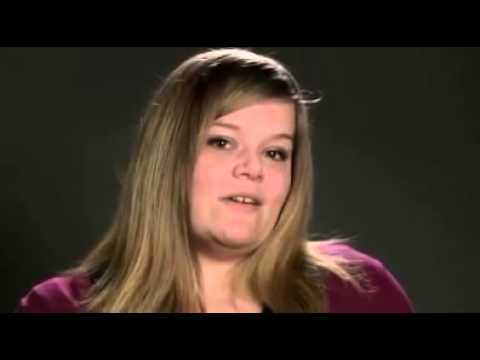
Jocelyn Tomkinson was born with lipomeningomyelocele, a rare form of spina bifida, and had her first surgery at 11 months. At 17, a graduation clinic gave her what she thought was final clearance, but she later developed a tethered cord during university that went undiagnosed. She describes the gap between pediatric and adult care as a major problem: most adult doctors won't treat complex conditions that started in childhood.
Chapters
Hi, I'm Jocelyn Tomkinson. I'm a research coordinator at the Child and Family Research Institute, and I'm an adult former patient at BC Children's Hospital. I'm really excited to be able to talk to you today about my transition experience and what I learned about the importance of young adult care for people with health conditions. Unfortunately, I'm not able to be with you today in person as we planned because I'm having surgery. And I'm really— I feel really lucky that I got into surgery so early, but I'm sad that it made me unable to speak to you today. So I hope that from my story you'll hear a bit more about my journey to adulthood and my transition, and I'll tell you a bit more about the significance of my surgery at that point. I was born with lipomeningomyelocele, which is a rare subtype of spina bifida, a neural tube defect. I had my first surgery at 11 months, and Spondylophagia affects my mobility and my sensation from T12 down. I use a wheelchair for everyday use, and, but other than that, it doesn't affect me that much in my everyday life. I grew up as a patient at BC Children's from the age of 5 when my family moved to British Columbia. I'm really excited to be speaking to you today in part because I have been involved in advocating for good transition care, but also as someone who's experienced the transition myself and, you know, have the bumps and scrapes to prove it. I know the power of having a good transition from pediatric to adult care. And the impact that it can have on adult life and independence. My first surgery was at the age of 11 months. The surgery I'll be— I'll have the week before this conference will be number 17. Interestingly, that's not— that's not really all that much among young people with spina bifida who I know, and I consider myself lucky that for much of my life I was very healthy. For much of my adolescence especially, I didn't have surgery, I didn't have a lot of complications or involvement, and so I was free to sort of grow and develop without really having to think about all that. I was followed by the Spinal Cord Clinic at BC Children's at least once a year from the age of 5 until the age of 18. And they've proved to be an invaluable resource and support even since my sort of graduation from the clinic. Through that experience at the clinic, I saw a variety of healthcare providers and allied health, everyone from neurosurgeons to physio and OT and social work. And I saw the real value of having all of those bright minds together in one room to, to follow me from, you know, my early childhood to being on the cusp of adulthood so that this condition which affects every part of my life and my body and my interaction with the world could be tracked and we could really minimize the impact that it might have and allow me to be the kid that I wanted to be and the kid that my parents were raising me to be. I was really lucky that my parents viewed me as the same as all of my other siblings. I was an individual, but I was considered to be at no greater risk or vulnerability than my sisters and brother. I was the youngest of 4, I am the youngest of 4, and we're a big close family. And from my earliest memories, my parents were involved in my life but encouraged me and in fact pushed me to take early and complete responsibility for my healthcare and involvement in my annual clinics and interacting with my family doctor. And I really credit this as probably the most fundamental step toward me becoming an independent adult with a physical disability. Probably the best way to explain my parents' view toward me as an independent young person is to tell you that at the age of 12, I decided that I needed to have a paper route. And I could not be convinced otherwise. In my mind, as a grade 7 student in elementary school, that was the way that kids earned money, and I wanted to have some money for myself. And so I called up the the paper and the paper route coordinator came over to my house and my parents were surprised to learn that this was what it was all about. And my parent— my dad sat with me in that room with the paper route coordinator and myself and heard about what it involved and, you know, 2 deliveries a week and had to be on the doorsteps by a certain time.. And all the papers had to be delivered and the route that I did had 75 papers. I had convinced a friend from school to share the paper route with me but in fact he only shared one of the days. So when the first Saturday rolled around, pouring rain as usual, I set out with the papers into for my first solo paper delivery. I came back halfway completely wet to the skin to pick up the next batch of papers. And for some reason my dad took pity on me and decided that he would bring the next load of papers to the street that I'd left off on. When he showed up in the car with the next load of papers, he found me in a heap on someone's lawn. Covered in mud and thoroughly humbled. I had punctured my tire on a splinter on the road and fallen out of my chair onto a very wet patch of lawn. I later realized that he was shaking not out of anger but out of laughter and wisely held his laughter in until I was an adult and we could laugh about it. It's become one of those stories that are repeated at family events and, much to my chagrin, used to explain my own hubris as a young person, but also to demonstrate, I think, my parents' approach to me as a person, which was to let me make my own mistakes, to put me in the driver's seat give me the help and equip me to be an independent person and let me fall out of my chair on someone's lawn, let me have a paper route and realize it wasn't the best option for me. We went back to the house that day, both of us wet, and my dad had helped me finish the route after that on a flat tire, and he didn't say anything. I was expecting to get yelled at and get in trouble, but he left it to me, and it took only half an hour after I got home until I called and canceled the route. And I didn't call and cancel it because I'd failed. I called because I now knew that it wasn't the right thing to do, and with that set of wisdom, I could apply it to all of the future events in my life. I consider myself also lucky because I was involved really early with wheelchair basketball. I joke with a lot of my wheelchair basketball friends that I was raised by a women's wheelchair basketball team, and in effect, my adult self and my skills as an independent adult with a disability are credited pretty strongly to those women who I traveled with from the early age of 13 playing wheelchair basketball all over Canada. They gave— they showed me the skills that someone who has a spinal cord injury would learn in rehab. I learned to ride escalators and jump curbs and to gain the skills that I would need to function in a world not designed for me. But even more than that, there was a very strong peer pressure in a positive way towards being fully and completely independent of your own bowel and bladder routines, of your own chair maintenance. You know, from an early age, my dad insisted that I change my own tires, and so I had a good base to grow that upon, but it was my fellow basketball players that that really enforced it. If there are 12 of you in wheelchairs traveling together all across the country, nobody's gonna baby you. You have to know how to do it yourself, and you have to have your stuff together. And I think that was such a positive experience for me, not just in self-esteem and not just in confidence, but in my own personal independence and my view of myself as contributing member of a larger societal whole. School was hard as a young person with a disability, as someone who had a health condition. I didn't consider myself as someone who was vulnerable or sick, but I was considered that way by the educational system. I encountered several barriers to being in the classes that I wanted because the school system limited the amount of students who had special needs in each class. For me, I didn't consider myself to have special needs. I didn't have an aide. I didn't need help in class. I did quite well in school, but when you're labeled that way by the district, that's how the procedures work. And I learned really early on to fight any type of label I could. Because they always come back to bite you, in my opinion. In school, I had a lot of support with respect to mobility, getting around the school and being an active part of the school's life, but nothing was quite so instructive for me for my later transition to adult care as my fight to get the key to the elevator. In my school, there were 4 floors and there was one elevator that joined all of those floors. The elevator was private. It was intended just for use by students with disabilities, and it was operated only by a key. The key was kept in the school district office not too far away, and the intent was that any student who need it needed to have an attendant to assist them to use the elevator. When I went to high school, I was tired of having an attendant. I didn't need an attendant, and I was tired of waiting, to be honest. I mean, what 13-year-old is patient? I certainly wasn't. I also happened to have been involved on a municipal committee for physical access, and I learned that it pays to have friends in high places, and I told the mayor, who I was on the committee with, that I couldn't get to my classes and to my extracurricular activities when I wanted to go. Because I had to wait for the key and the person to come with it. A few weeks later, I was given a key of my own, and through that advocacy, later students were able to have a key of their own and, in a high school microcosm, determine their own destiny. That was a really important experience for me, but I think it was a learning experience for the whole district. For the school as a whole, seeing that students with disabilities, people with health conditions, aren't inherently vulnerable. It's reasonable to respond to vulnerability where it truly exists, but often we create procedures and protocols that assume vulnerability where it isn't. I remember, I have conscious memories of my graduation clinic and the spinal cord clinic, and I know that probably Bev and other people from the spinal cord clinic will be there, so hi. I remember having a sheet of paper in front of me sort of summarizing my condition and the referrals that were going to be made on my behalf, signing a form, for the first time signing my own form that indicated that my records could be transferred to these referral groups and doctors. But beyond that, I, I couldn't tell you what the point of transition was at the time. At the age of 17, when I was transitioned, when I had my graduation clinic, I hadn't had any major complications or any surgeries for, I think, 9 years. In my mind, I was a healthy person, a kick-ass basketball player, and I was a normal part of everyday life. So if you can imagine being in my shoes at that time and being given this type of document, to me it seemed like a report card. It was saying, "Gold star, you're done, see you later, have a great life." And in my mind, it was a certification that I was normal and happy and well-adjusted and didn't need any more intervention. And so I promptly forgot about it. I don't even know what happened to that piece of paper. I don't— I couldn't tell you any of the names of the people I was referred to to follow me up for, you know, urologists and neurosurgeons. It wasn't until a couple of years later that I crashed pretty hard. That I realized that there was something in between pediatric care and adult, and I was stuck in the middle. I went to UVic for my first year of university. I was determined that I was going to set out on my own and be my own person, and I don't know what— why I ever considered that, given that I moved away from my basketball team, but It was a great opportunity for me. But one day after Christmas break in the second semester, one morning I woke up with a large new patch of numbness from my mid-thighs to my navel. And I didn't tell anyone. I didn't know what it meant. And I kind of, in my need to be independent at that time, saw it as a threat to my independence and didn't want anyone to know. I, following that experience, the numbness also involved pain later on, quite a severe kind of pain that I'd never had before. I had trouble sleeping, I had muscle spasms, and Still, I didn't tell my parents. The clinic doctor at the university had no idea what was going on with me. I think she probably, in her dealings with people on campus, had never dealt with anyone with my specific condition and probably never with someone with spina bifida. I knew enough about my condition to tell her what I had, but I didn't know any of the implications. I was effectively illiterate in my own condition, and it hadn't occurred to me that I needed to be until that moment. Near the end of the semester, when I wasn't able to go to classes as much and I was really struggling, I finally broke down and told my parents, sobbing on the phone. Now, this was a bit of an unusual circumstance for my parents. I don't think they'd ever had me ask them for help deliberately for several years. And, but as soon as they heard what was going on, they said, "Jocelyn, you have a tethered cord. We know what this is. You need to see a neurosurgeon right now." And I went— my parents knew exactly what it was. They told me it was a tethered spinal cord, and they'd seen this in me before. I'd had surgery for it when I was 9, when I was 5, and the initial surgery when I was 11 months. I realized in that moment my parents' own expertise in my condition, and I, I couldn't believe that I hadn't asked, but to be honest, the threat of losing my independence was so much greater in my mind. I had surgery about 9 months later to release my tethered spinal cord, and I have to say the biggest moment in my transition, the most sort of seminal event that captured the whole experience for me was when I was there at VGH in the pre-op clinic and someone came along with a clipboard and a pen and they said, "Here's your release, you need to sign this." And I looked at it, a whole page of small writing, nothing I would have trouble understanding, but I'd never been the one to sign before. My parents were there and they were sort of clutching onto each other, and I'd never noticed them affected by my condition before. I'd never been so conscious of the fact that it affected me and it affected them, but now I was responsible. And I wished in that moment that I could be a kid again. I mentioned at the beginning that I can't be there today, unfortunately, because I'm having surgery. By the time you see this, I will have had a hip replacement, a pretty unusual surgery for someone with my condition. I've struggled for the last 2 years to find an adult surgeon who would take my case, mostly because everyone I talk to says I'm too complicated. I can't tell you what that's like to be an adult and a fully functioning independent person, but to be told by the bright lights, the surgeons, the medical profession that you're too complicated, they don't understand exactly what to do with you. So where did I end up? I ended up back at Children's at the age of 28, not just as an employee but as a patient. I was referred back from VGH to Children's because The surgeons I spoke with there, they didn't really know what to do. I was dealing with adult complications of a pediatric condition and adult complications of a pediatric surgery. It was something that they felt was out of their league, but something I felt was squarely in their responsibility. I eventually found someone, but it was really instructive for me and it makes me worried in a way for other young people with complex disorders of childhood, because in order for me to find the surgeon that I got who's doing the surgery on me next week, I pushed, I emailed, I used my connections from work. The only reason I got in to see him was because I had worked at the Department of Orthopedics, and I had colleagues who helped and pushed for me. I had a pediatric orthopedic surgeon who was my champion and who beat on doors for me. In my mind, we have a good system, but that's not supposed to be how it works. You're not supposed to have to campaign to be seen by a doctor. Our system has some flaws. It has some difficulties. Those of you from rural BC probably know that more than anything else. You know that there's scarcity in, in doctors and in good specialists, and it isn't always clear who to refer a young person with a disability or a health condition to. But I say to you, to this audience, that that shouldn't be the reason why we don't try. That you here are the reason why young children and young kids are getting to adulthood, why I'm part of the first generation of people with my condition to survive and thrive in adulthood. So now that you've gotten us here, how do we get us to thriving as adults, to being independent, contributing members of society by supporting us from a health perspective. And sometimes that health perspective looks at housing, it looks at work, it looks at income support, it looks at family and reproductive health, it looks at us as young people with health conditions as a whole, but doesn't give up. When you approach a struggle. I think we are together, patients and doctors, going to have to approach this as a challenge together. But I bet you'll find when you talk to your patients that they're accustomed to challenge. It's— they're familiar with it, and I'm sure you can learn something from them on how to approach it. And if we move together toward a collaborative model of of facing the challenges in adult healthcare for young people with complex and chronic conditions. I think that's the way forward, that's the way to empower young people to be functional adults, members of society, and people with health conditions, and a way for doctors and other health professionals to be supportive active champions of their patients. I'm really excited to know that this event is happening and that all of you are here because you see yourself as a— as having a role in the care of young people with these conditions. You may not have many patients right now, but by becoming more sensitive to this, by learning, by improving skills and contributing your thoughts on this matter, I guarantee you will make yourself more available for young people with conditions like mine because, because you'll be ready when someone knocks on your door and says, "I don't know what's happening. I'm away at school, but something's wrong." And you'll know what way to turn. And that's the goal is that you might not know the answers right now, but that we can set into motion a process whereby you'll know how to find the answers with your patients together.
More from Tod




Ten times Canada helped the U.S. with its wildfires, instead of whining about the smoke. 





