Moving to Canada as a Doctor or Healthcare Worker
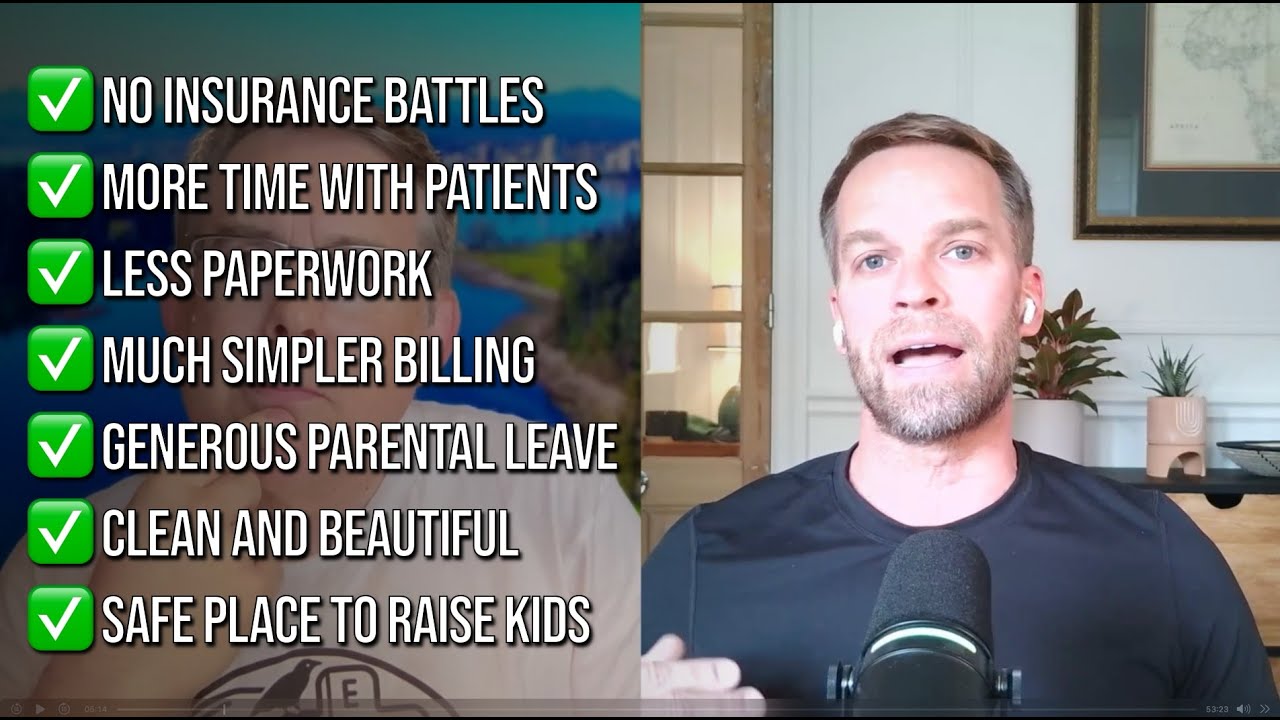
In this interview, host Tod Maffin talks with Dr. Robert Beck, an internist who moved from the United States to Vancouver Island, British Columbia, in late 2020. Dr. Beck explains why he and his wife decided to relocate—family ties, safety concerns after multiple mass‑shootings, the high cost of U.S. medical education, and the appeal of Canada’s single‑payer system. He walks through the step‑by‑step process they followed: using the provincial HealthMatch/BC Health Careers portal to secure a job, obtaining a work permit, navigating licensing with the College of Physicians and Surgeons of British Columbia (CPSBC) and the Royal College, and applying for permanent residency through the Provincial Nominee Program (PNP) that adds 600 points to an Express Entry profile. He notes that the licensing timeline has shrunk from months to about three weeks, and that his permanent‑residency application was approved in roughly four months. The conversation also covers practical logistics such as obtaining a driver’s licence, required documentation, and the role of HealthMatch as a “concierge” that matches candidates with job openings and helps compile paperwork. Dr. Beck compares the Canadian health system to the U.S., highlighting simplified billing, no prior authorizations, and less administrative burden, while acknowledging older facilities and longer wait times for elective care. He describes life on Vancouver Island—long daily commutes, beautiful natural surroundings, lower education costs for his children, and a sense of safety. Finally, he shares resources (his “Interesting MD” podcast and YouTube channel) and offers advice for physicians considering the move, emphasizing the importance of gathering all credential documents early and understanding the newer, faster pathways for U.S.‑trained doctors.
Chapters
Hello, I'm Tod Maffin. Welcome to the video. I don't know what we're calling this channel yet, probably From Far and Wide to match the newsletter. I'm not really sure. The purpose of this video is for doctors who are in the US to understand how the process of moving to Canada has worked for one individual. This is not necessarily going to be a perfect, this is the way it works guarantee. It's just the story of one man, and that man joins me now. He is Dr. Robert Beck. Uh, he lives in Victoria, British Columbia, um, and he is an internist who made the move 4 and a half years ago. Hello, welcome.
Hi, thank you so much for having me on. I appreciate the opportunity.
Not at all. I wanna talk about the journey in terms of the process mostly. That's what I wanna focus on. But what is an internist? What is internal medicine exactly?
Yeah, so I, I mean, generally what you can say is an internist is like a pediatrician for adults. Uh, we kind of, are—
I—
we deal with all of the more complex and complicated things when you get into difficult-to-control hypertension, coronary artery disease, um, you know, really complex medical problems that don't require procedures. We don't do too many procedures as a general internist like I am, but, uh, if your family doctor has some issues like significant heart failure AFib, heart dysrhythmias, things like that, then, or just things get more and more complex, you stack on more and more problems, your family doctor may refer you over to an internist to try and help optimize some issues, bring some clarity to the situation, and then—
Well, I'm getting to the age where I'm starting to see a lot of specialists. I have not yet run into an internist, although I'm sure that'll be on the list in the next year or two, judging from the way things are falling apart on my body. So let's start at the beginning, and I wanna sort of, diarize the journey for you in terms of like procedurally how did you make the move. Um, so let's start, and there's two kind of two factors of this, right? There's getting the job and the work permit, like getting the legal ability to work in Canada, and then there's the path to permanent residency. And those, they're two separate sort of things, although they do have some help along the way. So you're from where, Tennessee?
Yes, I grew up in— yeah, so I was born and raised in Tennessee. I went to the University of Tennessee for undergrad and moved to Cincinnati for a year and then moved to New Orleans, Louisiana, where I did a master's in public health and then went to med school and did my residency there. So I was in New Orleans for about 10 years. And after residency, my wife is also an internist. We have the exact same job, exact same training. We met when we were getting our master's in public health. And, and then we moved to Nashville, Tennessee, not exactly my hometown, but close to. And so we were there for about 9 and a half years. In a general internal medicine practice, a traditional internal medicine practice there in the States, and then moved here in December 2020.
What made you first want to move to Canada? Like, what— when do you recall it first being on your radar and why?
Yeah, uh, so I think that my wife is Canadian. She was born in Toronto, just north of Toronto, and there had been a thought of over the years about whether or not we would want to move back to Canada or that she would want to move back to Canada. And for the most part, we didn't really ever plan on doing that. You know, I think that COVID, when it hit, things just— our kids spent a lot of time in Ontario during the summers with some with her parents, but a lot in summer camps, and they had a lot of friends there, and that's kind of what they wanted. And we just kind of— all of that got shut off when the border got shut, and we just really started to rethink everything at that time. There were some challenges at work, uh, you know, a lot of what brought us a whole lot of satisfaction at work really started to go away because of COVID and the politicization of it all. Um, and so I really just wanted to start. For me personally, I wanted to be able to kind of rethink things, uh, and my wife being Canadian, that was an option for us. There were also some other, uh, things, uh, British Columbia. So we just started looking at Canada. My sister-in-law lives in North Vancouver and is actually an internist at Lionsgate Hospital. And so she was like, why don't you come out here?
Nope, that's it.
That's all.
That's it. Okay.
That's it.
No more. I'm curious though about your, about your, your wife's citizenship, um, Canadian. I know that that'll certainly help on the path to permanent residency, and I don't want to jump too far into the process, but did that help? Does that help at all having a spouse in terms of job offer and work permit?
So job offer, no. Work permit and licensing, a little bit. Uh, so I was going to have to go through— so when we decided to come to British Columbia I was able to, the way that it worked is that you had to get the job offer first, or you had to have somebody available that was going to sponsor my work visa. So my wife is a Canadian citizen, so she wasn't gonna have any problems. So that was going to be up to me. So while I was, I applied for the job and went through the whole Health Match and BC Health Careers thing. And while I was— when we came across the border, or maybe a week before we crossed the border, I submitted my permanent residency application. So it was going to be, I would get my medical license, and then the way that that was going to work was I was going to get my medical license, and then during that time I was going to have to apply for a work permit, and that the Island Health was going— the health authority was going to have to sponsor my work permit. It took so long at that time, it took so long to get my provisional medical license to move up here that I actually ended up getting my permanent residency. So at that time, I got my permanent residency in about 4 months. And so that was great.
That is great. That's, that's like record-breaking. Let's break down all of those processes. I want to get into the real nitty-gritty on this kind of thing. And we should probably say, since you're in a regulated profession, that you are only speaking for yourself, I presume. You are not speaking for the college, you're not speaking for the employer or anything like that. This is just, these are just your sort of. Yeah, so this is going to be my medical advice.
Yeah, yeah, there's definitely no medical advice.
I'm a doctor, but I'm not your doctor. Yes. Okay, um, all right, so let's start at the beginning of the process. You said that, um, that HealthMatch was involved. HealthMatch is a provincial program here in British Columbia. Other provinces have similar things in most cases, and the job of HealthMatch is to expedite the process or help you walk through it. You know, I kind of think of it like a concierge service for skilled workers, essentially. But you had mentioned that you first— did I hear you say you first went and got a job offer, or did you first contact HealthMatch? Like, what was literally the first step you took?
I think that the first step that people should take now is go to HealthMatch. I— the, the official site has changed now, it's bchealthcareers.ca.
Yes.
And so you go to bchealthcareers.ca, they connect you with HealthMatch, then you find a job. That is open for you, that you are qualified for. You submit your resume, you go through that process, and then once you get the job, and also while you're getting the job, that HealthMatch helps you to walk through everything that you need, uh, for the BC licensure.
What do they do?
So it's much— it is dramatically simplified now. This has been a dramatically simplified process where it took us 5 months, and some of that was due to COVID, but not all of it was due to COVID. But that is now a process that BC is promising is going to go from about 4 to 5 months down to 3 weeks. And so this is something that is very, very different. And again, for—
I'm sorry to interrupt. Yeah, yeah. 3 weeks to what? 3 weeks to a job offer? 3 weeks to a work permit? 3 weeks to entering the queue?
Yeah, no, 3 weeks to having your medical license approved.
Wow.
Yeah. So, uh, and this is very different because there is a difference. I guess I should step back for just one second here that there is a difference between some of the training and the— in Canada and the United States. So in the United States, most internists do 3 years of training, and in Canada it's 4 or 5.. And so there was— my wife and I did 4 years of training because we stayed on and did a chief resident year. And so we did 4 years of training, and that was acceptable to the Royal College. So we had to go in through the process and get an assessment, and they said, yes, you would be eligible to take the board exam here. And that's how we had to do it. So we got a provisional license from British Columbia after the Royal College said you will be able to sit for the Royal College exam later.
And the Royal College, as I understand it, there's the College of Physicians and Surgeons, which is a provincial organization, I believe. Yes. And then there's the Royal College, which, if I understand it correctly, is federal and handles very specific types of healthcare workers.
Yes, yes.
Right.
Yeah, so the Royal College of Physicians and Surgeons sits over everybody, and they are the ones that you take. That's the national board and licensing exam that any doctor is going to have to take. Okay. If you're coming out of residency, you know, you do medical school and then you do your training. At the end of your training, you have to take a licensing exam for your specialty, and once you do that, you are then board certified. But each province or territory will then go through and allow you to work in their province, in, in that specific province. So British Columbia, Alberta, Ontario, Quebec, whatever. And so the Royal College kind of lets you into the gate, and then everybody else will then decide if you can practice, and you will be able to, but that you have to meet the requirements to practice within British Columbia. For the purposes of this conversation.
Is it significantly different what British Columbia is looking for than what the Royal College at the federal level is looking for?
Yes, but that is no longer an issue. So the, yeah, that is no longer an issue that the Health Minister has recently been working, the Health Minister of BC, along with a lot of other health ministers, have been working with the provincial colleges. So for, again, for this conversation, the Royal College, or the BC College of Physicians and Surgeons, College of Physicians and Surgeons of BC, sorry, CPSBC. So they are the ones who will give you a license to work in British Columbia. So for internists, for doctors in the United States, they no longer really have to go through the Royal College if you don't want to. And this is where it is dramatically different for, for American doctors now and for this new policy that's been laid out this year. So the British— the College of Physicians and Surgeons of British Columbia works with HealthMatch. HealthMatch helps you to go through that whole process. And now a 3-year trained internal medicine doctor, a pediatrician from the United States, a psychiatrist family medicine doctors are kind of being fast-tracked through. But anybody who— there's no restrictions on any of this. Your U.S. board certification counts here now.
And if you're one year short, like you mentioned, that, uh, that U.S.— some U.S. specialists train for 3 years, Canada trains them for 4 years. What happens then? Do you, do you just take a quick upgrade course? You have to go back to the U.S. and do another year? Do you do the year here?
Absolutely nothing. No longer. That no longer has to happen. Uh, that British Columbia, again with several other provinces now, have said we will accept the United States certification. So if you are board certified by the American Board of Internal Medicine or the American Board of Medical Subspecialists or Specialist, so whatever U.S. certification you have, It is going to count.
Gotcha.
In British Columbia.
What did HealthMatch do for you then when you contacted them? Like, I'm still, I, I, you know, everyone says they're like a concierge service, they help, but I'm not clear exactly. Like, like, are they, are they looking for jobs for you and presenting you with a list of, hey, would you like to work here? Yeah.
So they will say they have a list of all of the job openings in British Columbia. So whether it's going to be a locums position, a full-time position, a maternity leave, whatever it is, they have all of that available and they have all of that information. And so they will take your CV and they will start pairing you with people that might be interested. And some of the doctors that I've worked with when they've gone through HealthMatch have been paired with 7 or 8 different job opportunities throughout the Lower Mainland, Vancouver Island, you know, the interior, that they will put you in touch with all these people and help you to find a position. They will help you to find it and kind of walk you through it. So what do they do? They will— it's whatever. HealthMatch isn't paying me. HealthMatch is like the worst concierge you will ever have. It's not that— it's a clear laid out process, but it's not It's not as quick as it could be, but they will tell you everything that you need for this step, and then they will tell you everything that you need for the next step and everything that you need for the next step and all the documentation that you will need. But that list is getting easier. They will also help the health authority to apply for your work permit, which is kind of the next step.
Right. So, so more a Holiday Inn concierge than a Four Seasons concierge.
Yes.
Yeah. Yeah.
They will get you there eventually, but it could be faster, it could be a little bit better.
Uh, and again, I, I, you know, so you went to the Royal College, they said no problem, well, your, your license works here. They, do they give you a new license, I guess, essentially like a Canadian?
No. So my wife and I had it differently. And so American doctors will not have to do this, but we had to actually sit for the Canadian boards. So we had to go Yeah, so we are fully board certified by the Royal College of Physicians and Surgeons. We are fellows of the Royal College because we went and sat for the boards. We did the, uh, the written exam, we did the oral exam, passed that. So we, we are fully board certified by the Royal College of Physicians and Surgeons. That is no longer necessary. Okay, you do not have to do that now. I want to be very clear. So as a 3-year doctor, as a, you know, as a board-certified doctor, it doesn't matter if you've done 3 years, 4 years, whatever. If you hold a medical license and a board certification in the United States, it counts in British Columbia.
Okay. All right. So you go— so you did that, which, whichever way people do that, it sounds like it's a lot easier now. Um, HealthMatch is then sort of says, where do you want to work. And then are you then on your own? You're calling the recruiter at the hospital and negotiating it from America?
Yeah. Yeah. So that's what we did. You know, they usually put you in touch with somebody who's like the group practice president or what they call the medical lead here. And so they'll start the conversation back and forth about, you know, are you a good fit? What are you looking for? Is this a good fit for you? And, you know, they may invite you up for an in-person interview. A couple of people have been brought up. That I've been talking to and working with have, they've flown them up and interviewed them in person and showed them around and let them look at everything and just your typical interview. So when that works out, then HealthMatch will then, once you sign, you know, sign the contract, HealthMatch will help you submit all your documents to the college. Which again is a much easier process now than what it was before. And then we'll also help coordinate everything between the Federal Immigration Services and Island Health so that you can get a— I can't remember what they call it now, but like a special provider, a provincial nominee. So Every province has a certain number of nominee slots that they can do so that they can appeal to the federal government and say, hey, we really, really need this person here.
Now you're talking permanent residency path, not employment path, correct?
So yeah, so this is like a work permit path. Oh, so yeah, so this is how you would get a work permit and then start working towards your permanent residency after that. But this would be where you would get a work permit and that you would also be able to have your family move here if you have other people that you're bringing.
So I think that if we're talking about the same program, which in BC is called the Provincial Nominee Program—
yeah, correct—
that, that also has a pretty strong input into the path to permanent residency for people who are going through the Express Entry program, which is a set of three essentially skilled trades, um, uh, programs. And at the very end of it, after you kind of go through the various processes You end up in a pool of people, and every week or two or so, uh, the government looks at that pool and says, all right, we really need people that are above 750 points and this type of worker. Or, you know, they've always got different criteria. Um, it's sometimes it's between 500 points and sometimes it's around like 800 points. It's— you can go on the federal website and you can see all of them. The Provincial Nominee Program if you are approved by one of those, at least the BC one anyway, it's probably the same with the other ones, gives you 600 bonus points. Like, that's how strong getting in that provincial nominee, provincial nominee program is, is. Yeah, if you can get in that, if you're looking to a path to permanent residency, 600 points plus whatever points you are bringing along with yourself— the fact that you're a skilled worker, you've got education, you've got, you know, you've probably got more than the $14,000 in cash that you need, like, you'd be pretty close to the top of the list for sure.
Okay. So yeah, I, that part, fortunately, I was going to have to go through that, uh, when I thought that it was going to take 12 months to have my permanent resident application processed. But fortunately, I got it 3 weeks before I got my medical license.
So, so from the first point that you took any action, toward this, to the point that you were doing your first rounds, how long was that? Ballpark.
For me, at that time, 5 to 6 months. Now, that's it. Yeah, it's— it should be faster now. It should be faster now.
That's what they're telling me, because I I think that the feeling out there is that people think it's a 3 to 5 year process. It's not.
Oh, not anymore. No, no, no, no, no. Now I will tell you that from the first time that I thought about doing this and, you know, summer of 2020, late summer 2020, until I got my full license and everything else, that was, that was years. But everything like that was, that was just kind of COVID stuff and, you know, immigration things and blah, blah, blah. But That, that part should be very easy. Now, there are some people that I am speaking with that have gone through and they've done the Health Match stuff, and that they, as of 2 weeks ago, have been entered into the Provincial Nominee Program. And so I haven't spoken with them in the last couple of months, but this— I mean, the last couple of weeks, but this seems to be a rapidly moving process. And this should be the, the slow part of it is getting the job and getting to the point where the federal government will tell you that you can come. Because once the federal government tells you you can come, that is when the British, uh, the British Columbia College of Physicians and Surgeons will then process your license. Because they don't want to give you a license if you're not going to be able to work, right? Like that, if you don't have permission to work. So now that these, you know, people that have been talking with, once they get the permission to work, they get that work permit, permanent residency, whatever. Uh, once they have that permit from the federal government, it, it has now been stated that it will take 3 weeks for the College of Physicians and Surgeons of British Columbia to approve a work license. And this is a full unrestricted work, uh, medical license. You do not have to be supervised. You do not have to check in with anybody. You don't have to do any further, uh, you don't have to do any further testing. You just have to do maintenance of certification, which is we all have to do, and it's not that bad. It's actually very easy, much easier and cheaper here than in the US.
Um, I have a random question.
Please.
How does it work with your driver's license?
So interesting. So with my driver's license, you have to have— what I went through is that you have to go through your state. And so for me, I had to get something from Tennessee that showed my driving record. And so I had like a 10-year driving record that was completely open and free and clean. And I showed them that. And I got, I think, a 2-year restricted license, or not restricted, but like a 2-year license. And that, you know, I just had to show proof of residency. I had to show that I was a permanent resident or that I was able to, you know, be here legally. You had to show proof of legal status, right? And then an address.
And you do that on the ground once you've moved?
Yeah, yeah, once you moved. Yeah.
Okay.
But that was pretty—
provisional. Do you have restrictions on it? I know this is not the topic, but I'm just curious.
No, no, no, I didn't have any restrictions or anything like that. I think that they just, you know, put you up for renewal in 2 years, just to make sure that—
At 2 years, they teach you the secret handshake, by the way.
So yeah, yeah, exactly.
Yeah. Rob, what do you wish you knew when you started this whole process? Hmm.
I wish that I knew the process was more complicated than I thought it was going to be, than what I thought that it should be, for sure. But now it has actually There will still be hassles. There are still things, you know, when you think that you cross over the finish line, there's still, you know, another 100 meters to go. Uh, that's 100 yards for the Americans that are watching. Uh, it's roughly 100 yards, uh, that there's still always, there's usually like one more step to go, but that has been dramatically improved and reduced. Um, You know, I didn't know a lot about the healthcare system, to be honest. We, you know, this is a new single-payer healthcare system. So there was a lot that I wish that I did know about that and about what I was going to get into. And it's not bad, it's just different. And so you just have to learn a lot of these new things. And I've actually tried to come up with some ways to help people understand a little bit more about the healthcare system here. You know, kind of things that I wished I knew. And, you know, to be honest, there's not a whole lot other than just this, that, that process, which has dramatically changed. Now, what I would say is go ahead and get all of the things that you could possibly do. So if you're a US doctor, update your, you know, make sure that you have access to your FSMB, the federal state medical board or whatever. I don't, I don't remember what that is. There's no way that that's the name of it. But, uh, where your, uh, medical degree, your, uh, board scores are stored showing that you have passed that. And it's really easy to get, uh, copies of your you know, your board certification. Most of us can just download that online, or the college can download that online. Typically, you will have to have things certified. So there will be, you know, used to be a lot of copies that had to be notarized. Like a copy of my diploma had to be notarized, and a copy of all of these things had to be notarized and sent directly to the college.— and I'm not sure where that stands right now. I do know that Ontario kind of doesn't want you to send anything to them. They get everything that they want online, and I just don't know how that equates here in British Columbia.
Yeah, I met with someone from the Divisions of Family Practice of British Columbia, and now I may have this wrong, but my understanding is that there are some records that they can pull electronically directly. That they don't— yes, they don't necessarily need that. And by the way, I appreciate you making the translation between meters and, you know, the metric system and, uh, and yards. America, I might remind you, is the only country in the world essentially that does not use the metric system. But, um, I always caution Americans to not use the metaphor of football fields. You know, a lot of— a lot of Americans will say it's about 3 football fields because Canadian football fields are 30 yards— 30 yards longer than American football fields. You will confuse Canadians.
Yeah, so, you know, yeah, you don't—
You'll get dramatically different things. I want to know, and give me your honest opinion on this, don't sugarcoat it just because you're in Canada now, but what do you think of the Canadian healthcare system as a whole?
Yeah.
Like, you know, and let me preface it by saying this, that, you know, I think a lot of American doctors are listening to American media, which we have up here, so we see how the American media talks about the Canadian healthcare system. Um, and it's, it's, you know, it makes it sound like you go to the ER and you're waiting a week and a half, and, and our taxes are 95%, neither of which are true. Well, so like, from someone on the ground, what genuinely, what do you think of it?
So people will— I mean, I think that each healthcare system is villainized on either side. And, you know, Canadians read stories about the boogeyman all the time and have very, very strong opinions about that. What I would say is that if you've worked in a VA healthcare system in the United States, you kind of know what working in the Canadian healthcare system is. And there are a lot of pluses and minuses to that. So there's not a lot of pre-approvals. There's not— there's no pre-approvals. You don't have to get prior authorizations for anything. You don't have to call and ask permission to do a procedure or whatever else. You— that's it. Yeah, billing is extraordinarily simplified and very, very easy. So those types of administrative burdens are absent, basically. Um, I bill using an app. I see a patient, I enter in their information, and then I enter my bill and it goes off. It's extraordinarily simple. Somewhere between 15 and 30 days later, I get paid for it by the province directly deposited into my account. And they're no hassle. It's really quite amazing. Things move slower here, and I will only speak for Vancouver Island. You know, I know that downtown Toronto and downtown Montreal are going to be different. Calgary probably is different, and maybe even downtown Vancouver will, would be different, but I will speak for Vancouver Island.
Sure.
That I think that the facilities on average are probably a little older and dated more than what you would see in the United States. But oftentimes in the US, I've been thinking about this a lot lately, oftentimes in the US, what you're competing for and why you have really, really nice hospitals is because you're having a competing— you're competing against the hospital down the street, right? And literally where we were in Nashville, there was a hospital right across the parking lot, like right across the street, that was a completely different healthcare system that provided all the completely same services that we did. And so you had to compete. And then Vanderbilt Medical Center was 10 blocks away, and so we had to compete with Vanderbilt Medical Center. And so you have to compete on facilities and you have to compete on services and everything else.
You don't have that as a doctor.
Oh, yeah. Yeah. Yeah, for sure. Not that, you know, I'm, you know, throwing water balloons at the doctors as they leave the other hospital. They're not that kind of competition. But I've never thrown a water balloon at another doctor. Don't worry.
I— but see how simple your metaphors are? You've been here 4 and a half years, there's no talk of guns, there's no talk of spray paint or vandalism. It's literally water balloons. See what Canada did to you?
I know.
Well, let me ask you this though. Let me ask you this though. Like, did— do you feel like you're doing more medicine than you were in the U.S.?
I think that more of my time I don't know that more of my time is spent directly in patient care. I think that it's— but none of my time is spent fighting with an insurance company. That is what I will say. There are electronic medical records that everybody is dealing with, right? And I would say that on the outpatient side, so like not in the hospital, but in the clinic, that there's a lot more— I end up having to be a lot more hands-on here than what I was, just as far as like tests and, you know, the ordering of tests and things like that. That my clinic where I work is, is great. It's just where I came from was just kind of a bit of a machine. And so you like to be more hands-on?
Is that a positive or a negative to you?
I know for that part it's a negative. I mean, it's more of like, you know, it used to be that I would walk out of my clinic and I would say, okay, well, I want a CT scan, I want this lab, this lab, this lab, and I'd like to refer over to this person, and that my nurses would just take care of it. And I would be able to go on to the next, you know, or call in— they would be able to call in prescription refills and, you know, send in this medication, that medication, whatever. And that they were taking care of those things so that I could then go on and see the next patient. I had a scribe when I was there, like an in-person scribe, for the last 6 years that I was in Nashville, which was amazing. I hear a lot of people are using virtual scribes and that that's becoming very popular. I'm not doing that right now. But That is something that is really great and has really been helpful for a lot of people. They've even had it translate the things that they talk about. So the Scribe listens to everything that you're doing, and then they put— the Scribe will translate into French a list of instructions. And so that is really pretty amazing. And I don't think that I am spending more time in front of the patient than what I was when I was in the United States. I am just spending less time— I spend a lot of time with my patients. I do spend a lot of time with my patients. I am just spending less time on dealing with insurance companies, rejections, and things like that. Uh, that has been a huge, huge relief.
So you have a YouTube channel and a podcast, which I promise I haven't forgotten about. I want to get— no, no, no. Um, but I also want to find out from you— you and I— I should mention that when we're recording this, it is June of 2025, so there is obviously a different political environment in the US. Yeah, to the point, um, than there was when you came out. Um, you moved to Vancouver Island, you came up here to Nanaimo, um, you abandoned us for some reason, which I'll never forgive, uh, and you were in Victoria, which is close, um, but you're on Vancouver Island, you're in BC, you're in Canada, all of which we're grateful or what do you think of Vancouver Island?
I absolutely love Vancouver Island. Now I will say I've said on my podcast a lot of times I have not explored as much as I should have. I've still not been to Gulf Island yet, which is— I've been here for 4 and a half years. I've not been to Tofino. I really spent— yep, I know, I know. I'm gonna solve that at some point soon. I'm gonna solve that at some point soon. But I spent 4 hours a day driving from Victoria to Nanaimo and back every day. So, you know, I live in Oak Bay. And so it's just about, it's about an hour and 50 minutes one way to the hospital there. And so it was just about 2 hours in the car one way, each way.
Yeah.
So I really kind of missed out on a lot of that. What I would say is I absolutely love Vancouver Island. I live 2 blocks from the beach, 2 blocks from Willows Beach. It is a beautiful sandy beach. It is— the water is really cold. So that part, the water is really cold. Yeah, at Willows Beach it is warmer other places, people guarantee that. But at Willows Beach it is really, really cold everywhere.
And on the— yeah. Yeah, yeah.
So I tried to go swimming last week. It's not— it didn't go out.
No, don't lie. No.
Well, yeah.
Were you not briefed on this stuff?
So with that part, no. But what I will tell you is that it is absolutely beautiful. And the wildlife here, the ability to get outside, everything. I do not regret any of this at all. I will tell you that I look out my window here, I see deer roaming all over the place. Most people really hate that. I live right in, you know, in a very pretty place, and I still love the deer. I don't care. I don't ever really see bears here where I am, but I do see bears on the road sometimes when I go to Nanaimo and back, and the elk, bald eagles everywhere. Seals are absolutely everywhere. So I love the seals. I go down, walk on the beach every day, and I just look for seals. I still look for whales, but I never see them from the beach. All the other places I see them posted online that they do see them all the time. I miss them every time.
Gotcha.
But it's beautiful. I see the mountains. I see where I am. I can see the Olympic Mountains on the north coast of Washington. I can see Mount Baker in, in northern Washington with some of the Gulf Islands out here. If the water were warmer, I could swim or kayak over. I think the current's a little bit too much, but I mean, it's close enough to where you could take a very short boat trip over to the United States, uh, through the Gulf Islands there so that you can have— uh, it's very, very close. It's very beautiful and it's safe. Yeah, I will say that that was one of the things, you know, when you ask why did I want to move they were just becoming a lot of really significant safety issues. We left New Orleans because my sons and I, they were 1 and 2 at the time, but they were involved in a mass shooting. Uh, like, we were in a mass shooting on Mardi Gras Day. Uh, that would have been Mardi Gras Day 2009, probably. Uh, 7 people were shot, and I was right there with my boys. There were 1,000, 2,000 people on that block, and 7 people were shot. I was close enough to where I could see the smoke from the barrel of the gun. And that, you know, really, we had to stay in New Orleans for another year and a half or so, but that was enough for me. Almost 2 years after that, and that was enough for me. I did not want to do that anymore. Um, maybe it was 2010, but in the 16 months before we left, 2 kids were murdered and my son's, like in my son's grade that was not at school. This was not, you know, a school shooting, but 2 kids were murdered. And it's just, it became too much. I lived in constant fear, honestly, of my kids being in a school shooting. And, you know, 2 years ago, there was a horrible, horrible school shooting in Nashville that was very close to where our house was, you know, 10-minute drive from our house, that people that we were, you know, kind of 2 degrees of separation had their child killed. And that was just something that was becoming overwhelming. And it wasn't, you know, it's just, it wasn't about politics. It was just about fear. And, and that was a big reason of why it has taken a while, but I no longer feel that impending sense of doom. Bad things can happen. Bad things happen everywhere.. But it is a very, very different feel, just 15 miles across the Strait of Juan de Fuca. And it, it really has made a big difference. Um, kind of the second thing that we really realized, and I apologize for rambling on like this, but, um, education is so much cheaper here that, you know, we, Andrea and I, racked up between our two masters and two MDs at a private university in the United States in the early 2000s, racked up $667,000 worth of med student debt. And so we spent an enormous— that was a huge albatross on our neck. Still is, uh, it's just less of an albatross on our necks. And so when we were looking to have our children going off to university— that's college for Americans, uh, we say it differently, uh, but when we were looking at them going off to university, we— I, I mean, it's, it's a fraction of the cost here. It is a fraction of the cost here. And there was a real possibility that we weren't going to be able to afford— two internists were not going to be able to afford to send our kids to university all at the same time. So our oldest child just finished his first year and our second child is going in the fall. And in the United States, if that, you know, that could easily, even at state universities, that's $45,000, you know, $35,000, $45,000, $50,000 all in per child per year. And when you make a, you know, two doctors are not going to qualify for economic hardships. And so then all of a sudden there becomes a lot of stress. And am I going to have to take out more loans or am I going to have to saddle my children with the same amount of debt? Um, here it is, it's not free, but it is drastically drastically lower. And, you know, the university now—
I, I was doing the math, I would think they would be late high school. No.
So, uh, yeah, now my oldest is— he just finished his first year at McGill, and my second is going to McGill.
So he's going to be a doctor if he's going to McGill? Yes.
Uh, he thinks he wants to be one.
We're—
so the second one is going into bioengineering, and so We're really proud of them, but to be honest, they get to go to a world-class university. When you look at the rankings, University of Toronto, I think, is pretty consistently ranked 20th. UBC and McGill, you know, kind of in the 30s in world rankings. Like, this isn't just like in Canada rankings, world rankings, you know. But then you get University of Alberta, Waterloo, Queen's, Western, you get lots of really, really great universities that will be $9,000 a year, $10,000 a year. And it's, there's just absolutely no comparison. Yeah. With, if you go to a top 20 school in the United States, it's $80,000 a year, $100,000 a year.
And I should say that's $80,000 US and the $9,000 to $10,000 that you were quoting was Canadian. Correct. That's really probably closer to $6,000 to $7,000 US. Yeah. Like, it's— it is— what is that, 8%, 10% the cost of a— like, that's— that is remarkable. Yeah. It's funny, you know, I'm— I'm grateful to hear that, um, especially about the healthcare system, I think, and about education costs. You know, I feel like Canadians, we forget how different our system is, you know. And I don't want to say we take it for granted because I don't know that many of us do. I think we all genuinely appreciate what we have, but I think we forget that it's not like that in the US. I'll give you a really good example. I'm aware that I just made a video a couple of days ago about interviewing tips, and one of the tips is don't talk about yourself, so I'm going to break it for 30 seconds.
That's okay.
I made a video documenting this eye. I had a torn retina. I basically said I got in that afternoon because a torn retina is kind of an emergency. Yes. Then the next day I was in a retinal surgeon getting my eyeball laser. At UCSD. I kind of walked through it a little tongue-in-cheek saying, "The pre-consult cost me $0, and then the copay cost me $0, but of course I had to pay for the medical fees and the lab tests, and those were $0." I kind of went through a little tongue-in-cheek how everything was $0. At the end I said, and this was true, I said, "Even the parking was free." That made Canadians mad that I said that, because in my comments it was literally— you can go to the video, there are 100+ comments from Canadians saying, now you're just lying, the parking is not free, the parking is $4 an hour and it's atrocious. And I get that we all genuinely in this country do— we do get mad that the hospitals charge us $4 an hour, right, parking. But sometimes we forget that we're not going into debt. There's no— there are no medical GoFundMes in Canada because, you know, um, yeah, I used to be in marketing. In marketing, we have a, we have a metric called the Net Promoter Score. No one knows it by the name, but you'll know it by the question because you'll see it at the very bottom of surveys. And the question goes like this: from a score of 0 to 10, would you recommend this to your family and friends? It's called a Net Promoter Score. Smart thing. What about you? Where would you land on this? Would you recommend to your family and friend doctors in the US, 0 to 10, about coming—
about moving to Canada?
If you're moving and working in Canada as a healthcare worker, I would say somewhere in the range of 8 to 9.
Things are not perfect. Things are never—
what is the 1 to 2 in there that is, that is Okay. Yeah.
It's— it is less efficient. But that doesn't mean that things don't happen. So again, there are no emergencies where people don't get seen for 6 months, right? But elective things don't get seen very fast. And sometimes that can be really frustrating that you do bang your head on a system. But I think honestly, having more doctors would actually solve that. And that would free up— I would like to see the province be able to invest a little bit more in some of the infrastructure. I think having more rooms, but also, you know, they could use more ORs, they could use more angiogram suites, they could use a few more things, but it's all directionally correct. I find that, you know, things are— there's nowhere perfect. On my podcast, oftentimes I will say, you know, the grass isn't always greener on the other side, but there's grass. And it's just different. It's not— and there are so many things that are better that I genuinely do recruit people and tell them, Hey, I think that this is the time. You know, it is safety, it is pay, it is, you know, a balance, work-life balance. It's wonderful patients. It's a wonderful environment. It's really nice. Canada has not been completely divided right now. Politics, even with the federal election a couple of months ago, that people aren't yelling and shouting at each other in the doctor's lounge. And, you know, people do have differences of opinions, but they're Canadians and they don't really express them all that much.
That is a very interesting perspective because, because to us— and I'm just gonna claim to speak for all 40 million of us— yeah, we felt that that was the most, one of the most divisive borderline angry federal election campaigns in our history. Genuinely, like, a lot of Canadians were like, that was fucking crazy. So to hear an American say that was nothing, that was— oh, that was—
that was like a local election. Yeah, I mean, everybody has strong opinions, but I had dinners where I had, you know, with people who were, you know, very far this way and people who were very far this way. And everybody talked and everybody agreed, I think you're a good person. We see things differently. And I'm curious, it was, it was kind of like being an American in the early 2000s where you'd sit in the bar and you would discuss the policies between George Bush and John Kerry and George Bush and Al Gore, where you would sit there and you could actually have meaningful conversation and say, actually, you know what, I see why my friend thinks like that. I totally disagree with you, and I vehemently disagree with you, but that's the way that it feels now.
Yeah, um, it doesn't— it doesn't feel as performative up here as, as in the US.
It feels personal here in the US, and that was, you know, that's a hard way to live.
Yeah, it's hard to live, you know, when you're— if you're, you know, if you need a bulletproof vest to have a political conversation. You mentioned your podcast. I want to talk about it. You also have a YouTube channel. Are they the same thing? Is it—
I do. Yeah, yeah, it's all just good advice.
Did you— did I see right that you interviewed the provincial health minister? I did.
Yes, yes. Uh, yeah, so Josie Osborne, so the health minister, the province, uh, the provincial health minister did come on. And she was kind enough to give me about a 20-25 minute interview about this process. Um, so you can definitely check it out there, check it out on my podcast, uh, if you're curious that she was kind enough to come on and explain the whole, uh, process and the province's thinking.
So what would a minister translate as? Would you call that a secretary?
Yeah, so kind of like the Secretary of Health. Yeah, so the Secretary of Health in charge of the healthcare system.
For the podcast. How do people find your, your YouTube channel and your podcast?
So I, I am on all of the podcast networks, uh, kind of anywhere that you would get it. So Apple, Spotify, um, at Interesting MD. It's just called Interesting MD. And on YouTube, it is at Interesting MD. And, uh, on all the socials, most of them are The Interesting MD. And that you can find me anywhere.
Gotcha.
So Dr.
Rob Beck, now, are you a Canadian? Did you—
I am a Canadian. I, uh, I was, I was naturalized, uh, about a week before the tariff war, so I was very, very appreciative.
Good.
They didn't pull, they didn't pull the plug on it, so, uh, they let me in.
Did you take the test, by the way? I did the citizenship test.
Yes.
Yeah, I did. And do you know what your score was? Did you get— how'd you do?
I got them all right.
So, hot damn, 100%. I didn't get them all right either. A friend of ours just went through that and she gave me a couple of questions, like, you know, they pull it out of a pool and I'm like, I know, I have no idea what that would be.
So I guess, yeah, so, uh, yeah, though it's very easy. They'll give you a 60-page, uh, document and as long as you read that and then just go and take the test directly afterwards, you'll be fine. So what's our favorite sport?
I'm gonna do— what's our, what's our, what's our, uh, national sport? And then I'll let you go.
Okay, here, hockey for sure.
Really complicated. We have international sports.
Okay.
Yeah, we have hockey as our winter sport. And do you know what our summer sport is? No. Holding grudges. No, that's not true. It's actually lacrosse. Lacrosse is ours.
Really? Lacrosse?
Okay. We actually have two national sports. Yeah. Okay. For what it's worth. All right.
Well, sorry, I got hockey, uh, and I'm still learning it. I'm not mad at you.
The culture is different.
Yeah, yeah, I appreciate that. I'm, I'm still trying to learn hockey.
Thank you so much. Thank you for your time here, and also thank you for moving up to Canada. I, I know that we all desperately need more doctors, and it sounds like you and your wife, um, are doing yeoman service there, so thank you.
Well, we're doing great, and if anybody has any questions, just reach out to me directly, uh, go to the website, reach out to me on socials, whatever. I would be more than happy to help.
And it's Interesting MD on YouTube and in the podcast, correct? All right, thanks.
Thank you so much.
More from Tod




Ten times Canada helped the U.S. with its wildfires, instead of whining about the smoke. 





