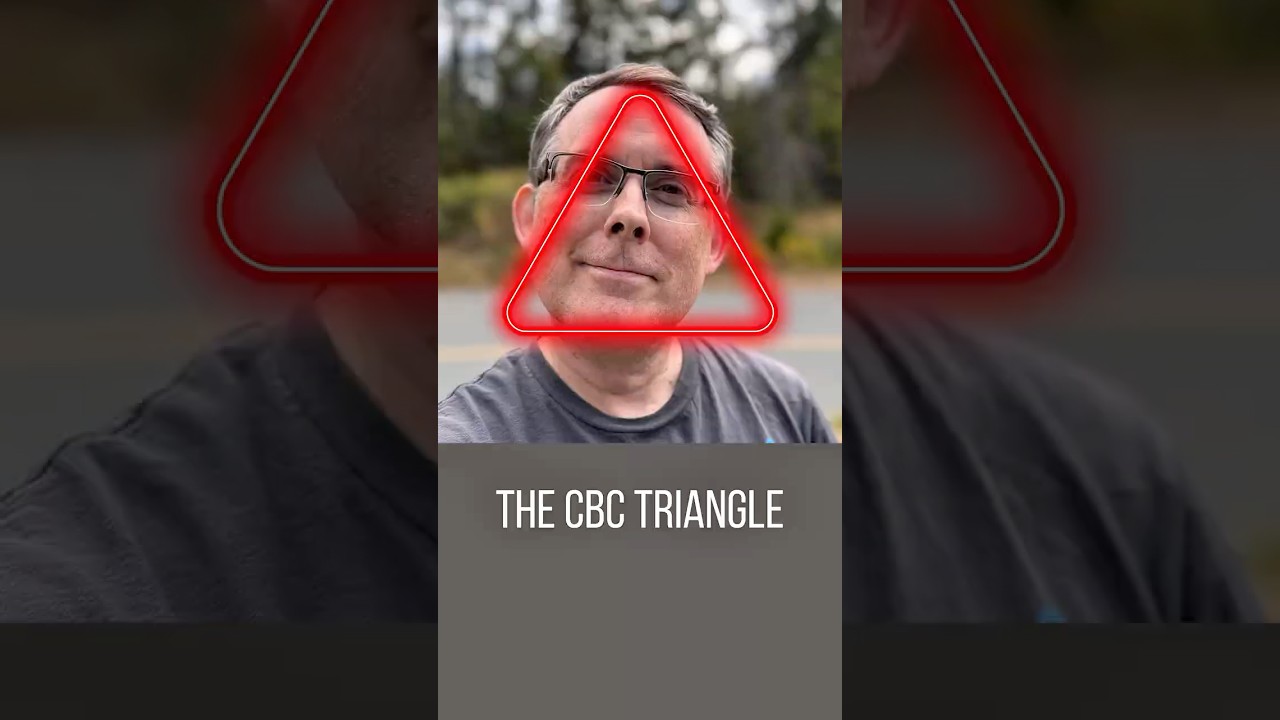
A CBC broadcaster explains the "triangle," a head-movement technique guests use in two-box interviews to look engaged. The motion cycles up, over, and down continuously, so viewers don't notice. Ian Hanomansing likely pioneered it.
Chapters
Okay, you guys liked my last two CBC stories, so here's another one. The triangle. Uh, I'm not quite sure who taught me the triangle. It was most likely Ian Hanomansing because I had a column on his show once a week. I'm not sure 100%. Anyway, the triangle is what you do when you are in a two-box. A two-box you've seen on television before. This is where they've got the host over here, the guest over here. Keeping an eye on that, Tod Maffin, CBC's technology columnist. Tod's in Vancouver as he usually is. If you're a guest and you are up on the screen as the host is asking you a question, if you're not doing something with your head, you kind of look dumb. You sort of end up looking like this while the host talks. So the triangle is what you do with your head to make it look like you are engaged and listening and paying attention. And now that I tell you this, you are not going to be able to get this out of your head. This is all you'll see. Ready? Triangle's up here, over here, and down here. Watch. Imagine I'm being interviewed by someone. And you just do this over and over and over again. You just do it in a cycle. Viewers can't tell that you're doing it. It just looks like you're engaged. And honestly, most of the time you're in a 2-box, people are focused on the host anyway. But now that I've told you this, watch people on TV, especially if they are— especially if they are broadcasters themselves, right? If they work for— I'm I'm sure other broadcasters do it, but— Watch this. Watch for them looking in 3 directions, or putting their head in 3 directions. There you go. It's the triangle. Everyone does it.