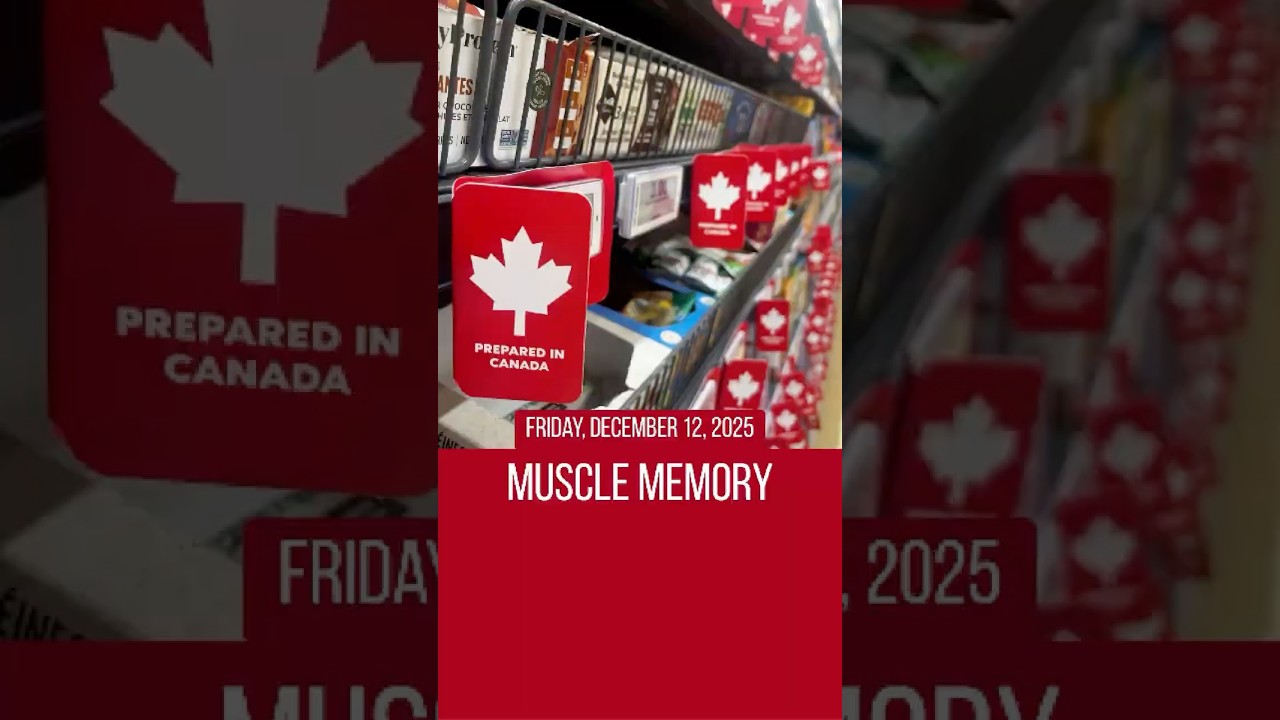
In this commentary, the speaker traces Canada’s long‑standing economic vulnerability to the United States, beginning with the 1970s when roughly 70 % of Canadian exports went south and the U.S. imposed a sudden 10 % import surcharge. In response, Pierre Trudeau’s government launched the “Third Option,” a deliberate strategy to diversify trade and investment toward Europe and Asia, not to replace the U.S. but to dilute dependence. The speaker argues that this historic shift created lasting consumer and policy “habits” that now surface as a de‑facto boycott of American goods and services. Recent U.S. trade actions—such as tariffs on Canadian aluminum—have been met not with protest but with entrenched habits: Canadians avoid U.S. brands, cancel trips, and governments cancel contracts, all while framing the behavior as choices rather than a boycott. The speaker backs this claim with recent data: a $153 million trade surplus, a steady Bank of Canada key rate, an 11 % surge in aluminum exports to non‑U.S. markets, a 6 % rise in crude oil exports, new top trading partners like Germany and Singapore, and a 11 % drop in imports from China. Six out of ten Canadians now report distrust of the U.S. The narrative concludes that these habits have become muscle memory; they persist even if political pressure eases, and they represent a structural shift rather than a temporary retaliation.
Chapters
In the early '70s, Canada had a big problem. Over time, it realized how economically exposed it was to the US. About 70% of Canadian exports went south. American firms dominated key sectors. Washington was making unilateral trade and monetary decisions that hurt Canada, including in 1971 when the US suddenly imposed a 10% import surcharge. But like today's trade war, Canada didn't respond with tantrums. It responded with habits. Pierre Trudeau's government launched something it internally called the Third Option, a strategy to reduce independence on the US by deliberately shifting trade and investment away from the US and toward Europe and Asia. Not replacing the US, just diluting it. Canadian firms started looking elsewhere by default. International trade rose steadily through the 1970s. So it's been almost a year now since the US attacked Canada economically, and how's Canada doing? Well, for the first time since that whole nonsense began, Canada just posted a trade surplus— $153 million. The Bank of Canada just held its key rate. That is not something a central bank does when an economy is wobbling. And why? Because while we Canadians are polite, We are also deeply petty. We have not forgotten about what the US is still actively trying to do to annex us by economic force. Watch people in a grocery store up here. They're looking for the Canada flag on the shelf. If it's not Canadian, we don't buy it. We don't eat at American chain restaurants anymore. We never rebooked that trip to Vegas that we canceled. Our governments have canceled contracts with American software companies. And you know what else we stopped doing? We stopped calling it a boycott. People don't say boycott here anymore. They say habits. They say choices. 6 out of 10 Canadians say they don't trust the US anymore. Unfortunately for the US, this, predictably, is what happens when short-sighted people without even a basic understanding of global economics try to set trade policy. Here's one example: Trump started charging American companies a 50% tariff on Canadian aluminum, thinking that it would hurt Canada. Instead, we just started selling that aluminum to other countries. Exports to those countries surged 11%. Crude oil exports up 6% in September. That was the 5th straight monthly increase. Germany bought more Canadian oil than ever before. Singapore became a top 3 trading partner. And just for those bots in the comments who say that China is picking up all the slack, no, actually Canada imported 11% less from China in September than the previous month and 5% less than a year ago. This is what happens when the leader of your nation spends his time flying to other countries and treating their leaders with respect. Look, this is not a victory lap. It is a reminder to keep going. The third option didn't make headlines forever. It didn't feel dramatic. It just stuck. And a decade later, Canada wasn't making a statement anymore. It was living inside a new set of defaults that it had built for itself. That's the part people forget. Once Canadians change how they buy, how they travel, who they trust, we don't go back to the old way just because the pressure eases. It's not retaliation. It's muscle memory.