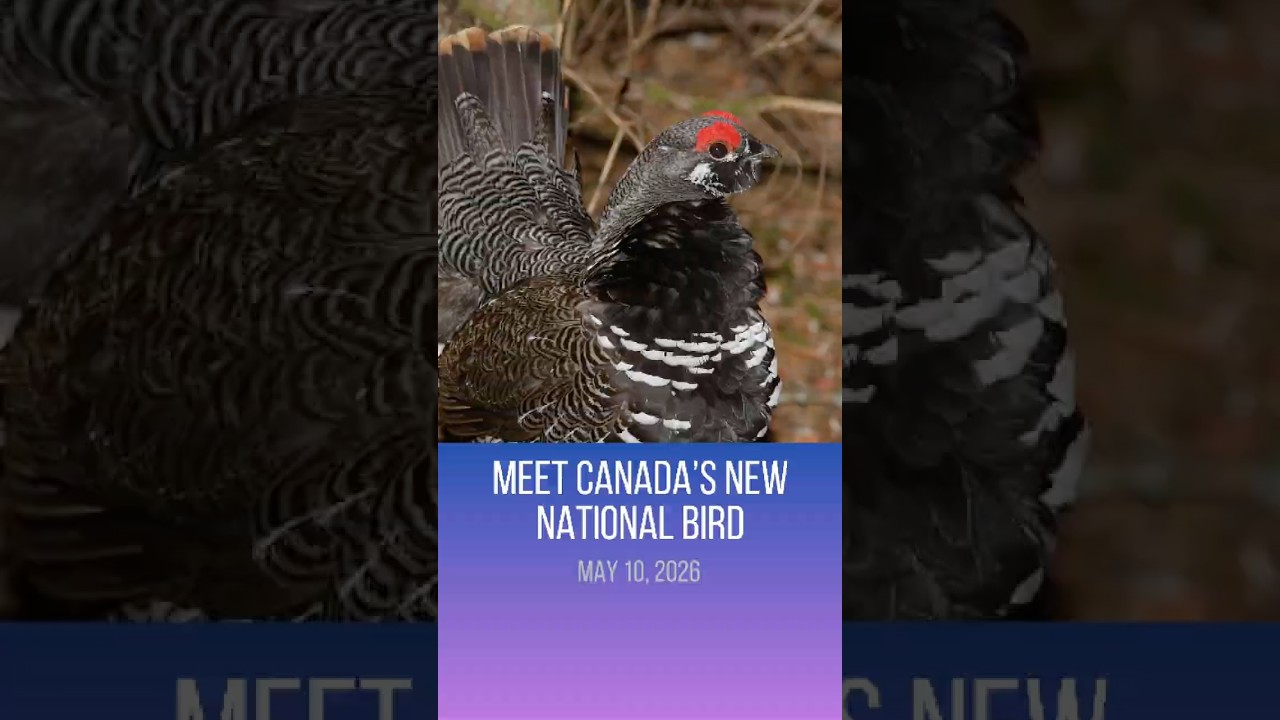
In a humorous monologue, the speaker discovers that Canada has never officially designated a national bird and proposes the spruce grouse as the ideal choice, with the Harris's sparrow as a runner‑up. The speaker details the sparrow’s exclusive Canadian breeding range and its passive‑aggressive social hierarchy, then shifts to an extensive, tongue‑in‑cheek description of the spruce grouse’s behavior, diet, and physical traits, using these avian characteristics as metaphors for stereotypical Canadian traits—passivity, politeness, cold‑adaptation, and a tendency to avoid confrontation. Interjections from a second speaker provide comic relief, reacting to the speaker’s exaggerated claims. The piece satirically critiques national symbol selection and reflects on Canadian cultural identity through bird‑based analogies.
Chapters
When I was researching the Hinterland Who's Who video that I did recently, I discovered that Canada does not actually have an official bird. It's not the loon, even though that's on our money. No, it's not the jay or the whiskeyjack, even though people think it is. We have a national animal, a national horse, a national jackass, but we've never gotten around to picking an official bird. Until now. I have spent a ridiculous amount of time researching Canadian bird species, and I am now prepared to announce my selection for our official national bird. But first, the runner-up is the Harris's sparrow. It is the only songbird on the entire continent that breeds exclusively in Canada. Every single one of them is ours. And it is so Canadian. It has a strict passive-aggressive social hierarchy based on the size of each bird's bib. They settle disputes by just staring at each other. And the rare times they do fight, it's mostly posturing and yelling, after which, and this is absolutely true, They all go back to pretending it didn't happen. If that is not a Tim Hortons drive-through on a Saturday night, I do not know what is. But I am giving the title to the spruce grouse. You can find the spruce grouse almost everywhere in this country in the forest. You might know it under its folk name, the fool hen. Not because it's stupid, but because when a predator shows up, it becomes very Canadian. It just sits very still and hopes the situation resolves itself You can walk right up to one. It would rather sit there avoiding eye contact and let you leave than engage with you. This is also how Canadians handle being in an elevator with other people. It's so passive-aggressive that when it actually does pick a fight, it makes the news.
He was attacked by a spruce grouse.
Jesus!
How are you feeling? You're still shaken by this?
Now it can clean up. It has fancy feathers, but when it tries to show off, it just looks like some kind of Timu peacock. Like us, it is not gastronomically adventurous. In the winter it only eats spruce needles, a diet which makes it smell so much like turpentine that hunters mostly gave up pursuing it. Its meat apparently tastes like a hardware store. Nobody eats it. Nobody fears it. It survives by just not being worth the trouble. And like us, it's great in the snow. It even grows its own snowshoes in autumn, small horny scales that extend from its toes. It burrows into snow to sleep. But this is my pick. This is our bird. Patient, unfussy, cold-adapted, quietly surviving on whatever the season offers. I know, I know, every other country picks an eagle or a phoenix or something with talons. The Canadian national bird should be the one sitting very still in a spruce tree, cursing us under its breath, waiting for us to leave.