U.S. Healthcare Workers: Want to Work in Canada? Watch This First!
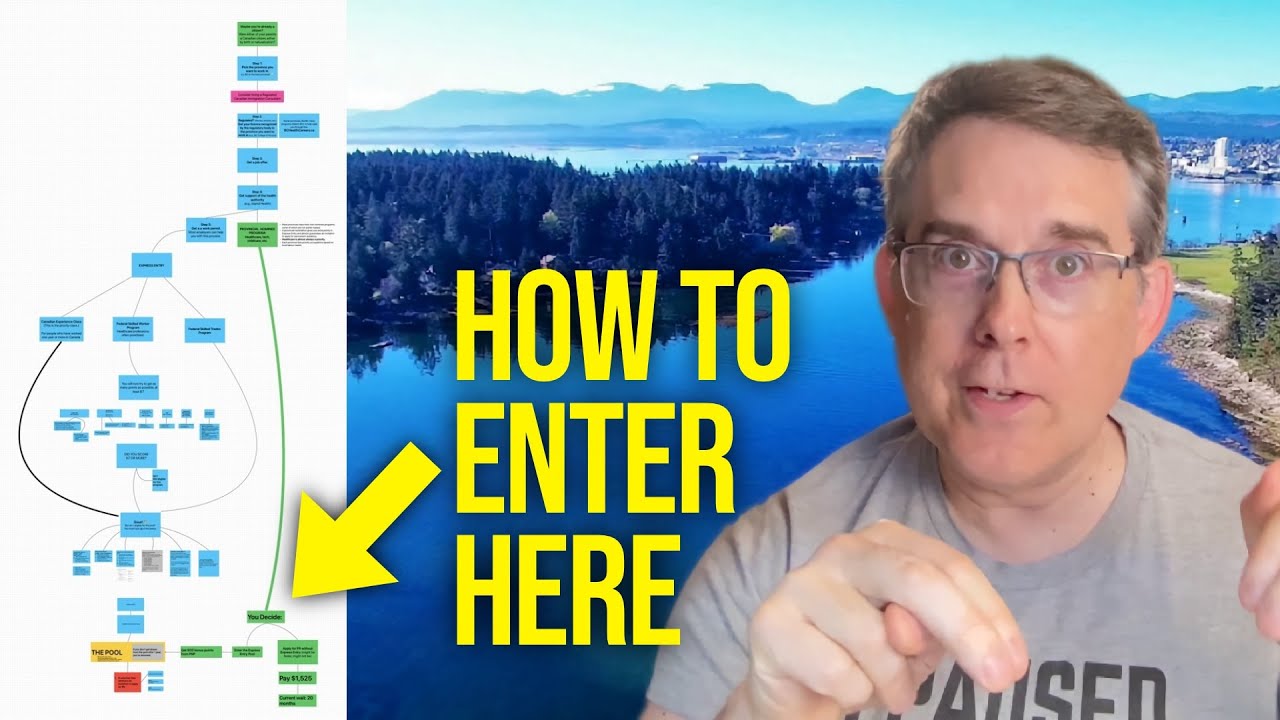
The video, created by Tod Maffin, offers a non‑legal, step‑by‑step overview for U.S. healthcare professionals who want to relocate to Canada, using British Columbia (BC) as the primary example. It begins with basic self‑checks (citizenship status, province choice) and moves through the essential stages: obtaining provincial licensure via the relevant college, using a low‑key concierge service (bchealthcareers.ca) to navigate licensing and job‑search, securing a job offer, aligning with the regional health authority, and then pursuing immigration pathways. The presenter explains the two main routes—Provincial Nominee Program (PNP) and Express Entry—detailing the points system (language, education, work experience, age, arranged employment, adaptability), the Comprehensive Ranking System (CRS) scores, draw mechanics, and the 600‑point bonus that PNP nominees receive, which virtually guarantees an invitation to apply for permanent residency. He also covers financial costs, timelines, admissibility criteria, and the need for proof of funds. The video concludes with an interview featuring Dr. Rob Beck, a U.S.‑trained physician who moved to Vancouver Island, and BC Minister of Health Adrian Dix. The interview outlines BC’s new targeted recruitment policy for U.S. physicians and other healthcare workers, the simplification of licensure for American Board‑certified doctors, the role of HealthMatch BC, and resources such as bchealthcareers.ca, healthmatchbc.ca, and welcomebc.ca. The minister emphasizes the province’s universal single‑payer system, lifestyle benefits, and the commitment to removing barriers for incoming healthcare talent.
Chapters
Hello, this video is for healthcare workers in the US who want to move to Canada. The system, both getting the ability to work legally here and the path to permanent residency, is very complicated. Uh, the purpose of this video is to try to help you get a general sense of it. Um, I am not an immigration lawyer, I'm not an immigration consultant, I don't work for the government. I'm some yahoo who is just trying to help. There will be some mistakes in this, so use this as a general guide to get a sense of how things connect to each other, as opposed to a accurate system. I would also say if you are Canadian or not, then you notice some egregious errors in this, like I'm not talking about tiny little things, but like things that would significantly impact someone's ability to understand or use this, please tell me in the comments. And then everyone else who is watching, watch the, the description field below this video, like the description part of this video. That is where I will issue corrections or I'll put corrections. All right. And then at the end of this, you are going to see a video an interview that a U.S. doctor who moved to Canada 4.5 years ago, he interviewed our Minister of Health here in BC. And so that will be the end of the video. I live in British Columbia. I live on Vancouver Island. This is Vancouver Island back here. It's beautiful. Yes, it's this good. Um, and so the examples that I'm going to be using are BC-based. They are based in this province, British Columbia. We have many other provinces. They all have similar, programs. They're not necessarily named the same things and so on. So, um, this will work really well if you're looking for BC and specifically Vancouver Island, but it can be adapted to Canada anyway. All right, so you are an American healthcare worker and you would like to move to Canada. The first thing you need to check— maybe you're already a citizen. Apparently this immigration consultant said that this is a thing. People may have had a parent, uh, who was a citizen and they didn't know. So check that first. The second thing that you have to do is pick the province you want to work in. You are probably going to be entering through a provincial nominee program. That's most likely the best if it has that in the province that you're looking for. And so you want to do a little bit of research on which province to go for. I might just remind you that BC looks like this. All right, I'll stop that now. All other provinces are, are beautiful and fantastic in their own way, but move to BC. The next step is to consider whether or not you should get the help of someone who, uh, who knows how to do this. So there are a group of people, they're not lawyers, but they are in a regulated industry. They are regulated Canadian immigration consultant, and they can help you. Um, I, I have a Discord set up where there are— there's at least one in there Her name is Laura, and it's a free Discord you can join, and there are other people that are trying to get citizenship and work in Canada as well. All right, so that's step 1, pick the province you want to work in. Step 2 is if you are regulated, right, you are a nurse or you're a doctor or so forth, you need to get your license recognized by the regulatory body in the province you want to work in. So BC College of Physicians, BC College of Nurses, and and so on. This used to be quite a bit of a longer process than, than it is now. These folks, because we need this so urgently, have got this down to a very short period of time. So this should not take that long. They have their own process for doing this. In a lot of cases, you may not even have to pull your own paperwork from your— I think you would call them a state board— because they have access to it electronically. But step 2 is to go to the provincial body that you— because remember, step 1 was you pick. Um, there are the second thing you need to be doing at about the same time. In fact, you might even want to do this first, is to go through a, um, what is essentially a concierge program. So here in BC, we have a website called bchelpcareers.ca, and they are kind of a low-key concierge to help you through this process. Um, I describe them more as a Holiday Inn concierge than a Four Seasons concierge. They, they're very important, uh, to guide you through. Now, they're not going to like get a job for you, they're not gonna— that's what I mean by kind of low-key, um, but they will help you understand how the process works. Um, they are guides, ambassadors essentially. They work for the provincial government and they are motivated, they are incentivized to get you here. So they will do that. They're not financially incentivized, you know, So that's what I would do is bchealthcareers.ca. Step 3: Get a job. Yes, you do this before you get a work permit. You do this before you get the path to permanent residency. You need to get a job offer. Again, the bchealthcareers.ca can help you. They will give you a list of what jobs are open. You just tell them like what your practice area is, what, what part of the province you might want to go to. If you don't know what part of the province, Talk to them. They're human beings, they're not robots. Say, you know, I kind of like camping, and I like, I like nature and outdoors, and I like a slow, slow pace of life. And they're going to say, you need to go to Vancouver Island. And they're right about that. So get a job offer is step 3. Step 4 is to get the support of the health authority that— of, of the, uh, of the region that you are going to be working in. Again, this is language that BC uses, but similar steps happen across the country. So, British Columbia is, is separated into a number of different, uh, health authorities. Uh, Fraser Health is on the mainland, Island Health is here on the island, uh, there's Interior Health, which is in the interior of the province, and so on. Um, again, the, the folks at bchealthcareers.ca will be able to help you with that. Now you have a decision to make at step 4. You've gotten to the job part, you've got the job, the, um,— that your employer will get you, will help you get a work permit and so on. So legally you're good. We are now entering the path to permanent residency. So the Provincial Nominee Program, or go it alone, get yourself the work permit, which the employer will, you know, get you a letter to say that you're worth having one, and enter the Express Entry program. There are 3 branches of Express Entry. You will fit into one in particular most likely. But forget that side, go to the Provincial Nominee Program. The immigration program is handled federally by the federal government. Every province is given a certain number of people that they can nominate, and they can say, these, these are the people that we really need in our province. Healthcare is the priority right now. The Provincial Nominee Program is, is pretty much just accelerating healthcare people. So I'll just read this really quickly. Again, most provinces have this. Um, the provincial nomination gives you extra points in Express Entry and almost guarantees an invitation to apply for permanent residency. Each province lists priority occupations based on local labor needs. Uh, the heat pump guy is here. Hang on a second. Okay, I'm back. Um, so we'll come back to the provincial nominee program in a moment, um, because, uh, it basically takes you to the end. But suffice to say If you look at the whole spreadsheet or the whole thing here, look at that green line. It bypasses all of this stuff that we're going to talk about. That's why provincial nominee program is really good. So if you decide not to go into the provincial nominee program or you don't qualify or whatever, then there's Express Entry. Express Entry is a program of the federal government that has 3 programs. There is the Canadian Experience Class. This is actually the one they pick from first, as I understand it, and this is for people who have already worked in Canada at least a year. There is the Federal Skilled Worker Program, which is what you would enter, and then there's the Federal Skilled Trades Program for carpenters, electricians, plumbers, and, you know, that kind of thing. But you're going to go here, so that's really the only part that I've drawn out. The first thing to do is you have to get points in this system, okay? There's two sets of points. There's these points inside inside, uh, uh, this Express Entry program. And then there's Comprehensive Review Score, which is at the bottom, which is the one that you will be participating in as well. So how do you get these 67 points? Well, language is 28 of those points. And you go to a, uh, there are, there are like 5 different organizations that will test your language skills. They're not federal, they're not government, they're like outsourced providers. It costs a couple hundred bucks. It takes anywhere from like 20 days to 20 weeks depending on the provider to get there. And then it'll give you a score. CLB level is the score. So you will score 6 if you're really good. Like if you're level 9 in English, which, you know, I presume you might be, like you're really good, then you would score it for 6 points for each of these. 6 points for speaking, 6 points for listening, 6 points for reading. If you're good at all those and you're just not that great at writing English and you get a 7, then you would get 4 points for writing, right? And so on. So you get 6 points for each of these 4 abilities. If you have a second language, like if you have English as your first language and French as your second language, then you will also test that. And as long as you get a CLB score of 5 or higher, then you get 4 points, 4 bonus points. And that's fairly low. That's, you know, that's not a lot of of, uh, skill required for that. Your education is worth up to 25 points. It's 5 points if you have high school, it's 25 points if you have a doctorate degree, and then they're all in the mid, right? So 2-year college is 10 year, 4-year university— sorry, is 10 points, 4-year university is 15 points, undergrad pre-med is 20 points. It's something like that. I don't know the exact things, but you can see that high school and doctorate are the bottom and top, and the point values are 5 and 25. If you are from within Canada, if you got your education in Canada, you just send them your credentials. You just send them your transcripts, your grades, you know, your degrees, I guess. And you only have to submit your highest earned degree. So if you have a master's in public health, that's what you submit. You don't have to submit your master's in public health and your bachelor of science in your high school that you did really well, and you just submit your highest degree. If your education came from outside of Canada, then you have to go to one of these groups, which is an education credential assessment group, very similar to how the language had organizations that did this. Similarly, there are organizations that will assess your educational credentials. Um, here are 5 of them. I believe there are 6. I think the 6th one is in Quebec, so I didn't put it on here. You can see for yourself, they are— it's couple hundred bucks. Um, the IQAS will do it in 25 days, which is great. Um, and what they are trying to do for you is they are trying to equate your education with the equivalent education in Canada. So if, if, as long as your training did— now I will say that this almost is fine for the US, right? This is intended for countries that may not have a similar kind of system or may not spend much time training in their education system as Canada does. So this will not be a burden for you, essentially. Then there's work experience. This is not work experience in Canada, this is just your overall work experience in the field that you want to work in, which if you're healthcare, I assume that you want to continue doing healthcare. You will not get any points if you are a doctor and you want to come here and get a— and be a baker. You will not get any points. That you must do roughly the same job. And the points are very simple, very very simple laid out. If it's 6 or more years, you get 15. If it's 1 year, you get 9 points, and so on. All right, the next one you're not gonna like. I didn't like it. Age speaks for itself. The older you are, the fewer points you get in the system. If you are 18 to 35 years, you get 12 points. If you are 47 or older, like I'll be in 30 years, uh, you get 0 points. That sucks. All right, if you have arranged employment in Canada, you get an additional 10 points. So if you've got that, which hopefully you will have by now, it has to be full-time, at least 30 hours a week. You have to have a commitment for at least a year, and it has to be in the tier categories of 0, 2 to 3. We'll get into the tier categories in a moment. I should note that the— you may have heard that this section was deleted recently. As I record this, it's early June 2025. In the last couple of weeks, that this section had been deleted. This was deleted from the Canadian Experience Class group, right? That's this one here. It was deleted from these people. It's still in this one, which is if you do not have any work experience in Canada,, and you are not going through the Provincial Nominee Program, which again you probably should, um, this is where you would end up. Then there's adaptability, and this is essentially you get 5 points if your spouse has, has good language skills like you do, if you have 2 years of full-time study in Canada if your spouse has that, um, if you've got at least, you know, a year full of work, uh, in Canada, if you or your spouse have close family members. You get 5 points for each of those, essentially. All right, did you score 67 or more out of those? You can probably figure out what your score is right now, but again, this is not the pool score. This is your score to enter, uh, to get through this particular part of the program. If you did not, you are just not eligible for, for that program. If you did though, you have to be eligible for entry into Canada as a whole. Okay, and there are some things that, that are here. Here's the language thing You'll have already done this, of course, in the previous, uh, area. Again, education proof, your skilled work experience. Here are the tier categories that I mentioned earlier. Tier 0 are management occupations. Tier 1 are probably where you're gonna be, which is requiring a university degree. Tier 4, which is where things are not usually accepted, are high school diploma jobs. Um, you have to prove that you've got some money with you. This is not— I should say, this is not the cost to go through this immigration program. This is just you proving that you have this money in your bank account, um, that you can support yourself. This is not required if you're coming in through Canadian Experience Class. Uh, you need a letter from your bank, and you have to generally be admissible, right? Like, if you've just murdered someone a year ago, you're— forget all the points you got, you're not getting in. They might waive it depending on what the crime and how long has passed, right? So if you If you murdered someone a year ago, no, you're not getting into Canada. If you were convicted of drunk driving a year ago, you are probably also not getting into Canada. Canadian government takes drunk driving incredibly seriously. But if you were convicted of a shoplifting felony when you were 18, and you are 46 now, and you have not had any blemishes on your criminal record after that,, they might give you a pass. So there's some flexibility here as long as you're not egregious. And all of this depends on whether of you living outside of Quebec, because, um, as you will discover, Quebec has its own sort of world, and they have their own program with its own processing time and so on. So this is just essentially for those. All right, so assuming now that you have your 67 points and you are admissible to Canada as a whole, You are about to qualify for the pool. And to do that, this is the pool of people from which the government draws to invite to apply for permanent residency. You are going to create a profile on their website, and you are going to get a comprehensive ranking system score. Forget the 67 points. This is a new system of scoring. You can actually go on to the federal government website right now and get a pretty good estimate of what your score is going to be. The— just remember, just be aware that the first question it asks is going to be about your edu— about your language skills. So if you're confident in your language skills, give them the highest number, or maybe one under just to be safe. So you get— you go through the Comprehensive Ranking System. It's very similar to kind of like all the stuff we saw before, and you will end up with a number between like, I don't know, 300 and 800, something like that. It's kind of like credit scores in a way. And then With your number, you and everyone else enters the pool. The pool is where all of the you people are. So, and the pool also, I might add, I didn't draw lines about it, but these people here that are coming from the Canadian Experience Class people, those people also go into the pool, right? Well, they actually do. You can see this 'cause they go through the eligibility part first. So you have your points. Let's imagine that you are— that your Comprehensive Ranking System points are— I don't know, let's say, let's say that you get— you got 500 points out of it. The way the pool works is about every 2 weeks or so, the Minister of Immigration will send like a directive to the people that manage the pool, the— his immigration staff that manage it. And the minister will say, what I want for this draw is nurses that have a score of 650 or higher. Now remember, your score was 500. Okay, let's just pretend your score was 500, so you would not qualify if you came through Express Entry. However, if you go— if you remember back here at the start of this, I mentioned that this Provincial Nominee Program at least in BC, and I'm pretty sure it works this way everywhere, will bypass all of the stuff we talked about and drop you into the pool, as long as the province accepts you, right? That's how it works. But when it drops you into the pool, it drops you in with 600 bonus points. So imagine that you have 500 points here. Can I change this? Yeah, 500 points here. You get your 600 bonus points. You are now at 1,100 points. You are top of the list because of that. If for some reason you do not get drawn from the pool— so after draw after draw, right? Some of these draws may be different. Some of these draws may say, "We just want tradespeople, score 500 or higher." They might say, "We just want any kind of worker.", but they have to be a score of 850 or higher. And you can actually go on to the government website and see what every single draw was, what jobs they were looking for, and what— how many points were required. You can see that on for all of the draws on the federal government website. Um, but if you see provincial program, you're, you're getting 600 points. That's why I said that it's almost guaranteed because of those bonus points. If you are pulled from the pool, if the pool Oh, if you don't get drawn from the pool after a year for some reason, you are out of the pool, which is rough. If you are selected from the pool, which— and I might just take a moment to add, if you are a healthcare worker and you are coming to Canada to work here, especially if you're from the US, you will be drawn from the pool. Okay, don't quote me on this, but you will be drawn from the pool. But you still want to get a good score. If you are selected, then they will send you an invitation to apply for permanent residency. You gather your documents. You have to wait 60 days. You have up to 60 days to complete it, and then you wait. I believe the cost is $1,500. That's Canadian money, so that's probably $1,200 freedom dollars for you. And then if it's the Canadian Experience Class, it's about a 6-month wait. I don't know what it is for Express Entry. And that, as I understand it, is the process. It's convoluted. And again, I'm sure that I've made some small mistakes here along the way, but my goal for this was not to give you a perfect clinical version of this, but rather just how all the pieces connect. And I hope it did help you. If you are looking, don't forget to go to nanaimoinfusion.ca, which we have more resources on. And if you want to pick BC, which of course you do, you really want to start your program here. @bchealthcareers.ca. Okay, now, um, can I click this to get me— yes. So there's a doctor named Dr. Rob Beck. He is an internist. He's from Tennessee. He and his family moved here to Vancouver Island in British Columbia, Canada, 4.5 years ago. He has a podcast called Interesting MD. You can find it on YouTube under Interesting MD. It's on all the podcast channels and so forth. Um, it's really good. It's a great podcast. And he did an interview quite recently with the Minister of Health, and he's given me permission to put it at the end of this video so you don't have to go around finding it. Um, so this is a doctor's perspective of it all. Um, so I'm going to start to play that now. That's it for me. I hope you enjoy the video, and I hope this video was helpful. And, um, please come join us here in Canada.
Now, the reason that I did want to have you on and am really appreciative of you coming here is because of this new policy that you guys announced, and this new policy that you were pushing. Would you mind just kind of telling us about the policy about US physician recruitment? Absolutely.
I, you know, British Columbia, like jurisdictions around North America, and in fact, I would say, you know, pretty much around the world, are experiencing a shortage of healthcare workers, be it physicians, nurses, but many other kinds of healthcare workers as well. And, you know, it shows in the waitlists the time that it takes to access a family physician, and in many cases even to have a family physician. That's really tough on people, and we are taking every step that we can to increase and strengthen the healthcare workforce here in BC. So we've opened, or we will be opening, I should say, in 2026, a brand new medical school, for example, here in BC. But that takes time to train, to get people trained. New doctors and, you know, more nursing seats. It takes time to train new nurses. We also know British Columbia is a fantastic place to live. We have seen record amounts of immigration to our province in past years, and now what we're doing is taking a really targeted approach to recruiting US-based physicians, nurses, and other healthcare workers, and, and making, extending the invitation to say, hey, come to British Columbia. This is a a wonderful place to work. We have a, a single-payer universal public healthcare system. We have incredible communities where people live. There are many different opportunities for people to practice medicine or their healthcare profession. And so we're taking a very targeted and specific approach to inviting physicians and others from particularly the West Coast of the US. And we know that one of the challenges people face when they want to change jurisdictions is being licensed. And so we've been working with our British Columbia College of Physicians and Surgeons to reduce those administrative barriers and make it simpler and make it faster for physicians to be able to practice here in British Columbia.
Absolutely amazing. And I think that anything that you can do to streamline that process is great. And sorry, I'm an American. I also am a Canadian now, but I still say process instead of process. So sorry, you'll have to be bilingual here with me. So what— prompted this policy shift?
Well, yeah, I think that sometimes when you, you know, something becomes urgent, it's when you really take a careful look at something and say, do we really need to have all of the process in place that we do? And can we make this simpler and faster? Of course, the public interest and patient safety is utmost, and we never want to compromise that. And we know that when people are trained as physicians or nurses in other jurisdictions that have, you know, similar education systems and are trained to the same standards, that it, you know, there is some paperwork clearly that's involved in proving those, that, that experience and that education, but we, it didn't have to be as onerous as it is. And that's why working with the college to enable US-trained doctors, and particularly those who hold certification with the American Board of Medical Specialties, make it really easy for them to become fully licensed here in BC without the need for further assessment and examination, taking more exams or training or, you know, that kind of proof piece that we could make this simpler and faster for doctors and nurses and others. And that's exactly what we're doing.
That is fantastic. Given everything that I and my wife had to go through, this will be— it's a huge relief. It's great to hear. And I think that this is going to be great. So what kind of physicians are you recruiting?
Well, we are, I mean, anybody is welcome, I have to say. Particularly though, of course, family physicians. We see gaps in our primary care system and particularly in rural and more remote communities, and love to talk a little bit more of that. But all specialties are welcome, and there are certain specialties I think that are ones that are more likely that who can find work here in British Columbia. And again, that, you know, that's a really important part of it, which is finding the right, fit. And so, part of this work is not just, you know, join, sign up to healthcareers.ca, which is the portal that we use, which will connect a physician, an interested physician, with our Health Match program and get you in touch with a person who will be able to explain the process and work with each person on an individual basis. But then also, you know, exploring the opportunities that are available here in British Columbia and finding the right match. I've had the opportunity to talk with a lot of different communities, with physician organizations here in British Columbia, the divisions of family practice as we call them for family physicians, but also speaking with, you know, consultant specialists at British Columbia, for example, and, you know, everybody says the same thing, which it's very important to find the right match. So, you have a person who is willing to bring their family here to British Columbia. You want to make sure that the job is the right job, but also that the community is the right community, it's the right facility, the right place for you to be. Wonderful, and I just heard the co-host, so obviously you're down town.
I, I heard the Coho Ferry horn leaving.
So yeah, for the listeners and watchers at home, that is the Coho Ferry, which connects our two countries between the states. And it's— you can come up from Port Angeles to Victoria by the Coho Ferry. And I'm sitting in my office at the legislature, and so yeah, right time of day, you get to hear the horn. It's beautiful.
All right, uh, so how many physicians are you hoping to recruit? How many positions are available? Do you have a number?
You know, we know that there are a lot of physicians who are at or nearing retirement age here in British Columbia. So honestly, we are just hoping to recruit as many as we can. And as I mentioned before, particularly in some of our more rural and remote communities, but urban communities as well, there are opportunities, I think, for a fit for just about anybody. And I mean, since we announced that we were going to launch this recruitment campaign, we've already had over 1,100 inquiries through the Health Careers Portal, which is just phenomenal. I mean, we haven't even put an ad out yet at this point, and we're speaking here in early May. People will see those ads coming down to the states in May, and we're already getting all of these inquiries. The response is phenomenal.
That's pretty amazing, and it seems like there is a lot of interest for sure. And it's really great because this policy, this new policy, is going to make it much easier and make it a much less onerous process, which is hopefully going to bring a lot of results here. Will there be any restrictions to the licenses?
We're still working out these final details with our college, and they're actually going through a process right now of amending their bylaws because they are the ones that need to do this in order to streamline the licensure pathways. So those details will become available very soon, but we don't envisage any US-certified physicians are going to face any particular or special limitations to their practice. And again, the whole point here is to make this simpler and faster for US-certified and trained doctors to be able to come and practice here in BC.
Are you able to outline the process for physicians so they hear you, they say, okay, now I believe it, I know what a single-payer healthcare system is like now after last week, now I am interested, I want to I want to start looking, so, and get in, and I want to do it. I want to pull the trigger. So, how do they do that? Can you— are you able to explain the process?
Yes, and it is quite simple. Right now, you go to the website, the portal, which is bchealthcareers.ca. Through there, you can register for an upcoming Team BC webinar, and we'll be hosting those in May. You'll get a lot of great information. Great information about our health system there, learn specifically about those job opportunities, and we can connect interested physicians with a navigator at HealthMatch BC. So, this is a person specifically who will be able to speak to each physician who's interested and talk a lot more about the process and answer a whole range of different questions for physicians.
Okay, so, bchealthcareers.ca.
You got it.
That is where you start. Okay. That is where you start. All right. So once they become licensed, they start working here. Has there been any thought about continuing medical education and the need to maintain certification? I know that most of the doctors here won't be able to— most of the U.S. doctors who move up here won't be able to sit for the Royal College exam, at least at this time. And so they wouldn't be certified under the Royal College of Physicians and Surgeons, but they would be under the BC College of Physicians and Surgeons, how would that maintenance of certification, how would that work? Great question.
So maintaining certification down in the US will be a requirement after registering with the College of Physicians and Surgeons here in BC. But, you know, similar to all the practicing physicians in BC, a US-trained and certified physician will need to follow the continuing medical education requirements that are set out on the college's website. So, you, you know, be just like anybody else who is certified here in B.C. And of course, as everybody knows, these are requirements that help physicians stay up to date with their practice and continue that really high-quality care that's delivered to patients. We have taken some additional actions that will help U.S.-trained physicians, too, by establishing what we call an associate physician role that allows internationally trained physicians who don't have a direct pathway to licensure here in BC to practice under the supervision of a, a fully licensed physician here. And we've had over 90 international medical graduates become licensed this way. We have another program here called the Practice Ready Assessment Program, and it provides an internationally trained physician with a different pathway, a different route to full licensure here in BC. And we have a international medical graduates who are coming literally from all over the world and are able to practice here in the province. But for those U.S.-certified and trained physicians, again, you know, it just— you just become a member of the College and subject to the same requirements that anybody else would have here.
Okay. And I will say that from my experience going through the Royal College maintenance of certification, that is not very onerous at all. It is much better than it was with the American Board of Internal Medicine. I'm not getting paid to say that, but it is a much much easier process, and there is no requirements for further examinations, for further testing, which is really important to U.S. physicians. You know that there's either yearly things that you have to do, or every other year, uh, very expensive things that you have to do in the United States, or every 10 years you have to retake the internal medicine exam, which is not probably the best use and most relevant. And so I— we have had no problems with compliance with MOC. There are 3 ways that you can get it and 3 different categories that you have to be in, but they're very, very easy to do. And so I find this to be a very reasonable, not onerous process at all. So good to hear. Yeah, that's great news. So that is very good news. At this point, what about immigration? How would doctors and their families obtain the right to live and work in British Columbia? Another great question.
The BC government administers an economic immigration program that's called the BC Provincial Nominee Program. It's the tool that we have. In fact, it's the only tool that we have to directly select skilled workers who can help address different kinds of labor shortages and needs here in the province. And so those who are nominated can apply to immigration, and this is run through our federal government. So it's that division of responsibilities between the province and the federal government here. So, it's Immigration, Refugees and Citizenship Canada, that is the agency people work with for permanent residence. We are focusing our provincial nominee program specifically on nominating healthcare workers who are going to be able to contribute directly to delivering healthcare services here in B.C. So, I recommend for any physician interested, you know, to learn more about how you and your family move to B.C., again, go to B.C. Health Careers,, and some of the information will be there. It'll direct you also to welcomebc.ca and include all of the information that's required for families and people.
So once again, bchealthcareers.ca. Once again. And what was the other website? Sorry. That's welcomebc.ca. Okay, welcomebc.ca. Welcomebc.ca. Getting started with all of this, they just, go to the websites, they sign up, they get all the information, that's all they need to do. Yeah, right.
You can take a webinar, you can be matched with a navigator, with a person who can help you move through the system.
You're trying to make it very simple, and that sounds great. All right, and finally, is there a message that you have to reach out directly to U.S.-trained physicians who are watching this right now and are maybe on the fence, or maybe just any message that you might have?
Well, I think our, our message to people is really clear, which is that British Columbia is a wonderful, warm, welcoming place to live. Our single-payer public universal healthcare system, I think the values behind our healthcare system here really match the values of why people choose to go into medicine and to serve communities, to serve people. And we are ready, willing, and able to welcome. We are removing all the barriers that we can to make it easy for people to come here to British Columbia. But you know, when I talk to physicians who have fairly recently moved to BC and I ask them questions, they've got good questions too. You know, they're, of course, they're very interested in different kinds of communities, the education for their kids, the childcare opportunities, work for their spouse, and often, you know, healthcare professionals are, It seems to be that they're often together. And, but what I hear from people who make that decision is that they are so grateful to live in a place where there are so many recreational opportunities. This is such a beautiful and diverse province. And whether you're into skiing or mountain biking or sea kayaking, or you just wanna find a really welcoming community to raise your family and, and feel a valued part of that community, it's, That's what seems to really draw people here and help them stay here. Our commitment is to do everything that we can to make it as easy as possible for people to come here and be part of our healthcare system. And in return, I think that people will find incredibly welcoming communities and beautiful, wonderful places to live.
It could not be said any better than that. It is a wonderful place to live, and if you come here, BC will sell itself. I can tell you, I had never actually been to British Columbia until we moved across the border, until we drove our U-Haul across the border because of the quarantine requirements. We just bought a house and then moved up here and we're happy, happy to be here and we have not regretted it.
So this has been great. Really great story. What a delight to talk to you. Thank you so much.
More from Tod




Ten times Canada helped the U.S. with its wildfires, instead of whining about the smoke. 





