What Makes Someone an Influencer?

An influencer is anyone who can move an audience to action, from pastors to barbers to social-media personalities. The speaker breaks down three types—online influencers, in-person influencers like salon owners, and industry thought leaders—and shows how to pick the right one based on your goal: awareness, clicks, sales, event attendance, or reviews. Relevance matters more than follower count.
Chapters
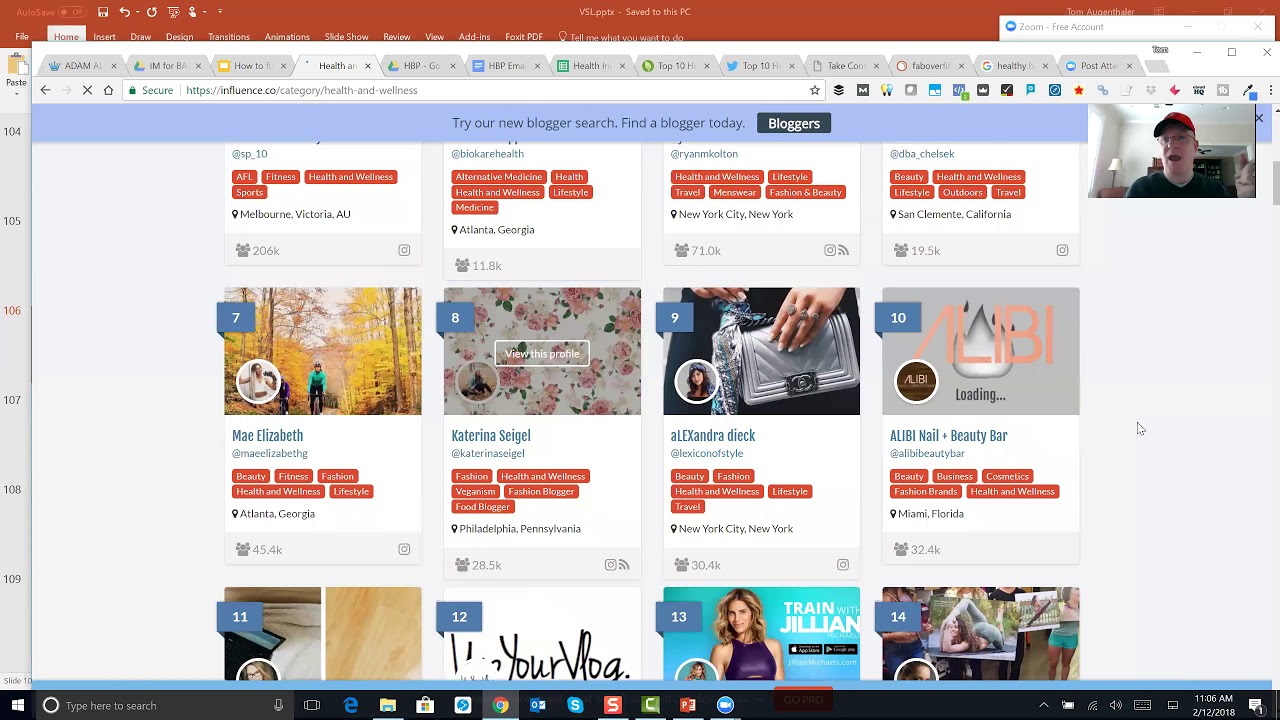
As I indicated this morning in my note to the group, I planned to speak to you all about what makes an influencer, because there seems to be a lot of confusion around the term, and I don't blame you. I think that there is a lot of confusion around it. I think there continues to be a lot of confusion around it. And when you read things online, different people have different opinions about What constitutes an influencer? And there, you know, it is, it is a bit confusing. However, I'm going to narrow it down for you today in the sense that we're going to be talking about online influencers. Those are the influencers that you can reach out to via social media platforms and make arrangements with to help you work on something, to help you get awareness for something or whatever. So anyway, let me back up for a second here because overall, if somebody can help you get a reaction on something, if somebody can help you take an— or cause people to take an action, does that make them an influencer? Well, think of it like this. If you've got a pastor in a church and that pastor can get 1,000 people and if his congregation is in church every week, that guy is definitely an influencer. I mean, if he suggests a book that they should read, if he suggests that, you know, they read certain passages of the Bible or something that they're studying, that, that's an action that he's asking them to take. And very likely a percentage of that audience is going to follow up on that and they're going to do it. How often have you all you know, been talking to a friend or somebody that you trust, somebody that you like, somebody that you, you really have a high regard for, and they suggest something to you like a book to read. How many, how many times do you follow up on that? You know, I know that I do. I'm, I'm somebody that, you know, I'm, you know, I will trust, you know, I have a circle of trust. And, you know, if somebody, a friend of mine recommends a book or something, I'm very likely to follow up on that. And that's true of people online too. I mean, there are people, members of this group like Dan McSweeney. If Dan recommends a book, I'm likely to think about that and follow up on it. If, you know, some of you are talking about books or something like in our conversations, I will likely go and look at that book at the very least to see if it's something that I might want to purchase and then read. Read. So if an action is a measure, what kind of an action is it that matters? Today on Facebook here, for instance, influencer marketing has a whole different sort of skew than it does over on LinkedIn. The kind of conversations I have on LinkedIn about influencer marketing are a lot different. They're with other industry professionals, people who are in the space, people working with clients actively, people who are publishing material over there. And those conversations are a bit different because they're— we're talking about the state of the industry and where it's going, and everybody's trying to figure that out. I have my own opinions on that. I think that, not to digress too much, but you're going to see influencers become more and more important. I've pointed this out to you guys in the group. I've shown you examples of TV commercials where an influencer like Marques Brownlee has been quoted for the Google phone. And that was right up alongside VentureBeat, Wired magazine, and other mainstream publications. So you're going to start to see more and more of that. You're going to see more influencers grow in stature that way. So anyway, getting back to our conversation about what constitutes an influencer, if the action is the measure, what kind of action is it that you want? If you're looking for something like growing awareness, it matters. Like, let me back up a second. You need to know what goal you're after in order to figure out what kind of an influencer sometimes that you want to work with. If you're doing affiliate marketing, if you've got a sales funnel that's channeling people to an affiliate product, you're probably going to look at this a little bit differently than you will if you're a big brand and you're trying to get awareness about a new product that you're launching. The reason is this: as an affiliate marketer, I, I just want to get people To click through to go to my sales funnel and to either buy or not buy. If they don't buy, then I usually have— if I'm a good marketer, I have an email sequence to follow up with those people, or I'm using a chatbot on Facebook now, which is very often the case. So I'm following up with those people. So really though, the idea is to get people to go to my offer and either buy or not buy. Then I get a commission. So my work is now done. I don't have to handle those people or anything else. It's somebody else's products and they get to handle it. If you're looking to launch a business or something, you're going to be looking at influencers in a different manner. Again, it's the goal that you're trying to achieve. So if you're trying to achieve driving awareness, then you're going to be looking at a different set of influencers, probably. That doesn't mean that you wouldn't use some influencers on a platform like Instagram because they can be very good at driving some initial awareness to a product, like for instance the affiliate marketing example I just gave. But the goal is what really matters. Now, what if your goal is to get butts in seats at an event? Or just to get people to attend an event? What if it's the number of click-throughs to a specific page? That would kind of qualify, I think, under the affiliate marketing example that I just gave. Because again, you're trying to get people to click through to something to participate in a sales funnel, and they're either going to buy or they're not going to buy. Are you looking for a number of purchases? So if you're a business and you're looking for people to purchase your laptop computer or a cosmetic product, you know, you might be looking at a different set of influencers. It might— they might still be on Instagram, but you're going to be looking at them a little bit differently, probably. And then reviews and testimonials. What if the objective that you have is to get reviews for your product? So that it can be viewed favorably by the audience. So I've done this many, many times in the past. I've helped companies take a product and get it into the hands of influencers, and those influencers then review the product and, you know, they post about it, they create content around it, and then that the audience can then can make up their mind whether they wanna go pursue that product or not. But again, what constitutes an influencer depends on your goal. Now, like I said, many people on Facebook only think about influencer marketing in terms of affiliate marketing. So it's what in the LinkedIn world is now being called sort of smash and grab. So I get a shout out on LinkedIn, I buy a shout out with some influencers on Instagram. They drive traffic to my account page, and my account page has a link to the sales funnel in the bio. Okay, that's really easy. It's simple. It works, and it can be a lot more effective than Facebook advertising. And Facebook advertising is getting more and more complicated, as we all know. And it's even getting more expensive if you ask me. So that can be a real good metric. But if I've got a complicated product, let's say I'm a B2B player, let's say I've got, you know, some kind of heavy machinery or something. Well, Instagram influencers are not gonna do anything for me. Nobody cares on Instagram about heavy machinery from what I can really tell. So you're gonna have to find influencers in your space or in that industry who can help drive traffic and drive awareness around what you're trying to do. So what does this mean? Let me give you an example. Let me give you a consumer example, another consumer example. Stephen Ace, who's a member of this community, is working on a men's beauty product. And it has to do— it's like anti-wrinkle cream or something like that. He hasn't given us too many specifics on it, but I think he's still in the process of developing it. Okay, so Stephen is already out talking to networks of barbershops because that's where men go to get their haircut. That's a natural entree into getting to your consumer, right? That is a— those barbers are influencers in this case. So it's not just an online influence, but it's a physical influence. So these guys are in the business, they're meeting and helping customers every day on a daily basis. They are influencers. That is one kind of influencer. Another kind of influencer is, all right, maybe I need to go to Instagram influencers who handle men's beauty fashion products online. Those people can help drive awareness about your product, your service, and even drive click-throughs if you're looking for that to your landing page or whatever it is that you've got set up, your sales funnel. So all of these types of people are influencers. And I know that term influencer is really sort of subjective and it's really not that helpful. That's why I try to— social media influencers are one thing, 'cause those people, if you say social media influencer, well, you kind of know inherently that they're online. Other influencers, like I said, are physical influencers, people in a business, they're in a business vertical. Those people are a bit different. I mean, because they're operating in the business. So when I handle like a B2B client, one of the things that I'm looking for is I want to find people that are conversant about whatever it is that my client deals with, what is their product or service, and I want to know that they have expertise in that industry. So sometimes it really doesn't matter how big of a social following they have. What matters more is the relevance that they have and the expertise that they have in that particular industry. So, you know, if I'm looking for— I mean, I was talking to an executive not that long ago about the funeral industry. He's an executive in the funeral industry, manages a big company, and we were talking about a program that he had and that he was, you know, he was debating about what, how to take that out to the marketplace. Well, believe it or not, there are influencers that are in the funeral industry. Now, they can be every funeral director every funeral home is an influencer in that community because they have a customer set which they've worked with. So, you know, you could work through those people, but there are also people online who cover the funeral industry as well. So that's something to look to as well. So when you're thinking about influencer marketing, it really helps to think of it beyond just social media influencers. That's one big component of it. But you also want to be looking at people in the industry who are influential as well. So for instance, I was in touch with a beauty executive last week, and she was telling me about how she owns and operates some trade publications within the industry. She is an influencer in the beauty and fragrance industry. But she's not somebody who's out there publishing every day on a blog about it. But she is a very influential person to know, and she— if you get— if you care about that industry, you would want to know her because she can make introductions for you to other people inside the industry. That's gold. So it's also influencer marketing. It's just taking it and thinking about it a little bit Differently. Again, what I usually concentrate on for the most part here with you guys is social media influencers because social media influencers are easy. You can get in touch with them very easily and they're located all over the place. Instagram, Facebook, they're on Google+, believe it or not. Google+ still exists as a platform. I don't really use it much, but it's there. Yeah. You've got Twitter, you've got blogs, and all of these people are findable and you can get in touch with all of them as well and see if they're willing to work with you. Now, we're going to get into it. I'm going to get into how to find influencers in a different video because that's a whole different topic. And honestly, I could talk about it for hours, how to find influencers. you know, there's all these different methods to use. But anyway, for our sake today, I really want to just sort of get through to you guys that an influencer is a sort of nebulous term. It means many things. Like I said, a pastor in a church who can get 1,000 butts in the seats every week is an influencer. If you've got a barber who's got, you know, who's seeing 10, 12, 15 clients a day or whatever it is, how many people a barber sees a day, That person is an influencer depending upon— now if you have a beauty product that— and that influencer is speaking to the people that you want to sell to, that person is somebody that you really want to get in front of and you want to talk to. And like I said earlier, our member Steven Ace is doing just that. He's reaching out to people in the industry who work with his target customer directly. That's an influencer. Those are people that you want to get in front of. Like, for instance, the hair care product Paul Mitchell. Paul Mitchell, originally Paul Mitchell, all they did, they didn't sell in stores and stuff. They only sold through beauty salons. So they knew that their target customer was in the beauty salon, and they knew that The stylist was influential with the customer. So what better person to have talk about your product than a stylist who's doing your hair at the time? So that's how Paul Mitchell built their empire, and that's how they, that's how they, that's how they, that's how they got so much traction, because they went directly where the consumer was interacting with somebody that was influencing them. So Paul Mitchell got right in between there, the influencer and the customer, and they got in there. And once the influencer started using the product and liked it, well, that is something that's going to drive your, drive your business. It's different, it's different with social media influencers, although it's the same concept. With social media influencers, you're going to want to reach out to them and and you're gonna wanna talk to them about doing something with you. It could be a trade in terms of value, a value trade. That's always gotta be a value trade there, meaning even if it's just paying them, maybe it's giving them some samples of your product, but the product has gotta be worthwhile. It can't be just junky trinkets or something. You've gotta make it really worthwhile for them. But when you're working with those influencers, You want to make sure that you communicate what your product is about, who you're trying to service with it, and what your ideal customer looks like. And then that influencer will likely help you craft your message a little bit better for their specific audience. Let them do it. Don't try to control every aspect of your messaging because you've got to give some latitude to the influencers to do some of that. Because they know their audience better than you do, believe it or not. You might think you do, but you really, really don't. When I worked inside of HP, they used to do these studies about their, you know, they'd pay for these studies about their customers and trying to understand what their customers wanted and all this other stuff. And some of the information that came back was really, really weird. And HP would then take that and then they would parse it up into sections. So they would parse their customer set up into, well, this person runs a microbusiness, this person is a small-medium business, this person is part of a large business, this person's part of an enterprise. I mean, nobody buys like that. I mean, nobody sits there and says to themselves, gee, I'm a microbusiness. So as a microbusiness, I'm going to go and buy my products in such and such a manner. Nobody thinks like that. They're all consumers. A guy who runs— or a guy or gal who has a 3-person business, if they see a deal on computers and they need computers for their business, they could go to Best Buy and buy those computers. Why not? They're not going to necessarily go to where HP thinks they should go as a micro business. So remember that the influencers know your audience a lot better than you do sometimes. Let them tell you what they hear and what they see because it's going to help you market your product better. So that's one way to really leverage those influencers and use them to best effect because they're going to tell you what they're experiencing with the audience. Now getting back to Stephen and his men's like anti-wrinkle cream or whatever, when he's talking to those barbershop owners, those barbershop owners are going to tell you what the customer's talking to them about. What does the customer give a damn about? So if maybe, you know, maybe men are more, you know, aware about, you know, the wrinkles and stuff than than you think. Maybe they're not. I was talking to that beauty executive I talked to, told you about earlier. She was telling me last week that Estée Lauder has a product out that's an anti— well, it's some kind of wrinkle cream. It's meant for the face, and it's supposed to be applied a certain way or something for certain conditions. And what these online influencers were doing was taking it and using it on their toes. And Estée Lauder really wasn't happy about this cream being used on their toes and it being talked about online that way. But who cares? Because if it drives business for you and it causes people to want to purchase your product, maybe there's a need for toe cream. I don't know. But the customer, the consumer then is telling you something. The influencer is telling you something. So go with that a little bit. and see where it leads because it might help you open up and crack a new market that you didn't know about before. So getting back to the whole thing about who's an influencer, it's a nebulous term, but look at it this way. Break it down. So you've got social media influencers, you've got influencers in your industry, your peers that are, that are also in the industry. It could be executives at companies, they could be small business owners that blog or something about what they do. Those people are influencers. But then you also have the people that are servicing your customers that are influencers too. So there's all these different types of people. You just have to parse it out. My particular expertise is in social media influencers, people that— to work with online, because companies very often want to reach people that have an audience and they have an engaged audience. So that's a big thing. You've got to, you've got to make sure that the influencer that you're looking at has an audience, but that they have the audience that you want. So that's why you have to know who you're going after in terms of your customer. You, if you know that customer well and you've developed a customer avatar, going at, you're going to be much better equipped to figure out which social media influencers are the people that are speaking to your customer avatar. So again, it's not the size of the audience that matters, it's the relevancy of the audience that matters. So make sure that the influencers you're looking at are relevant to your business and that have an audience that's relevant to you. Some, some have audiences that are all over the map. But some are very, very targeted. Like I've told you guys in the past, I've worked with influencers that have very small but targeted audiences, and they've caused customers to actually take an action and purchase. And again, like I said at the beginning, you want to make sure what your goal is. If your goal is to drive awareness about your company or your brand or your product, that's one thing. If you're looking to get click-throughs to a landing page or an affiliate or a sales funnel for an affiliate product that you're marketing, that's a little bit different. So make sure that you're structuring, you know, the whole program so that it's all going in the same direction. You can't sit there and say at the end of the program, gee, we didn't get many click-throughs, but all you were doing was trying to drive awareness. The 2 things are not the same. So make sure that your, your goal and your actions are aligned, your strategy is aligned with your goal. Some influencers are great at driving awareness, but they don't drive as much engagement, or they don't drive as much of a reaction. So you're going to want to take a look at that, and you're going to try to— and one of the best ways to figure that out is to query the influencers themselves, get them into a dialogue a little bit, and start asking them questions. Because very often they'll be upfront with you and they'll say, well, my audience is, they seem like they're really engaged in everything, but at the end of the day, they don't click through on some of these offers that I think they would click through on or whatever. So maybe that influencer is better for you to drive awareness with, not to necessarily drive click-throughs or some other kind of engagement. So again, Again, whenever I've set up a program for my clients or myself, I look for a mix of influencers so that they're all driving people to the same end goal. And in that way, I kind of COVID my bases. So I try to get a few people that are trying to drive awareness around it. I get to try people who are going to really try to drive a reaction, take— get the consumer to take an action. And then others that maybe I'm just trying to get some reviews around it at the same time. So I like sort of a holistic approach to things. Many people on Facebook seem to be really concerned with, all I need is, I just want traffic to my sales funnel. Maybe that's all you really need, but if you're looking at something a bit bigger, like a company or some kind of a service or something, it's going to be a little bit more complicated. So you're probably going to want to get some people that like I said, drive some awareness, some that can get you that click-through, that engagement, some that'll get you some reviews. But altogether, it's going to cobble together and it's going to, it's going to get you that kind of reaction that you really want for people to take a purchase, to make a purchase. So I hope this helps. I know I've kind of rambled a little bit, but the word influencer is just, like I said, nebulous and it's a bit subjective. I see these conversations all over the place online about what makes an influencer, and I think that's the problem with the term influencer marketing. It's kind of like, well, what does that mean exactly? I mean, I had somebody contact me a couple of weeks ago and they'd never even heard of influencer marketing. So what I take to be really common knowledge is not really by the larger population, and so there's still got to be a lot of education. So anyway, I hope this helped. The next video I want to do is finding influencers, and I'm going to walk you through a number of platforms and tools that I use to find them. And in that way, we can kind of refine our future videos a little bit. And what I'd like to do even is take some of the businesses you guys have and maybe talk about those specifically and what you might be able to do with influencers. So, you know, let me know what you want. And we'll continue to, you know, I'll continue to educate you guys about this, but I got to know what you want. And if you let me know, well, then we can do some more of these in-depth videos. Anyway, hope you guys are doing well. Have a great day. I hope you have a kick-ass month this month. I'm excited. I can't believe we're already into February. Where did the holidays go? Anyway, thanks a lot, guys. And let me know in the comments what you want, and we'll make it happen. Thank you.