Jay Winford: Making Work Fun
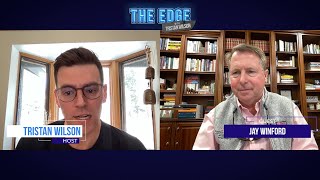
Jay Winford, president of Prairie Contractors, talks about running an asphalt company and why he started a company-wide book club. He uses Civil War history to teach civil disagreement, donates Kindles to elementary schools, and believes storytelling makes better leaders.
Chapters
I really believe I work in the greatest industry in the greatest country on earth. Unfortunately, we lost him a week before Katrina.
That's really thinking outside the box.
So no wonder our industry has the highest suicide rate in the country.
How many people are willing to have that difficult conversation? Welcome everybody to the Edge Podcast. Today we have the privilege of hosting a distinguished leader in the asphalt industry, Jay Winford. Jay's the president and co owner of Prairie Contractors, prominent asphalt paving producer and and contractor in Opelousis, Louisiana. Under his leadership, Prairie has really flourished, operating across multiple asphalt plants and expanding into aggregate production across south central and southwestern Louisiana. A little bit west of of my my my my home territory. So. And Jay's Jay's academic credentials are equally impressive. He has holds a Master of Science in Civil engineering and an MBA from Tulane University and also earned a PhD in civil engineering with a concentration in material asphalt pavements at Auburn. Jay's commitment to advancing the asphalt industry is is evident in his involvement with napa, where he served as the chairperson of NAPA for two years and a board member, during which time a large highway infrastructure bill got passed in in this country. Jay contributes to his knowledge to NCAT as well at Auburn. He was also appointed to the Board of Directors of Aztec Industries in July of 2023, where he continues to influence production as well as construction. Beyond all his professional compliments, Jay is one of the smartest and most engaging people that I know and I've looked up to him and for a long time and our families have known each other for a long time and he's one of the people that makes this asphalt paving industry as special as it is. So I am so excited. Jay, thank you for coming on. Welcome to the podcast, Tristan.
Thank you. I've looked forward to this all weekend. Yes, I'm glad you laid out the disclaimer. There is a strong family tie between the Winfords and the Wilsons. And just for our little history for our listeners, my dad and mother were younger than your grandfather, George H. Wilson Sr. And they accompanied him on the QE2 when he was NAPA chair, I believe in about 1972. And then obviously your dad and your two uncles have been a big part of my life. I think the world of them as I do you guys. And it kind of brings always together one of my favorite sayings. I really believe I work in the greatest industry in the greatest country on earth. There are great people in this industry and you know, I think forever and always I will be attached to the industry and the friends and the peers that I've made. So thank you for having me.
Absolutely. Glad you're here. So, Jay, could you tell me a little bit about your, your. Your history in the industry? Kind of, you know, how you came up and how you. How you got to where you are today?
Well, my grandfather, George Winford, was born in Texas. He ended up went to smu. I don't think he finished. It was during the Depression. And he ended up working for Austin Bridge and Road in southern Arkansas on a bridge job. And there he met a gentleman by the name of Mr. Gilmer who was in the gravel business outside of Minden, Louisiana, where I'm from. It's just the northwest part of the state, by the way, Louisiana, as you know, Tristan, since you grew up here, is three countries. It's north Louisiana, south Louisiana, where I live now, and then there's New Orleans. And he followed. He followed Mr. Gilmer back to the Minden area and they went into the gravel business and after a year to. George Winford bought Mr. Gilmore out and produced gravel and believe it or not, railed it from Sibley along 28 miles to the Shreveport market. And as typical in the 40s, you know, they expanded into surface treatment. And then this thing called an asphalt plant came along and he bought a. I think his first plant was a pioneer plant that he put in in Sibley, Louisiana. He died when my dad, Jim Winford, was finishing up his engineering studies at lsu. So my mom and dad, then it was compulsory service, went into the army. He had three wonderful years in Heidelberg, Germany, where my older sister was born. And then he came back and worked in the business. Unfortunately, he died when I was in college, so I was kind of left there. There was an oil bust in Louisiana. I think the, the billboards in Lafayette used to say, with the last person leaving, please turn out the lights. That's how bad it was. That was late, late 80s. And I ended up being fortunate enough to get a scholarship to stay at Tulane and get a master's in civil engineering. And believe it or not, I studied pre stressed concrete and had a wonderful professor there. Bob Bruce studied with him in China one summer on the mixed designs for the Yangtze Dam. He took me to Eastern Europe and Russia the next year. So I got to see the world with Dr. Bruce. He was quite an influence. And then this idea popped up of the national center for Asphalt Technology and a quick history, because that's my passion. Our fathers and grandfathers raised a $10 billion endowment and started NCAT as we call it at Auburn in 1986. Well, I found out about it when I was finishing up Tulane and I wanted to go over there and take some classes in asphalt. So this was 89 I show up. Laura and I had gotten married, spent two of our happiest years at what I call the loveliest village on the plains. And they said, well, you can take the classes, but you have to be a full time PhD student. And then they dropped this research project in my lap that was part of the beginnings of Superpave. So that's how I ended up doing that and came back and worked in the family business for about three years. Decided that wasn't for me, and a stroke of luck and maybe God works in funny ways. I was going back to law school and I had talked to your dad on the way down that morning because I could tell he wasn't too happy about Jake getting out of the construction business that I had trained my whole life and like you worked every summer in the shop and shoveling and all that stuff. And on the way back from giving my first down payment for law school, which the LSU still has by the way, I stopped at a coffee shop in Port Barry, Louisiana. And it's a divided rural US 190. And a company called Prairie Construction Company was rubberized and overlay on that project. Well, as I was walking out of the coffee shop, the owner, a guy named Laddie James, who was a friend of my dad's, and, and your dad and uncles was walking in and asked me to come sit down with him. And he said, what are you doing? And I said, I'm going to go back to law school. I've had enough of this business. And I won't use the language not to offend our listeners. But he said, why do you know, what do you want to do that? And he looked at me. He had a son my age, a little bit older, that had died of leukemia. So I lost a dad, he lost a son. And he said, jay, I've known you your whole life. He said, I just hired another young engineer who turned out to be my partner, greatest guy in the world, Woody Harvey. He said, would you move to Lake Charles and set up an asphalt plant for me down there? And in turn, I'm going to sell this business to you and Woody. It was a handshake agreement. He asked me if I needed to go home and talk to Laura about it. I said, I don't even talk to anybody. You got a deal. So Woody and I worked for him for seven years, he about killed us. It was 200 nights out of town a year. But that was probably the best college degree I ever got, was the University of Laddie James. It was really neat. He was a made work fund. He built his own asphalt plants. He had built, I think, 13. Most went to South America. They were simple things and real quickly, a little history. The way he ended up in that business. When the drum plants came about in the late 70s, he bought one from a company called Ace Co, Asphalt Construction Equipment company in Chattanooga. And halfway through the fabrication of his plant, the company went insolvent. So he flew to Chattanooga, cut a deal with a bankruptcy judge that he could get the drawings and get the part of his plant that was made pay the bankruptcy court. And that's why he built this big shop out here to build asphalt plants. And we had fun together. We did a couple of patents. We did one. We used vertical impact shaft crushers to crush gravel down here. By the way, as you know, the gravel is pretty much gone except for Florida parishes. And we'd always had a problem with those bearings not getting lubricated because the lubrication pump went out. So we had figured out how to put fins on the shaft. So when the shaft turned itself, lubricated the bearing. So it was a really neat, simple idea. And the other one, he came in one morning because we all got to the office about 5 o'. Clock. We had an inspector that always made homemade biscuits and sausage. So we huddle up, have coffee, and Laddie said, I was watching my wife put hairspray on her hair. How come we can't atomize tack and spray it if we put the tank under pressure? So we built a couple little prototypes and he said, well, call Cummins engine and ask them what the pressure of the exhaust off the engine is. So I called and talked to some engineer and told him what we were going to do. And he said, it'll work. But we never had this conversation because you just voided all warranty with any Cummins engine. So we built tack trucks and used them for 20 years that were pressurized by the exhaust of the tank and atomized. Attack did a beautiful job spraying it.
So that's kind of really thinking outside the box.
Oh, he did. Unfortunately, we lost him a week before Katrina. He had a heart attack in the office. But we still think of him finally and certainly appreciate the spirit of hard work and thoughtfulness that he gave us. It was really good. Tristan. When I came into Laddie's life, he would have been about 63. And as you know, he was a very conservative guy financially. You know, he ran a lien operation. He was. Had financial stability, you know, like a lot of those old contracts. You know, he owned a big piece of the bank, and he was a quiet guy. So at that point in his life, he wanted to do the jobs he wanted to do. I remember one time we bid a. At the time, it was 25 million. So let's say an $80 million interstate job. And Woody and I were all excited about it. And the morning we got that was paper bids. We were going to drive it over. He added 2 million to the bid. And I said, well, why did you do that? And he said, it's going to cost me 2 million by the time you and Woody get divorces, Bill, in that damn job. He just didn't want to fool with it. And the other little lesson, you talk about making it fun. Laddie loved youth. You know, I know one or two older people that seem. I think they think that anybody one day younger than them does not know what they know. Well, as you get older, mathematically that's going to be a majority of the population. But Laddie wasn't like that. He loved our enthusiasm, the dumb questions, the ignorance that we could conquer anything. We always. Laddie used to always say, you and Woody can build anything with a roll of duct tape and a rigid pipe wrench. Well, we really believed that. So I hope that answers your question. He did. He made it fun for us, and he made it fun for our families. And we had plenty of humor around the place. He never let anybody get by with anything. In fact, I tell you how he was. He. He wouldn't let you get on a high horse. And that was when we had these company radios and he assigned everybody number somebody was double oh7. He assigned me the number zero.
I remember company radios. I grew up. I grew up riding. Riding. Riding in the car with a. With a company radio. Yeah, 21 to 7, I think that was. That was. That was the call.
Well, I remember an old guy. You're. I did a couple of expert witnesses for barrier, and there was an old guy down there, Jim Breland's daddy. His name was Jim Breland, too. You know, just a hard charging old guy that, you know, he got her done. Those. Those guys are the backbone of our industry, which leads me in. Tristan. This thing is. Industry's changing exponentially. You know, if you don't mind, I wanted to kind of venture off into the way we execute our work.
Sure.
We are the only industry I know of that does not write the rules to our game. You take these iPhones that we can't live without. Apple decides how they're going to look, how they're going to work. They're writing the rules and the specs to all of this. Unfortunately, we don't. I was telling a good friend of mine, David Madden, who, like me is loves the industry and spends a lot of time, energy and effort trying to get the specs right and trying to build a quality pavement that he and I have been going to those spec meetings with our dad since the late 70s. And we've got people, they're good people. We've got people riding the rules to the game that, you know, have never designed the mix on paper, they've never validated in the lab, validated through the plant, and got 100% pay on a job. Because there's some things that we can do and we can engineer our product very well, but there's some things that we can't. And so I think these typical dots particularly. And again, they're great people. Those are what I call post depression, Pre World War II models that really have never changed in 80 years. And they worked very well in the beginning when we went from mules digging a ditch and throwing the dirt up on the road and then later on surface treatment. Because really all your grandfather. My grandfather did was supply gravel, materials, equipment and people and the highway department designed the job. They actually set the controls on the plant or the concrete plant. They did all the testing, they did the surveying. Well, our product has gotten so detailed, specific and scientific. You know, that level of knowledge was here. Well, now it's like this. And I think these dots and ours is in the process of kind of doing a look in the mirror. We've hired a consulting group to come in and kind of look at the highway department. They did some good comparison to us against like highway departments that have affected some change. I think the future is probably privatization. And I'll give you an example because you and I, both his project managers, had built a lot of work in Louisiana. Guys, we have parishes, not counties for, let's say, a parish. So the parish gets the funds, they identify the project. A private local engineering company designs the job. And then if you and I are the low bidder, we execute that job with that private engineering company. And when we do that, the incentives are and disincentives are completely aligned. You know, that owner of that private engineering company is going to say, tristan, if you're going to start Monday I want you to stay on this job. Don't pull off. Build it as quickly as you can. Number two, build it as safely as you can because he or she's going to get the lawsuits on their desk just like we do when there is a safety issue. And thirdly, remember, it has to be built to specifically. So the beauty of our product is forensically, we can test everything to see if you met the spec. So if you gave me a spec for a job that you built a year ago, I can go out in court, I can pull a profile graph now that that ride is going to disintegrate over time, obviously. But I can see if you met the gradation, I can see if you met density, I can check the rice gravity, I can check the volumetrics. So I think we're spending a lot of resources over testing things, particularly in our state. And again, I can go out at the end of the job and say, Tristan met the spec. So going back to this outsourcing of the design and the execution of the job, I think is probably the future for the industry and I think it will probably help develop the spec quicker than the process that we have now.
Well, Jake, tell me a little bit more. Let's talk a little bit more about those alignment of incentives. So you said under the conditions of, when you're working, maybe for a county or a parish, you go out and work with a private engineering firm, they do the cei and you know, you're working with them on the job and you're working to get it done as quickly as you can, as safely as you can, and do it right. Now. How do you think the, the, the, the incentives may be different under one of these highway departments that's, that's structured kind of in this, you know, post, post World War II era.
Great, great point of discussion. Well, let's take speed first. The equity holders of that private engineering company are going to benefit as fast as that job's done. They can close out the file, get their billings, collect the money and go to the next one. So the financial incentive for speed is on both sides, which working for a bureaucracy, unfortunately, the highway department project engineer and his staff do not get paid anymore. As fast as a job is built or as smoothly as it is. There's also the incentive, let's say, unfortunately, change orders. And I think the public has a misconception of change orders. In our industry, at least for us, they're not something we like to do. They're typically not big money makers. It's when Things need to be added to the job. We see those change orders get processed much more quickly when I'm working for a for profit organization because again, they want to close the job out. And then on the safety side, you know, if I had an accident, let's say an incursion from the public, which that's the problem now in our work zones is we got people inebriated or distracted and they coming into our work zones. So if I had that, typically the project engineer and his staff will not see much of that litigation. If you're the owner of the private consulting firm I'm working for, you're going to get the litigation and the lawsuits and the depositions and discovery just like I am. So you, you have an incentive to run a clean operation other than it being the right thing to do. And then on the quality side, you're going to want to is private industry, you're going to want to conserve resources and say, well, can I adequately inspect this job and ensure that I'm getting the quantities and the quality with two people or do I need eight people? I mean, you're going to be very, to use a current word, you're gonna be very dogeous about that, you know, to say what is the leanest I can be to ensure the public's getting what they're paying for.
Yeah, I mean it's an interesting topic. I think there's also discussions around, like around bidding and more innovation.
Right.
When it comes to bidding, you know, I think it might be helpful for maybe some of the folks who don't understand how, how bidding works in, in highway construction. If you could talk a little bit about that and then maybe some other, you know, things that you've seen just in some of the folks that you've talked to.
I'm glad you brought that up because like the evolution of how we execute our work. Another passion is, is the procurement or the bidding side. And I'll use the one. Unfortunately we have to low bid. The only way I get a job is to be the low bidder on public works. And the low bid is not always the best. I think I had told you one time, if I'm going to get my house reroofed and I knew that you recently had your house reroofed and I get three prices and you used the middle guy and you said, Jay, that person was jam up. They came back three times to check the attic, make sure it wasn't leaking. They ran magnets around the yard, they covered all the shrubs that they were Jam up. That's probably who I'm going to use. So in 2001 I sat on a NCHRP panel for the National Academy of Science. NCHRP is National Cooperative Highway Research Program and it was to investigate alternatives to the low bid method. Now this is 24 years ago and nothing's changed, but I was excited, hoping, hoping that the National Academies would put their stamp on a formula they thought was good for highway procurement. And let's just in all quantitative and let's just hypothetically say about 50, 60% price and about 10% of my on time completion record on other work, my quality indices maybe ride numbers and consistency through the lab, that kind of thing. Maybe the longevity of the management or maybe the owners rank Tristan's company and Jay's company and you know I get a, that maybe plays a little into it, but we've not changed anything so far because you know, you and I both know the low bidder is not always the best bidder. And finally Tristan, there was some talk at one time about taking the second bidder, you know, so I think in the future something needs to be done to make it more rational on how we procure highway work, which leads me into, and we can talk more at length a little later during our visit. You and I both know it's rapid consolidation in our industry. I think it's probably 20 years later than Laddie James and I thought it would be coming. You know, I don't know how a one plant company can make it in the future that wants to do like DOTD work because the barrier entry, because of the capital and you know, the certifications of people, you know a shuttle buggy now is what, $800,000 and I, I think is this consolidation happens, you're obviously going to have fewer larger companies, maybe the publicly helds or the super regionals. And there's some big regional players, particularly in the Midwest that are vertically integrated from asphalt, hot mix, asphalt and aggregate. And I think the dots are going to have to accept the fact that statistically they're going to have fewer bidders on jobs. You know we were doing the math the other day. In Louisiana in the early 80s there were about 25 families that owned an asphalt plant. And you know it's less than half of that now. And that's just, that's just the future. A lot of these businesses have gotten down to three and four generations and there's so many shareholders. The only way that somebody's going to retrieve their built in equity is to sell the Business. I don't see it as a bad thing though, Tristan. I really don't. I think the larger players are probably very good at calculating financial risk and otherwise risk. I think they're very good saying we have this capital employed now with that risk. This is the return we should make. Whereas, you know, a one plant company, they might have to go take work for nothing because they don't have anything to do. So I think I probably say a little bit more financial savviness there than what we see in a lot of very small family businesses. I think also these larger companies tend to invest more in the employees. I sit on the board of a large regional, privately held company in the Midwest and I am just amazed at how good they are. And they put so many resources and time into their people. And I think it's a very small family business where the owner has to wear the IT hat, the HR hat, the safety hat, the claims hat. Whereas a big company has those departments and they can spend more time nurturing and growing their people.
Yeah, and I think that's also part of why profitability is so important. You know, in, in my mind, you know, and in our business, you know, what we do at Edge Van is try to help, help improve profitability for companies because what happens, you know, with that profit is that it gets reinvested into the people and, and also you know, to, in into the equipment. But I think the people are, are far more important, you know, whether that's training and development and health and wellness and you know, all of the, all the important stuff, you know, that go to, you know, a well being, becoming a more well rounded person.
Tristan, I need to get one plug in, if you don't mind. And I know you know, this, this is for our listeners. We take a young, typically a young male that's going to run a paving crew and he's on a night job on the interstate. You've done it a hundred times. And they're fighting inspectors who probably really don't understand what they're doing and how to get it done. They're fighting Mother Nature, they're fighting the traffic that doesn't want them out there that's again, inebriated and distracted. They're fighting people that don't show up to work and they're fighting equipment that's going to have problems. So. And then you and I are throwing $200,000 worth of hot mix at them at night and tell them to get it on the ground and get 100% pay. So no wonder our Industry has the highest suicide rate in the country. And our good friend Vince down in Florida has done a phenomenal job making that awareness his ministry. And I am forever thankful to him for doing that. So I wanted to get that plug in because you're right, the health, mental and physical health of our workforce is number one. And again, I think these big companies pay a little more attention, pay a lot more attention to it than a lot of the smaller families do.
A hundred percent.
Yeah.
The work that Vince has done is fantastic. And he's getting out and really hitting the pavement. I mean he is, he is on the road constantly getting the word out. And everywhere you go like, you know that he's been there, you know, oh yeah, they've got, they're talking about it. There's more, you know, of that, of that awareness which is, which is so critical.
Your dad sponsored me for a group called Young Presidents Organization that actually my dad was involved in. And I've enjoyed it. I've liked not just the travel, but the learning aspect of it. And I've had the privilege for the last 20 something years of doing the YPO week at Harvard. Our good friend Pat Nelson did a couple of years of that and it opens my eyes up to the world. You know, it's a case method. They give us 16 cases and I learn about companies and geopolitical things that I don't get in my little world here. But it's interesting. Harvard has always preached the first two things they tell us is one, make a decent profit decently. And I want to talk about that in just a minute. And the second one, I always laugh, fire your bad customers. Which you and I can't fire our bad customers. We're always struggling for work. But I like those two sayings. And the reason I bring up the decent profit decently, cause we talk about trying to be financial savvy, running books and closing them every month. What was the return on my stuff, my bulldozers? Was it commiserate with the risk is a lot of our owners, they're great engineers. The only financial class you take as a senior as an engineer is engineering economics, which is really present value benefit cost ratio. But we need to educate our owners to understand what a decent profit is. You know, I can't ask Tristan to finish an overlay job to leave and then say, well Tristan, I need you to come back and do three driveways that are scattered out, then this whole 10 mile road for, for the same number that was in the blank for 30,000 tons of hot mix, because it took you five grand to pick up where you were in that lost profit for that day. You had to bring the whole crew because you can't just send them home, even though you need four and you're going to. You've. You have summed up a numerator that's very big in dollars. And the denominator might be 8 tons. Well, we take that big number and divide it by and let's just say you had 120 in the blank for the 30,000 tons. It's not 120. It might be $1200 a ton. And that's just for you to be made whole and get back even. And, you know, you still got overhead and everything else that ticks. In fact, I wanted to jump in. Your dad and I have a peer up in North Louisiana, very wise guy, and built a great company. And one rainy day, I was visiting with him in his town car. He was smoking his cigarettes and he was giving me little words of advice. I was about 29 at the time. It was raining and it was cold. And he said, son, today is the day that money comes in the back door in wheelbarrows and goes out the front door and dump trucks. And that's always stuck with me because it's true. That financial clicker, it's like the national debt clock. It's ticking every day in a company like Barrier or Prairie.
And so our owners need to understand.
What that decent profit, decently is. Because if you're not making the return, Tristan's going to be like selling shares of stock and say, well, I want to sell it and go put it somewhere else. So I think the industry needs to do a better job of that. I don't think we've cast ourselves in a. Our brand as a. In a positive enough way.
How many people are willing to have that difficult conversation with those engineers about what you just said? Like, hey, if. When you ask me to do this by coming back out and having to do a very small quantity of something that's really expensive, that costs a lot of people and a lot of. And a lot of machines and a lot of resources, I am losing a lot of money by you asking me to do that. So, like, how do we address this proactively on the front end to make sure that I'm able to get all the work done that's going to be available to me and that you're going to let me do it all and that we're not going to come back, you know, later in the game? And. And have you try to rewrite the rules or add, you know, a small piece of work to me. So I think, you know, I. How much of it's on the industry versus how much of it's on the. The owner.
I think. I think. Let me ask two things. I think we have to educate because we're educating our people. We send them back to Aztec School every year where we're buying their product and paying them to train our people how to operate, take care of it. And then secondly, we're back to this incentive disincentive. If you came back and did those three driveways and let's say the number was $1,500 a ton or whatever, there needs to be some pain on that project engineer that, hey, next time I'm going to make sure everything is finished before Trish demoes. You know, there has to be, because I'm sure you're like us. Every now and then we'll go into these plants, and when they call us back, these big companies are smart enough. Hey, I realize I'm coming. Asking you to come back. This is. This is time and materials and 15% or whatever the number is. And they get. So there has. Because our incentives are aligned. They want that done at whatever the cost is.
That's a great. That's a great. That's a great point. What about firing your worst customers?
Firing your worst customers? Well, we deal with it this way is. So these aggregate yards we run, we're distributors for Martin Marietta in our part of the world. And the biggest learning curve was. Was credit. You know, trying to figure out who paid and who didn't. You know, we do exhaustive credit reports and all that. Then we found out, really, the best person if. I know they dealt. Done business with Tristan is called Tristan because, you know, I could make my credit report look like I was Warren Buffett. So we had to figure out in that business, if Tristan paid like clockwork. And then they had to beat money out of me. Well, either I'm not priced right or I need to go down the road. You know, we always tell our young guys, because, you know, a lot of us pay on commissions, you know, a little bit of money on the volume they lay a year, the number of tons of stone or asphalt, whatever, and that's a good little incentive. But they don't really understand the credit risk or what's really going on in the back office. So I always tell them, if you sold something $10,000 of stone and you didn't collect it, now you got to go sell $100,000 and let's assume you had a 10% markup just to get back. Even so I realize in a public world I can't go say, well, the highway department, I'm not going to work for. If I did, I got to go get out of the business. But I think when we're, and you've done a lot of private work and there might be plants or certain companies that you just say it's not worth the hassle dealing with because it's eating up and it's not a crude thing. It's eating up all the limited resources in your office and your management and everything else. Let's go help the fast paying customer like Tristan and help him grow and put our attention over there.
Yeah, that's, that's, that's an interesting point. Could we, could we talk a little bit about. I want to get back to the consolidation because I think this is a big thing that's happening in the industry. Like every single week I pull up my LinkedIn or, or, or I get a notification from one of the news people that I subscribe to that so and so has been purchased. So and so has been acquired. What, what do you, what's driving that and how do you see that moving forward?
Well, one, the capital structure of these publicly traded companies and the multiples that they're trading, they can afford to pay pretty good multiples. They can do things cheaper than I can. They can probably buy materials cheaper than I can. They can probably have a preferred nationwide account with a John Deere or a Caterpillar and they buy that stuff cheaper than, than I can. And then I think a lot of it goes back. You know, these are all, all of us were kind of started at the same time with the buildup of the interstates and the, you know, the modernization of our pavement and bridge structures and, and now that we're down, you know, three generations or four from it, I think people are saying I want my money and I want to get out. I think that's, I think, the biggest driver. Coupled with the fact you've got these well financed big companies that have the pocketbook, the wherewithal to go. I still think there's going to be some private regional players, you know, that are kind of fairly vertically integrated. But I just don't see how small companies going to make it in the future, unfortunately. By the way, Tristan, there was the other thing I've been amazed at is the private equity's interest in buying up these, these pavers you know, they consolidated a bunch of them. And I was in an airport lounge recently with a guy I knew and he said the model is if we had. In fact, his. One of the companies he bought was doing five Walmart super centers where we operate. And you know, they sent us a financial statement, they sent us a guarantee from the bank. So they're thinking is they can get better pricing, you know, than a little bitty mom and pop that's coming over here from Florida. And you're wondering, am I going to get paid or not? So I thought that was interesting, that the roll up even of these little pavers is starting to happen.
Yeah, that's interesting. From both sides. Well, I guess kind of on that, on that topic, you've referred to the sales tax on public construction materials as the greatest robbery and transfer of wealth of all time. Can you elaborate on that perspective?
I can because I'm emotional about it. Now. In Texas, you do not pay sales tax on materials going into a public job. And so we are trying to change that in Louisiana. So let's just assume half your job is materials or 60% in our industry, let's just say 60. And all the combined taxes in our parishes with local, state and parish is about 10 or 11%. You know, you're looking at probably 6% of money that's coming out of the dedicated highway trust fund. Six percent of that's coming out and really going into general funds at cities, towns, parishes in the state. And I just don't think that's the intent. And it is, it's a transfer of, of money, of wealth. And I think if the public understood that as, hey, I can get you 6% more stuff done square yards. By the way, I think the last legal way to buy boats in Louisiana is a square yard of asphalt pavement. I can get you 6% more of that, I think. And again, the industry needs to be the educator here to spread the news and write articles in the op ed sections of the papers and let them know.
Help me out on the, on the, the, the square yard of pavement. What's, what are your thoughts on that.
In terms of the legal way to buy votes?
Well, yeah, well. And just in terms of being paid by the square yard for asphalt versus being paid by the ton.
I have two comments on that. I'm a big by the ton guy. And the reason why it's easily measurable. As you know, in our state, all of our truck scales have to be approved by the Department of Agriculture. You and I have built our careers working in very, very poor soil conditions. And I've always argued that you and I built pavements. 2 inch of binder, inch and a half wearing those are at least a half an inch too thin. I mean, let's put our money where the mouth is. So I'm a big by the ton guy, and I'm also a big by the ton patching guy. I know Calcasieu Parish, where Lake Charles is headquartered, has always had a robust overlay program. And those roads are so bad, if a 20,000 ton overlay, it might have 6 to 8,000 tons of patching on it. And if that patch is 200ft long, a good excavator operator knows when he gets to something hard, it may start out 6 inches and it may end up being 14 inches. And when we pay by the ton, we don't have all these calculations and all this wasted inspector time doing math, trying to get all that corrected and normalized for, you know, a thickness. Just pay for it by the time.
Yeah, if it goes, if it, if it goes in the hole or goes on the road, we got a ticket and we get paid for it. We don't have to worry about all that administrative burden. And, and I think in the end, in those situations, who gets, who gets a better product?
That's right.
Person who drives on that road every day.
That's right, Tristan. I got to get a plug in for something else. About 30 years ago, we made, we called it hot wrap because we ran 610 road base with 25% concrete sand and 2% asphalt cement. And we were making our own wrap to put on some shoulders. And we first we made it and stockpile it, and you're fighting chunks. So we said, hell, we're going to run. Just run it hot. Now, the first time the inspector saw rap coming out to the job hot, you know, to put out with a blown ox roadwinders, oh my God, it's hot, guys. Well, 30 years later, those rural roads and the piney woods, those asphalt shoulders, you know, so they, we notched out and they went from three inches down to about nothing. They're still there. And they look like it's. It's asphalt and it's tons through the plant. So then what happened is Calcasieu Parish adopted it on all of their roads. And by the way, it keeps the shoulder from getting built up with grass. You see that rural road? So when it rains, you got water backed up going up the slope of the lane, past the wheel path that's already cracked. And then Cameron Parish adopted It and then Cameron Parish did an article that, that hot route because we would wrap it down to the, you know, not all the way the bottom of the ditch, but some saved all their roads during the flooding of Hurricane Laura because the road didn't get undermined. It had a wrapping on the side. And so we have been pushing on the use of this hot wrap. That's the state does have a spec now. It's very simple but we just can't get full buy off on that, that product. It's a great thing.
Yeah, I mean I witnessed this as you know, you know I was the project manager of a road widening project and for, for the Cecil Lake Charles Chemical Road, which you all supplied all the great asphalt for us on. And, and I remember just driving around the area looking at those shoulders wondering why, what, what is that and how are they holding up? How are they holding up so well. And I think I actually called you about it and you explained, you know, what you all had done there and that's, that's something that I think a lot of other regions could, could, could, could benefit, could benefit from. It's, it's quite an innovation.
You know, Tristan, another thing it does, you know, cuts out of maintenance. But more importantly, you know, we have, we need torque reform in our state or really in a lot of states. And you and I have put billions of tons of stone on shoulder and as a wise old project engineer told me, it looks good for a week, then it ends up in the bottom of the ditch and we've got a drop off and a potential lawsuit problem. And so the hot rap gets, does away with that.
Yeah, that's. I'm a, I'm a, I'm a, I'm a fan, I'm a believer. So let's, let's talk a little. I want to talk a little bit about like future, future risks in construction. Just as like as our, as the landscape evolves, you know, in the industry, what, what emerging risks do you, do you see? And how can, you know, our industry proactively address those challenges?
Tristan? I have two and they keep me awake at night. We're not going to discuss the claims and the tort reform. That's another issue. One is consistent funding. You know, I've always used as an example, if you and I privately built the Superdome in New Orleans, we're going to know that in year five we're going to have some maintenance. In year ten we're going to have maybe a new roof just like our home. And it's Hard to get politicians that really are just trying to get reelected. That's their job to realize that hey, LA has X billions of infrastructure out there in terms of payments and bridges and we could get some of these young kids at McKinsey to run that number for, for us. And that it's going to take X percentage of that 5 or 10% a year just to maintenance what we have. And then, you know, you and I are both, and I spend a lot of time working on funding because without it we're dead. I mean we're our industry. And I'll applaud Audrey Copeland at Napa and her staff. I mean they and I, she and Niall are working on this next highway built right now. So one, the funding, the risk of the funding being there so we can stay in business, we can reinvest in equipment, we can reinvest in people. And then I see the second big risk is people, you know, where are we going to get the people? Who's going to train them? You know, if you look what a young welder makes or somebody, you know that can, a millwright that can work on plants or balance fans, I mean those are great paying jobs, mechanics, you know, you saw what you guys were paying at barrier. And I applaud Mike Rowe who came and talked to Napa several years ago that we need to applaud those trades and, and get young people in them. We can get them out with, with not a lot of debt and give them very good jobs. And you know, Tristan, I see even the benefits that we're having to offer, not that we're having to offer, that we are wanting to offer to attract that talent is getting more robust every year. And I'm speaking as an industry, not just us, you know, we, we had an old beat up office that Mr. James had. It was a double wide mobile home. The floor kept falling in, the ceiling got shorter because we'd have to just put more plywood on it. And finally, my bond underwriter is a very dear friend of mine. He said, jay, build a friggin office. And we sat down and decided like y' all did, I needed to build something that was attractive and nice and had a nice kitchen in it to attract talent. Young people want to work in that environment. So I would say consistent funding and, and talent is, is the big risk going forward.
Yep, I would, I would agree. Is there anything you see on the talent side where maybe an, maybe something companies are doing that that you say like wow, like that's, that's really working like like what you all are doing is bringing young people into the trades. And, and, and I think there's, there's, there's the management side, but I think probably the bigger, you know, the bigger number side is really the field and the craft.
What do you see in one example I can give you? Alabama, through Mr. McCarthy's son, has gotten very involved in their trade school system over there. And it's going to take the larger companies, or all of us as an industry to go be proactive in those things and set up the welding program to set up the. You know, I don't even think I could change the oil in my car. They've gotten so complicated, you know, to train people that can work on maintenance equipment, train people how to operate the equipment. I think we're going to have to rely more on our suppliers, too. Again, I've been through these Aztec classes. They are unbelievable. You know, they charge for them now and they fill up and we're relying, you know, you and I go hire a young person to run a plant. That's probably the first thing we're going to do is send them up there to learn how to not only run it, but how to. How to maintain it and take care of it. So I think those are the two things industry is going to have to get involved in these educational institutions, and they're going to have to support these companies with whom we buy stuff from to help us train our people, because it's all gotten very complicated. And Tristan, I think the other thing is, again, you know, we used this word, brand earlier of the asphalt industry. I don't think we sell. We're selling our brand well enough, you know, that, hey, we are the greatest industry and the greatest country on earth, and we have great jobs. You know, I want to call out and applaud the women of asphalt. Why did it take us all these years to finally say, we've got some great females in this industry. Let's create an environment where they can get together and share their stories and help each other and grow and, and, and, and even elevate themselves within the industry. So those kind of things we need to keep doing.
Agreed, Agreed.
Yep.
Especially, you know, timely with this is, you know, the, the women in Construction Day, which I think just passed, you know, last week, so.
Well, you know, I had a. And I hope she doesn't mind me telling this story. Buzz Powell is a. Is a very dear friend and confidant of mine. In fact, I always have to tease him. When I was in graduate school at Auburn. He was one of my students, although he's older than I am. And Buzz has been the, you know, test track guy. He is. His ministry in life is the asphalt industry. Well, he met his wife Cindy. She was a technician at an asphalt plant that was supplying hot mix to the test track. And she tells a beautiful story about that and how they fell in love and it was all because the hot mix business.
Leading. Yeah, that's awesome.
I want to add one other thing, and I had made a note to you. We need to invest in the continuing education of our people. And I don't mean just jay and Tristan's CPAs in here or the field engineers we have, but I mean everybody. You know, in the end, we want all of our co workers to be productive people in society, in our community. Personally, I would like to see everybody that I worked with own their own home with no debt or at least be working toward that, you know, to be for them like us to participate in things like the scouts and the churches and everything else that your uncle told me one time. Asphalt contractors are joiners. We join everything and we do and we support everything and we want that all the way down the line to our, all of our co workers and their families too. You know, I had a neat story one time when Laura was pregnant with James, there was a little issue that turned out not to be an issue. And she had to go in to see the doctor and the nurse had the clipboard and talking to Laura and she said, laura, are you, is your husband related to a guy named Jim Winford? And Laura said, yes, that's my father in law. But he died right before I met Jay. And the nurse starts crying and she said, laura, Jim Winford sent me and my husband through nursing school. And I never knew that. And those are the kind of things that when we make that decent profit, decently, we can reinvest in our communities. I'm a big believer in that. Yeah.
And I think we need to be better about storytelling because people don't care about numbers. They don't, they care about, they care about the lady who is a flag person in New Orleans who, who worked for a company for 25 years, put two daughters through Med school, like those that, that, that happens in this industry. And we need to like shout that, you know, from, from, from the rooftops.
You know, Tristan, I think, I think one of the best inventions for our, my co workers has been a 401K. You know, it was so much fun when we set that thing up. And I'm the one that talked to most of the employees, you know, and ran out math that if you were 20 years old and started with this and ran three different interest rates, this is what you could have at 65. And their eyes just got this big around. And, you know, even though it costs the company money, one of our ministries around here is we preach everybody to give to that thing until it hurts. And now you've got, you know, some of these young men that are 40 that have a very nice nest egg there. Yep.
And that's, yeah, that's, that's, that's another good one. And kudos to you. I'm sure you could explain that to them very quickly to where, you know, it's funny, you know, we, we, we went to the. Automatically opt in. You know, I think I read a statistic somewhere that, you know, in, in France, they, in order to. They automatically call you an organ donor. And if you want to opt out and then you come out and the rate is significantly higher, you know, than it is in the United States. So we actually moved to just doing you're automatically in. And if you ever want to come out, you can.
I like that. Tristan, if I, if I may, I wanted to give one more very complimentary shout out all of my friends in other industries. I tell them, if you're not in a peer group, please get in one. And I had the privilege and one of your uncles was with me for a while to be together now for almost 20 years. And now we've transitioned the peer group person down the line to the next generation or the, the next project engineer, that's going to be the ops guy. But we've, all eight of us have stayed together and we meet twice a year and I know early on, just best practices, we, I think the key is to get a very good moderator and we had a great one that wasn't afraid to tell us when we were doing something wrong. But, you know, really all of that is, is plagiarism, and you're doing it with friends with whom you don't compete. And it's been, it's been lifelong friendships. I never dreamt I would have when I joined that thing. They are just great people and we all have the same values, is what I like.
Yeah, some, some heavy hitters in that, in that, in that, in that peer group and some wonderful, wonderful people that I've actually, I've really enjoyed getting the chance, you know, to know over the last, over the last few years. So it's been, it's been A real blessing. Jay, quick, quick question. I want to ask you a little bit about kind of future, you know, well, kind of technology and you know, and kind of your, your take on that. How do you, how do you see artificial intelligence impacting the asphalt and construction industries over the next few years? And what areas do you think we'll see the, the biggest impact?
First one, I think AI is going to help with bid modeling. You know the industry that you're in now, which is very intriguing but you know I've always said you can we have one person with whom we don't compete but I can look at all the publicly available information and I can read them like a book and that's the kind of person I want to be. So I think AI is going to help with the bidding. I think AI will help with plans development because what you and I do is not SpaceX, you know, a patch mill and overlay is not that hard. I think AI will help with the plan development and I'll defer to Dave Tim at Auburn who I think is the best pavement engineer in the world is maybe AI helping with structural design and thicknesses and cement contents and all that. I think it will help with that. I think AI is going to also help us in training our people. We didn't mention that earlier. You know I think there's, you know it amazes me. I always tell this story. My first chat GPT was please write a love letter, 300 word love letter to my wife named Laura with whom I've been married 35 years. I sent it to her. She called me crying how beautiful it was and dumb me admitted to her that I didn't write it. You know it does wonderful, it does wonderful things. In terms of operating equipment. I don't know, I think there's a lot of, there's a lot of technology coming down the line. Getting off of a. And I'll give you an example, I'm a firm believer. One of the biggest influencers of variation in our laboratories is the moisture and the aggregate varying throughout the day. And typically and I did it too, you know they run a moisture test, you know, every so often and say it's 5% moisture. Plug in the computer and they were done. Well, you know they have these moisture devices out now that will real time read that aggregate on a belt and even change the asphalt content to reflect that, you know, more or less. So I think that's going to eliminate a big variation. And then the other thing, Buzz, going back to Buzz Powell, we had a Lot of discussions about this balance mix design and I think AI will play a part into that because what's happened is we had Superpave and Volumetrics and then we added a fatigue test to make sure we had enough asphalt in it. And then we had a wheel rut to LWT to make sure we didn't have too much. But we never took anything out of the middle. And one of the intents was the balanced mix design was that if Tristan had a novel way to get 32% wrap and 2% RAS and a modified asphalt cement or whatever that you made and it met all that, you were good to go. But that hasn't been the case. You know, we're still, still working in a bureaucracy that's very strict to method spec. You know, thou shalt do this, this and this, and all the materials has to be pre approved. So I think AI will get to the point to where it's like, wait a minute, rationally you don't need these 23 requirements or whatever to validate. These are the eight things you need to look at. So I'm excited about it. I think AI is going to be very interesting going forward. Yeah, I don't understand at all.
I don't think anybody understands it all. That's kind of the fun of this is, you know, just being at the, the time, the time that we're in right now is just, it's just amazing how quickly, you know, things are, things are developing, especially with like the large, you know, large language models.
Tristan, two other things that pop in my head. I think AI will help with scheduling and I think AI, you know, if you can get the politics out of it, you and I, you and I have a home state with the roads in horrible condition. So AI, not politics. Shouldn't that really be the decision where to place limited resources on what to fix first? You know, once you plugged in, you know, traffic counts and population and all that kind of stuff to make sure that we're putting the limited money where we need to.
Yeah. And it's not all going to the, you know, the. Just the major city or even, you know, the expansion, you know, capacity expansion. Great point.
I used to say this. If we had an eight mile road and there was only one person that lived at the end, and let's say it's grandmother, can we really afford to put three and a half inches of hot mix on that eight mile road for one person? You know, in theory, it would be cheaper that we call her an Uber every day to take her to the grocery and the hairdresser and to church. I mean, think about it. So, you know, where do you put these limited resources?
It's a great, That's a great. It's a great question. I think about that when I, you know, I was. I was driving across the Southwest recently and just thinking about how. How do they keep up with all this stuff because, I mean, there are some states with so much road, I mean, so many lane miles, you know, and you have to get creative with it and stretch the dollar, you know, as far as you, I guess, as far as you possibly can. Jay, wanted to ask you a question about, about learning and, you know, continually growing and, you know, you're, you're. I believe that you're. You're somebody who's, you know, pleased but, but, but never satisfied and wants to continue to, you know, further themselves.
Can you.
And I think you said at one point that a man who ceases to learn is doomed to failure. Tell me more about that and how you approach continuous education and development.
Yeah, I have to credit with my dad's big saying. He was a voracious reader also, you know, the best thing that came out of COVID In April of 2020, my business group put out this email that we were going to have. They were going to start a book club. And my book club was written by a guy that owns Johnsonville Sausage Company, biggest sausage company in the world. And I love his motto, we don't make sausage, we make people that make sausage. And so we've been together five years and the books hit mostly nonfiction. Well, I think all of it won phenomenal. They're books I would have never picked up in a bookstore. And it's opened my world to things. And it's fun to read it my age and your age, because we don't take a test on it anymore. You know, my wife always said by page 100, and she's half Kindle, half paper is not good. I'm putting it down and going to get something else. Life's too short. And if we could get everybody. And every now and then, if I get a really good book. There was a good one recently, the Mysterious Case of Rudolph Diesel. Good little mystery at the end of it. I went and bought six copies and gave the guys and the office one. I said, this is fantastic. Another one, we got a bunch of hunters in our office. The biography of Moses Browning, you know, that invented the Browning shotgun. You know, they all like that. And I think of a lot of topics, you know, sometimes I do like to read a novel that my wife likes. But I think continuing to learn is Ronald Reagan when he was working for ge, encouraged every GE employee to read the Op Edge page and the letters in the Wall Street Journal every day. And he said, even if you don't want to read them all, just pick.
One article and read it.
And I think that makes us more well rounded. In fact, I had book club this morning and there's a bunch of old cantankerous guys in that thing. And we went from the Demon of Unrest, which was a phenomenal book, by the way. I like this. Eric Larson. Splendid in the Vile is another one we got on the topic of politics. And you can imagine these old guys, you can kind of figure where they vote. But really where the discussion was is back at the beginning of the Civil War, all of the negotiations that were going on between the Confederate people and D.C. it was a gentlemanly exchange until war broke out. And why have we lost that ability to agree to disagree in Washington and how frustrating it is for all of us. You know, you and I had a dear friend that was Secretary of Transportation for eight years down here who ran for governor. And Sean always told me one thing that I really believe most productive people in America are between the 30 yard lines. I really think that. And I think that if we go into this thing realizing it's okay to disagree, I think the world will be a much better place. And look, some people just love to argue and they make a sport of it. So I think that if going back to this continual learning, I like to read the ideas and the reflections of somebody who maybe takes the other side of the coin than I do. And believe it or not, sometimes, Tristan, I've gone from being a no to a yes or maybe in between. But our society is going to be doomed to failure if we don't really push reading. I've always said one of my ministries is to adopt an elementary school and give all the children preloaded Kindles with credit and get them on their way to reading because I think it just makes for a wonderful person. I've enjoyed people like you when they give me, give me a book recommendation or you give me one. I have a very dear friend in north Louisiana whom, you know, that's in our industry. And every few Sundays he'll text me, need something to read. And so I'll send him, you know, a couple of, a couple of covers of books and say, I like these.
That's, that's. That may have been how he was. He heard about The. The book about crispr. Because he was talking about it recently, so.
Oh, yeah, yeah. Walter Isaacson's book.
Walter isaacson. That's right.
Dr. Down.
That was her name, yeah. Fellow. A fellow. A fellow Louisianan. So, Jay, before we. Before we wrap up, is there anything we haven't covered that you think is important for our listeners to hear? Any thoughts or advice you'd like to leave us with?
Tristan, I want to thank you. This is the third time we've brought up industry brand, and I think this is the kind of thing that the industry needs, you know, from top to bottom and to hear people's stories. I think you make a wonderful interviewer. I hope you keep doing this. I support you. I do want to leave you with one funny story because we all remember things through stories. And I used. When I taught. I used to teach through stories when I was 31. We were busy late one summer and we had gotten an overlay into the Deridder High School, which the road going is kind of a country road. And we were going to start on a Monday. Well, The Wednesday before Mr. James, my boss comes in and says the project engineer wants three sticks of small pipe extended on some cross drains of small pipe. I want you to round up two people and go over there and get some stone. And I got a backhoe there. Just shove those pipe in there. So I go over there, I've got three guys with me, and they go back to get some more stone. And I'm standing in the ditch with rubber boots on, and I can look down the country road and it's shimmering, it's so hot. And this little bitty mini pickup truck comes pooping down the road, pedaling down the road and it stops. So I'm eye level with the guy, and he's an old country guy, got on overalls and tobacco juice all down it. And he looks at me and he says, boy, it's hot in that damn ditch, isn't it? Yes, sir. And he said, well, this is a good lesson. If you stayed in school and finished, you wouldn't have been in that damn ditch.
Oh, the ditch story. I love it.
Yeah, that ditch story. Well, keep. Keep this coming again. You do do a fantastic job of this.
Well, thank you so much for. Thank you so much for. For coming on, Jay. Really appreciate it. Always, always a pleasure to catch up and. Yeah, man, this was a great conversation. Really appreciate it.
Thank you, Tristan. I hope you have a great, safe day.
More from Tristan
Before We Submitted This $300M Bid, Every Question on This List Had to Be Answered Yes

She Grew Up in the Family Business. I Came From the Outside. That Is Exactly Why It Works

The Number One Thing I Tell Anyone Running a Family Business: High Trust, High Communication

We Held Up the Entire Job Site in Chukchi. It Took Years to Earn That Trust Back

Mercedes Backed Tesla. Microsoft Backs OpenAI. Caterpillar, There Is Another Way to Handle This

Caterpillar Filed a Federal Patent Complaint Against Us. Here Is Exactly Where It Stands

The Best Estimators Don't Win Because They're Smarter. They Have Better Systems.


What It's Like Getting Sued by Caterpillar | Dick Zhang, CEO of Bluelight Machines