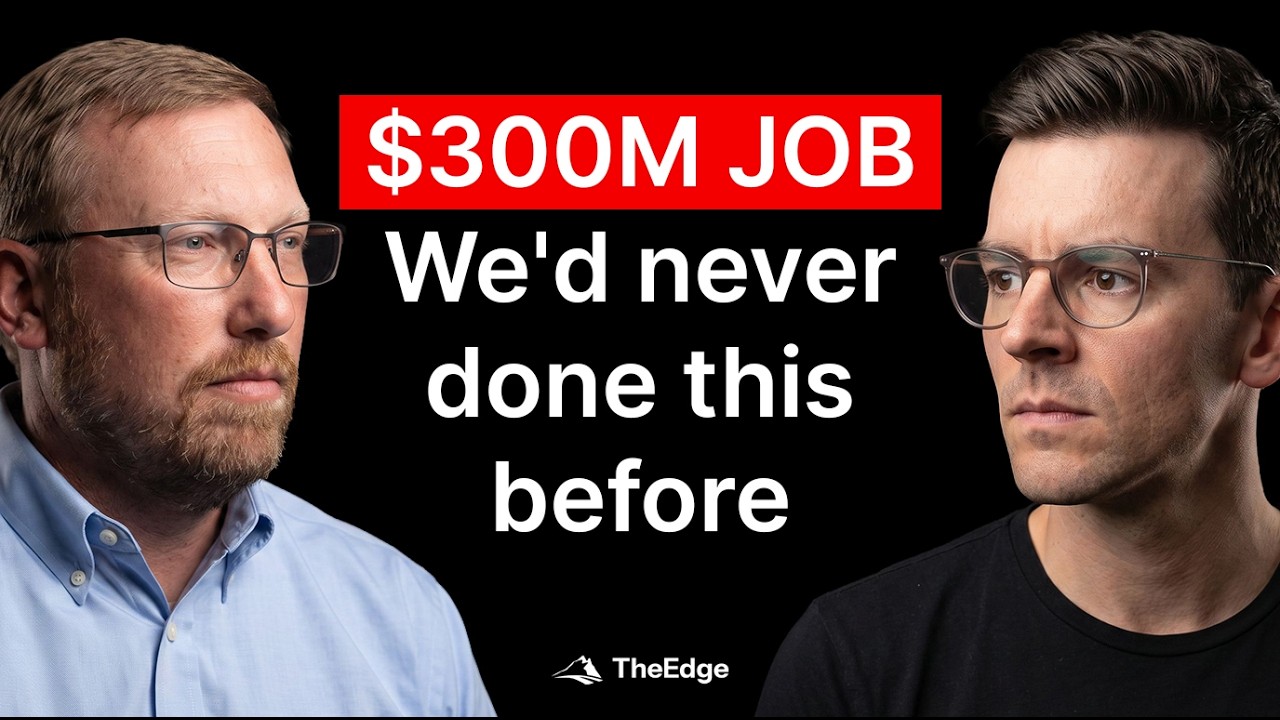
Shawn Godwin: Building a Legacy in Asphalt Paving
In this Edge podcast episode, host Tristan Wilson interviews Shawn Godwin, CEO and owner of Palmetto Corporation, a vertically integrated construction firm based in South Carolina. Godwin recounts the company’s origins—from his grandfather’s 1960s asphalt‑patching shop to his own entry in 1994—and charts Palmetto’s expansion through greenfield plant builds, strategic acquisitions, and market‑entry bets in Florence, Bishopville, Columbia, the Upstate, and Orangeburg. Growth was driven by opportunistic bidding on large DOT projects, the need to establish new asphalt plants on‑site, and diversification into ready‑mix concrete, precast, land development, and spec home building. A major theme is the people challenge: hiring, retention, and cultural alignment across dispersed markets. Godwin describes the “Leaders Lead” program, partnership with the Inner Will nonprofit, and hard‑talk leadership coaching to embed a unified culture, now augmented with AI‑enabled tools for SOPs, safety training, and information searches. He reflects on family‑business dynamics, the benefits of sole ownership versus multiple family stakeholders, and the importance of putting the business first. The conversation also delves into personal discipline: Godwin shares his 16‑year morning CrossFit‑style workouts, the influence of the book Rise of Superman on achieving a flow state, how YouTube‑driven extreme‑sport examples inspire a mindset of “if it can be done, I can do it,” and how the book The Comfort Crisis helped him push through challenging mountain climbs. He emphasizes pragmatic decision‑making, honest feedback, and the ongoing quest to attract and keep talent in a labor‑tight construction industry, while championing the adoption of AI tools (ChatGPT, Claude, Gemini, X‑GROX, etc.) as a way to streamline work and foster innovation.
Chapters
Was good for anybody as long as you survive.
Think about however much effort and resources you think this is going to take from your other divisions and multiply that by about 5.
I mean, we've had some difficult times. We actually don't have a problem finding people. We have a problem with basically keeping. That's another story altogether.
That's probably a whole separate episode. Welcome to the Edge podcast. The Edge is our podcast for everything highway construction, bringing you amazing interviews with industry leaders. Today's guest is one of the sharpest minds in the paving business. We're going to dive into his incredible growth story, his leadership philosophy and what drives his success in business and life. Sean Godwin is the CEO and owner of Palmetto Corporation in South Carolina. Palmetto is a vertically integrated construction company that provides best in class paving services and site development solutions throughout South Carolina. So Sean, welcome, welcome to the podcast.
Good afternoon, Tristan. How are you today, brother?
Doing great, thank you. So Sean, I was wondering if you could maybe just start off and tell us a little bit about your journey in the industry and your company. How did you find your way into the, into this, this wonderful industry?
It actually started my grandfather back in the 60s was, had a small little asphalt patching company that would follow around the telephone company, Belt south was taking telephone out to rural America. And they needed someone to kind of follow behind them and as they would patch the, as they would kind of cut through the asphalt driveways, they would need somebody to come behind him and put asphalt in his little patches. So his, he had two sons and when his two sons got out of the service, both of them came and started working. It was probably better for them to not be working together. So they fairly quickly decided to separate and join and kind of start their own companies. And that time was like in 1987, my dad started what is now Palmetto. When I graduated, the bank was, you know, they were, they were offering me a position making about $18,000 a year. My dad was willing to pay me 20. So I quickly pushed the bank to the side and then started working with my dad full time in January of 94. That's kind of how it all started.
And tell me about Palmetto in 94. What was the company like?
They had had an asphalt plant when my, when my grandfather had it. You're, I mean little, small, little batch plant. And so my dad actually got that, that as part of the deal with my, with his, up with his brother. So anyway, so when I got into the business, they had about 20 employees and one little asphalt plant and one little office here. And so we would do asphalt driveways and some small asphalt parking lots and. And, you know, and really just work right around the kind of Conway, Myrtle beach area. And so when I got into the business, you know, it was a nice little kind of established business. People knew who we were, but you kind of had to wear every hat or, you know, you. You basically go out and try to sell somebody, convince them, hey, you know, we'd love to do some paving for you. You know, if they. They did, you know, agree to, you know, to do it for you, then. Then you basically have to be out on the crew, you know, getting the driveway paved with a parking lot paved. And, you know, then you'd have to basically run back to the office and you'd. You'd get it all invoice put together and you, you know, drive it back out there to them and, you know, then you do it all over again, you know, the following week. So, and again, we. We'd been in business for some time now, so it was established. It was great. And a great kind of a. Kind of a starting point to. To learn a little bit everything about the business from, you know, one, how to operate equipment or how to deal with, you know, people in the field, but also dealing with owners and, you know, and selling and kind of having to, you know, convince them why you were better than the other asphalt paving companies. And. And then. But you also had to learn the insurance side of the business on payroll and a little of everything. And wearing all those hats, I think was. Was good for anybody as long as you survive it. And obviously the ebbs and the flow of the construction business are plentiful. But I did learn pretty quick. If I didn't, you know, if I didn't want to wear all those hats forever, I think we were going to need to see some growth. And, and that. That growth came from just looking at opportunities that came around. And fortunately, we've been able to take. Take advantage of some of those opportunities.
Yeah. So maybe if you could tell me a little bit about kind of Palmetto. Palmetto today, the thought process was, is.
You know, growth is great if. If it makes sense. And you know, and growth, it can be done in many different ways. You know, you can do it by just territorial, you know, kind of moving into a different market. You know, you can do it by acquisition. You can do it by just, you know, taking on a larger project and, and slowly adding people. And in our market, we kind of look, there was, there was there Was a, there was a, there's a big player in our market and a couple other markets where, where they were kind of that, you know, the big boy in town. And you know, if you're, if you're going to kind of compete on that next tier, and that next tier for us was, you know, paving city streets and county roads and, and ultimately kind of getting, you know, working with the South Carolina Department of Transportation. And that was something we didn't do at all. So, so for me, I looked and there was, there was another market that was pretty close to us, about an hour away from where we were. Our home office, our home office is in Conway now. But, but Florence, South Carolina was about an hour away and there was only one competitor there. So I said, you know, this could potentially be an opportunity for us. So, you know, we decided to buy another asphalt plant, set it up in Florence. I actually moved to Florence by what.
What, what year was this? How long had you been in the business?
Yeah, so I had been in the business for five years at that time. So this was in, this was in, we'll call it January of 1999 when we got set up there in Florida. So I'd been there about five years. I got a, you know, you know, kind of good feel for the industry and the business. And this was an opportunity. And you know, when you got a whole, when you got a market there, there's only one competitor in that space. It's just kind of, it's an opportunity, you know. And so we, we were able to kind of take advantage of that opportunity. I lived there for some time, kind of kind of going back and forth. My dad was still very involved in the business then, so he was able to kind of take care of things here in Conway while I was in Florence. Then we kind of looked at the kind of, you know, the next trajectory, I guess you'd say, which was about seven years later in 2006, we set up another asphalt plant kind of closer to Columbia. In between Columbia in Florida was a little area called Bishopville, kind of the same thing. It was just an opportunity driven thing. There were some, there were some jobs coming, coming out on i20 where we could go in. And fortunately we were able to pick up some of the jobs up an asphalt plant and kind of grow it into that market. And that was in 2006. And things were, things, you know, going very well. I mean, I mean, everybody remembers those times are good. There was commercial growth. It was also that, you know, the dots had money. Everything was, was Nice. But you know, not long after that, you know, 0, 8 hit and 9 hit and 10 and one thing or another. So that kind of brought that growth trajectory we had been on for, for a little while had to kind of basically slow down. And what that slow down meant was, hey, let's just, you know, kind of figure out how to kind of make it all work with what we've got. You know, we kind of added over a bunch of dead with more asphalt plants, equipment one day, another, and we had to kind of stop, had to drop back kind of in, almost like in a survival mode, you know, trying to figure out how to make, make it, make it work and then just sit right away for those opportunities for, for other growth that may happen.
So, so three asphalt plants at that point and kind of, and then 2008 to 2010 kind of drew back a little bit and then tell me a little bit more about kind of that, that the growth story from there.
Yeah, so we'll say for the next, you know, five to seven years. It was, it was, you know, let's, let's, let's, let's try not to, let's try to survive. And, and that's what we did. And unfortunately, things kind of started turning around a little bit in 14:15. That time frame kind of the balance sheet started looking a little bit better, a little bit stronger. And then we kind of started looking at some other opportunities that may come up, you know, in other, in other markets. And there was a big job coming up in the Columbia market that we bid on and we were low bid on that particular job. And we had originally kind of just, we had bid it from our, from our Bishopville asphalt plant, but it was a little bit, a long ways away from that plant. And this was a, a widening project, two lane road that they were going to make five lanes with sidewalks on both sides. And you know, we had already kind of started getting into other types of businesses other than just asphalt. So we already had grading crews and pipeline crews and one thing. No. So, you know, we, we kind of felt like, okay, well we can take on other, other projects now in this Columbia bargain. We didn't have any employees, we didn't have anything. You know, it was, it was nothing. And we were, you know, we, you know, our thought processes was well, here's what we'll do. If we bid on the job, we happen to get the job. You know, we'll, we'll, we'll either be just kind of a, the manager of it and sub everything out or if we get, you know, if we need to, we'll kind of shift some crews up there while we're waiting to build crews. And, and we, and this particular job had a nine month utility window on it. So we knew we kind of, if they awarded the job to us today, we'd have probably really a year before we really had to like have actually people, you know, other than like one project manager to, you know, to kind of look over what was going on. So we're like, that's plenty of time to go find some people to start laying some pipe and moving dirt, doing different things. So that was kind of our mindset, but, but along those same terms is from the asphalt standpoint, which is a big job. It was a lot later in the project. So again we felt like, you know, we could sell the job, the asphalt side of it out with somebody else. But when we kind of got into the, into it, we realized pretty quickly nobody was really interested in doing the asphalt force or they were, but just not for the price we wanted. So we said, all right, well how about this? Why don't we just go set up an asphalt plant, you know, in that market. So again, we started looking for property, started doing a little bit of, you know, permitting, you know, situations, got all this stuff probed and basically In I guess 1718 time frame, we were able to put that asphalt plant in operation and you know, in time to get this project started. But we felt like, you know, the Colombian market was, was on your shirt and, and we felt like that, that we could go into that market and be successful. So that was like I said, that was in we'll say 2018 and we've been working in that market ever since and actually still working on that same job. It's a, that's another story altogether.
But yeah, that's probably a separate, a whole separate episode.
That's a whole separate episode podcast we'd want to go into on that one. But, but we will get it finished this year. This is going to be, this is our year to get rich. So, but you know, so then we then, then it was all about just kind of focusing your efforts in that market. Right. You know, everything else in other markets, you know, our kind of, our thought process is, is, is that you have business unit leaders that are running individual markets, you know, or territories. Because I feel like, you know, in the asphalt paving business, I mean, you really got to wrap your arms around, you know, the business itself right there in your territory. You need to have somebody that's really, has Blinders on is not thinking about anything but that. But that particular market, you know, in, in some markets, you know, maybe it's just only asphalt taping. Maybe you got some markets that are. Have, you know, pipeline crews and dirt moving crews. You have all that stuff just depends on the market, depends on the business that are in that market or whatever. So, so at that time, we, we felt pretty comfortable with what we had, you know, in the Conway and the Florence and Bishopville market. So then it was all about, you know, trying to put our team in place, you know, for that Colombian market. And you know, we worked on that for some time and still working on it today. And that's, that's the case with all of our markets. You're trying to continue getting a little bit better. But, but we've got, you know, good teams in place. So, you know, the next thought was, is, well, hey, we, we've got good teams in place in all these markets. Let's look at some future expansion. And what happened was, is, is we had a. I guess it was a kind of a M and a group that reached out to us and said, hey, there's a. There's an asphalt paving company that's for sale in the upstate of South Carolina and would you guys be interested in. In, you know, in a bid to buy it? And so we said, you know, sure, hey, we'll take a look at it. So we, we started diving into the process and we'd never really done any, any mean major, you know, m and A type activity. You know, we've done some since then on some smaller stuff, but we had never really done a whole lot of that. So we kind of dove into the process. We hired somebody to kind of help us with it a little bit. We, we started analyzing the value of that company and analyzing the market. This is kind of the Green Bulls Hardburg, South Carolina market. And anyway, so we put a bid in to buy the company for sale up there, and we weren't successful. We didn't get the bid. There was somebody in that market that, that paid a whole lot more for it than we. We offered. You know, you know, my initial thought was, wow, they really overpaid for that thing, you know, but probably really what it was is, is, you know, I didn't know what the heck I was doing and didn't. Didn't value it as much as I didn't. I didn't see the value that they saw, really. You know, and I have learned that in some of the other deals we've lost Is, you know, just because I didn't think it was worth that doesn't necessarily mean it wasn't worth that, you know, so it, you know, I think, I think each time you do it, the more you get comfortable with it, you know, the, the. Yeah. The more you'll be successful at some point. But anyway, that. The kind of point to it was, is we. We basically looked at the market and we were kind of sold on the market, you know, and from an acquisition standpoint, you know, the company that bought the company was a company that was already there in the market. So it wasn't like it was adding another, you know, a competitor in the market. He really got rid of a competitor. So we were like, shoot, why don't we just Greenfield, you know, an operation up there? Which is what we did. So over the next couple of years, you know, we looked around, found a piece of property, bought an asphalt plant, set it up, you know, hired, you know, hired someone to run the market for us and, and started bid. Don't work. And fortunately, that market in South Carolina, like a lot of other markets in South Carolina have done nothing, grow exponentially over the years, and we've been able to kind of ride that wave of growth. So that was our fifth plant that we put in operation and, and so far it's going great around that same time frame. And you know, the next thing I'm going to say, I do not recommend at all, but we, we bid on. There was another opportunity that came, came with us, came to us. It was a large interstate paving job in a completely different market in kind of the low country, Orangeburg, South Carolina market. And, and we bid on this big interstate project and we knew that it needed an asphalt plant to be able to do it. And we knew that if we got the job that we would have to, you know, have to go find a piece of property and do this. And, and, and fortunately, again, you know, we were low bid on this job. So all of a sudden, while we're doing this, you know, upstate south, you know, Greenville, Spartanburg, you know, scenario, we had to all of a sudden very quickly buy another asphalt plant and buy a piece of property and Greenfield and operation there in that Orangeburn market. So we had to do both of those kind of at the same time. That's the part of it I don't really recommend, you know, try to. Try to get, you know, two plants going on at the same time, adding, adding team members and, you know, all the above that it takes to make it work. Yeah, there's definitely challenges with that.
I'm curious to hear some of those challenges. Like when, when you're going to a new market or you know, expanding or maybe it's an, you know, post, post acquisition. Like how do you, what, what are some of the, what are some of the unexpected challenges that you encountered kind of going through that process?
The biggest challenges is I would say the people, right? So you may, you may think, or you may think that you've got the right person running a particular market and maybe that individual basically is really good at running a market where they feel comfortable, okay. And so you can just throw them into another market and they'll be fine. Well, the problem is, is if they don't know that market, it's very difficult for them to go out and find people, you know, and it's easy to find people, but to find quite a qualified people that, that, you know, that, that understand your culture and, and do it the way you want to do it. And as long as you got plenty of time, you know, you can do that, you know, you can slow build it. But when you've got, when the, when you've got a job that you got to get completed by a certain time frame, you know, you don't have the luxury of just saying, well, I'll just sit around and wait for the, wait for the right guy to come, but wait for the right person. You know, fortunately for us, we, we found the right, your business unit leaders to run those individual markets for us. But it took, it, it has taken them some time to be able to, to, to get their team around them. You know, that one that believes in what they believe in, has the same work ethic, has the same skill set, all of that stuff. So that's the, that's the thing that we struggle with in certain markets. Now fortunately, in the upstate of South Carolina, it's been a little bit easier for them to find people. It just seems like there's, there's, there's, there's, there's a lot of people up there that want to work and are skilled and, and you know, they've been able to, to find good people and the people that they found found other good people. But in our Orangeburg markets, a little bit tougher. I kind of made the assumption that, you know, that's kind of a, you know, a rural market down there. There ought to be plenty of people that need jobs down there and, and maybe there is, but maybe none of them just want to be in the paving business. So it's just been Very difficult for us to. To get the team. And the guy that runs that market for us does a great job, but he. I mean, it's just been difficult for him to find those people. You know, the, you know. You know, we had to deal with some equipment stuff, you know, through Covid time frames of not being able to find equipment and that type of thing, which has created some issues for us. But we've got a pretty good team that works together and sharing equipment, doing different things.
Yeah, I remember when we went to. We decided we were going to go to Baton Rouge and put up a big plant there and start basically just Greenfield after trying to get into the market for a number of years, trying to do acquisitions, and the market didn't want us, so we just decided we're going to go plant the flag. And I remember one of our board members saying, just think about however much effort and resources you think this is going to take from your other divisions and multiply that by about 5, and that's probably going to be about. About right. And. And. And it ended up. It ended up being, you know, pretty much. Pretty much spot on. It was a real challenge with, especially what you talked about with the culture, like, with finding the right people, not just. Not just people that can do the job, but that fit. That can. That actually fit the culture. So kind of curious, like, how do you. How do you maintain that with such. Now an expanded, like, geographical footprint, your. Your Palmetto culture?
Yeah, I mean, we've had some difficult times, for sure. And I tell you, I actually got some pushback from. From my management team. You know, kind of while we're in the middle of this growth. When I say pushback, I mean, I mean, it was honest feedback. I mean, it was like, hey, Sean, you know, you know, this is great that you want to grow and expand on it. And, and it's easy for you because you can just kind of point the finger at all of us and expect us to get it done, you know, but the problem is, is, is that somebody's got to get out there and make all this happen. And so I had to kind of really check myself and say, Sean, you know, am I. Am I doing this for the right reasons? You know, can my. Is my team ready for this growth or this expansion? You know, and we've had some, you know, outside help that's come in and help us with some of that, but some of this stuff, you really almost just got to have those honest conversations with your management team. So just because you have the mindset that you want to grow doesn't necessarily mean the rest of your team does, you know, and if you don't have the buy in from everybody, that's going to be tough and make it happen. And because of that, I had to kind of say, all right, I get it, you're right, let's bring in some extra help if we need it to try to make this thing work. And if we need to change things and do things differently the way we've done in the past, that, hey, I'm willing to do whatever it takes. And if it means bringing in outside resources to help us with that, then so be it, you know, and we've done some of that and we've seen some help with it. But you know, anytime you've got over a thousand employees, it's just one thing. I mean, this is something constant. We have to work on and continue strengthening the connection of our team. You know, we started something this year that our safety director, he has a passion for leadership. And when he came on board with us, he asked if it was okay if he was able to put on a program he likes to call Leaders lead and take all of our key people that are in management positions. And I'm not necessarily talking about, you know, we'll call it our C suite people or our head believers. I'm talking about the individuals that really actually make it happen. You know, the foreman and the superintendents and the PMs that are in the field that are making, where they're actually dealing with the, dealing with, with our workforce day to day. He wanted to work with them and figure out ways to make them better leaders. And he's done a phenomenal job of sitting them down. He has like a six month program. They meet once a month. There's about 30 of them. I think it was 30 or 60 or someone in the first class. And so he put 30 and 30 people in the room at one time. And you know, he kind of have a, I think it was a half, a half day deal and they'd work together on just becoming better leaders. And in that class it was, it was individuals from all over the company. You know, so you had individuals that were forming from the upstate or from the low country down in Orangeburg and Columbia or the coastal market, you know, and you put them all in the same room and some of them did the same type things, didn't know each other and then, and then put them through the program that he developed. And it's been a great way to connect all of our different Divisions and we've got such good feedback from it. Matter of fact, they all think it's a first of the year. They bought. They all have to do a presentation to all of our management team, kind of what they learned and think some of their takeaways from the class. So I'm really excited to sit down and listen to those presentations. This will be the kind of the first graduating class of this program. And it's awesome that we have somebody within our company that just, you know, loves, loves and has a passion for that type of thing. So those types of things I think are ways that you can kind of connect people and make everybody feel like, hey, it's not just one big company out there, it's all a bunch of little small companies that come together and working for that same common goal.
Could you talk a little bit about some of the work that you all are doing with, with Inner Will, what that is and kind of what that, what that looks like.
So Luxone Corporation, they have a non profit Inner Will, that's a group that we work with to. They came in and worked with us on our culture because just like you talked about how difficult it was, you know, to be so, you know, territorially in different locations, how to pull us all together where you're thinking in saying same direction. The idea of sitting down with a manager and having a difficult conversation, you know, and understanding that, hey, just because you have different opinions on how things should be done doesn't necessarily mean you're right or they're right. Before we had Interweed come in, you know, we had already developed some core values and we had already developed, you know, kind of what our goals were and you know, our strengths and weaknesses and done different things over the last 30 years basically once we figured out what those core values truly meant, how they tied back to making us better leaders, you know, and how we should take that guidance on down to our, our next tier of leaders, you know, this former superintendent and yeah, it's great. And we, you know, continually working with some of their upper level management to, to help some of our key individuals maybe just get a little bit better at certain things. And they've been very hopeful and given those, giving us those assets and allowing us to learn what they've learned over the last years to make us better.
What's an example of one of these like hard conversations you may have a.
Former, for example, who totally thinks the way they lead, you know, their direct reports every day is maybe it's the way that they've already done it maybe they've been doing this for 30 years and this, this is how they were taught. And what they have to understand is just because that's how they were taught doesn't necessarily mean that that's the right way to lead. So sitting down with the individual and said, hey, let's look at it a different way. If the role was reversed, would you be okay with this particular individual either talking to you this way or giving you guidance this way? And then how are we going to go about make it turning those weaknesses into strength and giving them the training they need to basically get them to where that that weakness is not a liability? Yeah, maybe they're not ever going to be as strong at whatever that thing is. You know, maybe they're not the warm and fuzziest leader out there, but that's okay. Maybe they're not. They're not be the greatest at, you know, you know, putting their time in, you know, on their iPad, you know, figuring out how to basically make that work. But at the same time use their strengths to offset those weaknesses and, and not just pushing them out to the side. I think those are the things that we need to continue working on, you know, getting better. And I think we do that, you know, we'll be able to basically pull more people to our industry because that's something that we got to continually do it. We've got to make sure that the construction industry is a growing industry. Growing industry in the sense of not just doing more work out there, but convincing there's more people out there that want to come into our space and the more and the better job we do of that, our industry is going to be fine, it's going to be great. And it's going to be on us to convince them to come to it. It's. They're just naturally, naturally not going to want to work day in night, 60, 70 hours a week. You know, that's just not natural. So we better convince them that why, why is it so good? And that's something we'll continue have to work in.
So you guys work and you know, South Carolina has a lot of jobs outside of construction. I think there's a lot of really like high paying manufacturing jobs in some of the markets where you all work. So what's the pitch to folks there? Why should they come work in the construction industry?
What we see most is the individuals who have worked with us for an extended period of time. Maybe they've been in the industry for 30 years, maybe they've worked for us with us for 20 or whatever. When you see these individuals reaching out to, maybe it's their children, maybe it's their cousins, maybe it's, you know, other friends of theirs and showing them basically, you know, what is good about our industry. I think me, me sitting in a pedestal and saying, hey, hey, everybody should come into the production business, you know, that's fine. But when, when, when, when a, when a guy who's been doing it for 30 years and he's in the trenches every day, you know, most of my days sit in an office all day. Yeah, it's easy to sell sitting in an office and going out on the job site whenever I want to go out on a job site, even jumping on a piece of equipment whenever I want to jump on a piece of equipment. Yeah, it's easy to sell that, but, but, but sell the idea that you're going to be out, out outside working on a, on a job, you know, when it's 100 degrees outside or it's 30 degrees outside and still enjoying it. There's individuals who can sell that better than me are those individuals basically who live and do it every day. And that's our, that's our, our foreman, our equipment operators, you know, our flag then, you know, the ones that have been in our industry for some time, you know, you know, they can get out there and they can say, listen, this is what I've been doing. I enjoy it. I love it. I love being outside. I love how. I love the freedom of, of, of, of basically, you know, not having to be tied down behind, behind, you know, four walls. I mean, it's, it's, you know, it's a great industry to be in, but it's got to be your thing, right? I mean, some people don't want, they don't want that, you know, And I think that the more we have those individuals who do it every day, have them out there helping us sell it. I think that's how you're going to continue getting more people in our industry.
Yeah, and it's a problem that's not going away. I mean, I think it's, you know, 450,000 is the number right now of workers that, that the construction industry is, is, is, is short. And I'm sure you guys have seen it too, with, I mean, all of the, the, the big site developments and the EVs, and, you know, this, some, A lot of these new construction can suck up, you know, so much of the, of, of the labor and it's really a constrained resource.
We actually don't have a problem finding people. You know, we have a problem with basically keeping, keeping them in the sense. And I don't think it's, I think it's because we have not done a good enough job of convincing them that they need to be in our space. Okay. They show up, you know, they, we go, we take them through onboarding, you know, we, you know, introduce them out on the crew. They go hang out with the for and then sometimes we just kind of throw them out to the wolves. Right. You know, we expect them to know more than they really should know. If we, if we basically figured out how to, just to keep all the ones that came in the door and, and convince them that, hey, our industry is great, you need to just, just. I know you're starting off today as a, as a guy who just shovels asphalt or a guy who's just flagging traffic, but hey, show them that path. You know, here's where you're going to be going next, okay? If in fact you do 1, 2 and 3, then you'll be here. You know, if we show them that and then not just talk about it, I'm talking about actually live it and breathe it and show it and then use those individuals who moved up from that shovel man to the equipment operator, you know, to that lead mans, that former. If you show that path and have individuals kind of, you know, maybe it's your, your, maybe it's somebody in your company that's the rah rah guy. That's basically the guy who's out there, you know, say, hey man, this, this is great. I think the more we do that type of thing, the more we'll be able to keep people, you know, from saying, oh yeah man, I want to do that. You know, it's just too hot or too cold, you know. Yeah, okay, yeah, some of that's there. But if we keep all those individuals who come in the door and work and, and, and start with us and we get them to where they don't ever want to leave, we'll have plenty of them. We have plenty of people. You know, I'm sure other companies that are out there the same way. You know, guy shows up for one day and never shows back up, okay, yeah, you're going to have those. But for the most part, I think we can just, we as an industry can just do a better job of once they show up, convincing them that they stay.
I saw on your own social media there was a, a story about a young man who I think he joined when he was maybe 19 or €20 company and then it worked there and started out, you know, as, as, as basically, you know, with a shovel. And within maybe, maybe three or four years, he's now, you know, a field. Field supervisor running a crew with several people, you know, reporting up to him and, and, and really doing well for himself. So it's those type of stories that, to your point, I think we need to get better at telling that.
We just don't tell it enough. I mean, that's the deal, you know, I mean, what we. I mean, you know, listen, we're not making rocket ships here, you know, we're just build roads, you know. So, you know, it's not that hard. You know, it's. It's hard work. It's a lot. You know, it takes smart people, but for the most part, we can teach anybody to do it. And once you learn how to do it, it's a great profession. It's called be here, you know, until all the cars start flying. You know, maybe a sooner than later, I don't know. But at least today I think we're okay.
The robo taxi is still going to need mill and overlay. So we're.
We're exactly right. Yeah.
Sean, you, you've expanded kind of beyond just just paving and, and, and construction into some, into some other areas. Could you tell me a little bit about kind of what, what piqued your interest there and, and what. What that experience has been like?
I was, you know, young in the business and kind of having that kind of entrepreneur, entrepreneurial mindset. You know, I kind of dabbled in some other things while I was still, you know, doing the paving business and kind of some side gigs that were complete failures. You know, like I went into the started. I was not say started. I bought out a Toro dealership, a little small engine repair store, you know, had somebody running it for me and, and it was a, it was a failure. And you know, probably what necessarily the guy running it is the fact that I could add zero value to it. So. But, you know, since then, you know, we've. We've had some opportunities. I had some friends of mine reached out to me and interested in getting into the concrete ready mix business. And they reached out and I kind of gave them some ideas and thoughts. And it just so happened that they were looking at starting, starting that business, you know, in the Columbia stop going to market. And I kind of gave them kind of a whole layout of, you know, who the competitors were, the pros, cons, all these different Things because I knew nothing about the Ready Mix business. And anyway, a couple weeks later they reached out to me and said hey, would you be interested? And you know, partnered up with us. And I said well, you know, probably not. But you know, I got, I got a feeling if we do it together and we work on it together, I think we can make this thing a success. So we did. So we started a company called Core Concrete that has three ready mixed concrete plants right there in Columbia and New Golf, Lexington and Casey. And we've had it for four years now or so and I've enjoyed it. We've got a really good guy that's running day to day operations and well, you know, the partners I haven't integrate and you know that's been fun. But we had a, the guy that was running an initially who kind of brought the idea to us. He, he, he, he said hey, we need to try to figure out how to sell more concrete. And I got some buddies of mine who we want to get into the precast business and would you be interested talking to them? So I said sure, I'll talk to them. Anyway, so these are, these, these were two guys who where had been in the precast concrete business for years working for other people and they kind of wanted to do their own deal. So anyway, so we got together and started a precast company. We set it up on our own. Our, our lug off yard which is where one of our Ready Mix plants are. So you know, the Ready Mix operation supplies the precast company and we've been doing that now for about four years or so. And we just do underground structures and, and we do culvert in that type of thing. And if you know what I like about these businesses is they're kind of really ancillary businesses to what Palmita already does. I mean we're already in the storm drain business with lay pipe and we, you know, where we buy a lot of ready mixed concrete. And so it's not like completely going out on a limb and doing a small engine repair shop. You know, it's, it's actually doing something that kind of ties to and you know what we already do. And the key to both of those businesses are the fact I've got somebody really good that's running both those operations. And I do know a little bit about them or I've learned a little bit more about them over the years. So I feel like I can add a little bit of value here and there. Those have been fun. We do a lot of land development too. So we'll just buy a piece of property and we'll go put all the infrastructure in, we'll put all the roads and, and one or two or everything in and then we'll sell off the lots to, you know, a national builder or something. And we have, we have some, that we're building some spec homes in as well. So we kind of dabble in that, in that too. I don't really have a whole lot going on, so it's, you know, kind of need some little side gigs to kind of just keep my interest, you know, kind of peaked. But those have been mostly fundamental sound jobs, I should say.
What do you think family businesses get right and, and, and, and get wrong?
I'll say from my experience with family business, I was very fortunate. One of the best, I guess, gifts that my dad ever gave me was, is, was, was selling the business to me. So, you know, my dad owned the business 100%. He sold it to me in 2012 and then he had an outside company coming in and evaluated and, and then he financed it for me. So I've been making payments, you know, to him for the last 15 years. But the, the advantage of that is, is you've got, you still got one owner. And, and I think that the difficult thing with having multiple owners is you got multiple opinions, especially if they're involved in the day to day business. And when you, when you have multiple opinions and multiple ideas, you know, you don't have one last word, says, okay, I've listened to everything and you know, this is what's going to happen, this is what we're going to do. And I think because of that, sometimes that actually stunts growth or stunts things from happening because you know, you kind of get that back and forth like, well, I don't think I want to do that. No, we shouldn't do that or we should do it or whatever and then it never happens. And so with me, you know, being the only person who owns Palmetta, you know, wrong, right, indifferent, whatever it is, I'm the last word who can make that decision. Now. I promise you that I have some great family members that work in the business. You know, over the years, have had uncle and I have cousins now that work in the business and they're very instrumental or have been very instrumental in our growth and expansion and will be instrumental moving forward. But you know, the idea of me being, you know, the only owner, I can, I could have the final say on what goes and I think that that goes a long way. But you know, Also having the wherewithal to understand that you need a good leadership team around you and putting a lot of faith in that leadership team. So even though I may not have other family members that are, that are there to help me make decisions, everybody that's in my management team help me make decisions every day, you know, and in many cases tell me, no, Sean, we shouldn't be doing that. And so, yeah, they may not be owners in the company, but, you know, fortunately for me, they're just as invested and they're just as important to making, you know, what we do or be a success. But I will say I'm in some leadership groups that have, that are in the middle of family businesses. And the biggest thing that I see happens is, is, you know, you've got companies that have allowed into loud either other family members to be in the business that don't deserve to be in the business, maybe even in leadership roles that they shouldn't deserve to be in. And when you do that, you know, it really, it just screws everything up because what ends up happening is you, you don't make the decisions you should make because it's family, you know, and yeah, you, you've got to kind of decide, am I going to be a, you know, family first business or I'm going to be a business first family, you know, and, and I think that, that the businesses that say, listen, the business is first and foremost if, because the business has got to survive regardless the family does or not, you know, so you got, you got to put the two as completely separate situations. And if you do everything when it comes to what's right by the business, the business or, you know, at least increases the chance of success. Now when you step away, you can be, you want to be the strongest family you can as well, but you don't, you don't have to put them two together. You know, it's possible to have both, you know, but you got to make sure you separate the two and make decisions that are best for the business. Maybe not necessarily best for the family on that particular situation. But, you know, for me, it's know, I have two daughters that, you know, are 17 and 15, Sabrina and Simone and, and, and hopefully one day, you know, they'll want to get involved in the business. I mean, I, you know, I don't think there's anything that, that's any better that you can pass along. Is, is, is a family business, you know, to, to a, to a child. You know, it is hard starting a business from scratch. I mean, it is hard. And in the. The fact that my dad basically had already kind of had the groundwork already started for me, it was already, you know, established business. It was a whole lot easier than for me having to start it organically from. From scratch, you know. So, you know, if any new. Any child who is kind of wanting to get into the business or the family business, you know, don't take for granted what they built for you there. I mean, and if you do, you're missing the boat because it is very difficult to start something from scratch. So I think those are some of the things that we as family business make. We make mistakes when we don't do what's right for the business.
What you said about putting the business first is really, really, really important. And it's one of those things it's easy to say. And then when it really comes down to it, it's so challenging, you know, know, to do when you get personalities and, you know, and then, you know, people's, you know, children involved. So, yeah, that's a. That's a big. It's. It's something that a lot of people are facing, and I think it's, you know, and. And also I think you probably want to.
Let's.
Let's give. Let's give yourself a little bit of credit because not a lot of people have taken something from 20 people to over a thousand people and had the kind of, you know, growth that you guys have had, you know, under. Under your leadership, which is, I mean, super impressive because, I mean, you know, I. We. Some. Some companies stay the same size. I mean, our company was the same size for, you know, 15. 15 straight years. As far as, you know, headcount you got. You've really capitalized on. On the growth and. And take. And when you didn't have to probably.
No, you didn't have to. You know, a lot of it was opportunity driven. I mean, you know, I mean, South Carolina's been. I mean, you know, people have said, yeah, you guys have grown so fast. I'm like, I don't know. I've been doing this for 30 years. I've been that fast. Seems like I've been doing this forever, but I would say in the last, you know, exponentially. I'd say in the last five years, probably faster than we should have grown in the last five years, because we've definitely had our bumps and bruises that go along with it. But, yeah, I enjoy what I do. It's fun. And, you know, I'm 54. You know, I've got another 54, you know, you years ahead of me that I can continue growing it. So as long as I can almost as long as I'm excited about coming to work every day, I'm good.
Let's talk a little bit about exercise. I know it's something that, that we're both very interested in. Tell me about your, your, your fitness routine.
I've always enjoyed, you know, basically sports and, and, and staying in shape and that type of thing. But it was, it, I guess it was in 2000, 2008 or so I got with a friend of mine who started doing what we called location workouts. Like say you would, you would like go to the beach or you would go to the track or you'd show up there, you know, 5:30 in the morning and he would lead the group, you know, and you know, he put together the workout and, and, and you know, a bunch of us would just, you know, do what he told us to do, you know. And it was, it was, was a great kind of camaraderie type thing and it, you know, kind of motivated you to get out of bed early in the morning, you know, because there was other people there. Yeah. So anyway, so we, I did that for six months or so and then we kind of got into the winter months and it was cold, man, you, you have to wake up early in the morning, get out there and it's freezing cold and you play, you know, doing some doing burpees on the beach at you know, 5:30 when it was, you know, 45 degrees. And I said, hey guys, you guys want we can start, you know, having, having this group at my house because I have a, a gym area that, that we can all come there, work out in and we can do it there so we're not freeze to death and, and they're like, yeah, that sounds great. So anyway, so these guys all started coming to my house in the morning at 5:30 and we did that for a couple months or so. And all of a sudden the guy who originally led the class, he moved. So all of a sudden I got these people showing up at my house and, and I kind of take on the lead of leading these. When I say taking the lead, it's literally like, you know, me just putting the workout together, you know, and saying, okay guys, this is what we're going to do today, you know, and, but I've been doing this since 2008, so. Yeah. So basically Monday through Friday I've got, you know, 10 to 20 people show up every morning and you know, I put the workout together and I work out with them. You know, it is kind of a CrossFit based type workout. So, you know, we'll do a, you know, we'll all kind of warm up a little bit and then, you know, then we'll do a skill of some sort that usually takes about 20 minutes. And that skill could be, you know, Olympic lifting, deadlifts or snatches or something, or, or it could be handstand push ups or muscle ups or whatever, you know, some weird thing that I'm working on. Or sometimes we do sprints or whatever. And then we'll do about a 30 minute workout, you know, and it's again, a cardio based workout that maybe has weightlifting in it or whatever. So, you know, I've been doing that since 2008 and we've had, I don't even know how many people, hundreds, hundreds of people who've gone through, they've gone through there, you know, over the last, you know, how long that's been. 16 years. And I've been, you know, tracking all these workouts. And so I have stacks and stacks of books that have like, you know, my, my times, you know, how much weight I lifted, you know, who won, who won the workout that day, you know, all this stuff. And so every year I kind of, I'll go back to, you know, these different workouts. I do. So it's. Now it's a little easier for me. I don't want to actually come up with the workouts anymore. Just go back to, you know, the book we did in 2020, you know, and roll that one out again and start January, kind of work my way through it. But we've transitioned a little bit on Fridays now we don't, we don't work out, we don't, we don't lift weights or you do a CrossFit based workout. On Friday we play basketball. I have a full court basketball court in my house and we play full court basketball, which is fun. And we play volleyball Friday afternoons at my house, which is great. I play a lot of tennis on the weekends as well. So on the weekends I kind of take off just playing playing sports of some sort. And then during the week I kind of focus more on lifting mixes out. Kind of keeps me motivated to get out of bed every morning because I know there's going to be 10 to 15 people there showing up. Hey, Sean, what are we doing today?
That is the best. Like, I mean, having an accountability partner, somebody that you have to meet for anything is like one of the best tricks to sticking with something like that.
So that's.
That's really. That's really smart. I mean, because you have no excuse, like, yeah, I gotta be there, Tristan.
I'll tell you something else that's really funny. There is nothing, nothing more than I enjoy when an insurance salesman, a rock salesman, you know, an equipment salesman, take me to dinner, you know, one night, and then I'm like, hey, guys, want to work out? You're welcome to come work out with me in the morning. They're like, oh, yeah, that sounds great. They come. They come work out, and I just kill them. I mean, and used to. Used to. That was. My mindset, was, I'm just gonna make this the hardest workout ever. And the problem was they would never come back again. So I had to change my mindset a little bit and. And start making. Making a little bit easier just so I could get some repeat customers, you.
Know, Sean's boot camp. Yeah.
The next.
The next. The next time I'm in. The next time I'm in the area, I'm definitely. I'm. I'm definitely coming. You gotta. You gotta take it easy on me. So I come back.
No doubt. I will do that for sure.
What's. What's.
What's.
Is there a favorite book or books that you've. That you've gifted, that you've gifted to people, or maybe something that you're reading that you're really enjoying?
Well, I would tell you this, Tristan. I'm not as. Not as eloquent as you are as far as gifting books. I'm really horrible at doing that. So I don't think I've ever actually really gifted a book. If I did, I expected to get it back.
I hear you.
But I have. I do appreciate any book anybody gives me, especially if they. If they've read it and they've enjoyed it, especially if it's something on, you know, anything that interests me when it comes to sports or exercise or longevity or. Or. Or the construction business or any of that stuff. So. But I want to say that. And you. You may be familiar. Familiar with Stephen Fowler?
No, I can't say that I am.
He wrote the book the Rise of Superman.
Okay. No, I'm not familiar. I'll look it up.
Anyway, I think I got this book at a. A ypo. I'm involved in a leadership group called Young Presidents Organization. We had a. We had a conference one time. This guy was the speaker there, so he gave everybody a book. And the. The idea of this book Is. Is all about finding your flow. And in. In. I think he kind of told a bunch of stories about how the kind of the, I guess, like the X Games type concept where you got these guys surfing bigger waves than they've ever surfed or, or, you know, doing, you know, extreme tricks, you know, with. Be it with bikes or motocross than they've ever done before, or climbing highs mountains, you know, they've ever done, you know, free climbing and doing all these different things. Anyway, his point to it is that the reason, one of the reasons why a lot of this stuff is happening now is because of YouTube, because people will now post their videos of themselves doing these kind of extreme things. And now all of a sudden somebody watches this video and they're like, wait a minute, I didn't know you could do that. Well, if it can be done, then I can do it. So now you've got that mindset of, well, hey, if it can be done, then I'm going to take the mind out of it and then I'm going to do it and I'm going to work to, you know, I'm a trade. I mean, you still got to train, you still got to do all the things you're supposed to do. But once you kind of get it set in your head, it's almost like you doing that 100 miler. I mean, it's almost like, well, hey, if somebody's done it before, hell, I want to be able to do it now. I'm up to train, I'm about to do all the things. But, you know, maybe 100 years ago, nobody would even think about doing that, right? Well, somebody's done it. It's kind of that thing. And what I've kind of done is kind of somewhat kind of transitioned that. It's almost work a little bit too, in the sense of like five finding your flow. I mean, you know as well as I do that, that once you kind of get. Once you dive into something, maybe it's, you know, working on an Excel spreadsheet or, or trying to figure out, you know, you know, how you're going, you know, do this particular leadership class, you get ready to put on whatever. Whatever it is. Once you kind of get into the flow of actually preparing or. Or into work doing it, time has kind of gone by. You know, it's. You kind of. It's just that the problem is, is we're. We're so tied to our phones, we're so tied to our emails. Sometimes we don't. We have a tendency to lose our flow because we're so distracted looking at other things. And I think the better we can basically figure out how to, how to make our mind be what's focused on something. I think the better off we'll be at, the more, I guess, the better job we can do at actually accomplishing something. We focus to have our mindset on something. I got a lot out of that book. Highly recommend it. Thank you. But there's, there's, there's tons of other good business books out there. You know, you mentioned, I think one time about Dale Carnegie's book, you know, about how to, how to win friends and influence people. I have a, have a 2012 Toyota Tundra. Until about a month ago. This is what I drove every day. And I've been driving since 20 2012. So it's got 290,000 miles on it. But anyway, it doesn't have apple carplay in it. So, so I had, you know, so I couldn't really listen to anything on it. So, so I had, I had that, that book on, on, on CD in my, in my truck. So I would just put it in, I would listen to it over and over and over again. And it's a great, great book. And, you know, as far as, you know, learning how to, you know, you know, become kind of a humble leader, you know, it's, it's a, a great read or a great listen or whatever, so I enjoy that as well.
I love that and I love the, I love the 2012 Toyota Tundra. That's, that's great.
Yeah. So you, you gave me. Speaking. You gave me that book, that comfort crisis book. I enjoyed, I enjoyed that one as well, you know. Did you, did you that, did you get that book before you did the 100 mile race or after or, or what was kind of the. How'd that work?
I got it, I got it after. Yeah, somebody, some, somebody, somebody recommended it. Somebody in the baby in the paving. Paving business actually had read it and suggested that. I suggested that I check it out and it motivated me to go take a trip that I otherwise wouldn't have taken.
Okay.
And I'm, and I'm really, I'm really glad that I did. Just more time outdoors and, you know, time with friends. So it was, yeah, it was fun.
I didn't know if that's why you did. One of the reasons why you'd done the race. You know, I, I, I climbed a couple mountains. I climbed Mount Rainier and I climbed Mount Kilnajara, and those were kind of the two things that when I was reading that book, it was reminding me of what I was on, you know, having to dig my way out of a glacier, you know, to get my tent set up. You know, it's freezing cold, me sitting there. You know, it made me think about, you know, when I was out there doing that, like what the hell am I doing out here? But, you know, it kind of gets you through those times. Yeah, yeah.
Gets you through. And those are, I think those are a lot of the memories, those special memories. Yeah, that, you know, that, that get created.
No doubt.
Cool. Well, Sean, any, any closing thoughts that you'd like to, like to share with our, with our audience?
I would say the one kind of the new thing that I, that, that I've been trying to kind of wrap my arms around a little bit more is artificial intelligence. I think sometimes the construction business is a little slow to the game in a lot of things. I know for, I know for us, you know, the paving business seems like, you know, it used to take us 10 or 12 people to pave a road. It still takes us to people to pave a road. I mean, trying to figure out how to basically get it to where we can do it with two to three people. Now I'm not saying artificial intelligence is going to do that, but you know, if, if it does, that'd be great. But starting, starting now to kind of learn a lot about it and start using, you know, some of the things that are out there. You know, the chat GBTS and the, you know, the, you know, the cloud AIs or the, even the X grox, you know, those type of things. And just Lurio, I will tell you, the more you use those things that the easier life is going to be. You know, if nothing else, it helps you kind of get started with something, you know, then you kind of make it your own after that. If you're doing a job description or standard operating procedure or you know, or safety leadership training program or something, I even use it to do information, information searches. I don't use the Googles anymore. You know, I'm searching, you know, I'm searching there to, to find out information and I think the, the more anybody use it, gets familiar with it because I truly think this will continue to get better, better and better and it's going to make our lives easier and easier and easier.
I could not agree with you more completely. I'm just looking at, on my phone right here. So I've got Chat, GPT, Claude, AI and then Gemini because Google just released, you know, the, the updated version. So, yeah, it's really, it's really, it's, it's, there's so many different applications for it. I, I, I use it as like an assistant. Almost like anytime I want to get something quick or just get a, or, or even like refine or if I'm thinking about something, I want to just get a, get another, like, outsider's opinion on it, that, that it's been really, really helpful, you know, for, for me. And it can also help. I think the other thing too is like, one thing that's becoming more common is like, the automation of manual tasks. Like, because I'm sure that you all have a lot of folks in your company that are having to do manual things over and over and over repetitively. I think that's also another huge opportunity where our industry can be transformed with the amount of manual processing work that we do.
Yeah, I would agree 100%. I think people got to get it out of their mind that they almost feel like they're cheating if they use it. I'm like, you know, you know, if you're not using it, I mean, you're, you're, you're wasting a whole lot of time when you could, you could be using this tool that's out there that, that can only make you your mic a lot better. So anyway, I try to tell all my people, you know, use it as much as you can, as often as you can. You know, obviously don't rely on it 100%, but, but use it as a guide, you know, and if you use it as a guide and a starting point, I think if nothing else, it could get you started.
To me, it's really just like, just getting started. We're in like the super early innings, super early innings of it, and it's gonna completely change the way that people work and live and everything. So I'm pumped. It's going to be an exciting few years.
Thank you, Tristan. Have a good buddy.
Great catching up.
More from Tristan
Before We Submitted This $300M Bid, Every Question on This List Had to Be Answered Yes

She Grew Up in the Family Business. I Came From the Outside. That Is Exactly Why It Works

The Number One Thing I Tell Anyone Running a Family Business: High Trust, High Communication

We Held Up the Entire Job Site in Chukchi. It Took Years to Earn That Trust Back

Mercedes Backed Tesla. Microsoft Backs OpenAI. Caterpillar, There Is Another Way to Handle This

Caterpillar Filed a Federal Patent Complaint Against Us. Here Is Exactly Where It Stands

The Best Estimators Don't Win Because They're Smarter. They Have Better Systems.


What It's Like Getting Sued by Caterpillar | Dick Zhang, CEO of Bluelight Machines