Can You Burn Fat WITHOUT Doing Cardio??🏋️♂️
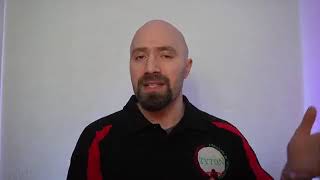
You can lose fat with resistance training alone, not just cardio. Weightlifting builds muscle, which raises your resting metabolism. Protein and a calorie deficit matter more than the type of exercise you pick.
Chapters
Can you burn fat without doing cardio? So that is the topic of tonight's Q&A. Um, this question literally came in a couple of hours ago, and I figured I'd jump on, answer it tonight to save wasting any time. Now, this is one of those common kind of questions that comes from people who are what I call cardio-averse. So they're people that either get bored by cardio because it's just boring doing the same thing over and over, hundreds and hundreds of repetitions, Or there may be people that feel like they don't have the frame or the body for doing that type of activity. It's like, oh, I'm not built to go running, or I'm not built for swimming, or whatever the chosen cardio method is. Now, of course, there are lots of different, but it's a common thing, particularly if it's something you don't feel you're good at, or if you have a personality that just tends to get bored with doing the same old thing for an extended period of time. So In that respect, it's a very valid question. And if I was to just give you a simple answer, it's yes. Yeah, you can, you can burn fat quite easily without doing any specific cardio. Now, the truth is, anytime we partake in physical activity, there's going to be a cardio effect come from it. But of course, the extent to which that cardio effect comes depends how much of a cardio-type emphasis we put upon that activity. So for example, we could go and do weights in the gym but do them in a manner that elicits a cardiovascular response. Generally speaking, that's not what the average person does. They use weights because they're trying to get stronger, build muscle, and so on. But we could use it specifically for cardio, assuming that we adjust the reps and the rests, etc., to elicit that particular response. Now, if I'm really, really against cardio and I, I there's just no way I'm going to do it. I don't want to do it. We can obviously also look around what's going on in the health and fitness world and in the sports world and so on, and what we tend to see is that on average, the people with the best physiques don't necessarily have a cardio priority in their program, as in the main focus of their exercise plan, etc., isn't actually cardio-based. So if we're looking at sprinters, for example, they tend to have very good physiques, gymnasts and so on, even bodybuilders. They will all use cardio to an extent, but it's not the main focus of their program. But yet they tend to have the best types of physique, the broad shoulders, the narrow waist and so on, which is what many of us want, or that's the direction we'd like to go towards. Now, if on the other hand, my goal is to just be slim and lean, not necessarily lean and athletic looking, then I might not need some of the resistance stuff, and I might go, no, you know what, I'm going to go all in on cardio. And of course, you'll still get a fat loss response, but what we have to consider with that is that the cardiovascular system is the fastest adapting system in the body, or at least one of, and therefore the return on investment that we get for time and effort input versus the reward we get back in terms of calories burned and weight loss or, or fat loss diminishes over time. Now, in theory, if we did the same resistance program over and over and over, we'd get the same type of thing, but it tends to take much longer for that adaptation to wear off versus the cardio. So with that in mind, we would go, okay, well, it doesn't really matter if I don't do cardio because I could lean on resistance training. It's going to give me potentially a greater stimulus for maintaining muscle mass and maybe even building muscle mass, which means I maintain a good high metabolism, which means I will burn more fat at rest even. So we would want to lean on resistance if we're not going to do cardio. And of course, we would also have to have a— or ideally we would have a heavy focus on our nutrition, both to make sure that we're bringing on enough protein, etc., to rebuild from the resistance training, but also to make sure that we're eating in a way where our food is actually helping us to burn fat, is providing energy, and we're eating in a manner where our meal is set up in a way that our food gets predominantly burnt as energy and not stored as fat. So we want to eat foods that we know are conducive to, to weight loss or, or fat loss, whichever our kind of target is. I would always recommend fat loss over weight loss, even though technically weight loss occurs with fat loss. Generally speaking, the target of fat loss tends to be far more healthy for us because when we just go for weight loss, as long as the scale goes down, we're happy. But that doesn't necessarily account for what weight we're losing. We could be losing muscle mass, water weight, bone density, and so on. And we're celebrating because the scale went down. But because there wasn't necessarily a specific fat loss focus, we sometimes can lose weight that we're not actually trying to lose. So back to our question, um, yes, we can do it without cardio. If we do decide to do it without cardio, we put a more heavy focus on our resistance training, whether that's weights, as in going to the gym lifting weights, or using kettlebells or bodyweight exercise. We want to use resistance-based exercise so that we're getting stronger, so that we're building or at least maintaining muscle and ultimately stimulating metabolism and so on. So we'd be getting stronger and building that physique that most of us tend to want to move towards, a more athletic-looking physique. Now, in an ideal world, we would also plug at least some cardio into that. Now, you might be like, oh, well, I don't want to run, or I don't want to cycle, or I don't want to swim, or whatever chosen cardio it is. You don't necessarily have to, but we want to at least have something going on that's going to support the other things that we're doing doing with the resistance training. So for example, if we do real low-level cardio, go for a nice walk, or if you do choose something like cycling and things like that, you keep the intensity real low. That way it helps to encourage improved circulation and blood flow and nutrient delivery, etc. But it will also help to speed up the recovery from our resistance training, which means we can then get back to training hard again at a high enough level to create a great enough stimulus to continue the changes that we're looking for. So it's always good— not essential, but always good— to have at least an element of cardio there. One, to help with your recovery, but again, done at a good enough intensity will also help with the fat burning that we're looking for. And of course, what we would do if we are like, I just don't want to run and just do 30 minutes, 60 minutes, 90 minutes of that same old boring activity, that's fine. But there are lots of different ways to do cardio. So we could look at other alternatives that would give us a cardiovascular response that isn't necessarily just doing the same old thing for anywhere between 30 and 90 minutes. So I'll leave it there. Hopefully that's a, a good enough answer. Yes, we can burn fat without cardio, but if we were to add it in, that can actually enhance our results and of course improve cardiovascular health and, and give us the ability to potentially live longer because we have good heart health, good circulatory health, and so on. And having a good cardiovascular base actually improves our body's ability to adapt. The deeper or the broader— sorry, the deeper and the broader our cardiovascular base is, the better potential our body has for adaptation to any stressor. So whether that's resistance training, stress at work, stress with our partner, electromagnetic stress, or nutritional stress, doesn't matter what it is. If our cardiovascular base is broad and deep, that gives us a better opportunity to adapt to that stuff as well. So ultimately, each thing will help to enhance the, the potential that you have, not only for burning fat but also for staying healthy and continuing to remain healthy as you age and get older and so on. Age and get older, same thing, but you know what I meant. So as always, people, if you have any questions of your own, drop them in the comments below. If you're kind of at this place where you're a bit stuck and obviously we're well into the year now and you're thinking, I know I need to do some shit about my health, but I'm not exactly sure where to start, and you just want to have a chat, maybe sort of figure out if the path that I take people on is maybe of any use to you. Maybe you could just get some feedback on what you're already trying, and perhaps I could give you some pointers about how you can tweak or adapt or improve that so that you can get quicker results. If that's something you might be interested in, drop me a comment below, or of course reach out to me in the DMs. I'll be more than happy to have a chat with you and to see where we can help you move forward faster, whether that's on your own, continuing on your own just with some help and advice, or whether that, that's with me through one of my coaching programs. As always, people, thanks for watching, and I look forward to chatting with you all in my next video.
More from Tyrone







Boost Your Metabolism, Burn More Fat and Reduce Cravings: The ONE Simple Dietary Tweak



