How to Eliminate Shoulder Pain!
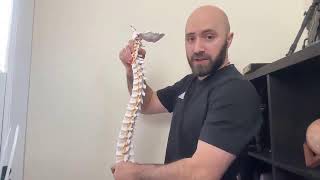
Shoulder pain usually starts higher up. Poor posture tightens your thoracic spine and destabilizes your scapula, creating muscular imbalances that hurt the joint. Fix it from the foundation: restore upper back mobility, then rebalance the rotator cuff by stretching internal rotators and strengthening external ones.
Chapters
Hey guys, what's up? So today we're going to be talking about shoulder pain. Now the reason for this is earlier on in the week I posted a question saying something along the lines of, it's Monday, what do you need to do this week in order for you to, to win, or to win the week? And one of the guys in our group commented, uh, it was John, and he mentioned how he needs to clear up his rotator cuff pain. Um, for those of you who don't know, the rotator cuff is basically a group of 4 muscles that stabilize the shoulder joint. And quite often, if those muscles get injured or imbalanced, then we can end up with shoulder pain. And shoulder pain tends to be a, a common thing that I see and a common thing that I have to rehabilitate with my clients. So today, obviously, that's why we're, we're going to talk about that. Now, one of the other things that John mentioned was that, um, he wakes up with pain, uh, pretty much daily, so he can only sleep on his side. and as a result, he then wakes up in pain. Now, some of the reasons that we end up with shoulder pain, injury, etc., in the first place is due to muscular imbalance and also postural imbalances, which are often caused by those muscular imbalances. So the biggest issue that most of us have is we sort of think, all right, well, I've got this shoulder pain, I better go see someone, and then that person will then look at the shoulder. So, well, that's where your pain is, so I need to look at your shoulder. Catch-22 is the shoulder has multiple foundations. Now, what I mean by that is, first off, you've got the actual shoulder joint complex, which is like the ball and socket joint. So that joint is controlled mechanically by obviously all the muscles around it, such as the rotator cuff plus the deltoids, etc., pecs, the lats, and so on. But because it has such a great range of motion, it has a lot of potential for injury. Because it's less stable than many of the other joints in the body. So what we need to do first is obviously make sure that joint's stable. But the catch-22 is the, the foundation for that ball and socket joint is the scapula. Now, by scapula, I mean your shoulder blade. So if the, the muscles controlling the movement of your shoulder blade are not working correctly, then unfortunately that ball and socket joint cannot work correctly either. And then the foundation of the scapula, or the shoulder blade, is the upper back or the thoracic spine. So, you know, for many of us, because of our daily lifestyles, particularly those who sit at computers, we end up with pretty crappy posture. We've got that sort of rounded upper back and then the shoulders roll forward. And that's because if my thoracic spine or my upper back collapses into this poor posture, my shoulders tend to follow because gravity wants to take us in that direction. Plus, this is also the position of what we call exhalation. So as you breathe out, then everything wants to collapse. Catch-22 I have is now my scapula mechanics are affected because my rib cage is in the wrong place and my spine is in the wrong place. So now when I go to use my arm and my actual shoulder, the ball and socket joint, it cannot move freely or correctly because the shoulder blade cannot do its job correctly because the upper back isn't doing its job correctly. So we have to be careful sometimes not to just go, oh, my pain's here, so I'm going to work here or get here seen. We need to look at the body as a system of systems, and each component is often reliant on a different component. So the first thing that you'll want to do if you have shoulder pain is make sure that your upper back has full mobility. So what I mean is, as you can see, we've got spine here. So many of us, this is if we're viewing the spine from, from the side. So this upper back curve is the one that tends to hunch us over. So if you are fixed in this position where you've got excess flexion in the spine, what you're going to want to do is mobilize those joints so that you can pick yourself up. Now, you're not going to be 100% vertical. Of course, this is just a model, but you're looking to get it so that spine is much more upright and has the mobility required to allow you to freely move your arm. Because, for example, if my spine is fixed and rigid in this position, I actually can't get my arms above my head properly because that final portion of the movement— so the first 60 degrees takes place in the, the glenohumeral joint or that ball and socket, and then the final portion of the movement that actually takes them above the head comes from scapular movement, so shoulder blade, and thoracic extension. So me having the ability to pick my chest up, basically. So in order to get my arms vertical above the head, I must have that. If I'm fixed in this position, they won't go up. Now, some people will cheat it, and over time from forcing the arms, what we can do is actually keep this rounded back and get the arm vertical. But that's because what we've done is made the, the ball and socket joint lax. So we, we over-force and over-strain the movement so much that we then end up with a lax joint that can get in the position but is now unstable. Therefore likely to cause us pain and discomfort. So the first thing that we must do when we're trying to get out of pain in any portion of the body is try to re-establish good joint mechanics. So we want good muscular balance around the joint. So for example, with the rotator cuff or the shoulder stabilisers, what tends to happen for most of us is we get too strong or too tight in the muscles that turn the shoulder in, and therefore we're too weak or too long in in the muscles that turn the shoulder out or externally rotate the shoulder. So quite often we have to stretch off those ones that turn in and then we have to strengthen the ones that turn out. This then brings some balance back in the joint. And then occasionally we have to do a few movement drills and things in order to kind of reeducate correct movement. But none of that really matters unless we fix the joint mechanics in the spine first and then obviously the, the control of the scapula. Because that will dictate how well that ball and socket joint moves. So I know that's a little bit more complex, or it sounds quite complex. Holy fuck, Ty, you just come in with a shoulder problem and now I've got to fix my shoulder blade and my upper spine and so on. So there's some of the things that we need to look at. Now, of course, if you go to a specialist, hopefully they would do that. But sometimes the definition of a specialist means to know more and more about less and less until they know absolutely everything about nothing. So we do have to be careful because they get so detailed in that one thing that they specialize in, they forget the rest of the body and how it influences or how it's influenced by other aspects of the body. So one good way to start mobilizing the upper back is using an exercise, sorry, called the foam roller horizontal. So if you look that up, you'll find foam roller horizontal, and it's a good mobilization that you can do using the foam roller to gently mobilize movement back into the upper back. That will allow you over time to, to reestablish movement there, which will then help with the mechanics of the scapula, the shoulder blade, so it moves freely. So we want to do that. Then you want to use movements like a prone cobra reach and pull. So all these things you can Google 9 times out of 10. If you can't, let me know and I will record a video or share a video with you. But foam roller horizontal, you'll probably find all over YouTube. And then the prone cobra with a reach and pull will help to re-establish scapular mechanics. So the ability for your shoulder blades to move as they should and function as they should. And then of course, we want to do rotator cuff work. So stretching off the internal rotators or the subscapularis, and then strengthening the external rotators, which are called the teres minor and the infraspinatus. Now, you don't necessarily need to know that, but if you happen to Google or search for these things, it will make it much easier for you to find those particular things if you know the names. Now, if you actually want me to write the program up for you, and in fact, that's what I'm going to do. So tomorrow, what I will do for you guys is I will drop the program in here with some videos and stuff so you can see how this works. So if you happen to have shoulder pain, shoulder pain, you can start implementing these things and that will also save you having to go to Google or YouTube and try and find everything. I'll put it all together for you tomorrow. But I just wanted you to know that just because you have shoulder pain doesn't mean the shoulder is the problem. Same as if you've got hip pain, doesn't mean your hip's the problem. Same with the knee, etc. We have to look beyond both towards the core and distally towards the end of the joint because sometimes— sorry, the end of the limb, because often it's not, or the cause isn't at the area of pain. So first thing we do with shoulder pain, fix the mechanics in the upper back, then we fix the mechanics of the scapula, and then we focus on the ball and socket or glenohumeral joint. Any questions, guys, let me know. And if not, I look forward to seeing you tomorrow when I will drop this program in so any of you that have shoulder pain can start working on that and obviously get things sorted out. Take it easy, people, and thanks for watching.
More from Tyrone







Boost Your Metabolism, Burn More Fat and Reduce Cravings: The ONE Simple Dietary Tweak



