Why Big Pharma Wants You on SSRIs (w/ Dr. Roger McFillin)
Clinical psychologist Dr. Roger McFillin argues that pharmaceutical companies invented the "chemical imbalance" narrative to expand SSRI use, funding media and reshaping medical education. SSRI trials are short and often no better than placebo, while long-term use causes emotional numbing, sexual dysfunction, and withdrawal symptoms that mimic the original illness.
Chapters
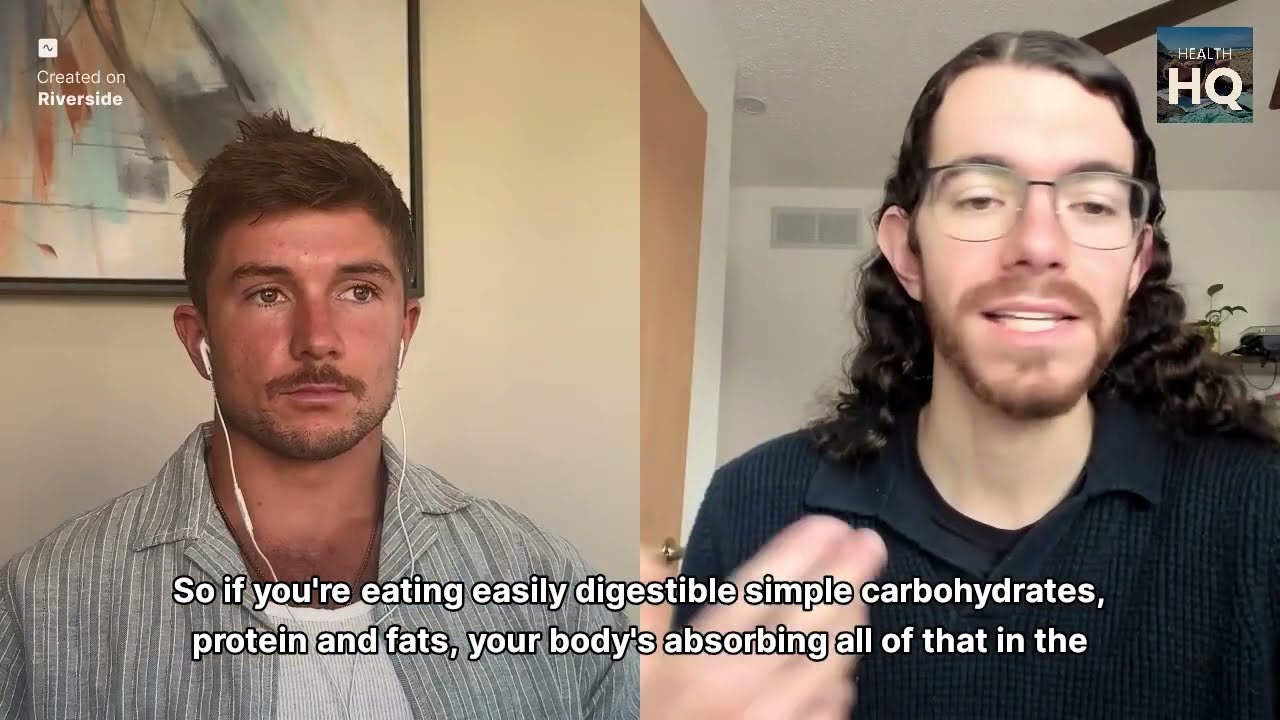
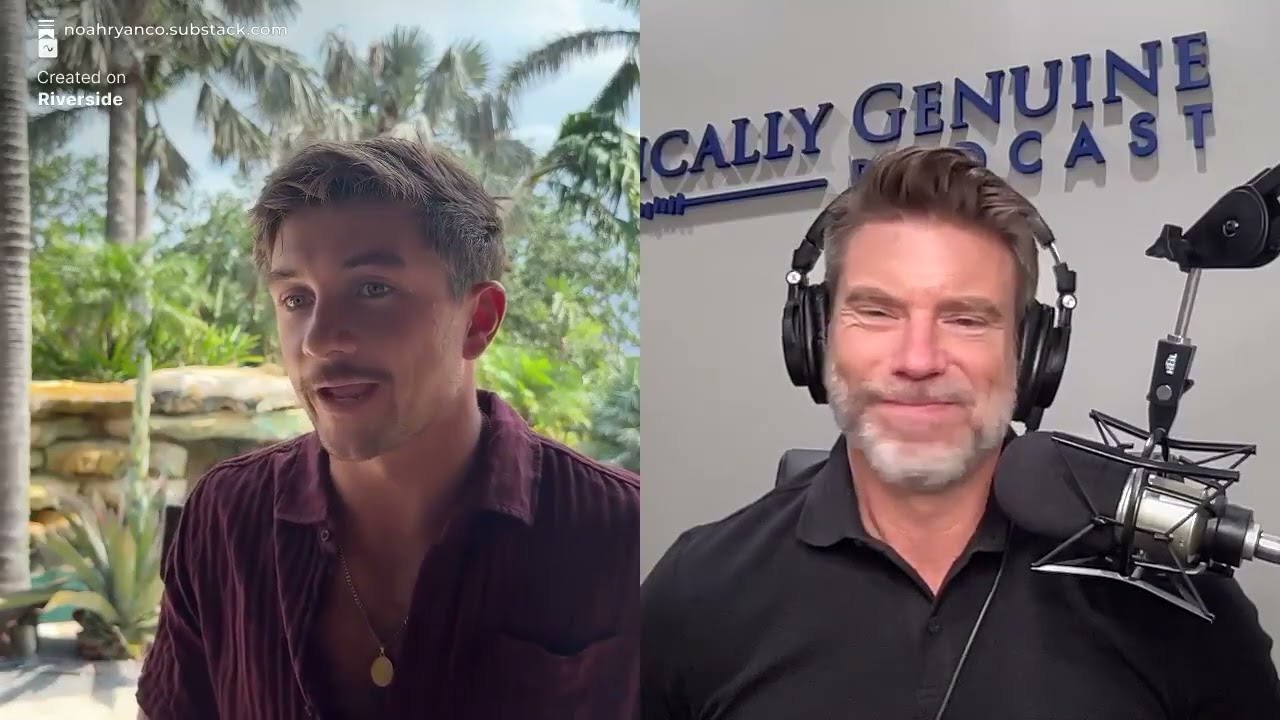
Guys, what's going on? We are here with Dr. Roger McFillin. Roger McFillin is a practicing clinical psychologist. He runs the Radically Genuine podcast, Radically Genuine Substack, and then a new organization called the Conscious Clinician Collective. Dr. McFillin, I've seen a lot of your posts. They resonate with me. Something that I've been talking about for a while is the over-pathologic— pathologization of the human— of human nature. Right. And this idea that so many of these symptoms that we're dealing with on a daily basis, anxiety, depression, ADHD, I mean, both physical and psychological are actually just signals our body is telling us to change our behaviors. But we'd like to classify those as problems and then, you know, fill, fill ourselves up with drugs to mitigate those. So I'm excited to have this conversation with you. Welcome.
No, thanks for having me.
It's an honor to be here. So as I mentioned before we started, the interesting thing about you is you have a lot of ideas and conversations that fringe people have where they're just kind of shouting from the rooftops with no context. I mean, I'm, I'm guilty of that. I don't have any qualifications, but I say like SSRIs aren't solving the problem, right? Why are we giving everyone drugs? You're a clinical psychologist, you're a practicing clinical psychologist, so you've seen the inside, you've seen the doctrine and dogma and traditional approach, and you have an opinion that's alternative and unique. I'm curious, going into that, did you know how inefficient the system was, were you going in with an objective to approach it differently? Or was this something that you came across in your progression into becoming a clinical psychologist?
Yeah, it's fascinating that I get referred to as fringe or even radical, because I think my ideas are grounded in very hard science as well as clinical experience. I think why you see so many people on the fringe talking about it is because it's just outside the mainstream narrative. And we have to ask ourselves, how is the mainstream narrative developed? Well, the mainstream narrative is developed because it serves a particular industry. So let's just talk about the mental health industrial complex, which has really become pushed by the pharmaceutical industry. They have a, a stake, a financial stake, in being able to get more people to identify as customers. How do you get more people to identify as customers in a pharmaceutical industrial complex, especially especially around, uh, mental health? Well, you have to have more people identifying with mental illness. So you have to, uh, increase your customer base by creating a narrative. And I think that narrative was to say, hey, there's a biological basis for anytime you feel horrible, right? Anything in life that makes you feel horrible, it's because it's something that's outside your control. It's some genetic chemical imbalance. And they promoted that chemical imbalance myth. The United States is one of two countries that have direct-to-consumer advertising. So, it's certainly much more pushed on our collective consciousness in Western societies. But, there was a huge media apparatus that drove that narrative. The pharmaceutical companies fund that. They fund major news networks. And so, it entered into our collective consciousness that if you feel normal emotions, reactions to events in your life, which are signals, which are meant for your creation and your transformations, it could be because you're physically sick, it's in the wrong environment, there's relationships you have to get out of your facing trauma. We've evolved this way to experience these reactions, and they've become medicalized and pathologized to serve an entire apparatus, an entire industry. It's a multi-trillion dollar industry, the pharmaceutical, uh, apparatus. But it's much more than that. There's a therapy culture that's pushed, and what it does is it drives attention inward on yourself. And if there's any way to make you more miserable It's to think about yourself all the time and to think about your emotions and your mood and your motivation to be something that's outside of your control. People don't understand how these drugs came to market, their efficacy, their safety and danger aspects of them that are really important for people to make informed decisions. But it's, it's on the fringe right now because there's only a small percentage of people who are willing to kind of step out of the system because there's just so many people that benefit from it. And so I'm just kind of speaking to what I have observed. I'm trying to be a critical thinker. I even speak to the educational system, which I don't think molds critical thinking and analysis. It really creates a, creates a culture of people who are subservient and, um, you know, deferent to authority.. And I hope that my, my podcast or my Substack or my tweets get people to start thinking more critically, to kind of pull yourself out of the matrix and understand that there are other ways to living well and feeling well.
Right. Totally. And when you look at it that way, you know, they say to trust the science, but when you understand that the, these are businesses, right? These are industrial complexes. They have objectives and agendas and incentives outside of actually providing care. When you look at it that way, you can say like, yeah, it's evil. These are evil people doing malicious things. Which is possible. And that's probably, you know, a component depending on how deep you look at it and your definition of evil. But in reality, like, if you abstract yourself from what you're actually doing and you're looking at exclusively from a monetary and fiscal lens, you're going to be making decisions that don't have the interests of the end consumer in mind. And like, that's the reality of these businesses. They're massive. And, you know, it's hard. I think people are really turning around because they realize that, oh, they say to trust the science, but what science, right? Like, there's science that contradicts what we're being told. And then also if we look at, you know, the research process and the study publication process, particularly in psychology, it's very skewed. It's very one-sided and it's very sparsely replicated effectively. So it's like, okay, who are we supposed to trust? Which is fascinating. Um, was there a point where you became blackpilled, so to say, where you really just got to the point? Because I'll read some of your stuff and I can see where you're like, what's going on here? Was there a specific point or experience that had— like, that caused that realization, or was that something that gradually bubbled up to the surface?
I never had the intention of being a psychologist, but I took a job right after undergrad working at a children's psychiatric hospital. It was my first exposure to what the mental health system was. And this was in the late '90s, early 2000s, which was the start of this culture of mass-producing psychiatric drugs as a, as mental health care. And I saw what was done to young kids. I was on a hospital unit with kids from age 5 to 10 years old, and I saw kids who came from violent backgrounds, horrible environments, were responding as traumatized kids should, and they were the ones that were pathologized and they were drugged into sedation. So I knew it right away, intuitively. But I entered into the educational system, wanted to learn more, generated tons of experiences. I didn't really understand the science or the, the trials or why drugs were brought to market until I threw myself into that in leading up to the pandemic. It's funny, when people say trust the science, that's usually from someone who doesn't understand science. And it's, again, that's just repeating marketing terms. And that's where I was really down on our collective humanity, because I just saw so many people just blindly repeating marketing messages, thinking that they're somehow evolved. And that's science. Even if you, if you go really deep dive into, into the scientific literature, there's what's called meta-science, where there are meta-researchers who look at the totality of all of science. And there's a gentleman by the name of John Ioannidis who's a meta-researcher at Stanford, and he's come to the conclusion that like 85 to 95% of the published research is false or misleading. So it's a, it's a distortion of science in order to solve, in order to serve an industry, an ideal, a large apparatus, the allopathic medical authority. But I can tell you clearly that the psychiatric drugs that people are ingesting, which SSRIs, anti— what we call antidepressants, are the ones that are most frequently used along with stimulants. The reason that they were brought to market was based on fraud. Those drugs have never been proven to be antidepressant, and their harms are significant. And so when I realized that and talked to experts around the world, and realized that I was kind of filtered into thinking that there is an antidepressant drug to some extent. Even I, who had the experiences where I questioned it, you know, there were so many people coming into my office that were just miserable. They would be on these drugs for 5, 10 years and horribly depressed, coming to see me, and I'd ask them, you know, if you're so depressed, why are you still taking a drug? You know, if I took an antibiotic for strep throat and still had strep throat. I'm not going to continue to take the antibiotic, not after 10 years, not after 5 years. And I saw the brainwashing because people would say, well, my doctor tell me I would just be worse. I say, how can you be worse? You've— you want to kill yourself. You're miserable. You don't have much of a social life. Your motivation is down. Your, your sleep is poor. You're unhealthy. You're just absolutely miserable, and you're taking a drug that I know from looking at the safety data and talking experts around the world know that can induce a depressive state, can induce suicidality. And I've seen the reactions— people scared to stop the drug because the medical authority told them that they needed it. Uh, that's a level of brainwashing that I had to begin to understand and resolve the conflict that I was experiencing. And that's been a process for me now that's been 7, 8 years. But COVID did make a difference because I saw the same messaging for the mRNA vaccine and fear provocation with COVID So I saw the same playbook essentially, and the misrepresentation of science. And so that was a big wake-up call for me.
Yeah, I mean, I've seen it firsthand. I was on SSRIs for, what, 7 years, right? You get— you go into the doctor for 15 minutes, and this is such a cliché at this point, but it's true. You go to the doctor for 15 minutes, like no context is brought around the fact of like, why do you feel anxious? Why do you feel depressed? Why do you not want to do things? Like, okay, cool, here we have a drug for that. You get on that drug, which, as you mentioned, like the mechanisms weren't even clear, right? Like the actual serotonin self-reuptake component doesn't even come into effect until what? Like it, it does. Like SSRIs typically don't work until you take them for multiple months. The serotonin self-reuptake occurs immediately. So like, that's not the mechanism that's playing there. The chemical imbalance theory, which is like a very vague theory in and of itself, is kind of disputed. The serotonergic hypothesis of depression is also entirely disputed. So it's so ridiculous. And to what you said of like why people stay on it is one, because they're like, you need to stay on it, right? Otherwise, like, it may be good, but you have to stay on it too. If you're taking a drug that's affecting your brain and I'm sure you know this as well, like your brain chemistry at that level, You become a different person. You are no longer you. You are you on that drug. So your entire identity is wrapped around who you are on that drug. So that's a psychological hurdle that you have to get over first and foremost. But also the withdrawals, right? You go on SSRIs, you get off SSRIs, you feel worse because you're withdrawing from a potent drug. And then you go back to the doctor, they're like, oh, you're just more depressed. You know, that's more reason for you to get back on. It's a vicious cycle. And the damage— I think the damage is what's the most concerning. It's what I personally experienced. It's what took away like 2 years of my life. Because if you're on a drug that's manipulating your brain chemistry for that long, your brain is incredible at adapting, and it adapts to that. And getting— taking off it, like, getting off of that is the equivalent of giving up, getting off of opium or any other drug. It's no different than withdrawals from anything. It's horrible. It's atrocious. I wish nobody would do that. But we can actually— like, let's go and talk about the negatives, the documented negatives of SSRIs. Both acutely and long-term? Like, what are the concerns? What are the risks? What are the things that they're not telling us before they put us on these drugs?
Well, you brought up so many important points that I feel like I have to address some of those first. So people don't know that the trials that were conducted by the pharmaceutical companies to prove that an SSRI is effective are done in really short amount of time, like no more than 12 weeks. You know, a lot— most of them are like 6 to 8 weeks. So it's kind of a misnomer that there's been any evaluation of the drug's effectiveness long term. And the way that they become approved is by trying to create a, a, uh, a statistical difference between a placebo group and a drug group. And what's very clear when you evaluate the data of an SSRI is that they've never been able to meaningfully outperform placebo. In fact, when you really look historically, the placebo often was outperforming the drug. And so that's without any potential side effects. There's a lot of games that the pharmaceutical companies can do to try to get their drug to outperform a placebo. One of those is what's called placebo washing. Basically what you do is you take the placebo group and you withdraw them abruptly from a drug that they're on so they have adverse reactions, and then you can create a dis— a discrepancy between the two groups, or you run an initial trial and the people who respond to placebos— there are people who are more susceptible to a placebo effect— you remove them from the trial and you keep the people in there who don't respond. Therefore, when you take the drug, if you're, for example, if you're, um, uh, if you're someone who's in the drug group, blind is broken because it's a psychoactive substance. You know you're taking it, so That's something that can be called an active placebo. And as you mentioned, there's a real psychological component to this is like once you start, if you believe you're broken, you believe that there's something wrong with your brain chemistry, you take a drug immediately, you can have a response to it. Not because it's a drug effect itself, but because you believe you're taking something that's improving you. Now, the question always is, is well, What— when it quote-unquote works, well, what does that entail? Well, there is an emotional numbing effect that occurs in about 60 to 65% of people who take the drug. The other thing that's important to know is most emotional struggles are rather episodic, meaning they're time-limited. When you look historically, that concept or idea of what clinical depression actually is is a rather rare event. What we've done is normalized it, right? We've taken the time required to say something is depressed and we've reduced it to a very short amount of time to be able to include almost any challenge in life to pathologize it as depression. But since most of, of mental health struggles or emotional struggles are rather time-limited because they resolve themselves or we face the problem in itself, we overcome it. We're very resilient. A lot of people get better or improve and they attribute it to the drug. So it's like a 3-month period of time, you may— maybe you go through a breakup or you feel like you're at an uncertain point in your life, you're dealing with anxiety, depression that would have naturally resolved itself on its own. That's called natural recovery. So you go through those 3 or 4 month period of time, you feel better, then you go back and you just attribute the, uh, change to the drug, which Essentially externalizes it and saying it wasn't me that solved it, it was the drug, which is problematic. That in itself is going to increase more people to not develop the self-efficacy to overcome challenges in their life. They're going to think it was the drug itself, and that's an attribution error. So the other thing is the mechanisms from which the drug works is completely made up. The idea that, that there's a serotonin deficit, which leads to people obtaining depression, is a complete lie. It's not— see, when there's a theory, a theory is an idea, and it has to be proven by science. That's how we develop hypotheses and we test that out. It's never been tested. It's never been proven. Every time it has, there's been no differences in serotonin between someone who's severely depressed and someone who's not. And serotonin is a very complex neurochemical that interacts with all aspects of our body, even our hormones and our gut health. I, I can't even get into the degree, the extent which serotonin is a very meaningful chemical. And even then, we don't understand the full mystery of it. So you talk to a, a neuroscientist, for example, who's actually legitimate, not your typical psychiatrist, And you ask them the question, "How much do we really understand about the mysteries of the brain? Scale of 1 to 10." A really solid neuroscientist will say, "Eh, a 2 maybe?" We don't even know if brain emits consciousness. I don't believe the brain emits consciousness. And I think we have sound science to show that it doesn't. So what do you do then when you artificially, chemically induce a shift in a major neurochemical serotonin? Well, there's a, um, there's a reduction in the natural production of serotonin, so your body stops producing it because it's, it's recognizing this synthetic chemical. And so what's the downstream consequences of that? Well, they, as you would think, messing with nature, there are some significant consequences from permanent sexual dysfunction that is not restored to potentially when a, a teenager or developing adolescent takes it, could be interfering with their gender identity, their sexuality. There's a range of adverse consequences from inducing mania to hyperman— hypomania to akathisia. It could worsen mood. Um, some people experience psychosis. Uh, there's a a 4 to 6 time— a 4 to 6-fold influence in becoming suicidal compared to placebo. And for a percentage of people, they become violent as well. So there's, there's a range of problems, and including without even talking about health consequences around metabolic health. So you're taking a drug that, if not in the short term, definitely in the long term, is going to induce a myriad of health problems. Problems and psychological consequences. What's the short-term benefit? Placebo and emotional numbing. Yeah, and those— the, the emotional numbing aspect and the placebo aspect of both, I think, interfere with your long-term functioning. Because I think what happens is when we go through difficult times in our lives, those are meaningful experiences. They help us grow. Our soul expands. We solve problems.
We learn.
What happens when you outsource that and you assume or attach to the idea that there's something wrong with your brain chemistry or there, or somehow you've lost the genetic lottery? Now you're developing an idea of being a depressed person, of a mentally ill person. And this goes right back to the narrative. This is exactly what the pharmaceutical companies need in order to produce a product that has, um, long-term sales possibilities. Because dead people don't make money for the pharmaceutical companies, nor do healthy people. They need you in the confused middle where you're constantly going to them seeking for an external solution, and you get hooked on their product. And they've done a wonderful job doing that.
They really have. I mean, they're really good at that, especially when you control the narrative and you control, like, the sacred dogma around practitioners. We've been taught to listen to your doctor, trust the doctors, trust the scientists. But they're the ones being fed from private entities and private organizations that don't have to go through the genuine, like the traditional checks and balances of like direct-to-consumer, you know, purchasing. If Sirtuin was sold as a drug on Shopify and it had reviews and it had people reviewing it and it had competitors and it had competitors that were trying to disqualify that brand, it would be a failed product entirely if they were required to tell you before you got on these drugs, hey, by the way, this could cause you to lose all like genital sensitivity. It could cause suicidal ideation. Just so you know, also, like, looking at the amount of crazy stories of people who have taken SSRIs and done crazy things that have been swept under the rugs, you know, looking at the statistics of school shooters and mania-induced— mania situations, and also the anhedonia component as well. Like, hey, this might work. 12% chance that you'll never be able to feel your genitals. 15% chance that you'll never be able to feel any emotion again. And by the way, it's probably gonna wreck your gut. It's gonna wreck your serotonergic system. It's gonna downregulate some of the most important, like, presynaptic serotonin receptors in your body. Nobody would take it. And you brought up a bunch of things there. Once again, I think a big thing too about when they get on this drug is, like, excess serotonin does contribute to learned helplessness, right? Like, we've seen that. I think acetylcholine does as well. But the— and you could probably poke some holes in that. But this idea that you are missing this one neurotransmitter, this neuromodulator, and the solution is to pull the lever so hard to flood your synapses with more of that neuromodulator, neuromodulator, it completely like jumps over base-level neuroscience in looking at the fact that all of your neurotransmitters operate in balance. Like, hey, did you know that if you increase serotonin levels in your brain, you're gonna lower dopamine because they're antagonistic? You're gonna have less drive, you're gonna have less motivation. You're probably gonna have less feel as well. I think also we know that there is a gut— like, there's a gut hypothesis. Like, there's a, there's a heavy correlation between gut issues and psychological issues. Like, we know that. And I think I even noticed that when I was young. And I'm like, why do I feel the worst, the most anxious, and most depressed when my gut is flared up? And why, when that happened, does my skin flare up as well? There's no, there's no talk about that. It's so siloed. And I think that's probably a problem with the hyper expert, the hyper expert structure of modern science and medicine. I mean, there's, there's so many problems there. I think PSSD should be something that everybody should have on their radar and should be something that's at least talked about by your doctor. It's like, hey, there's guys that have completely lost the ability to have any level of, like, sexual function, of, like, romantic attachment or romantic connection. Like, and on top of that, they lose the ability to feel entirely as a whole. And in my opinion, it's better to feel anything than to feel nothing, right? Because the reason that you feel is to— the reason that you feel is because that's your brain and your body and your central nervous system telling you something to enact change. So it's atrocious. It really is. And we know that, like, when we talk about SSRIs, we're looking primarily at sertraline, we're looking at fluoxetine. Interestingly enough, the fluo and fluoxetine, from what I understand, it stands for fluoride, which is a core component of a lot of these SSRIs. I mean, whether or not that's the culprit here, it really isn't. It's just a nice little add-on. Are all SSRIs bad? Are all antidepressants bad? In my opinion, I would just say, yeah, like, why would I want to dampen this intricate signaling system that's telling my, my body and my brain to change? Like, what is— is there any role for pharmaceutical drugs in the treatment of depression or anxiety or even ADHD?
Okay, it's a good question. As far as SSRIs, you know, I think it's unequivocal, the answer is no. That provides absolutely no benefit at all, and the harms way outrisk any potential benefit of emotional numbing. From a science of emotion regulation standpoint, our ability to feel, experience, and regulate emotions is really necessary for us to pull ourselves out of episodes. Your question—
it—
your question should be better phrased by saying, is there any role of manipulating brain chemicals in our healthcare field? Because if we start limiting, like, these diagnoses and we give them validity, like everyone who labels themselves as ADHD experiences the same thing, or everyone who identifies as being anxious is the same thing, then we say that there's some singular pathway disease state that leads someone to feel that way, and we can target it, and then, you know, that improves functioning, and that's not the case. So the best way to think about drugs that manipulate brain chemicals is to see them as emergency medicine, okay? So, uh, let's talk about a benzodiazepine, for example, which is the true anti-anxiety drug. Alcohol is an anti-anxiety drug. Cannabis is an anti-anxiety drug. Anything that impacts the brain that alters your body's chemistry that reduces those feelings of energy or fear that we label as anxiety has a sedative type effect to it. Is there any benefit to it? I would say in circumstances of crisis or emergency situations, I would say yes, there's a potential for it. Like, if someone's not sleeping for a couple days and they're at risk of having psychosis or health problems, or it's really impairing their life, a benzodiazepine can put somebody to sleep and stabilize an episode. The long-term use of a benzodiazepine is going to make someone drug dependent, and they'll feel, feel worse in the long run. If someone is manic or in a psychotic state, um, they pose an imminent danger to themselves or to someone else, the use of chemicals to What essentially becomes on the role of sedation to stabilize a potential dangerous situation has benefit, but that's not lucrative. So that market needs to be provided, and that narrative has to be created for people can use this for their, their mental health long term. That's the lie. That's where it's evil. That's where it's more than just money, because there's intent to harm in that, because they know the long-term consequences.
This.
So it has been a failed human experiment to say that we can improve our mental well-being with chemicals that are made in a factory. In fact, it's been the exact opposite. Every identifiable statistic says we are worsening, and dramatically. And the people who turn to these drugs turn what could be episodic conditions into long-term chronic illness. So We should be only looking at it as where in emergency situations can a trained doctor use this to stabilize somebody and then help find out what are some of the root causes that are leading to this so you can help— so that you can help them recover. That's not what happens with psychiatry. They say, oh, you responded this way, you're mentally ill, take these drugs for life.
Yeah, who, who's pulling the strings here? Like, why is the medical system so stubborn? I think we can go back to Obviously, big pharma is thrown around a lot. Are there other players? Why is it so sticky?
Oh, this is a dark conversation. A really dark conversation because I'm interested in the same things. I know the— I know the pharmaceutical company and allopathic medicine has its roots going back to Rockefeller Medicine. I often find myself getting into interesting places around the role of, uh, elite institutions or organizations that, um, certainly have stake in coercion and control. So drugged up, sedated people who identify themselves as mentally ill are much more easily controllable. And you can, you can go back to, um, you know, some of the psyops that have been done on our own country through the CIA, um, that have been evaluating and studying various, uh, psycho— psychostimulant drugs, uh, psychedelics, psychiatric drugs to try to understand its impact on human behavior and human consciousness. And there's just no doubt from even looking in the MKUltra work is that our own government is interested in how do you control and manipulate the population. And I am 100% convinced that there is an unholy alliance that exists with not only the United States government, but I think, you know, elite groups of people who really fund politicians, who have a real vent, a real interest in directing the future of the world in how it operates. And you see this play out globally. You've seen it play out in the COVID bioweapon aspect of all of this. And they're pretty outspoken now. I mean, it's not like this is conspiracy theories because there's a conference in Davos, Switzerland every single year. Where, you know, the World Economic Forum is talking all about these things, about how to institute widespread aspects of control and removal of freedom. How can you use technologies to manipulate human beings? How can you fundamentally alter, uh, human consciousness? And it's a strong transhumanist movement. And you see these two growing, uh, movements globally transhumanists, um, and anti-human components versus pro-human. And I am well in the camp of the pro-human side of things, which basically, you know, states we are, we are divine beings, we are naturally, um, developed and inspired to, to create in this world. We can heal ourselves. The more we get disconnected from nature and each other, the sicker we become. The healthier we become, the more connected we are to nature and each other and our purpose. And I don't in any way believe we improve humanity by trying to combine us with AI or pharmaceuticals or chemicals. I think that trying to alter human evolution, I think, is very deep It's dark, it's evil, and it's pretty apparent, and we have to protect ourselves against it.
I love it. I'm really glad that you, that you brought it there because it's not conspiracy. I mean, the white papers are out there, the convention presentations are out there, right? Like, this is an agenda, um, and it's been stated. And not only has it been stated, it's been acted on, right? It's been acted on very effectively. And if you can remove yourself from whatever conditioning you're in and just look at things objectively, and like roleplay, you're like, oh yeah, this is working really well. And it's also very convenient that at the same time that all these drugs are being pushed on people, there's a huge cultural push to remove all the things that prevent you from getting to the point of needing to take these drugs. The community, the connection with your heritage, the connection with your family, the interaction with people. Like, yeah, no shit, we're all going to be depressed if we feel comfortable and we herd ourselves into our apartments and we order Uber Eats from our phone and we date from our phone and we interact from our phone and we live in this black box that everything's monitored, you're like, we're falling right into it. And it's super apparent for me. And it's also apparent because if you get out of that and you start living a life in alignment with nature, if you start living a life with priorities and faith, family and community, a lot of those symptoms go away. And that makes you relatively dangerous when you see the other side of that, because then you can't go back. You know, it really is a frog in a bathwater, you know, the frog in a pot of slow boiling water. And unfortunately, I think a lot of people aren't going to realize until it's too late. I like that you bring up the pro-human movement, and that's something that we see really strong within certain grassroots areas on the internet. I think like the same tools that can lead to our demise are also the same tools that can lead to our salvation to a certain extent. So, I mean, that's so apparent to me. What is the solution then? Like, what is— we know what the transhumanist movement is, right? Like just to detach ourselves from what it means to be human. To become drugged-up pseudo-cyborgs operating within the lens of technology devices and AI, what's the alternative?
Okay, so I'll— we'll start talking about, I think, what needs to, needs to happen and is actually happening. There is a shift in consciousness that's existing on this planet right now, and, and it's representative by the awakening that's occurring. And this conversation right here is a good example of it. I don't think people understand, um, the power that they have to create in consciousness. So there is, um, a wealth of scientific advancement in quantum physics and quantum reality that we are active creators, and energy in itself can move matter. And I think there's secrets to this and being able to create a reality or an existence that works for you. To simplify a lot of things is where your attention goes, your energy is going to flow. So we do have a choice about where we put our eyeballs and where we put our attention. If you want to, if you want to consume, um, toxicity in consciousness— not just forget about the poison that they're trying to feed us through our own food sources and disconnect us from nature and chemicals and so forth There is a toxicity that is being fed to us on daily news and social media algorithms, and it's all in provocation of fear. It is in fear that you are controlled, right? I don't want to reduce the human experience to certain neurochemicals. I think that's part of the control mechanism, to say that everything you experience is based on something that is biologically identified. You're much more than just a body. We are souls that have incarnated into this physical reality for a direct purpose. And the awakening occurs is when we get more closer and connected to the whole. What's interesting in my field is there's this advancement in psychedelics for the use of mental health. And people are still promoting this as if you're turning to something that is what heals you. No, that's not what happens. When people are taking psychedelics, there's an expansion of consciousness where they are now connected to the oneness of all things. They are connected to the Creator, they're connected to God, and now they see everything differently. That's the expansion of consciousness. So now they see all their challenges, all their problems, it's not happening to them, it's happening for them. Think about that shift. Now they're no longer operating in fear because one, you know, there's interconnectedness of all things and we're more than just this body. So, you're not just living for this life, you know that you're an energetic soul, that you're going to continue to live outside this body, but you have a great mission here. And so, now you're talking about life purpose. Now, how can I create in love? How can I create in consciousness? I'm not going to feed the sociopaths my attention anymore. I'm not going to give into their control mechanisms. I'm going to actively resist and I'm going to become more local. I'm going to— I'm going to create platforms. To serve each other and to serve our advancement. I'm going to get healthier. I'm going to get stronger. And guess what? You can't lose that way. You continue to expand and the Earth continues to expand and it's just a shift. It is a dramatic and intentional shift in consciousness on this planet. We're undergoing that transition right now. Now, in order to do that, I do believe we're going to go through a transition and we're in the transition. And that transition, it includes you having to face your own fears. This is part of your soul growth here. It is fear that is, is keeping you controlled. It's fear that's going to keep you in this mental health industrial complex. It's fear that's going to lead you to the experimental medical intervention, and it's fear that's going to give up your freedom. You're able to move past that and say, fear will no longer control me. What is on the other side is so beautiful and so amazing, and everything that you thought life would be changes. It absolutely changes. And there's a lot more of us than them. There's a lot more of the pro-human people than there are of the transhumanist, anti-humanist sociopaths. And they fear our awakening. So that what you need to do is awaken. Don't give up your sovereignty to another person or another entity or another leader or another authority. You are the authority. You know internally in your soul what you're going to need, and then when they no longer hold your consciousness through fear, you're able to create in any way you want, and I'm pretty sure that's going to be from a place of love and concern for everyone that is in your life. That's how things shift, and they can shift dramatically, and then no longer— war will not exist in those environments, because you need to participate in war. You need to engage in war. You need to be part of war. And the transition time is, is now. And there's a lot we can do.
Totally. You know, on surface level, it's scary. It's, it's, you know, I think when you start getting into it, there is that, that Dunning-Kruger effect of overwhelm where you're like, this is too much. I don't like this. This is scary. I want things to go back to where they are. But once you get over that, once you get over the fear and the gloom and doom, you realize that this is the best opportunity that could ever happen. Like, this is the best position that you want to be in. Because we live in a world where we're all designed to want to fight for something. We're designed to want to give our lives for something. That's why every kid grows up playing with sticks as toy guns, pretending to play war. That's why sport is just ritualized war. This is an actual thing that you can fight for that's meaningful and worthwhile, right? Like fighting for wars for your government now doesn't really make sense. Like, I don't want to fight for, you know, objectives of someone that I don't care about, that doesn't care about me. This is something that's worth fighting for, and that is the most motivating, inspiring, and exhilarating thing that makes you feel real. I think for me personally, SSRIs dampen my ability to feel, but there are a few things that really make me feel at that higher level, at a higher level that I've ever felt. And all that comes down to the Pro-Human Movement, figuring out what it means to become more human, wanting to fight for something meaningful. And there's nothing more important than this, because if anybody looks around and sees how unsustainable society has become for being a human, and how so many good people are so far gone. It's— you have two options, right? You can either be depressed and accept it, or you can do something about it. And I think that starts with, with yourself. So tactically speaking, I have a few things where it's like, I know this is what I need to do. I am so aware of this, and I'm still susceptible to it because it's so powerful. It's It's never been so powerful to be manipulated, right? Social media is a great example. The 24/7 news cycle, just going downtown and seeing all the culture. This, this control that's been had on us for the last, let's say, 80, more like 95 years is super powerful. What are tactical things that people can do to start regaining that sovereignty?
The first thing is you have to control your mind and you have to control your attention. And I don't know if you, you can do it if your face is in the phone all the time. Because you're being controlled and you're being manipulated by that device. So I ask everybody, um, who comes and sees me, I want to know exactly what their days are like, but most importantly, I want to know how their mornings start, because that's what you're worshiping. Wherever your attention goes first thing in the morning, that's a good indication. That's your religion. That's what you're going to be focused on. Yeah. Um, and so many people say the first thing they do is they pick up the phone. Um, they start scrolling social media, who text me, who contacted me, like it just controls their attention right away. So I would, um, really encourage people that the earliest morning hours, which I would try to get up as early as you can, hopefully before sunset, and try to really use that time to slow your mind down and connect, um, to a greater consciousness. There's a lot of wisdom there. I think gratitude practice is really important. I think there's a— again, where our attention goes, our energy is going to flow to. Are you going to be focused on everything that you don't have in life? Are you going to be focusing on the fear, what can be lost? If you do, I mean, it's going to drive misery. But if you're— if you have this attention and focus to everything you have as blessings and to imagine it, it enhances your entire life. I give a great example of this, like Um, you know, if you've, if you've, if you lost the use of your legs, you were a paraplegic, right? Um, that would be so devastating. And those who have go through that devastating period before they adjust and, and try to figure out living a life that way. But obviously that's real depression, right? Losing your independence and freedom. If you could imagine like that happened to you and then you're provided the opportunity to go back in time and to have full access to your legs and just to be able to move and to walk. Imagine the gratitude and the feelings and the emotions that would be related to just walking. But these are things we take for granted every day, right? So I sometimes say, have gratitude that you can walk here, because when you lose it, when you don't have it anymore, Well, you know, then you suffer. But when you do have it, you don't even have attention to it. And that's all aspects of our lives. I think there's a reverberating effect here that the more energy you're creating around these things, the more you're going to bring things to you. Then every conversation means something more. Every relationship is meaningful. Um, having a good meal, being out in the sun, um, the health of your family. Like all these things, they generate more meaning. So I think a gratitude practice is something that's really, really important. I try to bookend my days with it, you know, morning meditation, morning gratitude practice, but also an evening one. You know, what am I most grateful for, thankful for, for this, for that day? Did I live my life today with purpose and meaning, aligned with the values that, you know, I'm really attentive to? And that's important because we can only live in the eternal now. You know, people suffer when their mind goes into the future. They suffer when they go into the past and replay all the painful events. And all of a sudden now they're trying to protect something in their lives and they're not actually even living it. You know, you can go through an entire life and not even live it. Like, you could be completely caught in your own head. This is what I mean by we are creators of our own reality. So how are you going to gain your independent sovereignty? Well, you have to protect your mind and you have to protect your attention. And I really encourage people to get into meditation and to get into morning practices. Like, that's powerful. I'm thinking about things a lot more energetically. And, you know, as I mentioned before, I do not believe our brain emits consciousness anymore. I, I think there's so much post-material science that we have that demonstrates that We have this ability— our, our entire bodies, probably at the DNA level, can act as almost antennas to a greater field when we learn to be able to do that. And we're, we're able to connect to a greater source consciousness. And I think that's really, really powerful. So I want to protect my mind. I don't want to be caught in, in the egoic state of my own thinking. That just drives misery. I want to live more fully and in the flow of life and connect to that source consciousness. And that's when I'm generally inspired with creativity and opportunities, when I throw myself into that flow. So, people getting out of their heads are really important. There's all different ways to do it. Connecting to nature is really important. Like, really ground yourself in nature as much as possible. Move your body. The sun in itself is so healing. Be outside as much as you can, push yourself physically, um, because, you know, you're not thinking when you're pushing your body, and then you feel so much better, um, you know, when you're, when you're done doing that. So there's so many things that are necessary to not only improve our physical health, which is important, but I think it's our energetic health. You're, you are, you're, you're responding and you're generating, you have more control over the energy that's created in your life that I think has unforeseeable consequences that we have yet to tap into.
Yeah, I love that. I think that's such a good playbook. You mentioned this idea— well, you're talking a lot about the energetic component, which I really like, but this idea that we're antennas, right? Antennas that are meant to receive signals. There's a lot of noise and our antennas are dampened at every level. So I think step number one, there is a hierarchy of needs here. A lot of people get stuck on the first step. They get stuck on like the self-idolization that comes with health optimization. I— that's part of the reason why I've stepped away from the biohacking component, because I see all of the people that have gone too far there. They become transhuman for the most part. Every longevity guy, I'm like, you don't even look like a human, let alone healthy. Realizing that you are an antenna, your vessel that's receiving signals, and figuring out what things give you signals and what things cut through the noise, optimizing at a base level to receive those signals, and then being aware and observant of the things that bring you closer to said signal. For me, it's things as little as, as help. For some reason, you know, being in a city or like even any place in the United States, from what I've seen so far, it's so void of the things that make us human. You need to actively go out of your way every day to do things that make you feel human. You know, talking to strangers, making an old person's day, right? Helping an old lady across the street or get her groceries, doing something nice for your friends and family. Once you start doing that enough, there really is a signal that you can feel. And for me, it comes up as like a bubbling up of emotions of joy and exuberance, which is rare in today's day and age. I think the thing that you bring up, which is really important, and it's something that I'm also guilty of, is starting my day the way that they want me to start my day by going on X and seeing what's going on in the Middle East, seeing what's going on in Los Angeles and being consumed by these things, which on the topic of learned helplessness induces that more than anything. Seeing all the things that are going on in the world, but knowing you have nothing to do about it. It's a script that really needs to be flipped to say, what's within my locus of control and what can I do? And a lot of that just starts with becoming healthy, competent, and high energy. So speaking of the impossibility for that feeling of, would you say, presence in modern life, like modern life pushes us in mass to depression. What are the biggest detractors? Like, what— why is that? What are the components of modern life? You mentioned what we need to do and like the gratefulness and presence, but like, what are the things that— what is it about society? You recently had an article about particularly woke culture and how it is objectively transhumanist and how it objectively leads us to a lot of these feelings of depression and anxiety and helplessness. What, what is that?
It's the illusion of separation.
Okay.
So their identity politics is a great example, is they try to separate us by putting labels on top of us. You know, they detach us from our collective humanity and they put an identity characteristic. You're a white male, you're, you're black, you're African American, you're Middle Eastern, you're Christian, you're Jewish. All these tribal labels are designed to separate us, and that's going to drive misery because essentially we're one, we're part of a greater whole, right? This is the expansion of consciousness. What we learn is we are all connected, we're all brothers and sisters, right? So everyone, uh, when you walk them— when you walk along the streets, those— the people that you see, the strangers, are not your enemy. If they're a different color than you, a different race, a different gender, they're not your enemy. But there's a societal control that's trying to, to create that. And I find people are more lonely than ever before. And that's part of modern society, the disconnection from nature. It's not just the physical nature, it's each other as natural beings, because the people who are happiest are the ones that are in service of others. And they have purpose and meaning in their life that way, and they have a connected group. And that's what we're designed to do. We're designed to be in love, in connection with each other, not in fear and not in division. And modern society is pushing that more and more. We'll even get— we'll even, we'll even hand over our freedom and sovereignty to the people who are trying to control us and be brainwashed into believing that's for the greater good. It's absolutely insane, the susceptibility we have to that. That's why it's so important that we, we wake up. Uh, anyone that is trying to divide you from your natural self is not doing that in the betterment of the planet. They're doing it to control you. And that can never be more clear than ever before. The snake oil salesman is more evident and more clear than another other point. Don't let them do it. And you have to build a community for yourself. That's really, really important. And it can't just be a digital community. It can't be something of distance. You have to be in presence with other people. There's a difference. Like, I know it as a psychologist. There's a difference when I'm— when someone's right in front of me versus if I'm on a telehealth call. When I run podcasts, it's different when somebody is in a studio with me. Versus, you know, they're halfway around the world. Um, so it's not enough to, you know, meet somebody on Instagram and DM them and that be your connection. That's not enough. That's going to drive misery. You have to have people closely connected in your communities in person, and we need to build and cultivate relationships that way, right?
That's so important. You're right, this isn't the same as us talking in a room together. These are all weak proxies for the real thing. This is a weak proxy for community. I mean, this is closer than most, closer than most people get. Weak proxy for status or reputation or fame or affection or love. I mean, these are all just weak proxies that are enough to scratch your itch so you don't go and seek out the real thing, but not enough to meet that core need. I think a good example here is, you know, these are the tools that are used against us, but we know they're powerful. And any, anything powerful has two edges of the sword. Right? If you're weak, you're going to be weak for good or bad. If you're strong, you're going to be strong for good or bad. Using social media to build those real connections is what I see as the true potential. Using social media to build real-life connections, right? To make friends with people online and connect with like-minded people, to leverage that leverage and then use that to go in the real world. It's really important. It's interesting, your most recent article, the I Must Be Living in a Simulation. That's one that made me think as well, because, you know, you talk about some of the pop culture, where it's like these podcasts and you're like, oh, you know, when someone feels like they're starting to wake up, they're like, none of that's important, right? Like, I don't want entertainment or anything, so I'm going to go spend all day on X refreshing the feed to see what's going on in the Middle East. I'm guilty of that. I'm guilty of that as well, because I'm like, that stuff's dumb, let me do this. It's just as bad. We're stuck. It's almost like our, our options are confined. Our options are confined where no matter what we do, if we think we're doing the right thing, we're still doing what is wanted of us, which is not breaking free of that. Where does the break free come through? Like right now it's like those are the two options: social media or mass entertainment or like mass news of what we think is real. The third option, from what you said, it sounds like it's being in person, being real and being present. If that is the case, like how can one cultivate that when they're in a city where it's like you're surrounded by 100,000 people but you're so alone? It's hard to make community like you could in a small town, like What are, what are the steps you'd recommend if someone was in your office?
It's a good question. I, one of the words that's sticking out to me is, is seeking some form of balance. Um, I'm, I'm not saying that we have to disconnect entirely, uh, because there's some benefits to being aware of, uh, you know, what's going on in the world. And there's some benefits of connecting with people socially and, or through social media and online. You can cultivate relationships that way too. It's just to what is going to consume you, what is going to dominate your attention. Because, uh, you know, where, where your consciousness is, where your focus is going to reverberate throughout your entire body, it's going to affect your energy and your experience. So there needs to be some form of balance, connection to nature in person with other forms of entertainment, which are fine. I don't want to go to extremes and say you kind of get completely disconnected entirely around, you know, living in cities. I mean, to be honest with you, I'm a bit bias because I think that the modern city life is not compatible with health. Um, and so my, my suggestion is to remake society in that way and move away. I mean, you're, you're bathing in electromagnetic fields, you're bathing in the energy, the negative energy of so many people in confined spaces, and they can be the center of some of, uh you know, the most sociopathic ills of our entire culture and society— money and greed. And you're— you see the real division between the haves and the have-nots. Now, there's some great things in cities too, like around culture and food and experience. I don't want to deny that, but it's— I think it's just much harder to be connected to each other in nature in those type of confined environments.
It is. It's so orthogonal to our biology. We have no precedent for it. There would be no context in which a human would be surrounded by 100,000 strangers ever, ever. And like, if you— historically speaking, you say a lot of bad things do arise from cities. It's almost always where the bad things arise. Like all of the revolutions, for good or bad, have occurred within little cafes within cities of people kind of twiddling their thumbs and being detracted from what it really means to have community and have I think a big thing too is like responsibility and reputation within a small group of people. I've spent time living in cities, I've spent time living in small towns in foreign countries, and the only time I felt truly human and the one time where I didn't feel squirrely and needing— like I needed to run away or crawl out— was when I was in a small town where I saw the same people every single day. I'd go to the same store, there wasn't even a supermarket, but I'd go to the same store and I'd get food from the same people. And you would build these connections organically. And I think that's where the dissonance is, is because you can't organically build those connections anymore. It doesn't happen because you can be in a city every single day for 10 years and it's very possible you'll go a day without seeing a single person you actually know. I honestly— and you mentioned it— I think this is where I'm at too, Roger, where it's like, I don't think it's not salvageable within cities. And I think this is where I'm a little bit absolutist, but I'm like, the only solution is to go and build that, go somewhere where that's already starting and then cultivate that and contribute to that. Are you doing that right now? Is that something that you're actively doing? Is that something that's a longer-term pursuit?
Well, I think I try to, on a micro level, try to cultivate that in my, in my life. Um, certainly it's a group of friends and making sure I spend time with them or connect with them, family. I also, you know, still have a private practice, a group practice here where I do therapy. And no matter what all the other things I do— the podcast, the, the writing, the speaking, um, the business aspect— that office time one-on-one with other people and building that relationship with supporting them and helping them is just extremely meaningful. And I, I derive a lot of joy and meaning from it, um, because I can see people and be a part of their lives and, and see tangible improvements. So I think on that area, like, that's important. I'm also, you know, to be honest with you, like I said, that morning period of time where I'm trying to connect to, you know, God, Source Consciousness, prayer, meditation, intention— I'm trying to live out what I think I incarnated here for, like what my soul's purpose is. And so I started this Radically Genuine concept of just being true to that and, you know, trying not to be too swayed by other people's opinions, whether they like it or don't like it. You know, you mentioned that article that I just posted yesterday, Am I Living in a Simulation? It's getting a lot of views and a lot of shares. It's going to end up being my most read Substack article. And I have a tendency to curse sometimes, you know, in my writing too. And it's because that's my— that's kind of the mental narrative at the time when I'm, when I'm writing. So if I'm going to be genuine and I'm like a bit angry about something, like, I think emotions, even emotions like righteous anger, can be used for creativity and transformation or meaningful. So like when I'm— I use the word fuck, you know, to describe what I'm experiencing at that moment. Like, what the fuck is going on? Or because I'll say that out loud. If my wife's there and I'm watching this documentary with Alex Cooper from Call Her Daddy, and I see a group of women cheering when she says, this is where I got my first STD. You know, my experience is like, is just as a human being, is like, what the fuck is this? What is going on? So, so I'll write like that sometimes, and then I'll get a lot of, you know, negative feedback for using the word fuck, right? As if I'm not articulate enough to use other language. I think they're missing the point. You know, you're trying to be genuine to kind of who you are, what your experience, because that's humanity, that's collective humanity. Um, even in our, in our most emotional periods or emotional, emotional times. People suffer when they have to repress that, when they have to suppress that aspect of who they are. And in— still in that therapy room is where I find it to be some of the most authentic periods of my life. And then I question is, how did we get to that way as society where it has to be professionalized? And that is the most authentic experiences that are occurring in the professional interaction. And the answer to that is because once they step out of that office, they have to put the mask on. They have to follow the rules. They have to adapt to whatever the narrative was created. And God forbid you say the word fuck or you— or some other idea. And that's been a real problem because that furthers the divide, because now we put people into categories. I'm fine with disagreements. Like, I have some opinions on popular culture and You go and read the comments of articles sometimes, especially the ones that become more popular. It's popular because there's two people on different sides of the aisle and they're screaming at you and they're putting you in categories and they don't realize that that's how they were conditioned. But I think the more conversations we have, the more we try to learn from each other, the more interested we have in another person's perspective, the better we are, we come together. And so any way that you can facilitate facilitate conversation of understanding and knowing without great judgment and without fear, I think we evolve ourselves. I think we evolve to closer communities that take care of each other, and I think we just simply create out of love instead of fear. So, I'm trying to do that to the best I can, but I can really be put— I can put a label can be placed on me and then I'm put in a camp. Because that's how we're divided. We're divided into in-groups or out-groups. So it's interesting, I think a lot of people who read my stuff or sometimes even listen to my content, they have a hard time putting me in a, in a category. So I'll be painted as really right-wing in some aspects, and then, you know, ultra liberal in others. So when you start thinking for yourself and you are just You know, trying to be radically genuine, for the lack of a better word. You start thinking independently, and then you start, you know, breaking free of those chains that are placed upon you in society that you have to be this. I don't want to be anything that someone else wants me to be to fit in, that tribal aspect of it. I want to be who I truly am and see where things go, right?
You know you're doing something right when both sides disagree with you, when there's no in-group that's like, that's one of us. And, you know, this is such a problem. And I think it is the fact that these are all core human desires. We want to fit in. We want to be a part of a tribe. We want to have adherence to a group. We want to have adherence to a religion or a faith or be one people under something. But there's nothing that we can attach that to. So we look to the next best thing— political affiliation. We see it a lot in the health space. Everyone's keto, everyone's carnivore, everyone's a Peter or Paleo. They do that to their own detriment because they prefer feeling in with the group more than they do truth or coming to their own conclusions. I think building your own worldview and scaffolding is difficult, but it's hard. And, you know, I think you're— it's good, obviously, you know, that is good that you're doing that. Why align and assimilate with a culture whose objective is to subvert you and to just like detract you from what it really means to be human? So yeah, I mean, Roger, I— this is, this is so important. I think this is more important than any minor discourse on the health, like, health aspects of things. I mean, those are all symptoms, right? Like, those are all symptoms, and those are all like base-level manifestations of the true core problem. And I'm sure you realize it, it's kind of hard to, to talk about this stuff because I don't know, what would you say? Like, why is it difficult to get to this level? Is it because there's so much fodder around the edges of like talking about what the real problem is, which is kind of like a spiritual transhumanist war going on?
I think you bring up when you go back and say what is like fundamentally about us and our tribal history and our tribal nature. There's survival mechanisms that we've evolved to experience, right? If you, if you are pushed out of the group, you will die. You know, that's really ingrained in our DNA. I think we're evolving, you know, past that, but certainly there's a point in our collective history that we needed each other just to survive, just to get food, um, just for protection. So that is just so ingrained, and then that's used against us. Through psychological operations for manipulation. And so there is such a fear of not being liked. There's such a fear of judgment. I think it's all still tied to, um, you know, to your ego. It's tied to just this life. There's a statement— if I would get tattoos, I would get this tattooed on me— Memento Mori, which is remember you will die. And that's a Latin phrase And that's like, if you can live knowing that this is all temporary, right, then you're more willing to live according to what you truly value and protect yourself from the influence of others. Now, that's very hard. We've been conditioned since we went to school. Like, that's what public school has done. That's what most education has done. It's to get you to think a certain way. And this sounds offensive, and I don't mean it to be offensive, like I'm somehow more evolved, but I mean, what's the percentage of people who like don't even have independent thought. Like they are just repeating the messages over and over and over again, and they actually believe that they're their own. And so it's so, it's so strongly brainwashed into all of us. And there's just so many people that come in to see me with, uh, who are struggling with anxiety and depression, who are living in a state of fear And they feel depressed because they've created this idea in their minds that they are rejected, that they are unloved, that they are unlovable. And they don't even realize that's their own making, that's their own creation in their mind. They live it out, of course, and so then it becomes confirmed. But that starts within their own creation and own consciousness. I think if people could accept that you are going to die and what's going to matter to you when you're on your deathbed is not what is going to matter to you when you are in fear, you will evolve and your life will change, right?
I notice that every time I fly— it's probably the only use case for benzodiazepines is flying nowadays— but, uh, I get close to death every time I feel turbulence. And that's what I feel. I'm like, okay, now I know it's important. Um, I think that's totally right. I think something you brought up there is like the people, organizations, and movement that's trying to push us to be dumb and to be stupid and to completely forego you know, 5,000 years of history and prehistory, are very smart and they're very tuned in to what the human psyche is and how the human operates. And they use that to our detriment. They understand anthropology and they understand evolutionary biology to our detriment. So the best thing that I think we can do, and I think the best thing everyone can do, is to become well-learned, to become competent, to read good, uh, read well. I was a joke. I always say that and people don't know that I mean it seriously, uh, which is good rage bait, by the way, if you're looking to improve engagement. Um, but I think you're totally right. And I think we're at a precipice right now because AI is rapidly expediting the total detraction from independent thought. Um, I mean, that's huge. And this is something that I think is really important. It's something that you bring up a good point because I asked, why is it hard to talk about? And you're right, it's ego. It's not wanting to sound a certain way. And there's nothing worse that I think someone can do than living life in misalignment with what you actually wanna say, with biting your tongue. So in closing, like, where should people start? Like, what would be your closing advice to give people who are aware of this problem, who want to become more pro-human and who want to do something about it and, you know, Be what it means to be human.
I think, I think my closing advice would be this: there are answers that exist with inside you that you'll never be able to access if your mind is caught up in a social media algorithm, if you're glued to that phone, if you're disconnected from nature, and you're not willing to take risks to to face fears that exist in your life. The steps to doing that is resisting everything that exists in society right now that is designed to control you, manipulate you, uh, divide you. Open resistance has to be the call for all of us, and that's resisting all aspects of society. That are trying to monetize off your fragility, you know, create unwavering, you know, dependence to their ideas, to provoke fear. Anything that is going to hijack your sovereignty is ultimately evil, and it's pulling you away from your divine nature. So I think the answer is going to exist within you. Slow down your mind, connect to nature, and really know who you are and try to live that out. And I'm telling you, it's going to come from a greater place of love and peace. Everything else is just a drug. And that drug, that toxicity, it might make you feel good temporarily, but the downside to that, you know, the, the withdrawal from that is, is the emptiness that a lot of people are feeling in culture. So it's time that we kind of recultivate exactly what it means to go through this life, the good, the bad, the ugly, everything, and really embrace it. Because those strong emotions, the positive and the negative, are absolutely necessary for your learning and transformation. Don't drug them, don't try to escape from them, don't try to sleep. You can handle it. It's there for you. Everything is happening for you.
I couldn't agree more. In a world that's so full of shit, there's nothing more exciting than the idea of resisting all of it. So Dr. McFillin, I really appreciate it. I highly recommend everybody check out your Substack. You have some great articles there, drmcfillin.substack.com. Got some great tweets as well. I'll link all of those in the show notes. Thank you.
Thank you, Noah.