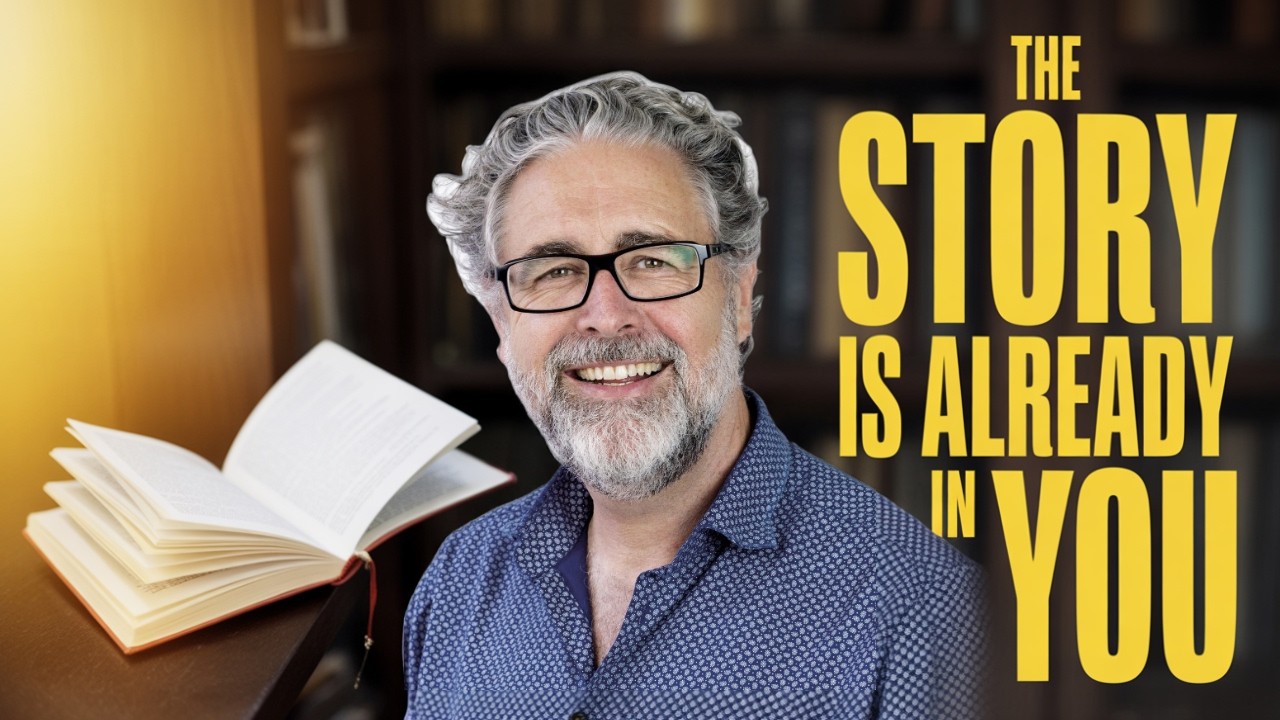
In this interview, host Utkarsh Narang talks with Sean about what makes someone a natural storyteller. Sean observes that natural storytellers often grow up immersed in storytelling environments—family traditions, cultural settings like Irish pub storytelling—rather than through formal training. He proposes that, when he reaches 80, he wants to help others recreate that immersive experience, possibly via a not‑for‑profit focused on storytelling immersion. Sean emphasizes learning through experience, appreciation, and love for the craft, likening it to language immersion where one learns by being surrounded by the language. He also references advice from a speaker coach about the body absorbing experiences when one is present, and highlights vulnerability (citing Brené Brown) as a prerequisite for growth. Throughout, Sean reflects on his own career shift toward this vision, noting his partner’s likely surprise, and underscores that joy, curiosity, and immersion are the core drivers of becoming a better storyteller.
Chapters
Anyway, he comes off the stage and I've got to go up on stage after him. I've got about 10 minutes before I go up. And I say to him, where'd you learn your storytelling? And he just looked at me like, what? He didn't even know he told a story, right? It just didn't even— he was a natural storyteller. So it got me interested. How do you become a natural storyteller, right? I think people become natural storytellers because they've been immersed in stories. Their family tells stories. They're like, they're from Ireland and there's a pub culture of, you know, having a crack, as they call it, is, you know, storytelling. And there are other people who just haven't had that experience so much. Now, how do you recreate that? So when I'm 80, I want to help people recreate that experience. Told lots of stories. Anyway, he comes off the stage and I've got to go up on stage after him. Got about 10 minutes before I go up. And I say to him, how did you— where'd you learn your storytelling? And he just looked at me like, what? He didn't even know he told a story, right? It just didn't even—
Wow.
He was a natural storyteller. So it got me interested. How do you become a natural storyteller, right? I think people become natural storytellers because they're been immersed in stories. Their family tells stories. They're like, they're from Ireland and there's a, the pub culture of, you know, having a crack as they call it is, you know, storytelling.
Yeah.
And there are other people who just haven't had that experience so much. Now, how do you recreate that? So when I'm 80, I wanna help people recreate that experience. of just being immersed in stories. No formal training, no nothing about you need to do this followed by this followed by that. Just hearing stories, appreciating stories, marveling at how stories work. That's all you need to do to become a better storyteller. This is my, my proposition.
Yeah, yeah. So, so if say that happens at 80, what would be the advice of 80-year-old Sean to the, the current Sean? What should, what should you start doing right now?
Uh, he would say, give up on your current career, Sean, and, uh, go create a not-for-profit and just do this till you're 80 because it's going to make you very happy. I think that's what he would say.
Powerful.
And mind you, I'm, I am actually got one foot in that direction. I, uh, I'm sort of doing both things. My business partner would probably be absolutely aghast at the idea Yeah. That I'm sort of suggesting that we, you know, sort of just throw in all of the training element. But I am a big believer in it's through experience, it's through trying stuff out, it's through appreciation, and it's through building a love for something, right? That's where you really learn, and that's what gives you the motivation. Yeah, so yeah, that's an interesting question. I'm glad you asked that. It's now got me on a new career path already. Damn it.
Beautiful. In this one short sentence, and I think people should rewind it, and I'm going to go back and listen. I think you gave a great summary of how do you really learn, because you need to find the joy in it, you got to experience and immerse yourself in it, and you got to find that inner curiosity to be able to pick that skill up. I think, and this idea, Sean, of immersing people into storytelling, I think it's pretty Brilliant. I can almost imagine a fire right in the middle and people sitting in a circle around that fire and just sharing stories.
Yeah, continuously. That'd be good. Well, you think about how people learn a language, right?
Correct.
You know, have you ever tried— I've tried learning Spanish by traditional methods, failed miserably. But, you know, if you want to learn Spanish, you go to Spain, you go to a place where no one speaks English, and you immerse yourself. You feel you struggle to start with, Right? Because you have to, it's meaningful. Um, next thing you know, you can speak, speak the language in the way it's supposed to be spoken.
Love it.
So I think that's the interesting part of it.
Yeah.
Um, yeah.
I, I spoke to, uh, uh, someone on the podcast a few weeks ago, uh, and I think, and he's my speaker coach. So, so he, what he shared was that the body absorbs. And so his advice to his younger self was, I think, or something like that, where he said that just don't try to learn everything, just be present to everything and your body will start to absorb it. I think that's very in line.
Similar idea, very similar idea. I'm with him on that.
Yeah, I love that, love that. Awesome. This was such an insightful conversation, Shawn. Thank you for shedding all the stories and sharing all the stories with us. And I think what's really important for anyone who is wanting to go down that path is to Learn to be vulnerable. I think that to me, and Brené Brown speaks to it in beautiful ways, but I think that's the first step. You've got to be okay with being vulnerable in front of an audience and to yourself to then embark on any journey of learning anything.
Indeed. That's a key part of it, I think.
Awesome.
Comes back right full circle of that confidence element.
Absolutely. It does. It does. Awesome. Thank you for your time today, Sean. I hope the listeners get value out of it. And yeah, I look forward to seeing you very soon.
I really enjoyed it. Thank you very much.
Thank you. Thank you for watching this clip. If this was of value, then you would love this full podcast episode with the guest that you just saw. I'm just putting this link somewhere left or right of me that you should just click on and watch the full episode. We talk about deep ideas, insights about life, leadership, you as an individual, and you as a professional in this beautiful yet so chaotic world of ours.