The Conversation High Performers Never Have With Themselves
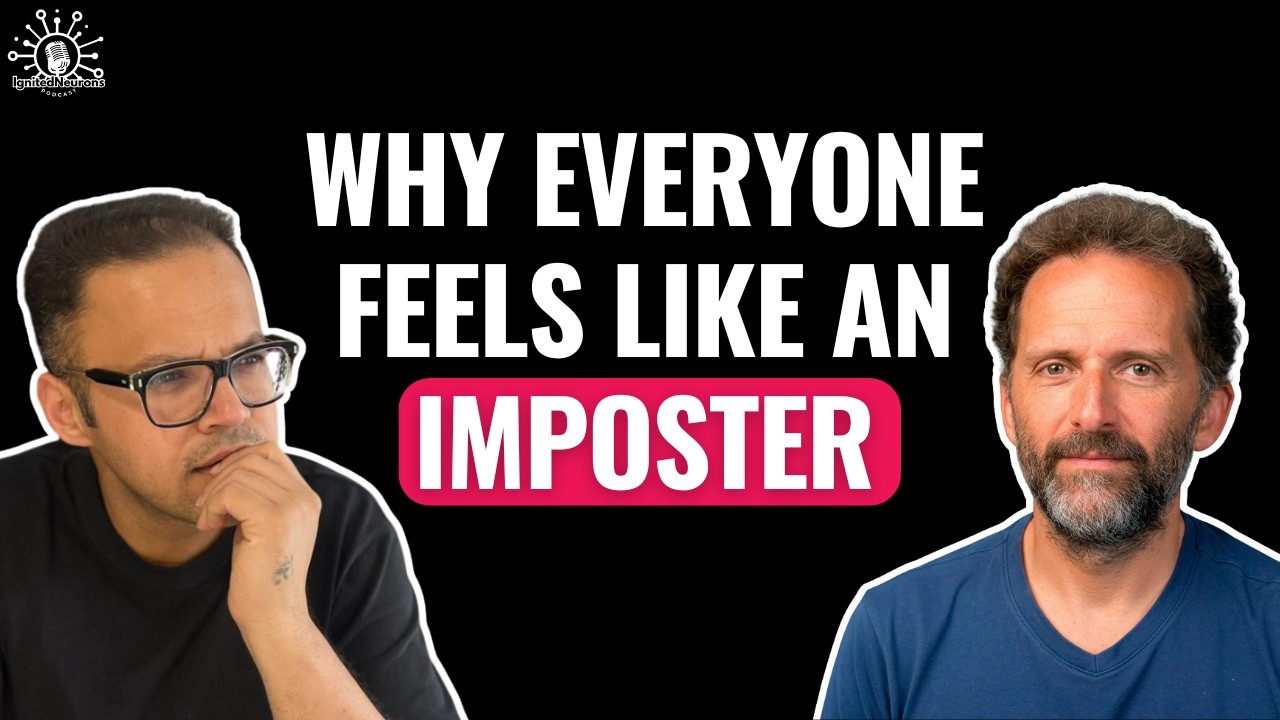
Cam, a videographer with 20 years of experience, talks about the mental blocks that stop high-performers from showing up on camera. He traces perfectionism and imposter syndrome back to childhood, then offers concrete fixes: lower the stakes, build repeatable systems like a weekly LinkedIn video, and embrace being relatable over polished.
Chapters
What if the problem isn't that you're not good enough, but it's that the world asks you to stay in a box, stay between those lines?
I didn't like a lot of rules. I didn't like to be told what to do, and I certainly didn't care about the opinion of some 50-year-old dickhead.
Here's a man who spent 20 years behind the camera making others look good while struggling to show up for himself.
The first time I got in front of camera, I was terrible.
And maybe that's the truth no one tells you. You don't need to be perfect to begin. You just need to begin.
One of the things that I find works for me and I've seen work for others is lower the stakes.
Because all of us, we're not stuck because we're not talented, but we are stuck because we are seeking to be perfect.
It's not what people need. It's not what people connect with. People want relatable and accessible.
So the real question is, who are you when no one's asking you to perform? Who are you? When the camera stops. Let's begin. A LinkedIn post told me that someone turned 50, and from there I reached out to Cam. This is the person who turned 50, and Cam has been doing videography and is the person behind the camera for 20 years. But today we'll not talk about that. We'll talk about what makes people tick. We'll talk about how to look good in life, and that's the purpose of the conversation. Welcome, Cam, to the conversation.
Very nice to be here.
Absolutely. Looking forward to it. And I typically don't stalk people, but when I find anything interesting about them that I feel is like worth just bringing out in the world, then I just, yeah, I go all guns blazing. And so absolutely excited about this conversation. The first question, Cam, that we put ourselves in the deep end with is that if that 8-year-old little boy, 8-year-old Cam, wherever Cam was growing up, if that boy comes and meets you right now, And has a conversation with you, what kind of conversation would emerge between the two of you?
Well, 8-year-old me was a misunderstood middle child. I have an older brother and a younger brother, and it took me a long time to find where I belonged in this world. And I was quite a solo child. I was very happy tinkering on my own. I didn't need a lot of external attention. I got engaged in projects and did all sorts of stuff. So honestly, if that 8-year-old child met me, he'd be like, who's that old bastard? I'm not interested in him at all. I would've thought I was an absolute idiot.
Unreal. 53 episodes. 53 episodes. I've never had that answer.
You're welcome.
Why was that 8-year-old misunderstood?
Well, I don't think the 8-year-old was misunderstood, but that's how I perceived the world when I was that young. And a formative memory I have that my mum reminded me of was that I was a very happy kindergarten student. I was very engaged and playful, and I did lots of creative stuff, and life was great. And then when I was in grade 1, I had a teacher that I didn't match with at all. She had a totally different philosophy on life than I did, and she wanted me to within the lines and write my words in exactly the right spot and be very neat. And she would lean over and she would correct my work. And I went from being a bubbly, happy, joyful kid to literally crying on my bedroom floor and not wanting to go to school anymore. And I was younger than 8 at the time, but my parents told me that that transition and working out what kind of kid I was, that I didn't like a lot of rules. I didn't like to be told what to do. And I certainly didn't care about the opinion of some 50-year-old dickhead.
It's fascinating, right? How the world keeps trying to mold us and shape us and try to have us be within the lines. Don't be outside of the box. And then still they expect us to be out of the box. Like, I've never understood this paradox. What's your take on this?
Well, my brother, my younger brother now has 3 kids under the age of 6. He has a 6-year-old, a 4-year-old, and a 2-year-old. And I'm heavily involved in their life and I love them dearly. And it's been really nice to see some children grow up with my DNA, who I see my mother in. The middle child, his daughter Darwin, is this beautiful little girl who reminds me very much of my mum. And his first son is a typical first child, and his baby boy is 2. They're all themselves. You can't choose who they get to be. And I've really enjoyed my brother's philosophy with raising them, which is that his job isn't to try to make them into a certain type of person. His job is to just help them become who they are. And That philosophy, I think, is the best thing you can do with any relationship in any life with anyone.
Yeah.
Just how do you provide an environment where someone gets to be who they enjoy being and who they feel good being? And so that little 8-year-old me, he might've wanted a bit of guidance from me, maybe some craft tools or an interest in the curiosity. So I love making things out of Lego when I was 8 years old. I had a little Lego exhibition. That I set up in my house and I wasn't too concerned with whether the colors matched. And I certainly wasn't concerned with building what was on the box or following the instructions. What I wanted to do was build whatever I wanted. And I feel really lucky that I had parents that recognized that and nurtured that in me and sent me to a school where eventually after grade 1, I got to largely have that experience. And that I just grew up in a privileged environment where I got to explore the world and find out who I wanted to be largely on my own terms. And I know not everybody gets to do that.
Yeah.
So I feel really grateful and lucky that that's the life I've had.
Yeah, that's so amazing. And it's like the word I use often, Cam, for this is like, it's just bliss when you get to do what you want to do, when you choose your own path, when you, it's just bliss. That's what I feel like being on drugs. I've never had drugs, but that's how it feels.
Well, I've taken a few drugs in my time. I'm not an addictive personality and I mainly just love fun. And so in the right time and the right place with the right people, I'll absolutely take some drugs. And I'm here to tell you at the right time, they're great, but they should never be a substitute for enjoying and having the self-esteem in your life that you need them to cope. That should only ever be a supplement to something fun. And what I have enjoyed about having this freedom to have a life that I've largely chosen for myself is recognizing that sometimes I do need rules and I do need structures and frameworks because relying on motivation alone isn't enough. And so I think the challenge for anyone who's choosing their path in life is to choose which guidelines will work for you and to choose which communities can hold you to account and to choose and surround yourself with people who bring out the best in you, but also don't take your bullshit, don't indulge you. So you don't want to grow up a spoiled child. You don't want to be someone who's not very resilient. You don't want to be someone who always wants their own needs met. You want to be someone who's good to be around, who contributes to people, who makes people's lives better. And if you can do that, then I think you're doing pretty well.
Yeah, it's such a fine balance, right? To be able to do that. You spoke about frameworks. What's one framework that you feel like we can live by?
All right, so here's a work one. Here's a really simple one that's quite mechanical. So I've been lucky enough to have attracted your attention on LinkedIn, right? And like a lot of people who want to promote their own business, I didn't find that very easy at the start. And I always wanted my stuff to be really good and polished and important and original. And I didn't understand that that's not actually what you need. It's not what people need. It's not what people connect with. People want relatable and accessible. But I was quite paralyzed with imposter syndrome and perfectionism, and I wasn't getting a lot done. And then a wonderful mentor who I've worked for, who's known me my whole life, he said, Cam, you need a system. And I've rejected systems my entire life. I don't want them. And he said, no, but it's whatever you're doing now is not working. So we need a system for you. And so he said to me, You have to promise me that for 3 months you're going to post a video on LinkedIn once a week. And he said, I don't care how good it is. I don't care what it's about. I don't care which day of the week it is, but you have to promise me you're going to do it once a week. And of course he doesn't care. He's doing it as a favor to me, but he knows that I can let myself down easily or I'll find a way to not do it. But if I promised it to him, then I might have a better chance. So that's an example of one system. The second system is that I have to do it once a week. And what that did was take the pressure off it having to be brilliant or original or fantastic. And instead it just has to be, what's the best idea you've got this week? And that totally unlocked me. And I think a lot of people will be, will feel paralyzed by some element of what they want to do, be it imposter syndrome or a motivation issue or feeling like they don't belong or fear of judgment or any number of things that can stop us. And often what we need is a system to let us get outside that fear or get over that barrier because total freedom can often mean paralysis. So, that's an example of one system that has worked for me really well and has led you to invite me onto your podcast.
Interesting. Interesting. So, what you're saying is when you're paralyzed, when the imposter kicks in, sometimes we build like these amazing goals and we're recording this in that space, right? The 2 weeks before the new year and the 2 weeks after the new year where people People want to build systems and goals and all of that, and then they fail within 2 months. So all you're saying is that find yourself a system that you can adhere to. Is that correct? Yeah.
Well, one of the things that I find works for me and I've seen work for others is lower the stakes. People have grand plans and ambitions. They're going to build a huge online curriculum or they're going to make a massive new fancy website or they're going to launch a program that they spent 3 months working on before they've found out if anyone wants to buy it. And if you can lower the stakes, if you can remove the pressure and remove the fear of judgment or reduce the risk, then you're much more likely to actually do it. And so I'm a massive fan of incremental things and things that don't have too much scope or don't take too much out of you.
Yeah.
Because you see, I think a lot of people will overly commit to doing something that requires a huge amount of effort or time before they've got a proof of concept or before they've worked out if it's in alignment with what they want to do. And I think lowering the stakes is a great idea. So for example, to go back to the same challenge I was set by my friend Pete, I'm a videographer with 20 years of experience. I've got fancy cameras. I know how to use them and I know what looks good. I know how to do good editing. I know how to do all this stuff, but I don't do it for myself. And Pete said, well, why are you making them fancy? Do they need to be fancy? And they don't.
Yeah.
Now, nearly everything I record and post on LinkedIn, I'd use my phone. I'd just record it on my phone, often just holding it in my hand.
Yeah.
Because Pete asked me a question that lowered the stakes. It lowered the amount of investment. It lowered the amount of pride attached to the product. It lowered the need for me to feel like it was brilliant.
Yeah.
Because what it, what you can give yourself permission to do is do something that's not perfect.
Yeah. Yeah.
And do something that doesn't have your identity attached to it and do something that's playful and is almost expected to be a little bit shit. Yeah.
These are, these are big terms that you're speaking. So in my work, when I coach people, you know, you're saying Move away from thinking of it as like a performance, get into like you're just practicing incremental changes, lower the stakes, not attached to your identity. People are attached to their work, to who they are, to what they speak, to how they want to express, to who— how do you figure this shit out? How have you done it? How have you done it? Maybe that's where we begin.
Trial and error. So, and I've surrounded myself with really good people.
So, love that.
The people who, like, I was really lucky. I moved into the world that you met me through. So the world of LinkedIn, solo business operating, consulting, if you like, a little bit of public speaking and training. I came into that world because I was employed as a videographer for a company that helped people run businesses like that. So I walked in the back door. I walked in the back door of a company that helps people exactly like me.
Yeah.
And what that gave me was the exposure to a whole heap of people who do it really well. And it gave me exposure to people who are used to giving very generous, friendly advice to people who were stuck in the same way that I was.
Yeah.
And so the benefit of that is you get to see and model yourself on people who are quite willing to be open and vulnerable about how they work. So if someone's too obsessed with presenting a perfect image, I just find that immediately repulsive.
Correct.
Like, I'm not into that at all.
Have you ever left a podcast like middle? I'm not going to talk to this person.
Oh no, I don't mean that. I mean the way you find your voice or the way I found my voice was being quite willing to be quite open about what kind of person I am and what my behind the scenes looks like. And instead of trying to be impressive, just trying to be honest and relevant and trying to just relate to people with where they're at. I mean, if you try to connect with people, but you're concerned with your own identity and you're concerned with your own reputation, it just isn't that appealing.
Yeah.
Being vulnerable, I don't think means confessing or showing all your flaws. It just means being honest with what's going on and showing up and sharing in a way that isn't trying to sell something. It isn't trying to come across as being perfect. It's just being relatable so that people can see you as a human, connect to you as a human, relate to their, relate their experience to the example you've shown, and hopefully forge a useful relationship that might be a friendship, It might be a client relationship. It might be just someone you get to hang out with on LinkedIn, who knows? But if it comes with honesty and a willingness to just be playful and make fun of yourself and not take life seriously, then that to me is meaningful.
Yeah, love that. About, I think, 14 years ago, I was given the responsibility of being a videographer to a leadership professor. And I cannot tell you like everything that I learned through that experience for 4 years. It's just fascinating. There are so many stories. And when, what you're saying, when someone does it really like authentically with vulnerability, being themselves on the camera, it's just a pleasure to watch. It's just a pleasure to watch.
But that's hard. So one of the things that you learn as a videographer is sticking a camera in someone's face is very rarely a pleasant experience for them unless they've had a heap of experience.
Right.
So one of the things that I love about the job is that I have worked out over years that The job isn't really pointing the camera. The job is helping the person who's on camera feeling comfortable. And the way that I found this out was that I didn't make videos of myself. I wasn't on camera at all until the start of the pandemic in 2020. I was only ever behind the camera producing events and promos and videos for other people. And then when the pandemic hit and no one had any work and I couldn't do anything, My partner, Alicia, said, well, why don't you get on camera yourself and just talk to people about what's going on and help them make videos? Because now they can't get a videographer. And the first time I got in front of camera, I was terrible.
Yeah.
I was awful. And I was wooden. I didn't relax. Even though I technically knew what to do, I was absolutely unable to bring that out of myself. And Alicia, my partner, who has run a very successful consulting business for many years, said, this is the example that people need. They don't want someone who's perfect. They want someone who's just a bit like them. So why don't you start a course and help people who are in the same position as you? Because everyone's in that position. So that's how I shifted from being just a videographer to helping people relax and be good on camera.
Yeah. Yeah. I love that. Like people don't want someone who's an expert, but someone who's relatable and that's who they learn from and grow from the best.
Yeah. And if you try to learn from an expert, if you learn from someone who's got 10,000 hours experience and they've been doing it forever, they've forgotten what it's like to be you. They have no idea. They've completely separated themselves from what it's like to be a beginner. And so sometimes they're not the best person to learn from. Often the best person to learn from is the person who's 1 or 2 steps ahead of you because they remember what it's like to be you.
Love it.
And when you're lost and floundering, you don't know anything, you can't take in very much information. You just want the next best little step so that you can make incremental progress that feels doable and it's not too intimidating. And the best person to do that is someone who's on the same path as you or a very similar path to you, but just a little bit ahead. So that was how this coaching side of my work was born. And honestly, I've been doing it for 5 years now and I'm nearly at the point where I'm no longer the best person for a beginner. Hmm.
So how do you like, so I wrote an article, I think it was last week. When was it? Time seems a blur some days. And there are so many questions popping up in my head, but I'd love to ask this. So what I feel is like, it's almost like a almost like a cycle, right? You start as a beginner, you become better, you then become an expert, but then you have to become a beginner again for you to keep growing. How do you see that cycle play out for you?
I wouldn't say it's a cycle. I would say that the process of improving anything means that you become aware of new insufficiency. Ooh, I love that. So every time you get better at something, you also get better at perceiving what Excellence looks like. So Ira Glass, who is the American broadcaster for This American Life, he says that when you decide you want to be good at something, you get the tools to perceive quality faster than you get the ability to create quality.
Hmm.
So you end up with this horrible gap where you know what you're trying to do, but you're not good enough to do it. And that gap might last a year or 2 years or 6 months, who knows? But you've got this gap in front of you where you know what good looks like now, but you can't produce it. But then when you lift that standard, so too your ability to perceive quality gets nuanced and further refined. And so if you're not challenged every 18 months or so, if you don't feel a bit of imposter syndrome or feel like you've got more to go, like you should be continually going through that because until, like, even if you're at the peak of the thing that you're doing, there's always something you can learn. The challenge is balancing how far you've come and being proud of what you've done and knowing objectively that you're much better than you were a year ago with realizing that there's still growth to do and being humble about it and ambitious in whatever way works for you. And so the position I'm in now, I can see that I'm way better than I was a few years ago, but I can also see where I need, where I would like to go.
Hmm.
But what isn't helpful for someone learning is for me to play down the competence that I've built up. So I think we do people a disservice when we play down the effort and the achievement that we've made because it does take time and effort and playing it down as though it's nothing or you're a natural or telling someone they've got a talent or someone saying, you know, it's, this is just little old me. It's nothing special. I think that's actually quite rude because it gives people the impression that if they're not that good, that there's something wrong with them. And that's a terrible thing to give someone the impression of.
Yeah.
So if you've spent 1,000 hours getting good at something, but you act like you haven't put in all that effort, then you're setting someone else who wants to be like you up for failure because without 1,000 hours, they're probably not going to be able to do it. And it's important, I think, to be realistic about how much effort you put in and what outcome you get.
I think it also comes from that, and I'm talking about myself here, with that upbringing, right? Growing up in India, it was like, don't toot your own horn. Don't celebrate yourself too much. Don't project what you achieved because whatever you've done, that's okay. Not, you don't have to brag about it. And I think that then makes you feel like you don't even deserve the small celebration. And this came to realization very, a few months ago. I was doing like an in-person event and then for some reason I told everyone in the room that our podcast reached 90,000 views on YouTube. And as I spoke that, and I thought like there were like 30 people in the room and I imagined like, Utkarsh, imagine 90,000 people in a room. That's the MCG, mate. You should be like, you should be super proud of yourself. But that did not kick in till that moment happened. And I was like, we're doing something good. So it's just hard sometimes to celebrate yourself.
Well, the difficulty is avoiding being the hero in your own story. So Australia and New Zealand, I'm Australian, but I live in New Zealand and our culture is very similar to what you described as growing up within India, where you don't toot your own horn and you don't overinflate your achievements and you don't big note yourself. And that's in quite a contrast to American culture where they're used to introducing themselves with their achievements, accomplishments. That's how you get taken seriously. And we're the opposite of that.
Yeah.
But what I think there's a difference here where you can be honest about what you've done without being the hero in your own story. And so if your podcast has reached 90,000 people and you're shouting that out as a reason why someone should like you or why they should take you seriously or as a way to seem impressive, then we are going to react badly to that. That's culturally not the way that we behave. But if you're teaching me, if you're showing me an example of work you've done, then I want to know that you've got the runs on the board. A cricket metaphor is probably appropriate for an Indian.
Yeah.
Sporting metaphors often don't land with the right people, with some people. And so what I always think is that if you're telling a story, you shouldn't be the hero in it. And if you're elevating someone else, but identifying the traits or the, the key moments in the story, often it's better if the person who has the breakthrough or the person who shows resilience or the person who is modeling the behavior you think is impressive, it's better if that's not you.
Hmm.
Interesting. Which unfortunately, like I've just spent half an hour talking about myself, so I feel weird saying that right now. I think you, hopefully you get the meaning, which is that it's a disservice to downplay how much effort you've put into becoming good at something or downplaying the impact that your work is having. Like you've reached 90,000 people. That's the MCG. That's amazing. And it helps no one for you to pretend that isn't the case.
Yeah.
But the key is acting with someone else's best interests at heart and teaching in a way where you're acknowledging that their feeling, their role, their performance is your priority and that you're not concerned with what they think of you. That's up to them what they think of you. You just present the information as best you can. Their judgment is outside of your control. And so just let that be what it is. If someone wants to take something from it, awesome. If I can tell my story in a way that overlaps with meaning in your story, then that little intersection is where the value is. And if I tell my story with the idea that you're going to be making yourself the protagonist, then that's how I think you get valuable connection.
That's, that's so deep because what you're saying is, so it's, it's not about It's not about tooting your own horn. It's not about bragging. It's about the intention you have behind it and how you do it. And don't make yourself the hero, but also don't do a disservice to the effort that you've put in to achieve what you've achieved.
Beautiful summary. That took you 30 seconds to summarize what I spent 5 minutes rambling about. Nicely done.
And we need both of them, right? Because we need the dissection and then we need the top line, I think. Yeah. So love that. When you were previously sharing about people like you experiencing video and then feeling terrified about it, I sometimes feel there's something about the camera. It switches on and then the person who's not yet learned to be authentic on camera changes. There's a switch that gets toggled. What is it about? And you've done this for 20 years, so I'd love for you to share and break it down. What does the camera do that people are maybe afraid of or makes them change who they are?
The camera, I don't think, does anything. It's just unfamiliar. So if you want to go for your driver's license in Australia, in Melbourne, you need to have logged 120 hours of practice driving on your learner plates before you're even allowed to sit the test to get your license. 120 hours. Driving with a supervisor sitting next to you, building up your experience. You have to drive at night, you have to drive during the day, and you have to do it a lot. And you have to do that before you're even allowed to sit the test. And yet people think that being on camera is going to be the same as talking to a person or the same as even teaching a room. And it's not, it's completely different. It's a very, very different skill and the skills don't transport. So you might be good at speaking to 100 people in a room. You might be good at one-on-one coaching. You might be a very confident professional person who knows their stuff, who's confident sharing it, and who previously believed that they could deliver that in any forum. And then suddenly you turn a camera on and it's a black hole and there's no faces and it's a different energy and they get tongue-tied, they get a limbic response, their mouth goes dry, they want to be impressive and weird, and it's so intimidating and so fear-inducing that they think, that's not for me, and they give up. You need to do it a lot. You have to get on camera a lot, a lot, a lot, a lot before you should have the right to judge whether you're good at it. Like if you, have you ever played a flute, for example, or a saxophone?
I've not. My son plays the drums. I'm not.
Okay. So if I handed you a saxophone and said, can you play this for me? You can't, but also, you know, you can't.
Yeah. Yeah.
And I know you can't, so you could Play a crap saxophone melody and that would be what we'd expect because you can't play the saxophone and you've never tried before. But if you do the same thing with a camera, people think they should be better at it. There's an impression that being able to speak to camera should be something that you're immediately good at. And most people are shocked and embarrassed to discover that they're not, but they shouldn't be. Like, you shouldn't expect to be good at it if you haven't done it before.
Yeah.
And yet that's the thing that Turns most people away.
That's so cool, this idea that even to drive, you need like 120 hours. Even though you feel like you're the best driver and you're ready for Formula 1, you still need that to get your license. And when we're recording on a video, we feel like day one, we should speak like whatever that— I don't know what that expert is, but like some expert. Yeah.
And the other thing is too, is most people don't like hearing or seeing themselves recorded. Most people don't like hearing a recording of their voice. They certainly don't like looking at their face when they watch a recording back. And there's this massive dissonance that happens where whatever someone's self-perception of their identity or their voice or their appearances meets the reality of what shows up on camera, they find that really confronting. And the funny part about that is that's what you look like. That's what you sound like. But you've never met that person. You don't know that person. You're looking at them through the other side of your eyes and you don't know them. It's like if you suddenly discovered you had a nearly identical twin. who looks a lot like you and sounds a lot like you, but isn't you. And you didn't know they existed. And if you were 30 or 40 years old and a twin suddenly appeared, that would be a really, a really weird and eerie experience. And I think for a lot of people, when they see themselves on video, that's what it is. And so your job is to learn to like that person. You have to get to know them, this weird sort of facsimile of you.
Yeah.
Who is definitely you, not what you thought you were, you have to learn to like them. You have to get to know them. And most people's experience of that is that that takes a little while and you have to sit through the discomfort of realizing that you say like a whole lot, or that one of your eyes doesn't open properly, or that you've got a pointy ear. All these things that are big and obvious when you see a recording of yourself that are the person that everyone in your life knows and loves anyway. Like, they don't care. It's who you are.
Yeah.
And your job is to get comfortable with that, get comfortable with the recorded version of you so that you can relax when you're on camera and be yourself. And then also learn to like and be usefully judgmental of the person who you, who shows up on camera. And being comfortable with the idea that you can coach yourself if you're willing to watch your recordings and give yourself honest feedback. You can train yourself out of using phrases that don't come across well in recordings, like, like, or so, or as I said earlier, or sounds that you might make with your mouth. All these things that you can ignore comfortably in conversation are laid bare in video recordings, and it takes work and commitment and a willingness to be uncomfortable.
Yeah. And it so beautifully compares to like everything that we do in life, right? Whether we are going and leading, whether we are producing content on LinkedIn, whether we are, I I don't know, like acting, anything that we do, we need to get comfortable with knowing ourselves. And then that's where the journey begins. And then I love this idea that you're saying, be usefully judgmental. I think that's such a powerful reframe. Instead of being just point-blank judgmental and saying that, what the fuck, I can never do this, saying, let's pause, let's be usefully judgmental. But here's a challenge that's coming to mind. As a videographer, you're meeting someone and you're working with them, right? And people are sometimes difficult. I'll not overgeneralize it, but people are complex human beings. We are all complex. Have you seen work to help people really settle down before it's a big shoot or settle down and feel like they understand themselves better? Why I'm asking this question is because what will come out of this might help someone who's listening to us right now and trying to speak up in a meeting and trying to show up to his work or show up to his family or friends or colleagues in a beautiful way? So what comes to mind?
I think it's a process of genuinely caring about the person. So over the years of doing interviews with people who were nervous or shy or couldn't find their natural voice, I've developed a range of skills to help people relax, but I don't think that's the important part. The important part is caring and being empathetic and genuinely only wanting that person to feel good and the best and to get the best out of themselves. I heard a really great excerpt from a Jimmy Carr interview on the Diary of a CEO podcast where they made the observation that a quality interview isn't really about the quality of the questions. Everyone wants to know, oh, what's the best way to ask a question or make sure you ask open questions or there's a certain timbre or words per minute or all these technical aspects to it. And I've never really focused on that stuff. What led me down this job And why I think I'm pretty good at it is because I care. I love meeting people. I love it when someone feels proud of what they've done or enters a situation feeling nervous and then leaves feeling like they've done something they weren't sure they could, or that they've managed to capture an idea or a story that they had that they didn't think was in them, and that together we've managed to create something that's worthwhile. And there's technical sides to things like don't put a whole heap of bright lights in people's faces if they're not comfortable on camera, or put the camera a bit further away, or spend the first 5 minutes just laughing about a shared interest. Ask them a few questions to get them talking about a hobby or what they did on the weekend or what food they like or something that has nothing to do with the content you want to record and burn the first 5 or 10 minutes trying to just get them to relax. Because once someone's relaxed and you ask the question you want the answer to, they're probably going to deliver it in an organic, useful way. Whereas if you keep interrupting someone who's still nervous, then that's never going to be any good.
You're pushing them off the cliff.
Yeah. And so I think the job and the joy, if you want to bring the best out of anyone, is can you create the environment where they feel seen and heard and capable of stepping into discomfort?
So easy. It's so easy. Being, being a, being a good human being is so easy. All you got to do is be kind, be empathetic, be caring, be listening.
Well, it's not, no, it's like, it's not all you need to do. So here's the danger of reducing it to just a motivational Hmm. So anyone who's done a job for 20 years is going to be pretty good at it, you would think. And the skill, I think, is of knowing when and how to use the skills you've accumulated, but without drawing a sign on it or without big noting it or needing that to be impressive. I think the joy of watching someone who's really, really good at something is how effortless it seems. Underline, it seems.
Yeah. Double-edged blade.
It takes a lot of practice to do something that looks effortless.
Yeah.
And the job, if you wanna bring the best out of someone, is to do it in a way where it doesn't seem like you're putting in any effort because that makes them relax. If you're making a theater of being an expert, that's intimidating. If you are comfortably absorbing stress, if you are easy to be around in any context, with a camera, in a meeting room, in front of a room, anything where some people might be feeling nervous, If you can have the lowest heartbeat and if you can have the smallest ego and if you can radiate a desire for people to feel good around you and to be proud of what they've done, then you're going to get a good result.
I love that. Lowest heartbeat, smallest ego. And what was the third ingredient there?
I can't remember.
I love that.
A desire, a desire for people to feel good about themselves.
Yeah.
And Something. All right, so we're going to go back to 8-year-old me. Let's go back to 8-year-old me. I had, I realized as an adult, an imperfect bond with my mother. And my mother was loving, kind, caring, but we didn't quite gel. And I wouldn't like to, for her to hear me say this, but it's also not a secret. But what it meant was I have a self-esteem problem as I understand it as an adult. And I don't mean I don't know I'm good at my work or that I'm not confident in a room. I mean, some part of me feels like I'm not worthy of being loved. Now, this is sort of a pretty heavy topic compared to what we were talking about, but what it's meant is I've gone through life really enjoying a lot of approval from a wide variety of people. And as a result of that, I've developed a whole heap of extroverted social skills that mean I get to meet a lot of people because that brings me joy. And it saves me from the heartache of not necessarily finding it easy to have an established romantic relationship in my life. Now that we can now put all that psychology aside, but what it's meant is I've got 20,000 hours of meeting people and enjoying speaking to them. Like I've done that a lot and it brings me deep joy. And if you're doing something that naturally energizes you, that you're not consciously aware of, that you've been doing a lot, you're probably going to be good at it. And so in a videographer role, like the videography skills kind of don't matter. And what I've noticed is when people hire me, they're not hiring me for my video skills because they don't know about cameras and lenses and shutter speeds and production quality and color matching. They don't give a shit. They just know if they like the video or not. And the thing that I think makes a video that I've made stand out from others is that the people speaking on it are being themselves and bringing good energy because hopefully I've created an environment where they get to do that.
Some deep shit. Did not, did not expect us to go, go where we're going. Uh, thank you. Thank you for that.
That was a dip. I didn't want to go there too far, but I think it's important to understand what your motivation is and like, know thyself is the quote, because it's so easy to go through life pretending we're the objective, reasonable person in any interaction and everyone else is difficult and hard and temperamental and judgmental and all the bad qualities humans have. And we just don't see our own. And the more you can understand who you are and why you're the way you are, the more likely you are to be able to use those skills in a productive way and to use that to elevate others. And that's like, that's my joy. That's where I get the most fun. I love being in a room where the whole room lifts and someone's doing something they didn't think they could do before. And I'm there alongside them when we've created it together, or there's, there's some chemistry there that didn't exist beforehand. That's my favorite.
Love it. What's the secret? How do you— you spoke about know thyself, right? What's your process? What's your secret? How do you go on that journey?
Well, it's pretty much what I explained. It's just understanding that it brings me deep joy for reasons which might be unpleasant to poke in a psychological way, in a way that happiness and doing good work, I think, depends on finding a role for yourself where you bring out your best and their best. And it doesn't matter who they are. It's just, are you doing work that energizes you that is also beneficial to others? And if you can do both of those things at the same time, awesome. And for most people, that's not often a conscious choice. You just do something well and someone asks you to do it again.
Yeah.
Or you put yourself in a situation where you did good work and someone will notice or you'll notice and you say, oh, I like that bit. I'm just going to go and find that again. And so none of my career, I feel weird using that word because it doesn't feel very planned, But none of it was planned. None of it was designed. None of it was a dream I had when I was 15 or 8 or 20 or 30. It was just a bunch of stuff that happened where I found what I liked and I did it. And then by doing something well, you create, if you are willing to increase your surface area of luck, I can't remember who said that, Stephen Covey perhaps. If you put yourself in situations where good things might happen, sometimes they will. And if you do a good job when that opportunity comes along and you're not too shy to let people know about it, or you post about it on LinkedIn, or you tell your friends, or you cold call someone you admire, like you've just reached out to me randomly and I've said yes, awesome. Yeah, we both win. All of these things, I think, create the opportunity for further good things. Yeah.
Beautiful.
And if you're lucky, or if you think other people are lucky, I don't think it's luck.
Yeah. They're deliberately, consciously increasing the surface area of their luck.
Yeah. And so I'll give you an example. Before the age of the internet and before everyone had a video camera in their phones, I had a mini DV camera and I used to make videos on group holidays where me and my friends would go and be clowns on a houseboat trip or at a ski lodge or somewhere. And we'd just do silly things and I'd make videos. And I loved editing that footage down into a clip that people wanted to watch.
Hmm.
The key part is people wanted to watch them because most of the time when someone has a slide night or makes a video of their holiday, it's boring as batshit because they don't know how to edit. It goes for too long and it's not interesting to other people. I learned over the process of doing this for 10 years how to make a video that people wanted to watch. And I did it just for fun and I did it just on holiday. And then one of my friends got a job covering the Ashes, the cricket series between Australia and India, uh, Australia and England. In England. And they said, do you need a videographer? We'd love it if you'd go with a videographer and make some clips while you're there. And my friend who I'd never worked with, we'd had no professional relationship at all. We were just mates. He said, holy shit, do you want to come to England and make videos for the Ashes? We've got a modest budget, but they're going to give us flights and we're just going to go and do this thing. And I was immediately enthusiastic. I said, yes, let's go. This is in 2012. And we just did it. And I'd never done a job like that before. I don't have a media degree. I've never worked for a sporting organization and I didn't know what I was doing, but I did have 10 years of experience making stupid videos with my friends. And so that went really well. We had a couple of clips that were quite popular and then that led to another invitation to do the next job and then the next invitation and then, and so on. And by being willing to try things and just be active. And say yes to opportunities, then good things cascade and you end up with a career.
Love it. Love that. And Ashes, wow, that's 2012. So that was Shane Warne was still playing, I'm assuming. Ricky Ponting was the captain? Unreal. Unreal. Goosebumps. Oh, what a series. Now we go 3 decades into the future. And because I know your age, because that's how I met you on LinkedIn, 3 decades into the future, Cam. We go to that 80-year-old Cam. If that Cam were to come and meet you right now and give you one piece of advice on how to lead the rest of your years, what would that 80-year-old Cam say to you?
I am very much a live-in-the-present person. And I saw a great thread the other day of people recognizing that they visualize a calendar year in unique and different ways. Some people see the months go around in a circle. Some people see them in a grid. Some people see them in a vertical list. Some people, the months are in a cloud. They're all different sizes. Some people picture them with colors. There's a bit of synesthesia going on. A third of people are wondering what the hell any of these visualizers are talking about. They don't see things in pictures. They're just a list. But one of them stood out to me and it was this month in a box right in the middle, and then just a blur on either side. Very little planning, very little thinking ahead. And I'm not really a planner. I live in the moment. That's how I've always lived. I don't have long-term goals particularly. And so I tend to live in a way that isn't based on a future reward. And I think a lot of these questions are designed, what would 80-year-old self say to you? Or what would you say on your deathbed? A lot of them, a lot of those questions are designed to make people live more in the present. Like, well, if you wanted, if you want this stuff in the future, why aren't you doing it now?
Exactly.
That's usually what that question means. And so I think 80-year-old me, if I lived that long, would probably be giving me a thumbs up, I hope. My life's not perfect. There's heaps of things I do badly and things I'm trying to improve, but overall, I don't think there's a regret lurking, if you like.
I was talking to my dad this morning. He's right now in the US. Um, I was telling him that I was reflecting about this with my wife and I was telling her that when I turn 80 and whenever that happens and if that happens, I would imagine that as an 80-year-old and not say, oh, what the fuck, how bad was my life? I'll be so full of gratitude for everything that would've happened, right? Then if that 80-year-old can do that, what's stopping this 40-year-old to do that? And so why can't all of us just say like, life's good. Yeah, we're doing our best. It's a blur left and right. Let's do our best in the moment and give ourselves a thumbs up.
Yeah. And so you were speaking to your dad this morning, but I haven't spoken to my dad for 27 years because he died when I was 23. And so I'm about the age that my dad was as I remember him. And he died when he was 57, so 7 years older than me now. But when I'm 15 years old, when you start to realize that your parents are actual people, I'm my dad's age. And I didn't unfortunately get to make more memories of my dad because he died. And so I don't have a role model. My immediate role model for how I should live as an 80-year-old doesn't exist. I don't have one. And my dad's brothers are great. I still have a close relationship with one of them. And it's not like I don't know 80-year-old people, but my single greatest influence on whether or not I'm living a good life, and my mum's still around and she's great too, by the way. It's not like I don't have a family, like everything's fine. Just dad happens to be dead. I honestly don't really care. Like I just don't mind. I like my life. It's going pretty well. I don't have a lot of regrets and I don't feel trapped by any situation I'm in. Like, I really feel for people who are financially bound to a job they don't like or domestically in a situation that feels they don't have agency over what they do. This is class and privilege speaking here, so not everyone has the luxury that I have, but a lot of people do have that objectively but don't live that way. But there's nothing I really wish I was doing instead. Everything's fine.
Love it. To everyone who's still listening to us about 50 minutes into the conversation, live in the moment. That's all that matters. You got to do something about increasing the surface area of your luck. There are 3 things that you must do. In the room, lower your heartbeat, have the smallest ego, and have a desire to help people be better. All you can do in your life, whatever career, whatever you're doing, whatever career in quotes, is to care for people. And I think that's what's most important. Be usefully judgmental of yourself. I think that's a new idea that we've learned today. Make sure that you do a lot of trial and error because life is full of beautiful experiments. Run those experiments. If you're not feeling challenged for a while, then something's not right. So find a way to challenge yourself because that, as an expert, gives you new ways to look at your insufficiencies. When you're trying to do some new experiments, We're getting into 2026, so you must be having all those amazing big resolutions of changing your life. Don't try to go too big. Try to start small, but lower the stakes. Build the systems because that's the only way you'll make progress. And to that 8-year-old Cam who we met at the start, who was misunderstood, who did not want to color between the lines, but he created his own systems to be where he is today. Thank you, Cam, for that wonderful hour. I truly appreciate you being here.
Utkarsh, that was amazing. Beautifully summarized, by the way. I sound very articulate.
You are.
And well considered. You've done a great job of cobbling that together. I do want to leave you with one final thought. And it occurred to me when you said I recommended having the lowest heartbeat in the room. I don't always think you should have the lowest heartbeat in the room. What I think is you should always be asking yourself, what does this room or this situation or this group of people need? Not what do I want, not what's best for me, what's best for this now us.
Which is what we did, which is what you and I did in this room today. Everyone who's on a podcast platform, you'll have to share it for others to listen to it. So please do that. If you're on YouTube, then appease to the algorithm gods if you want to. But make sure this kind of conversation, this kind of streaming of the universe is not for everyone. So if you feel you have someone in your network who will value this, share it with them. If not, Keep it to yourself. This is Utkarsh and Cam signing off.
Goodbye.
More from Utkarsh

You Left Yourself Behind | The 7 Questions That Help You Find Yourself Again | Michelle Chappel




Are You Trapped in a Life You Didn't Choose? | Dr. Michelle Chappel | The IgnitedNeurons Podcast

Financial Freedom Doesn't Make You Free | Tim Kelly | The IgnitedNeurons Podcast


Your relationship might be missing this! #shorts #ytshorts #shortvideo #shortsfeed

The Truth About Financial Freedom Nobody Talks About | Tim Kelly | The IgnitedNeurons Podcast

The Question We Ask When Life Hurts #shorts #youtubeshorts #shortvideo #shortsfeed #shortsviral

How to Keep Going When Life Changes Everything | Kenneth James Kunken | The IgnitedNeurons Podcast