Why Hustle Culture Is Quietly Destroying Your Brain
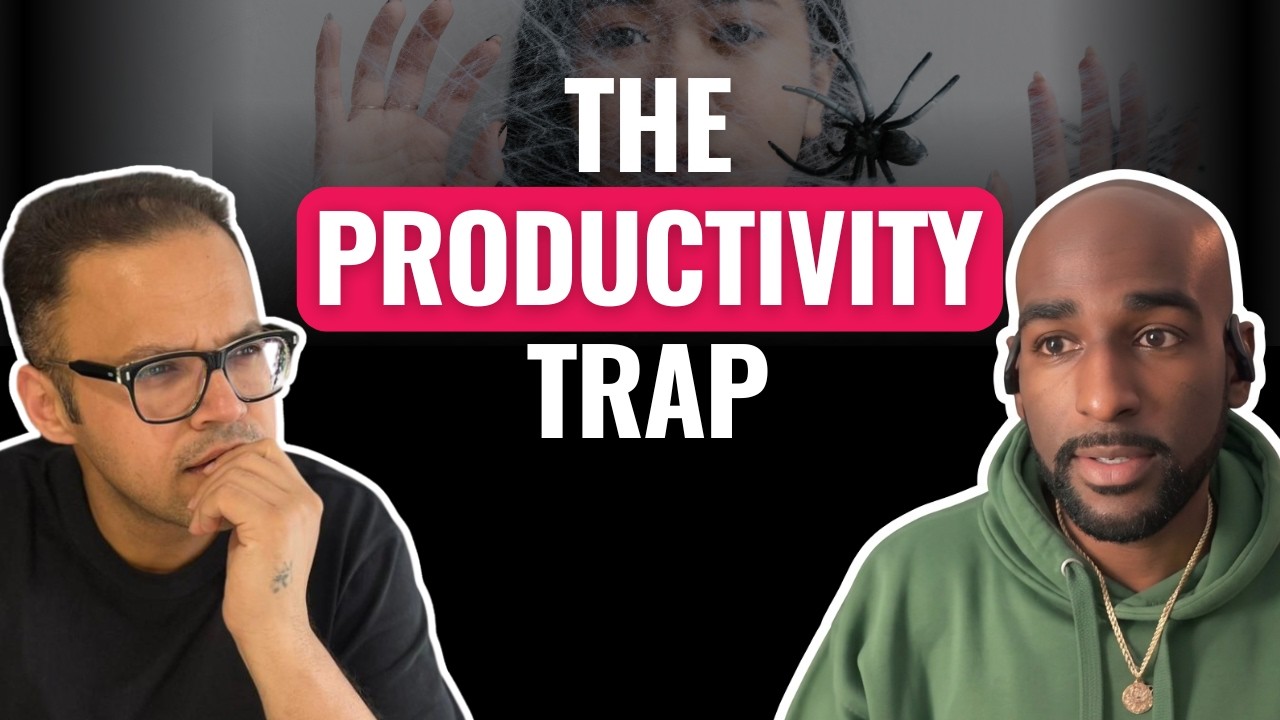
In this 44‑minute Ignite Neurons episode, host Utkarsh Narang interviews resilience coach and author Chas Scott about the hidden costs of hustle culture and how chronic burnout erodes mental health and performance. The conversation traces Chas’s personal journey from a high‑earning cybersecurity career to a burnout crisis, his discovery of positive psychology, neuroscience, and epigenetics, and the development of his "Success Starts Within" framework. They explore how cultural narratives around success condition the nervous system to view rest as a threat, discuss multigenerational trauma and cortisol dysregulation, and propose practical self‑care habits—morning routines, meditation, aerobic exercise, intentional boredom, and scheduled rest days—to rewire the brain for well‑being. The dialogue also features reflective thought experiments: advice Chas would give his 8‑year‑old self (spend time in silence) and his 80‑year‑old self (serve without sacrificing self‑care). Throughout, they emphasize that rest is a necessity with measurable ROI, not a luxury, and encourage listeners to assess how they feel upon waking as a personal success metric.
Chapters
I met a few people in my life and nobody wakes up and says, I hope I lose myself today.
The way I was taught what was success and happiness wasn't what I was feeling. It didn't feel like happiness and success.
In this episode, we unpack what happens when you hit rock bottom, how identity collapse can become your rebirth. If you've been functioning but not fulfilled, if you've been achieving but feeling dead inside, then don't skip this one. Let's dive in. Rest is not a reward, it's a necessity. And today I'm joined by Chas Scott from the US to speak about how sleep, stillness and self-care can actually help you build the stronger version of you, the version of you that's going to thrive and do beautiful things with the world. Welcome, Scott, to the Ignite Neurons podcast.
I appreciate it, man. Thanks for having me. I'm very excited for today's convo.
Absolutely. I'm looking forward to it because as I was talking on LinkedIn, the journey started somewhere in cybersecurity to positive psychology, to neuroscience, to rest, and writing a book that is Success from Within. So I'm just intrigued to know what that journey has been.
Well, it's been a journey, man. It's interesting because Because if you take a look at the work that I do, a lot of people say, you know, how did you get into sort of neuroscience or employee retention and burnout and rest? Well, I experienced my own story as it relates to burning out. I actually went to school for computer science down in Hampton University. And it was during that timeframe, I actually ran across a book called Power of Positive Thinking by Dr. Norman Vincent Peale. And it was during this sort of stage of my development where I really started to understand like who I was as a person. And it was during that timeframe in school where that book sort of changed the way that I looked at life.
Mm-hmm.
But also gave me sort of the motivation, the initiative to like give this type of knowledge to youth.
Yeah.
And interesting enough, we started a, a nonprofit at the time, uh, called Positively Caviar Incorporated, where we were able to give these mental wellness workshops to underserved youth in Baltimore, D.C. To really get them to understand that there are preventative strategies to decrease stress, like meditation and yoga. And it was actually during that timeframe where I had just graduated from school with my master's in cybersecurity, and I was starting this nonprofit, trying to climb the ranks within cyber and then build a nonprofit. And I suffered my burnout.
Hmm.
And I was waking up with anxiety. Uh, in 2017, I was waking up sweating, fearful of the day. And I had sort of all the material objects of success. I had the BMW, 6-speed manual, red leather interior. I had my dream job running incident response teams in cybersecurity, and I had a beautiful condo looking over the Potomac in Washington, DC. And yet I was burnt out, depressed, and waking up to a job that was just paying the bills. It wasn't really giving me fulfillment anymore. And I said, something needs to change. Um, because the way I was taught what was success and happiness wasn't what I was feeling. It didn't feel like happiness and success. And it was at that time where I started to read every book I could in positive psychology, neuroscience, quantum physics, the observer effect, law of attraction, The Secret, Tony Robbins.
Mm-hmm.
If it was something that could improve the quality of my life, I read it because what I was told wasn't true. I needed to change my relationship with what fulfillment, what happiness, and what alignment actually meant. And that meant taking care of myself. So that was sort of the impetus of how I came out to do the work that I'm doing today.
Yeah, that's so powerful. It also reveals a fact, Chaz, that we need to really go through our own pain to really understand what needs to shift, right? And sometimes I feel like I wish that once you've gone through and been through such stages in life, I wish we could really help others really feel what that pain is, because then the definition of success, the relationship with fulfillment and happiness, all of this could be drastically— And the way of— let's go even further back, because I'm really intrigued to know a little bit more on what that 8-year-old boy would say. If that 8-year-old boy— and that's the question that we start the podcast with, right? That if that 8-year-old Chas were to come and meet you right now in your present self, did not know that burnout's going to happen, did not know that all of this is going to play out the way it did. What kind of conversation do you think will emerge between you and that 8-year-old Chaz growing up?
You know, as simple as this sounds, it's just so profound because it really extends into every area of your life, which is basically spend more time in silence and trust yourself more. And the reason why I say that is in life, as you grow up, particularly in America and Western countries, we're taught that happiness, fulfillment, And this term success is something out there. And we're almost hypnotized into thinking that I won't feel good until I get this outside of me. And you're constantly trying to climb this mountain. And eventually you may get to the mountain, but then you realize it's not giving you the fulfillment and the joy that you thought it was gonna give you.
Mm-hmm.
You know, like the movies tell you or the TV shows tell you, and If, you know, if I was my 8-year-old self, I would be having a conversation and say, Chaz, it's about how you feel every single day that matters. It's about how you feel when you wake up in the morning. Do you have energy? Are you excited about your day? Do you feel like you're contributing to something much bigger than yourself that gives you that fulfillment and that joy internally? And then I'll also say to myself, which I said a little bit, which is you don't need something out there to feel good now. You don't need something in the future to feel good right now. If you take care of yourself, your mind, body, and soul today, you can feel good right now. And I always look at, particularly when I travel outside of the United States, and I haven't traveled that many places, but I always take a look at, you know, many of the people are much less fortunate than me.
Mm-hmm.
And, you know, many of these third world countries, as you take a look, they have nothing, and yet they're smiling and they're happy. Now, there's something to say about, you know, making sure that you can meet your means and you feed yourself and clean water, right? That's very, very, very important. But one of the things that you start to find is they, they're not constantly trying to achieve or obtain certain material items, and yet they're still happy. So why can't I live like that?
It's a good question. It's a, it's a billion-dollar question. It's not even a million-dollar question. I know as you're sharing this, and thank you for sharing What this 8-year-old will have that conversation. You know, as a— it was, I think, about 22 years ago when I used to live in Delhi, India at that time. And there used to be a spiritual place very close to our house, like maybe a 3-hour drive where we would go there. And so this place called Vrindavan, I don't know if you've heard of it or not. And there were these small little alleys there, like so small that That you would just like, maybe a bicycle will go through those and people can like walk through them. And I was there with my cousin who was from the US at that time. And we were walking there through those alleys and we saw old age people sitting on the side of the roads, just waiting for someone to, and not begging for anything, just sitting there for someone to give them some food, maybe some money, something that they could use to sustain and survive and live, right? And you're reflecting in that moment that when someone can spend the whole and take care of their bodies for a whole month for maybe say $20, $30, $100, how is it that the world needs hundreds and thousands of dollars to survive, to sustain, to be happy, to be fulfilled? And as you were saying, their faces were lit with happiness. It was that something, some kind of a higher force was supporting them. And I don't know why this experience was just coming back to me. As you were speaking.
Yeah, it's, it's interesting. I, um, I know we'll probably talk about it in the future, but I had went to Portugal. It was my first time overseas, uh, this past March, particularly Europe.
Yeah.
You know, over there, the, it, it was much slower. In, in the United States and many industrial-sized, uh, cities, constant grind, rat race, continuing to achieve and hustle and, um, I think there's something to be said about, you know, expanding your potential, feeling like you're in control of your life, but then it comes to a point where we're almost hypnotized into thinking that we can't be happy and fulfilled now. And your stories and many others that I've heard, and even me traveling to certain areas, there are different lifestyles on how to approach life. And I think as we start to come back to that, And start to learn how to take care of ourselves. A lot of the work that I do is helping high achievers build a life that feels as good as it looks. So much of, so many of us are worried about what it looks like. And then the last thing that we think about is what it feels like.
Yeah.
So I like to help people understand and really get back to this whole notion and philosophy of being well, because what we've done too much is put doing well above being well.
Yeah.
But if we put being well first, not only do you accomplish your goals faster, you're more in alignment to your true self. You know, your brain is optimized and your focus increases. There's something in the brain called brain-derived neurotrophic factor that gets released when you do aerobic exercise. These are simple practices that you can do daily to radically improve your life, optimize your life, and just feel good throughout the day. And then you start to notice, oh, you accomplish things a lot faster in less time. And not only that, you're healthier.
Yeah, yeah, yeah. You said somewhere the 8-year-old, the conversation that'll happen is sit more in silence, spend more time with yourself, something like that. But I really feel, and now that you're saying what a good life looks like, it needs to be more than that. So how we forget how we feel, I think to really feel your feelings, we need to really pause, Chaz. And I don't think in this rat race, in this grind, people are people are doing that enough. They're not pausing. And even the spaces that we had that would lead to boredom, that will lead to space, is now being taken up by our phones, by Netflix, and so on and so forth. And it's a massive battle. So how does one resolve that?
It's such an interesting topic. And I was just talking about this with a couple of friends last week, which is we live in a time now where people don't even know how to be bored. Boredom used to be this thing, you know, you're, you know, as a child, you're like bored. Now we distract ourselves from boredom. Yeah. So we're, we're unconsciously picking up our phone, unconsciously watching TV. And, you know, when I was writing my book, Success Starts Within, I did a lot of research on, you know, how our focus, our concentrations, our concentration is decreasing. Some people say that we have an attention span shorter than a goldfish. I'm not sure how they measured the attention span of a goldfish. But the point is our attention spans are slowly but surely being influenced. And the ability to concentrate, the ability to think of things that are outside sort of your daily regimen or battle rhythm is something is really important to the human psyche.
Yeah.
Because that's where creativity comes from. That's where transformation comes from. That's where insightfulness comes from, as well as You know, taking a look at yourself and saying, I don't like where I am right now. Something needs to change. And the only time that you're able to have that conversation is when you're in stillness. So you can start to observe yourself in life and say, you know what? I don't really like the way that I treated that person the other day. I don't really like the way that I showed up for my significant other today, or I don't like the way that I talked to somebody at work. And the only times that we have that space is within stillness, prayer, meditation. And, you know, particularly on Sundays in the United States, a lot of us go to church, right? That was an opportunity where we could sit with ourselves and say, there's something that I need to learn that I can change in my life. You know, there are moments in our lives that we need to sit with ourselves to create space for transformation.
Mm-hmm.
And if you don't give yourself space for transformation, you are constantly in a programmable loop through somebody else's timeline on Instagram.
Mm-hmm.
Or watching Netflix and drowning out, you know, that potential transformation that could be happening or experiencing in your life. And I lie to you not, every change that has ever happened for me, it's really came from pain. Some of it's come from pain, but a lot of it has came from insight and inspiration. And a lot of insight and inspiration comes from sitting with myself.
Yeah.
You know, me writing my book, I look at my book, I'm like, how did I write that thing? And I really do believe that a lot of that creativity and inspiration came from sitting with myself 20 minutes a day meditating and just, I call it getting mental and gentle downloads. And you're, you're able to have output and contribute that to the further wellbeing of humanity. And I think if more people are able to do that, it's critically important for our health, but also humanity at the same time.
Yeah. I love that idea. And, and, you know, I've started to call these podcasts Chaz, as 2 people having conversation that are not specifically trying to achieve an agenda, but they're just the universe streaming through us and hopefully giving the listeners something that they can shift their life through. And the ideas that you're speaking about, I'm going to like— and I think what's also like asterisk mark and conditions apply that, and I'm speaking for myself, Chaz, and then I'll let you speak for you. I'm not saying that it's wrong to watch Netflix, and I'm not saying that it's wrong to be on Instagram. I'm just saying that, do you balance it out with sitting with yourself? And I'm sure that you'll resonate with that. And what's the— do you really create that space for boredom? Do you really create that space where the brain can go like, I have nothing to focus on?
Yeah, no, I love that. And I'm glad that you sort of put that asterisk in there because I watch Netflix. Sometimes I feel guilty about watching Netflix. And we could talk about that later about how high achievers feel guilty for resting or doing something that's not working. But yeah, I love that point because I had to stop and say to myself, you know, I'm on social media a lot. I'm really producing content to help people, but I had to look at my screen time very recently and take a look at how much screen time I'm using on my phone. And I gotta be honest, it— the number was very large. I was very surprised.
Mm-hmm.
So I had to sit with myself and say, okay, is this working for me? Right. Am I balanced in my life? How do I feel throughout the day? Is the content contributing to me or is it making me compare myself to somebody else who's in my same space or a house or a car that I can't afford that's totally outside of my radar, just short-circuited my journey because I happen to be scrolling at 3:00 AM.
Mm-hmm.
Um, and I think that's important that we sit with ourselves and we say, is Netflix, is this show, at this current space or season in my life contributing to me? And I, and I think there's times in my life where if I'm going through a tough time, maybe I use Netflix to watch and have some entertainment.
Yeah.
But then it comes to a point where I felt it in my own heart where I'm using it as a scapegoat and I'm not facing the challenge or the pain or the problem in my life. And I think it personally in my life when I use social media or Netflix or watching TV as a scapegoat to not challenge or face the problems that I'm facing, that's when it becomes a problem. So you're right. I think it's, it's, it's a balance and you've got to sit with yourself in terms of what works for you based upon the season in your life, because there are ups and there are downs and you have to be mindful of what season you are and what's contributing to you.
And I think that's the space that we are asking listeners to create, right? The space where you can actually figure out what season it is because as you were saying, the US is getting into its winters and I'm here in Melbourne, 6 months into our winters and the winters don't seem to go away. We are really aware of the environment that allows us to either look at our weather app or look at just how we are feeling to see that it's cold or it's hot. And I think there's no way that's been popularized or made viral by either of us or thinkers who are in our space who can say that, are you really measuring what's going within? Is there an emotion that you're really like hiding from that you're not— like the burnout story you shared? And let's go back to that maybe. In '17, you said, right, life seems like a success on the outside. Cybersecurity, you wanted that job, the condo, the car, everything. And still it was hard to figure out that it's leading to burnout. So what changed, Chaz? So take us to that day, the moment, the week, whatever that looks like. And if you were like a fly on the wall of your house where you're waking up with that anxiety, with that like, what the fuck is wrong with my life? What was happening then, man? And how did you come out of it?
Yeah. And I think about it constantly because there's subtle things that happen in your life. You're like, oh, that was a shift. And if I didn't change, that would've been a problem. So yeah, in 2017, I had everything that I thought was success and happiness, and yet I was still waking up with anxiety, sweating, fearful of the day. Um, I remember waking up one morning and the sun was just, you know, coming in. I, I wasn't waking up early. I was waking up really late for work, particularly because I, I was just nervous and scared about work. I just, I don't, for some odd reason, I was just very stressed and the sun was coming in and I woke up and I was in like a puddle of my own sweat. And I was like, what is going on? Like my body was reacting. And sometimes when we're caught in a loop, our body begins to wake us up. And that was one of the opportunities where my body's like, Chaz, something needs to change. You're out of alignment. You're not feeling well when you wake up in the morning. You don't have energy when you come home. You're falling asleep at the wheel during your hour-long commute to and from work. You're not present with your friends and family. And I remember one time, I'll tell you this, And it's very vulnerable, obviously. I remember one time coming home from work and I wanted to like hang out with my friends and family, like during the weekend. And I could feel that my energy, the way I was feeling was affecting my friends. And that's when it hit me because I used to be this, this positive light of inspiration to help and give. And yet I was so unhappy with myself that my friends and family were feeling it.
Yeah.
And they didn't say anything. It was just the way that they were looking at me. And I remember my dad asking, you know, son, like, are you okay? And, you know, when someone who knows you asks you that question, they already know the answer. That's why they asked the question because they know you. And I said to myself, you know, in my heart, I realized I wasn't okay. Something needed to change. And that's when I started to really understand what it means to live a happy and successful, fulfilled life.
Hmm.
And I started to change my practices, how I woke up, How I went to sleep, my diet, what was coming into sort of my filters as it relates to social media and what I was experiencing at work. And I lie to you not, I remember I was reading at the time, probably Miracle Morning, 5:00 AM Morning Club, a couple other morning routine books. And I started implementing these simple practices and I worked out, I meditated, and I read one morning. And I was like, wow, getting some pep in my step. I'm feeling really good today. I didn't really accomplish anything, but I feel good inside. And I went into work that morning and I just felt this rush of, rush of energy. I felt good. I was more present with people. Um, I would write emails very quickly, getting stuff done in half the time. I would feel like I was in a state of flow in my life. Yeah. And I started to stack those days.
Yeah.
And slowly but surely my life began to change.
Yeah.
And not only that, that same job, that I felt burnt out in and felt sad about and anxiety going into work, that job began to change. The job didn't change the way I felt changed. And that's when I started to realize, oh my goodness, no pun intended, my book Success Starts Within. It's all about how you feel internally that contributes to what happens externally in your life.
So powerful. So like there, there was This moment when you asked your dad asking you, when you shared your dad asking you, how are you feeling, son? I had goosebumps all over my spine because you can imagine this, right? That for a loved one, for a friend, for a family, for a spouse, for a parent to see anyone going through something like that where you're waking up with feeling like shit, feeling like what the hell is wrong with my life, cannot be easy. And what's also interesting, Jaz, is that it takes a lot of how the environment supports you, and then how you also build that awareness of realizing that something needs to shift because it's a massive shift that needs to happen. And this idea of being in that state of flow, the stacking, I think I love all of that. I was with a group of coaches a few months ago, and that workshop was called Building Our Extraordinary Life. And I sort of went in, it was the first week of August, went in thinking like, Oh, I'm going to build my extraordinary life. This is going to be amazing. And then all the excitement around that, right? The first thing that the person who was leading said was, your extraordinary life, you're already living it. And so, all that's going to change in the next 3 days is how you're perceiving it. And what else can you do to change it? And I was like blown away. I was like, that's so true. That's such easy wisdom, right? And sometimes, even as coaches, even as people who've written books, we also are human. And so, we tend to forget that we are actually living our extraordinary lives.
It's such a good reminder because you and I both know perception determines your reality. You could have 2 people looking at the same exact thing or something happens to them. Somebody cuts them off on the road. One person says, oh, that person's gotta get to the hospital. You just never know what's going on in their life. And the other person says, that person got over just to piss me off this morning, spilled my coffee, heading into work, and the negativity just spirals. So you're right. Perception determines your reality and determines how things show up for you. Um, and I, I just love the way that I think it's important, especially for people that are contributing to others, whether you're a leader, whether you're a mom, whether you're a father, whether you're anything where you're contributing to somebody else, that perception change is so important because you're able to serve at higher levels, manage your own perceptions, manage your own stress, and figure out how to contribute more to other people.
There will be listeners who are listening to us right now, Chaz, and they'll be resonating with some of the things that you and I are saying, right? How a burnout can feel, how you can have the best job but feels like you're not in the right place at the right time and all of those challenges, right? Let's talk about rest because that, as you and I were also speaking earlier, what's the neuroscience of rest? Like, what happens when we allow our body to rest, which seems like, oh, I'm going to reward myself after I accomplish something. I'll rest in December because that's when Christmas is, when you got to rest, right? Why is it so hard for us to rewire our brain and say that, oh, I'm going to rest today?
Yeah, this is a topic that's near and dear to my heart because I experience it. And it's very interesting. And I think we touched on it a little bit with— let's go back in America. This was the early 1900s, actually, the whole industrial movement. We're taught that you have to work hard, you have to grind, you have to achieve a certain status to live a certain life. And that's really ingrained into the culture, particularly in America and many Western countries, but really industrial cities in general. And we're thrown into our lives and thinking that we must constantly work and achieve in order to feel like this. What tends to happen is particularly our nervous system literally is being programmed to think that rest is a threat to your nervous system. And I did some research, particularly on my own family. I think I told you I did a TEDx talk and it was about why rest feels unsafe. It's not out yet. We're still waiting for it to be sent out through TED, but I talked about my great-great-grandfather, great-great-great-grandfather, who was born enslaved in Sparta, Georgia on the William Hurt Plantation in 1828. And we got a chance to go visit the plantation down in Sparta, Georgia. And it was at that moment in time, it was about 2 years ago where I thought to myself, You know, they didn't even have an opportunity to rest. There were times where they were forced. It was forced labor. They had to continue to work the fields. And there were many times that they didn't have the opportunity to take some time and just say, I'm just going to sit and enjoy my life. And I started doing research on epigenetics and how genetics have an effect multigenerationally and how that really would affect somebody And feeling like they have an opportunity to rest. And you know what's interesting? A lot of my coaching clients, women, people of color, first-generation professionals, even if you come from a blue-collar family, what I've started to realize was it was really hard for them to take time to rest, to get their foot off the accelerator and just enjoy life. And I started to connect the dots here. And there's been some research, particularly on Holocaust survivors in the concentration camps. where their cortisol levels, because they were in states of stress for so long, their cortisol levels were abnormally very, very low. Sometimes we always think of cortisol as being very, very high as it relates to stress.
Right.
But cortisol helps to balance the stress levels as well. So in this case, it was very, very low because of long periods of stress, which means the cortisol levels were low. The point I'm trying to make is they started to realize that Burnout, stress epigenetically for Holocaust survivors down the line started to affect the potential for those in the same families as it relates to burnout. And they connected this study epigenetically and how it passes down. So basically what I'm trying to communicate is it's almost like rest is a threat to our nervous system because a lot of us feel like, because my ancestors sacrificed for me or because my family did this, I have to continue to work. I can't, I don't have time to rest. I feel very fortunate about where I am right now. because my family didn't have an opportunity to go to college, right?
Mm-hmm.
My family didn't have an opportunity to go read, you know, back in the slavery days. And I, I would find these messages time and time and again, um, particularly in marginalized communities. And, uh, it, it's very interesting. And I'll, I'll add this, which is, um, I read a book by Deepak Chopra by, uh, called Super Genes.
Mm-hmm.
And he talks about epigenetics. Read this book back in 2017. And what they did was very interesting. It was a study on zapping cows or cows. So they would put cows in this gated sort of fence. And each time the cow would go up and touch the fence, the cow would be electrocuted. So it was a gentle mental shock, right? So Pavlov's theory, the cows would not touch the gate anymore because of the pain that it would experience and register in its brain. So the cows had kids. Okay. And the cows, the kids had never touched the gate. What they saw was the kids within the gate, they would not go up and touch the fence. Okay? Because epigenetically, the trauma was passed down to the kids. And they would actually take the electric wire off, and they still would not go up and touch the fence. So this shows how trauma and as well as sort of our experiences of what our parents have been through can be passed down epigenetically. This is just a test to show that through through cows, but they've actually shown this through humans as well as, as well as the Holocaust and many of other of us that have experienced sort of trauma as it relates to rest. I know that was a lot, but I, I think characterizing all of that is something that is something new to add to sort of the conversation here.
Yeah, no, I, I, I love all of that and that, that experiment, like, wow. I mean, trauma that the cows were seeing and experiencing being passed down to the calves is, is, is massive. And what I'm also thinking as you're speaking, It's decades and centuries of experiences that we carry, right? And so it's not stopped. Even society kept forcing this idea of grind, grind, grind, because if you don't do something, then you're going to lose out. And whatever opportunities, as you were saying, have come to you have come because of the work that you've done. And so why rest? And so rest, I think, somewhere started to be compared with laziness almost like, oh, how lazy are you? Are you resting? What the hell is wrong with you? How do we differentiate this, Chaz? Because we got to give our listeners something where they can feel like they got an action that they can do from this. So how do you separate rest being lazy? Rest, how do you prove the rest ROI?
It's a very good question. I want to start with a story first and then we'll talk about sort of your specific question. I think I had mentioned that I went to Portugal my first time overseas to Europe. It was after my divorce and I was like, you know what? I'm going to take some time off to rest, to enjoy my life. And I never forget, I flew I flew into Portugal, Lisbon. I had an Airbnb right downtown. It was right by the water. I said to myself, well, Chaz, you know, tomorrow morning you're gonna take the train to Sintra. And it was a little city, a couple, maybe about an hour, 45 minutes away. And I was gonna take a train around 10:30. And I said to myself, it's gonna be a nice easy morning, right? So I woke up, sure enough, I said, I gotta go running. I gotta go meditate. I gotta read. I gotta, I gotta go shower. And it was, my nervous system was already clocked into achievement. The hustle, the rat race. I lied to you not. I woke up, I did my run. Of course nobody was up because the culture in Portugal is completely different. I'm the only one out there running. Everybody knows I'm from America because I'm trying to hustle and achieve at 5:00 AM. And I just got off from my flight. I lied to you not, man. I got back to the Airbnb and, uh, all right. I was like, my train leaves at 10:30. I need to read. I need to meditate. And, um, I got my, I got dressed and sure enough, uh, I called an Uber. I sprinted downstairs and as I got in the Uber, I realized I had forgotten my wallet and I was just completely stressed. I was like, I can't leave my Airbnb without my wallet. So I jumped out, I sprinted right back upstairs, and as I began looking for my wallet, I noticed, I looked down, like noticed my hands were shaking. I was like stressed and completely just like wired for no reason. And that's when I realized, you know, living in Portugal and not being sort of in my own environment back at home in the Washington, DC area, My nervous system was still wired for achievement in this hustle culture. And I had to stop and say to myself, wait a minute, Chaz, there's nothing that you need to do. If you miss the 10:30 train, just take the 11th. What are you hustling for? What is going on? And I really had to have a conversation with myself. And that's when I realized it, like the hustle culture has really been ingrained into us and makes us feel lazy. Um, especially for those that want to achieve at the highest levels and contribute to society, um, you know, in any way that we can. And even if you're a mother or a father, you just feel like you always gotta, you gotta work and serve and give. So your question on, you know, when is it, you know, resting for your body versus feeling lazy? Again, I think that really comes down to sitting with yourself. I know particularly for me, I make time to not do anything on Sunday, Sunday afternoons. And why do I do this? Because throughout the week, Monday through— I try not to extend to Saturday, but Monday through Friday, I'm constantly like, what's the next checklist? What do I need to accomplish? What podcasts do I need to be on? What book do I need to write? Do I need to do another TEDx talk? The point is my brain is constantly focused on the future and I'm trying to remain in the present. So on Sunday afternoons after church, I made a commitment to myself Literally not to do anything, leave church, which is in DC, and take a scooter around DC and just live my life. Just talk to people, walk into random tea coffee shops, get some tea. You know, I'm not reading anything. I'm not trying to accomplish anything. I'm literally just roaming the streets in a scooter just to enjoy my life. And I had to intentionally put that in my weekly schedule because I realized I'm always focused on the future. When can I be in the present? What are those simple practices that can unhook you from that nervous system of feeling like I have to get somewhere? Because I lie to you not, when I left church, I'm like, I got to get to Trader Joe's. I got to get to Giant, the grocery store, so I can get my groceries, get prepared for the week, write my checklist of items. Just live your life. Can I do that?
As you're asking this question, can I do that? I'll be honest, just asking this question to myself, and I'm not even talking about the listeners right now or about you, Chaz, just asking this question to myself, can live my life, I'm scared, man. And that's the honest thing because again, as you're saying, the brain is wired. Even it almost seems that even rest needs a structure. Even rest needs a checklist. And how do you achieve that? How do we give ourselves permission to rest?
It's a really good question. That's what I sort of help out with, with my coaching clients. You know, one of the things that I ask my clients, it's kind of like a really pointed question, which is, you know, what happens? What do you feel? What do you feel in your body When you rest, if you were to take your foot off the accelerator, what are you losing? What's going on? What is the conversation in your head when you feel like you take your foot off the accelerator? And I find that similar to what you're saying, people are nervous. People are fearful because where they are right now is because of hard work. Where they are right now is because of the grind, the, you know, the willpower. And I think ultimately you get to a certain threshold in your life Where you'll knock it outta the park.
Mm-hmm.
But you'll get to a point where I've seen in my own life where that peak only goes so much farther and you're not able, able to adequately withstand the stress and the demands and the distractions in your life. And you have to recuperate. You have to rest. You have to take time to do, to take care of yourself because you'll get to a point where your body can't withstand it anymore. And high blood pressure pills, you gotta go to the hospital. Um, people are having heart attacks on Monday morning. So the point is integral things that you can do daily that can really fill up your cup before it starts to spill over. And slowly but surely you begin to train your nervous system to say, it's okay to rest. It's okay to take time to take care of myself. And particularly, you know, that's why I use the term success starts within, happens to be a very sexy word, but really the entire book is about wellbeing. The entire book is about taking care of yourself. And I only use that term to make people attracted to the book, right?
Yeah.
But when they open it, they're like, you mean to tell me if I take care of myself, I'm able to achieve more in less time? I feel good in the process and I'm able to give and show value at higher levels with joy and integrity. Oh my God, I didn't know it existed. So, you know, there, there are strategies to, to, to do that and withstand stress more at higher levels and to give more and to be more present.
Yeah, yeah. We've become human doings instead of human beings. And I think, yeah, it'll be maybe whoever is listening and you're still with us at about 44 minutes, maybe just decide this weekend, during the weekday, just take a pause and don't do anything. And I think, just I realized this, like, even when you're having like a productive week, the breaks that you give yourself, the pauses that you create, That's where the ease starts to flow in. That's where the joy comes back. And I think another thing that I really— so my son is a drummer, so a lot of music in our house, right? So he keeps telling me, and I think there's a famous quote around this also, that when he pauses the drum, that's when the music starts created, where the pauses, the silences are what make the music happen. But many of us, Chas, are like dogs sitting on a nail, and I can't finish the episode without having that story be told.
Um, you know, there's this story, it's like an old fable story where his friend, you, you, you could say his, his friend goes to visit his friend at his house. And the friend's like, hey dude, John, your, your dog is, is yelping over there. He's like screaming for his life. What's going on? And, uh, the owner of the dog says, um, he says, well, he's sitting on a nail. And he's like, well, why doesn't he just get up? And the owner of the dog says, well, I guess, I guess the pain isn't, isn't worth it yet. I guess he hasn't experienced much pain yet. And he's still sitting on the nail experiencing the pain. The whole point to the story is sometimes it takes us something radical or an extreme amount of pain for us to change. And typically you either change through insight, inspiration, or you change from pain. Now, most of us as human beings, we sometimes, most of the time change from pain, but podcasts such as this. Reading books, focusing on your personal development are ways to continue to develop insight so that you can have those new neural connections for creativity and transformation. And if you're able to make sure that you're being more mindful, more conscious, you're able to have those insights before an extreme amount of pain and your body tells you, Chaz, I can't take it anymore because you're sweating before you even go into work and you're fearful. But if you're able to constantly work on yourself and take care of yourself, you don't get to that threshold of pain, or at least you're able to adequately address it before it becomes something bigger.
Love that story. Love that story. Had to bring it back. To all those that are listening, don't wait for that pain to get so strong that you're feeling dizzy, you're shaking, you're sweating, you're reaching those stages where burnout is very real because people lose their lives when they And literally and psychologically. So yeah, take care of yourself. I think that's really important. Thanks for sharing that story, Chas. But now let's go into the future, Chas, to that 80-year-old Chas, lived the beautiful life from now to then. And that 80-year-old fellow comes back to you right now in this moment and gives you one piece of advice on how to live the rest of your years. What would that 80-year-old Chas say? 80 is what we are referring to now.
80, the big 80.
Big 80.
It's kind of 2 points, but number one, serve. Always feel, always have the intention of serving, but not at the expense of yourself. And I find that most of us, when you find your calling or when you're operating at a very high level and trying to serve at high levels, we forget who we are and we forget how to take care of ourselves. And that particularly happened to me. And I think it's important that Even, even if you don't know your calling, if you begin to take care of yourself, you'll start to find out your calling and you're on the journey because new neurons, more creativity, more opportunities of transformation, more stillness, more abundance, more joy. You're on the path of figuring out what your purpose is. And even if you are on the path of knowing your purpose and you're constantly grinding and hustling and serving at higher levels, if you take care of yourself first, Not only do you feel more joyful and present, you're able to serve at higher levels. So it really hits on 2 points. And for me, particularly when I was waking up with anxiety and stress, when I had all the material items of success, none of that mattered. It all felt— the only thing that was important is how I felt when I woke up in the morning. And that is a consistent question I always ask myself. How do I feel when I wake up in the morning? And that is literally my definition of success.
To everyone who's listening, thank you, Chaz, for sharing that. Ask yourself, how do you feel when you wake up in the morning. And if you've listened through the episode, I hope you got the point that rest is not opposite of building a beautiful life. Rest is not the opposite of doing a lot of work. Rest is what makes great possible. And we listen to the 80-year-old Chas's advice because I think it's worth its gold. Serve, but not at the expense of yourself. Fill your cup. It's okay to rest. Don't wait for that pain to be so strong that it leads to change. Instead, listen to the podcast, listen to things that will Give you the inspiration to change. And rest always has an ROI. You don't have to hustle. You don't have to grind, grind, grind. You can rest and succeed. It's not an or situation. Make sure you balance the human being in you with the human doing. It cannot be either or. Again, it's the balance. And we'll also listen to the 8-year-old Chas's advice, which is spend more time in silence, spend more time with yourself, because that's where all the answers lie. Thank you, Chas, for that wonderful conversation. Loved having you here. And we'll put all the show notes so that people can get in touch with you, buy your book, watch your TEDx talk when it comes. Thank you for being here.
Thanks, man. I appreciate you for having me.
To everyone who's listening to this on a podcast platform, make sure that you share it with someone who might enjoy this, who might need rest according to you. Maybe you'll change their lives. And if you're on YouTube, why don't you put something in the comments? What did you gain from it? What's one quote that's resonating? Because Chaz and I are reading all the comments, uh, while we take rest. This is Utkarsh and Chaz signing off.
More from Utkarsh

You Left Yourself Behind | The 7 Questions That Help You Find Yourself Again | Michelle Chappel




Are You Trapped in a Life You Didn't Choose? | Dr. Michelle Chappel | The IgnitedNeurons Podcast

Financial Freedom Doesn't Make You Free | Tim Kelly | The IgnitedNeurons Podcast


Your relationship might be missing this! #shorts #ytshorts #shortvideo #shortsfeed

The Truth About Financial Freedom Nobody Talks About | Tim Kelly | The IgnitedNeurons Podcast

The Question We Ask When Life Hurts #shorts #youtubeshorts #shortvideo #shortsfeed #shortsviral

How to Keep Going When Life Changes Everything | Kenneth James Kunken | The IgnitedNeurons Podcast