Why You Never Become The Person You Want To Be
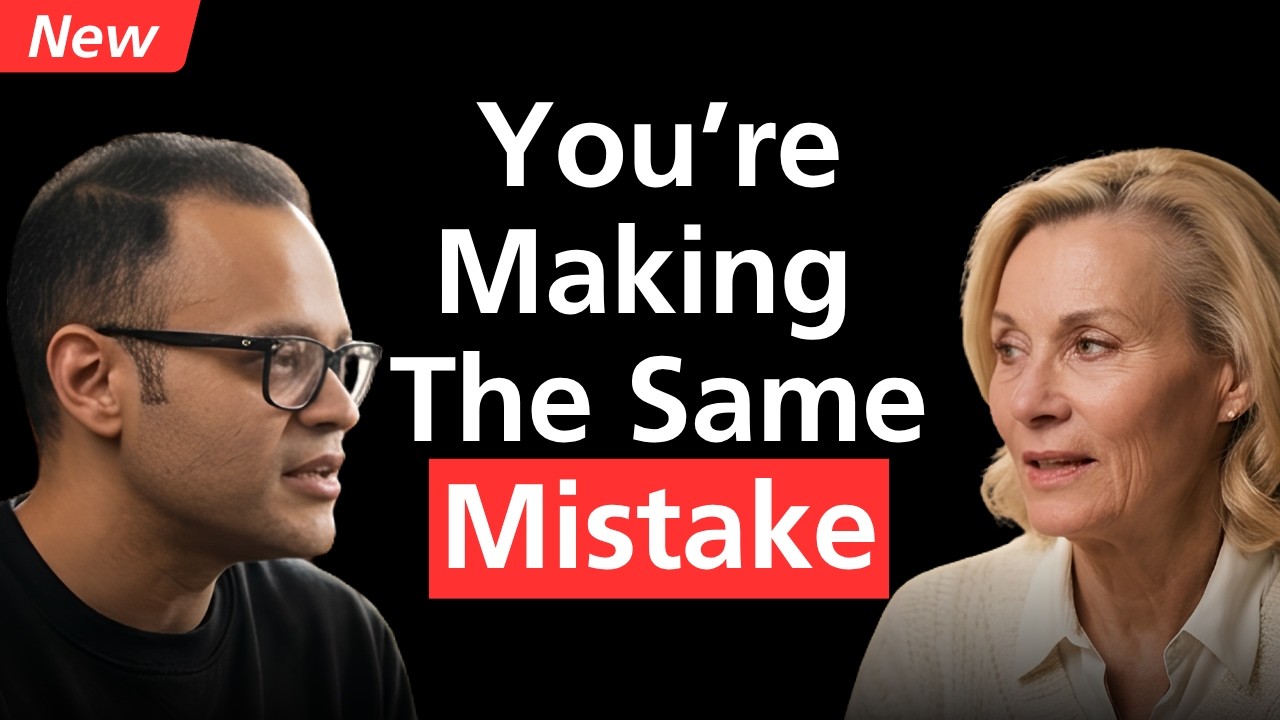
Executive coach Liza Broderick worked with Marshall Goldsmith on research where high-performing leaders answered six daily questions like "Did I do my best to set clear goals?" Over a year, their self-ratings climbed from mixed to near-perfect, and many kept going for years. Change sticks when you build a system, find accountability, and let small daily actions compound.
Chapters
We've all tried to change things about ourselves, whether that's a new habit of meditation, becoming more fitter, becoming a better parent. But what if that change journey was not the hard part? What if staying changed was what the tough, scary part was?
I didn't want to be ashamed to report that I didn't even try.
Lisa Broderick spent a year every weekday getting on the phone with some of the most amazing leaders across the world. And what that whole research became was a book co-written with the OG coach, Marshall Goldsmith called Permanence.
It's about the small steps taken every day through the arc of a lifetime where you become.
Remember, it's not a finish line. It's not a New Year resolution. It's a way of life. It's a practice.
Almost everything I worry about now doesn't matter, and only a few truths remain. One, be happy now. There is only now.
What if that person that you're trying to become, the future self that you're trying to serve, all that person was seeking was that how you go through that process and how you make change permanent. Let's dive in. We all live in a world that's obsessed with change. We all want new goals, new habits, new versions of ourselves. But what if, what if the question isn't how we change, but how it lasts? How we make this journey of personal growth permanent? And today I'm joined by Liza Broderick, who's written a book called Permanence, And we'll explore this idea of permanence for a world that never stops moving. Welcome, Lisa, to the conversation.
Thank you, Utkarsh. It's a pleasure to be here.
I'm most intrigued about the 6 questions. I'm most intrigued about what led you to do this work because I know a little bit of the backstory. But before we kind of go there, Lisa, the first question that I ask in, in the podcast is to help us go deep into who Lisa is. And what's been your journey? And so the question is that if that 8-year-old Lisa, a little kid running around with dreams in her eyes, if that 8-year-old Lisa comes and meets you right now and there's a conversation happening between the two of you, your present self and the 8-year-old self, what kind of a conversation do you think will emerge?
Well, I think the 8-year-old Lisa had a lot of wisdom because I think all kids have wisdom. Right? And so really, even thinking back that far, and I'll tell you a little of the origin story. I grew up in Phoenix, Arizona, where my parents were high-tech executives, but it comes back to my life's work. And it's all about a single question. How do we become people we trust ourselves to be from the inside out over the span of our entire lives, starting with 8 years old or before? My father was a very early computer executive. from the computer industry, which was nascent at the time. And then we moved to Silicon Valley. And the 8-year-old had a lot of wisdom, but she didn't trust it. And so I would say if the 8-year-old were speaking now, she might say, don't forget that we all already know what matters, especially children. And so doing things like thinking back to that time, trusting in my own curiosity, right? My own sense of fairness, my instinct to help people. Those are the things that drove me at the time. But I was around people who had a different view, especially grownups. And grownups are all about permission and credentials to do it. You have to be old enough to do that. You have to have permission to do that. And so I think we all start measuring our lives by how impressive it looks. And that was exacerbated by moving to Silicon Valley when I was about 12 years old, where it really was even back then, and this is in the '70s and then in the '80s, about how impressive it all is and how impressive people are. And you can see that online today. And so instead of doing that, my 8-year-old self would say, start measuring who I am and my success in life by how it truly feels and how true it feels. And I think that that's very important and it remains important today.
It's such a deep question, right? And it's such a deep quest, I should say, of being able to define success in your own terms and then to be intentional enough to be measuring it. And this thought that you're sharing of trusting yourself, of having the wisdom as a 12-year-old. My son is 15, Lisa, and day before yesterday, we were having a conversation at night where he was asking, you run this podcast, what makes you think you're going to be successful? And I'm asking him, like, what makes you think that I'm not going to be successful? And then he pulls up ChatGPT and he has a conversation with ChatGPT. ChatGPT, how many podcasts in the world? Some random 450,000-odd number comes up. How many of them make money? That's 0.1%. How many of them will make a million dollars out of their whole existence? And so he's telling me that your chances of succeeding on the podcast is very low. And so how do you define success for yourself? And then the conversation happened where I started to tell him that it's also the process of making the podcast that's got to bring me a lot of joy and thus has to be my version and definition of success. But it was really hard for him to understand that. And I'm pretty sure listeners who are in that same space. So how do you respond to a conversation like that?
Well, I think young people today have a very difficult place. At least back when I was a child, things were a little more pure. And so even though back then it could have been a little bit about how impressive things look and, you know, how important you were, it wasn't so much so. Now online, your son is facing a world where everything, and I write about this in Permanence, everything is being measured by his friends, how his friends look, the best version of their lives, which may not actually be their lives. And so you get into comparison syndrome and you get into this success cycle where you have to be somebody in order to feel good about yourself. And that is what my 8-year-old self would've said. Not that I've really succumbed to it. In fact, I've sort of written about it and stood against it my entire life, but it still exists. We all measure ourselves to some extent by how impressive it looks and not by how true it feels. And that's at the essence of your son's question, because that is a truly successful life.
And so how do you differentiate between the two of what the outer world is influencing you to believe is true versus going into understanding what you— you spoke about that, right? That how do we become people we trust from the inside out? So how do we take that journey?
How do we take that journey? Well, one step at a time over time. And I've written, I have another book that's on time called All the Time in the World. which talks about how to understand time within the context of our lives. Permanence is also about time, but it's about time in terms of making permanent how you want to change and using time really as a lens for personal transformation, which I really love. And so I think that we confuse being whole with being busy or alive. And we have to continue to remind ourselves to not do that. And it is so difficult in today's world. Especially for young people. They don't have a different barometer, a different guide, a North Star than maybe than we had. Certainly I had, and possibly you as well, where I know that this is all being created by a society which now values externals rather than internals as greatly as they used to. It used to be that internals were greatly valued. And then with all of social media growing up and then cell phones and then cameras and then the culture and then the comparison culture and the success culture and everything that we're going through, things sort of got flipped. And so now so many people, and you can slip into it as well as an adult, start measuring things by how it appears on the outside, how impressive it looks rather than how it feels. And to get back to self-transformation, which is what my book is about, all my books are about transformation, using science-backed methods for transformation. And permanence is about that as well, to use that, how to become that person that you wanna be. But also, as you mentioned, how to stay that way. Because you might be that way for a while. You might get it, you might, on January 1st, you might make a lot of wonderful New Year's resolutions and then, and do all kinds of things. And then you find out that you don't keep them. You didn't actually become the person you wanted to be. You might've been there for a while, but then you slip back into your old ways and then you start comparing again to the outside world. which looks so impressive, which looks so wonderful with people's curated lives online. And you start to feel badly about yourself. So how could we get to a point where each of us individually for the path we are on have a set of goals that we can become the person we wanna be and then be able to have the tools to stay that way? And I think that that is what I've written about, you know? And again, becoming the single question, how do we become who we wanna be from the inside out? That was the essence of your son's question across the entire span of our lives instead of just appearing outwardly, which is ultimately false and which ties into your 80-year-old question quite nicely.
There's so many paths I could take from what you're sharing, and every path seems to invite me. Here's how I'm thinking about it. What I'd love for us to do is to develop a case study right now. And again, unscripted. I'll give you an example of someone who's, say, 27 years old and wants to make certain changes, wants to go through this journey of personal transformation. And let's see how you help my 27-year-old become who I want to become and build that desired future. But before we go there, I'd love to understand where did this journey start? Like, where did the thought of creating a concept of permanence and the whole research behind it come up?
Well, that's an origin story that has to do with Marshall, and it certainly wasn't when I was 8 years old. And it's actually a very funny story. So, I was together with Marshall and we were working on some projects together. And Marshall said to me, Lisa, I want you to do some research for me. And I said, Marshall, what kind of research? Because with, if you know Marshall Goldsmith, and I know that you've followed his work for some time, it could mean just about anything. And he said that he wanted me to follow his clients who are among the most prominent, let's say, and well-placed leaders in the world for a year of their lives and help them gauge their behavior over time to see how their behavior could change if they had daily reminders about who they wanted to become. And since I'm an economist by training and now work in executive coaching, it was a perfect combination. What better than to follow the lives of these people and work with them in real time over the course of a year, collect data, and figure out what it truly took in order for people to become the person that they wanted to be and see if they could stay that way. So we embarked on this journey, and the journey involved me calling these leaders every day, every weekday through dinners with heads of state and last-minute meetings and changes and flights. And you could imagine what happens. It was quite something all over the world for a year in order to help them reflect on their daily questions. And if they needed to understand something that happened, we could talk about that together as well and listen and take down their answers and see how their answers and how they changed over time. And what I learned with this was this, what Marshall and I learned. And that is over the course of time, people had developed questions. There's a set of 6 questions. Did I do my best to set clear goals? Did I do my best to be happy? Did I do my best to find meaning? These are questions that Marshall has developed over time that are sort of the tried and true measures that we can all use of becoming the person we wanna be. We all wanna be a person who sets clear goals. We all want to be a person who is happy. Now, the wording is very important because the wording, did I do my best, is very important because, and it's very important to the research which happened later, because did I do my best? It's not whether you did it or not, but it's whether you even tried. Now, following these leaders over a year, about at 6 months, I would say that their questions were kind of, their answers were sort of all over the map. for the first 6 months. They may have had good days and bad days, let's say, days when they did and days that they didn't, but they were all considering these questions plus a handful of questions of their own. Right around 6 months, things started to change. They all started to coalesce and they all started to coalesce around yes, on a scale of 1 to 10, where 1 is closer to no and 10 is closer to yes, their scores were moving up towards 10. Toward it so that at the end of the year, their scores were almost unilaterally 10 every day. And so going back, we did some exit polls, some exit research, and asked them, why was it over time, given who you are in your schedule and knowing that this check-in call would happen every day, what is it that occurred to you that really changed you? And they said 2 things. They said, Because I knew the questions were coming at the end of the day, I changed my behavior in real time so that I would answer the question in the affirmative, so that I would answer as close to 10 as possible. That's number one. And number 2 was the most surprising of all, and that is, I didn't wanna be ashamed to report that I didn't even try, which is why the framing is so important. At the end of the day, these were people who wanted to be the best version of themselves, And they didn't wanna face the fact, you know, if in one day they had not even tried. And so it was a basic human instinct that caused them to become the person they wanted to be and then to continue to stay that way. Now it's almost 2 years later. Half the cohort is still doing it. And the cohort that's still doing it, guess what their scores are? They are still in the tens. What do you mean high? They are, and they're changing. And about every 6 months we change their questions. So they're becoming and becoming and becoming and staying that person. And the cohort who did not keep doing it, well, they fell back and they became, they sort of like the person who makes the New Year's resolutions in January, and then by January 15th, it's a little too hard and they don't do it anymore. They didn't have any motivation. So out of that, we get what we really needed was a program in order to do it. We needed to explain why it was important, which is what the book Permanence is all about. Permanence comes with a journal in the back so that someone can begin right away. And we have online options and all other options. And then because I work with coaching, in coaching, I do recommend working with a coach on this. Boy, the motivation when these leaders said to me, I didn't want to have to say that I didn't even try. To I, who was, you know, to me who was calling them, that was really remarkable. And because it was a live person that was calling them.
And that's the power of accountability. And I have a question on this, but before I go there, for those who've not heard of Marshall, and that absolutely is possible, but he's like the OG coach. He's the one who's kind of, he's the one who's like made coaching accessible And made it into something that is valued across the world and is one of those people who I've reached out to over the last 2 years about 20 times to have him on the podcast. So maybe Lisa, you can influence him someday if you enjoy the podcast and we'll get to learn from his wisdom. But what I'm most intrigued about, Lisa, is that through this process and still doing this, what do you think you learned about how human behavior and human psychology works around change and transformation?
Well, it's the story that I told you, and that is an external motivator can cause someone to change fundamentally in a way that continues to work, but really only as long as they continue to do it. Because fundamentally, human beings will slip back into old behaviors. It's very difficult to maintain a behavior that you don't actively think about. So again, coming from a data sciences background and thinking in a systems way. In order to succeed, people need a system to be successful. So if you want to go on a diet, don't buy junk food and don't have junk food in your house. That would be a good thing to do. That's a system. For personal transformation, for the permanence approach, the daily questions approach, have a set of questions, create your own questions, either yourself or with a coach. Make a time to do it during the day. Usually the end of the day is a very good time. Have a buddy call you, someone you can rely on who knows you well enough, who will do that, who will do you this favor, or also do it with a coach. Or if you'd like to use an app, there are many online options that you can use. Marshall Goldsmith has the new Marshall Goldsmith AI option, which is an AI version of this for daily questions. Whatever you do, set up a system so that you can continue to grow. Once you see the reinforcement that you are actually growing and achieving, you'll continue to grow further. Once that person who wants to go on a diet eliminates the junk food from their house and the late-night eating and they lose the first 5 or 10 pounds, they are motivated. They will stick with it. But you have to have a system set up in order to set yourself up for success. Some of the systems I've mentioned. And you have to continue to have the intention to do it. And that's how personal transformation comes about. And you can stay that way if you continue to do it. And this is a system that's meant to be set up for life. Some people have been doing this for decades.
Yeah. Building systems for life does not come naturally to the human soul, spirit, whatever, or the mind, right? And there is a high possibility, like you were saying, of half the cohort dropping and maybe also going back into that same behavior. Now, I understand the need of the system and I understand the need of the intention, but I think a very important key ingredient there is the accountability with a friend. Now, here's my devil's advocate popping up, which is asking that if I always need accountability and if I always need an accountability partner to grow, to maintain my personal growth slash transformation slash whatever commitment I've made to myself, then that's extrinsic, right? And so is there a possibility for me to shift that extrinsic into intrinsic, Lisa, or is the extrinsic the only way forward?
Well, yes, through habit. So with that said, you start off with the extrinsic motivators and keys that you work from and system that you work from, and then it becomes part of your habit. Again, setting up a system. If you have a system such that you will always do these things, again, back to losing weight, right? And so don't buy that junk food and don't order that second drink at dinner.
Yeah.
And don't have late night snacks. 3 things you could do, right? You could add to it exercise 3 times a week. It seems pretty simple, but setting yourself up for success by planning ahead of time. And so these questions are exactly the same. You set up the questions, you have the questions, you set up a time of day, You set up a time of day for reflection. I happen to be a longtime meditator, and so I'm very used to a daily practice. I've been a meditator for over 35 years, and it is a morning and an evening meditation. So it's very easy for me to slip something like this in where as part of meditation, I have a daily, I have a time, a quiet time for reflection. And for someone to say, you know, from I'm finished with work at 6 o'clock and I'm gonna take 15 minutes at 6 o'clock to sit quietly and I'm gonna think about my day. And oh, I could do my daily questions. And oh, look at this, I have a journal. I bought a beautiful journal. Oh, and my friend is gonna call me. And my friend is gonna call me at 6:08 'cause they do every evening. And they're gonna ask me these questions. That is setting up the system for success. It's both internal and external. It can't really be, it can be all internal, With that said, we have to take into account human nature. Humans like junk food and humans like eating at night and humans like falling out of habits and humans do fall out of habits and they fall out of good habits unless they have constant reminders about the person that they want to become. That's what really the program is about.
I love that setting the intention, the system, then starting with that external accountability that motivates you to Because you know that someone's going to check in at 6:08 and then hopefully over time it becomes more of an internal need because you're seeing the shift happen for yourself. But human beings are, again, we love short-term gratification. That's what social media, that's what everything's telling us in the world that we will get gratified. There are apps in India that deliver groceries in like 7 minutes. I'm like, why do you need groceries in 7 minutes? Can't you like plan for it? And so how do you help someone shift their view onto that short-term gratification to looking at this as a long game?
Well, they first have to have the desire to become, to become, period. And so some people may not have a desire to become, which is fine. They can just be. But mostly you think about human beings. So think about animals. I love animals. I'm an animal lover. I don't think that animals seek to become. Like my kitten Annie is not seeking to become the best kitten ever. See, that doesn't occur to her. But for human beings, maybe not for all human beings, but we have the ability to seek to become. So when someone has an idea, I seek to become different, I seek to be a better parent, I seek to not raise my voice at work, I seek to lose weight, I seek to be in better shape so that my blood result tests will be better in 6 months. These are intentions which happen to people. And the reason we wrote the book is it's inspiring people to, first of all, to seek to become, that they can do this, giving them a system they can use to actually do it, getting them started because there's a journal right in the back of the book, and giving them all of the concrete suggestions. We wanted to write a very concrete book about how to actually do this. And then we have real-world stories about people who've done it, starting with the beginning, with all of the leaders flying around the world and what we learned about that. And that is they actually did all do it under remarkable circumstances. They did it because they kept taking the call. They kept thinking about it during the day. They knew that it was going to happen. It became part of their lives and they did actually transform themselves. And some of the questions they asked themselves were remarkable. So a question would be, again, did I raise my voice at work? Right? Did I— there was a very remarkable question, and that is, did I do my best to forgive my parents? And another question, did I do my best to forgive myself? One can go into very profound questions if they've done some sense of exploration in order to really begin to become self-aware and begin to heal themselves. If they have issues that they'd like to work on.
I just love this framing, what you just shared, like the desire to become. And animals don't have— your kitten does not have the desire to become the best kitten ever. But those human beings who have that desire, then this journey is for them. And I think everyone who's listening to us right now could just maybe pause this for a second, pause this for a few minutes, and I'm okay with that. And just answer this question. I seek to become dot, dot, dot. And if you have framed it, again, coming back to your point, Lisa, if you framed your goal clearly, then the next steps will follow up.
Or even a more heartfelt, my heart yearns to experience going flying, going traveling around the world, right? For your son, maybe becoming a millionaire.
Yeah.
Children might like that. Someone else might be climbing Mount Everest. So they're seeking to become, which is someone who has a lot of self-exploration. And then there's, let's call it, the yearnings of one's heart, where your heart has a yearning to do something. In that yearning, you become. But it might be a little more concrete for people to be able to appreciate. I really want to experience Living in Africa. I really want to know how to sail. Whatever it is, these are also parts of becoming that people can use in their daily questions.
So let's go into a thought experiment. Let's hypothetically imagine someone who's 36 years old is at a managerial position and feels that in a few years from now, they want to become the president of the company and they have what it takes to do that. So their heart is yearning to get material success, to get up on that corporate ladder, which I absolutely respect. And so they've, they have that yearning. And then they think that they want to do some actions. They, they, they imagine all of that, but then they start to spiral out of that yearning. They feel the environment's not supporting them. They feel that something's wrong, there's politics, whatever, right? And so if that person comes to you, Lisa, how do you help them?
Well, I would first ask them why. What is it about that dream that they love? And get down to really what they care about. They may want recognition, they may want the money, they may want to feel as though they're valuable as a person and they haven't felt that way in the past, you can get to a lot of deep questions for someone. It's usually not for no reason that someone would want to do that. So that's number one. You can identify those questions. And then as part of their daily questions, you can create a set of questions around that, right? Did I do my best to be, to really shine today? Did I do, did I, if I know about myself that I won't speak up in difficult situations, did I do my best to speak my mind calmly and with love? Even in a business situation, I know it sounds weird, but I say this in business all the time. You can say anything to someone if you say it with love, you can even fire them. So, you know, did I do my best to speak up and speak my mind? Let's say that they're shy. And a shy person is not going to become the CEO. Did I do my best every day to speak up calmly and with love? That might be a question. They need to get down to the questions that they want to create for themselves. The book takes people through how to create these things for themselves. And there's always working with a professional coach, with a whole range of coaches out there, someone who could help them Work out their questions for them. Even a friend who knows them well might be asking the same questions that I'm asking now. Why do you want to do that? What is it about that? What do you feel is holding you back? Let's ask those as questions because you can't ask the questions, did I do my best to be CEO today?
Yeah.
That's why they feel they failed, right? But it's not about that. It's about the small steps taken every day through the arc of a lifetime where you become.
Yeah. Small steps taken through the arc of life where you become. Is permanence about just having the discipline, Lisa, or is it about shifting your identity?
I wouldn't say it's about shifting your identity. I would say it's about, again, it's about back to the system. It's about the system. And so the identity comes out of becoming, right? And our identities shift over time. And permanence is a system where you can literally change your identity. And when I work with CEOs in coaching, doing permanence-like daily questions coaching, they very often shift their identities. And then it's an intentional shift to become different because they are crafting their identity in their professional life in order to become a better leader.
I love that framing. If I were to try and use the next few seconds of this clip And share these, this, whatever you share next with my son who's 15. How would you explain this idea of permanence to him?
It's a very simple way to do something every day where if you look back over not very much time, I can guarantee you, you will be different in a way that you want to be. Now, The catch is you need to actually do it.
Yeah.
So if I give you a system where if you put a penny in a jar every single day, the pennies would add up and eventually you'd have a lot. And if you put them in the bank, it would be compound interest, right? And so a dollar a week, all of these things compound over time. Permanence is like that. With that said, you need to do it. Yeah. And to set up a system for success so that you actually do that, which may not be, it may be less attractive to a young person. The good news is there are apps for doing it that are kind of fun. And so imagine, and they're on phones right now, there are daily questions apps that have come out of Marshall's work. So let's say at the end of the day, the app beeps, And comes up on his phone and says, time for your daily questions. And all he has to do is answer them from 1 to 10. Even if he doesn't do his own questions, even if he only does the 6 questions that Marshall created, over a very short period of time, he will be different in ways that he notices. He will be thinner, using the diet example.
Yeah.
There is no question. That if you do 3 things, you will be thinner. No junk food, no food at night, and exercise 3 times a week. There's no question.
Yeah. Yeah. The change will come. And I love— yeah, the change will come. And how you share, like, permanence is like compounding. And I think I was speaking to a coachee a couple of weeks ago, and the idea that was emerging in the room was That if compounding can work on the positive visa, compounding will also work towards erosion. And so if you have junk food every day for the next 100 days, you're compounding your ill health to get there quicker. Your blood pressure will rise, your sugar will rise because you're creating a negative behavior. So I thought this idea of compounding is always spoken about in that positive frame. But we also look at the flip side that if I don't do these things, what am I losing?
Well, and here, so if someone knows what they should do to be, to, if they have their questions and they don't do them, the compounding becomes negative. I know I should have spoken out and now I feel even worse about myself.
Yeah.
Oh, I know. I know I carry resentment towards my parents and I just, and I just had a terrible conversation and now I feel worse about myself.
Absolutely.
With that said, one needs an initial desire to become different.
Yes.
In some sense, we all have it, right? I really haven't met anybody who doesn't wanna become different at all. It's possible, but it's really not human nature. Humans grow and the universe expands because of human ingenuity and people doing things and all living things doing things, becoming.
It sounds so simple, right? And the first time, like, I experienced growth mindset or this idea of growth or this idea of compounding or all that we're speaking about, it was like a light bulb switching on that then there was light and the light will never go off. But these ideas are still, I feel, and I might be overgeneralizing, but the world's still struggling deeply to put these ideas into practice. Why do we resist it so much?
It is the human condition. We all know what we, quote, should do, and we generally speaking don't do it. In fact, in Marshall's research, one reason why the research that we did, which lasted a year, was so extraordinary, and that is people who start on their own without a system usually do it for about 2 weeks and then they quit. Why do they quit? Not because they don't wanna get better. They quit because they didn't, they decided that they didn't even want to try. They set it aside. They didn't get feedback quick enough, whatever that was for them. And so the real secret is setting up a system to continue to do it, and you will get results without a doubt. And you do need to make the effort.
Hmm. Yeah. How my brain is right now framing this is that you start with desire. That's step one. You have to have a desire of becoming a better version of yourself. Then you build yourself a system and then have the intention of asking those questions first through accountability. And then hopefully once you see the transformation. once you see the compounding happen, then you want to be in that state of permanence because you love it so much.
That's right. Just like, again, like all the other things you could do, if you're going to the gym and you start out and you can't lift very much weight, but you keep going and you're going 3 times a week, eventually after a month, you're going to be able to lift more and you're going to feel better about it. And then maybe after a month more, your girlfriend or your boyfriend might say, wow, You look really good. Well, that's more positive reinforcement. And then you're gonna continue to go back. You need to set up a system where you have positive reinforcement. That's what the permanent system is. It's positive reinforcement. You look at your scores and you see that they are creeping up, which they will inevitably do. That's why keeping them is so important. Having a way to keep your scores over time.
Yeah. I'm coming back to the podcast example and that conversation. Like, my son's been like a common denominator to this conversation in my head. I'm putting this effort, right? And wanting to have these deep conversations. And I'm seeing this small but growing tribe that we are building of 1,000 people on YouTube. And hopefully through this video, more will subscribe. But at what time do I say that this is not working, I need to reframe my goal or reframe my desire? When do I course correct if I ever do?
Well, when the questions don't feel true anymore, right? And so someone who's asking their question, did I do my best to forgive myself? That person eventually got to the place where They didn't need to ask that question anymore because they had. And in the meantime, they had continued to do it. So framing the right questions, you are, you know, a young person, the 38-year-old wants to be a CEO. They can't be a CEO tomorrow, but they can look up the things which are the qualities of a CEO. They could do that on ChatGPT and look up the qualities of a CEO for the industry that they wanted to be in. And they could set up a set of daily questions around the qualities that they know are the qualities for CEO and also the qualities that they may not exhibit that would be better for them to exhibit if indeed they wanna do that. Like speaking up, like presenting a confident image, like feeling confident, like always being calm in tense situations, like not raising one's voice, All kinds of things could be questions for someone so they could develop themselves over time. And when the questions no longer feel true for them, then they move on to new questions. Again, that's why working with someone, a friend, a buddy, or even a professional coach can be really instrumental in doing this type of work.
I love that. When the questions don't feel true anymore, that's when you course correct. I love that. You were sharing earlier about your books around time, right? And the other books. How have you seen this concept of time evolve for you over time?
Well, there's a paradox about time that I write about. And so, to human beings, time is change. One definition of time is change. A universe with no change experiences no time. So that's interesting. And so we are growing and changing, therefore we experience time. But we have many experiences of time where we slow down time in our minds. Einstein once famously said, when your hand's on a hot stove, a minute seems like an hour. And when, when you're with a pretty girl who you care about, an hour seems like a minute. And we've all had that experience. Holding your child for the first time, Lost in time, right? Or something going by very quickly. But the paradox is, and most Eastern religions are very aware of this, there is only this now moment. There is no moment other than this now moment. There is nothing else. There is no past. There is no future. And we go as a universe from one now moment unfolding into the next. Where According to quantum mechanics, which the book is about quantum physics and time as seen through the lens of quantum physics, that anything could literally happen, which is really a wonderful thought. There is only this moment now, and literally anything could happen next moment. You could be called up by Oprah and be on Oprah podcast, be on the Oprah podcast, anything, you don't know. Anything could happen. And you know what? Anything does happen. All kinds of things happen. So juxtaposing these 2 things, right? We are unfolding over time. Time is change. We're growing and changing. There is no moment other than this now, and anything can happen in the next moment. Holding those 2 thoughts in our minds at the same time is very, I find it very freeing, very liberating, very expansive. And very uplifting rather than feeling burdened by anything. And when I get down a little bit because something has happened or the circumstances or the world seems to be going in the wrong direction, I remember there is nothing happening other than this moment now. And anything can happen in the next moment. And sometimes it does. And it could very well happen to me.
Such a blissful state, right? Such a blissful state of being because, because then you're not, then you're not worried about what's gone and anxious about what's to come. It's just that moment. Um, and I don't think, Lisa, we ever get to live in the future, right? We can talk about the future and we can plan for the future.
There is no future. The future is the now moment that's unfolded to now. That's it. That's it. Humans do all kinds of things about the future. The future does not exist and the past does not exist. There is this moment.
Mirror neurons are firing in my head right now.
Good. Well, you know, that is, these types of expansive thoughts are why I wrote my first book. And then also Permanence is a little, it's less expansive. It's concrete advice to how to act as to how to actually get there.
Correct.
How do you become? A lot of people talk about it. Well, how do you actually do that in a way that anybody can do? That's what we wanted to challenge over the arc of a lifetime. How do we become and how do we stay that way? And ultimately staying that way is a bit of a misnomer because we're always growing and changing.
Yeah.
And we're gonna grow into something else. We're gonna always continue to become. But at least we're not going to unbecome. We're not going to fall back into, if we keep doing this, we're not going to fall back into the person who buys junk food and eats late at night and doesn't go to the gym and doesn't do their daily questions. Building a habit and having a system is the way to stay there.
And even when it does not come naturally to the human mind, this idea of permanence, this idea of doing this practice, I think it's worth giving a shot and worth giving a shot with all your intention and energy because once it starts to transform what you become and how you become that, I think all our listeners is going to enjoy the moment that they create for themselves.
Yes. The feedback that you instantly get, taking small steps every day. As Marshall would say, in just 2 minutes a day, you can change almost anything about your life. Wow. Think about that. And I will tell you, because I've done this for years, that's all it takes is 2 minutes. So do you have 2 minutes to change your life?
That's a question. That's a question for all our listeners. Do you have 2 minutes to change your life? And Marshall, if you're listening, I'm still waiting. I'm still waiting for you to be on the podcast.
That might happen. Better than never.
Absolutely. Absolutely. I agree with that. In some future moment, when that future moment becomes the now, Lisa, you'll be 80 years old.
Yes.
And if that 80-year-old Lisa from that moment of now comes to this moment of now and talks to this current Lisa and has one piece of advice on how you should live the rest of your years, what would that Lisa say?
Well, that is such a wonderful question. It's actually the epilogue to the book. In the epilogue of the book, there's an 80-year-old— you're speaking to your 80-year-old version of yourself. And the 80-year-old version of yourself is giving advice. And so it's the advice that is in the epilogue. And she would say, from the vantage point of living all those years, almost everything I worry about now doesn't matter. And only a few truths remain. Be happy now. There is only now, not later, not after the next milestone, not after the next achievement. Right now. Right? And then as we've talked about for your son, let go of the idea that success and happiness are earned through money and recognition. Happiness is a choice. People can lead very simple lives. In fact, people who live in very simple societies are typically happier, like Bhutan, than we are in the United States and in other more developed places. Why? Because happiness is a choice. It's not a reward for getting something right. It's internal. And then at the end, and then the last thing, at the end of your life, the people around you are the people who love you, not colleagues or titles or accomplishments. It will be the people I loved, you loved, and who love me. And those relationships will matter more than anything that I built in life or any title I have or anything that I proved. And then last, go for your dreams. I would tell myself, and I do in the epilogue, go for your dreams while I still can, even small or foolish ones that might seem foolish to someone else. As Marshall would say, learn to play the guitar, speak Spanish, climb Mount Everest. You know, waiting quietly becomes a form of self-betrayal, right? A form of defeating, compounding of defeating. Right? And regret is a heavy, heavy burden to bear. And something that I've done for much of my life, feel truly proud that I've helped everybody I can, right? And I would say this to everyone, choose kindness, generosity, service over reward, right? Because those are the important things that people That people will see in their lives and will remember you about.
Heart is full. I think I personally, and I don't know yet about the listeners, I personally needed this conversation today, Liza. So thank you for being here.
Of course, Utkarsh. Thank you so much.
For everyone who's still listening to both of us in about 45 minutes of this episode, listen to the 80-year-old with Liza's advice. Be happy now. People you love who are around you in those last moments, they're, they're what you've earned. And go for your dreams, even how small, foolish they might seem. Go for your dreams. Ask yourself right now, do you have 2 minutes? Do you have 2 minutes to change your life? Make sure you remember that over the arc of a lifetime, you become Whatever you wanna become, whatever desires you have, you become. And that pursuit of becoming, that pursuit of permanence compounds and allows you to be intentional about who you become. If you wanna go on this path of change, this path of achieving that permanence of transformation, you need to start with the desire, the desire to become, period. And once you have that, then you create the system, the intention. And the accountability on how you keep going through that. We know that human beings will slip into old behavior, but if you build yourself a strong system, if you build yourself a feedback loop, you will keep moving forward. The framing of the questions that you do for yourself matters. And so don't worry about the outer disposition of the question. Ask yourself, did I do my best? Because when you ask that, then it's It's your effort that matters. Time is a beautifully paradoxical thing. All we have is now, this moment, this moment when you're listening to this podcast, this moment, make the most of this moment. And as we go back to that 8-year-old Riza, all kids, you and I had wisdom, have wisdom. All we need to do is to polish that wisdom and bring it to the world. There will always be a success cycle. There'll always be a comparison syndrome that will keep going, but try and break it because only you know who you truly are. And all you need is to trust yourself from the inside out. To everyone who's still listening, um, all the ways you can connect with Liza, the book, the links, all are in the show notes. And, um, if you enjoyed this conversation, if you're still here, put it in the comments. We'd love to know what did What resonated with you, but don't share it with anyone. Don't share it with everyone. Find people in your network, find people in your circle who you think will value this kind of a conversation, will actually shift something about their own self, and then share it with them because then they'll have the intention to listen. Thank you, Liza, for your presence. I truly appreciate you for being here.
Beautiful day. Thank you so much. Bye-bye.
Thanks so much. This is Utkarsh and Liza. Signing off.
More from Utkarsh

You Left Yourself Behind | The 7 Questions That Help You Find Yourself Again | Michelle Chappel




Are You Trapped in a Life You Didn't Choose? | Dr. Michelle Chappel | The IgnitedNeurons Podcast

Financial Freedom Doesn't Make You Free | Tim Kelly | The IgnitedNeurons Podcast


Your relationship might be missing this! #shorts #ytshorts #shortvideo #shortsfeed

The Truth About Financial Freedom Nobody Talks About | Tim Kelly | The IgnitedNeurons Podcast

The Question We Ask When Life Hurts #shorts #youtubeshorts #shortvideo #shortsfeed #shortsviral

How to Keep Going When Life Changes Everything | Kenneth James Kunken | The IgnitedNeurons Podcast