Why Your Own Thoughts Are Ruining Your Life
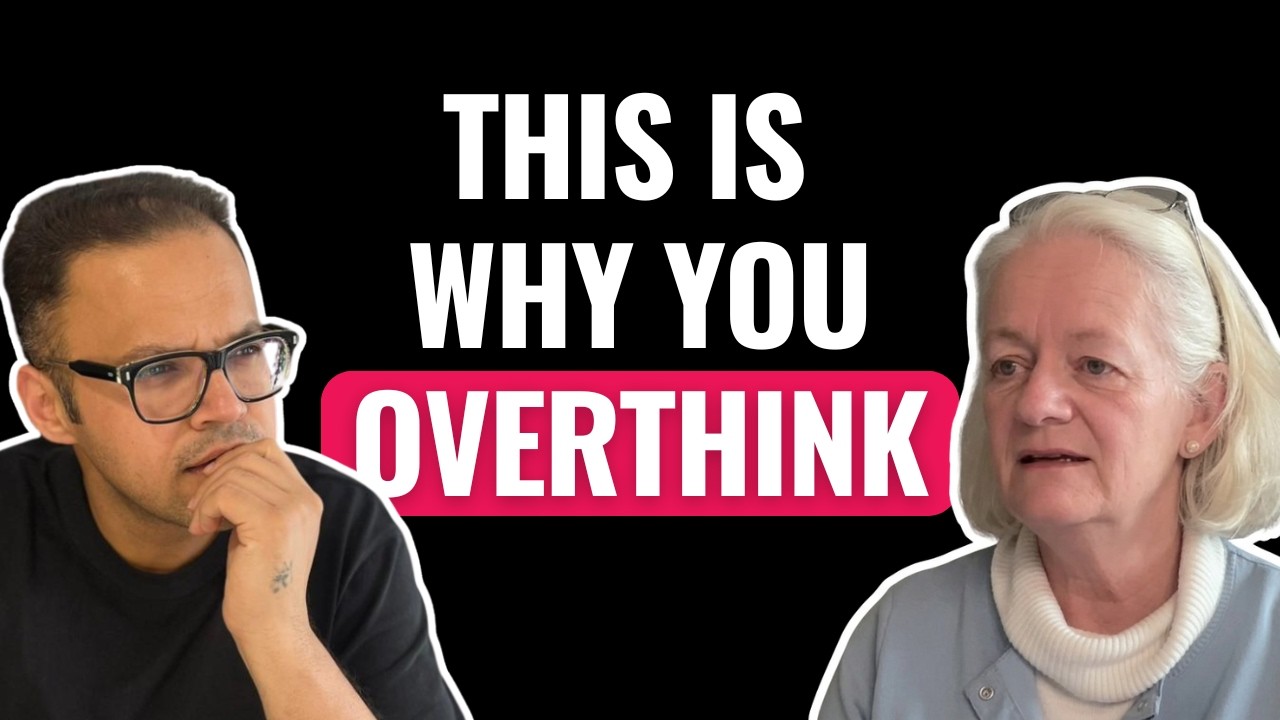
Mette explains how our internal stories create stress more than actual events do. Your brain makes guesses about reality with only 80% accuracy, and a single comment can spiral into a day of negative thoughts. By getting curious about what you believe and noticing your body's response, you can catch when a story isn't true.
Chapters
Have you ever noticed how one small comment from someone can ruin your whole day? You start to think about it again and again. You replay that moment, and you always think of the worst.
We do not meet the other one where the other one is. We meet the other one through the story we have about the other one.
Most of the stress in our lives does not come from what actually happened to us, but it comes from the stories that we tell ourselves.
Our brain doesn't know anything. It guesses. The whole time.
And sometimes, actually 90+ percent of the times, those guesses are simply flawed.
Don't believe everything you think.
In our conversation today, we explore how you need to stop believing the stories that are happening in your mind, because when the story changes, your life can too. Let's dive in. Welcome to another episode of the Ignite Neurons podcast, and I'm joyed, overjoyed today to have Mette Joining me from the other side of the world, the European continent. How are you, Mette?
I'm fine, thank you. It's very early here, so, and I've been looking forward to this little adventure with you.
Love it. Love it how you frame it as an adventure. And the adventure, like the audience who we have, and I've shared this with you before as well, is somewhere in the age group of 25 to 45 who are doing beautiful things with their life, but they feel like something's not working. Something that, and that could be the inner story or the outer, we'll figure that out. But these stories often start from very early in the childhood. And so the first question that we ask our guests when we frame the conversation on the podcast is that if that 8-year-old Mette, that little girl growing wherever Mette was, if that 8-year-old were to come to meet you right now in your present self, what kind of a conversation do you think will emerge between the two of you?
First of all, it could be pretty interesting, actually. I think that first of all, I would tell her that She's a lovely, unique little one, cutie little one. And then I would ask her about what she's curious about. And also because I know that from my childhood, I've always been a very curious little one, asking a lot of questions, annoying a lot of grown-ups, like, you know, Curious George. How come?
Why?
And so on. And then I would tell her that That the most important exam that she has ever passed and she will ever pass is actually already over and done, and that happened the day she was born. Because, you know, coming here on Earth, that is amazing. It actually shouldn't have, you know, been possible. So this unique experience being on Earth, on Earth school, allows us to be open because it's such an amazing gift we have been given. To unfold such a gift needs you to be very curious and asking a lot of questions. So I would ask her or allow her to be very curious in her life. And yeah.
That's so beautiful. And a couple of themes are really deeply resonant. Curiosity is absolutely a path we could take. And you called this Earth School. Can you elaborate a little bit more on that? Like, why do you call being born as the biggest exam we have passed? Because it seems like 8.8 billion people have already been born on the planet. And so, so many are already— they've already succeeded is what I'm understanding from you. But can you like double-click on this for me?
If, you know, I have a son and he's studying math. And one day I asked him, what is the chance of me being born? And then he looked at me and then he said, it's almost not existing. So if we see what it takes for, you know, the whole process in my mom meeting my dad and then having, you know, making love and then, you know, the whole process biologically is— Yeah, you can say that we are so many people on Earth But that I have been born, me, Mette, that is, you know, so many coincidences, so much has to be, you know, put together in a certain way that it's, yeah, incredible. And then going on this little black spot in the universe, so small that, you know, it's almost not possible to see from outside of, you know, the universe somewhere, that is really incredible. So it can be that you think that you're just one among a lot, but that is not the whole story about you. So, feel this uniqueness and this amazing experience that you have been given. Allow you also to be extremely curious. What is everything about? And I like to see it as a school, kind of school. I've always liked to attend school. So, curious about that. And then also not to be in war with myself. Because if I'm in war with myself, then I cannot really be present and, uh, and, uh, and live this amazing experience called life.
I love this, how you've reframed it. And I never thought of being born as, as something that the universe has to almost like conspire for me to be born. And that's, that's super helpful because then it also makes me feel like I'm here then with all that's, that's happened because of which I'm here. And so how do I add more meaning to my life? I feel like there's that beautiful responsibility that's also emerging for me. What are your thoughts on that?
You know, we are all very busy in trying to find a meaning. But what if the meaning is to breathe, to wake up in the morning, to breathe, to get out of your bed, brush your teeth, have breakfast? What if the meaning is kind of not very complicated? It's living and be present. in living, which we are not really. Either we are in the past or we are in the future. We are very seldom where we actually are. So what if the reason why we have difficulties finding meaning is that we are not really present? Because when we are present, that is where we actually find meaning.
What does that look like? What does that look like for someone to be present and being present in the moment?
It doesn't look like anything, but it may feel— you may feel something. I think that it's about feeling, it's about looking for certain feelings. It doesn't look in a very— it should not look like a special way. It's more about how it feels. And be aware. When you get this sense of awareness, and to get this feeling of awareness, you need to be curious. What is it that I'm thinking and what is it that I am believing? And even though that it may feel very, you know, I can feel it in my stomach, then what I'm thinking must be true. But what if our body is a kind of, you know, like, like a— how do you say that in English— thermometer? You know, when you're sick, you need to see if you have fever.
Yeah.
What if, if the body is kind of also a measurement So when you have, you know, you can feel it, you have difficulties breathing, you have— it feels not good in your stomach, your body gets tense. What if the body is trying to tell you that what you are thinking about reality may not be true?
Hmm.
But instead, very many, they believe the opposite. They believe that, okay, I can feel it, then it must be true. And then they try to look at more that can kind of make their story they tell themselves even more strong, and then, you know, their body and everything becomes even more tense, and maybe by the end they become very sick. It's called stress. So the moment you start to be curious about what I believe in this specific situation, can I be 100% sure that that is actually valid? Is it true that my boss is screwed up, or my family, or whatever, or that I should have reached more, or— Whatever. 100% sure? Maybe not 100% sure. And already at that moment, the tense— you will feel it— it will kind of evaporate. And then you get to see that what you believe in certain situations that cause stress in your body is just because you're pulling your own leg, very innocently. But you are the one scaring the life out of you. It's not your birth, it's not your family history, it's not whatever, it's you. And at that moment, life becomes a little kinder. And then you can meet whatever, you know, reaches your plate in a different way. You can look at it in a different way. You don't need to take it personally. Does it make sense?
It does, it does, but it's easier said than done. And I'm putting myself in the shoes of a 27-year-old listening to this right now and saying that, Utkarsh and Mette, what you're saying, maybe I'll agree with it in 15 years from now. But right now it seems that that job that I'm chasing, the title I'm wanting to get to, I'm never going to get there because I'm not good at speaking. I'm not good at raising my voice. I'm not good at asking the right questions. And so I have all these thoughts throughout the day that are putting me down. And I know, Mette, you say that we have thoughts, but we are not our thoughts. But for a 27-year-old, it's really hard to get there. So what can you and I think and talk about right now that will help that 27-year-old?
Make the person curious about what he or she believes to be true. Because what's in front of him? Maybe it's a job where he thinks that the title is not the right and All his friends and his family have a lot of faith in him. So, but he's not the job. He's not his thoughts. He's not what other people believe him to be. He's the one on Earth making his own experience.
Hmm.
And if we believe that we need to be somewhere else than where we are. Regardless of how fast we run, how much we work, we will never reach that spot. Also because sometimes what we believe, that we think that others, they think that we should— what if that is not true either? You know, a lot of my customers, they are very experienced business people. They have built companies, they have sold them, they have on the paper very, very successful Right. But they are not very— they are insecure about this. Have I really been successful? And then when I ask them, why are you— you have everything, what's the problem? And then they tell me, yeah, I'm not so sure if my father is really proud of me. Okay. And then I ask them, if your father is still alive, ask him. And then the next time they come, they tell me, I have had a very good conversation with my dad. And actually he said he's very proud of me and he's very worried about me because he can see that I work too much. I have wife number 3 and I'm not really present and I have never time to really visit him or just go out play. He do not want me to be very, you know, have a lot of titles. He want me to be happy.
Hmm.
And I have misunderstood that. Actually. And, you know, we may believe that we're here to make our parents proud, but the best way to make our parents proud is actually to find a way to be happy in our own life, you know, to unfold this amazing life and this amazing coincidence that I have been born.
Hmm.
So, just like our parents, you know, they have had the same battles, the same, you know, thoughts than we may have. And it can be that you do, you know, only 27, I'm 62, got this insight when I was 40, 45 around. But it's also because we have been brought up to believe that what we are chasing is outside of ourselves.
Yeah, yeah.
You know, it's, you know, education, titles, the right house at the right spot, the Rolex watch, a lot of those things. But so of course it will take a little time to reframe our mind and our brain because our brain, you know, our brain doesn't know anything. It guesses the whole time. And the brain is very happy if what it puts together is just around 80% correct. Because then it doesn't need to spend more energy on that. Our brain is all about saving energy. So it's just guessing, but we believe that that must be true. So I really would recommend this young person to be curious, to stop up, and then also could stay in this not very nice feeling for a little while. To be curious. How come I have this feeling every time I go to work and I have to, you know, have a meeting with my boss? I get this feeling. How come? I'm afraid. What is it that I'm afraid of? That I'm not good enough. Okay, can I be 100% sure that I'm not good enough? Maybe not. I just got a new client for the business. Okay, that's good. But also because we believe that A lot of what we have, you know, all the stories that we are putting together, we believe that to define who we are.
Hmm.
But we are not our stories. We are like, you know, in a cinema, the screen. Every day they run maybe 8, 10 different kinds of film. Some films are very romantic, some there's war film, there are funny films, and— but when the film is finished. The screen is like nothing has happened on the screen. Inside, you know, this soul, whatever, this is the screen. And whatever lands on our plates, that's the different films. Some of the films we tend to keep onto a little longer than other films. And then at a certain time, maybe we let go.
Mm-hmm.
And my point is that maybe we should let go a little faster of those films that create too much emotions, stress, not nice feelings. And when we look at it like a more, you know, okay, like an anthropologue looking at a certain thing, okay, that is really interesting. The feeling is not very nice, Okay, I can also have this kind of feeling. Okay, and that was— okay, I can see that every time I do this and that, I get this feeling.
Okay.
Without this feeling at the concrete moment, I go and have a meeting with my boss, then how would I meet him? How would I listen? Okay, actually I can see he looks a little tired. Maybe I would bring an extra cup of coffee. And then I would say, oh my God, it has been a tough day, hasn't it?
Yeah.
Can I help? I have an extra hour. So when we— because we do not meet the other one where the other one is. We meet the other one through the story we have about the other one. So actually we meet ourselves. And when we get to see that— and then, okay, and then when we meet the other one through the story we have about the other one, And the reaction that we would presume would come looks differently or may not at all come. Then suddenly we also start to judge. Then we think, okay, that is really not very polite, or he is rude, or whatsoever. But it's actually because we have not really been present. We have not met the other one where he or she is.
Yeah, we're meeting our perception of them.
Yeah. So actually, we meet ourselves.
We meet ourselves. I love that. Let me dissect this because I think I would recommend our users, our listeners to maybe go back about 3 minutes and listen to this part again. Because as I was making notes, what you said was that, A, we've been raised to believe that success is all on the outside, and it'll take a lot of retraining, unlearning, and relearning for our brains to understand that that might not be the true story because success is something that is deep within ourselves. What I love about what you were saying was that our brain knows nothing, and it is simply doing the predictive analysis of whatever information it has because it wants to save energy. And then what happens is that we meet others with the stories we tell ourselves about them. So we are not meeting them, we're meeting ourselves. And we attach to those stories really deeply and emotionally, which leads to all the stress that we are speaking about. And we judge. And we judge.
Yeah. And you know, that's actually also okay. But the moment we become aware of it, life seems to change. Totally.
Yeah, it does.
Because then suddenly it's not so scaring. And we do not need to be something that we are not. And then we can, you know, handle whatever lands on our plate totally peaceful. And you know, there are so many wars in the world. The world is crazy. We do not need more wars. And it starts with us. It starts with me. When I'm not in war with myself, then there's one less war in the world. And that means that when I meet people, I can meet them peacefully. I can help them. I can listen to them in a different way. And then the world becomes kinder. My world becomes kinder, and the world around me becomes—
We need to pause on this one. You said that there's a war going on within ourselves. And if we can be kind to ourselves, and we can stop that war, then there's one less war in the world. That's the easiest war to take care of. Because— or maybe is that the easiest war to take care of? The war within? Do you think it's an easy war to handle?
The moment you become aware of it, it's very, very simple, but you need first to become aware of it. And you know, it's also a little annoying actually, because suddenly you cannot blame all the others, and so you need to, you know, take responsibility for your own well-being. And it doesn't mean that that companies and organizations should not be, you know, working on their culture. Of course they should if they're smart. But if it's up to them to make you happy— it's like, you know, people who meet and fall in love and they marry and start families. If they believe that my wife is responsible for making me happy, Or my husband is responsible for making me happy. They're going to divorce at a certain time because it's not going to happen. But when I know that it's my responsibility to make myself happy, and it's not you know ha ha ha ha the whole time, but it's you know this feeling of calmness meeting the world and meeting my spouse and meeting my kids and my boss, then then it's. It's very simple.
Yeah.
It's so simple that some people maybe would say it cannot be. There must be more into that because it needs to be more complicated or more complex. But it isn't. Life in itself, you know, is very, very simple.
Yeah. Yeah. We overcomplicate it. We overcomplicate it. The whole time. All the time. All the time. But here's a thought, Merete. You know, letting go is, I think, one of the most difficult acts for a human being because we are so, so attached to my job, my story, my life, my thoughts, my spouse, my kids, my podcast. We're so attached even to our pains that I get attached to the pain that I have. How do we start this journey? Like this, this art of releasing, this art of letting go?
You and me having this little conversation. Maybe there's someone out there who our words kind of lead into something that he or she understands, not only, you know, with his brain, his intelligence, but he sees something or she sees something and starts to say, ah! And from that moment something has changed. We may not change the whole world, but if we can help one... To see something differently. And you know, I have been on podcasts also where, you know, the theme has been violence in families and incest. And you know, when we believe that we are a victim, it can be almost— that's the reason why a lot of women, for instance, stay too long in very violent relationships, because they believe that they are the victims and are supposed to be the victims. And without this kind of identity, who am I, then I'm even maybe more vulnerable than with being a victim of a violent husband. But the moment they see that this story, when I let go of it, I can restart, I can reframe my life. So the only thing we can lose is actually a story.
Hmm.
But it can be very, very difficult To let go of this story that doesn't serve me anymore.
Yeah. And curiosity becomes such a critical first step as a pathway to that freedom. And I know you speak a lot about curiosity. If we were to— what's a good question to ask if someone were to start their day in the morning where they can feel more curious about their life, this existence? What's a simple question they can ask themselves every single day?
Maybe it's not a question, actually. Maybe it's more a curiosity. about the specific moment. For instance, when they are out in the bathroom brushing their teeth, then really, you know, be— observe me brushing the teeth. 2 minutes, 1 minute, I don't know how long people are doing that. And try not to think about anything else than just feeling the toothbrush in the mouth. With the water and the smell and the taste and be present for that little moment. Or when you are standing in a crush passing a road, feeling your feet, trying to be curious about being present. And then I think that the good questions, they will just arise themselves. So what is it, you know, a tree is not having a discussion about being a tree with itself. I don't think, at least I don't think so. It's just a tree doing what a tree is supposed to do, right? Be curious about being a human being, all the functions, looking at oneself. And every time we tend to believe that something should look differently than it does. Like, you know, I have my customers, many of them have been laid off. They have a lot of stories about why they have been laid off. And actually, that's not interesting. What is interesting is that they're not going to work in that specific company any longer. And maybe they have even been given, you know, 6 months of salary.
Yeah.
And after a little while, they tell me that they had done what they should do in that company anyway. What is the factor? What is it that I'm no longer going to work in company X? And now I'm going to be curious about what is it that I do not see in the job market or in the industry? Or what is it that I see too much of?
Yeah.
And they are still waiting for different results.
Yeah.
What is it that I want to, you know, challenge? Because we do not need more of this and that. I'm free. And of course then suddenly you start to become very, you know, you have a lot of stories about, I have a house, I need to pay my mortgage, I need to this and that. And then you have to come back to, you know, the present moment. Because the present moment you're sitting in your living room, in your lovely house, you have 6 months of salary. And what's the problem? There's no problem.
Yeah. Yeah. It's really interesting, you know, that these stories are sometimes so wired within ourselves that it becomes really hard. And I think what you're taking us back to again and again is to be a little bit more observant, is to be a little bit more, more aware of what's happening. Maybe how are you brushing your teeth? As simple as that. How are you breathing in this moment? And I think as a coach, and we both do similar work, but like, what could be something special about today? And today does not have to be your birthday or anything else, right? You could still find something to be curious about. And there's such power in shifting your thought process from, as you were saying, being focused on your victim story to then moving into a more curious and open space. I think what I'm still kind of We're so pre-programmed, Vete. And I'm I try and play the devil's advocate again and again, right? Like I'm I keep thinking about someone who who's focused on that content that does not serve them, maybe who's focused on that conversation or an argument they had with their spouse, who's focused on that my manager hates me, and their thought process keeps taking them back to to that same place, to that same victim story. And it seems like breaking away from these stories is hard for them to do. And I know awareness helps. What else would you recommend? What else do you think, have you seen that's been helpful in your practice and work?
That you don't keep feeding the stories that doesn't help you. So if you think you have something not very nice going with your boss, try to imagine that you do not have this story. And then look at your boss, you know, what is it that you see? Are you seeing someone who is always, you know, running and you know for a fact that he has problems with his family, there's something with a kid? Maybe you can meet him, you know, with a little, you know, in a nicer way because you can meet him where he is actually.
Yeah.
And then maybe you think, but he's so awful, I'm not going to do anything good for him. But what if when you're doing good for him, you're also doing good for yourself? So, and if you also become aware of that the relationship with him is not defining you, it's not about who you are, it's about how you decide to be in the world and especially in the present moment. So you can, next time you meet him, try to be a little bit more neutral. Just look at him.
Yeah.
And then if you really look and if you really listen, you can hear someone who is maybe just as scared as you.
Oh, I love it.
Or just as, you know, mind's a little fucked up too.
Yeah.
And then suddenly you are united. And I think that in that moment when you do that, he can feel it. And suddenly he can relax and maybe also start to meet you where you are.
Love it.
And where, you know, it's not about him, it's about you. So Be curious about the story you tell yourself and who would you be without that story? Who would you be without the story that, you know, make you feel your life very heavy? And then maybe you will say, but that's reality. That is how it is. Yeah, until it isn't.
Yeah. I think what's really important to understand is like, at the end of the day, we are the authors of our story. Why let anyone else do that? And I think it's the story. It's what you said, right? Don't keep feeding the story that doesn't serve you. And I think to me, this is like the overarching theme of our conversation today is that— and I was talking to someone, coaching someone last week, Mede, and we were talking about how when we feel that the other person is judging us for the question we might ask or for the presentation that we might do, even in that process, we are the ones judging them for judging us.
And actually, and actually, I have to say that that people they are not really concerned about you. They actually they are so much up in their own storytelling thing. They you know they don't spend much time about telling themselves about you.
You should.
They couldn't care less.
Yeah, love it.
They couldn't get rid of it. They couldn't care less.
They couldn't care less. We kickstarted this journey of curiosity from that 8-year-old Mette, and we've had a beautiful conversation, Mette. Now, if you were to go into the future, and somewhere you shared, I think, that you are at the beautiful age of 62. So 18 years into the future, if the 80-year-old Mette now comes back to you right now in this moment and has one piece of advice, she whispers that one piece of advice to you on how to live the rest of your years, what would that 80-year-old Mette say?
Don't believe everything you think. Very, very simple.
I love that.
Life is not supposed to look a certain way. Life is life. Really, either you stand up or you sit. It's so simple. The rest, it's— you choose the colors.
Yeah, yeah, you choose the colors. I love that. For those who are still beautifully with us at 43 minutes, let's, let's trust that 8-year-old Mette and listen to the wisdom. Don't believe in everything that you think. Understand that curiosity is a pathway to that freedom. Letting go might be hard, but it is your path to releasing what is not serving you anymore. You're the only one who's responsible for yourself. No one's coming to save you. No one's coming to change your story. And if there's one war that you can stop today, that is the war within. And always remember that when you're talking to the other person, that be your spouse, your manager, whoever that might be, don't meet their story in terms of how you perceive their story to be. Meet them for where they are. You don't want to meet yourself in that moment. Remember that we all have thoughts, but we are not our thoughts. And being present, observant, and fully aware, even while you're brushing your teeth, is the best thing that you can do for yourself in the morning. And when you wake up, maybe on your bedside, put this word curiosity, because 8-year-old Mette told us that let's be a little bit more curious. Thank you, Mette, for that beautiful conversation.
Thank you, my dear.
I loved it. For everyone who was on a podcast platform, share with someone who might need this, and that's the only way we grow. And if you're on YouTube, then leave your name in the comments. Leave what resonated with you, something that you thought you enjoyed. And if you're listening to this 45 minutes into the conversation, I request you to not to share it with anyone because maybe they're not ready for it yet. You were, you got to this, you listened, and that's what matters to me and Mette. This is Utkarsh and Mette signing off.
More from Utkarsh

You Left Yourself Behind | The 7 Questions That Help You Find Yourself Again | Michelle Chappel




Are You Trapped in a Life You Didn't Choose? | Dr. Michelle Chappel | The IgnitedNeurons Podcast

Financial Freedom Doesn't Make You Free | Tim Kelly | The IgnitedNeurons Podcast


Your relationship might be missing this! #shorts #ytshorts #shortvideo #shortsfeed

The Truth About Financial Freedom Nobody Talks About | Tim Kelly | The IgnitedNeurons Podcast

The Question We Ask When Life Hurts #shorts #youtubeshorts #shortvideo #shortsfeed #shortsviral

How to Keep Going When Life Changes Everything | Kenneth James Kunken | The IgnitedNeurons Podcast