Utkarsh Amitabh TED Talk: Democratizing Mentorship Across Borders and Boundaries
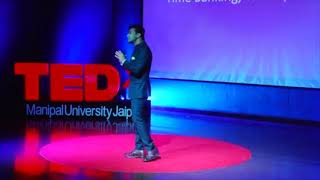
Utkarsh Amitabh argues that current education systems (especially in India) stifle creativity by prioritizing standardized, fact-focused, individual achievement. He proposes democratizing mentorship via a time‑banking/tinder‑for‑skills platform (Network Capital), expanding tinkering labs, promoting diverse storybooks and women’s participation, and encouraging individuals to pursue their ikigai to build a more innovative country.
Chapters
I'm fascinated by the question of building good products, good services. But the question that keeps me up at night is how to build an innovative country. It's important to build innovative products, it's important to build innovative services, but how to build and innovative country. And I suspect that something very profound goes on in classrooms around the world. I'm going to focus more on India because that's where I went to school and I have more hands on experience doing field research. But I suspect that one of the most profound roles that any facet plays in one's life is what happens in a classroom. The education system today is failing us profoundly. We are just marching towards a collective failure that we refuse to see. The schools of today are inspired by factories. They are mass producing mediocrity, they have standardized excellence, and they are marching towards a direction in which the world isn't going. They are focused on what instead of the how and the why. They are focused on facts. They emphasize individual achievement as opposed to collaboration. As we move towards the future, we'll see the importance of collaboration with various stakeholders. But unfortunately, schools and colleges, many of them today, reward only individual excellence. That needs to change. We have codified intelligence. People with a certain kind of intelligence, analytical brilliance, are considered intelligent. But what about linguistic intelligence? What about spatial intelligence? What about cultural intelligence, contextual intelligence? There are many kinds of intelligence today, but our educational institutions unfortunately prioritize one kind of it. We've even managed to codify aspiration. And I suspect that in India at least, we are suffering from what I like to call the profound Macaulay hangover. Macaulay in 1835 infamously said, we must at present do our best to form a class who may be interpreters between us and the millions who we wish to govern. A class of persons Indian in blood and color, but English in tastes, opinions, moral and intellect. In short, Macaulay was trying to make all Indians into polite and obedient receptionists. What do you see here? 2.99792458 into 10 to the power, 8 meter per second. What is this? I'm glad that all of you know it, but what disheartens me is that it's a question in an Indian Board examination. A standard tense question. What is the speed of light till eight significant figures? I'm not sure why this question was asked, but it sure as hell wasn't meant to inspire innovation or creativity. When I said that we've codified aspirations, that we focused on the what, this is what I meant. We've even managed to Codify how people do art. Recently, I was in Moldova, a post Soviet country in Eastern Europe for the launch of their Startup Week. I went to a classroom, as I do whenever I travel, and I asked children to draw something. You know what they drew? They drew sun, they drew a mountain, they drew birds, they drew a river and they drew a green grass. Wherever I go in India and in many other parts of the world, that is what people end up drawing. You want to take a look? This is what it looks like. We need people to not just draw this, but invert rainbows and take a different outlook towards art. Aspiration, creativity. Something that schools were meant to inspire, but are failing to do. So now let's turn our hands to textbooks. Do you know Ram Pat Shala Ja, Radha Khana Paka? What are these? These are things written in Hindi textbooks today. Let me translate it in English for the benefit of an international audience. It sounds something like this. Jack, go to school. Jill, cook food. Jack, have some jelly. Jill, go stroke his belly. Jack, will take some rest. Jill, go fix his bed. Jack, this is your house. Jill, you must fade in and out. We are stereotyping gender. So we are seeing in schools is a codification of creativity focused on the what. And it's contributing towards gender stereotypes in ways in which we can't imagine. And my hypothesis is that if we keep doing that, we are going to all miserably fit in future something we just can't afford as we march into the fourth Industrial revolution. You know, somebody once remarked that India has 1.3 billion cricket coaches. Everyone in India is a cricket coach. I believe that India also has 1.3 billion career coaches. Everyone in India has an opinion on careers. If I ask people, which I do often, they say, how did you choose your career? How do you decide what you wanted to do? It's often a mix of this, what the neighbor suggested, what the market needs, what the counselor wants you to do, and what the most successful relative does today. This is how we choose careers and we hope to make a difference. How can we do that? But I believe that not all is bad. There have been some concrete steps taken by the country, the private sector, the non profit sector, and we can make an effort to march into the right direction, to embrace the fourth Industrial Revolution equitably and sustainably. The fourth Industrial Revolution, as all of you know, has been defined by the World Economic Forum as the fusion of the biological, physical and the digital worlds. This revolution is going to be powered by cloud computing and mobility as an experience and leads to copious amounts of data. But in terms of careers and education, the statistic is still self explanatory. 85% of the jobs that will exist in 2030 do not exist today. 13 years from now, most of the jobs, 85% of them, are not the ones that are present today. So in order to embrace them, in order to be prepared for the future, we need a very different model of education. Let me tell you how I'm trying to do that and how it can potentially be possible. I run a community called Network Capital. We have about 18,800 members from 89 countries. It's a very simple concept that every single person in the world has something unique to learn and something unique to share. It doesn't matter where the person comes from, what gender the person has, what religious affiliation or what political affiliation the person has. Every single person has something unique to learn. And if you're able to trade in skills, you can learn from each other like you've never had before. So imagine Tinder. This is a young population. Imagine Tinder for skills where you eat, Tinder for mentoring where you can learn from another person who comes from a vastly different cultural background, political background, and learn from them. Let me give you an example. On Network Capital, we have a beggar and a billionaire mentor each other. Why? A a beggar understands sales, marketing and pitching better than any of us can ever, because that is what he or she does on a daily basis to survive. The billionaire, on the other hand, knows a thing or two about financial stability. Imagine them trading their skills. Imagine learning from each other. So this is what we've tried to do, that if you build a large enough community and build the right culture, you can learn from each other. Because no one person in the world that's largely changing can be a master of all skills. But if you're like a sponge, if you can listen to the other person carefully and trade on skills, you can potentially be prepared for what's to come. Our community has partnered with Niti IO, which I think has done a brilliant job by building tinkering labs across schools in India. These tinkering labs are precisely meant to change the focus from what to why and how. These tinkering labs, I believe, would be the bastions of creativity as we move forward. And what will these mentors do who are currently exchanging skills with each other? They will go to these tinkering labs and share their experiences. And once you have a dialogue between, say, the boardroom, the classroom and the laboratory, that's where you'll See a new India emerge, an India that questions the status quo, where children are inspired to learn, where children are focused on the why and the how. Because what is free online? We live in a world where information is free but wisdom isn't there. We live in an overwhelming amount of data. But intelligence sometimes is hard to find. Empathy is hard to find. So I believe that this construct of time banking and leveraging this tinder for mentoring model can potentially lead to some amount of peace as well. Because on network capital we often have mentor mentee pairs from Iran and Israel, from India and Pakistan who are Republicans and Democrats in the us Adam Smith's aficionados and free market opponents and Karl Marx aficionados as well. So you are actually attempting through the trade of skills to build a world which at least listens to each other and is trying to converge according to the common minimum. We live in a world where there's a lot of political and political turmoil and political noise. I think it's up to us. And I think skilling from each other and learning from each other in this time banking centric model can be a way forward. So this is the first step that we must take to revamp our classrooms to make our country a little more innovative than it is. It has done very well in the past few years, but sky is the limit and we must aspire for more. You know, what's the second most important component of innovation? Like, what's the most defining feature of innovation in a country? Take a guess. It's storybooks. There is a study done that looks at the kind of stories children have read and how many patents have been filed. Essentially, the stories that highlight originality lead to a deeper sense of innovation and possibility in the population of the country. The books that you see here, Lord of the Rings, ali Baba and 40s Eves, a wrinkle in Time, they are the favorite books of Today's top leaders, CEOs like Elon Musk, Peter Thiel, Cheryl Sandberg, Jack Ma, to name a few. And the core idea is that if you inspire children to invert the rainbow and try and paint the world in a slightly different direction, they will do it. But we as a young population need to do that, need to be able to inspire stories that nurture creativity, that encourage people to think in a slightly different direction. The third thing we must do is to empower women with rigor and passion. There is a direct correlation between the number of women employed in a country and how innovative it is. And my hypothesis is that the same holds for Countries as well. A country where women feel secure, safe, and you find them in boardrooms, classrooms, laboratories, conferences, is going to be a more innovative country. I spoke to you about the gender stereotypes of Jack and Jill, but I feel that there's another study done that talks about the number of relatable role models and mentors women have and how innovative a country becomes. So one call to action for all of us is to disrupt gender stereotypes like it's no one's business, disrupt gender stereotypes and make women a part of the entire growth story, because that is one of the most defining factors as we march into the future. Make role models possible for them. Parents often mean well, but research shows they aren't often the best mentors. So sometimes you need to nurture different kinds of mentors, role models that you can relate to and are inspired by, to democratize inspiration and make a world of possibility possible for a lot of people. You know, my Moldova hangover still exists. And in Moldova, I walked out of my hotel and the first thing I see is Karl Marx checking Facebook. So I couldn't help but notice that he said back in the day, workers of the world unite. You have nothing to lose but your chains. In the era of the fourth Industrial Revolution, I claim, mentors of the world unite. You have nothing to fear but yourself, your limitations, your myopic view. And I think that this room is a room of hope and possibility. It's a room of diversity. And if each of us just plan to listen and trade on skills and time, and if mentors of the world unite and we go, we do a better job of reaching out to the people who are not like us, but fundamentally think differently, we can march into the future. I spoke about a construct where there are 1.3 billion career coaches in India, so I call it Freaky Guy. But I want to end my talk with a message that each of us can use in our lives. And this message about choosing careers and building careers of passion and meaning doesn't come from a management book, but it comes from a concept. In Japan, it's called ikigai. Ikigai or raison d', etre, or reason for being. It's the intersection between what you love, what you are good at, what the world needs, and what you can be paid for. This sweet spot, ladies and gentlemen, is going to enable us to become more innovative. It's the summation of all that I have talked about today, and it's going to make India a far more innovative country, because it all begins in the classroom. What do you love. Only you know what you love. You have to keep trying. You need to keep. Nobody else can come and tell you, hey, person X, this is what you love. No, you have to do it by doing mini experiments with yourself with taking small but calculated risks and see what happens, what you're good at. Once you start doing things repeatedly you discover that, oh, while I'm studying computer science, but my real passion is poetry. And you know what, I'm actually very good at it. Is there a way to combine poetry and computer science and do something that the world potentially needs? You know, India ranks 116th out of 157 countries in the UN Sustainable Development Goals. At the same time, We've shot up 30 places in the Ease of Doing Business ranking. We've done much better on the Innovation and Competitiveness index. So we can marry the entrepreneurial energy of India with the challenges of India. And that is what India needs. And I think the world needs India to step up and stand up and start marching in the right direction and each of you can make that happen and what you can be paid for. I think we're moving towards what we call the gig economy or the platform economy. And some of my other speakers are actually leveraging this platform to build careers that are self crafted that they can be paid for that the world needs what they love and what they're good at. So ladies and gentlemen, I want to leave you with this message of Ikigai. Please don't listen to anyone who tells you otherwise. The world is full of possibilities, but you need to take ownership, you need to take charge and you need to inspire ikigai for yourself and for everyone around us. Especially for those who disagree with you. If you other them, you've lost the battle. So ladies and gentlemen, happy Ikigai. Have a nice day.
More from Utkarsh



Utkarsh Amitabh: From building my startup along with my job at Microsoft to Literature & Philosophy!



Freedom Of Speech, YouTube Economy & Algorithm Unplugged: Utkarsh Amitabh, CEO of Network Capital

The President of India and Dr. Anamika (mom) at the inauguration of the Festival of Libraries




What was India like when Education and Skilling Minister Dharmendra Pradhan was 18?