ADHD & Executive Function | Patty | ADHD Rise | Summer Christiansen & Val Nichols
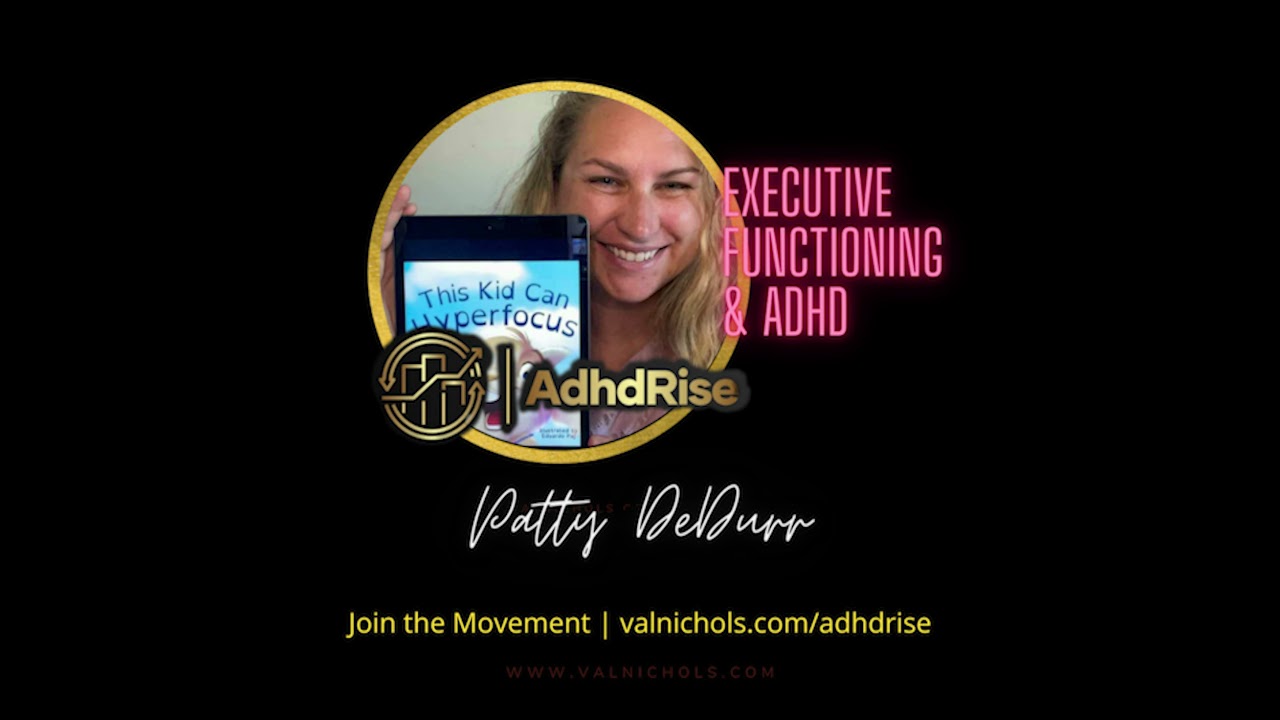
Patty, author of "This Kid Can Hyperfocus," joins Summer Christiansen and Val Nichols to break down executive function and ADHD. They cover eight domains like emotional regulation and time management, share concrete tactics (body-doubling, timers, color-coded alarms), and debate medication versus natural approaches. A veteran discusses managing ADHD and PTSD while pursuing FBI work.
Chapters
who have been like collaborating with each other. There are people who have been, um, you know, sending us messages saying how much that they've been impacted by certain speakers and stepping into action and upleveling. Like, oh my gosh, you guys, when we say that this is like— this event is about rising up, because when I rise, you rise, we rise together. I was like waiting for that.
I know, girl. I was trying to get back to my screen.
We rise together, and it's so true. It's so true. We are rising the consciousness. We are raising the awareness for ADHD, and we are literally— you are creating a movement. You are creating a movement. So that's what I have to share. Back to you, Sama.
Yes, we are so excited to have our beautiful Patty here today. We'll, we'll start by having her introduce herself and tell us quickly about Um, her book and how she's fully funded. There's so many exciting things going on in one of our amazing entrepreneur ADHDers. So yeah, I'll turn the time over to you, Patti.
Thank you, everybody. And, um, so my name is Patti and I am now an author. This picture that you see in my background, This Kid Can Hyperfocus, is the book I wrote about a goat that has ADHD. That's not what this room is about today, but that's just part of who I am. And it's about his hyper-focused mission that he has on the farm. And that's kind of how, uh, Val was a huge cheerleader, Summer as well. They changed like pictures to me on here and as well as like made different posts, uh, on social media about it as well. So I definitely appreciate all the, um, support that they gave as well. And my social media account, I kind of started setting it up earlier this year, like January, February. And my mission on my social media account is all about, I had parents reaching out to me because they knew I was able to get different accommodations in place for my kids and working with different organizations here and legislators as well in the Iowa area. In regards to kids with their 504s and IOPs, excuse me, IEPs. And so I just set up my social media mission as kind of expand on some of the knowledge that I had and just kind of be an inspiration to people who are kind of starting out on the process with their children as well. And so I provide a lot of free resources on my website, massive accommodations list. Um, executive function resources, and then this book as well, with new books that will be in the future as well. And I am done speaking for a minute.
Yeah, that's super, super exciting. We are so excited for you, and we definitely wanted to, to put that out there about your book. And yeah, it's going to be amazing. So yeah, executive function. So Um, as, as you know, she talked about her social media, and that's actually how I found her. And we've been connected for, you know, a while. And then we also met back up on Clubhouse. So yeah, it's been great. And I'm a parenting coach. And so, uh, I love having her, you know, looking at her stuff as a resource. And, um, she's been super helpful in the, in the community as well. So let's talk about executive function, Patty.
Yeah.
Are you gonna talk specifically about kids or just executive function in general?
Most of the stuff I do and focus on is about children. Some of it will relate to adults as well. Um, but most of what I do is in social media and elsewhere is child-focused.
Okay, perfect.
Okay. So I'm, I imagine most people in this room, if we're in an ADHD room, may already know what executive function is, but for people who don't, Did you have something to say, Val, before I start?
Okay, maybe not.
Did I unmute? I mean, I'm like eating my lunch. Did you guys hear me crunching? No, I'm sorry. I unmuted on accident.
Go ahead. Okay, no problem. So executive function is just a group of skills that are used to kind of help manage your daily activities, as well as like work and schooling and school. So, and these skills, I kind of focus on 8 aspects of executive function, which is emotional regulation, organization, task initiation, self-monitoring, time management, impulse control, flexible thinking, and working memory. And a lot of what I focus on is just how, what are some resources and aspects that we can look at to help kids. And, you know, some of the adults have have found, um, knowledge and stuff in the resources I provide as well. Just how can we help engage and do a better job with these executive function skills? Because as many of you may already be aware, a lot of these executive function skills are in our prefrontal cortex, which is, has been shown to be delayed several years compared to someone who is neurotypical.
Mm-hmm.
And so we kind of look at how, what can we do to kind of help those kids when they're in school to work on some of these skills and deficits that they may have. And so if you were to look at like, let's say, okay, let me back up a minute. So let's say that there is, you want to make whatever task you're doing more into like a habit or ritual.
Mm-hmm.
So, and a lot of aspects of that is looking at something that's going to help make it the end goal rewarding. So, you know, when we leave the house, let's say we all put our shoes on. It's kind of something that we formed into a habit. And let— this is just like an example. And so let's say someone's having difficulty with the task of remembering to put their shoes on when they leave the house. So something that could help with that is making the shoes rewarding. So making the shoes light up, making the shoes be those roller skate shoes. So making some aspect of that task into something that's more rewarding will help it to form into more of a habit. And, um, when you look at kids, like, and this is adults too, so when you look at like their morning routine, getting ready for school, and a lot of times maybe telling your kids, go brush your teeth, get your backpack ready, things like that. And that's stuff that you, some of that stuff you may be able to do the night before to make it a little easier. for the transition. But when you're telling your kid all the time, go brush your teeth, go, go do that, that's not helping them to form that habit and ritual. So actually, one of the things that I have on my site, and people may already do this kind of thing, is it's like this resource guide that is like a task. And so it's a, it's printed as a landscape with the different tasks they have to do. In the morning to get done. So instead of telling the kid, go brush your teeth, you can, you can just reference the sheet and then they would have to, I make it so they, it's something that they close. So when they're done with a task, they close that task so then they can see what still needs to be done. And so referencing that task helps them form what the morning routines would be into more of a habit. So then they know every morning you wake up, they know to brush their teeth, have breakfast, that kind of thing. So it makes it— that become more independent in their daily living. And so I don't know if, uh, Somerville, want anything to add, because I feel like I've been talking a long time now.
No, I think what you're saying is fantastic. I mean, it's all things that I think as ADHD adults and parents that is so important to understand, really. I mean, I know that when I was more familiar with what executive function is, and I was able to help myself, but also understand my child. You know, in every child and adult, ADHD is so different. Like, my son has a really, really hard time in school, but he is extremely self-aware, and he's actually quite mature for a 16-year-old, and he can see the big picture if he wants to. But he's actually a lot different than the type of ADHD that people often talk about because it's, you know, if it is a bigger problem or more prevalent challenge, you know, it gets talked about more. But, you know, it's important to recognize that there are 7 different main executive functions and that they're located in your prefrontal cortex. So it's very important to recognize that that part of your brain is actually a part of your brain That is trying to do tasks and that's trying to organize, you know, that's trying to, trying to focus, which is why it's so hard. So understanding all those functions, even at a, like, at a very, at a very small level, is really helpful. So I think, you know, bringing that up and talking about it is really helpful. And I think you— Definitely pointed out some fantastic points. Patti, what— tell us a little bit about your experience with your kid, with your own child.
Yeah, so a lot of what I've done with my own kids really focuses on more of their accommodations in the school system and how to best help them as they kind of traverse this whole schooling. And also, just to back up, I do look at 8 different executive functioning tasks. I know sometimes people look at 7, but mine's more of 8. And so let's say as a kid goes through school, you know, um, oh, I'm not sure if you can hear me. I just got a warning, poor connection. But so one of the major things that I think is so important for kids that have ADHD or a lot of neurodivergencies as well is getting the full teacher notes when they're either starting a new, um, A new session, or when the teacher's, like, actually doing notes on the board, which happens more as they get older through, in school, you know, the notes on the board that the kids have to write down. So, I'm always a big advocate of getting those full teacher notes. And I know a lot of times parents have difficulties getting their IEP team to understand that this isn't cheating, that getting the full teacher's notes is something that is necessary for them to kind of be able to kind of work at that grade-level context with the rest of the class, because if they're not getting those full teacher notes, they're spending so much time and, like, cognitive resources trying to write down what the teacher is saying and not really paying attention to what's happening. So, getting those full teacher notes, I think, is so important for, for kids as they go through school, and then eventually, Once they start working more with those full teacher notes, you may be able to drop back down to guided notes, which is more like fill-in-the-blank type notes. So it's still kind of like full teacher notes, but it's more fill in the blanks. And more teachers are open to doing those type of notes than they are full teacher notes when people start going down that path.
Um, can you explain what full teacher notes— what does that mean?
Um, yeah, we do it a couple of different ways. So full teacher notes can look like, so, and this is more for older kids, like more middle school, high school, when you're actually, a teacher's actually making you write stuff down that they're doing on the board. Um, sometimes elementary you do it, but usually not so much. So when the teacher's up there presenting the information, you know, I don't remember doing your outline when you were in school and you had to do, write down your outline. Like A is like the headline and then like 1, 2, 3 underneath that. So, the teacher would provide whatever they were going over in class today to that student. So, as the teacher provides or goes over the notes, this kid can just not worry about writing everything down the teacher did because it's already there in front of them. And they can just highlight things to kind of help them as well. Some teachers like that where the kids can highlight things as they go along. We also do, when they start a new section in their school, We also have the teachers send home whatever vocab list they may have or whatever they will be going over the next section in the class as well. So, the teacher would send that home as well. So, we kind of do it 2 different ways for the full teacher notes.
I like that. That's super, super helpful to know. I know that I had accommodations because I had a very hard time learning in school. And I think that that was, like you said, like, that's a— people think that, including some teachers, unfortunately, think that it's like this huge advantage over the other students in the class. And so I think it's really important to remember that, like, we're not trying to take advantage of the system, you know, we're trying to accommodate a neurodivergent student in a neurotypical setting. So I think like everything taught in school is like for neurotypicals, you know, all of the, you know, social norms that have been set up, like in a classroom, sitting in a seat, sitting in a desk with a teacher up front at the chalkboard, those are all very neurotypical. And we have to have a standard, you know, there's a total standard, we have to have that. And it's just Recognizing as, you know, an administrator, as a teacher, you know, how important it is to speak to the other types of kids in the classroom, you know, in the environment. So I love, I love that, you know, that's one thing that, you know, you can actually do is do the notes. And that was something that would have been super helpful for me because it's exactly what you said. Like, I totally smiled. I was like, Oh yeah, it would be so nice if like I, I was trying to comprehend and write notes. So I would try and— and this still happens— I would try and write the note down, but I couldn't remember by the time I got like— I would halfway through the sentence, I would forget it. And then by the time I was trying to remember it, I may or may not have like written it down or like fully remembered. And then I have to go back to what the teacher was talking about and catch up. But by that time I am a little bit lost if, well, if that happens more than, you know, once or twice. So yeah. So, so helpful to know that type of information. Val, did you have some thoughts?
Yeah, absolutely. You know, I know for me, because that whole executive functioning piece is so imperative and important, and I agree, you know, like having, this is something I was just talking to somebody yesterday about, like, Making sure that there's always written instructions, right? Because if your kid isn't bringing home the information, like, ask the teacher for that written instruction. And then for myself, like, I always ask for written instruction because, yeah, I'm gonna take a note, but it's going to be a random piece of paper along with the other billion other random notes that I have taken, right? So I might even write something down, but I might not even remember to go get the note. much less read my own handwriting or, um, you know, remember to actually find the note or whatever. So I always ask that of people. I say, hey, can you text me that so I don't forget? Like, I don't have my phone with me right now. I don't have my calendar. Can you just text me the date and time so I don't forget? And then I also do that with my clients. You know, I work with mostly ADHD entrepreneurs and, you know, I make sure that they always have written notes of what we talked about and then what the clear action step is. Like, this is what I need from you. by this date, you know, very clear and precise. And then they also get access, they get to have the replay too. So they can go back and listen because I know about myself, if I start like rifting on an idea that's like gold and then they're like, oh my gosh, can you repeat that? And I'm like, I don't even remember what I just said. So, you know, having the replay to go back and listen to if we're doing like a sales training is really helpful. You know, if there's, if they're practicing their pitch with me, they can go back and have that and actually like listen to it and then, you know, hear my coaching, hear the instruction through it. So I know for me, like these types of things are also so helpful as an entrepreneur, as someone who has ADHD and works with ADHD people. It's helpful for me to have notes to look back on. It's helpful for them to have notes to look back on. And then also, you know, you can track the progress. So I'm loving every single thing you're talking about. It is so helpful at any age, any stage, and I, I just adore it. Thank you.
And one of the things that a lot of the teachers are typically okay with, if they're not okay with giving the full notes, is taking the pictures of the board as well. But I think taking pictures of the board isn't necessarily as helpful for kids when they have to go back and study on something, using a photo to study instead of using actual, like, a printed note, but that is one way to kind of, I know, when you're trying to get accommodation in place, it's one that's a little easier to get as well.
Yeah, and I think that, like, just on that, I know that I really encourage parents to be advocates for their kids. A lot of parents don't understand the 504 or the IEP, the difference between the two, so that's very, like, valuable information to know. When you're dealing with executive function and trying to help your kid and where they're at and explaining to the teachers. I think honestly, as much as we would like every teacher to look at their IEP or their 504, teachers are very overwhelmed right now and they really, a lot of them don't have the time to accommodate so many children, but it is— The law, you know? And so I think it's important to know those things, you know, to know the difference so that you can advocate. And you say like, if they do need those notes instead of the pictures, like you push it, you know, as, and it is kind of difficult.
Mm-hmm.
Um, but I feel like if you don't say what you need, then you're not gonna get it right. So it's so important to put it out there and say, you know, this is the type of accommodation that my kid needs. And, you know, if they need some informing, which I will say that a lot of times, you know, they do, and it's getting better, you know, in the school systems, but a lot of times they really just don't know, like they haven't been taught. So yeah, that's good, good information. Yeah.
And then one of the things that I think helps, this is for more for adults. You can do this for kids too, but, um, for adults is just the whole body doubling thing. I know, That, uh, I think Sherry on here has, like, her work she does for body, body doubling. I think that's so helpful sometimes, if, especially if you, you know, that task initiation part is difficult. Having a body double can be so helpful too for a lot of aspects of executive function as well. I, I don't know. I don't know if people have used body doubling much, but it's something that I know, even for like getting out and exercising, cuz exercise has been shown to help with executive function as well, and actual prefrontal cortex as well. Cuz there was, um, a study done, I think probably about 10 years ago, that looked at people when they were working out and had 'em do this cognitive test that worked on their prefrontal cortex. And it had them do the test like 5 minutes after working out, as well as 30 minutes after working out. And it just showed a great, um, that they had, you know, great, uh, what's the word I'm thinking of, increase in the, in their prefrontal cortex and their cognitive, um, uh, oh, I'm having a hard— I'm being tongue-tied here, but it just showed like that they really improved with their cognition when they did the exercise.
I just had a really good question come through. For people who don't know what body doubling is, so body doubling is pretty much where you have someone there with you, almost like an accountability partner. And the way I use this in my business is we do, we actually do like sales blitzes every once in a while. I have a mastermind group that is, you know, like alumni clients. And then we also, I have my current clients and we'll meet up like, let's say on a Tuesday afternoon, I'm like, okay, let's do a sales blitz. Like, that for the next 45 minutes, we're going to make some goals or whatever that is. And so it's pretty much like having someone else there with you. That could be another person on Zoom. It could be another person, you know, here in a Clubhouse room, just knowing that there's someone else there with you and you're working with them in the virtual coworking space, let's say, or whatever that is. I could even say like, hey, Summer, I really need to clean up my Closet. Be with me. You know, for the next 45 minutes, we're both going to clean out our closet and we're going to do it together. So that's what body doubling is. It's kind of like having someone there with you, even if you're not actively like engaging or talking, depending upon the person and the platform. It is, you know, sometimes there is those coworking spaces where you're chatting at the time. And again, that's something that I do too. Like we do office hours where people will come in if they have questions, they can work together, and then they can also ask questions and get feedback from people. But sometimes we're literally just like, okay, 45 minutes. What's your goal? You want to get that sales page done?
Okay, great.
Let's check in again in 45 minutes. You want to make 10 sales calls? Great. Let's get those 10 sales calls in and then check in after that 45 minutes. So it can kind of look different. In different ways, but it's a very powerful way for that accountability. And for me, it kind of reminds me of going to the office when you'd have coworkers and stuff there, and it was like there was fun and camaraderie and you felt accountable. So it just seems to be a good psychological mindset shift that you can really— it can help you to get into action and do things. So I hope that helps. If you do not know what that was, now you do.
And maybe somebody can speak to this. I've been so hesitant. I don't know why. I don't know if it's because I'm more of a loner, but being accountable to somebody, I'm kind of like, F you, I don't care. So interestingly, I'm just curious what others think about that because I'm super hesitant because I really, I feel like it's kind of like a study, a study group in college. Like, in college, it's like, you know, everybody gets together, and especially like the ADHDer who shows up, like, everybody starts talking and then everybody wants to go out, and I'm like, hell yeah, let's go. So it's so like difficult for me to change my perspective. And since I, I did work in the work field for like a couple years before I had my kids, but because I've always been like a solo entrepreneur, it's, it's definitely been, um, Like, I've hesitated to do that. So anyways, that was kind of my question.
Yeah.
I think for me, I can speak to that. I get that. I can be such a freaking rebel to a fault where I'm like, I don't need to check in. I don't need anybody. You know what I mean? But honestly, what I ask myself is like, okay, is it working? Am I getting it done without this extra support? And not always, if I'm honest. And a lot of my clients will, they'll use our hour session to sit there and get something done. So I know that sometimes that is needed. And I know for me also having someone else that's like, there's a deadline. So now it's like, ooh, well, I'm not going to fail. I'm not going to fail at this. If there's a deadline set, then I now have this, I can make it kind of a game. It's more like gamified for me. So for me, it does— it's a good mindset, like motivation shift for me where I might sit at home all day and pretend like I'm gonna get something done. But then when I actually have someone there saying, okay, we're gonna check in, then— I mean, it just depends on the leader and how they run it because I have been a part of things like that, especially with ADHD people, where all of a sudden now everybody's talking and you're in the conversation and you're talking about like Squid Games and you're talking about like, you know, um, I don't know what you're doing next Saturday and it doesn't really become effective. So I think it does depend upon the environment personally.
There's some groups on Clubhouse here. I haven't seen them for a while for ADHD specific, but that are kind of body doubling groups where it'll be like 15 minutes of where you kind of talk about what your goals are. And then the next 45 minutes is just silence. And those ones are nice because The moderator usually just cuts people off or says, okay, you know, we're going over now. We need to, to kind of close conversations so we can do our next 45 minutes of whatever goal you may have. But I found, I have found those very helpful here in Clubhouse.
So you've done those in Clubhouse? Okay.
That makes sense.
Yeah. I've seen them and I know Sherry would, I've seen Sherry's rooms especially. So I've never tried them because I, I feel like I, I don't want it to become like a big party. So that makes sense.
Yeah, they're usually not, but they're not as often. And sometimes I'll pop in when I see them. And I said to one of them, I said, I haven't seen this room in a while. And I guess the moderator just says that they haven't had time to set up the actual event itself, but they used to be a lot more common than they are now.
Yeah, I love that. So Val, if you didn't have any more to add, let's just open up the floor to, to a couple of our friends that came up and sat with us on this nice comfy couch. I heard that the other day and I'm like, oh, that's nice. So a stage is kind of scary, but if you just come up and sit with us and be with us and ask questions, that'd be awesome. Hey, Catherine, do you have any questions for our moderator or about executive function?
Hi, Sommer. Hi, Val. Thank you so much. It's so good to hear from you. Yes, but the executive function, I mean, I get it, it's in the frontal cortex. And I understand what the frontal cortex, you know, what has to do with the brain and its functioning. But I just keep hearing some more definition of truly what the executive function is doing in our brain. Aside from being, you know, the filter, but I'm just listening because I'm learning so Much. And when it comes to executive function, I was just wondering, what are the other, I guess you would say, categories or listings inside that executive function? I mean, I know that we lack in that executive function. And I know for myself, I just, we talked about that, you were talking about that room. And I actually am hiring someone in a couple of weeks to come in and help with my piles because Um, I really do want to get organized, and those rooms sound a lot less expensive.
Yo, excuse me, I definitely agree. There used to actually be even rooms that were just, I'm cleaning my bedroom, come join me, and it'd just be like whoever wants to come join can, while the person would just clean their room and people could chat if they wanted to while everyone else cleaned their room. And those, I thought those were very helpful. And then are you just wanting to know like, what are the other, um, actual executive functions? Like, let's say like working memory?
Yeah.
Okay.
Yeah. Because I don't, I mean, I don't, I'm new to, I was just diagnosed last week. Um, well, about 8 days ago, but, um, so I'm still, I mean, I know what the executive function is, but I don't know the different categories, so I'm still learning. Like, I know the overall. So yeah, that's where I'm at.
Okay, so like working memory is one of them, which isn't necessarily just in your prefrontal cortex, but that is— so like having a hard time remembering dates and stuff. So, you know, you may write everything down your calendar with alerts, and that's what I do at least, write everything down. Even, even if I have to get like bread from the grocery store, I'll write that down in my calendar with an alert, or I will forget. Um, and then you have emotional regulation. So difficulty with, um, emotional control, like maybe burst out in anger at something, something doesn't go your way and you get really angry about that. Um, so people can find benefits with that if they do like journaling or meditation. So they may be like late to events or difficulty making deadlines. And so some people like to use like these color coding alarm clock timers. So like when you, let's say you have, you want to set a timer for like 15 minutes to clean your kitchen. So instead of just telling like Alexa, set a timer for 15 minutes, there's these timers that are color coded. And so you turn the timer. And it will actually like be— it will show, I think there's different colors. Sometimes they're red. And so you can see the red, like, kind of moving as it goes down and counts down. There's an Alexa clock as well that has like little dashes on it. We have one of those and you can see the dashes on the clock itself. So you can look up at the clock and see how many dashes are left. Then you have like self-monitoring. So that's like your self-care task, like brushing teeth and stuff. And so, that's, that's something that could be benefit from body doubling there, as well as, like, that morning task sheet that I was talking about that I have for the kids where it breaks down, like, this is your morning task, you have to do, like, brushing your teeth, and then they can, they can flip it up themselves. They know that that task is done. And then, like, getting your backpack ready, then they can flip that task up and be done with that. Then you have cognitive flexibility. So that's things like, if you have difficult time adapting to change in your daily activities or routine, that's one thing, thankfully, I don't have difficulty with. My son doesn't really either. My youngest does though. So that's just maybe trying to allow yourself some extra time to kind of breathe or maybe even learn about the new activity before you are going to do it. So that's like, um, watching like a movie preview kind of thing, you know, so you have an idea of what's going to happen. Or sometimes like we'd go to a new, um, a new amusement park and before we go, we go on the rides, we would have our youngest kind of look at the YouTube videos of the rides so they would know what they would look like and what they were like before we actually went to the rides. Then you have impulse control. So that's like blurring out things before, um, Before you even think about it and like not waiting your turn when you're talking. So a lot of that can be just like playing board games where you have to wait your turn. Then you have task initiation. So that's kind of procrastinating and trying to catch up on stuff. And that's— some people have, uh, I don't do this, but I know some people do like to do bullet journals where they kind of write down everything that they need to do. For the week, or they can break down the task by importance as well for the whole week. And then if it's too overwhelming for the whole week, they can just write down the tasks that need to be done for that day or, or 2. And then organization. So that's— I think probably a lot of us have this one where it's just like you have those doomsday boxes that just have like who even knows what in them. You go through them and got things you've been missing for weeks and years you find in these doomsday boxes. So that's, again, you know, having body doubling is a good one for that. Just having, um, going through, going through them and kind of making more of an organization system, uh, could be beneficial with that as well. And this is Patty. I'm done speaking.
Wow. Thank you so much. That was a lot. Wow. I'm going to take it all in. But I do, on a side note, Patty, I'm gonna text you in the back because I have written a book that went for publishing, but I pulled it. So I'd like to talk to you about that someday. But anyway, about the executive function, thank you so much for all this information. The biggest— I think the biggest thing that I noticed as someone with ADD is what I cut people off. And I, and I get it now, but it's still, it's so hard. I mean, I'm just grasping at my, you know, holding my hands before I'm waiting my turn to say something. So I think that's one of the biggest things that I've had to deal with as a person, as Kat, and I'm creative.
I think that could be so hard too, because when you, you have that thought in your head, so now you're gonna have a hard time remembering what that other person's saying or what they're even talking about, because all you're thinking about is what you are trying to say. So that's a big part of it too, as well.
Oh, absolutely. I resonate a lot with that because I forget that I, I like tell my husband, I'm like, please, please get to your point. Or like I ask him a question and he's very detailed, which I love, But I, I finally, you know, told him, honey, you gotta get to the point like way faster. I'm gonna forget why we even started this motherfreaking conversation.
I love that.
I do too.
I do too. I tell him, hon, because remember, if you remember, Val, I worked for the airline. I say, hon, that aircraft already took off.
Yes. I'm like, okay, what are we even talking about anymore? Like, what are we talking about?
Oh my gosh, my husband does that. He's from New Hampshire and they talk about talking about talking about planning. And I'm like, their whole family, I swear. And I'm always like, and he's an engineer, so he's like, I'm just used to explaining things in depth. And I'm like, babe, oh my gosh, you don't have to mansplain to me. I get it. It's so funny. He's like, mansplain.
I love that.
Sorry.
I'm like, stop mansplaining to me, babe. He's like, oh, well, you know, especially when we first started dating, he's like, I'm not used to, to dating smart girls who actually understand what I'm saying. And I'm like, thanks. My thought for the day.
I love it.
Sorry. Um, yeah, that's amazing though. I mean, honestly, like I said, everybody's, um, journey is So different. So it's so important to remember, like, it took me a while because I like to learn, I like the information, but, you know, I'd ask a question and he gets so deep into it, I'm like, what are we even talking about? I don't even know what we're talking about anymore. So once again, communication in relationships and ADHD is very, very important. So awesome. Thanks so much for your question, Catherine, and your contributions, Patty Yandel. Hello, Felicia. How are you?
I'm good, thank you.
How are you?
And everyone, love this, love this daily, um, ADHD community. It's wonderful. Thank you both, Summer and Val and Patty. Hi, thank you today for all your awesome tips and tricks. Uh, I don't know if there are parents on here listening with younger children However, when I used to teach parenting classes, there was something that all the parents really enjoyed and seemed to have a lot of success with it. So for the younger ones from age, you know, 3 to maybe 10, and when we call them morning and night routines, is you get the child involved. Because when you get them involved and they're part of it, They own it as opposed to us making them a list or making them a chart. It means nothing to them many times. So, we would ask the child, we'd make a list and we talk to the child and make it fun and get snacks and sit down and say, let's make a list of those morning things that we have to do before we go to school. Can you remember any of them? And if they're older, obviously the conversation, you speak to them on their level and you just create a list, whatever they say. And you just say, ooh, good one. Just keep going. And then, together, you look at it and you say, let's pick those 4 that we together, you know, think is— that are like a non-negotiable basically. And the younger, you know, for the younger ones, you take a picture and they have so much fun doing this, is you go through each of them. If it's making your bed, for us it was make bed, brush teeth, have breakfast, backpack. Those were the non-negotiables. Backpack packed or whatever that could be in the evening. But, I'm just giving you examples. And, you take pictures of them doing it and they have so much fun. And then, you can make it, you know, put their picture there, write the word next to it, or they can write the word next to it if they're a little bit older. And then, you kind of laminate it and you have on the refrigerator and you have it on their mirror in their bathroom. And, if you laminate it, they can check it off or you can ask them how they want to do it. And, it really allows them to own it. And, when they own it, it starts to become a A habit because it was their quote unquote idea. So I don't know if that's helpful. And you do the same thing in the evening. Make a list of what do we do before we close our eyes or go to bed. And it's the non-negotiables that you as a family decide. And like for us, again, it was, you know, take a shower, brush your teeth, pack your backpack for the next day. So whatever it is, and then you have fun with it any way you want. They can even draw a picture of them doing it, but then they own it. And it really allows for those small habits. I mean, my kids now are 12 and 18— are 12 and 15, and they know that they don't leave the house until their bed's made, teeth brushed. And, you know, they can have breakfast if they want. That's their choice now. But we don't have a—
more—
it became a habit for them. So, hope that's helpful. This is Felicia. I'm never done speaking, but I am going to—
I love that, Felicia. And one thing too, Because you mentioned like laminating it too, is you could do those Command strips on it. And so on the backside could be like a checkmark. And so like when they're done with it, they could flip it over and then put it on. Yeah, sure.
Whatever allows them to be involved and not just stare.
Yep. Love that.
I love that. And you know what's interesting? This is so funny. I hear this all the time. And my husband was listening to something the other night. I can't remember what it was. And he's like, what was that about? What is this whole thing about? Why is it so hard for us to like do the grooming, the self-care? Like, I keep hearing toothbrushing is a hard thing for us, right? Like, why is that such a difficult task? And for myself too, like sometimes I'm like, oh, I need to go brush my teeth before I go to bed.
And I kind of like dread it, but then I do it.
But it's, it is like so funny that that's a difficult thing.
I think it's more of like for the younger ones, it's not their priority, it's our priority, which is why we struggle. I'm sorry, I didn't mean to jump on you, Summer.
No problem.
It's why we have to remember that, you know, we get on them or we remind them of things and they don't do it and we get frustrated because it's not our priority. I mean, sorry, it's not their priority. So that's why we kind of have them involved and we make it kind of more fun for them by drawing it or taking a picture. But for us as adults, we sometimes at the end of the day, there's times where we expire. And if we haven't brushed our teeth yet when we quote unquote expire, It is a very difficult task for us. This is—
I literally feel like that. I feel what you're saying. I don't even like to brush my teeth in the morning. And well, number one, I have really bad gag reflexes, so I gag when I brush my teeth. But also, I don't know, it just feels like I just don't want to. It's just like one more thing, and it's usually last on my list. So for whatever reason, I'm like, screw it. I'm too busy, and I'll like go start work. So it doesn't even have anything to do with like being exhausted or like done with my day. I'm just not— I mean, I do it because I'm supposed to now, but I totally get what you're saying, Val.
Yes, totally. And I don't think it's anything that we don't do on purpose. We intend to get up, do the regular routine, and then the next thing you know, we're doing something else and we forgot to brush our teeth.
I think this is why you see so many products on the market To kind of help with teeth brushing. Everything from like glow-in-the-dark to actual apps that have games on them for brushing teeth, like toothbrushes that are like Bluetooth connected to apps as well for teeth. There's so many different things on the market that are to help there with the, with the teeth brushing.
Oh my gosh, there's an app for toothbrushing? That's incredible.
Like the electric—
I love that.
What?
I know I'm old school.
Oh my God. There's—
yeah, and there's a great app actually for kids. Again, I know we're going back and forth, but there is a toothbrush that goes with the app, and it's like a red, yellow, green light to show them how long to brush their teeth. And then they get like a little sticker on the app when they get to the, you know, red light. If they can— if they— it's like a timer kind of thing that shows them not just put toothpaste and put it on your tongue. It's really a cute.
There's one called Bright Brush too. That's like a game that you play that come that's with a certain toothbrush that you buy as well.
That's kind of cool. Do they have them for teenagers?
I don't know if this is a teen. Can it be a teenager? I think it just might be a kid brush, but maybe.
Yeah, I'm just being sarcastic because I swear I'm like have to remind my boys to brush your teeth like all the time and like. Dude, you have a girlfriend. You guys kiss even, so you need to brush your teeth.
Oh my God, I say the same thing. I say that like to my daughter. Did you brush your teeth? I mean, I think maybe.
Yeah, I guess I did.
I think I did.
What are you—
you're going to your boyfriend's house.
What's wrong with you?
Oh, right.
It's not even my ADHD year either. Just saying. I think it's just kids in general and adults don't like to brush their teeth, I guess.
Oh, hey, I just need to say something real quick. Um, Summer Val, thank you so much for having me in here. You guys rock. I'm gonna keep listening. I'm gonna keep going into these rooms and learning more. I have to bow out. I've got a NAMI meeting in 40 minutes and I've got to get ready. Thank you. Bless you.
You've been so wonderful.
Thank you for your service. We love you, and I'll see you on Friday at the Instagram class.
Yes, you will.
Thank you, Patty. Take care. Great meeting you.
You too.
Right, Natalie, my love, love, my love. Gonna miss her, her talk on ADHD. My goodness, such—
I'm not sure if my phone's breaking up.
I think your phone's breaking up, Val.
Oh no, is it?
Now you're back.
It's fine though. Okay. I have—
so I live in this like neighborhood with a bunch of businesses around me, and for some reason whenever they're— it's a big corporate builder that's big here— whenever they're in, in their office, my internet sucks. I don't know what it is, but I was just gonna say, Miss Natalie, um, if you guys missed her talk on ADHD Rise, it was so good. So, so, so good. ADHD and divorce, and it was amazing. So excited to have her up here on the couch with us. Hello, Natalie.
Hello. Thank you for having me. As always, it's been such a pleasure to chime into these clubhouse rooms, especially the ADHD one. ADHD Rise, I should say. You know, I was listening to you ladies talk about the toothbrushing and the ex. dental assistant in me had a little giggle because it reminded me of when I had to teach little kids for brushing their teeth. And there was like a little poem/song that we used to say to them. And it was how to brush their teeth. You know, you had to start on the bottom and you had to go up and then on the top, you had to go down. So it was like, up like the flowers, down like the rain, back and forth like a choo-choo train. So the back and forth was the tops of your teeth, you know, the molars. And that's what we used to say to teach the kids. And I'm taught on that.
Natalie, thank you. I'm gonna, I'm gonna sing it every night.
Now we can sing it ourselves to ourselves. I think that's it though, is it's just something that's so boring for so many people, right? It just is. It's like this monotony, like this daily monotony of brushing your teeth. It's just not that interesting to people really, right? But talking about the executive functions, what was coming to my mind is the impacts of, you know, for the executive functions for those with ADHD, but then add on now this pandemic, and how it's like the world just came to a halt. And now everything's You know, it's slowly starting to get back to normal. And just the impacts of that on executive functions, you know, going from, oh my God, like my calendar, like I didn't even need a datebook, you know, like my datebook was empty or whatever. And then going from— for a person to go from that to then, you know, their calendar filling up with, you know, events to go to or work things or now, oh, now each of your children are doing this and that and this and that. And just the overwhelm that can take over for parents, I'm certain, or not even just parents, any individual that, you know, went from sort of their life coming to a halt and then all of a sudden, boom, it's just they're thrown to the wolves. It's, you know, like for me, I'm all about the baby steps. And like, you know, dipping my toes in and taking it slow. But, you know, sometimes you haven't got that option. And then all of a sudden it's just, like I said, you're thrown to the wolves and all this stuff sort of comes at you from all directions all at once. And just how impactful that is on the executive functions for anyone, never mind add if you already have ADHD. And I'm Natalie, and I'm finished speaking for now.
Talked about the monotony. Sometimes even like this, the things that like I know I need to do, right? Like working out and then taking a shower. Sometimes those types of things, because they can feel so boring or like just another thing I need to do, can be such a— I mean, I know this is so silly, but like, you know, I think of taking a shower and I'm like, Oh, I've got to take a shower and then my hair's wet and then I've got to go blow dry it and then put some makeup on and then da da da. You know, like I think about all the things that's like it's just such a task, right? Such a chore. But it's like doing it is you know obviously I do it. I need to do it. I don't wash my hair every single day, but I like doing something fun or mixing it up. Like something I've incorporated the last couple years is you know taking a bath. Getting in the bath and just like soaking in, you know, like a nice— I do sometimes I get those really fun like bath bombs. Like I had one that I use every once in a while when I'm like in celebration whenever I hit like a new level. I have these ones that are like these glitter, like gold glitter bath bombs. I love using those or, you know, just doing something that kind of changes it up or being in my body, you know, makes a huge difference. Like I used to rush through showers because I was like, I've got to work. I've got to get, you know, get my work done, get it done, get it done, get it done. It was just another thing to check off. But I actually got a speaker in my shower, you know, one of those like speakers you put in your shower. And now I listen to music and I dance while I'm, you know, shampooing my hair and I have fun or I'll just like really be present and feel the water on my body just to kind of break it up and be conscious or be in in my body and be in the moment while I'm doing those things. Because I feel like that makes a little bit of a difference, even with, you know, in business, like gamifying things or, you know, like breaking it down, those simple things we can do to mix it up and make it a little more fun when we have a tendency to get bored and in that monotony.
I'm so with you on that, Val. I have to say, I've really You know, it's all about the lens that you're looking through, right? And I think that when you look at something like it's boring and it's monotonous and I have to do this every single day, it's going to feel that way, right? And I, you know, with everything, my whole journey with the divorce and everything and just the life coaching, I have just really developed this different mindset or lens on my self-care and especially that physical kind of self-care when it comes to bathing and washing hair and blow drying hair. And, and it's like this real process for me. Now, and I enjoy it because it's like I'm I'm so proud of myself for taking good care of myself. You know, I'm I'm showing myself how much I love myself, and that you know what, darn it, you're totally worth taking care of. You know, and just day in and day out, just putting that effort in. I mean, obviously, the effort level is not always going to be exactly the same, but those days where I really take it. Slow. And as you say, take those beautiful baths and light some candles and play some music and, you know, use the bath bombs. Like, I just— I have really found so much joy in that, and it's made such a big difference for how I view, you know, my, my daily ins and outs of self-care. And I'm Natalie, and I'm finished speaking for now.
This is Patty. And I think just like in toothbrushing, like showering and this type of thing is such like a monotonous task as well. And that's why the market for bath products is so massive because, you know, it's not just ADHDers that are having, you know, this self-care thing with the showers. There's a lot of autistic individuals as well and, and other just neurotypicals as well that, that may. So I think that's why you see it's such a large market for that. And You know, getting your favorite smelling soap or your favorite smelling— like, I love eucalyptus, so eucalyptus conditioner is just like so nice to have. Like, when you're in the shower, it's just something that I really look forward to. And this is Patty, I'm done speaking.
That's amazing. That's something I have not thought about, like how big the market of, um, yeah, like personal, you know, bath care, bath bubbles, um, that whole thing. Like bath Tiny homes are crazy right now. They're an amazing market. And yeah, I've never thought about that, how it just like people are craving different, they're craving fun. And especially in the past year and a half when we've all been at home, we're looking for a little bit of fun. So I love that thought as well. Looks like we have Ashley on the stage. Hello, Ashley Fern.
How are you?
I'm doing well.
How are you?
So good, so good.
So, um, thank you for letting me join. Um, I am— I just want to say I'm really, really excited to have found this group today, or this room today. Um, I, uh, anyway, I'm just really excited, and I'm really excited that you guys have all been talking about the whole how struggling with self-care, because that's probably one of my, uh, Biggest things, and it's really great to know that I'm not the only one that dreads. And when I think it was Val that was saying like, it always seems to be such a process, like, and then I have to do that, and then I have to do this, and then I—
you know what I mean?
Like, it's like this long, and then it just becomes overwhelming. It's like you already have decision fatigue before you ever get in the shower.
Yeah.
Anyway, I just wanted to chime in and say I'm really glad that you guys are supposed to Oh, thank you, Ashley Fern.
It's so good to meet you. I think this is the first time I've seen you. So I'm really excited that you're here. And I know that we are so happy to have you. And we are— for anyone who did jump in the room or is new to this space, we are doing the ADHD Rise event all month long. I know you guys, there's so much ADHD stuff going on this month. We are so blessed to have such a generous community. So there's lots to pick from. I get that. And we We are so honored that you're here, and we are doing this all month long. If you would like to get all the information on the rooms we're doing, we have like relationships, we have business entrepreneurship, all kinds of topics coming up for the rest of the month. And we you can go to adhdrise.com. That's adhdrise.com, like it says in the description, and you can sign up and join in on all the fun. We have a Facebook group going. We have replays. We have All kinds of incredible things all month. So welcome.
And this is Patty. And one thing about the shower thing too, I don't know if people have ever seen this group. I haven't seen it in a couple of weeks. But for self-care, there is a cold showering group on Clubhouse that showers together. I don't know if anyone's ever been a part of it. But they do cold showers together. So just in case someone's looking for—
That's crazy.
Okay, that just reminded me of our ADHD and sex room because I was getting messages. People were like, people were like, I need to go take a cold shower now. Yeah.
Oh, yeah, I remember. I can't remember who it was. Brett's like, yeah, Brett.
I am so sorry I missed that one.
It was good.
Yeah, I made an idiot of myself. So please don't listen to the replay.
I'm not gonna put that part in there. Because I may, I may have said some things.
Anyway, now that we've talked about cold showers and sex, let's head on to our friend Charlie down here. Hello, Charlie.
Hello.
How's it going? All right.
I am ADHD, and I'd like to pose a question to everyone on whether pharmaceutical drugs can treat ADHD and whether it is the way forward.
Yeah, thank you for that question. So yes and no. I mean, that is going to be such a personal choice. Are you Newly diagnosed, Charlie?
Diagnosed for too long.
I think that, you know, that's going to be something to definitely talk to your doctor with, you know, and, and really get education. And, you know, it's a personal choice. I know some people go the natural route, which we just did. One of my past clients who's absolutely incredible, she spoke this morning about that. She's a chiropractic doctor. She's been in, um, you You know, she's worked in clinics and she also has talked about the natural route. So I think that that's a personal choice, you know, for you and your doctor to talk about. I do believe it helps people. I've seen it. I'm doing the medication route right now myself with the idea that I'm going to be doing it more naturally, holistically. But I think that that's really— I mean, for everybody, there's a different physiology, there's a different function. So each brain is going to use, you know, each brain is going to react differently to medication. So I think that that's something that, and I'm not a doctor, so I can't say yes or no. From my personal experience, yes, it can absolutely help you get back to the place where your brain feels better and you can operate. And it's a personal choice. So yes and no. Definitely a great question.
Yeah, absolutely. Um, yeah. Um, so yeah, I think that like what Val said is extremely relevant. Yeah. I mean, you got to make that choice for yourself for sure. Um, but yeah, we appreciate you coming up and asking that. Do your research and then, you know, trial. That's what you do. You try. And if you do the stimulants, they're out of your system and, you know, and 24 hours. And so, and then there's, you know, people that can't handle it. So yeah, it's just a personal preference, a pretty hot topic in ADHD, especially with parents that I deal with. And so you kind of just got to test and try just like you do everything else. And I've got clients and friends that medication just, they have too many side effects and they're, you know, too, not too, but they are very sensitive to the drugs. And so, you know, they choose to go a different route. You know, there's also the meditation, mindfulness, you know, there's all different sorts of stuff. But thank you, Charlie, for being here. We appreciate your question.
And also, I just want to add as well, if anyone is curious, we had, um, Dr. Bloomberg last week. She talked very extensively, and she had great things to say about mental health and diagnosis. She talked quite a bit about— we talked in depth About, you know, her opinions and her experience with medications. And again, I'm not a doctor, I'm not certified any of that, so I can't really speak to it besides my own experience. But if you go to adhdrise.com, sign up for the event, and then you'll be prompted into the Facebook group where the replay is. And she had amazing things to talk about with medication. Yeah.
Yes.
And she has She has the science and the credibility behind it to speak to that, whereas I don't necessarily, or as a coach, we don't. But she had a lot to say, which is really helpful. We'd love to send you that resource as well.
Can I just add some more?
Absolutely.
Well, I haven't been on pharmaceuticals in over 6 years. I'm doing well for myself. And it just goes without saying that for everyone else in this room, try the natural route. It's so much better. And then last year, I tried to get in contact with my psychiatrist and I had a Zoom and they're just very narrow-minded and their opinions because obviously their life is built around that. So how do you sort of change that? Well, you can't really change it. I mean, the medical profession and the holistic or the more natural route is, but yeah, we probably ought to move on since we're trying to talk about executive function. But thanks so much for being here. You should definitely go to adhcrise.com and, and so you can access those replays and that one room, um, Uh, Dr. Blumberg was amazing. So thank you. We appreciate that. Okay, Josh, how are you today?
Good. Is it okay if you guys come back to me? Cause I'm in a bad service area.
Yep, you bet. Um, Medna, let me look at your profile to see. Oh, you don't have a pronunciation. What's up? How are you?
Hi, uh, it's pronounced Meekna.
Okay, love it.
Thanks.
Yeah, yeah.
So, um, I haven't attended any of your rooms before, but, uh, the topic seemed really interesting, so I joined in. And, uh, I personally don't have ADHD, but, um, a really close friend of mine does. And, um, being from India, uh, my experience— and even though I'm studying psychology, it's a, it's a very different environment here. So I would actually just want to know what are some things to keep in mind as, as, um, a friend of someone who has ADHD and to support someone with ADHD? And also, what are some of the beginner resources for someone who's, you know, completely uninitiated?
Yeah, thanks so much for that. So, um, one really good resource, um, you can look at podcasts. I have a podcast called Living— Live Life Clearly with ADHD. Um, you can check that out, that has some good stuff. And then, um, if you go to attitudemag.com, that's also a really good resource. Uh, it has lots of different different types of ADHD that they talk about. So it's not just kids or parents. They're, they're pretty well-rounded wealth of information. And then any books by Dr. Hallowell, Dr. Amen, or what's my third one?
Russell Barkley books.
Yes. Barkley. Yep. Any of those would be super, super helpful. Yeah. Exactly. Like, those probably be your best resources. So any books by, um, um, Dr. Russ— Russ— wait, Russley? What did I say?
It's Dr. Russell Barkley, if that's—
Oh my gosh. Okay, sorry, I have to laugh at myself because I honestly— I'll get my— like, if I say 2 words, sometimes I'll say them in one. So obviously, Dr. Oh my gosh, I'm not gonna even try.
I don't know what that's Russell Barkley.
Oh my gosh, Dr. Barkley. Okay, or Dr. Hollowell. He is like a really, really good resource as well, and Dr. Aman as well. So, and AttitudeMag.com.
And the attitude thing is with two Ds, so it's ADD.
Yeah, so it's like attitude.
Okay, got it.
Well, spelled wrong actually. So yeah, thank you, Josh.
Thank you.
Yeah, you bet. Josh, are you available to speak now?
I am now.
Awesome.
How are you?
Welcome.
Thank you. Uh, it's kind of cool to find a little landing spot. Um, so I'll give— is it okay if I give you a little backstory?
Yeah, absolutely.
Awesome.
So I'm a U.S. Army vet. Um, I did a tour over in Afghanistan back in 2012. And I was recently diagnosed with both PTSD, uh, with ADHD, which was kind of a unique, uh, thing. But come to find out, my entire military career I had been self-medicating with caffeine. So I didn't know that I had ADHD until I kind of tried to drop it last year and I, I lost my mind. Um, uh, so ADHD for me is, is kind of really good and kind of not really good. What I do for work now is I work as a criminal intelligence analyst in law enforcement. So if you have ever watched the movie, like, or the show NCIS, there's that nerdy girl with the white lab coat behind the computer that runs phone numbers and uses satellite images and drones and blah, blah, blah. That's what I do. So every aspect of, like, a criminal case, starting from the responding to the crime scene all the way through to court testimony, is part of my job. part of my job. So, it's a really unique job. It's awesome. I love it. But, ADHD screws my world up and all I do is drink caffeine all day. So, I'm trying to find a way to safely come off caffeine because, yes, it helps me do my job. It helps me when I get up to a crime scene. I know what 1,000 different things I have to do and they all hit me at the same time. It's when I get back to the office and I sit down to focus on one item where I really become screwed. So, any advice would—
Yeah. So, I have a couple of thoughts on that as well. So, I also drink a lot of caffeine. My mom, even though I am a 41-year-old married woman with 3 kids, still finds it necessary to lecture me on my caffeine intake. So, you know, there's several factors to that. I mean, there are, um, there is, uh, I remember I went to a conference 2 years ago and I believe, I can't remember the person, it could have been, I know that Dr. Barkley was actually there and I think that was part of his talk that he gave. But there is a negative impact on ADHD when it comes to caffeine. I think I know a mom that was giving her son like a little Dr Pepper in his lunch to help him. And that's actually like proven in a lot of ways not to be helpful. But, um, yeah, I guess, you know, are you medicated? Are you on medication or any other, um, treatment?
So not at all. Um, and kind of what happened with me last year is obviously COVID hit and ADHD things kind of went crazy. So for me, again, you know, I had just come off of 12 years in the military. I started this job in law enforcement and, uh, I hadn't realized, you know, I would talk to a doctor and the doctor said, hey, why don't you try and cut caffeine completely out of your diet? Which I did cold turkey overnight, which was a terrible, terrible—
I was gonna say, yeah.
Um, so, but to give you an idea, I was drinking kind of like 3 energy drinks a day and iced coffee, you know, it was insane. And now I'm down to 2 energy drinks a day, which isn't much better.
Um, oh, it is better, right?
It is better. But it's the only thing that can help me to focus, and without it, right, I cannot sit down and focus. So it's it's something that I really struggle with, and I have a thousand to-do lists and Post-it notes all over the place to remind me to do things. But it's only the caffeine that gets me to focus.
Oh my goodness!
Mostly, I think mostly sorry mostly it's just looking at what other treatments because if you if you don't have like some type of regimen or treatment, whether that be like, you know, a natural whatever, or it'd be medication. Like, I think it would just be most important that you look at what your options are, and at that point, then you can, you know, experiment and decide what is going to work for you. Like, I definitely, um, I, I take Adderall, and, um, there's a lot of misnomers with, um, with any stimulant. So it's important to like do your research and make sure you're comfortable with that. But I think honestly, your best, your best bet is, you know, either work with your doctor, your therapist, or whoever, and make sure that you know what your treatment options are, because obviously caffeine isn't the best treatment option. But it's not like you can't have caffeine, you know, it's all about experimenting, like what works and what doesn't for you personally and for your body. Like we had a room On that this morning. And then also one thing, sorry, that I wanted to, to comment on is you, you said that ADHD and PTSD, um, you thought was an interesting mix. But I, um, I know my mom's a therapist and we've talked about this before, and we've had foster kids that have a lot of PTSD. My dad is a veteran, my stepbrothers are both veterans, and so there's a lot of that in my family. But ADHD sometimes the PTSD symptoms that you have are very similar to ADHD. So, um, that is a, a good factor to maybe do some research on because I know that they do mimic the same types of symptoms. So, you know, just a heads up, it sounds like it's been like a lifelong battle, obviously. But yeah, I think that's one, one thing that I wanted to point out there as well. So yeah, hopefully that was, that was helpful for you. Ariel, I think you have something to say.
I'm bursting.
Yes, go for it.
No, Josh, I just, you know, it's, uh, when I heard you speak, Josh, um, there are, there are 2 other guys, um, in the Clubhouse community who are both veterans. Um, and, you know, long time, like, you know, served for long periods of time. And, um, I was looking at your profile, they're both Um, like absolute passionate about photography. So when I saw that, I was like, oh my gosh, like gotta hook you up with these guys. Um, and so if, if you wanna hit me up in the back channel or on Instagram, happy to do it. Um, I actually hooked— first I put them 2 together and I think they were pretty, you know, enthusiastic to, you know, have their little sub support group. And, and, um, I'm sure they would be very welcoming to, to, uh, discuss common themes as well. But just the fact that you're— it's not just that you're a veteran or what have you, but when I saw the— when doing wedding photography and stuff like that, it really put on the light bulb. So make that offer to you.
Yeah, I can't say ADHD is completely terrible. In different aspects of my life, it's really cool.
Oh, 100%.
In wedding photography, having a brain that's basically Pinterest, um, is, is really cool. But it's, it's trying to— when it's time to calm down and focus, like, I've given up trying to edit photographs after I photograph a wedding. I know what to do at a wedding, but I used to spend 8, 9 hours before I joined the military editing photographs, and I can't sit in front of my computer for more than 4 minutes, um, to edit photos now. I just can't do it. I just— I start Googling things, I start listening to podcasts, I start watching YouTube videos. Doing anything but what I need to do. And so it's, you know, it's, it's been cool for, you know, some aspects of my life, it's very helpful. But in other ones, it's, it's completely overwhelming. And I'm just learning how to deal with it and what it's called.
I mean, Josh, the other thing I'd throw in is just, I'll just tell you very briefly, you know, I believe that I had ADHD my whole life, but I was diagnosed at age 30. After, you know, going through some really pretty heavy trauma. And, you know, I don't think that, you know, and I've talked to people that know a lot more about it than I do. It's not that the trauma caused the ADHD, but that I was able to manage it well before the trauma. And then after the trauma, whether you call it that it got enhanced or activated more or what have you, I think that's a fairly common experience that you'll find that a lot of us, you know, share. And it certainly, when you go to these rooms and you go to these different clubhouse rooms, you hear the same stories over and over again. And you just sort of nod your head and like, yeah, that's exactly what happened to me. So, you know, I think, you know, it's helpful to know that you're not alone and it's not unique to, you know, your particular experience. And at least when I hear that, it gives me comfort Because it is like, oh, I am not some freak. I am not trying to invent the wheel. And then it makes the, you know, listening to people talk about different ways to manage it, it makes it a lot, you know, a lot more relevant to me. And I found that I have found that very helpful. I am Ari and I am complete.
Thank you, Ari. Did you have a question or did you have a comment, Val? Corey, thank you for being so patient. We will be with you in just one sec. Val, are you good?
Absolutely. I was just gonna say, Josh, you are fascinating. Oh my goodness. I swear that was like my dream career when I was growing up. I would want to be like a forensics, like, you know, whatever, like go out there and be all— I love like those shows and all that. But, um, yeah, I totally, you know, in my experience, I had this really weird— I don't even know exactly what it was, but I had this like experience Where it felt like I wasn't quite awake or I wasn't quite alert for most of the day. It would take me a while to feel like I was in reality, if that makes sense. I don't know if anyone can relate with that, but I remember having to drink a ton of caffeine and really energy drinks. And, at one point, I had detoxed off of everything when I was doing an allergy panel. I had quit everything, meat, wheat, Caffeine. I mean, everything. I was pretty much doing like raw vegan, and it was the worst experience of my life getting off of caffeine. It was like, I don't know, it felt worse than any hangover I've ever had ever in my life. And you know, the cool thing about like what I discovered and what I what really helped me was I didn't do the stimulant route for right now. I am you know I've I've been sober for ten and a half years, and I decided not to do. the stimulant route personally. But when I got on an SSRI, I noticed that that morning fogginess went away. That is something I've noticed. Like, I feel awake and alert in the morning. And I'm not giving anyone any medical recommendations or medication recommendations, sharing from my own experience. I noticed that fogginess and that need for like caffeine or whatever it is really helped. And, you know, for me, like also being feeling like I was dependent on caffeine. Yeah. Kind of scared me too, just because I know that I do have a kind of addictive personality. So yeah, I don't know if that's just my experience in what I've done. And yeah, I also know that I have the tendency, I don't seem to have a filter necessarily. So I would end up drinking so much coffee that I'd be sick. So yeah, I do have friends that drink a lot of energy drinks and And stuff like that. And I don't know, you know, I've read studies it's not healthy. I've read studies it's fine. But for me, the SSRI really did help with that morning fogginess and that feeling of like disassociation or not feeling like life is real. So that's just my experience. And thank you so much for coming up. It is so cool to meet you. I was reading your bio and I'm like, wow, this is very interesting. Very cool.
Thank you.
It's great to have you. And—
No, I appreciate it. Can I add one more thing?
Absolutely.
So I guess the reason that I've been so hesitant to even go and get like a— I didn't get a formal diagnosis for ADHD except through the psychologist that gave me my PTSD diagnosis from the VA. And I was concerned about the PTSD diagnosis and also an ADHD Diagnosis because my goal, my whole goal, my whole life was to work for the FBI. I finally achieved that goal. That's one of the agencies that I now work for, which is why I have no social media for those of you that are wondering. But my biggest concern was going on any kind of stimulant or even having that formal diagnosis. I would be precluded from working at this dream job, and you know I quickly found out that as long as I just kept to the caffeine. I'd be fine because I would have no, you know, diagnosed condition. I would have nobody telling me that I went and saw a psychiatrist and they were giving me X amount of, you know, whatever prescription. And so, you know, for me, I've avoided it for such a long time. But as I entered into this process with the FBI, you know, they looked at me and they said, you know, it's okay to have ADHD. We don't— it's not something that we mind. It's okay to have PTSD. How many federal agents have been in an officer-involved shooting? And I've seen dead bodies and, you know, it's a normal thing in this work environment. And so for me, you know, I'm at the point where I'm finally— I've made it to where I want to be. And now it's kind of safe to maybe lay off caffeine and maybe explore some of those medications.
Yeah, I would definitely. I think that's a great idea. Yeah, definitely. You know, explore, explore your options. I'm definitely not on as much caffeine as I have been in the past. But, um, yeah, you just— I feel like caffeine has no effect on me at all now. So it probably does, but I feel like it's, um, it's okay for me. I'm not ready to address that yet. So I think it's awesome that, that you're going that route. And yeah, definitely good luck. We appreciate you being here. All right, Corey, how are you?
Good, good.
I just, uh, wanted to say Thank you to Josh for your service for our country. And also, there is an app that you can get for your computer that will shut off the internet for you so you can do work. It is made for people with ADHD.
I'll see if I can find the name of it and I could send it to you in the back channel at the very least.
I would love it. So however, sometimes I need the internet for my job. So they won't let you download certain programs. But for at least for my home computer and for wedding photography and, you know, the other aspects of my life, sounds like a—
Awesome. Corey, did you have any other questions about executive function?
No, no, no. I just want to bring it up since Josh is talking about it and, you know, just wanted to make sure I share the knowledge of what I do have. So thank you.
Awesome. Yeah, no problem. Thanks so much for being here. Hi, Val. Okay, Patty, do you have I was going to say Val, and then I was going to have Patty say some closing words before we head out. Val, did you have anything also?
Yeah.
I mean, I just want to say thank you to everybody who has contributed to this amazing conversation today. Man, it's been incredible. And I'm always excited to be here, you guys. This has been the best event in my life because it is something that I'm so passionate about with ADHD. You know, we get to create an impact. And someone had asked, you know, how do we change the narrative, like with doctors and all of that? And I think, you know, it's what we're doing right now, you guys. We're doing it in real time. We get to start changing the narrative and, you know, maybe the bias or the misunderstanding or, you know, whatever. We get to come together and collectively share our experiences and rise in ADHD. Because it absolutely can be our superpower. You know, that's something I say quite a bit and people, you know, either agree or don't with the language. But, you know, for me personally, it has become a superpower because I choose that it gets to be a superpower and that we can rise together in this and say, yeah, you know, we have a learning disability. And as hard as that is for someone like, you know, us that are— we're very intelligent people, as hard as it is to think that our brain operates differently, it's through the knowledge that we get the power and we get to learn, you know, executive functioning. This is a huge tool. So definitely go check out Patty's website. I know she has a ton of resources out there for you. And, um, you guys, this is, this is where we get to have the knowledge and learn and grow and expand, and we get to do this together. So thank you.
Can I say real quick, So ADHD is not a learning disability, just so I could put it out there.
I've had to—
Oh. I've had to like clear. So it's not a learning disability, but there are often probably 50% of those with ADHD also may have some type of learning disability. But ADHD in and of itself is just an executive function issue, like in your brain. So if that is Any consolation, it kind of made me feel better when I was like, okay, yeah, it's just my brain being like super unorganized, like an easy way to put it. But yeah, we are all rising together, you know, in all of the things that we are trying to accomplish. So I think that's awesome. So Patty, go ahead.
Yes, this is Patty. I just want to thank Summer and Val for inviting me to come talk about this today and everyone here for joining as well. And like Val said, if you go to my website, I do have, um, executive function accommodations list. So if you guys have any kids that are in school, take a look at that because it is pretty large. And as well as some different executive function resources. And while ADHD isn't considered a learning disability, it can be classified as a disability itself. And, um, and kids that have ADHD Just that diagnosis and nothing else can still get an IEP. Um, obviously a 504, they can get— anyone without a diagnosis can even get a 504, but IEP, you do need a diagnosis of something for an IEP. And anyone with ADHD can get an IEP if they need that specialized instruction. If they don't, just a 504 is, is fine. And this is Patty. I'm done speaking.
Thank you so much, Patty, for being here. We really appreciate it. So I think we'll go ahead and close up the room. Thanks everyone for being here. You are in the Business and Brand Secrets, Val's amazing club that she does once a week. What time is it? 10:30 on Wednesdays?
10:30 Pacific time, Monday, Wednesday, and Friday. And it is always a great time.
Yeah, yeah, it's a great room. So yeah, but we are doing in, um, celebration of ADHD Awareness Month, we'll be doing our ADHD Rise Summit, this event here on Clubhouse. And we do 2 rooms a week at 9:30 Pacific and 1:30 Pacific, Monday through Friday. And we will be doing that till the end of the month. So we have tons of amazing speakers and we're super excited to share that with you. So if you haven't already, go to, um, adhdrise.com and sign up so you can have access to the Facebook page and the replays. And yeah, so should be an amazing event going forward as well. So thank you all for being here. Bye-bye.
Awesome.
Bye, guys.
We love you. We love you, Patty.
More from Val

Kind of Chic to Treat Your Business Like An ACTUAL BUSINESS | ADHD & Business Creator Val Nichols

ADHD Creatives Make The Best CREATORS! I Can't Wait To Show You How! ADHD Content Creator Val

ADHD Creators Never Apologize For This! Be Too Much | Val Nichols ADHD Creator & Entrepreneur #adhd

Fidget Toys for ADHD! What do you think? What do you think is the BEST Fidget toys for an Adult?!



Social Media For Business | Content Pillars | Val Nichols ADHD Business Coach

Your 'TOO MUCH' energy is actually your highest paying brand ASSET In Your Business

