ADHD RISE | KATY WEBBER | ADHD ADVOCACY & HOLISTIC COACHING | Val NIchols & Summer Christiansen
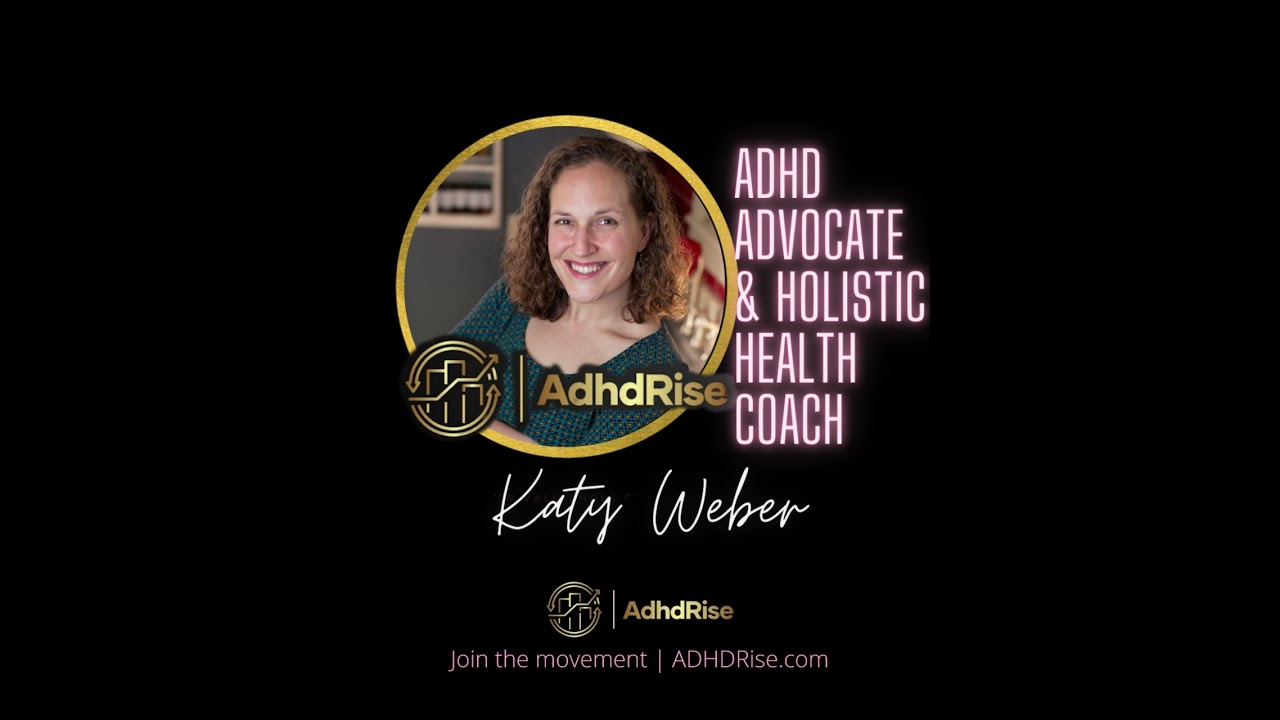
In this live panel, ADHD coach and author Katy Webber leads a discussion with moderators Summer Christiansen and speaker C, and a diverse audience of women (and some men) who share their experiences with ADHD. The conversation covers the importance of self‑diagnosis as a first step, the role of medical diagnosis and medication, and the pitfalls of relying solely on pills. Webber emphasizes a holistic approach: understanding neuro‑cognitive traits such as rejection‑sensitivity dysphoria (RSD), time blindness, and chronic self‑doubt; developing self‑trust and intuition; and creating accommodations in work, home, and school. Nutrition is explored through a critique of diet culture, advocacy for intuitive eating and Health‑at‑Every‑Size, and personal anecdotes about insulin resistance, binge‑eating, and Weight Watchers. Exercise strategies focus on ADHD‑friendly motivation, avoiding boredom, and tailoring physical‑therapy routines (e.g., using audio cues, accountability partners). The panel repeatedly stresses the need for community—podcast, Instagram, online groups, body‑doubling sessions—to counteract feelings of being “broken” and to provide peer support. Participants also discuss parenting, adult‑woman socialization, and navigating clinicians who lack ADHD training. Practical resources (womenandadhd.com, podcast, coaching) are shared, and the overarching message is to find one’s people, embrace neurodivergent gifts, and build self‑compassion.
Chapters
I think self-diagnosis is the absolute first step. I, I feel like a medical diagnosis is important if you want to get medicated, and I think it can be very validating for a lot of people to have a medical diagnosis. However, I think that self-awareness and a self-diagnosis is plenty valid to get started on your ADHD journey. Um, and so when we talk about it, when I talk about holistic health with my clients, I'm really, you know, I say this a lot on my podcast. I believe that like 50% of ADHD treatment, for lack of a better word, is to just understand what is happening. You know, we are learners, we are researchers, we are puzzle solvers. So usually when, when we become diagnosed or self-diagnosed with ADHD, we fall down like the research rabbit holes and we hyperfocus on ADHD. Uh, You join a million Facebook groups, you follow all these accounts, you suddenly you're on TikTok and your For You page is nothing but ADHD, and you just become obsessed with learning everything you can about what this is. And, and that is, that is kind of that, that the— where was I? Oh, my point was that like the treatment of this ADHD is understanding how your brain works, what things are, What is RSD? You know, what is, um, you know, how does time blindness manifest itself? You know, what, what is this paralysis that I keep feeling? And, and, um, so it's, while I think medication is an important way to treat ADHD, um, and I think it's, you know, uh, a very successful way for a lot of people, I feel like there's oftentimes people will go get a diagnosis at a doctor's office and the doctor will Give them a prescription for a pill and send them on their way. And they leave them under this false belief that simply taking a pill every day is going to, quote unquote, cure their ADHD. And I think you're in for a world of hurt if you think that that's all there is to it. So this is really about kind of understanding who you are and how your brain works, and then being able to kind of develop a sense of intuition and a sense of self-trust. which is something that we have not generally had. I mean, you think about it, we have grown up without self-trust and we have grown up mostly, most of the time we grow up being told by our parents, by our teachers, by many people in our life that the way we do things is wrong and the way we naturally have an inclination to be is wrong. We are too much. We are too— you know, too chaotic or too hyperactive, you know. And so, as it— we have a tendency to have a lot of self-doubt. So, and, you know, and I think it's also why we have a tendency to kind of follow things, you know, we have a tendency to like fall for traps. Like, you know, for me with binge eating, a lot of my binge eating came from obsessive dieting, right? And that belief that like this diet is going to turn my life around and it's going to make me a better person and everything's going to work and I'm finally going to be that wonderful person I've always wanted to be. And so I think we look for those quick fixes, uh, and, and there's a lot of ADHD happening there when you're looking for quick fixes. Like, we are impulsive and impatient and we want things to happen yesterday. So, um, you know, with the holistic health, I think it's a matter of kind of understanding who you are and, and what you are, you know, how you operate in certain elements of your life, and then empowering yourself to, you know, realize that the way you are doing things is absolutely correct, that you are not the problem. The system has failed you. And that system could be the diets or your job or, you know, the classroom where you were expected to sit still for 9 hours at a time. Like all of these ways in which we are kind of square pegs jammed into holes. And have grown up always feeling like we are the problem and we are wrong. I think just shifting that paradigm and understanding that, you know, there's nothing wrong with us, we just don't have the accommodations we need. So what are those accommodations and how can we make lifestyle adjustments that will best serve our brains so that we can lean into the gifts that come with ADHD? And I'm done for now.
I love it. I love that you said the gifts of ADHD, you know, and that's, that's true, you know, because we do have so many gifts, you know, even with, you know, with the good, there's the bad. And I think that that's true for anyone, whether if they're neurodiverse or if they're not, like, there is good and there's bad. And there's also gifts. There's a lot of gifts with ADHD that are, you know, we're highly creative. We are willing to take risks. Um, you know, there's a lot of just amazing, incredible individuals out there who are changing the world that are, you know, identify as ADHD. So, um, yeah, I love that process. And also, if anyone has questions, I would love for you to raise your hand and we will call you up if you have any questions for Katie. Um, I'm also wondering too, with your, um, what was I going to say? Oh, where, where can people find your podcast at?
Uh, yeah, the podcast is called Women and ADHD, and it's on pretty much any podcast platform you can imagine. Um, or you can get directed to those podcast platforms from the main website, which is womenandadhd.com, and you can find out more about my one-on-one coaching there as well at womenandadhd.com/coaching.
Awesome. And I was just reading your bio. I was like, you're sober. That's awesome. Sober sister. Sounds like we have very similar backgrounds for sure. And you're in New York, which keeps coming up for me. Oh, we've got some questions popping up. Hello, Barry. How are you today? What's your question, my love?
I'm good. Thank you for hosting the room. And Kate, it was great to hear your story. And thank you for talking and saying that self-diagnosis is important. I self-diagnosed long before I got a doctor's diagnosis. And if I'd have only gotten the doctor's diagnosis, I think I'd be in denial about my ADHD because he seemed sketchy to me. He kept trying to say I was bipolar and maybe I was bipolar, despite the fact that I lost my purse at the visit when we were— when he was going to diagnose me. But yeah, I had long since done a self-diagnosis. So, and I definitely agree with your perspective around holistic health and how it can help you with ADHD. I decided recently to do something about the fact that I was insulin resistant. And I've been insulin sensitive. I took my fasting insulin from 35 to 8 for the past year and got rid of a lot of brain fog and inflammation through diet and getting organized around my eating and food. And I too was a compulsive eater for my entire— for a long time. And it helped my ADHD a lot. And I hear, you know, when you hear things about type 3 diabetes and Alzheimer's and insulin resistance in the brain, it makes— it motivates you to really get your— get things together. But I'm just wondering what you think or what you do nutritionally in your approach to taking care of yourself. So I guess that's my question.
Yeah, awesome. You know, it's funny, I think when it could— just to touch back on the part about diagnosis, where it's such this like mental health revolution, I think right now with ADHD, which like the irony of going to a doctor is that so many doctors misunderstand what ADHD even is, right? And so here we are going for a diagnosis and it's like a lottery. You never know if you're going to get a doctor who sort of really, really understands and gets what is happening, or you're going to get somebody who's completely going to dismiss you and say, no, it's just depression, or it's just anxiety, and they aren't willing to kind of look at what else is going on there. And so, like, I hear time and time again, so many women who have gone to their doctors and have been sort of sent away, and we who are doing this research into ourselves know more about ADHD in adult women than our medical professionals and the and the physicians. And I think, you know, slowly, hopefully we are changing, um, the face of ADHD. And, and I'm hoping that more medical providers are going to start understanding what this looks at— looks like and how damaging it is to a person's psyche and self-esteem when they have ADHD to then be told by a medical provider, no, it's all in your head. Just, you know, you're just lazy or you're just depressed or all these things that we have been telling ourselves our whole life. And then, Summer, did you want to jump in?
Yeah, yeah, I just, I was thinking about, I was thinking about that. So I actually was talking to my husband about this because he went to med school, and something that we talked about extensively is the fact that that training isn't really a part of some of the, like, education that they receive. So we were, we were discussing, like, the need to teach because, you know, I think when you don't have an understanding, you You can't know like what, like how to, to do that. So, um, one thing that I, I always make sure of, number one, is that I do go to, um, a psychiatrist or, you know, a doctor that knows something about ADHD because that's becoming more and more common, especially in the psychiatric world, that there are, um, ones that specifically deal with, um, kids and ADHD. So there are, there are those out there who understand. So that's— I made sure, like, I took my son to a doctor and I was like, nope, nope, I don't agree. And, you know, and if you don't agree, just make sure that you're self-advocating and that you're moving, that you're moving forward with that. So yeah, I just wanted to throw that in is that, you know, we do need to advocate for ourselves and we do need to educate. And if we're not comfortable, you know, we really do need to follow our intuition and follow our, you know, our thoughts on it and move on to something that, you know, suits us better.
Yeah, absolutely. And that's why I think it's so important for us to build that intuition and the sense of self-trust in so many elements of our life over the, you know, over the grand scale, because it really, really helps us when we go into a doctor's office to be like, no, this is— I am the expert of what is happening with me. And yeah, so then in answer to the second part of your question, Barry, the I mean, when it comes to nutrition and activity and, you know, healthy lifestyle changes and adjustments that have to do with ADHD, I follow— I personally really encourage a non-diet intuitive eating approach and a health at every size approach to nutrition. I personally went on every diet you can imagine from when I started at age 14 on SlimFast and, you know, went from there. I was a chronic yo-yo dieter. leader, obsessed over my weight gain and my weight loss, and really struggled with my self-image as a result. And this is what my book is about. It was about becoming a Weight Watchers leader and developing a binge eating disorder because of the incredible restrictive eating of Weight Watchers and really kind of understanding why our bodies Why people who are chronic dieters tend to gain weight, why dieting is the number one predictor of weight gain.
Oh, Carolina, do you have a question?
Oh, can you— did you—
oh, are you there, Carolina?
Did I get cut off?
I think—
Yes, I'm here.
But I'm sorry, Katie, Katie didn't finish.
Yeah, I'm so sorry. I didn't know if my mic cut off or something because I got interrupted. Um, so anyway, the— what I like to follow is a non-diet approach because I feel like diets in general are really, really sort of predatory when it comes to the ADHD brain. And so I think you kind of hit the nail on the head when you were talking about motivation because we are, we are interest-driven brains, and there are ways in which we can become nutritionally motivated when we understand what it's doing for us. So, for example, exercise. When you exercise for weight loss, it becomes really, really boring, and you have a tendency to not want to do it anymore. But when you are exercising because you know it feeds your brain and it improves the rest of your day, if you go out for a 30-minute walk, in the morning, uh, and your ADHD brain really, really feeds off of that, it becomes much easier to do those things. So it's again tapping into kind of what motivates you in terms of, um, activity and, and nutrition as well. I hope that answers your question.
Yeah, it does. And you— I think the why, understanding the why is like an ADHD trait because I, I'm a person that needs to understand what's behind something or why something is happening, or it's not even a real thing for me. And my favorite form of exercise is swing dancing, and I have no problem doing that. But forget about me going to the gym. It's very done speaking.
Yeah, absolutely. The gym is a very, very boring place for the vast majority of us. So yeah, find something you love that stimulates you, you know, because we, we do not tolerate boredom very well. I'm done speaking.
I like that you, that you spoke to the boredom part because honestly, unless— and for some people this works and some people it doesn't, but I actually don't enjoy working out with people. Um, I don't know where that comes from. I, I almost feel like embarrassed, like I don't like to To be around people, if I don't like to be told to like, I don't, I almost don't like the encouragement. Like, yeah, you got this, hurry up. It makes me like super irritable. So I think like what you said, like it's important. Like if you're bored and that's not something that works for you, that you find something that does work for you. I personally, I work out to YouTube videos. Like I have a girl that I follow, Carolyn Girvin. She, I just follow her and I do her. her stuff every day in her program. And I do it like literally in my bedroom, in front of my bed. And I have my weights in my closet, you know? So I think you just have to do, you know, what, what really is, is working for you. And, you know, like you're saying, like, be, um, be cognizant of that. Like, what is it that is going to help you? What is going to work for you? And don't, you know, don't push against that. Don't try and go with the norm. Like you were saying earlier, don't, um, do something just because somebody else or, you know, the rest of the world is doing it. that way. We think that what we do isn't right, but the only reason we think that is because the social norms that exist in the world aren't for neurodivergent people. So I think that that's a great point that you spoke to. And I am done speaking. Val, do you have any thoughts on that? If you are around? If not—
oh, there you are.
I just want to say, acknowledge that, oh my gosh, for some reason I think my end just went dead. So I was like, it's quiet. What happened? So I'm so sorry I cut you off. That was so incredibly rude and so ADHD of me. I just, I did not hear for some reason. It just went dead. But, um, yeah, I'm loving this conversation. I'm loving, you know, the questions we're getting and all of the feedback because it is such a crazy time to be in the ADHD space with all of the, um, you know, just information and research and things that are coming out. Whereas, like Summer said before, That they didn't have that. They don't get training. Doctors do not get training. People don't get training specific with ADHD unless if they seek that or they are very specifically like specialized in that. So it is so important to have someone who understands that because our brains, the way we do things. I was just talking to someone earlier about this. He was saying like, yeah, but you know I had this person in my life that would tell me to just go do it. Just do it. And I'm like, oh yeah, that really works with ADHD. No, it doesn't. We can't just be told, just go do it, or just manage your health, just do this, just eat this way. Because for one, we're going to rebel and not want to do it. And two, we don't always just follow a strategy or follow a simple thing. It has to work for us. So I am a huge lover of any type of ADHD advocacy. And, you know, working with people who are familiar with that ADHD realm as well.
Yeah.
And like Summer said too, you know, if something isn't working for you, I think our default tends to be like, you know, the default tends to be like, oh, what's wrong with me? This is working for everybody else. There's something wrong with me. As opposed to saying, you know what, I'm not a person who likes to go to YouTube to watch YouTube videos for exercise. I like going to the gym because the gym is a place where I feel accountable. And it gets me out of the house and it's a place to go that I know I can schedule, you know? So it's really like leaning into what works for you and trusting that and not feeling like if something's not working, that it's because you are the problem. You need to keep looking for what does work for you.
Yeah, I love, I love that. And we don't like to be told what to do, for heaven's sakes. That's why we can't work out with people because when they're like, hurry up, come on, catch up. Like I used to run with some of my friends I'd be like, screw you. I don't care. It's the stubborn person in me. So it's not always very inspiring. Um, and I don't, I don't know what it is, but like, honestly, that doesn't work for me. So what does work for me? You know, that's what I try and look at. Whatever works for me is like, um, what I'm going to do. You know, I, I've, um, kind of shed off that idea that I have to work like everybody else because I already know that I don't. So I love, love this conversation, Katie. And I'm super glad that you're, you're here. So we have another question, Felicia, or no, Carolina, let's go to you. Sorry, Felicia. I think we— did you ask your question yet, Carolina?
I, I have not. I just, um, I wanted to tell Katie how helpful her, um, I follow her on Instagram and that's how I found her podcast. Um, I'm at the very like pre-beginning of the journey. I started investigating because of some behaviors that my 2 girls have. And then I realized very quickly that I do a lot of things too. And, um, so I actually have an appointment tomorrow for my diagnosis. And, um, and my kids are a couple of weeks though.
Congratulations, that's so nice. So nice.
Yeah, and I'm like, I identify with a lot of the things that you guys are saying, or just like how You just, we do things a certain way and just think that we're, you know, failing at being a typical adult.
Well, a lot of that comes from being socialized that way and being told that as women, we are supposed to act a certain way and we're supposed to be domestic goddesses and we're supposed to love doing the dishes and folding the laundry and we're supposed to love our children all the time. And, you know, all of these things that when we get into the reality of it, we're like, oh my God, this is terrible.
terrible.
Why didn't anybody tell me how boring and awful this is? Um, and then we feel bad about ourselves because, you know, I think, you know, that's what's so interesting about thinking about the female experience is, is how much of this is what we've been socialized to believe we should be as women. And, and again, what I was saying, you know, when you're— when you grow up with so much self-doubt and, and lack of self-trust because you are told that the way you do things is wrong, It's, you know, it's no wonder we all have such self-esteem issues. So yeah, I'm done speaking. It's not— I recognized your profile picture. It's so nice to see you here, Carolina. Thank you.
Well, and I really think part of that goes back to like speaking to like, do we know ourselves and what we love? And are we, I don't— maybe too influenced by like the social norms and have we been socialized that way. And, you know, it really is there. There are a lot of women who do enjoy staying home. I don't know if they enjoy doing the dishes, but they enjoy like, you know, doing domestic things like I did for a while. But girls, I am over that crap. My husband does a lot more now, you know? And so I know— That's very funny, Summer. Yeah, I know. I used to. What'd you say, Carolina?
Sorry. Oh, sorry. I was going to say, it's just, you know, for me, I've found I've had a lot of like behaviors that I thought were just like, oh, this is just the way I am. And this is, you know, I just like, I became an entrepreneur when I was very, very young. I was 16. And then, but where I'm from, I'm from Mexico and they don't take you seriously without a degree. So I actually, like, I went to college just to get that piece of paper and I'm a graphic designer. And my idea is that I didn't— I never wanted to be in a cubicle. You know, I knew that from a very young age and I just thought, you know, that's the way I am, but it's partially because of the ADHD.
Oh yeah. I mean, it can be a superpower in so many ways and, you know, I've watched my own life evolve. You know, my kids aren't little anymore. So, um, but I did, I wanted to be a stay-at-home mom. I hated cleaning, but I hated the, I hated the idea that I had to do everything. Like I didn't have to, I chose to do all of the things, but the ADHD is really what was, um, not allowing me to do that. That's how I started to, interestingly, Katie. So that's how I, I started to revisit my ADHD diagnosis from when I was younger. Um, is that I would go to my psychiatrist because I have anxiety really bad. And I would, like, he was looking over my notes. I mean, it took him like 4 years, for heaven's sakes. But, um, I was looking, he was looking over like, um, the notes in his files and he's like, you say a lot. Like, I feel like I'm walking in circles all day long. And, you know, that's the frustrating part is like, even though, you know, I, I wanted to stay at home. I want to keep a nice house. Like, I enjoy that. I didn't realize that there were so many, so many things that were hindering my love, that were keeping me back from being my best self in that. And then as my kids got older, like I did, I realized, you know, that isn't something that I'm really interested anymore in. My husband is totally fine with that. And now that my kids are older too, and so And that's the awesome thing about ADHD is we, we can, we have that ability to trans— to transfer. It's not the right word. No. Um, not transfer, whatever. Going into like a new phase, a different thing. Like we, we can, you know, have that exchange because we'd like to do lots of different things, right? We like to learn new things and, you know, it's, it's a different time and place in your life. So yeah, I love, I love that all of that kind of came from that because I, I love the The idea that we can, you know, grow and learn and change, and we all have the things that, you know, we love and that, you know, our ADHD is like superpower for us that allow us to, you know, go through that. So yes, sorry, that was a very long tangent. Alyssa, what's up, my friend?
Yo, yo.
Hi, Sunny.
And Katie, I'm so happy to finally— I should say, it's interesting to say meet you, but talk to you in person. I follow you. I feel like we, we have some kind of connection, so we can talk about that offline if you want, and if you think that I'm someone you want to speak to. Anyway, with that being said, I realized about, gosh, almost 8 years ago that I was a diet addict, and I looked after I really figured out how to change my health, my wellness, and most of all, my mindset. And realized that I wanted to kind of pivot. And by the reason that I wanted to pivot is I realized that something had worked for me finally, where I kept— I enjoyed eating. I hated being deprived and restricted. And that's what everything that I had done my entire life. My mom was also a diet addict, and I watched her go from size 8 to 18 and 18 to 8 my entire life. I thought that's what we needed to do as women if we want to look good and feel good. It is about a diet. diet. So changed my life. I don't need to tell my whole story, but when that happened, I said, you know what, there are so many other women that I'm coaching that just wanna lose weight. And I'm realizing that there, there's a reason that all of a sudden this has worked for me. It's been 8 years that I've kept off 40 pounds. And I've pivoted to coaching women that have busy-minded, which I call either ADHD diagnosed or undiagnosed. And the reason that I have felt the pivot was so strong and literally calling me to do this was because I finally realized what it was. It wasn't the diet that wasn't working. It wasn't the food that I was eating that was making me heavy, or yes, I lost weight and I got to a number on a scale, but it wasn't sustainable for life. Why? Because my brain works differently. It was, it was about how I thought about it, how I broke it down, how I made it work for me and my lifestyle, and why I had to stop thinking like a typical brain, you know, neurotypical person, that, that's why it was failing me. It was the culture, the diet culture, which Katie, you speak about a lot. And it was about the restriction and the deprivation. And if we know anything about our brains, We get bored easily and we are deprived and restricted from anything, especially when you're talking to a foodie. I do not cook. I do not go grocery shopping. Summer and I talk about this all the time. My husband does all the grocery shopping, all the cooking. I literally do not even make a sandwich if I cannot grab and eat it. If I cannot find healthy, grab and eat it and go. I like to walk around and eat. The only time I sit down is dinner and I still eat so healthy during the day. 3, 2, 5 times, and that's not including my large dinner. I have found that it's about thinking differently in order for it to be successful for life. And this is Felicia, and I'm done speaking. Actually, I'm never done speaking, but I'm—
I was gonna say, where's your like tagline, girl?
Sorry, I had to get all that out there and I didn't want to take over the, um, the room. But you know, I, I feel like I can relate so much to Katie and Um, and can't wait to read her book or listen or whatever I can do because it's hard. It's my jam. Health, wellness, and ADHD. That's my jam.
Yes, girl. Girl is on fire.
This girl is on fire. Okay, we're done.
We gotta get a little singing out every now and again.
I love it.
I love it.
I love what you said. I love what you said, Felicia, about deprivation too, because I think there's something that has been so important in my own eating journey and, you know, my own diet history, which was, you know, deprivation comes in so many different forms and not just like caloric deprivation, right? So like, I think about, like, I remember when I was, you know, developing this full-blown binge eating disorder and I thought, well, okay, if it's calorie, uh, you know, and I, I remember reading that it was Caloric deprivation was causing me to binge eat. So I was like, okay, I've got the answer. I'm not going to, you know, restrict my calories, but I'm only going to eat certain foods and that's going to be the— this is going to solve all my problems and I'm going to lose weight and I'm going to be amazing and everything's going to be happy. And, and, and I realized that like the deprivation wasn't coming in terms of caloric deprivation. The deprivation was like a deprivation of myself, right?
100%.
A sense of self-denial.
Yeah.
And so it was the way we thought we were supposed We were supposed to think about keeping things out of our body and not eating it, or even just, you know, what we should look at and what we should read and how we should weigh or count calories or count fat grams. Or it just was a different way. It was, it was just— I agree with you. I, you know, I'm the Weight Watchers. How many times do I go before somebody says, who's the idiot?
Yeah, you know, and I found that so many parallels. I mean, this could be a whole other topic, but like there's so many parallels between Weight Watchers and ADHD because I think about like, you know, this set— this idea, like I would have people come when I was a Weight Watchers leader, I would have people come over and over and over and they would say like, Weight Watchers is the only program that ever worked for me. And I'd say, well, obviously it's not working for you.
Like, that's why you're coming back for the—
That's my line.
I say to my clients, that's it. If you're going back to anything, if you're going back to Weight Watchers, if you're going back to anything, it didn't work the first time.
Right. Yeah. And, and, but there's this sense that like, that, you know, it's not for lack of trying. The people who are failing the hardest at health and nutrition are often the people who are trying the hardest. And that irony sort of really like hits me when you think about ADHD and how many times we've been told, like, you know, it feels like everybody has this whole thing figured out but me. And how many times it's like, I am trying so hard to do the thing and, and it's just not working for me. So again, it's like this idea that I think we have to really shift our focus away from, from where we are depriving ourselves as humans and, and as human beings and think, you know, to lose that sense that, so, you know, one thing, if we pick up this new fi— fad, if we pick up this new habit, if we pick up this new diet, that somehow our life is gonna be wonderful. And this assumption that, like, if we change who we are, that's going to be the answer to everything. And, and really kind of leaning into, you know, I have it. What did you know? Like they said to Dorothy, like, it was in you all along, right? It's strength.
Yeah.
Let's just shift. I say flip, flip the script, like completely flip the script.
Yeah, sorry, I was drinking water. Yeah, no, I totally agree. But yeah, I'm done. I'm done. Do we want to move on to Andrea? Or did Val, Summer, either of you want to?
Yeah, sorry, I was— yeah, I think my, my thing keeps going in and out too. So it's a great day. Yeah. Hi, Andrea. Welcome. How you doing? Are you with us? Maybe we'll come back to you if you're not available.
Sorry, I'm trying.
You're good.
I couldn't unmute and I'm struggling with getting an earring in and it's just—
You're multitasking, no worries.
I am and I'm getting ready to go out, but I've been listening to this conversation and some of it really hits home and some of it I don't really relate to all that much. I don't have— I haven't really struggled with eating much.
I—
a little, but I've never done dieting or anything like that. Um, what I struggle with is repetitive exercise. Anything where I have to count. It's 1, 2, 3, squirrel. Wait, how many? Oh, hell with it. I'm done. I can walk. That's the one exercise I've been able to do, although recently I hurt my back and that slowed it down. But walking I can do because you walk to a place and then you walk back, and that I, I can keep track of. And, you know, I can think and I can talk to people and I can read books and I can listen to books, all kinds of stuff. But other than that, I find it really hard to exercise. And I'm going in to start doing some physical therapy to get my back better, to strengthen my core muscles. And I gotta figure it out because otherwise I'm gonna need surgery. So I gotta figure out some kind of exercise routine that doesn't force me to count, that doesn't drive my ADHD nuts. Any suggestions?
I'm done.
Yeah, you know, it's funny that you said other than walking I'm not exercising, because walking to me is a fantastic exercise. So I, I feel like it's, you know, seems to me like this is a very ADHD trait, which is I'm not doing it, you know, I'm not doing it enough. I need to be doing this 110%. I need to fix this. And, and here you are also talking about the fact that you've got, you know, an injury that you're dealing with, but you're not allowing yourself to rest because you feel like you have to figure this out. And I feel like that's something that we can all relate to, right? This idea that, like, I have to be the absolute best at anything I do. And it's often why we get injured a lot of the times that, you know, like, I used to run and I kept getting injuries from running because I would push myself, like, in If I got a certain time yesterday, I had to beat that time today. And you know, and I never had time to stretch, and I never had time to do the boring stuff. And so I was getting injured all the time. So now I walk, and and like you said, like I listen to books, and I listen to podcasts, or I you know talk to my partner, and and it's all the fun stuff. And so I I don't really think of it as you know. It's easy to sort of dismiss it as not being enough, but I think it is. a great form of exercise. If you're not feeling like you are physically pushing yourself and you're not physically spent, that's another thing. But it sounds to me like you're just— like a lot of this is a sense of guilt, like you should be doing more, which I, you know, is a very ADHD quality. But also you're injured. So I think you're dealing with like the The need to find something that is going to help you heal as well. That's kind of what I'm hearing here. Is the walking exacerbating the bad back? Like, are you looking for something to do that will be restorative?
Well, the walking hadn't done anything, but then I think I pushed it one day, like you said, And I went almost 3 hours in walking. And by the time I got home, I was really hurting. I have a fusion that happened 14 years ago. And they told me that 10 to 15 years afterwards, there might be problems start to arise. So it's sort of built into where I'm at with my body right now. What I'm worried about, what I'm concerned about is when I go to the physical therapist, they're going to say, okay, You need to do this exercise every morning. You need to do ten reps of da da da and ten reps of da da da and da da da. And I can't do that. Those I can't. So I don't, and I'm not sure how to communicate with them that or how to find some way to integrate that into. I don't know. Timing train. I I don't know.
Yeah, I know. I think that goes back again to motivation, you know, figuring out like the thought of doing boring physiotherapy reps to heal are, you know, seems theoretically really boring. Oftentimes if it's the motivation that's gonna, you know, if we're in intense pain and we need to do something that's going to help alleviate the pain, that can be the motivation to get it done. But I do commiserate with the fact that, you know, I don't know about everybody else, but I feel like people with ADHD tend to injure themselves from over-exercise and pushing ourselves just in general. And I don't necessarily have a solution to that other than to be kinder to yourself and, you know, address it with a physiotherapist. I feel like, you know, that's the other thing. It's— It's, I think, you know, to go and bring that up and say, look, you know, I'm somebody who has a tendency to get really bored with this, especially if I'm not seeing results immediately. So, you know, what would you suggest? How can I gamify this for me to actually see some results? They would probably have some great advice. And I've done some.
I love that. Yeah.
I've done that before.
I've been—
I've gone and advocated for myself in different areas. I've said, yeah, if it's boring and repetitive and redundant, I'm not going to do it. So let's figure out a way how to make this more fun and interesting. Because, you know, even if that's just like changing things up, maybe doing a little bit different exercises, things like that really helps too. Does that answer your question, Andrea? Or give you some thoughts on it.
Yeah, yeah. It, uh, I don't know that it's a solution. I don't know that there is a solution. But, uh, yeah, I— and the truth is that I've had a bunch of surgeries and I've had to do physical therapy post-surgery a number of times, and I've always done it well enough and long enough that I recovered. Um, But this back thing has been a real struggle for me. I, I, because it's flared up time and again, and I've never really managed to build up my stomach, my core muscles the way that, to really help me be better. So it's, I don't know, I'm just, I was, I don't even know why I brought it up, but it's, it's a, it's a, it's a struggle and. I'll— I'm sure I'll do the exercises with, with, with the physiotherapist. I'm good at that. I'm good at following directions. Um, but it's when I try to do it myself, I struggle a lot. Anyway, thank you.
Thank you.
You are so welcome. Accountability partner, that's what I would suggest. If you do it when someone else tells you to do it, then maybe, I don't know, Maybe a suggestion would be to get an accountability partner where they tell you to do it. Or I know Brett has that like, really cool— oh, he's not in here. Here. He has that cool, like, he's— it's like physical therapy, but it tells you what to do. It's all like audio through Alexa. So if you have an Alexa, that could be a cool option too.
Oh, Did we lose our next question?
That might make it worth getting an Alexa all on its own.
Yeah, no, I was like, this is genius for the ADHD space because, you know, like if I have to do an exercise or something on my own, I'm gonna have my routines down now. But in the beginning it was such a struggle and maybe, you know, it's that audio motivation of hearing it and learning it that will help.
Great suggestion. Let me investigate that.
Yes, go look up Brett Adler. He is— you know who he is, right? He has the dog Lucy, and he is, um, gosh, I can't remember the name of his company. Let me look real fast. But that is exactly what they do. They do audio, um, exercise, like physical therapy.
That's right.
I was reading his bio the other day. Yeah, super interesting.
So yeah, yeah, super fascinating.
Would somebody DM me his name?
I was gonna say Val.
I'm in the car and if I try to—
Yes, I will message you his information.
Awesome.
Got you.
Hi. So okay, is it Dania? Is that how you say your name?
It's Dana. Thank you.
Oh man. Oh, you have it spelled there too. Dang it. Okay. I should have checked first. Hi, Dana. How are you?
I'm good. I really appreciate this conversation. Like I just also, Carolina, what you were saying really resonates with me. I was just also like formally diagnosed and partly because my 2 children, 2 daughters as well, are, have some neurodivergent stuff that we were trying to sort out. And suddenly I was like, oh, hey, That also sounds like me. And I thought it was hilarious because when my doctor lady talked to me about the ADHD diagnosis about a month ago, well, 2 months ago now, she— one of her really helpful tips was to give me a list of like 10 books to read, which I thought was hilarious given that, you know, as ADHD folks, we are really, really good at sitting still and focusing on one task. So that— and it was funny because I borrowed one of them from the library and someone had written like tons and tons of notes in the margins.
Oh, no.
For like the first 30 pages and then wandered off. And I was like, yep, there it is, ADHD in a nutshell. Uh, so I just wanted to thank you guys for this conversation today. I'm trying to figure out some support systems and healthy eating and all these same things that you guys are talking about, which is, um, I don't do diets at all because I'm not good at that. I'm a foodie also. I love food and I want it when I want it. And it's really— I'm trying to figure out some dietary stuff in my life that's actually causing me harm, like food is hurting me. So I'm working on sort of not thinking of it as a deprivation, but more like I need to avoid this thing for my health. And that's going okay. But I just— I really appreciate the conversation. I'm done speaking.
Hi, Dana. Yeah, that's a great experience or a great example of the difference between deprivation and self-care. And so that's another thing I talk about a lot if you follow me, or if you, you know, in my book with my clients, we talk about the difference between self-care and self-control. And how, like, yeah, you can, you know, if you have an allergy to peanuts, it's not a problem not eating peanut butter because it's a life-or-death situation. But again, you know, if this is a matter of like, well, I read a book that told me I would lose weight if If I ate like a caveman, then that is self-control. And chances are, it's your body's not going to go along with it for what you know it will in the initial. You know it will initially. They it always does. But eventually, it rebels against the desire for self-control. So, but I do. I really empathize with the experience when you're first diagnosed. Me talking like I'm this. You know I was diagnosed all of last year. But you know we all know that. A year in the life of a person with ADHD is like a decade for somebody else in terms of how much we learn and research. But it is, it is such a dizzying experience to go through and think about, you know, how, how this is applying to so many random, seemingly random issues and experiences in your life. So it's quite a roller coaster. So strap yourself in. I've done—
I just want to give a shout out to my fellow Oregon girl, Dana! I grew up in Portland and I am now in Central Oregon, but I always— every time I see someone from Oregon, I'm like, what?
Well, yeah, because I've only lived here a couple years and it only— it doesn't feel like that long because of COVID so I still feel like it's a very new city to me. But, um, I'm now an Oregonian, so it's very exciting.
Oh girl, you're gonna love it. Next time I'm in Portland, I will hit you up because there's so many cool things to see now that you guys are open, right? Sorry, I'm taking this conversation—
I will take this conversation offline.
No worries.
Thank you so much. Yes, absolutely. Love it, love it, love it. So Katie, thank you so much. What a great conversation. I know that for me, like, I definitely— there was a lot of ideas and thoughts sparked, a lot of, um, you know, great questions from you guys. It's been amazing, and I would love to know if anyone does want to work with you. If they have, you know, maybe they're hearing what you're saying and they're feeling it, and they're like, "Yeah, I want more information. I want to get involved with whatever you have going on." How is the best way to get a hold of you? Instagram, Facebook. How can they get a hold of you, and how can they work with you?
Yeah, I'm on Instagram as. Women and ADHD Podcast, or I think that's the one that you can get to through Clubhouse, or my coaching Instagram is katiweber.adhd. And you can always go to womenandadhd.com, which is a little easier to remember. And that's how you can book an initial consult to work with me one-on-one. I also have an online community with about 200 and some odd women in it. I think there's like 200 and almost 250 of us that are, you know, a nice online community that is away from Facebook where that's sort of where I spend most of my time if you want to, you know, for messaging and that's a place where we, it's generally just, you know, a place where we hang out and talk about our ADHD and what it looks like and ask questions and pontificate. And we have body doubling sessions for co-working and accountability, and we have online Zooms and all of that. So if you're just sort of interested in dipping your toe in, that's, that's the best way to find me. And you can join that through womenandadhd.com as well.
Awesome. And if you have one more thought, I'm curious to know if you have one more thought to anyone out there who is just starting this journey or just diving into their holistic wellness health, what would that be?
Yeah, absolutely. I mean, I feel like find your people is the most important thing. And I think Uh, something that I hear the most from the listeners of the podcast, which is like, you know, we have felt for so long that there is something wrong with us. And I think it is just the best thing we can do for managing ADHD and understanding who we are and building up our, our self-esteem and, and changing that inner narrative is finding, um, other people with ADHD, joining groups, joining communities and feeling connections like you do in these rooms, like on Clubhouse, where, you know, you can start to connect the dots and understand that this is, you know, that you are not broken. There's nothing wrong with you. You have ADHD, and it actually can be quite a wonderful, wonderful thing.
Yes, I love that message. You are not Broken. I say that a lot. You're not broken. We are not broken. Our brain is just different. So thank you so much for that. That's a great way to kick this off. Thank you so much for spending time with us today, Katie. It's been great to have this conversation with you, and I'm just so grateful that you took the time to pour into us today on ADHD Rise. We are very, very grateful for you. So thank you.
Yes, we are. Thank you so much for being here. Yeah. Yes, we've loved having you. All right, everyone, when I rise, you rise, and we rise together! We rise together! I was waiting!
We love you guys. This has been Katie Weber, and this is Val Nichols and Summer Christiansen hosting this amazing event. We will see you again tomorrow at 9:30 AM Pacific time. We will be back Back in the saddle again. I didn't get to sing enough, so I had to sing. I love you guys. Take this amazing energy away with you. We love you. Bye.
More from Val

Kind of Chic to Treat Your Business Like An ACTUAL BUSINESS | ADHD & Business Creator Val Nichols

ADHD Creatives Make The Best CREATORS! I Can't Wait To Show You How! ADHD Content Creator Val

ADHD Creators Never Apologize For This! Be Too Much | Val Nichols ADHD Creator & Entrepreneur #adhd

Fidget Toys for ADHD! What do you think? What do you think is the BEST Fidget toys for an Adult?!



Social Media For Business | Content Pillars | Val Nichols ADHD Business Coach

Your 'TOO MUCH' energy is actually your highest paying brand ASSET In Your Business

