Lauren Sergy - Authentic Communication -WILD Tribe Interview
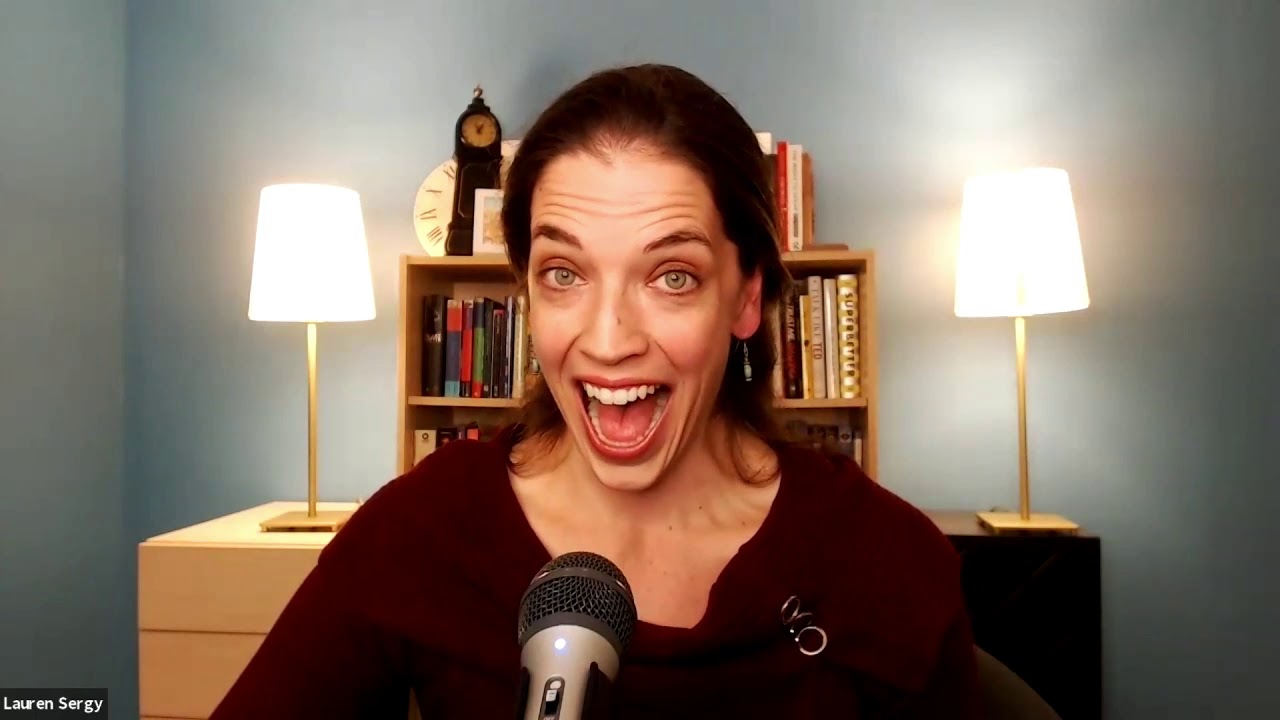
Lauren Sergy talks about authentic communication and public speaking with host Val Nichols. She covers managing stage anxiety, crafting messages for your audience, and the practical tools in her book Strategically Speaking.
Chapters
Hey guys, welcome to the Wild Tribe Online Summit where women influencers, leaders, and dreamers are telling us all about how to tap into your deeper purpose through business and entrepreneurship. My name is Val Nichols, and I am your host for this series. Over the next 21 days, I am going to have an entire panel of experts, influencers, and leaders who are the top experts in their field all around the globe, and they're going to teach you all the things. We are going to pull back the curtain and we are going to reveal to you all the secrets and all the trades of the experts that are out there. And today I am so excited to be bringing to you a communication expert. She has helped thousands of leaders around the world transform their impact through creating genuine, authentic communication that connects. She's a TED speaker, and she is here from with us today from Canada. Miss Lauren Sergi. Welcome, Lauren.
Hello, Val. I'm delighted to be here and here with all of you at the WILD Summit. Great opportunity. I'm always happy to reach a new crowd.
So share with us a little bit more about how you got to where you are now, teaching thousands of people all over the world how to communicate and how to incorporate The art, the science, and the alchemy of communication.
When I was a wee lass entering university, I had aspirations actually to go into performance, theater, acting, that sort of thing. I was always a very shy performer as a kid growing up. You know, there is not a single picture of me that exists in the 9 years that I studied piano where I am not crying at a keyboard. during a recital. And you kind of have to learn how to get over that sort of presentation nerves in order to go into acting. So I embraced acting, did a ton of radio work, studied English literature because that storytelling was a love of mine, and then thought, oh hey, this is pretty neat, let's get into Greek rhetoric as well because why not? And then what do you do with a bunch of acting experience and a degree in English literature and rhetoric? You go into library school and say, hey, libraries sound good. No, no, I was a terrible librarian. I was absolutely terrible at the librarianing, but I was a very, very good presenter. And what I was able to do consistently was bring people around who did not want to be sitting there listening to me speak, because I usually brought fairly disruptive information to the staff who I trained. It was always behind the scenes and staff training. And I was able to take these people who did not want me there, who did not want to listen to me, and then turn them into really warm, receptive, excited audience who would actually implement the tools that I was suggesting to them. And as I did more of this, people came up and said, hey, great talk about thing XYZ that I was training their staff about. Could you come back to our conference next year, or could you come back to our library and teach us how to present like that? And I said, yeah, absolutely, because that brought in all of my background in acting and information studies and literature and this weird disparate stuff I used to do. And it just repackaged it for people who really wanted the help. And I was able to clearly pull apart the different aspects of public speaking and communication and what makes a presentation work, how we can speak clearly to other people and make it simple and not intimidating and easy for people to understand. So that's how I kind of got into this whole weird, wild world that I'm now in.
I love that because I think that so many people can relate with that idea of going one way and then all of a sudden realizing that your deeper purpose is actually in a totally different direction.
Totally different direction. And it's kind of funny because it was at one of my, at one of my worst jobs that that came to fore, and it was other people who started identifying it for me. So I was, I was driving to a meeting with my then boss who had the social skills of like a limp gray soup, and he was, he wanted to tell me something. I could see he was so uncomfortable, and we're driving to this meeting in his tiny little Smart car. And he said, Lauren, people tell you things. You're very disarming and they tell you things and I don't know why. Well, they kind of do, don't they? And it was because of the way that I communicated with them, because I was able to build trust and respect with an audience very quickly through clear messaging Genuine interest in forging a connection and very careful strategic planning in terms of how I worked with different audiences so that I could meet them where they were, that created a lot of trust. And people saw that and recognized that even before I did.
I love that you talk about that because I think so many of us can relate with that idea of pursuing one thing or thinking that this job is our next big thing and then realizing it through that process, through all the different interests that we have, all of a sudden, your deeper purpose arises from that.
In our communication environment, we are living in a space where what's in front of us is artificially created authenticity and it's kind of nauseating. And what I mean by that is these very curated images that we see on On social media, on Instagram, on Twitter, on whatever social online space it is that you are hanging out. We now have to constantly question whether or not what we see is real or if it's been passed through some kind of filter. A photo filter, a message filter, that filter that says, you know, I had this amazing, relaxed, totally chilled-out morning with my kids, but glosses over the fact that it took you an hour of like crying and tears and wrangling them into their— Flippin' jacket just to get them out the door. So when we're confronted with these overly perfect, overly curated, glossy images, we lose a sense of what connection and authenticity actually means. So we're connected, but we're not authentic. And then we crave that genuine connection that we're constantly seeking to make with other people.
I just wanna hook onto that for a moment. What you talked about, that True, authentic, genuine connection. Because I think in this world of social media and highlight reels and stories, all these things, I think the one thing that we're really craving is that true, genuine, authentic connection.
In terms of thought as well as in terms of connecting with other people really is a process of taking the lens and taking your focus off of yourself and turning it around so that you can Learn to look at a subject through the audience's eyes or through your people's eyes. When we are expert in a topic, any topic whatsoever, we get so used to seeing that thing from our viewpoint and our perspective that it can become really difficult to detach from that and say, okay, this is what I think is important about this subject. There's the little bits of information that I think are really critical. But what's critical to these people that I'm speaking to? It might not be the same thing. So when you're able to say— when you're able to disconnect yourself and disconnect your conceptions about what's important in a topic, and then really say, okay, I want to know how you look at this topic. I want to understand all of the different things in your world, in your life, that are affecting your frame of thought, that's going to affect your view on the topic that I'm presenting to you, or the thing that I'm trying to lead you to do. Or encourage you to take on. Once you look at a topic from the angle of someone totally different, you start to see where the gaps in their understanding might be. But even better, you start to see what is, what is actually going to be important, what is actually going to transform them in terms of the information that you need to relay. And that's something that by the time that you're a leader, you've become an expert in the thing that you are leading. So that can be a really, really difficult shift that many leaders have to take. So part of the process that I engage in with helping to shift these— shift how leaders communicate is teaching them to again look at this thing with fresh eyes, teaching them to view even their own role from a completely new light. So they'll say, well, I know what my role is. It's CEO of organization XYZ. Okay, you are the CEO, everyone sees you as the CEO, but in this meeting that you're having with this group of people in a couple of hours, do they need the CEO or do they need a cheerleader? Or do they need a voice of reason? Or do they need you to be something other than your job title in order for them to get the information that they're craving and get the connection that they need to make in order to take the information in and apply it in their life? So you need to look at these information needs at a very layered, layered level with the people that you're communicating with. And this holds true not just for leaders. This holds true to anybody who is trying to connect with someone else through the medium of communication.
When we were talking on the phone the other day, you said something very powerful, which is your fear doesn't define you. I love that because it's so empowering. And as a matter of fact, you also shared a story with me about someone who is very much a leader, very well known for her expressions, her emotion, her voice, her ability to stand on a stage and command the attention. Could you share with our leaders— or I'm sorry, our watchers today— about that story about Adele that you shared with me? The other day.
Elle apparently throws up before every performance. Who knew, right? So, and this is, this is the danger in thinking that a leader has a certain amount of chutzpah or is inherently brave or courageous or isn't intimidated in different situations. When we get this notion that in order to be a leader, we need to be brave and fearless and unflappable, That's going to set you up for failure because that is not usually how leaders feel. Generally speaking, they're figuring things out as they go along as well. But what a leader does is say, you know what, it's my responsibility to do this thing for these people because that is what they need. I am acting in service to them. So for Adele, she gets nervous before her performances. Barbra Streisand is another famous one who does deal with really considerable stage fright. What does she need to do to get out in front of them? Go and throw up? Say, okay, that's done, time to do my thing. And she is certain in what that thing is that she offers, that she's doing for them. She's in service to her audience through her voice, through her music. The nervousness isn't a factor. It might feel wretched right before you get out. It might make you feel like, you know, like everyone can see how deeply you're flushing or how much your hand is trembling. But if you flip that focus From this is how I feel and it's the only thing that matters in the world to what are they feeling, what do they need, what is the thing that matters in their world, then you flip that lens away from your own nervousness, from your own fear of anxiety, and instead you focus your brain wholly on the thing that you are doing for someone else. So you're taking yourself out of that mental anxiety state and simply changing the focus. on where you're looking, which is a lot better than saying, oh, I am zen about this. I am calm, cool, and collected. Nobody is going to die by me going in front of these people and speaking my mind. It's much better to, instead of focusing on trying to calm down, focus instead on what you're doing, who you're serving, and what they need. It's the only thing you think about. I've been there. It's horrible. And you know what? It sometimes still happens, even with Professional communicators, people who are used to doing their thing at different points in time, some days you will feel the ick or something will have gone in your world that's thrown you for a loop. You feel off-footed and that nervousness and that self-doubt creeps up. It's something— it isn't something that you get rid of or you eliminate from your life. It's something that you are constantly managing.
Hmm.
So you're always just gently nudging yourself gently saying, okay, yeah, I'm feeling this way right now, but what's going on in their world? Yeah, I'm feeling this. I don't want to do this. I don't want to do this thing. What is it— do they— what is it that they need to move forward? So you're just always nudging and gently turning that lens away from yourself and onto the other people. One thing that is not going to help is beating yourself up for feeling the way you're feeling when you go to communicate.
It's—
this is a very mindful process where you say, yep, I'm feeling this way. Okay, what's the next thing that I'm gonna do? You acknowledge it, but you don't give it any energy. You just move forward.
So many of us get caught up in that idea of what we should be, what we should have, or where we should be in life. And I love that you talked about How we don't necessarily lose the fear. There's not a place in our life where we become fearless. We just learn how to push back that fear or manage the fear.
Someone who says, oh, totally fearless, have no problems, no anxiety, I get worried about them because they're either delusional or checked out. I view it not in terms of nervousness but in terms of energy, and it's, you know, picture the proverbial thermostat. Energy is neither positive or negative. It's how we interpret it. So if you are low energy, right at the bottom, you're in that blue zone in the thermostat. It's cold, it's turned off. Maybe it's that you interpret that as not feeling nervous at all. Well, the audience, the people who you're talking about, will just interpret it as you being checked out. Basically, maybe even bored by what you have to say. If you're at the top of that thermostat in the red zone. Where there's too much energy going on, that could either be nervousness, panic, anxiety, or someone who is just so jazzed and excited that they're effectively no longer in control of themselves. And I've seen that happen plenty of times. Well, that's no good either. So you want to kind of manage that and bring it down to— my favorite space is like upper green to mid-range orange. I don't like being up in the red. That's too far out. But if I can then bring that energy back down into that, that that green-orange stage where there's still some fire there, there's still some heat, there's still some energy, but I am in control of it, that's when you can keep a level head. You'd never want to get rid of it all because that's— why are you even speaking to them?
Hmm.
If you've got— if you were so disinterested that there's not even a little quiver in you hoping that it all goes well.
You gave us such a great visual there with the thermometer, the different colors. So often women are gauging their own self-worth based upon these external factors, based upon that one critic, that one thing, or that one voice that they hear, even though they can hear 100 positive things. There's that one voice and they'll focus on that instead.
One thing stands out. Our brains are wired to look for threat. It is a survival mechanism. It's not a weakness. It's our little frightened amygdala back there saying, there's a threat around, I need to stay safe. So, we tend to hyperfocus on those things. Years ago, I did a talk. It was early into my career as a public speaker. Did a talk, got the feedback, and it was overwhelmingly positive. Like, people loved this talk. Except for one, and it is literally the only one that I actually remember. They were all, it was great, it was good, it was— I remember generically what all the good ones conveyed, but there is one that I remember verbatim, and it was, I found her laugh jarring and off-putting. It's one comment that I remember verbatim, and it was literally the only negative one out of the pile. So I just have to say, you know what, that was one person. My laugh is my laugh. No one else had a problem with it.
So bye-bye. Hmm.
Throw it in the trash. But it still sticks in the brain. So, you know, recognizing, learning how to disassociate from pointless negative feedback, not feedback that is negative but helpful, just the pointless stuff that is not going to help you, that does not reflect anyone else's experience. It is just like switching that lens. It's a process of being mindful and deciding where you're going to put your attention. I put my attention in the areas where I can learn the most so I can improve the most the next time around. Some of that will be negative feedback. Some of that will be positive feedback. That's where— but can I learn from that? Can I use that feedback to get to the next level? That's where I put my attention. And if the feedback makes me just start beating myself up, then it's not helpful. It can be challenging. It can challenge you. It can make you uncomfortable. But if it makes you say, I am the worst, this is terrible, what am I doing? Then it is not useful at all. Ignore it.
What I hear in that is so empowering because what you're essentially saying is that we have the power and the choice to choose whether or not we take that one criticism and whether or not we move that forward to help us move forward in our life because it can be just useless information, right? And what I love about what you teach is you say that communication is all about the art, the science, and the alchemy. Can you explain to us a little bit more about the alchemy of communication?
The alchemy happens when the art and the science come together, and I refer to the alchemy of speaking because when someone gets good at any kind of communication, you don't see all of the processes that go in behind it. It looks like magic. It looks effortless. It looks spontaneous. It's not. It's not. It's a practiced skill, but it looks that way. And when you are engaging with your communication skills, when you're learning how to speak better, how to converse better, how to network better, whatever, there is going to be an element of throwing spaghetti at the wall, of putting that stuff in the crucible and seeing what comes out at the end. Sometimes you'll get lead, sometimes you'll get gold, but you have to experiment and experiment and experiment. So the alchemy really happens in that experimentation. The art and the science is understanding that there's always going to be a bit of a performance aspect. To communication. Now, by performance, I do not mean faking it. It's not faking it. It's being aware of how your vocal inflection can affect your message, how pauses and cadences in your sentence can affect interpretation, how your body language might make the other person feel. Those are little elements of human social performance. That's the art. You know, what kind of words do you pick? That's the art. The science comes in and understanding human behavior. So understanding that we tend to think in certain patterns about certain things, that we like to reason out our beliefs and our decisions in life, but that reason doesn't always mean rational, doesn't always mean true, doesn't always mean logical. And that's something that you have to work with. So there's these behavioral elements that all humans engage with. Understanding cognitive biases, why we make assumptions about different things in our life. That kind of behavioral science really affects the communication. You get the performance art with the behavioral science, put it in the crucible, alchemy, magic.
I love that.
And it takes effort. It takes effort. There's, there's a reason that to put someone through a crucible means— also means to go through a big trial and, and period of thrashing. And communication takes thrashing. Learning how to speak, learning how to own your voice, how to get it out there, how to experiment with it in front of other people where you always are going to run a risk of failure, even if it's just a tiny risk. That takes thrashing. That takes a lot of effort. It takes practice. It'll take, as I put it, tantrums and frustrations. When I'm creating, when I'm crafting a presentation, when I'm working on my communication, I do it with a glass of wine and a bucket of chocolate chips. It's so terrible. Why does, why does my whole speech suck?
Om nom nom.
And you go through it, but it's magic in the end. All of that effort does have results. You got to be strategic about it, though. You got to think about it. You have to say, where are they coming from? Write it down. What angle do they need from me? Write it down. What role do they need me to play? Write it down. Plan this stuff out. Even if you are planning it out for a spontaneous conversation or something where you don't have a script, you still want to think about that communication you're having and ask yourself, Where are they coming from? Excuse me, where are they coming from? How do I need to connect with them? What do they need from me in order to connect? And then figure out how you can offer them that.
Speaking of offers, Lauren, I know that you have an amazing gift for our watchers today, and that is the Strategically Speaking Worksheet. Can you tell us where we can find that and a little bit more about it?
The Strategically Speaking Worksheet is a quick activity that I want everyone out there watching to go to grab And to work with so that you get used to the idea of planning your communication. And in that worksheet, I take you through a process of asking yourself, okay, what is that other person's context? If it's a big audience, what's their general context? If it's a one-on-one conversation, what is that individual's context? What's their viewpoint on the issue that we need to talk about or the thing that it is I'm offering them? I will also have in there, there's also questions about the role that you're playing. So you can say, okay, do they need the CEO or the marketing director or the social media expert, whatever it is you might do? Do they need this person, my title, or do they need a cheerleader or the therapist or an oracle or a true believer or something like that? Do they need some other role from me? And then there's a series of prompting questions to help you identify what specific communication strengths you bring to that, what information you have for them that will get them to where they want to go, and how to leverage it. So it's a process of thinking and planning your upcoming communication engagement, whatever it might be, and then identifying what it is you need to do, what it is you need to convey so that you can connect. With those other people. And when you put the effort into it by going through this worksheet, by thinking it through ahead of time, you can walk into that situation feeling much more settled, much more relaxed, much more certain that you'll be able to get your message across, which is a massive confidence booster. You're basically taking power of the situation, taking control of the situation, and planning for it in advance so that you can so that you can stay in control and be flexible where you need to be flexible. Planning is gold when it comes to communication. There is my book. I will hold it up for you. This is both my monster and my baby. The Handy Communication Answer Book. If you ever need to give a speech and you're wondering, what do I say? I've got templates at the back. This back section is my favourite. You can pick that up on just about any bookstore. out there, Amazon, wherever you like to get your books, it'll be there or they can order it for you. And I definitely encourage you that, of course, if you do like the YouTube videos, head on over to my website and sign up for the updates so that you can keep getting those articles that I put out. I obsess about this topic. I'm here to help people get better at this communication thing because it's such an important aspect of our life.
You have given us so many valuable takeaways. You talked about communication and how to present in the role that your audience needs you to be. You talked about shifting from being self-aware to audience-aware. You talked about ignoring the critics. I mean, so many good things in this topic, in this subject, and I've just been honored to have you here. I am so glad that you chose to be a part of the Wild Tribe Summit because I believe your message of communicating in such an authentic, genuine way is really going to land home with so many of the women out there. Lauren, thank you so much for offering your talents, your communication, and of course your voice, because you are just so wonderful. You're so eloquent, well-spoken. You gave us so many great nuggets of information that we can just really land home, that we can take home with us today and use it. So thank you so much. It's been an absolute honor having you on here, and I just had a great time. So thank you.
You are doing all of those women a big service by arranging this summit.
And thank you to our wonderful audience who's tuned in today. We hope that you will join us again on day 2 of the Wild Tribe Summit. We love you, and until then, mwah, bye!
More from Val

Kind of Chic to Treat Your Business Like An ACTUAL BUSINESS | ADHD & Business Creator Val Nichols

ADHD Creatives Make The Best CREATORS! I Can't Wait To Show You How! ADHD Content Creator Val

ADHD Creators Never Apologize For This! Be Too Much | Val Nichols ADHD Creator & Entrepreneur #adhd

Fidget Toys for ADHD! What do you think? What do you think is the BEST Fidget toys for an Adult?!



Social Media For Business | Content Pillars | Val Nichols ADHD Business Coach

Your 'TOO MUCH' energy is actually your highest paying brand ASSET In Your Business

