Building STARR Community
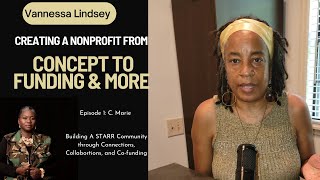
C. Marie founded STAR Community, a nonprofit focused on trauma awareness and women's health, without a 501(c)(3) by using a fiscal agent and generating revenue through merchandise and a farm business. She built the organization on reciprocal relationships and shared labor, avoiding what she calls toxic charity, and says genuine trust is the key to accessing resources and funding.
Chapters
Oh, welcome, welcome, welcome to Concepts of Funding, where we talk about all things nonprofit. It's about nonprofits— how do you start them, how do you build, how do you go from a concept to your mind to getting it funded. But the most important thing is all that stuff in between is where you're providing the good services that you're meant to provide. And so today I am on with C. Marie, and it is so wonderful because C. Marie is with Star Community. You talk about an organization, a But people who's out there, that's not just talking the talk, they're walking the walk and they're really doing some wonderful things in the community. And that's what we love. We love to see what people are doing because they're helping to make the world a little bit better than they found it. So welcome, Miss C. Marie. It's so good to have you here and to learn more about your star community.
Hi there, Vanessa. Thank you so much for having me.
Yes, welcome. Thank you. Thank you first for all that you're doing in the community because we need more foot soldiers on the street, you know, really helping out the people. So that's what, that's what I see when I look at you and I see you out there doing. I'm like, this is a real foot soldier, you know. She is really, I know, as you say, boots on the ground, you know.
Yeah, yeah.
And, and it's so good to see your boots on the ground even with the, um, the COVID I'm gonna say the COVID word, but for the last few years everybody's been behind their computer and a lot of people been doing a lot of telehealth and behind it the scenes, but I've seen you over the years, you're still out there with boots on the ground. So tell us a little bit about the STAR Community and why you do what you do.
Well, first of all, these boots are getting a little older, so these boots are really looking for some young people, um, younger people to pour some things into so that they can carry things a little bit further. But the STAR Community is really all about trauma awareness and resolution. Honestly, I wish that I had, you know, a really cute story about how the name came about, but to be quite honest, I was laying in bed in the wee hours of the morning and I just kept hearing "star," "star," and I said, "Hmm, baby, I'm a star." I was thinking about this song or something, but then I sat up and it was— I heard it very clearly, Supporters of Trauma Awareness. Understand the reality. Engage the resources. So that's quite long, and we've just been using the handle STAR, S-T-A-R-R, the STAR community, because again, we're all about not only trauma awareness, but then how do we connect people with the resources that they need to effectively resolve or at least minimize the impact that trauma has on individuals. And so, you know, just to be honest, my day job, I see so much the effects of trauma on both sides of the fence, if you will. I see a lot of things even when someone does something not good. It doesn't just impact the victim, but it also impacts that person's family. And when you look a little closer, you begin to realize that that individual themselves usually has come through so many things, so many traumatic incidents that have shaped them and gotten them to that point. So You know, I— it just wasn't enough for me to go to work and then just leave those things sitting there and, um, and, and just carry on, you know, as if nothing was wrong. And so I just started looking at how could we begin to be of practical help, um, to help minimize the negative effects of things that we see in our community. I don't know if I think I've shared this with you before, and really when we started with the Star Community, it was really, and probably still is, more or less focused on women. Um, because one thing that I realized is anything that is birthed into this earth realm comes through a woman. So when I'm to look at the fact that especially as women of color, we are too often birthing nurturing, and then burying or losing our children.
Yes.
Um, and I began to look at, even as I would see different things here locally in our community and talk with my son in particular, um, as he would share some time about losing a friend, either through death or incarceration, and I really began to take notice of how my body felt as we would talk about certain things. So while we do just try and help anyone in our community, we have a couple of specific things, but really at the core, the STAR community is really about women. We have to be healthier and manage our traumas so that, um, We're able to nurture our children differently, nurture and even correct and admonish our children when they are not right. So as women, when we are able to be healthier mentally, physically, emotionally, I think we'll really begin to see some community changes as our women become more— become healthier.
Yes. You said so much, and I'm trying to remember it all so I can go back and touch on it. You said so many wonderful things. I think the very first wonderful thing that you you said, as you said, I was laying in bed and I kept hearing this star. And you, you listen to that, you know, we hear things and we just bypass and we don't follow what it is we're supposed to do. But at night we're told something. That's when you know you get that whisper in your ear and you're like, what? Okay, because that's the time when it should be quiet, right? Because during the day you really can't hear that much because everything's going on and so much stimulation. You said, I heard it say star, and you took that and you heard what it said, that star meant, and you took it and you just, you ran with it and you worked with it.— and he has been doing it ever since. And that's— that is amazing.
And they said, uh-huh, you know, this really takes us— I'm just going to mention this— you and I would— I think we were in this room together, and I cannot directly remember the gentleman's name, but he talked about, you know, um, basically, as it is in heaven, so it is in earth. And you talked about it a little bit earlier. How do we really figure out who and what we're here for? And with that, so many times we go to bed just, oh, I'm so tired, you know, I just, you know, sleep. But really, when we lay down— and I'm trying to be more mindful of this— we need to be mindful of what is in our gut, because that's really where patterns come from. But that's where we reconnect and we can receive download. So, um, and then so dealing with traumas our health and our rest patterns, uh, are, are, are important because that's where we get the download.
Absolutely. And I look at, as I'm, as I'm, as I'm growing, uh, more spiritually and connecting with that, who were you before you came? And as I'm listening to you, and you know, we're like, we made this agreement, when I come down to earth, these are the things that I'm going to do, these are my agreements. And I look at you and I said, she says, when I come down there, I'm going to be those boots on the ground, I'm going to get out there and I'm going to help people with all this trauma that they're suffering, and I'm going to connect their trauma with resources. Not just talking about it, but I'm, I'm going to be out there and I am going to connect the resources. So it's— so you see people when they're walking in their purpose, because a lot of people, we hear it, we don't walk in our purpose, we just bypass and we keep looking at what we see in the world, right? But we all know— well, we don't all know, but we should realize that we're here for a purpose. There's a reason for us to be here at this time And so with that, restoring with all the trauma that's going on, as you say, we women, we birth everything in this earth. It's being birthed by a woman, whether the female plant or whatever is being birthed, right? And after, actually, but you talked about the Black woman, right? And how we have a lot of trauma from the, from the cradle to losing our babies, right? And losing our babies in so many traumatic ways, even from African American women, Black women having the highest infant mortality rates, right? So we lose them sometimes before they even get here, or they barely got here. And so you're working with these women that's suffering from the trauma from possibly losing a baby early, right, which causes trauma, all the way to their life. So if we can strengthen our women, you're saying— I'm hearing you say— we can strengthen our women, then we can hopefully strengthen the world. And it's funny you said that because the majority of people that I see in the Nonprofit Founders Club are starting nonprofits for women. I work African-American women. They're like, you know what, they see it too, you know. So, so I, I congratulate you. So I see that's what was your passion. So your passion behind that was that, the getting that downloaded into you saying this is what you need to do. Okay. And so you, you mentioned that you're doing on your job, but you said, okay, leave it at my job, but now I come on. Is that how you determine what the need was and that was a population because you've seen a lot of the women?
Yeah, um, so really I think one of the— so, so I've always been the fixer, we'll just put that there, and that's not good or healthy, so don't try that at home, folks, you know. Um, but that we went through a particular time where we were working very directly with a group of mothers who had all lost their children or a child, gun violence, or I'll say violence in Aiken County in particular. And there was some things then that were, you know, just really kind of hit me, you know, square in the face with that. So in my job, you know, it's we deal with what we deal with and, you know, do the program or the paper, whatever it is, and that is my job. But again, you know, there's so much spill-off and so much that's left, or as old folk would say, there's so much meat left on that bone, until you just find yourself in the middle of things that are kind of a continuation, you know, if you will. So yeah, so that was a big part of starting the organization or the movement, the Starr Community. But as I said, you know, even just from early in life, if you see a need, you try and take care of it. So children and youth have always been a big part of whatever outreach or whatever I'm a part of. So it really became that these passions and these things that were just really deep-rooted in my being, I began to try to structure and organize these things So to be more effective, because if you just here, here, there, there, you're— so a lot, most of the time you don't really get anywhere. So what I really began looking at is holistically, how do we make it make sense? So again, the women, that is a core piece, and then we do have pieces that specifically focus on youth. And then we have some pieces and some other partners that we work with, with the STAR community, who specifically focus on homelessness. So, but again, it's mainly women, as you said, where we've started coming together, trying to pool our resources and leverage our strengths so that we can do more and get further.
That is wonderful. And you know, some of the things like, I know when I, when I started, when my movement started like in 1987, when I started my nonprofit, and all along the way there were so many bumps and bruises, you know. And I know there's still a lot of bumps and bruises today. So tell me about some of the bumps and bruises that you feel, because when you get into a community, there's so many people that's like, we don't want you here, you're definitely in our territory, you know. And then even though you, you've determined the needs, you may find that the people who you want to serve is like, we don't want your services. We may need them, but we don't want them, you know. So can you talk a little bit about some of those bumps and bruises that you may have along the way?
So really, this is probably a hard lesson for me because I am such a community and gatherer. And as I said before, I'm the fixer, I'm the healer, right? Well, thing is, um, although you may be connected with or you know people who have good intentions and are doing good things, everybody don't belong in your ship or in your camp. So that's one thing that I think that's one of the hurdles or bumps and bruises that I've had to deal with and overcome. And so even though, like I said, it may look like a fit, you have to do an assessment of who and what you are and what your organization is about. And we've talked about this before, and sometimes you just have to realize maybe this person isn't a good partner, or I may not be a good partner for them. We may be able to collaborate on one thing, or we may not. So one of my bumps and bruises has been you know, is that everybody is not going to be suited to work together. And again, it may mean that I or the STAR community is not a good partner for someone else, and that's okay. There's enough work to be done, you know. The— it's a lot out there. So that self-assessment and then figuring out, you know, if it's a good idea to partner. And something you said, you know, even when you're out there sometimes trying to provide resources or information or do some things, even with the very population that you know you are to serve, if it is not received, that's okay too. Because another hurdle that I had to learn to master is. Again, everything isn't for everybody. And so rather than, um, drag, you know, the bull to the china shop, rather than put a whole lot of energy into trying to provide something maybe in a space where maybe they're just not ready yet, just make sure whatever information or resource you have Make sure you, you, you have packaged it. It's the best that you can offer. So then when you do cross paths with that person or that group that's ready, you have something quality for them. See, we'll waste time and resources and energy and, and, and, you know, ideas, creativity. We'll, we'll spend a lot of energy really sometimes trying to give something to somebody who's not ready. So one thing with the Star Community, we, we do some giveaways and handouts and, and that type thing, but really at our core, we really try to work things where the give and take is reciprocal. Um, we want to build community. We're not trying to build babies. We need to build a strong community where everybody brings something to the table. So one project that we worked with some other partners was our community garden. And I'll be honest, where we— what we were originally trying to do, I don't know that it was time for that there. Because the vision of it is we want to grow it together, we want to do it together, and we partake together. Not that a few people from outside your community is going to come do all the labor and then, you know, you just get it. Um, we wanted to bring that together so that there was some equal sweat equity and labor and and thought, you know, everybody put in together. So again, we'll do— we do some giveaways and we do some things like that, but ultimately we're about the business of building community. And when we do that, that's going to take some mutual elbow grease. And maybe someone can, you know, mow the lawn or whatever. Maybe someone else just has to have the eye. They may not— they may not be physically able, So maybe their part is they think through the plan and the strategy and then we execute. But there's something for everybody. And that's how we try to do it with the STAR community.
And I love it because what I hear you saying, and we are on this— I think we're on the same page and we're trying to teach this more because we've been in this game for so long. I think you're the one that really first hit me to it with that toxic charity.
Ah, yes, yes, yes.
And I would love for us one day to really come back together and get and do a segment on toxic charity and what that looks like. And so it sounds like how you're setting your program up and how you set the STAR Community up, it's a reciprocal— it's, it's a give and take, but it's, it's about community. And you can't always have— you can't build a community with one person just constantly giving and the other person just takes. So I would love us to be able to sit down and do something on toxic charity. And something else that you said that a lot of us don't do, and you said it in the very beginning before you started to say, when you said self-assessment. We don't assess ourselves. We have to assess the community, but we also have to assess ourselves for our strengths, weakness, opportunities, and threats, not within the organization, but within ourselves. Because if we don't, those bumps and bruises come, those obstacles come up, what we set out to do, we can't do it because we haven't assessed ourselves and strengthened ourselves. And that's something else we would love to touch on. Is that swatting ourselves, right? Yeah, this is— it's amazing, the work that you're doing. It's amazing that you're setting it up and people have to come because in order to receive services, you have to give something in return. Because we do appreciate— I think we do appreciate it more. Like they say, we— if you, you— if you pay, you pay attention, right? You heard that. And anything that I believe that I've had If I have participated in it, paid for it, put some sweat equity in it, I appreciate it a little bit more.
Right, right. So one, one thing I want to— I guess I'll clarify. So we don't even though provide direct services, we are more of a connector on that relationship building piece. So when we talk about starting a nonprofit, and so I have some stuff down there and I'm trying to maneuver around it. When we think about starting a nonprofit, I think one of the first things we need to do is assess what is already going on in the community. And where we live, we are rich in resources and generosity. So, but we're not always good with that meaningful engagement piece. So that's a part of the STAR Community name to engage the resources. So we often will set up activities, events, outreach engagement activities, mainly to get people together and then get them connected with those essential resources. So assess what's already going on in the community. You may not need to start another clothes closet or food bank. It could simply be that where the— maybe where the clothes closet or the food bank is located, perhaps it's not easily accessible for those who might need it. So if you or your group have a couple of vans, maybe you become that in-between. So assess what's already going on and see if you can connect or help fill a void with that. So that's what we do, a lot of that connecting. First of all, meaningful engagement so that we begin to recognize what's going on with us, and then we try to fill that. I'm gonna go ahead and share this because I don't know that I've shared this before publicly anyway, but I know for me, so One of my shortcomings with even working with the movement, the community movement, is delegation. Delegating, getting other people, you know, putting it in their hands, turning it loose, you know, and letting them go. That's one of my shortcomings, and I believe that's one of my trauma triggers because like, you know, there have been so many times when you— maybe it's abandonment issues even, honestly, because so many feel like you've trusted somebody to do something and then it doesn't get done. And so especially when it's your name, your face, you know, whatever on the line. So I have one of my friends will probably tell you I— we do a lot. We've done a lot of things, but we don't do too much that if everybody— I always say if everybody else pack up their marbles and go home, Cynthia Mitchell can do it and it'll be done.
That's right. But I know it's with you because it's like your baby, your child. And so somebody comes and they're mistreating your child, are you putting your child into a new babysitter? There's a trigger. It's like, wait a minute, not quite sure I'm comfortable with that. Because that's— that's nonprofit, or the work that you're doing is like— is your baby.
But we do have to work on that because the work is so big. So you do have to find that tribe, find your niche, find your community. And then sometimes you do have to just let go. And I've said before, when I was working with some young folks, as a matter of fact, one of my friends, he was trying to get me to turn loose with some things. And he says, well, just let it be crooked then, Sylvia. Just let them do it crooked. Okay. But, but I got— for our balance and for our health, you have to find that group that you trust. And it may take a while, but then some things you'll just have to let be a little off, right?
And so, right, because when you're first coming into a community, people have to know, love, and trust you. Get to know and like you at first, and to trust you, because they're trusting you with several things. They're trusting you to come into their community and you say, I'm going to help, but who are you? You're saying, I'm gonna turn my clients over to you. I'm gonna refer 'em to you for your services, but how do I know that I can trust you with these clients that I've been working with? And then also another thing people have to realize when they're first starting and getting to the community, there's lots of rich resources, but when you come in and you're talking about doing A, B, C, and D, you may be pulling some of those resources away from some of the other providers. So you wanna make sure when you talk about that community connection that you are, again, like you talked about leveraging the resources and you're filling the gap. They don't need a whole lot of duplication of services, but you gotta get in there and figure out where do I fit in? And people will be more welcoming to you versus them feeling like you're coming in, you're gonna take our clients, you're gonna take our funding, you're gonna take our community partners. So it really is a relationship building. It's about building the relationships.
Absolutely. Absolutely. Absolutely. Mm-hmm.
Yes. So what do you think? What do you think? Is that what you think makes you so successful is building those relationships? What do you think makes you successful?
Yeah, I would say, um, relationships are key, um, because there's a small hub of us, and mostly women. We do have one or two men now who are actually a part of that, you know, that core hub, but it's mostly women. So, because— so I was gonna say, even though we're all sheroes and superwomen and we can do it all But the relationships are key because there are times when you may already be dealing with or handling one thing and another call comes in. And so the strength or the good thing is you can pick up the phone or do a three-way, you know, and click somebody in, and then you have an extension. And the relationships where If I call someone at 8, 9, 10 o'clock at night, first of all, they know if I call them at that time, it's not a bunch of bunk. This is real. So we don't cry wolf, you know, we tap into those relationships as needed. We're not always— we're never— we're not standing around with a handout, you know, we need money to do this and we need money to do that. So when we, when we tap a resource or a partner, it's because it's needed. So when you build those genuine trusting relationships where people who can make things happen know how you operate, know your heart, know what's what, and, and they don't hesitate at whatever hour to pick up, and you need to be prepared to do the same too when your phone rings the other way. So honestly, yeah, I believe really, and with the community that you're serving, because we interact and serve a vulnerable community. Sometimes, you know, we have people, men and women who have been abused in different ways, or men and women who, even if they've gone to another resource and then the resource doesn't follow through, So we're dealing with vulnerable population. So build genuine relationships. And if it's something you can't do, say, "Ain't got it, can't do it." And you can say, "Hold on, let me tap something else." But build genuine relationships on both ends of the spectrum.
That's right.
So yeah.
Yeah, absolutely. And then with building those relationships, you know, I see a lot of people, they're like, okay, I got my program, I got my program, or I have my idea, or I got my 501, now boom, I'm going to funding. But there's so much in between, and that relationships are so important because when you build those relationships comes funding, right? So when you first start your nonprofit, are you first starting out, no one wants to give you any funding. But once if you start building those strong relationships, you may have a partner that is strong, that's been in the community for a long time, that says, hey, Miss Mitchell, I love what you're doing. I'm going to write this grant. I want to write you in. I want to help you get some funding because you're building that relationship and they know, love, and trust you. And they're like, okay, what she says she's going to do, she's going to do it. And so those are the things that's so important.
Well, and exactly because I was trying to remember to make sure to bring this out because the STAR community itself We do not have a 501. Number one, I don't have time for the paperwork in that because it's really a business. Yes, we have. We work with a partner that operates as our fiscal agent. And yes, we've had other groups or organizations or things going on and they've seen this, what this hub does. And they'll come and ask for some assistance, if you will. And some of the people that maybe operate or do some of the programs or the outreach things that we do get included with some other things. So that's a key thing because if we back up again, if we assess, make— do your self-assessment, and the self-assessment over here says you got a lot of irons in the fire, and managing a nonprofit is not one of those things that I, that I have time to do, or really that I want to do. But again, the relationships that have been built, we can— we operate with a fiscal agent and working our partnership, and, and I believe, I would like to believe, just as impactful, if not more so, because we're not worried about office space overhead. There are so many things, and there's a couple of nonprofits, you know, some things I see happening, and I'm like, honey, you could do that from your house. Yes. So you're taking away funding that could be going to really help someone to pay rent, to pay employees, you know, to pay insurance. So that's how— that's, that's one reason I think that we've, um, been able to get as much done as we have. Yeah, we operate.
Absolutely, absolutely. And that's one of the things about assessing before you even go out to get your 501 to assess, is this needed? Do I really want to do it? Am I an entrepreneur? Because when you start a nonprofit, you are an entrepreneur. And do I want to be an entrepreneur, or do— am I just a service provider? You know, what level am I at right now? Where do I want to be? You may decide 5 years down the road, okay, now I'm ready for entrepreneurship. But it's a lot, it's a lot of blood, sweat, tears, and money. Your money coming out of your pocket when you're starting to build your nonprofit. And people don't— they think, oh, nonprofit grant money, nonprofit donation. It doesn't work that way. It's like you're nonprofit, you're there for the community benefit, to help the community and provide service. Exactly what you're doing. But you're like, I can still do this. Without having all that other stuff, you know. So that's wonderful. That's good. That's good. So, um, so if someone wanted to help or give funding or support or collaborate with you, what do they need to do? How do they get in touch with you? How do they help the STAR community to keep doing what they're doing, or even learn how the STAR community is doing what they're doing?
Okay, well, absolutely. Please go check out our website www.thestarcommunity.org, and, um, you'll get a little bit more background on the organization. And I think there's a donate tab there, but mainly— and that's another thing, again, the way we try to operate the STAR Community— we have some merchandise up, mostly t-shirts, some mugs we do some different things because again, we appreciate any donations, but we believe in building relationship and things are reciprocal. So we also believe in working with our hands because we know we're blessed by the fruit of our hands. So what we make, even if it's, if it's intellectual property, but, but again, we have merchandise, t-shirts, things that we get creative, and then you can purchase that. And it's not just a, you know, gimme gimme gimme some money.
We're doing—
we're trans business. So that's how we really, you know, like to look at our fundraising. So please go on and check out some of the merchandise we have. Again, we have t-shirts, we have mugs, and through a partnership with my other business, which is Whistle Bridges Farm and Gardens, We are now actually offering Pampered Pinecones. The Pampered Pinecone is one of our businesses. We have a fall/winter collection that just passed, and so we— some of, you know, they're decorated in different ways. Well, we also sell wholesale, and everything that Cynthia does, a portion of the proceeds does go to support the STAR community. You can purchase some of my books. Um, and they're on Amazon, but you can go to Lady Love Publishing. So again, it's the entire essence of how we've tried to build the Star Community. Um, again, it's reciprocal, it's relational. We want to transact business with you, so, um, purchase some of our merchandise. That's what we really like, you know.
And I read— I have to, I have to say this— is that I read your book. I read one of your books at first, and I was on a plane and I could not put it down. And then I seen you had another book and I could not wait to read that book. You are an exceptional writer and you're— it's very engaging. So if anyone— I'm gonna just— I'm gonna do this shameless promo because I've read them and I really enjoyed it. If you guys get an opportunity to pick up one of her books from Amazon, please do it. If you just want to sit back and just read and, and get some inspiration, some feel-good, and you want to laugh You know, uh, you definitely want to get these books. So I want to make sure that all of your information is linked in wherever I'm— wherever we're posting this at, that all your information links so they can get to you, because I love what you're doing. And then you, you tell people, you know, you can do something different. Yes, starting a nonprofit is phenomenal. I love nonprofits. I love the work nonprofits are doing, and I love nonprofit funds. But you have to make sure that this is something that you're ready to do, or you're an entrepreneur, because so many people get their nonprofit status and they lose it every day, every year. People are losing their nonprofit status, and that's one of the reasons why we're here, from concept to funding, to teach you from the concept in your mind on how to do all the process to get you to that funding, but not to just go from here to here. So we thank you so much, Cynthia. I thank you so much for your time. Promise me this, that we will get together again and we're going to talk about toxic charity.
Yes, ma'am.
What that's all about. Okay, absolutely. I'm looking forward to— I thank you so much for being here. We thank you. If anybody's interested to learn more about us, we have a Nonprofit Founders Club that is exclusively for new nonprofit founders. If you're starting your nonprofit or you're thinking about it and you want assistance and some tips, tactics, techniques, and some strategies along the way, look at joining us in the Nonprofit Founders Club. So we thank you and we look forward to seeing you, uh, next week. Thanks, Cynthia.










